

Tailor-made safaris. Since 1991



Trust us to find you the rarest animals, the most spectacular wildlife events, the remotest landscapes and deeply meaningful cultural encounters!
What is the minimum age for safari activities?
Every family that has considered a family safari has asked some version of the same question: will our children actually be allowed to do the safari activities? It’s a fair question, and an oddly difficult one to answer from scattered lodge websites and forum threads! The rules differ by activity, by country and sometimes by individual reserve. This guide brings the whole picture together in one place, so you can plan with confidence rather than guesswork. As our CEO Simon Espley says, "Travel in Africa is about knowing what, when and where to go – a few weeks too early or late, or a few kilometres off course, and you could miss the greatest show on Earth."
Let’s unpack this a bit. The minimum age for safari activities really depends on what you’re doing. Gorilla and chimpanzee trekking require a minimum age of 15 throughout Uganda, Rwanda, Tanzania, the DRC and Congo-Brazzaville. Guided bush walks generally require children to be 12 to 16, depending on the lodge and the wildlife present. Game drives have no formal legal minimum, but most lodges require a private vehicle for children under five, and treat ages 6 to 11 as eligible for a shared drive only at the guide's discretion. Malaria prevention for children depends on age, weight, destination and medical circumstances. Antimalarial options are available for young children, with the appropriate medication and dose depending on the child’s weight, destination and individual medical circumstances. Families with babies and toddlers may nevertheless prefer malaria-free South African reserves to avoid malaria risk altogether.
None of the rules pertaining to age are arbitrary, and none of them need stop a family safari; they simply shape which activities suit which family member, and when.
Minimum ages at a glance
Age limits vary primarily by activity, but individual countries, reserves, operators and lodges may set different rules. Use this summary to see what your children can join in on immediately, and what works better for now.
Gorilla trekking and chimpanzee trekking: minimum age 15, no upper limit
Guided bush walks and walking safaris: minimum age 12 to 16, lodge dependent
Game drives: under-5s usually need a private vehicle; 6-11 at guide's discretion
Antimalarial medication: options are available for young children; suitability and dosage depend on weight and the specific medication
Adventure activities such as rafting or ballooning: ages 7 to 18, by activity
Safari activities and minimum ages compared
Activity | Minimum age | Upper limit | Where it applies |
Gorilla trekking | 15 | None | Uganda, Rwanda, DRC, Congo-Brazzaville |
Chimpanzee trekking | 15 | None | Uganda, Rwanda, Tanzania |
Guided bush walks | 12 (16 in some Big 5 areas) | None | Most Big 5 and walking-safari regions |
Game drives (shared) | 5-6 typical; under 5 usually private vehicle | None | Ranger's discretion, continent-wide |
Game drives (private vehicle) | No formal minimum | None | Recommended for under-5s |
Hot-air ballooning | ~6-7 | None | |
White-water rafting | 15 (Victoria Falls) | None (fitness-dependent) | |
Bungee jumping | 14 (with consent) | None | Victoria Falls Bridge |
3 things we love about age-matched safaris
Age limits are not obstacles to a good family safari. Matched thoughtfully, they shape a trip where every family member finds their own highlight, at the right time.
Every stage gets its own moment: meerkat encounters and gentle boat rides for under-fives, then gorilla permits and full-day bush walks once children turn 15.
The rules protect wildlife too: minimum ages for gorilla and chimpanzee trekking exist specifically to shield these endangered great apes from human childhood illnesses.
Patience pays off: waiting until the right age for a first bush walk or gorilla trek often turns that single activity into the whole trip's defining memory.
Minimum ages by activity
Each safari activity sets its own age rule, based on either the physical demands involved, the disease risk to wildlife, or straightforward insurance and safety practice. Here is what applies, activity by activity.
Gorilla trekking (age 15)
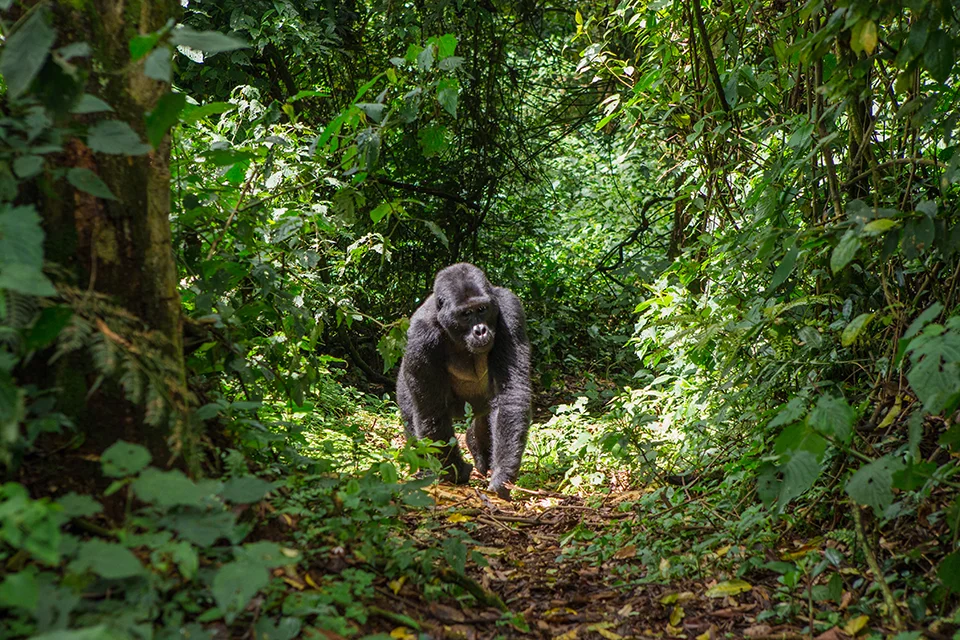
Gorilla trekking carries a strict minimum age of 15 across every country where it takes place. The rule exists to protect gorillas, who share around 98% of human DNA, from childhood illnesses such as measles and chickenpox, to which they have no immunity. There are no exceptions, regardless of a child's fitness or maturity.
Chimpanzee trekking (age 15)
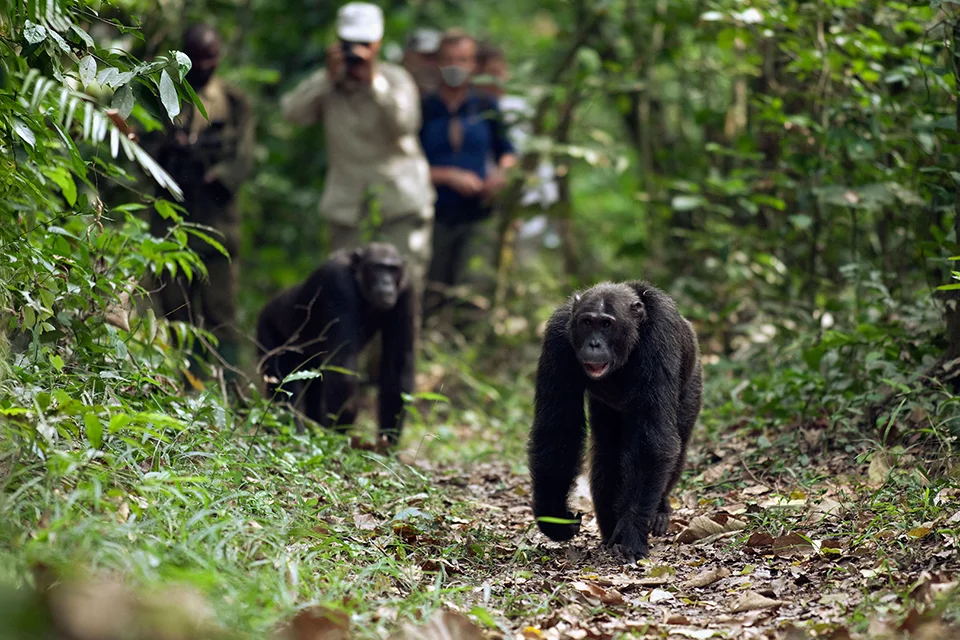
Chimpanzee trekking in Uganda, Rwanda and Tanzania sets the same minimum age of 15, and for the same reason as gorilla trekking: chimps are equally vulnerable to human disease. Many lodges near trekking areas run childminding or half-day nature programmes, so younger siblings can still enjoy the base while older family members trek.
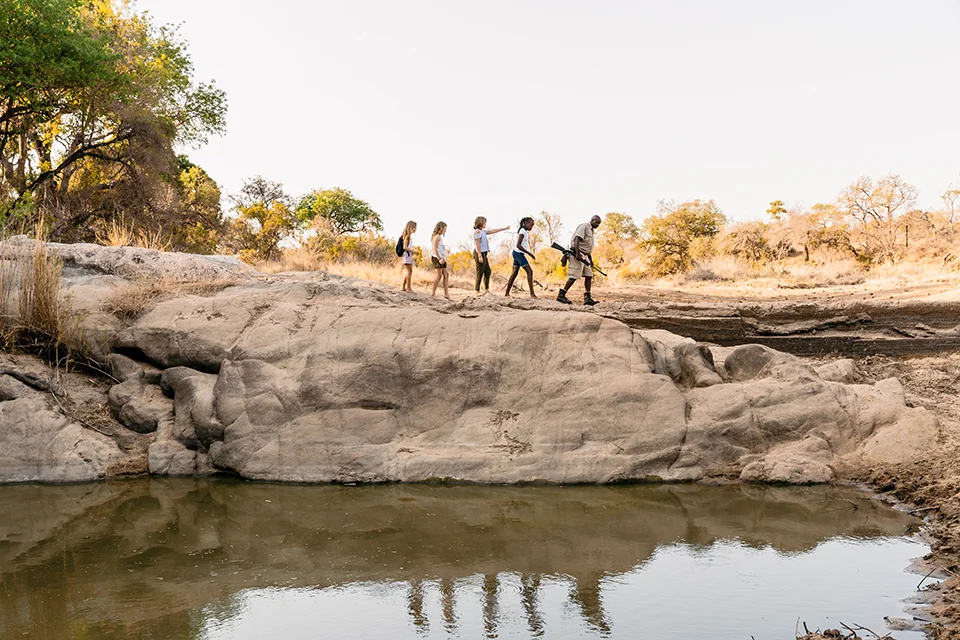
Walking safaris and bush walks (age 12-16)
Guided walking safaris in areas with dangerous wildlife typically require children to be at least 12, rising to 16 at some Big 5 lodges. The close, on-foot proximity to elephants, buffalo or lions demands calm, controlled behaviour that younger children cannot reliably guarantee. Gentler nature walks away from dangerous wildlife are usually open to younger children.
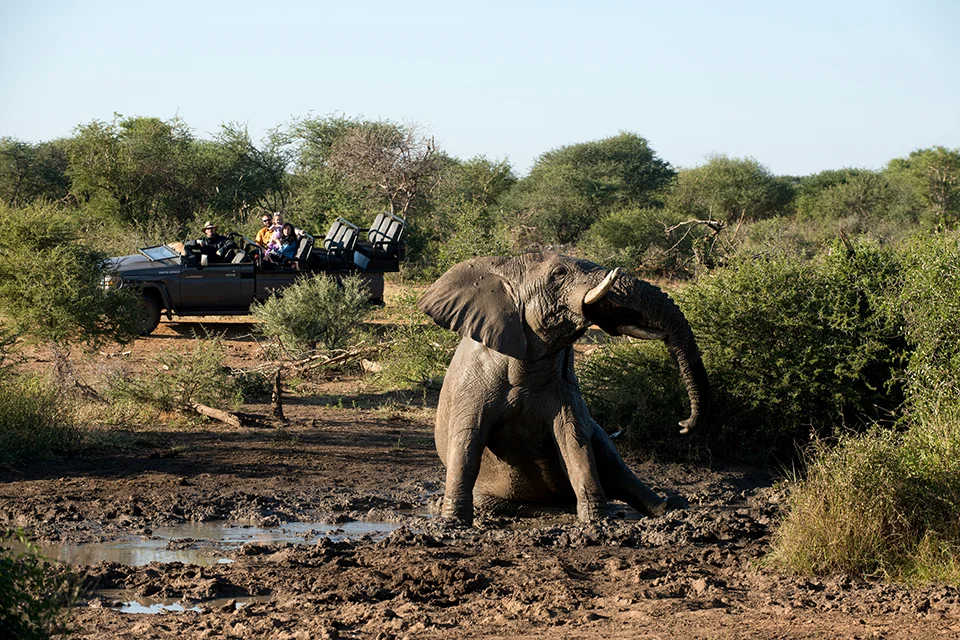
Game drives and private vehicles
There is no formal minimum age for game drives, but most lodges require a private vehicle for children under five, while shared drives for ages six to eleven are usually at the ranger’s discretion. Some family-focused lodges also offer dedicated children’s drives.
Ramona Rubach recommends a private vehicle, or lodge-based nanny care, for very young children because it gives families more flexibility. As she notes, “Having kids on a safari vehicle will impact what you potentially see,” particularly how closely vehicles can approach sightings.
Luis Gama similarly recommends treating under-fives, especially babies and toddlers, as private-vehicle-only and confirming arrangements with the lodge in advance. His usual guidance is “five years and older as the normal minimum for shared game drives.”
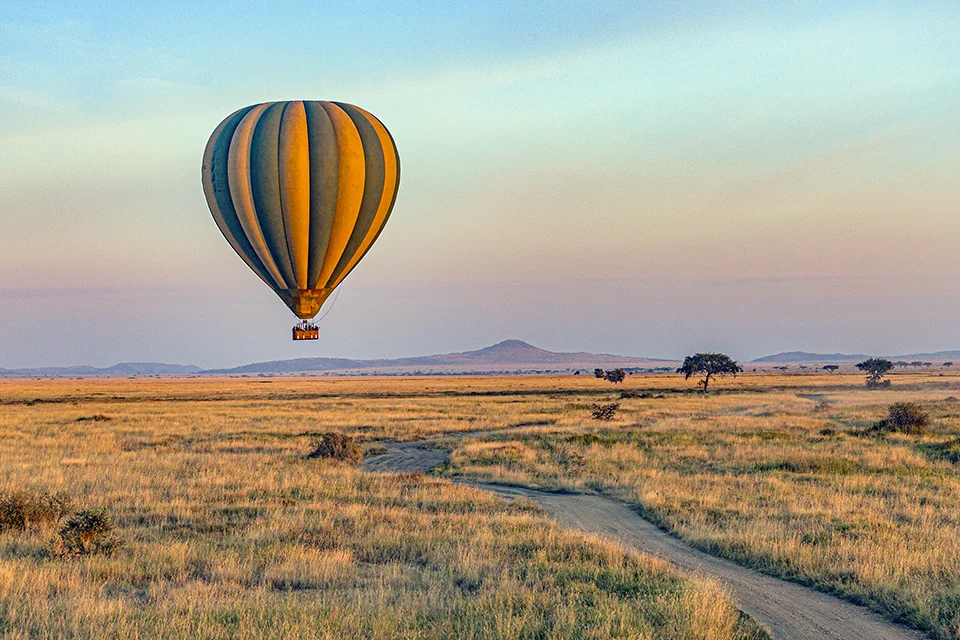
Adventure activities for older children and teenagers
Victoria Falls' white-water rafting generally requires guests to be 15 and older, bungee jumping is usually open from 14 with parental consent, and Maasai Mara hot-air balloon safaris commonly set a minimum age of around 6 to 7. Quad biking and sandboarding in Namibia vary by operator and terrain.
Family safaris we love
Malaria medication and age limits
Antimalarial options for young children
Antimalarial medication can be prescribed for young children, including babies, although the available options vary according to the child’s weight, destination and individual medical circumstances. Some medications have minimum age or weight restrictions, while others can be used in younger children at appropriate weight-based doses. Families travelling with babies or toddlers should consult a travel doctor to determine the most suitable malaria-prevention strategy for their itinerary.
Choosing malaria-free reserves instead
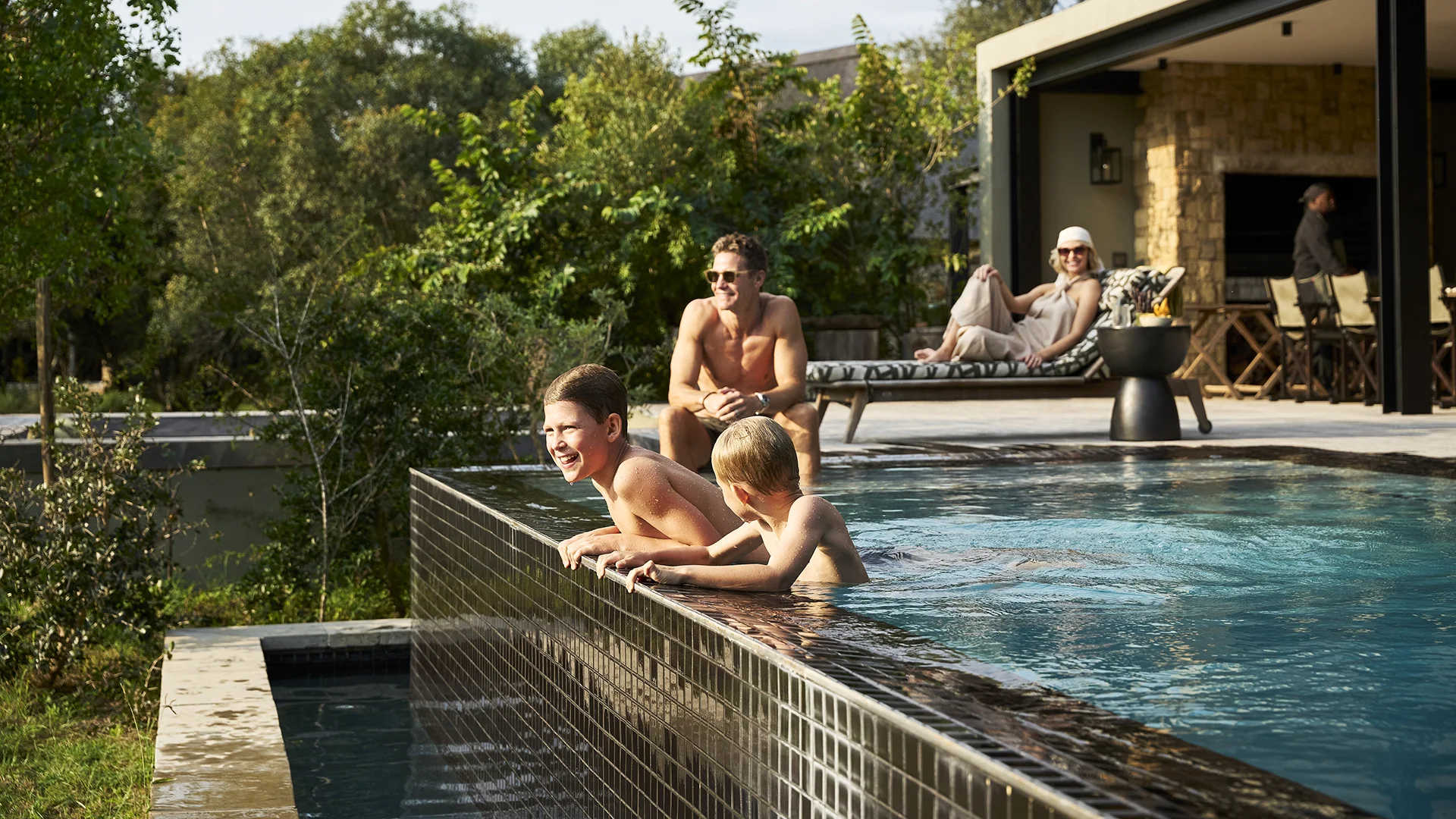
Even though antimalarial options are available for young children, many families with under-fives prefer malaria-free reserves such as Madikwe, Pilanesberg, reserves in the Waterberg and the Eastern Cape's Kwandwe in South Africa, or low-risk parts of Namibia. These regions offer genuine Big 5 wildlife viewing with no antimalarial requirement at all, and pair naturally with Cape Town or the Garden Route for a complete first family safari.
For advice on choosing between Madikwe, Pilanesberg and the Eastern Cape, read our guide here.
Why these age rules exist
Protecting endangered wildlife from disease
The 15-year minimum for gorilla and chimpanzee trekking is rooted in conservation, not bureaucracy. Great apes share the vast majority of human DNA and lack immunity to common childhood illnesses. A single case of transmitted flu or measles has, in the past, proven fatal to a habituated group, which is why park authorities in Uganda, Rwanda, Tanzania and the DRC apply the rule without exception.
Fitness, terrain and safety
Walking safari age limits reflect a different concern: the sustained, disciplined behaviour required when on foot near elephants, buffalo or lions, with no vehicle for protection. Younger children, however well-behaved at home, cannot be relied on to stay silent, walk in single file, and follow a guide's instructions instantly in a genuine encounter, which is why lodges set the bar at 12 or higher.
Wish you were here?
Planning your family trip around age limits
Matching activities to each child's age
The most reliable approach is to list your family's ages first, then build activities around them, rather than choosing a single destination and hoping everyone qualifies. A trip might pair a malaria-free base for a toddler with gorilla trekking for a 16-year-old on a separate day nearby, reuniting the family each evening over dinner.
Check out our guide to the best family safari destinations by age.
When a private vehicle is worth booking
Most lodges require a private guide and vehicle for children under five on game drives, and treat six to eleven as a judgement call for the ranger on the day rather than an automatic yes. A private vehicle also allows a flexible pace: an early return to the lodge when a toddler tires, or entering a sighting more closely than would be considerate with young children aboard a shared vehicle.
A quick planning checklist
List every traveller's age before choosing a destination or lodge
Take into consideration that gorilla and chimp trekking permits require age 15, no exceptions
Check whether your chosen lodge sets its own walking-safari age minimum
Ask your doctor about antimalarial options before booking a malaria-risk area
Consider a malaria-free base for children under five
Confirm minimum ages for any adventure activities in advance
Budget for a private vehicle or in-lodge nanny care for children under five
Speak to a safari expert who plans age-matched itineraries daily
Frequently asked questions
The minimum age for gorilla trekking is 15, with no upper limit, and this applies across Uganda, Rwanda, the DRC and Congo-Brazzaville. The rule protects gorillas, who share around 98% of human DNA, from childhood illnesses such as measles, mumps and chickenpox, to which they have no immunity. There are no exceptions for younger children, regardless of fitness or experience, so families with under-15s typically choose a different primary activity for that leg of the trip.
Chimpanzee trekking also carries a minimum age of 15 across Uganda, Rwanda and Tanzania, for the same disease-protection reasons as gorilla trekking. There is no maximum age, and fitness matters more than the calendar for older travellers. Many lodges near chimp-trekking areas offer childminding, half-day nature programmes or gentler forest walks, so a family with younger children can still base itself in the area while older teenagers and adults trek.
Most guided walking safaris have a minimum age of 12, and some lodges, particularly in Big 5 areas with dangerous wildlife on foot, set it at 16. The exact age depends on the destination, the wildlife present and the individual lodge's policy, rather than one continent-wide rule. Shorter, gentler nature walks in areas without dangerous wildlife are often available for younger children as a suitable alternative to a full bush walk.
There is no formal legal minimum, but most lodges require a private vehicle for children under five and treat ages 6 to 11 as eligible for a shared drive only at the ranger's discretion, which is never guaranteed in advance. Our safari experts generally recommend five as the practical cut-off for shared drives, since a young child on board can affect how close a vehicle approaches a sighting and can disrupt other guests.
Yes. Antimalarial options are available for young children, although the appropriate medication and dose depend on the child’s weight, destination and individual medical circumstances. Some medications have specific minimum age or weight restrictions, so families should consult a travel doctor before travelling to a malaria-risk area. Malaria-free reserves in South Africa, such as Madikwe, Waterberg and the Eastern Cape, remain an appealing alternative for families who prefer to avoid malaria risk altogether.
Yes, with the right planning. Malaria-free destinations remove malaria risk from the equation, while short game drives, boat safaris and relaxed wildlife viewing from the lodge deck suit short attention spans far better than a full day in a vehicle.
Yes, and these vary widely by activity and operator. White-water rafting at Victoria Falls typically requires participants to be at least 15, bungee jumping is usually 14 and up with parental consent required for under-18s, and hot-air balloon safaris in the Maasai Mara commonly set a minimum age of around 6 to 7. Height and weight restrictions sometimes apply too, so always confirm current age and consent requirements with your safari expert before booking.
Often, yes. Most lodges require a private vehicle for children under five, since a young child on board affects how closely a vehicle can approach a sighting and can disrupt other guests on a shared drive. Ages 6 to 11 are usually assessed by the ranger on the day rather than guaranteed a shared seat. A private guide and vehicle also allow for a flexible pace and an early return to the lodge. Exclusive-use safari villas and family houses usually include one as standard.
No standard safari activity, including gorilla and chimpanzee trekking, sets an upper age limit. Fitness rather than age is the real consideration for trekking and longer walking safaris, since both involve several hours on foot, sometimes at altitude and in humid conditions. Older travellers who are reasonably fit, and who hire a porter on trek days, generally manage these activities comfortably well into their seventies and beyond.
Start with your youngest and oldest travellers and work out which activities suit each age, rather than picking a destination first. A malaria-free base might suit under-fives, while teenagers head off gorilla trekking or white-water rafting on a separate day nearby. Our safari experts routinely build itineraries that run parallel activities for different age groups within one family, reuniting everyone at the lodge each evening for dinner.
Start planning your dream safari
Our travel experts will craft a no-obligation itinerary just for you. We have crafted over 5,000 safaris since 1991. Your personal details are protected; we only use this information to contact you.
Why book your safari with us?

Deep Experience & Knowledge
Handcrafted experiential safaris since 1991.
Travel in Africa is about knowing when and where to go, and with whom. A few weeks too early/late or a few kilometres off course, and you could miss the greatest show on Earth. And wouldn’t that be a pity?

Trust & Safety

Make A Difference
We donate a portion of the revenue from every safari sold to carefully selected conservation projects that make a significant difference at ground level.
YOUR safari choice does make a difference - thank you!