

Tailor-made safaris. Since 1991





Waterberg: Big 5 safaris in ancient mountains
Waterberg at a glance:
Location: Limpopo Province, South Africa - not to be confused with Waterberg Plateau in Namibia | Access from Johannesburg: 2 to 3.5-hour drive, or a 45-minute shuttle flight from O.R. Tambo International Airport |
Key reserves: Marakele National Park, Welgevonden Private Game Reserve, Lapalala Wilderness, Marataba | Best time to visit: May–September (dry season, cooler temperatures, peak wildlife sightings) |
Nearest major airport: O.R. Tambo International Airport, Johannesburg | Minimum recommended stay: 3–4 nights |
Currency: South African Rand (ZAR) | Malaria risk: None - the entire Waterberg region is malaria-free |
Why visit the Waterberg?
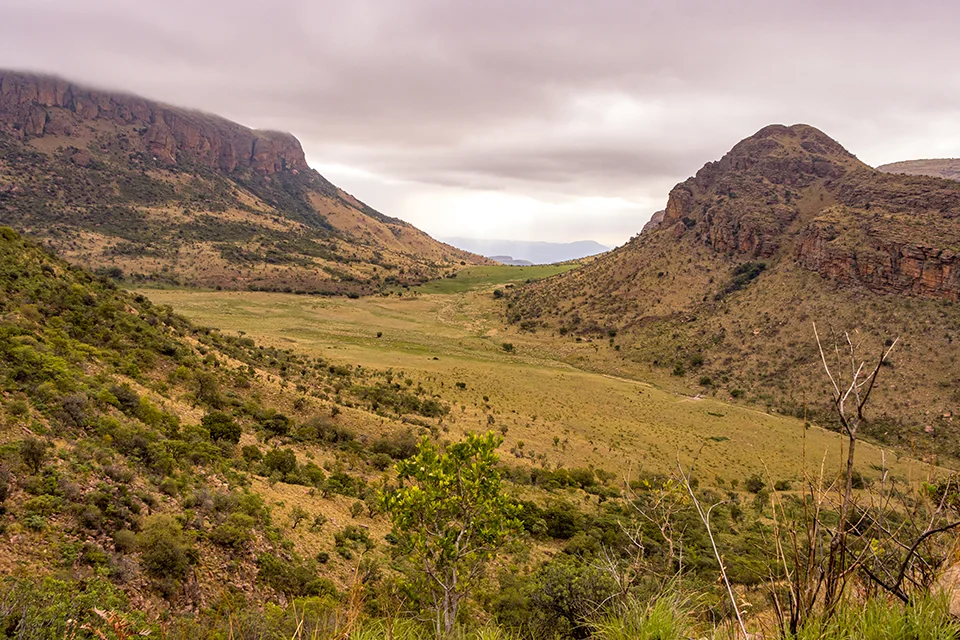
The Waterberg does not announce itself. Across 150 kilometres of ancient sandstone buttresses, undulating plateaus, and hidden wetlands in Limpopo, it runs on its quiet rhythm, governed by a nightjar's call at dusk, a Cape vulture banking above red cliffs, and the snap of a branch marking an elephant in dense riverine forest. For travellers who know South Africa's more visited bushveld areas, the Waterberg offers something different: fewer vehicles and tourists and the uncommon reward of a sighting that is yours alone.
The entire region is malaria-free - a defining advantage making it one of South Africa's most compelling safari destinations for families, first-time visitors, and anyone whose health considerations shape where they travel. Within a UNESCO-recognised Biosphere Reserve, the Waterberg includes three of the country's most significant conservation areas: Marakele National Park, Welgevonden Private Game Reserve, and Lapalala Wilderness. All three carry the Big Five - lions, leopards, elephants, rhinos, and buffalo - as well as wild dogs, cheetahs, and one of the world's largest Cape vulture colonies, with around 800 breeding pairs nesting on Marakele's Kransberg cliffs. In the Waterberg, conservation is not a backdrop to the safari. It is the point of the safari.
5 reasons we love the Waterberg
Malaria-free Big Five: Fewer vehicles on track, truly uncrowded sightings, and genuine exclusivity within a UNESCO Biosphere Reserve.
The Cape vulture colony: One of the world's largest - around 800 breeding pairs nesting on the dramatic cliffs of Marakele National Park.
An ecological crossroads: Where mixed bushveld meets mountain fynbos, supporting around 765 plant species and outstanding habitat and wildlife variety.
A rhino and wild dog stronghold: Critical habitat for black and white rhino, wild dogs (painted wolves), and cheetahs - with active conservation programmes protecting all three.
Ancient heritage: San rock art, Stone Age surface scatters, and Iron Age sites woven throughout the Waterberg's ancient landscape.
All you need to know about the Waterberg
About the Waterberg
The Waterberg runs 150 kilometres through Limpopo, rising from 1,050 metres on valley plains to 2,088 metres on the Kransberg summit. This span creates a striking habitat gradient: mixed bushveld and sweet bushveld on lower slopes, sheltered forest ravines, and mountain fynbos at higher elevations. Marakele National Park - the anchor protected area - is roughly 55% Waterberg Moist Bushveld and 42% Mixed Bushveld, supporting around 765 plant species. The endemic Waterberg cycad is among them, named after Eugene Marais, the naturalist who spent 16 years writing in these mountains. Three river systems - the Matlabas, Mamba, and Sterkstroom - flow through the park, creating year-round water sources and rich riparian habitat across the landscape. Lapalala Wilderness lies 50 kilometres north-east of Vaalwater, a 48,000-hectare reserve bisected by the perennial Palala River across eight distinct land types.
Things to do in the Waterberg
Game drives: Morning and evening drives across Marakele, Welgevonden, and Lapalala offer Big Five encounters across three distinct and varied landscapes.
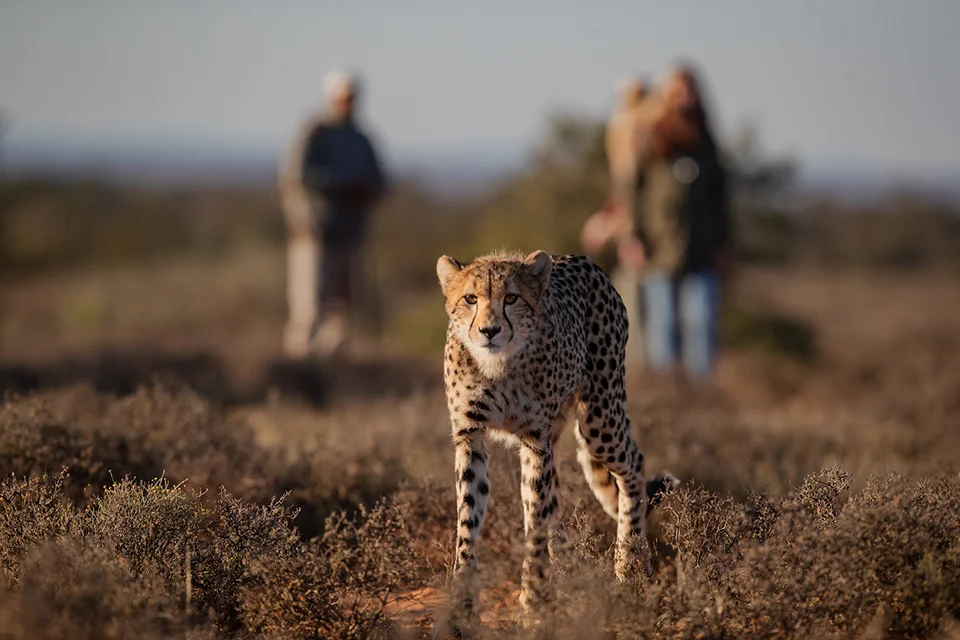
Guided bush walks: Experienced rangers lead walks through mixed bushveld, rocky ridges, and river habitat, revealing rich ecological detail at every step.
Lenong viewpoint: Drive the mountain pass in Marakele for sweeping vistas, klipspringer on cliffsides, and regular leopard sightings near the top.
Bollonoto Dam bird hide: Particularly rewarding in the summer rains when waterbirds and raptors converge - a quiet, absorbing way to spend a morning in Marakele.
Marakele 4×4 Eco Trail: A three-day guided wilderness route accessing remote areas of Marakele closed to standard day visitors.
Heritage sites: Seek out San rock art, Stone Age surface scatters, and Iron Age sites dispersed throughout the broader Waterberg landscape.
What wildlife can I see in the Waterberg?
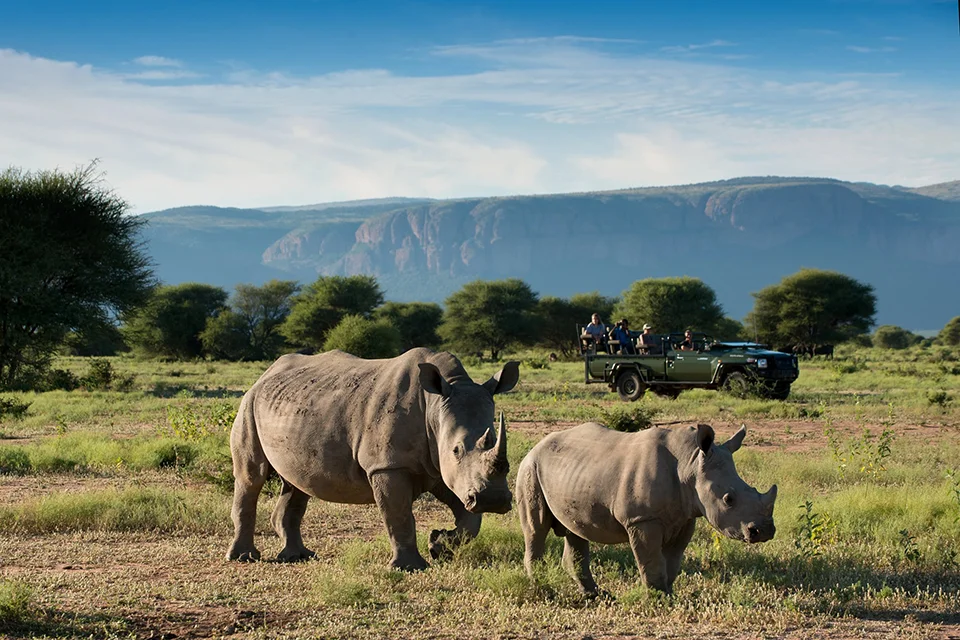
The Big Five: Lions, leopards, elephants, buffalo, and both black and white rhinos are present across all three principal Waterberg reserves.
African wild dogs (painted wolves): Ranging across Marakele and adjacent reserves, the species is an essential conservation priority throughout the Waterberg landscape.
Cape vultures: Around 800 breeding pairs nest on Marakele's Kransberg cliffs - one of the largest known colonies of this endangered species globally.
Rare and unusual species: Brown hyena, caracal, aardwolf, roan antelope, sable antelope, and pangolin have all been recorded in the Waterberg's protected areas.
Birds: The Waterberg area hosts about 450 bird species, including Cape vulture, African finfoot, Verreaux’s and martial eagles, secretarybird, Denham’s bustard, white-bellied korhaan, black stork and Meyer’s parrot.
Where to stay in the Waterberg
Marataba concession - 23,000 privately managed hectares within Marakele National Park - two lodges cater to different temperaments. Marataba Safari Lodge is a full-service Big Five property set against dramatic red sandstone topography, with guided drives and bush walks across terrain that hosts all five resident predator species. Marataba Mountain Lodge is smaller, elevated, and more intimate - positioned for panoramic Waterberg views and better suited to couples or small groups who prefer a quieter experience.
Welgevonden Game Reserve restricts guest numbers and does not permit self-driving, keeping its 36,000 hectares uncrowded. All guests travel with qualified field guides. Mhondoro Safari Lodge & Villa offers a luxurious stay. Clifftop Exclusive Safari Hideaway confronts the landscape directly: perched on a Waterberg cliff edge, its open-sided design places the escarpment at every guest's feet.
Lapalala Wilderness presents two options within its 48,000-hectare reserve. Noka Camp is a remote, immersive bush camp for travellers who want the weight of wilderness entirely around them - no frills, no distractions. Melote House operates on an exclusive-use basis, with the entire property reserved for a single group alongside the Palala River.
The Waterberg reserves: where to explore
Marakele National Park: 'A place of sanctuary ' in Tswana, Marakele sits 12 kilometres from Thabazimbi - the closest national park to Johannesburg and Pretoria. Altitudes span 1,050 to 2,088 metres, creating habitats from mixed bushveld to mountain fynbos. The park records 91 mammal species, including lion, leopard, buffalo, elephant, both rhino species, wild dogs, and cheetah. Around 800 Cape vulture breeding pairs nest on the cliffs. May to September offers cooler weather and peak sightings.
Welgevonden Private Game Reserve: 36,000 hectares within the Waterberg Biosphere, 2.5 hours from Johannesburg by road or 45 minutes by air. More than 65 mammal species - including brown hyena, caracal, aardwolf, and aardvark alongside the Big Five. No self-driving permitted. San rock art is dispersed throughout the reserve. A Scientific Advisory Committee guides conservation management recognised internationally for innovation in large-scale reserve ecology.
Lapalala Wilderness: At 48,000 hectares, the largest private protected area in the Biosphere, 50 kilometres north-east of Vaalwater. Bisected by the Palala River and spanning eight land types, Lapalala has led private rhino conservation since 1981, becoming in 1990 the first private reserve in South Africa to manage black rhino. Lion, leopard, elephant, buffalo, cheetah, wild dogs, spotted and brown hyena, and roan and sable antelope all occur here. A roan breeding project begun in 2010 has produced over 150 animals.
Marataba: A private concession spanning 23,000 hectares in Marakele's north, Marataba combines Big Five safari with premium lodge hospitality, guided drives, and bush walks. The concession participates in the Greater Marakele Security Cluster - a collaborative anti-poaching initiative uniting Marataba, Welgevonden, Marakele, and surrounding private landowners.
Trusted by thousands of ecstatic travellers
✔️ 5-Star Trustpilot Rating ✔️ Condé Nast Travel Specialist Award Winner
✔️ Accredited by SATSA ✔️ 5,000+ Exceptional Safaris Since 1991
Why choose Africa Geographic to plan your safari?

"...Africa Geographic was amazing. They took the time to listen to what I wanted to experience on my trip and designed the perfect itinerary for me. They were always available when I had a question and made sure I was well prepared from the time I booked all the way through my trip. They even checked on me after I returned home. Thank you...for making my dream vacation an amazing and unforgettable experience."

"Our experience was unforgettable....went the extra mile to make sure that everything was just perfect. It was a perfect balance between luxury and adventure and we felt like we really experienced the bush, mixing game dives on the vehicle and game drives on foot. We felt completely immersed in nature and we discovered so many things about the local traditions...We would definitely recommend Africa Geographic!!"

"Africa Geographic was amazing to work with. They tailored a trip specifically for us based on our wants and needs. They take the time to listen to you and understand what you are looking for from this sometimes once in a lifetime experience. They are professional, courteous, friendly and with you every step of the way. Their job does not end until you are home. If I could give them more than 5 stars I would!"
Wish you were here?
Frequently asked questions
Yes. The entire Waterberg region in Limpopo Province is malaria-free, making it one of South Africa's most accessible Big Five safari destinations for families and first-time visitors. No antimalarial medication is required.
The Waterberg in South Africa is a mountain range in Limpopo Province, home to Marakele National Park, Welgevonden Private Game Reserve, and Lapalala Wilderness. It is an entirely separate destination from Waterberg Plateau Park in Namibia - a different country, different ecosystem, and different wildlife composition.
Lion, leopard, elephant, buffalo, and both black and white rhino. All five species are present across Marakele National Park, Welgevonden Private Game Reserve, and Lapalala Wilderness. This makes the Waterberg one of the few malaria-free regions in South Africa where all five can be encountered.
Most lodges in the Waterberg are a two- to three-and-a-half-hour drive from Johannesburg. A 45-minute shuttle flight from O.R. Tambo International Airport is also available, landing on private airstrips within the reserves.
May to September is the dry season, offering cooler temperatures, sparse vegetation for easier sightings, and peak wildlife activity near water sources. October to March brings summer heat, lush green scenery, and migratory birds — rewarding for those willing to visit outside the peak window.
Welgevonden is a 36,000-hectare private game reserve within the Waterberg Biosphere in Limpopo. It is one of South Africa's most accessible premier malaria-free Big Five reserves, approximately 2.5 hours from Johannesburg. Guest numbers are limited, self-driving is not permitted, and all visits are conducted with qualified field guides. It is also home to ancient San rock art.
Marakele National Park is a South African national park in the Waterberg Mountains, 12 kilometres from Thabazimbi. Its Tswana name means 'a place of sanctuary'. The park supports 91 mammal species, 272 bird species, and around 765 plant species. It is malaria-free, Big Five, and home to one of the world's largest Cape vulture colonies - around 800 breeding pairs - on the Kransberg cliffs.
Lapalala Wilderness is a 48,000-hectare private reserve within the Waterberg Biosphere, 50 kilometres north-east of Vaalwater. It is the largest private protected area in the Biosphere and has been at the forefront of private rhino conservation since 1981. In 1990, it became the first private reserve in South Africa to manage black rhino. The reserve supports lion, leopard, elephant, buffalo, cheetah, wild dogs, hyaena, roan and sable antelope, and more.
Marataba is a 23,000-hectare privately managed concession within the northern section of Marakele National Park. It offers luxury lodge accommodation - Marataba Safari Lodge and Marataba Mountain Lodge - with guided game drives and bush walks in Big Five terrain. Marataba participates in the Greater Marakele Security Cluster, a collaborative anti-poaching initiative with Welgevonden, Marakele National Park, and surrounding landowners.
Yes. African wild dogs (painted wolves) are present in Marakele National Park and are a critical conservation priority in the region. They are also recorded in other parts of the broader Waterberg conservation landscape. Wild dogs move across large territories, so sightings require patience and some luck.
The Waterberg region as a whole hosts about 450 bird species, including Cape vulture, African finfoot, Verreaux’s and martial eagles, secretarybird, Denham’s bustard, white-bellied korhaan, black stork and Meyer’s parrot.
Yes. The malaria-free status of the Waterberg makes it particularly well-suited to families travelling with children. Several lodges across Marakele, Welgevonden, and Lapalala offer family-friendly configurations and junior programmes. Confirm minimum age requirements directly with your chosen property when booking.
Waterberg safaris typically cost from R9,660 per person, per night, depending on the accommodation comfort level, time of year and activities. This price usually includes accommodation, all meals, game drives, experienced guides, and 24/7 support from our team.
Click here to schedule a no-obligation call with one of our Safari Experts or fill in our 2-minute form with your questions. Our team of experts are here to help! Whether you’re curious about the best time to travel, want to hear first-hand about an experience or need help planning your safari.
Explore more African destinations
Start planning your dream safari
Our travel experts will craft a no-obligation itinerary just for you. We have crafted over 5,000 safaris since 1991. Your personal details are protected; we only use this information to contact you.
Why book your safari with us?

Deep Experience & Knowledge
Handcrafted experiential safaris since 1991.
Travel in Africa is about knowing when and where to go, and with whom. A few weeks too early/late or a few kilometres off course, and you could miss the greatest show on Earth. And wouldn’t that be a pity?

Trust & Safety

Make A Difference
We donate a portion of the revenue from every safari sold to carefully selected conservation projects that make a significant difference at ground level.
YOUR safari choice does make a difference - thank you!