

Safari experts & storytellers. Since 1991



Bush and Beach Safaris at a glance:
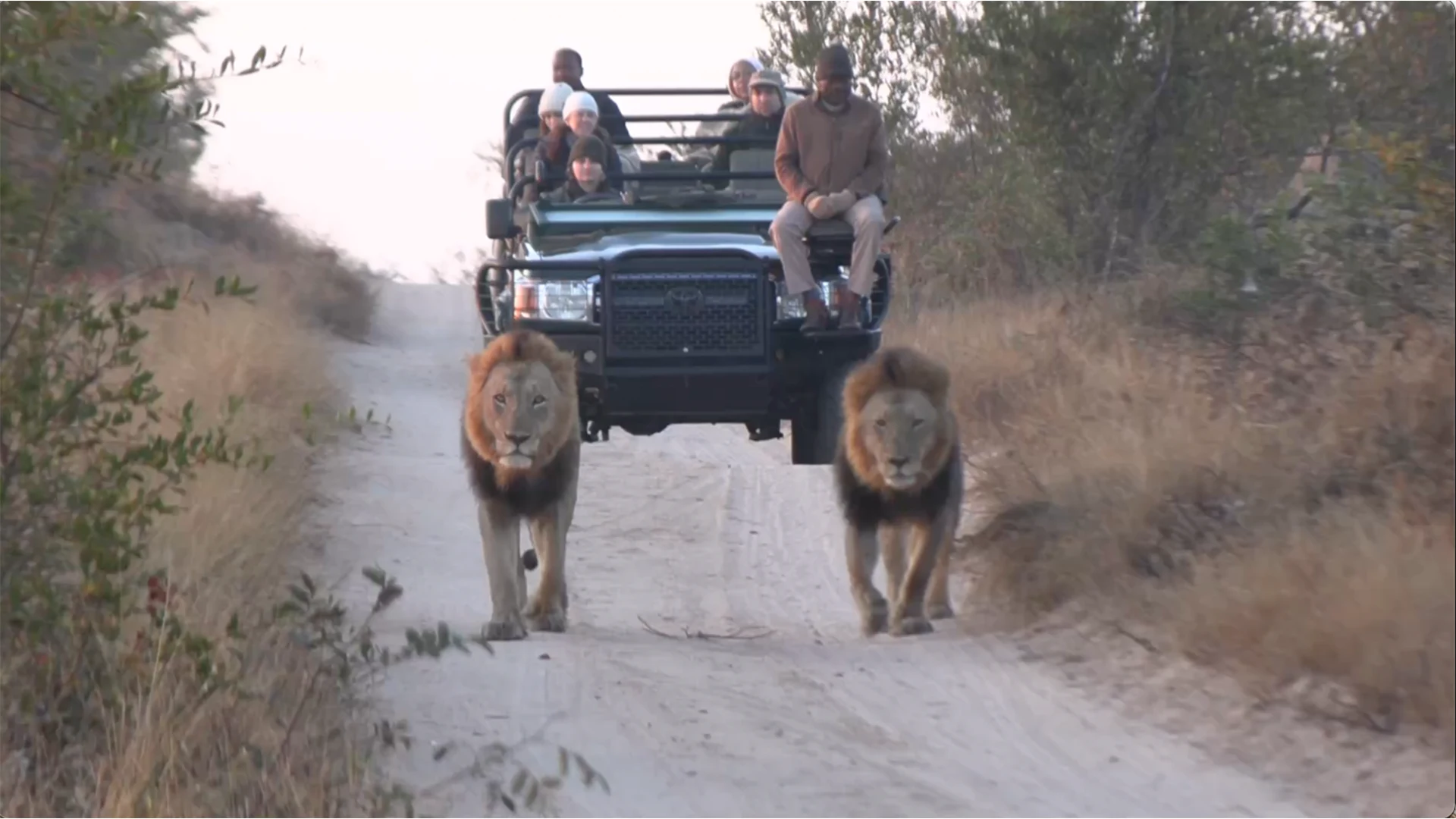
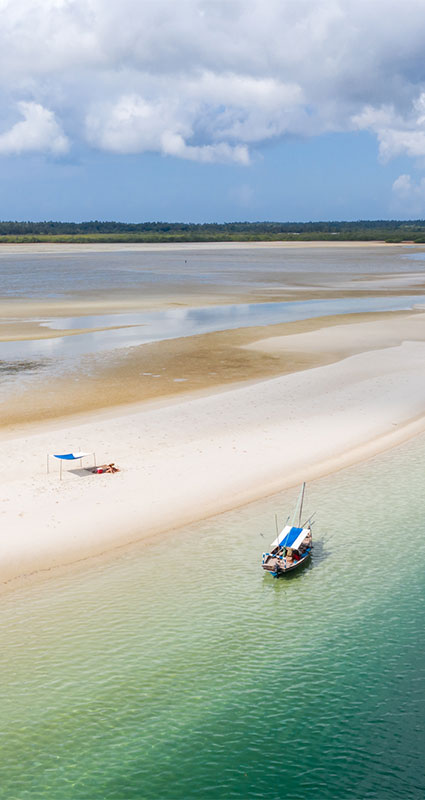
A bush and beach safari pairs a classic wildlife safari with time on Africa's coast, islands or great lakes.
We sequence the safari first, beach second, so the coast becomes the place to recover from early-morning game drives.
Popular pairings: Greater Kruger with Mozambique's Bazaruto • Maasai Mara with Diani • Serengeti with Seychelles • Serengeti with Zanzibar, and South Luangwa with Lake Malawi.
Best timing is roughly May–October in Southern Africa and June–October in East Africa, when prime wildlife viewing meets good beach weather.
Most transfers are one or two short flights (about 1–2 hours); a typical trip allows at least seven days on safari plus three to four on the beach.
Where wild mornings meet barefoot afternoons
A bush and beach safari pairs a classic wildlife safari with time on Africa's coast, islands or great inland lakes.
It is among the most rewarding ways to shape a journey through the continent, and the logic is simple: the pre-dawn starts and charged game drives of a safari are best followed by unhurried days when the only real decision is whether to dive, sail, or stay in the hammock.
Africa's long coastline and scattered archipelagos hold everything from wide sandy expanses to secluded tropical coves, while freshwater shores such as Lake Malawi bring the same sense of release inland. Modern flight links make the contrast feel seamless rather than logistically fraught, so guests can wake to the call of hippos and fall asleep to the sound of lapping waves on the very same day.
Done well, the combination is also a conservation story. The reserves you explore on safari and the lodges you unwind in afterwards both channel tourism revenue into protecting the wildlife and habitats that make the journey worth taking in the first place, which is why we treat the beach not as an afterthought but as an integral part of a considered African itinerary.
Is there a better way to end your Africa Geographic safari?
Five reasons we love a bush & beach safari
The contrast is the whole point. After days of early starts and intense game viewing, the slow rhythm of the coast lets the experience settle, turning a packed itinerary into a properly restful one
Modern light-aircraft links make the switch seamless. Most bush-to-beach transfers take one or two short flights, so you can leave the savannah at breakfast and reach the ocean in time for sundowners
The marine wildlife rivals the bush. Africa's reefs and channels host whale sharks, manta rays, dugongs and nesting turtles, so the spirit of a wildlife safari carries straight on into the water.
There is a pairing for every traveller. East Africa leans into migration drama and reef islands, while Southern Africa blends Big Five density with Mozambique's sandbanks and private islands.
It rewards conservation-minded travel. Many coastal lodges fund reef protection, turtle monitoring and community programmes, so your time on the beach helps sustain the places you came to see.
Bush & beach pairing | Why it works |
Maasai Mara → Zanzibar | Big-cat country and the wildebeest migration, then Stone Town, spice markets and reef snorkelling, linked by short, regular flights |
Greater Kruger → Bazaruto Archipelago | Reliable Big Five viewing in Sabi Sand or Timbavati, followed by warm-water diving, dhow cruising and sandbank picnics off Mozambique |
Serengeti → Mafia Island | Endless plains and predators paired with a quieter, dive-focused island known for seasonal whale shark encounters |
South Luangwa → Lake Malawi | The birthplace of the walking safari, followed by an inland freshwater "beach" of clear bays and barefoot island lodges |
Check out our additional resources on bush and beach safaris:
Looking for the perfect bush and beach holiday? Explore our favourite safari combinations.
Not sure what to pack? Use our safari and beach packing guide.
How should you split your safari and beach holiday? Find the perfect balance.
What can you do on a bush and beach holiday? Discover the best safari and coastal experiences.
Our favourite Bush & Beach safari ideas
Why book with us?
Tailor-made experiential safaris - with love
"Travel in Africa is about knowing what, when and where to go - a few weeks too early/late or a few kilometres off course, and you could miss the Greatest Show on Earth. And wouldn’t that be a pity?
Our crew of passionate safari experts have lived and worked in Africa for most of their lives. Trust us to find you the rarest animals, the most spectacular wildlife events, the remotest landscapes and deeply meaningful cultural encounters!"
Simon Espley - CEO, Africa Geographic
All you need to know about Bush & Beach safaris
Where to find the best Bush & Beach safari combos
Africa offers more pairings than most travellers realise, and the best are chosen so that wildlife and coast are each at their peak and easy to link by air. A few combinations we craft again and again:
Southern Africa: Greater Kruger reserves such as Sabi Sand and MalaMala, or KwaZulu-Natal's Phinda, paired with Mozambique's Bazaruto Archipelago or Ponta Mamoli.
Kenya: the Maasai Mara, Laikipia, Tsavo or Amboseli, followed by Diani, Watamu, Malindi or the Swahili island of Lamu, and further afield, the Seychelles.
Tanzania: the Serengeti, Ngorongoro, Nyerere (Selous) or Ruaha matched with Mafia Island.
Zambia: South Luangwa's walking safari country, combined with the freshwater beaches of Lake Malawi.
A pairing is only as good as the flights that link it, so we build itineraries around short, sensible hops rather than backtracks.
Beach accommodation types
Africa’s beach accommodation ranges from barefoot simplicity to ultra-luxury private-island exclusivity, including:
Private island retreats on exclusive islands. Expect limited guest numbers, butler-style service and custom dining and activities.
Small, characterful properties. These are often thatched bandas or chalets that emphasise sustainability and local materials.
Medium-sized boutique beach hotels & lodges. These are stylish properties with thoughtful décor and a strong personality. They feature large suites or villas, private decks and plunge pools, spas and fine dining.
Medium-to-large urban beach hotels. These are beachfront properties near towns or historic/cultural hubs, providing easy access to restaurants and markets.
Large classic beach resorts offering facilities, activities, and convenience. Expect multiple restaurants and bars, pools, kids’ clubs and scheduled water sports.
Beach activities
Your beach holiday will be designed to help you relax and recharge.
Gentle days might mean candlelit dinners on the beach, sunset dhow cruises and cocktails as the light fades. For the more active, there is snorkelling, scuba diving, deep-sea fishing, sea kayaking, stand-up paddleboarding and island-hopping by boat.
Wildlife does not stop at the shoreline either: depending on where and when you travel, you might swim alongside whale sharks, watch for manta rays and dugongs, or join rangers monitoring turtle nests after dark.
Cultural excursions add further depth, from dhow sailing with local skippers to village visits, mangrove explorations and wandering the lanes of a historic Swahili town.
Or, of course, you could spend your beach holiday in a hammock with a book and your favourite beverage in hand.
Trusted by thousands of ecstatic travellers
✔️ 5-Star Trustpilot Rating ✔️ Condé Nast Travel Specialist Award Winner
✔️ Accredited by SATSA ✔️ 5,000+ Exceptional Safaris Since 1991
Why choose Africa Geographic to plan your safari?

African Geographic planned a perfect safari for my family. From the very beginning, with Stef planning our safari. Lodges and camps were outstanding. The beach holiday was a perfect ending. Our guide Thomas was fantastic.
Nadia - our personal travel agent from AG - compiled a superb mixture of bush and beach for us. It was a magical trip, including a homestay at a lovely Zulu family. We highly recommend Nadia's service!
We have booked with this company for 3 years now ... Tanzania - Ngorongoro Crater and Zanzibar ... You can trust that you will have a great holiday if you book with Africa Geographic.
Frequently asked questions
It depends on the region. In Southern Africa, the dry season from roughly May to October offers the strongest wildlife viewing alongside warm, clear coastal days. In East Africa, the prime window runs from June to October. Because the best safari months tend to coincide with good beach weather, combining the two is usually straightforward.
We almost always recommend the safari first and the beach second. Game drives involve early starts and full, exhilarating days, and the coast is the ideal place to decompress afterwards. Ending on the beach also means you travel home rested rather than road-weary.
As a guide, we suggest at least seven days on safari and a further three to four on the coast, though many guests extend one or both. Photographers often want more bush time, while honeymooners and families tend to lean towards the water.
Most safaris we craft for our guests range from 7 to 10 days, depending on the target experiences and budget. Read more about safari durations.
Usually by one or two short flights, often on light aircraft, or by road, where the beach is close to the reserve. Reaching the Kenyan coast from the Maasai Mara, for example, typically means a short hop to Nairobi followed by a flight to the coast. South Africa's KwaZulu-Natal and Eastern Cape have beaches near the wildlife parks, and a road transfer will do the trick. Your logistics are arranged for you so the transitions feel effortless.
Very much so. Gentle coastlines, malaria-free reserve options in parts of Southern Africa, private villas and lodges with children's programmes all make the combination family-friendly. The beach portion is often what younger travellers remember most.
Yes, they are one of the most popular honeymoon packages in Africa. The pairing balances shared adventure in the bush with private, unhurried time on the coast, and many island and reserve lodges cater specifically to couples with secluded villas and tailored dining.
Neither is better; they simply suit different travellers. East Africa is hard to beat for the wildebeest migration and reef islands such as Zanzibar and Mafia, with short flight links between them. Southern Africa pairs high Big Five density with Mozambique's sandbanks and private islands, plus easy add-ons such as Cape Town and Victoria Falls.
Most safari and coastal regions carry a malaria risk, although some in South Africa do not. Always consult your doctor about antimalarial medication and pack insect repellent. If you would prefer to avoid the question altogether, we can suggest malaria-free reserves and pair them with a suitable beach.
Regional bush flights usually require soft-sided bags and enforce weight limits of around 15–20kg. A practical approach is to leave heavier luggage at a hub airport and travel into the bush with essentials only, with the rest arranged to meet you at the coast. Find out more about packing for a safari.
Tanzania's Mafia Island is at its best for whale sharks from around October to February, while Mozambique's Inhambane coast peaks from October to March. Permits and dive slots are limited, so it is worth booking these well ahead.
For peak-season travel, we recommend planning 12 to 18 months in advance, as the best lodges and island properties fill up early. Trips outside peak season can often be arranged six to nine months out, usually with better availability and rates.
Bush and Beach safaris typically cost from US$700 per person per night, depending on the level of accommodation and activities. This price usually includes accommodation, all meals, game drives, experienced guides, airport transfers, and 24/7 support from our team.
You only make your first payment when you book your holiday. Your second (and last) payment is due about 105 days before you travel.
Peak season bookings require 12–18 months of advance planning. Trips outside peak season can be arranged 6–9 months in advance, with better rates and availability.
Click here to schedule a no-obligation call with one of our Safari Experts or fill in our 2-minute form with your questions. Our team of experts are here to help! Whether you’re curious about the best time to travel, want to hear first-hand about an experience or need help planning your safari.
Explore more African safari experiences
Start planning your dream safari
Our travel experts will craft a no-obligation itinerary just for you. We have crafted over 5,000 safaris since 1991. Your personal details are protected; we only use this information to contact you.
Why book your safari with us?

Deep Experience & Knowledge
Handcrafted experiential safaris since 1991.
Travel in Africa is about knowing when and where to go, and with whom. A few weeks too early/late or a few kilometres off course, and you could miss the greatest show on Earth. And wouldn’t that be a pity?

Trust & Safety

Make A Difference
We donate a portion of the revenue from every safari sold to carefully selected conservation projects that make a significant difference at ground level.
YOUR safari choice does make a difference - thank you!