
Tailor-made safaris. Since 1991



Trust us to find you the rarest animals, the most spectacular wildlife events, the remotest landscapes and deeply meaningful cultural encounters!
Congo-Brazzaville vs the DRC – is it safe to visit Odzala-Kokoua?
From a terrace above the Congo River in Brazzaville you can see Kinshasa on the opposite bank, close enough to pick out individual buildings. Ferries cross in under half an hour. These are the two closest capital cities on earth after Rome and Vatican City – and they belong to two entirely different countries. Almost every safety warning a traveller meets while researching Odzala-Kokoua National Park belongs to the ‘other’ Congo
Let’s start with an important distinction: Congo-Brazzaville, formally the Republic of the Congo, is a different country from the Democratic Republic of the Congo. Western governments rate it as substantially lower risk, and Odzala-Kokoua National Park, in the stable north-west, carries no destination-specific warning. Reaching it involves no contact with the DRC. Standard travel precautions apply, as they would anywhere.
The confusion is reasonable, and it costs travellers one of Africa's most rewarding forest destinations. Search for ‘Congo safety’ and the results return conflict in the eastern provinces of the DRC, a country of roughly 113 million people spread across 2.3 million km². Odzala-Kokoua sits in the Republic of the Congo, a country of about 6.4 million people covering 342,000 km². The conflict zones dominating those results lie over 1,500 km east, across an international border.
What the two Congos share, and what they do not
Both countries take their name from the Kongo people of the region.
Both are francophone states that became independent in 1960.
They share a long river border but do not share government, army or currency.
Brazzaville and Kinshasa sit on opposite banks of the Congo River.
The shared name is where the confusion comes in. Congo-Brazzaville was the French Congo; the DRC was the Belgian Congo, and later Zaire. They are separate states with separate security records.
The two Congos compared
Republic of the Congo | Democratic Republic of Congo | |
Also known as | Congo-Brazzaville | Congo-Kinshasa, formerly Zaire |
Capital | Brazzaville | Kinshasa |
Area | 342,000 km² | 2.3 million km² |
Population | About 6.4 million | About 113 million |
Former colonial power | France | Belgium |
Currency | Central African CFA franc | Congolese franc |
Typical advisory position | Exercise increased caution | Do not travel |
Safari destination | Virunga, Kahuzi-Biega |
3 things we love about Odzala-Kokoua
Beyond the safety question, here’s why our safari experts keep returning to this corner of the Congo Basin, and why it repays the additional effort of getting there.
Rainforest on a continental scale, around 13,546 km² of it, first protected in 1935, inscribed by UNESCO as a World Heritage Site in 2023 and managed by African Parks.
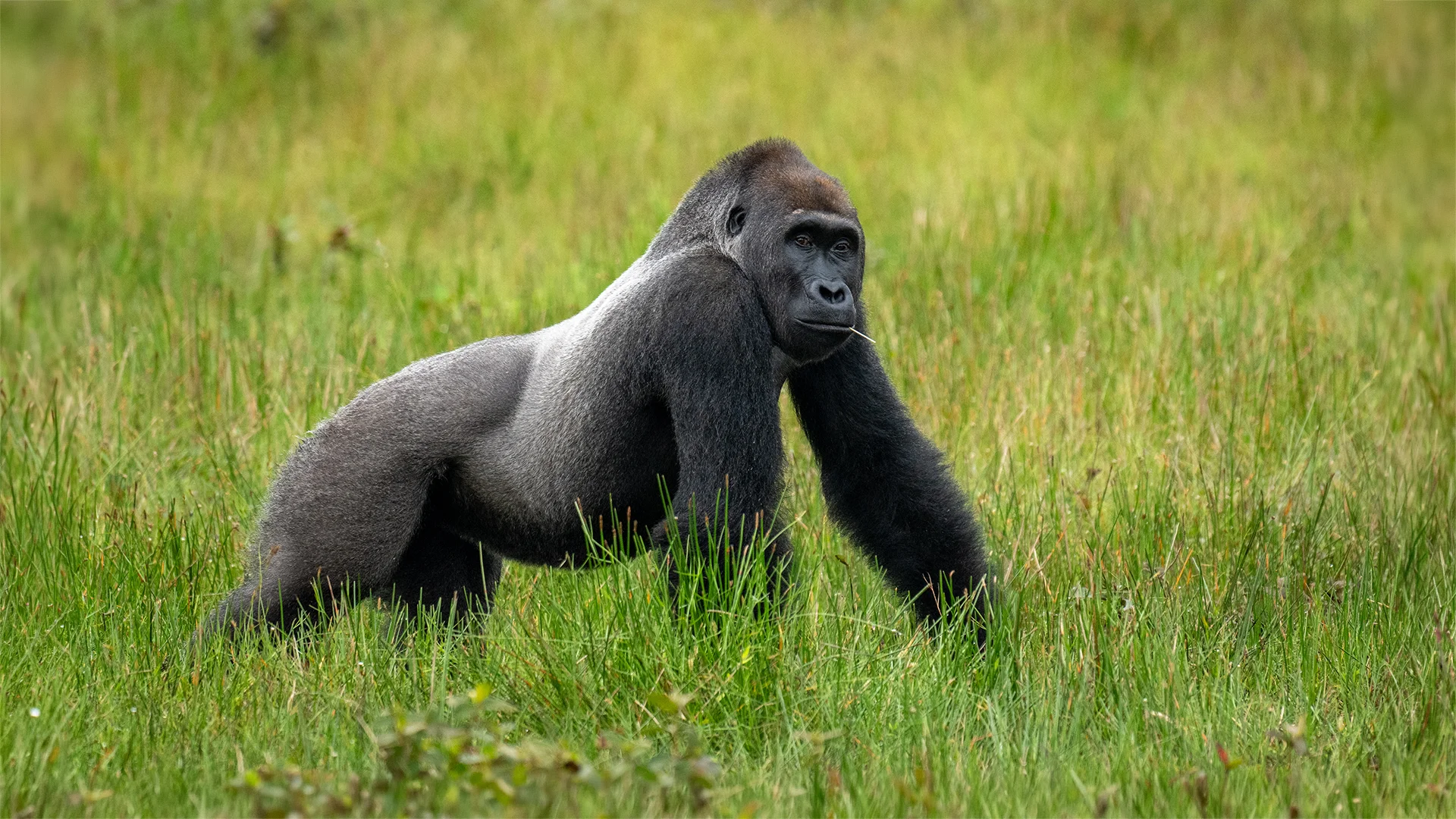
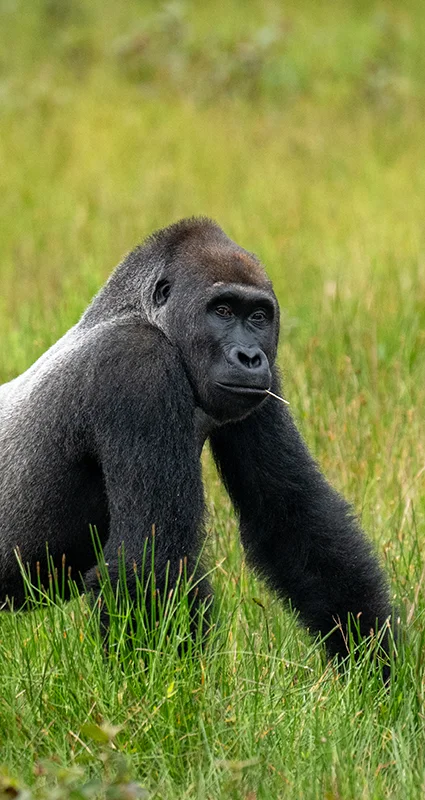
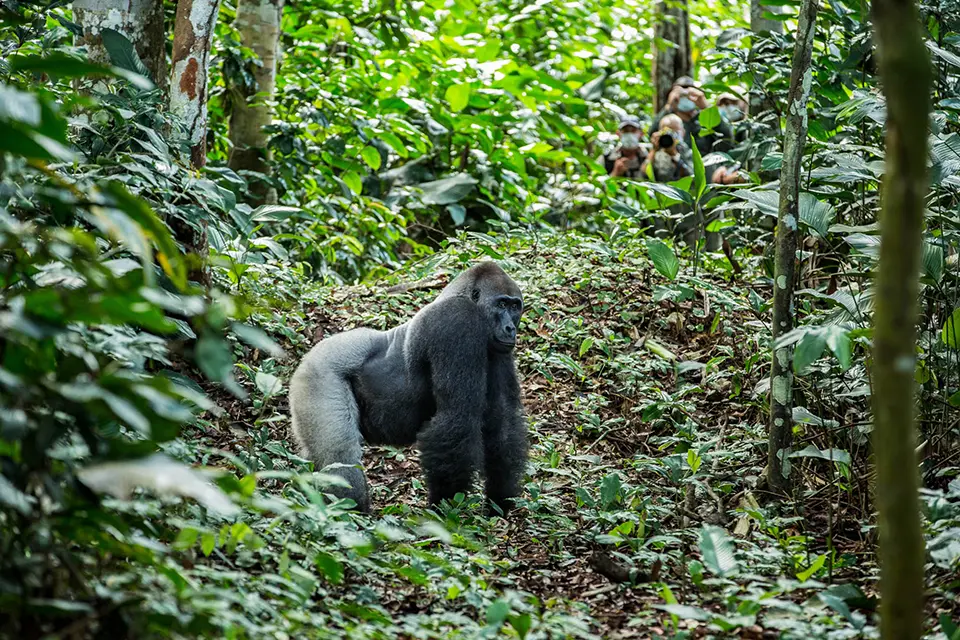
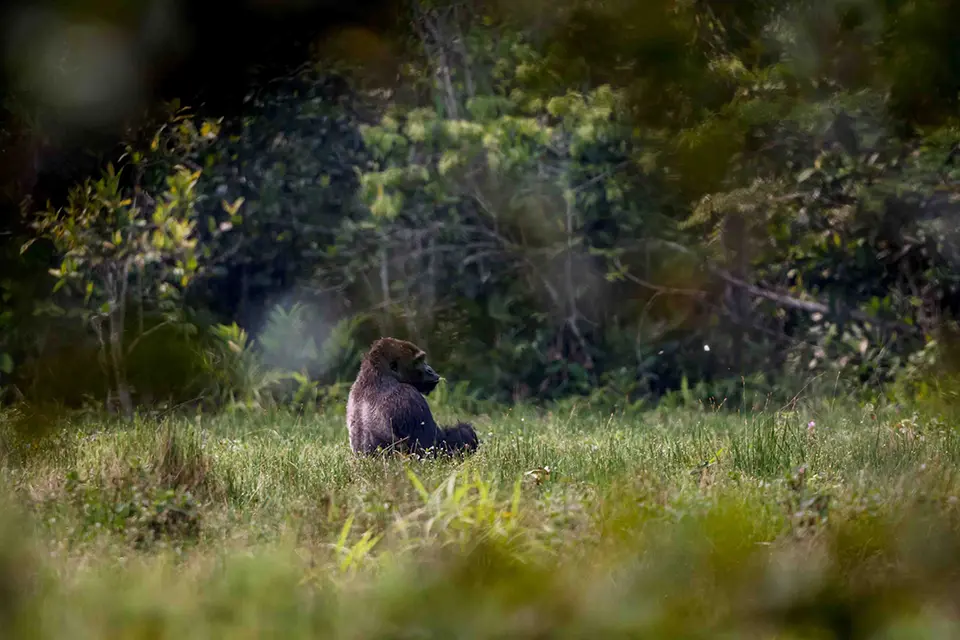
Western lowland gorillas in genuine wilderness. African Parks puts the population here at roughly 7,585 animals, close to 3% of the species worldwide.
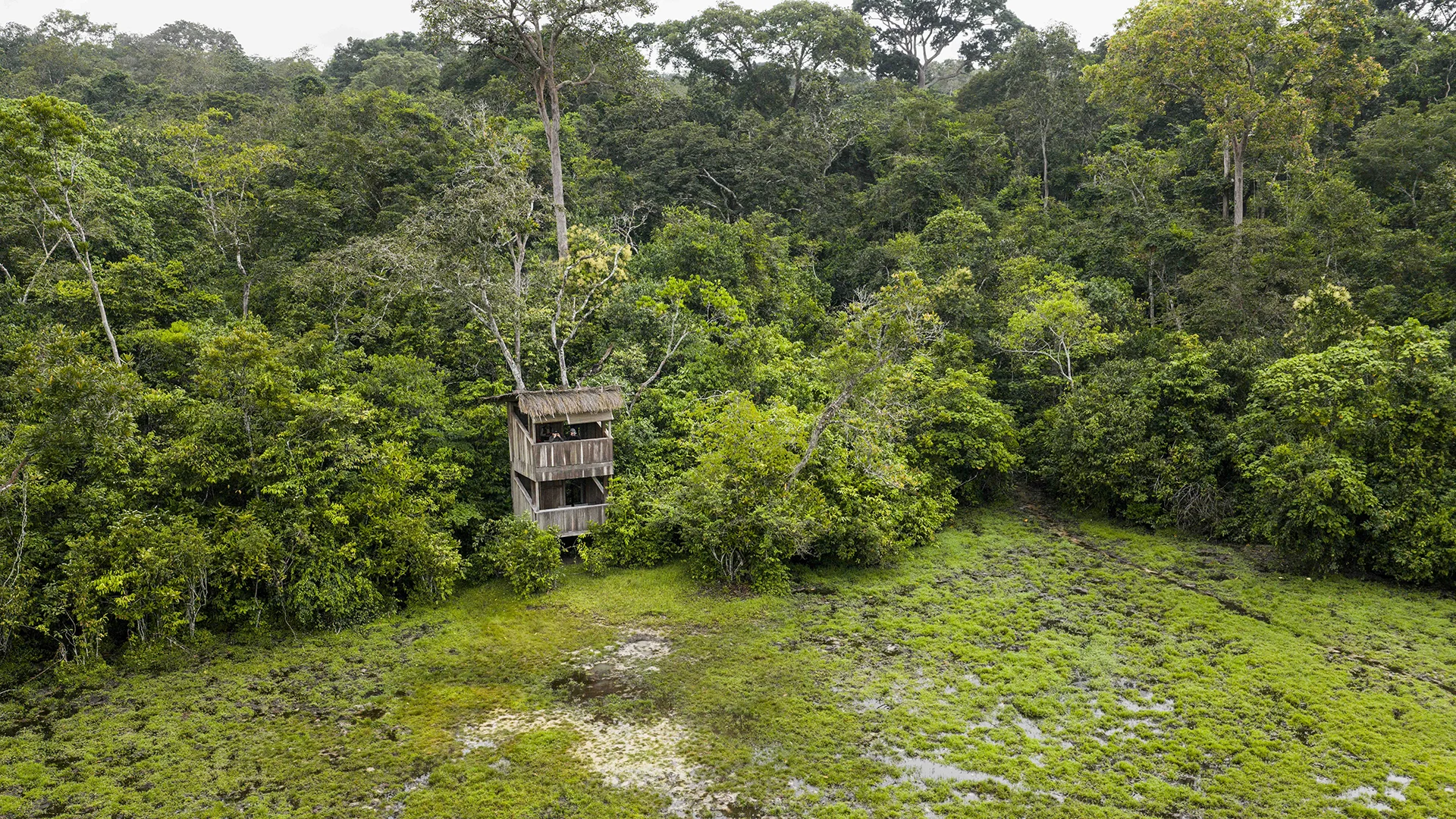
The bais, mineral-rich forest clearings where forest elephants, forest buffalo and bongo step out of the trees and can be watched for hours at a time.
What safety looks like on the ground
Brazzaville on foot
Brazzaville is calm, low-rise and walkable, and travellers routinely explore the riverside Corniche without incident. The realistic risks are pickpocketing and opportunistic bag-snatching, as in most capital cities.
The road north
The N2 to the north-west is now a tarred national highway in good condition, with a lunch stop at Oyo roughly halfway. The transfer takes nine to ten hours over about 800 km. On the last stretch near the park boundary, forest elephants occasionally appear at the roadside.
Rangers inside the park
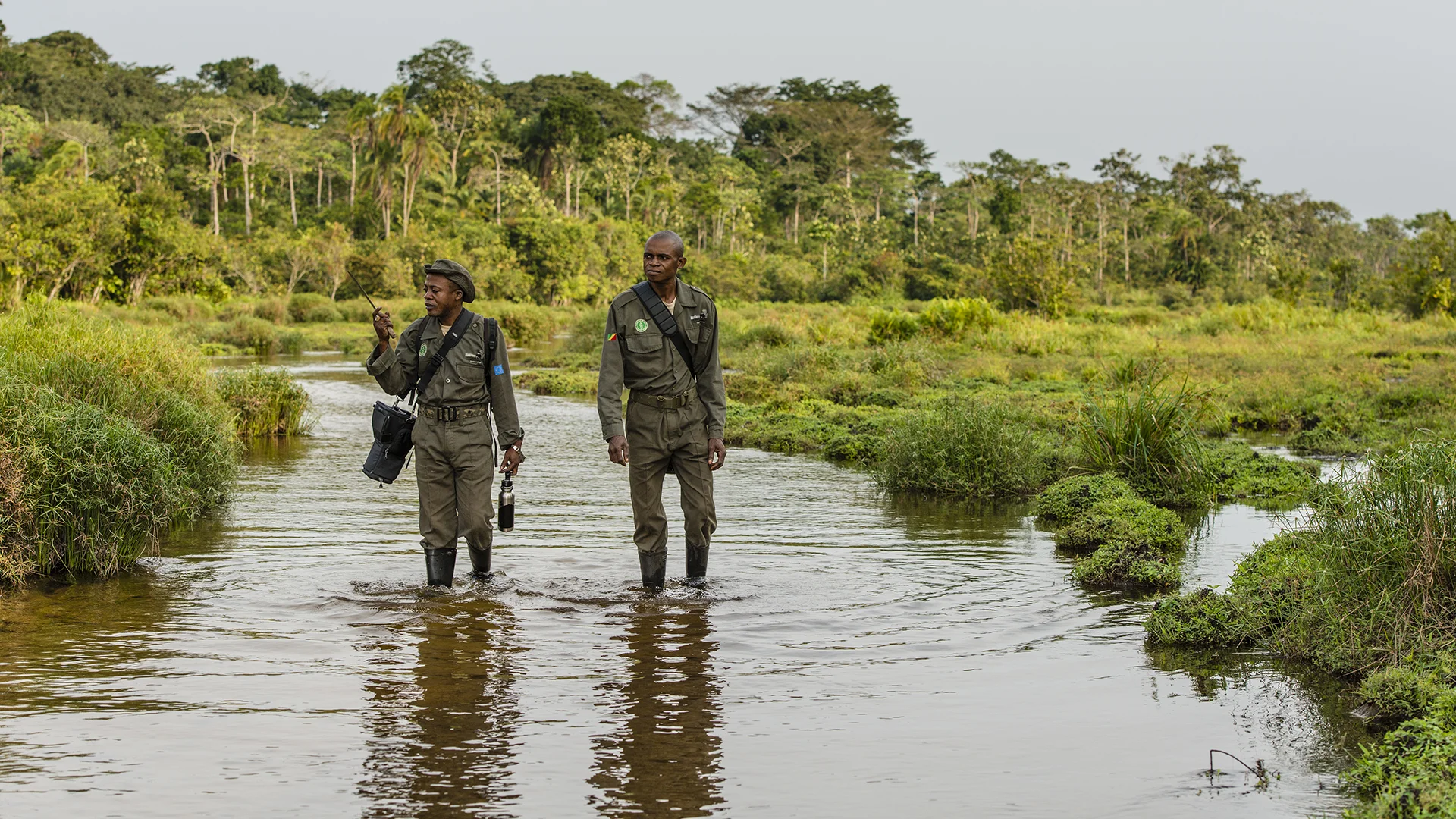
African Parks has managed Odzala-Kokoua since 2010 under a long-term agreement with the government. A permanent ranger force patrols it, an amnesty programme has brought former poachers into that team, and 97% of permanent staff are Congolese nationals, most from villages on the boundary.
What travel advisories actually say
Two countries, two ratings
The US State Department places the Republic of the Congo at Level 2, exercise increased caution, the same category as a long list of ordinary holiday destinations. The DRC sits at Level 4, do not travel. The UK Foreign Office draws a similar distinction. Reading the two side by side is the quickest way to see that these are not comparable propositions, and that the warnings driving most travellers' hesitation belong to the neighbouring country.
Where regional warnings apply
The Republic of the Congo does carry two regional carve-outs. One covers the area within 50 km of the Central African Republic border in the far north-east, and the other relates historically to the Pool region south of Brazzaville, where a ceasefire has held since 2017. Neither touches the route to Odzala-Kokoua, which runs north-west from Brazzaville through Cuvette-Ouest. In January 2025 the UK relaxed part of its Pool region advice.
Reaching the park from Brazzaville
By road along the N2
The overland transfer has a dated reputation for mud and multi-day misery, and older guidance still repeats it. The road was rebuilt. Africa Geographic CEO Simon Espley described the drive after travelling it himself: "The trip lasted nine hours, broken only by a stop in an impressive town called Oyo. The excellent tar road is a few years old, so the proffered advice I had received was somewhat outdated."
By scheduled light aircraft
A weekly scheduled flight on a twelve-seat aircraft connects Brazzaville with the Mboko airstrip inside the park in about an hour and three quarters, removing the road transfer entirely. Baggage is restricted to 15 kg per person including hand luggage, so soft bags are essential. Our safari experts will advise which option suits your dates, since the flight does not operate daily and seats on a twelve-seat aircraft are finite in peak months.
No contact with the DRC
Travellers reach Odzala-Kokoua without entering or transiting the Democratic Republic of the Congo at any stage. International flights arrive at Maya-Maya airport in Brazzaville, served by Air France, Ethiopian Airlines, Royal Air Maroc and RwandAir, with the usual routings through Paris, Addis Ababa, Casablanca or Kigali. The onward journey stays inside the Republic of the Congo throughout, and no border crossing of any kind is involved.
Wish you were here?
Practical planning and precautions
Choosing your months
Rain is a constant in equatorial forest, but there are two main wet seasons, March to May and October to December. The lower rainfall months of June to September and January to February are the strongest for wildlife viewing, with firmer trails and more predictable bai activity. Forest conditions remain humid year-round, and a wet afternoon is normal rather than exceptional in any month of the year.
Entry and health requirements
A visa must be obtained in advance; there is no reliable e-visa or visa on arrival for UK, EU or US passport holders, and a letter of invitation is required at immigration. A yellow fever certificate is mandatory, and a polio certificate is also requested. Malaria prophylaxis is essential. Comprehensive insurance including medical evacuation is a genuine requirement for a remote forest destination, not a formality.
Sensible habits on the ground
Carry a passport copy and your yellow fever certificate separately from the originals.
Arrange airport transfers and internal travel in advance rather than on arrival.
Travel between towns in daylight hours, which is standard practice across the region.
Dress conservatively in Brazzaville and keep valuables, cameras and phones out of sight.
Avoid photographing government buildings, airports, bridges and security personnel.
Carry small denominations of CFA francs, as card acceptance is limited outside the capital.
Steer clear of political gatherings and demonstrations, which are infrequent but best avoided.
Confirm that your evacuation cover extends to remote forest areas before you leave home.
Frequently asked questions
No. They are two separate sovereign states that share a name and a river border. Congo-Brazzaville, formally the Republic of the Congo, is the smaller of the two, with a population of around 6.4 million and a capital at Brazzaville. The Democratic Republic of the Congo, or Congo-Kinshasa, has around 113 million people and was formerly known as Zaire. Odzala-Kokoua National Park lies in the Republic of the Congo.
It is considered a low-risk destination by regional standards. The US State Department places it at Level 2, exercise increased caution, largely on the basis of urban petty crime rather than conflict or terrorism. Brazzaville is walkable and calm, and the north-west of the country, where Odzala-Kokoua sits, carries no destination-specific warning. Standard precautions against opportunistic theft are sensible, as anywhere.
No. The entire journey takes place inside the Republic of the Congo. International flights land at Maya-Maya airport in Brazzaville, and the park is reached either by a nine to ten hour road transfer along the tarred N2 highway or by a scheduled light aircraft flight to the Mboko airstrip. At no stage do travellers cross the Congo River or pass through Congolese territory administered from Kinshasa.
The N2 is a tarred national highway in good condition, with a few potholes and a lunch stop at Oyo. The drive covers roughly 800 km and takes nine to ten hours. Older accounts describing a two-day journey on laterite tracks and a river pontoon predate the road's rebuilding, so they should be treated with caution. Our safari experts can confirm current conditions and timings when planning your travel dates.
There is no current outbreak in the Republic of the Congo. The Cuvette-Ouest region experienced outbreaks in 2003 and 2005, which devastated local gorilla populations, but the last recorded regional human case was in 2005. Outbreaks reported in recent years have occurred in the Democratic Republic of the Congo, a different country. Travellers should still follow standard hygiene precautions and park health protocols.
A yellow fever vaccination certificate is mandatory for entry, and a polio certificate is also requested at the border. A visa must be arranged in advance through the Congolese embassy, along with a letter of invitation presented at immigration. There is no dependable visa on arrival for UK, EU or US passport holders. Malaria prophylaxis and comprehensive medical evacuation insurance are both strongly advised.
The lower rainfall months of June to September and January to February offer the most reliable conditions for wildlife viewing, with firmer forest trails and steadier activity at the bais. The two main wet seasons run from March to May and October to December. Rain falls in every month in equatorial forest, so waterproofs and quick-drying clothing belong in the bag regardless of which month you travel in.
African Parks has managed Odzala-Kokoua since 2010 under a long-term agreement with the Congolese government, reaffirmed in 2020. Their presence means a permanent, professionally equipped ranger force, established anti-poaching operations and formal visitor protocols. An amnesty programme has brought former poachers into ranger employment, and 97% of permanent staff are Congolese nationals, most from villages on the park boundary.
Start planning your dream safari
Our travel experts will craft a no-obligation itinerary just for you. We have crafted over 5,000 safaris since 1991. Your personal details are protected; we only use this information to contact you.
Why book your safari with us?

Deep Experience & Knowledge
Handcrafted experiential safaris since 1991.
Travel in Africa is about knowing when and where to go, and with whom. A few weeks too early/late or a few kilometres off course, and you could miss the greatest show on Earth. And wouldn’t that be a pity?

Trust & Safety

Make A Difference
We donate a portion of the revenue from every safari sold to carefully selected conservation projects that make a significant difference at ground level.
YOUR safari choice does make a difference - thank you!