

Tailor-made safaris. Since 1991



Art safaris at a glance
Where | Timbavati Private Nature Reserve, Greater Kruger (South Africa) and the Okavango Delta (Botswana). Earlier safaris took place in Madikwe Game Reserve |
Group size & duration | Maximum five guests; typically six nights and seven days, with two game drives daily |
Who it suits | Complete beginners through to practising artists. Non-sketching friends and partners are welcome to join the drives |
Guide | Led by professional wildlife artist Alison Nicholls since 2011 |
Where wildlife watching becomes wildlife seeing
Our art safaris offer one of the most joyful and inspiring experiences in the bushveld. Led by a professional artist for over a decade, these journeys are so popular that returning guests often book most departures almost a year in advance.
Blending creativity with wilderness, our art sessions unfold during game drives and continue back at the lodge. With personal guidance throughout, you’ll refine your technique, deepen your observation skills, and discover new ways to connect with the wild, enriching not only this safari, but every one that follows.
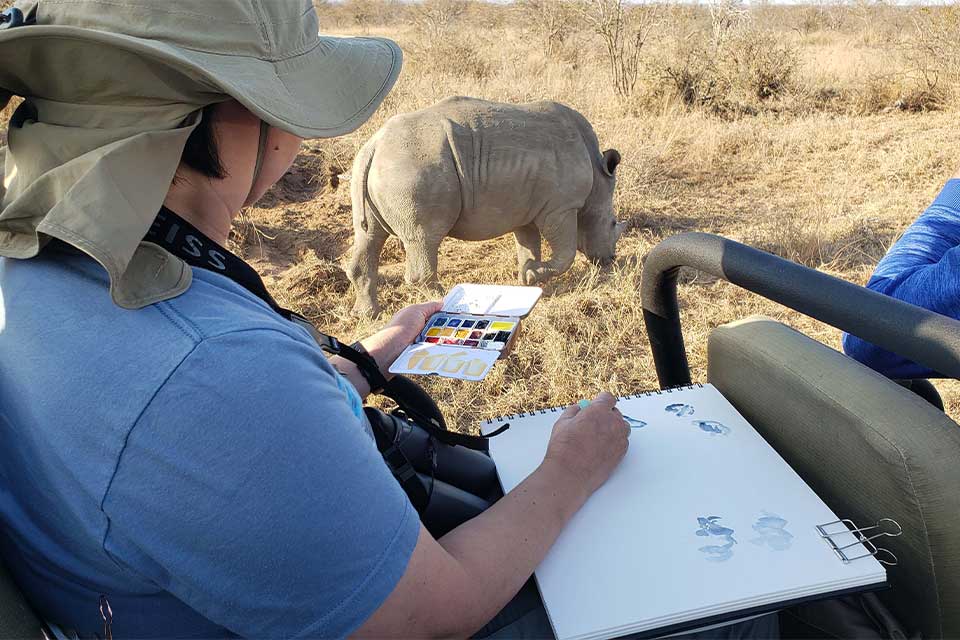
Most safaris are governed by the camera shutter. You arrive at a sighting, you photograph it, you move on. An art safari asks something different of you: to stay, to look properly, and to translate what you see onto paper while the animal is still moving.
That shift changes the whole rhythm of a day in the bush. Guests describe sitting quietly with a herd rather than rushing between sightings, and learning to read how an animal is built and why it behaves as it does. As one early guest put it, art and science both depend on intense seeing.
Africa Geographic first trialled the concept in Madikwe Game Reserve more than a decade ago, and the format has changed little because it works. Small groups. Unhurried private drives. A professional wildlife artist beside you in the vehicle. Midday workshops while the bush sleeps.
You do not need to arrive as an artist. Every departure carries a mix of experience levels, and tuition is calibrated to the individual. What returning guests consistently report is not just better sketchbooks, but a permanently altered way of watching wildlife, one that follows them onto every safari afterwards.
Five reasons we love art safaris in Africa
You learn to see, not just to look. Sketching a moving animal forces you to read anatomy, gait and behaviour in real time, and that skill stays with you long after the sketchbook is full.
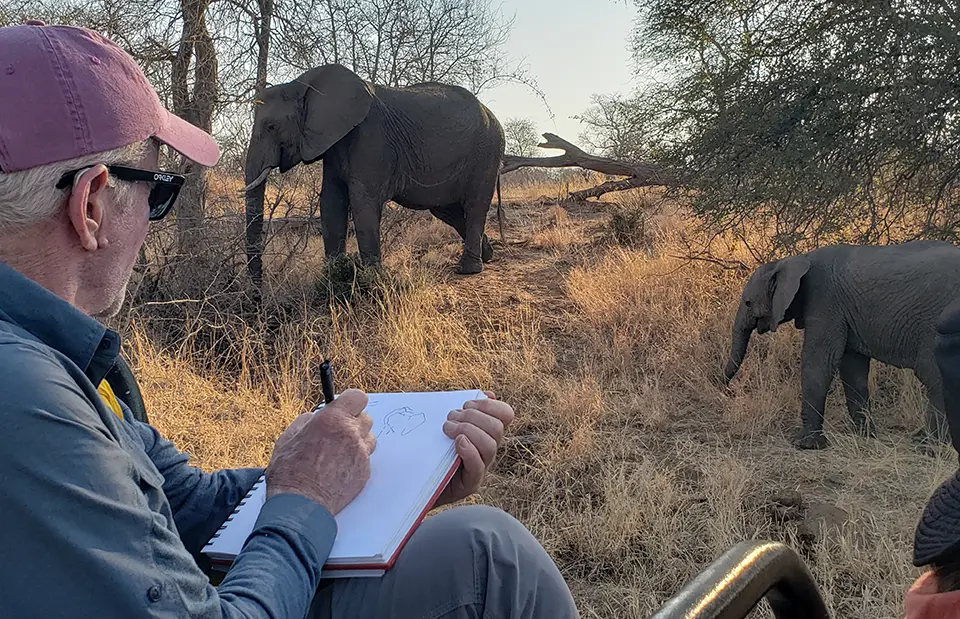
The teaching happens where the wildlife is. Your guide sits in the middle row of the vehicle throughout every drive, offering tips, demonstrations and anatomy references as you work.
Five guests, one artist. The deliberately small group size means genuinely personal attention, and a private vehicle that can wait at a sighting for as long as the drawing needs.
Beginners are not an afterthought. Every departure carries mixed abilities by design, and the first lesson is simply how to see an animal as a series of simple shapes.
Your safari funds conservation. Africa Geographic donates a portion of revenue from every safari sold to carefully selected projects working on the ground across the continent.
About the art safari experience
Days follow a generous, unhurried shape. Two drives head out daily, in the early morning and again in the afternoon and evening, each lasting roughly two and a half to three hours with a stop midway for refreshments.
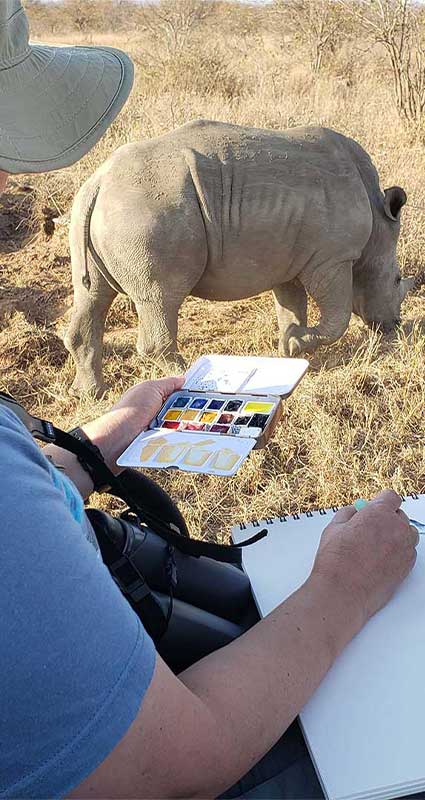
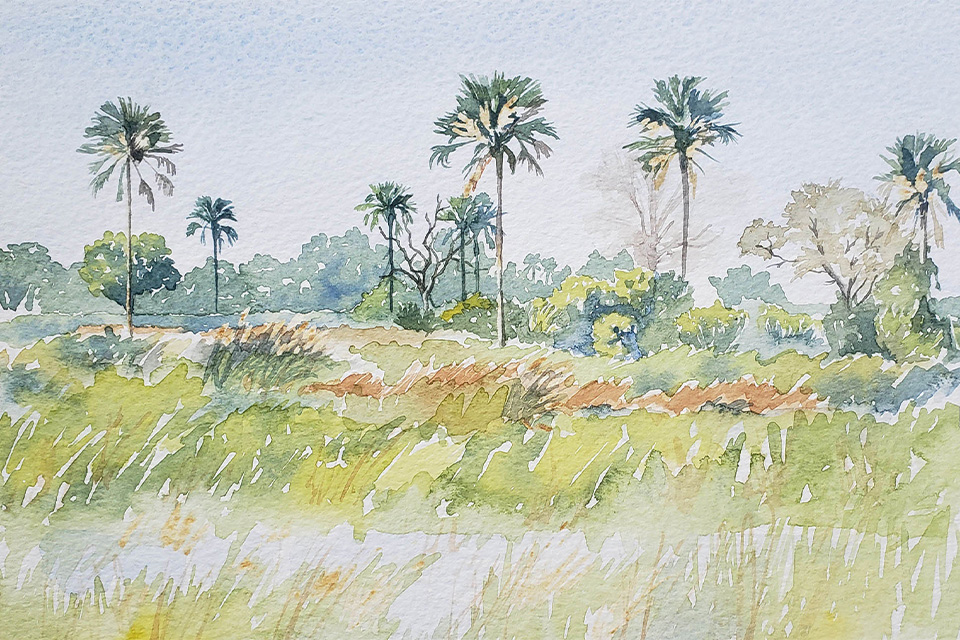
Before the first drive, Alison gives a drawing demonstration explaining how she begins a wildlife sketch. On the reserve, she sits in the middle row of seats so she can speak easily with everyone, sharing instruction and showing her own sketches as anatomy references. Some days the vehicle stops so the group can paint a watercolour landscape in the field.
After brunch back at the lodge, a two-hour watercolour workshop covers washes, placing animals within landscapes, and working sketches up into finished paintings. Timing is agreed at brunch, leaving space to rest before the afternoon drive, which ends with sundowners, a short night drive and dinner around the fire.
The ethics behind our art safaris
Sketching is, by its nature, a low-impact way to be in the bush. It rewards patience over proximity: a group content to sit with a resting lion pride places far less pressure on guides to manoeuvre for the perfect angle than a vehicle of long lenses.
Africa Geographic donates a portion of revenue from every safari sold to carefully selected conservation projects working at ground level, and guests on recent art safaris have seen first-hand how those donations are used.
Alison Nicholls's own practice reflects the same commitment. She is a Signature Member of Artists For Conservation and sits on the International Advisory Council of African People & Wildlife. Zimbabwe-based artist Lin Barrie, writing for Africa Geographic, frames the question that art in wild places keeps asking: how do we use the world around us ethically, and what legacy do we leave?
Why book with us?
Tailor-made experiential safaris - with love
"Travel in Africa is about knowing what, when and where to go - a few weeks too early/late or a few kilometres off course, and you could miss the Greatest Show on Earth. And wouldn’t that be a pity?
Our crew of passionate safari experts have lived and worked in Africa for most of their lives. Trust us to find you the rarest animals, the most spectacular wildlife events, the remotest landscapes and deeply meaningful cultural encounters!"
Simon Espley - CEO, Africa Geographic
All you need to know about art safaris
What materials do I need for an art safari?
"Having learned some harsh, sandy, dusty lessons about field sketching materials, I recommend pens or pencils for sketching, with some watercolour for use at camp. Sounds simple, right?" - Alison Nicholls, our art safari guide.
Here is Alison's essentials list:
Pencils: 2H, HB, 2B – plus sharpener and pencil case.
Pads of paper with hard covers (ring-bound), and at least 50 sheets in each, 11 x 14″ or 35 x 28cms.
Optional extras:
Watercolour field box set containing a dozen solid half-pan colours.
Small water container with a screw-top lid.
Three types of brushes: 3-round, 7-round, and 14-round.
About Alison Nicholls - our art safari guide
Alison is a Signature Member of Artists For Conservation and the Society of Animal Artists, a member of The Explorers Club, and a member of African People & Wildlife’s International Advisory Council. She has been leading art safaris for Africa Geographic since 2011, teaching guests to sketch and paint wildlife from life on safari.
Born in England, Alison lives in Port Chester, New York, with her husband, Nigel. She lived in Botswana and Zimbabwe for several years, so most of her art is inspired by the people, wildlife, and landscapes of Africa.
Whether working in watercolour on paper or in fluid acrylic on canvas, Alison's paintings are built around washes of colour which obscure and reveal the subject. She uses these washes to create effects of light, dust and heat, but often uses colour to convey a mood or a time of day, not to mimic the actual colours of nature. By eliminating unnecessary detail from my compositions and using a limited palette of colours, Alison creates a tranquil atmosphere and leaves room for the viewer’s own interpretation and imagination.
Where to find the best art safaris in Africa
Africa Geographic's art safaris take place in wild areas chosen for reliable, relaxed wildlife viewing and excellent guiding, because sketching time is the point.
Timbavati Private Nature Reserve, Greater Kruger, South Africa. A private reserve within the Greater Kruger with regular Big 5 sightings, plus zebra, giraffe and hippo. Cheetah, hyena and African wild dogs are frequent visitors. The 2026 departure is based at Kambaku Safari Lodge.
Okavango Delta, Botswana. Spectacular predator viewing, including lion, leopard, cheetah, hyena, and wild dog, alongside large elephant and buffalo herds, red lechwe, giraffe, zebra, hippo, crocodile, and tsessebe. Water, light and reflection make it a rewarding watercolour subject.
Madikwe Game Reserve, South Africa. Where the concept began, with early groups based at The Bush House, sketching from lawn chairs beside the waterhole.
Art safari accommodation types
The properties chosen for our art safaris tend to be small, owner-run lodges or authentic bush camps rather than large commercial operations. The reasoning is practical as well as aesthetic: small camps mean flexible mealtimes, quiet workshop space and hosts willing to build the day around the group's creative rhythm.
Safari lodges: Permanent lodges typically built from stone, wood, canvas and thatch, offering the comforts expected of a luxury lodge. Kambaku Safari Lodge in the Timbavati is the base for the 2026 South African trip.
Bush camps: Smaller and more exclusive, constructed from canvas, wood and local materials. Comfortable but deliberately pared back, they generally do not offer swimming pools, spas or other luxury amenities. Okavango Origins in the Okavango Delta is the base for the 2026 Botswana trip.
Trusted by thousands of ecstatic travellers
✔️ 5-Star Trustpilot Rating ✔️ Condé Nast Travel Specialist Award Winner
✔️ Accredited by SATSA ✔️ 5,000+ Exceptional Safaris Since 1991
Why choose Africa Geographic to plan your safari?

Alison Nicholls, artist (!) and Africa Geographic created and curated the trip of a lifetime: an art safari with 4 other artists ... Being with Alison Nicholls to focus our artistic abilities with observing and sketching and some painting, well, all I can say is the only way to travel is with artists...and Alison is the best!
The art safari was wonderful, and I have only good things to say about the thought that went into planning this one. Africa Geographic donates a portion of the revenue from each safari to selected conservation projects, and our group got to see firsthand how our donation was put to use ...
I have been travelling to Africa since 2002. I discovered Africa Geographic and the Art Safaris with Alison Nicholls in 2017. I have been using AG to plan my trips ever since. I have now attended 7 Art Safaris with Alison ... I always recommend AG to anyone interested in travelling to Africa.
Frequently asked questions
An art safari combines guided wildlife game drives with structured art instruction in the African bush. Participants learn wildlife sketching and watercolour techniques directly from the vehicle during drives, then continue in workshops at the lodge. Africa Geographic's art safaris have been led by professional wildlife artist Alison Nicholls since 2011.
You will learn to sketch wildlife quickly and confidently: capturing movement, using an animal's coat pattern to your advantage, sketching with negative shapes, and using colour to create atmosphere. You will also learn why several sketches of the same animal in different poses serve you better than one detailed drawing, and you will pick up a working knowledge of animal behaviour, tracks and vegetation along the way.
Current trips run in the Timbavati Private Nature Reserve within the Greater Kruger, South Africa, and in the Okavango Delta, Botswana. Earlier safaris were based in Madikwe Game Reserve and elsewhere in the Greater Kruger. We can also arrange private, custom art safaris for small groups.
Groups are capped at five guests so each person gets meaningful time with Alison. Non-sketching friends and partners are welcome in addition and are under no obligation to take part in the art sessions.
Yes. Non-sketching partners regularly join art safaris and simply enjoy the game drives and lodge experience with the group. Past non-participating spouses, including photographers, have rated the experience highly.
Definitely. Wild animals will not hold a pose, so you have to work quickly, which is itself the best possible training. You'll learn specific techniques for loosening up in both sketching and painting, with time to practise them on the drives and back at the lodge.
Yes. We usually sketch in pencil or pen to start, just because dry media are easier when we’re in the vehicle. But if we find some animals that might be stationary for a while, you will be shown how to do some simple gestural sketches in watercolour. Also, during our daytime workshops back at the lodge, there will be plenty of time to add watercolour to your sketches and learn new techniques.
Keep it minimal. Alison's essentials are pencils in 2H, HB and 2B with a sharpener and pencil case, plus ring-bound hard-cover pads with at least 50 sheets each, 11 x 14 inches or 35 x 28cm. Optional extras: a watercolour field box of a dozen solid half-pans, a small screw-top water container, and 3-round, 7-round and 14-round brushes. Dry media travel best; dust, heat and sand are unforgiving of anything more elaborate.
No. Art safaris are designed for everyone, and every trip carries a mix of skill levels. Whatever your experience, the environment is friendly and informal. Before the first drive, you will be shown how to see animals as a series of simple shapes, which makes sketching them considerably easier.
Southern Africa's dry season, roughly May to October, offers the classic conditions: sparse vegetation, wildlife concentrated around water, and comfortable weather for long hours outdoors. Later in the dry season generally means better sightings, though October and November can be very hot. The green season, from November to April, brings dramatic skies, newborn animals, and outstanding birdlife, with lower prices and fewer visitors.
Yes, as many as you like. Photographs are useful for touching up work after a drive. If this is your first safari in Africa, it may be worth scheduling the art safari toward the end of your trip, so you are already familiar with the wildlife and ready to focus on drawing.
Africa Geographic's 2026 Okavango Delta art safari starts from US$7,685 per person sharing for six nights and seven days. The Timbavati departure is priced from ZAR79,370 per person sharing for the same duration. This price includes accommodation, all meals, game drives, art lessons, guiding, airport transfers and 24/7 support.
Well ahead. Art safari departures are small, and most fill almost a year in advance, largely with returning guests. Africa Geographic advises 12 to 18 months of planning for peak-season travel, and six to nine months outside peak season, when rates and availability are generally better.
Click here to schedule a no-obligation call with one of our Safari Experts or fill in our 2-minute form with your questions. Our team of experts are here to help! Whether you’re curious about the best time to travel, want to hear first-hand about an experience or need help planning your safari.
Explore more African safari experiences
Start planning your dream safari
Our travel experts will craft a no-obligation itinerary just for you. We have crafted over 5,000 safaris since 1991. Your personal details are protected; we only use this information to contact you.
Why book your safari with us?

Deep Experience & Knowledge
Handcrafted experiential safaris since 1991.
Travel in Africa is about knowing when and where to go, and with whom. A few weeks too early/late or a few kilometres off course, and you could miss the greatest show on Earth. And wouldn’t that be a pity?

Trust & Safety

Make A Difference
We donate a portion of the revenue from every safari sold to carefully selected conservation projects that make a significant difference at ground level.
YOUR safari choice does make a difference - thank you!