

Tailor-made safaris. Since 1991

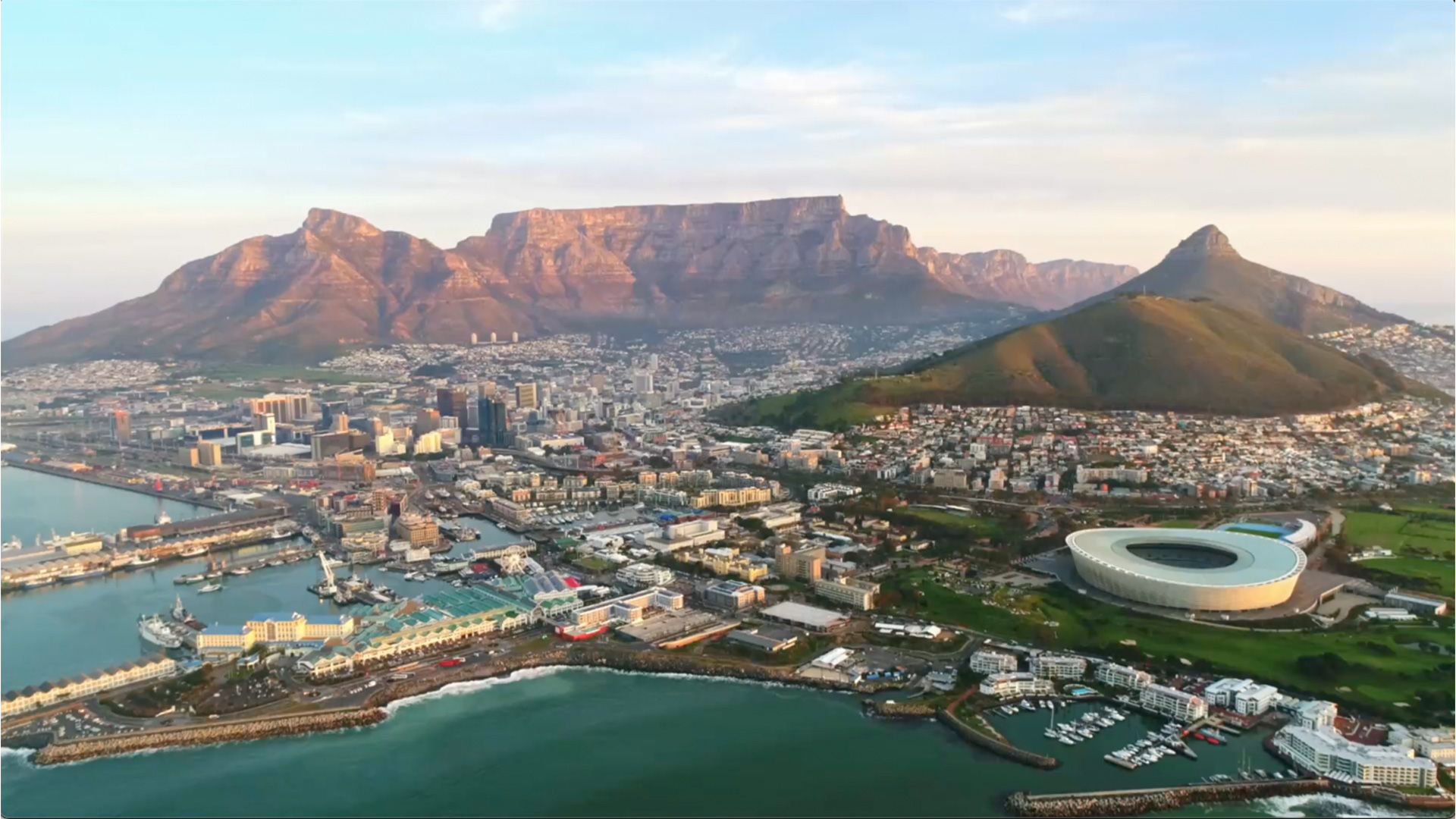
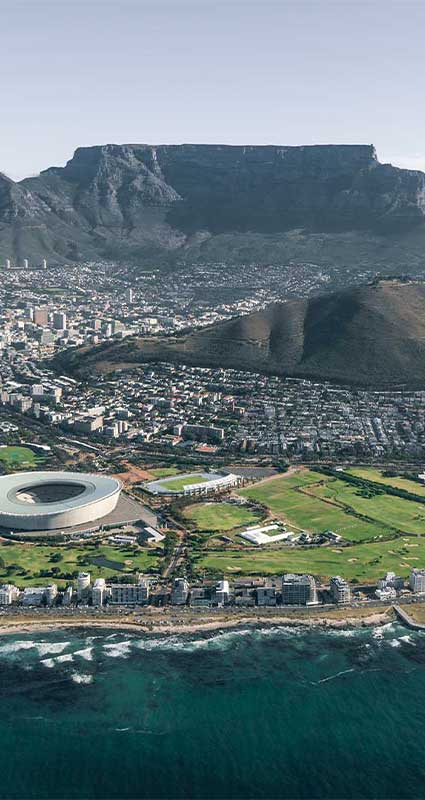


Cape Town: where two oceans meet a mountain
Cape Town at a glance:
Location: South-western tip of South Africa, Western Cape province | Distance from Johannesburg: ~2 hours by air; ~14 hours by road |
Distance from Cape Town International Airport (CPT): ~20km from city centre | Whale watching season: June-December (peak August-October) |
Best time to visit: April-June, September-November | Minimum recommended stay: 5 nights |
Currency: South African Rand (ZAR) | Malaria risk: None |
Why visit Cape Town?
Few cities anywhere on earth compete with Cape Town for sheer, undeniable drama. Pressed between a flat-topped mountain and two oceans, it is a place that rewards every sense - the smell of fynbos after rain, the cold shock of the Atlantic at Clifton, the sight of the sun dropping behind Robben Island from a Camps Bay sundeck. Trekking to the summit of Table Mountain, watching a southern right whale breach in Walker Bay, or sitting down to a bowl of Cape Malay curry in the Bo-Kaap: guests consistently describe Cape Town as one of the most extraordinary places they have ever visited.
Cape Town is the legislative capital of South Africa and the oldest city in the country, founded by the Dutch East India Company in 1652 as a supply station for ships rounding the Cape. That history - layered, complex, and deeply human - is written into the city's architecture, its cuisine, its neighbourhoods and its people. The Cape Malay community of the Bo-Kaap, descended from enslaved people brought from across Asia and Africa by the VOC; the apartheid-era forced removals that reshaped District Six; the eleven official languages spoken across the Western Cape - Cape Town is a city where the past is never far from the surface.
Set within the Table Mountain National Park, a UNESCO World Heritage Site, the city is also one of the world's great natural destinations. The Cape Floristic Region - the smallest and richest of the planet's six floral kingdoms - surrounds it, packing more plant species per square kilometre than the Amazon rainforest. Beyond the mountain, the Cape Peninsula stretches 75 kilometres south to Cape Point, passing penguin colonies, fishing villages, mountain passes and the cold waters of two oceans. The Cape Winelands - Stellenbosch, Franschhoek, Paarl - lie within an hour's drive. Whale watching and Big Five game reserve day trips complete a portfolio of experiences that few single destinations can match.
5 Reasons We Love Cape Town
Scenic wonders: From Table Mountain, which looms over the Mother City, to the Cape Peninsula, a 75-kilometre finger of mountain and coastline stretching south to Cape Point and the quaint fishing village of Kalk Bay, to name a few.
Nature and wildlife: Waddle with African penguins at Boulders Beach, dive with seals off Hout Bay and track zebras, eland and more at Cape Point Nature Reserve.
Day trips, including whale watching in Hermanus, 90 minutes from Cape Town, and the Cape Winelands to explore historic estates and enjoy some of the world’s finest wines under ancient oak trees, an hour from the city.
People and history: Mingle with cosmopolitan Capetonians, visit fascinating museums and hitch a ferry to Robben Island to learn about Nelson Mandela's prison home for 18 years.
Vibrant, city life: Walk the safe streets of the city and the nearby V&A Waterfront for cosy coffee shops, lively bars and world-leading restaurants.
Our favourite Cape Town safari ideas
All you need to know about Cape Town
About Cape Town, Mother City
Cape Town occupies the south-western tip of the African continent, where the cold Benguela Current of the South Atlantic meets the warmer waters of the Indian Ocean. The city is flanked by Table Mountain to the east, the Atlantic Seaboard to the west, and False Bay - one of the best whale watching areas in the world - to the south.
The city's natural setting is extraordinary. Table Mountain National Park, a UNESCO World Heritage Site since 2004, runs almost the full length of the Cape Peninsula, protecting a mosaic of fynbos, coastal forest, marine environments and the open ocean. The Cape Floristic Region, home to over 9,600 plant species, approximately 70% of which are endemic, is one of the world's 36 biodiversity hotspots.
The city's human history is no less remarkable. Cape Town was founded in 1652 by Jan van Riebeeck of the Dutch East India Company as a supply station for ships on the spice trade route to Asia. It became a meeting point of cultures: European settlers, the indigenous Khoikhoi and San peoples, and enslaved people brought from across the Indian Ocean world. That layering of identity is still visible today in the city's architecture, cuisine, languages and neighbourhoods. District Six, once a vibrant mixed community forcibly cleared under apartheid, and the Bo-Kaap, home to the Cape Malay community for over three centuries, are both essential to understanding what Cape Town is.
Things to do in Cape Town
Table Mountain: Take the revolving cable car to the summit or hike one of the classic routes to the plateau above to ogle at extraordinary views across the city, the ocean and Robben Island.
The Cape Peninsula drive is a full-day outing from the city through Hout Bay, the dramatic Chapman's Peak, Cape Point and back along the False Bay coast to Simon's Town, the penguin colony at Boulders Beach and the quaint fishing village of Kalk Bay for the best fish and chips in the country.
Whale watching: Between June and December, southern right whales visit the bays and coves of Walker Bay, Hermanus, to calve and nurse. Just 90 minutes from Cape Town, this is the world's most accessible land-based whale watching destination.
The Cape Winelands: Expect historic estates with Cape Dutch architecture, some of the world’s finest wines, magnificent scenery and mouth-watering locally made chocolate, cheeses, charcuterie and olives under ancient oak trees.
Robben Island: A short boat ride from the V&A Waterfront lies South Africa's most notorious political prison, where Nelson Mandela spent 18 of his 27 years in prison. Tours are led by former political prisoners, giving the island a weight and intimacy that no museum can replicate.
A feast of other destinations, including the V&A Waterfront, Kirstenbosch National Botanical Gardens and the Bo-Kaap and District Six neighbourhoods.
Where to stay in Cape Town
Cape Town offers an exceptional range of accommodation, from some of Africa's most celebrated boutique hotels to intimate guesthouses, self-catering apartments and luxury winelands estates.
The City Bowl, De Waterkant and the V&A Waterfront are the most central options, with easy access to the main cultural attractions, restaurants and the Robben Island ferry. The Atlantic Seaboard — Sea Point, Bantry Bay, Clifton, Camps Bay offers the city's most glamorous beach hotels, with the Twelve Apostles range as a backdrop and some of the finest sundowner viewing in Africa. The Southern Suburbs (Constantia, Newlands, Bishopscourt) provide a quieter, forested base close to Kirstenbosch, Constantia's wine estates and the back routes up Table Mountain.
For travellers with food and wine as their primary motivation, staying in Franschhoek or Stellenbosch puts you at the heart of the winelands, where you can enjoy farmstays, intimate owner-run guesthouses, converted manor houses and world-class boutique hotels.
Trusted by thousands of ecstatic travellers
✔️ 5-Star Trustpilot Rating ✔️ Condé Nast Travel Specialist Award Winner
✔️ Accredited by SATSA ✔️ 5,000+ Exceptional Safaris Since 1991
Why choose Africa Geographic to plan your safari?

"Our internal flights to get to Cape town ran very smoothly and we were then picked up punctually and stayed at the Queen Victoria hotel in Cape Town for 3 nights. What a lovely place! We visited all the "to do" sites there including Table mountain, Boulders beach and Robben Island... All in all, a fabulous itinerary made to our liking. Thank you AG and I would highly recommend them.."

"We had a marvelous family trip during christmas holidays. AG tailor designed a perfect trip for us. The choice of lodges in the Kruger area was very good and well sequenced; we met very professional and smily staff everywhere. The accommodation in Cape Town was very comfortable and well located. The communication with AG staff was also very fluid and efficient. We highly recommend AG travel agency!"

"...Africa Geographic organized an awesome trip for us - safari, Cape Town and wine country. Too many highlights to fit them all in a review, but suffice to say that our family of 4 enjoyed every minute! Everything went very smoothly and without a hitch. The only thing left now is to decide when we will be back!"
Wish you were here?
Frequently asked questions
Cape Town combines luxury city travel, Big Five safaris, world-class wine regions, beaches, and marine wildlife into one malaria-free South African itinerary.
Cape Town is one of the world's most naturally dramatic cities, built between a UNESCO World Heritage mountain and two oceans, surrounded by one of the planet's six floral kingdoms, and within reach of outstanding whale watching, historic wine estates, a penguin colony and a Big Five game reserve. It is also South Africa's most historically layered city, with a complex human story that gives every visit genuine depth.
Cape Town is worth visiting year-round, as follows:
March to May: autumn, mild weather, uncrowded, and wine harvest season.
June to August: winter, cool and wet, uncrowded, best time to pair with a bushveld wildlife safari. July is the start of the whale watching season, which runs to October.
September to October: spring, warming weather, wild flowers and the last of the whale season.
November to February: summer, dry and warm. This is the peak tourism season, especially for locals, so expect it to be busy and expensive during December and January.
The African penguin colony at Boulders Beach near Simon's Town is one of the Cape's most visited wildlife experiences. Southern right whales are present along the Western Cape coast from June to December. Table Mountain National Park supports diverse fynbos wildlife, including caracal, baboon, Cape mountain zebra and over 2,200 plant species on the mountain itself.
Table Mountain offers routes to suit all fitness levels. The Platteklip Gorge route - the most popular - takes 2–3 hours and is a moderate, well-marked climb. Skeleton Gorge (approached from Kirstenbosch) is more demanding and more beautiful. The cable car is available for those who prefer not to hike. The mountain makes its own weather rapidly; always carry water, a warm layer and a waterproof jacket regardless of conditions at the base.
Cape Town International Airport is approximately 20 kilometres from the city centre - around 20–30 minutes by road. Car rental, Uber and the MyCiTi Bus Rapid Transit network all provide reliable transport in both directions.
CTIA receives direct international flights from London, Amsterdam, Frankfurt, Dubai, Doha and several African cities. Most travellers from North America and Australasia connect through Johannesburg (O.R. Tambo International).
You will need at least 5 nights to cover the main highlights: Table Mountain, the Cape Peninsula drive (including Cape Point and Boulders Beach), Robben Island, a Winelands day trip, and time in the city itself. Seven to ten nights allows for a more relaxed pace, a day trip to Hermanus for whale watching (in season), a deeper exploration of the Winelands, and time to discover the city's neighbourhoods and food scene at leisure.
Our Cape Town itineraries typically cost from US$400–500 per person per night, depending on accommodation level, time of year and activities included. This usually covers accommodation, meals, guided experiences, airport transfers and 24/7 support from our team. Costs increase for peak season (December–January and July–September for whale watching) and for pairings with higher-tariff private game reserves. Contact us for a tailored quote.
Yes, Cape Town is safe for tourists in the main visitor areas — the V&A Waterfront, City Bowl, Atlantic Seaboard, Southern Suburbs and the major tourist attractions — with standard urban precautions. Use trusted transport (Uber or hotel-arranged transfers) rather than unmarked taxis, keep valuables out of sight in vehicles, and avoid walking in unfamiliar areas at night. The city has well-developed tourist infrastructure and experienced local guides who add both safety and depth to the experience.
Yes, you can do a safari from Cape Town. The classic combination is Cape Town, followed by five to seven nights in a Kruger private game reserve such as Sabi Sand, Timbavati, or Thornybush, with a 2-hour connecting domestic flight.
For those with less time on their hands, there are small wildlife reserves reachable via a 3-4-hour road trip from Cape Town. These reserves are not as wild as Kruger, but they do offer a wonderful experience.
The Cape Peninsula drive (Cape Point, Boulders Beach, Kalk Bay) is the most popular full-day excursion and is best done with a private guide. The Winelands — Stellenbosch, Franschhoek and Paarl — make an outstanding day trip or short overnight. Hermanus for whale watching (in season) is approximately 90 minutes by road. West Coast National Park, north of the city, is spectacular during the spring wildflower season (August–October).
For first-time visitors, the City Bowl (Gardens, De Waterkant) or the V&A Waterfront area gives the best balance of access, security and atmosphere. Return visitors often prefer the Atlantic Seaboard - Camps Bay or Bantry Bay - for the beaches, sunsets and restaurant scene. The Southern Suburbs suit travellers who want peace, greenery and proximity to Kirstenbosch. For a primarily food-and-wine trip, staying in Franschhoek or Stellenbosch is strongly recommended.
Click here to schedule a no-obligation call with one of our Safari Experts or fill in our 2-minute form with your questions. Our team of experts are here to help! Whether you’re curious about the best time to travel, want to hear first-hand about an experience or need help planning your safari.
Explore more African destinations
Start planning your dream safari
Our travel experts will craft a no-obligation itinerary just for you. We have crafted over 5,000 safaris since 1991. Your personal details are protected; we only use this information to contact you.
Why book your safari with us?

Deep Experience & Knowledge
Handcrafted experiential safaris since 1991.
Travel in Africa is about knowing when and where to go, and with whom. A few weeks too early/late or a few kilometres off course, and you could miss the greatest show on Earth. And wouldn’t that be a pity?

Trust & Safety

Make A Difference
We donate a portion of the revenue from every safari sold to carefully selected conservation projects that make a significant difference at ground level.
YOUR safari choice does make a difference - thank you!