

Tailor-made safaris. Since 1991



Greater Addo: South Africa's malaria-free safari heartland
Greater Addo at a glance:
Location: Eastern Cape, South Africa, centred around the Sundays River Valley near Gqeberha | Access: Chief Dawid Stuurman International Airport, Gqeberha (PLZ), with daily flights from Johannesburg and Cape Town |
Wildlife: Big Five across all reserves; Big Seven in Addo Elephant National Park's marine section | Best time to visit: Year-round; June to September for drier conditions and clearer wildlife viewing |
Malaria risk: None. The entire Eastern Cape is malaria-free; no prophylaxis required | Nearest city: Gqeberha (formerly Port Elizabeth), with most reserves within 50 to 160 km |
Currency: South African Rand (ZAR) | Recommended minimum stay: 3 nights per reserve |
Why visit Greater Addo?
The Eastern Cape did not always look like this. A century ago, elephants had been hunted to the edge of local extinction, and the land that now sustains one of South Africa's most compelling Eastern Cape safari circuits was given over largely to farms and livestock. What followed is one of conservation's more quietly remarkable stories: a landscape steadily reclaimed, reserve by reserve, until the Greater Addo region emerged as the country's most accessible and genuinely diverse malaria-free safari destination.
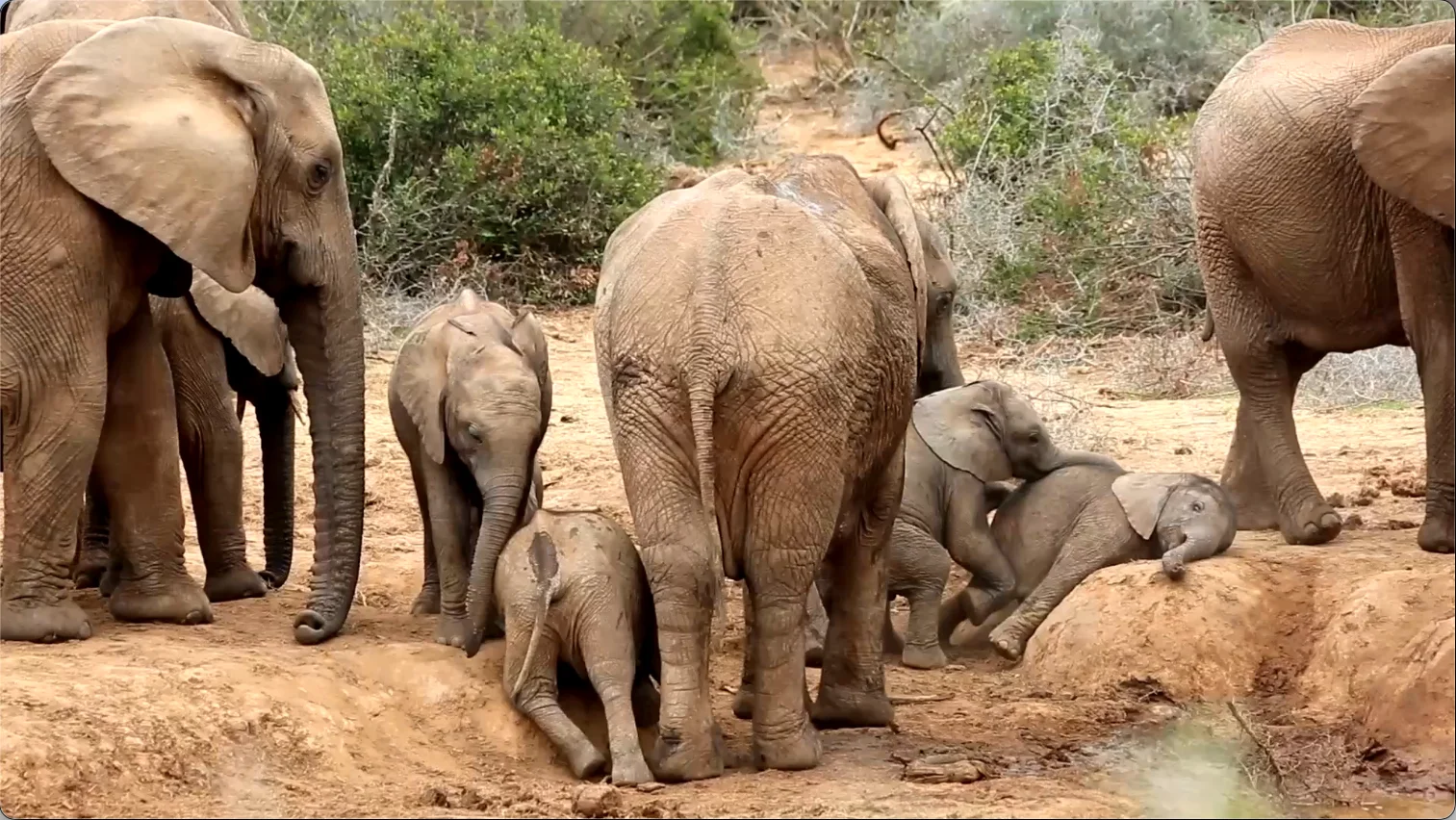
At its centre sits Addo Elephant National Park, a SANParks-managed reserve that grew from eleven surviving elephants in 1931 to a thriving national park of nearly 179,000 hectares today. Surrounding it, a network of private game and wildlife reserves, including Shamwari, Kwandwe, Kariega, Amakhala, Sibuya, Pumba and Lalibela. Each tells its own rewilding story, each occupies its own ecological niche, and each offers a distinctly different experience of the African bushVELD.
What binds them is the malaria-free Eastern Cape, which makes the entire region accessible to families, first-time safari travellers and anyone who prefers to avoid antimalarial medication. Add easy access from Gqeberha, natural combinations with the Garden Route and Cape Town, and a conservation depth that extends from active rhino monitoring to community partnerships, and Greater Addo stands as one of South Africa's most well-rounded safari destinations.
5 reasons we love Greater Addo
A conservation story still unfolding: From eleven elephants saved in 1931 to a thriving, multi-reserve ecosystem, Greater Addo proves what sustained protection across decades can achieve.
Malaria-free Big Five safaris: The entire Eastern Cape carries no malaria risk, with no prophylaxis needed, no age restrictions, and no barriers for families or first-time travellers anywhere in the region.
National park scale meets private reserve intimacy: Addo's vast landscapes and self-drive freedom pair naturally with the exclusivity of the surrounding private reserves.
Bush meets ocean: Greater Addo is the only place in South Africa where a Big Five safari connects directly with a marine protected area, and the only Big Seven reserve in South Africa.
Conservation you can be part of: Rhino monitoring drives, wildlife rehabilitation visits, walking safaris with armed rangers and community partnerships run across the region's reserves, going well beyond the conventional game drive.
Our favourite Greater Addo safari ideas
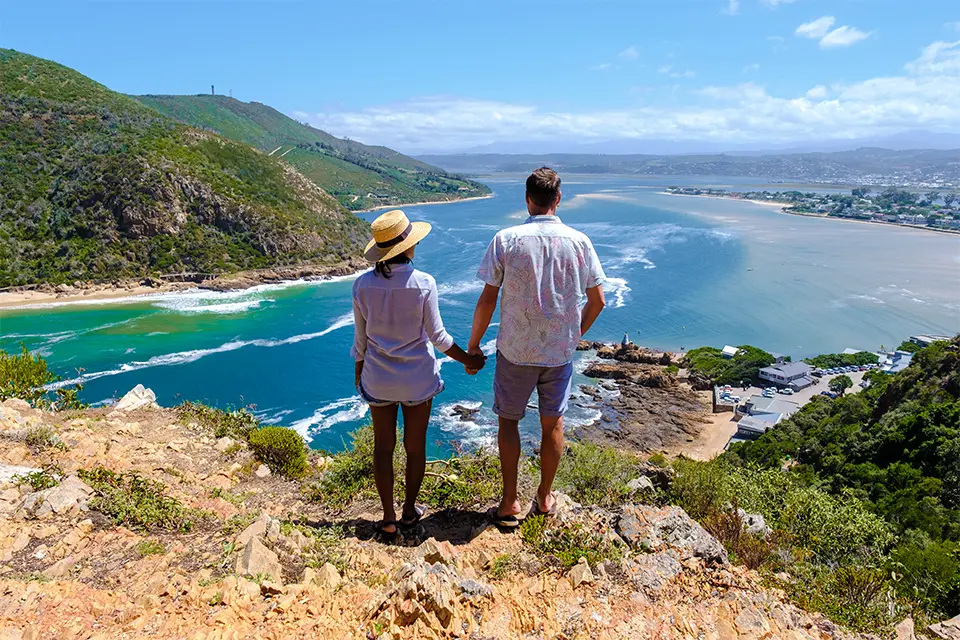
All you need to know about Greater Addo
About Greater Addo
Greater Addo is the collective name for a safari region in South Africa's Eastern Cape, anchored by Addo Elephant National Park and extending across a network of privately owned game and wildlife reserves. Most reserves lie within 50 to 160 kilometres of Gqeberha, formerly Port Elizabeth, making this Eastern Cape safari circuit among the most accessible in southern Africa.
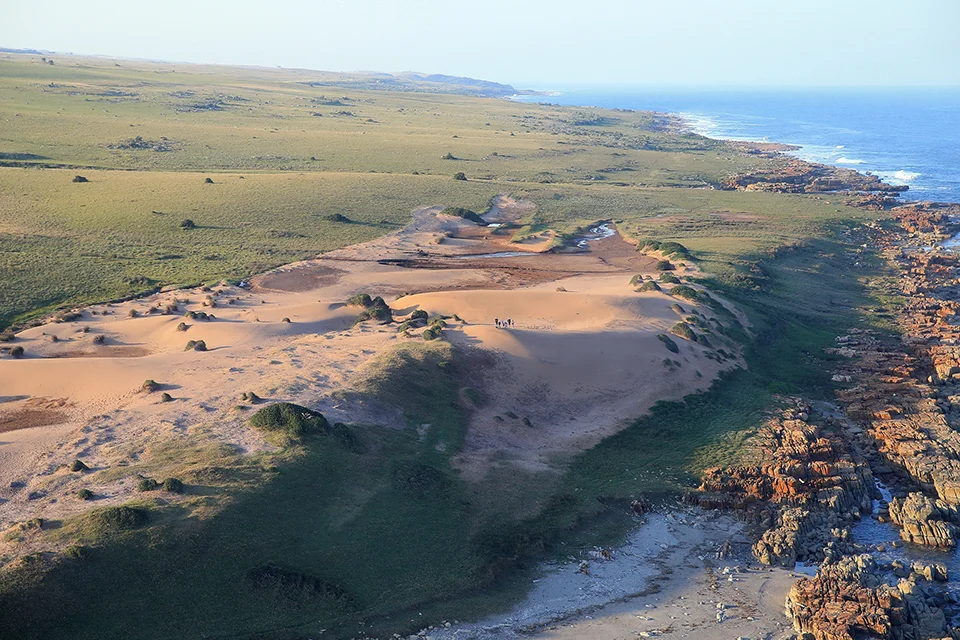
The landscape is extraordinary in its variety. Albany thicket and valley bushveld dominate the central reserves; the Great Fish River carves gorge country through Kwandwe's 30,000 hectares; the Kariega and Bushmans rivers define the coastal reserves near Kenton-on-Sea on the Sunshine Coast; and Addo's boundaries stretch from the Zuurberg Mountains to Algoa Bay and the Indian Ocean. Between them, the reserves collectively encompass seven of South Africa's nine vegetation types, from dense euphorbia thicket and spekboom-rich valley bush to open savannah grassland and coastal dune systems.
The region came into being not through a single act of conservation but through decades of individual decisions: farming families removing internal fences, private landowners reintroducing wildlife, and SANParks steadily expanding Addo's boundaries. The result is a destination with genuine ecological depth and a conservation story that visitors can engage with, not simply observe.
Things to do in Greater Addo
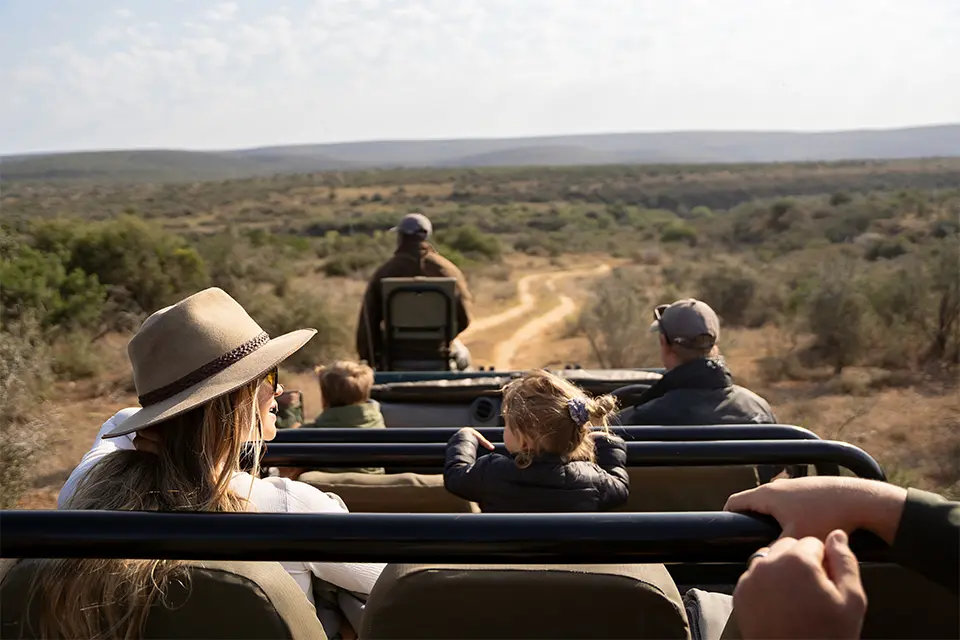
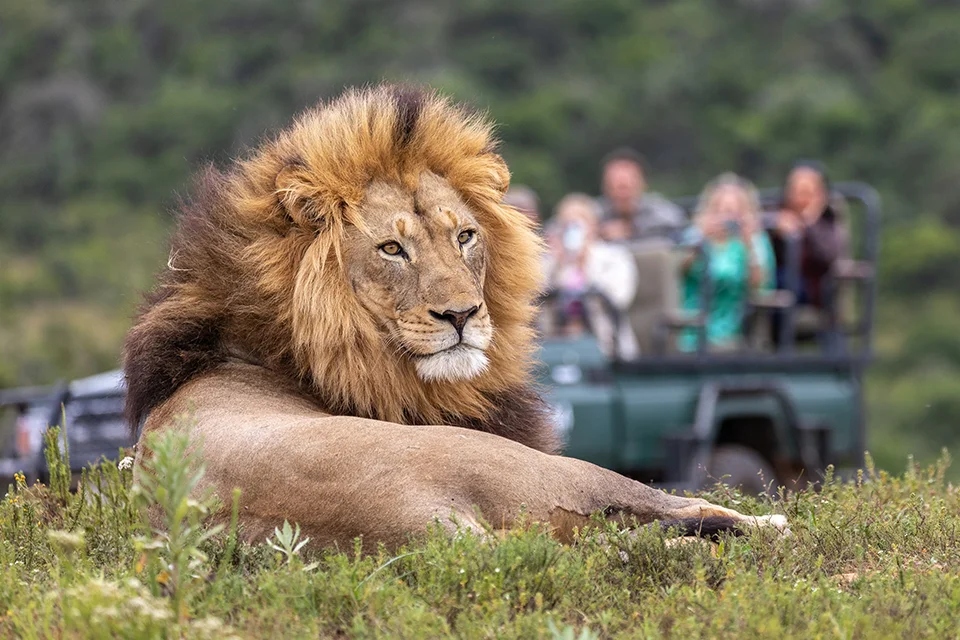
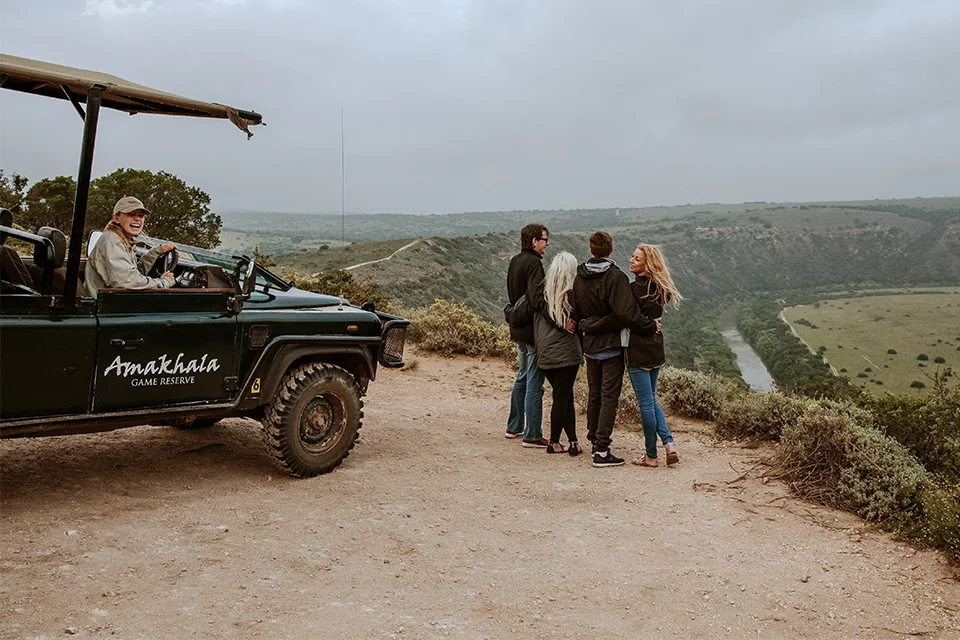
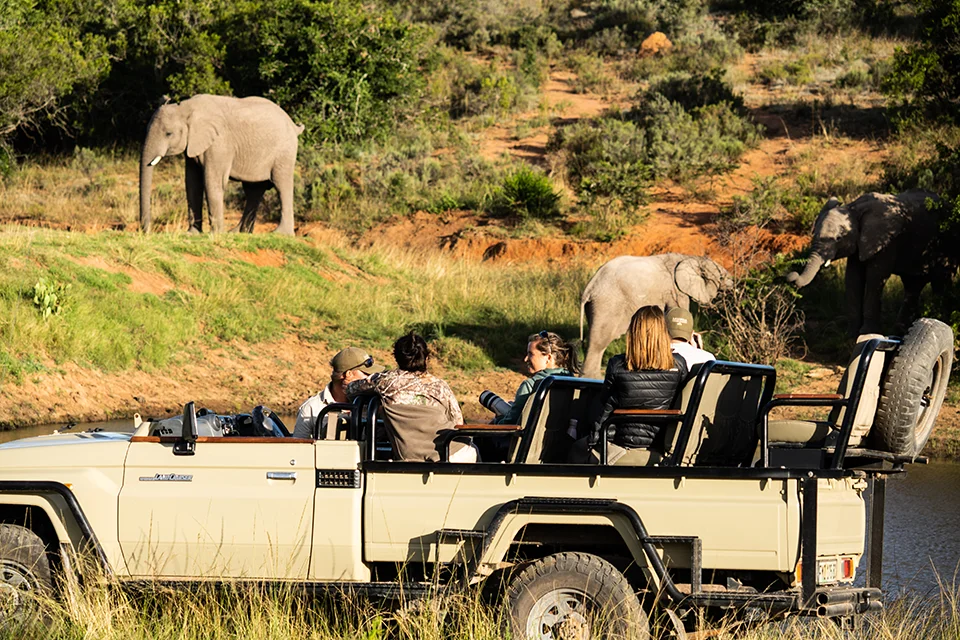
Join open-vehicle game drives at dawn and dusk: All reserves run twice-daily drives in open 4x4 vehicles with experienced rangers, tracking the Big Five and other species.
Walk the bushveld on a guided safari: Armed rangers lead walking safaris across multiple reserves, from Big Five encounters to focused bird-watching through valley thicket and riverine forest.
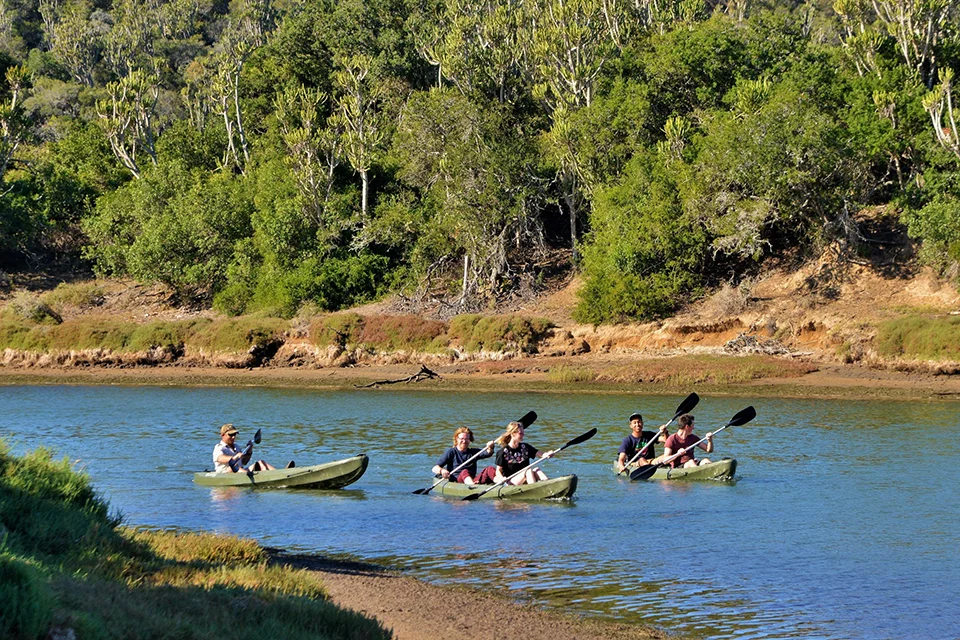
Explore Greater Addo's waterways by boat and canoe: The Kariega and Bushman's rivers and Kariega Estuary offer cruises, canoeing and sundowner trips past fish eagles, hippos, otters and riverine birdlife that no vehicle can reach.
Take part in hands-on conservation work: Kwandwe's rhino monitoring drives use telemetry and drone technology; Shamwari's Wildlife Rehabilitation Centre cares for injured animals; community visits at Kwandwe and Pumba connect guests with each reserve's off-road conservation impact.
Hike and self-drive through Addo's diverse sections: Addo offers a signed self-drive network, the 36 km Alexandria Hiking Trail through coastal dune fields, mountain trails in the Zuurberg and the 45 km Bedrogfontein 4x4 route through Anglo-Boer War terrain and rock art sites.
Extend the experience to the ocean: Addo's marine section in Algoa Bay opens the door to whale and dolphin watching, great white shark excursions and visits to St Croix Island, home to one of the largest breeding colonies of African penguins in the world.
What wildlife can I see in Greater Addo?
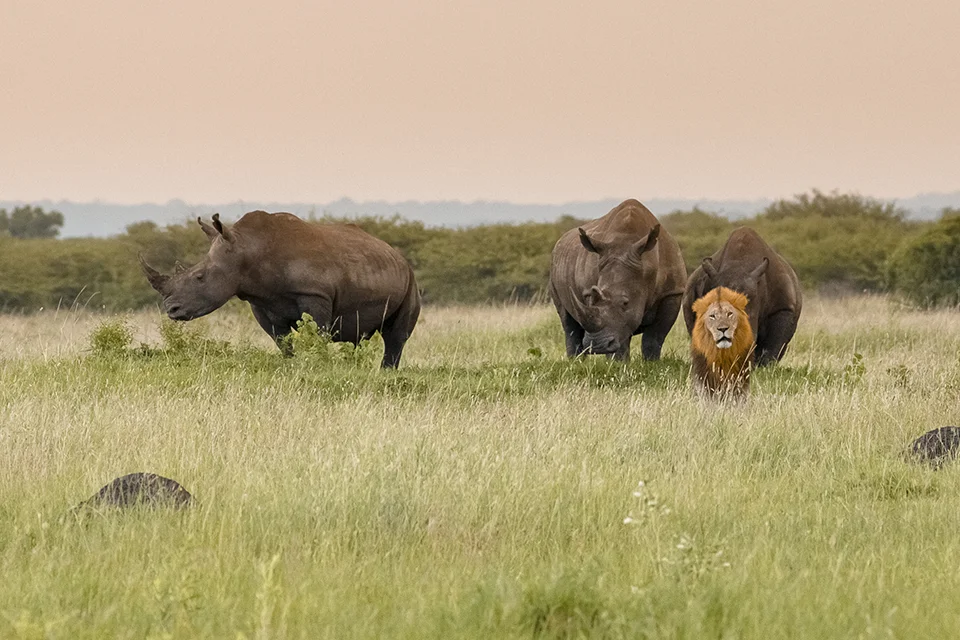
The Big Five: Lion, elephant, buffalo, leopard and rhino are confirmed across each of the region's eight reserves, one of the few safari destinations in South Africa where every property in a circuit carries the full complement.
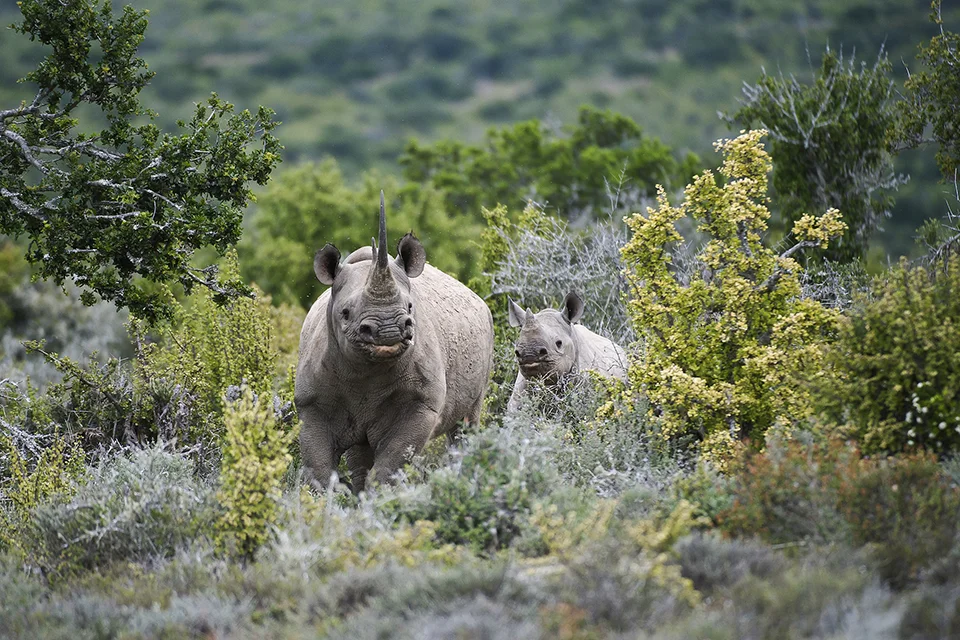
Both black and white rhino: White rhino are reliably encountered across the region's open grasslands; black rhino are present across multiple reserves, with Kwandwe among the most consistent locations in South Africa for sightings of this critically endangered species.
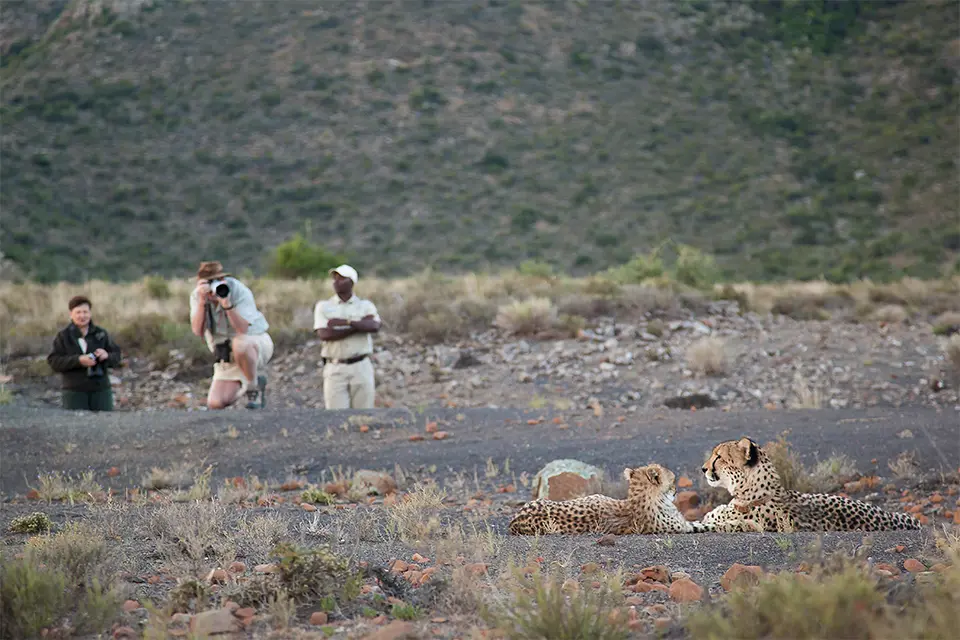
Cheetah and a depth of predators: Cheetah roam multiple reserves, with Lalibela playing a significant role in their conservation. Brown hyena, spotted hyena, caracal, serval and African wildcat add further predator diversity well beyond the standard safari checklist.
Marine wildlife unique to Addo: Southern right whales move seasonally through Algoa Bay in Addo's marine section, while great white sharks patrol its offshore waters, together extending Addo's Big Five into the Big Seven, found nowhere else in South Africa.
The endemic Addo flightless dung beetle: Found only in the Eastern Cape and unique to Addo Elephant National Park, this industrious beetle has formal right of way on Addo's roads, a small and telling symbol of the park's commitment to every species within its boundaries.
Up to 450 species, including Knysna turaco, African finfoot, crowned eagle, narina trogon, secretarybird, blue crane, Knysna woodpecker, Southern black korhaan, Denham’s bustard and Cape gannet.
Where to stay in Greater Addo
The Greater Addo region offers an impressive range of safari accommodation, from exclusive five-star lodges and luxury tented camps to intimate, owner-managed bush retreats and rustic wilderness camps. Couples and honeymooners can enjoy secluded suites with private plunge pools, sweeping wilderness views and personalised service. Families are well catered for with spacious lodges, dedicated children's programmes and exclusive-use villas with private guides and vehicles. Adventurous travellers can choose remote walking safari camps, while riverside retreats offer boating, canoeing and birdwatching. Many lodges overlook productive waterholes, offering exceptional wildlife viewing between game drives, while others prioritise privacy, tranquillity and understated luxury.
The range of options across the region is vast, and we showcase many of them on each regional page linked below.
Explore the Greater Addo reserves
Addo Elephant National Park
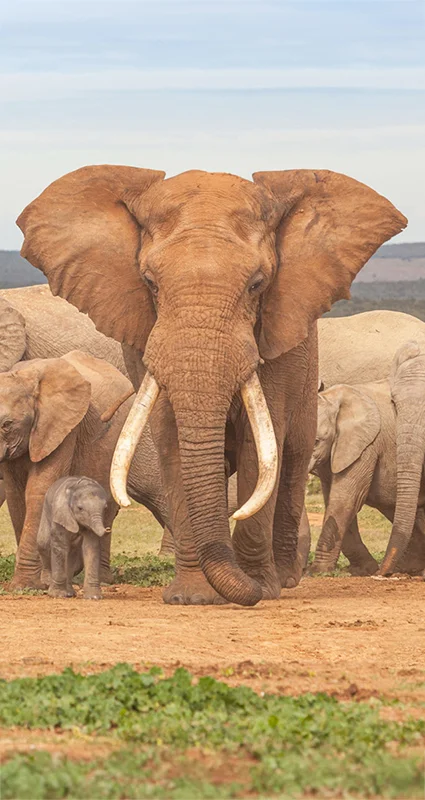
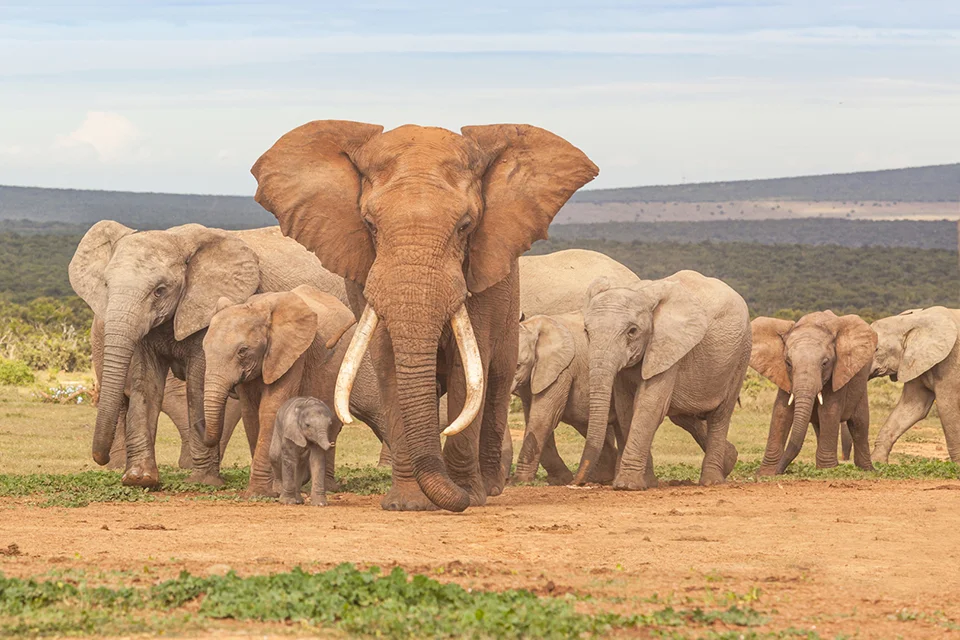
Proclaimed in 1931 to protect just eleven remaining elephants in the Eastern Cape, Addo Elephant National Park has grown into one of Africa's great conservation achievements. More than 600 elephants now move through its nearly 179,000 hectares alongside the full Big Five and five of South Africa's nine terrestrial biomes, including Albany thicket, fynbos, forest, Nama Karoo and the Indian Ocean Coastal Belt.
What sets Addo apart from every other reserve in the region is its marine dimension. The park's boundaries extend into Algoa Bay, encompassing St Croix Island and offshore waters where southern right whales move seasonally, and great white sharks are encountered year-round. This makes Addo the only Big Seven reserve in South Africa and one of the very few wildlife destinations anywhere to offer both land-based and ocean species within a single park boundary.
Within the park, a floodlit waterhole at Gorah Elephant Camp draws elephants through the night, the underground hide at Main Camp offers eye-level wildlife encounters, and the 36 km Alexandria Hiking Trail runs through the coastal dune fields of the Woody Cape section. Self-drive is possible across the park's signed road network, and guided drives run from in-park concession lodges year-round.
Shamwari Private Game Reserve
When restoration began in 1990, Shamwari's 25,000 hectares were agricultural land. By 2001, the reserve had become the first Big Five reserve in the Eastern Cape, an achievement that had seemed impossible just a decade earlier. Today, restored bushveld divided by the Bushman's River supports lion, elephant, buffalo, leopard, both white and black rhino, cheetah, brown hyena and spotted hyena across five of South Africa's nine biomes.
Conservation is embedded in the guest experience at a depth few reserves match. The Shamwari Foundation runs a Wildlife Rehabilitation Centre for sick, injured and orphaned animals destined for release; a Born Free big-cat sanctuary housing lions and leopards rescued from zoos and circuses; a vulture rehabilitation and breeding partnership with Vulpro; and the Sindile Leopard Protection Project, which tracks and supports the reserve's leopard population. Guests can engage with all of these directly, not simply observe from a distance.
White rhino are most reliably found in the open grasslands of the southern section; the more elusive black rhino favours the denser northern terrain. Over 275 bird species are recorded across the reserve's five converging biomes.
Kwandwe Private Game Reserve
Kwandwe takes its name from the isiXhosa for "place of the blue crane," South Africa's endangered national bird, which still nests within its boundaries today. Spanning 30,000 hectares along both banks of the Great Fish River, the reserve was restored from farmland since the 1990s into a landscape where approximately 7,000 mammals now thrive across seven of South Africa's nine vegetation types. Dense euphorbia thicket covers the south-facing slopes; open bushveld and spekboom-rich valley scrub spread across the north.
Kwandwe is regarded as among the most reliable reserves in South Africa for black rhino sightings, a distinction earned through a formal partnership with the WWF South Africa Black Rhino Range Expansion Project and active monitoring using telemetry, drones and AI. With a maximum of 52 guests across the entire reserve at any one time, the guest-to-land ratio is among the lowest in South African safari country.
Conservation extends beyond rhino. Guests can join the Ubunye Foundation's work with the nearby Mgcamabele Community, plant carbon-storing spekboom, and experience behind-the-scenes reserve management. Night drives reveal aardvark, aardwolf and the elusive black-footed cat. Over 315 bird species are recorded.
Kariega Game Reserve
Since 1989, Kariega Game Reserve has been in the hands of the same family, who gradually reunited fragmented farmland across 24 properties into a 12,000-hectare Big Five reserve straddling the Kariega and Bushmans river valleys near Kenton-on-Sea on the Sunshine Coast. The full Big Five roster was completed in May 2004.
Two rivers are central to what makes Kariega distinctive. Beyond twice-daily game drives across five ecosystems, guests can cruise the Kariega or Bushmans River past hippos and fish eagles, paddle by canoe along quieter reaches, and take boat trips to the beaches at Kenton-on-Sea. It is a breadth of bush and water activity rarely found within a single Big Five reserve.
Kariega also carries one of the region's most powerful conservation stories: Thandi, a white rhino who survived a brutal poaching attack in 2012 and has since given birth to calves, becoming a symbol of resilience for rhino conservation across the Eastern Cape.
Amakhala Game Reserve
Amakhala's name comes from the isiXhosa word for aloe, a reference to the aloe ferox plants that set the hillsides alight with scarlet flower spikes each winter. This is a landscape shaped as much by the families who have farmed and later rewilded it as by the wildlife that now moves through its 9,000 hectares of thornveld, open savannah and riverine habitat along the Bushman's River.
In 1999, neighbouring farming families took down the fences between their properties, combined their land and began reintroducing the species that agriculture had displaced. Several of the reserve's lodges are still run by fifth-generation frontier-settler families, descendants of the 1820 English Settlers who shaped this part of the Eastern Cape. That continuity gives Amakhala a warmth and personal character that more recently established reserves have not yet had the time to develop.
The Big Five roam across five converging biomes alongside cheetah and over 250 recorded bird species, including the blue crane. At roughly 50 minutes from Gqeberha, Amakhala is among the most accessible of the region's private reserves.
Sibuya Game Reserve
No road reaches Sibuya's camps. Every stay begins the same way: guests check in at reception in Kenton-on-Sea and board a boat for a 45-minute transfer up the Kariega Estuary. As the salt air of the Indian Ocean gives way to reed banks, fish eagles, and the reserve's first thicket-covered slopes, the safari has already begun. It is the most distinctive arrival in the Greater Addo region, and it sets the tone for what follows.
Sibuya covers more than 3,000 hectares of Eastern Cape valley bushveld, grassland, coastal forest and fynbos pockets along the Sunshine Coast, supporting the Big Five alongside approximately 45 further mammal species and close to 400 bird species. The elusive oribi and bontebok are among the rarer antelope species recorded here, and otters, seals and turtles inhabit the Kariega Estuary.
The reserve's Rhino Foundation and a dedicated anti-poaching unit underpin Sibuya's conservation commitment. Beyond game drives, guests can cruise the estuary at sunset, canoe the calm upper reaches, walk with a guide through the reserve's varied terrain, and reach Kenton-on-Sea's beaches by boat.
Pumba Private Game Reserve
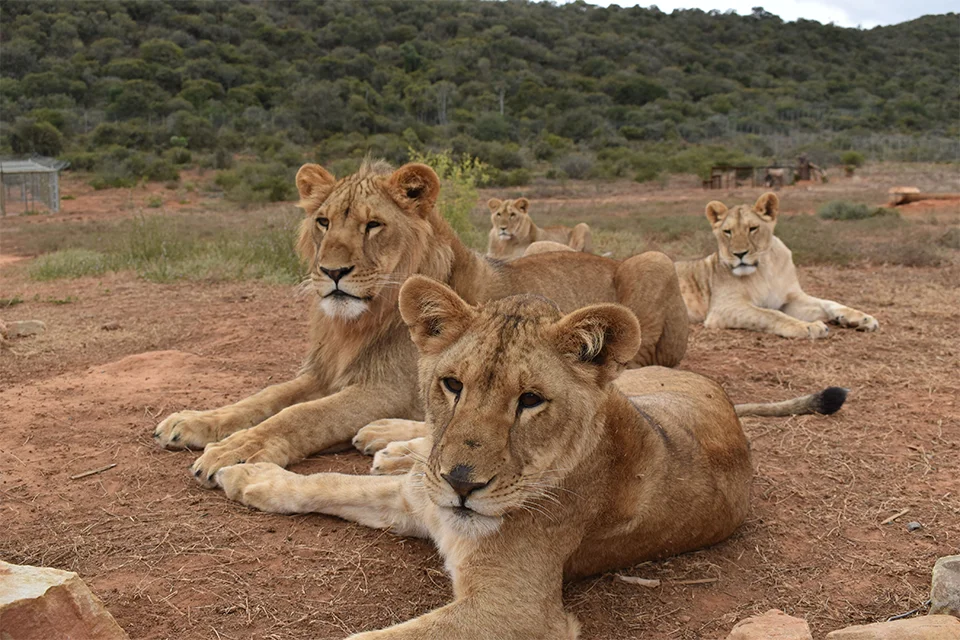
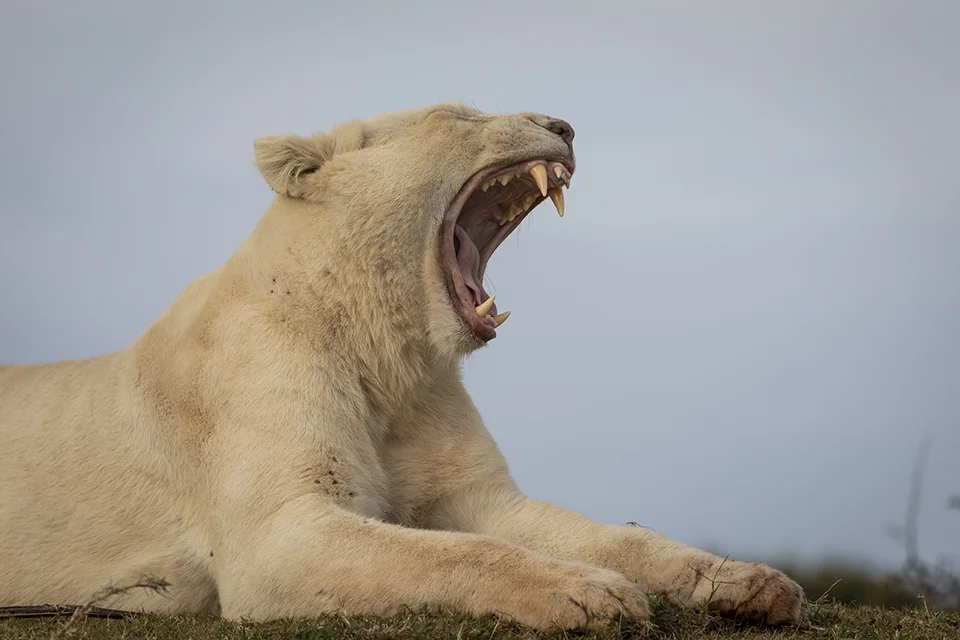
Pumba's defining characteristic is its white lion pride. A free-roaming group of white lions lives here alongside tawny lions in a self-sustaining social structure, a genuine rarity in the Eastern Cape and one found nowhere else in the region. At Pumba they roam the reserve's valley bushveld and riverine habitat without restriction, encountered on open-vehicle game drives alongside the rest of the Big Five.
Founded in July 2004 by Trevor Lombard and Dale Howarth on the remnants of the historic Cariega farm, the reserve was built as a conservation project from the outset: reintroducing the Big Five, hippos, spotted hyenas and cheetahs to land that had been without its indigenous wildlife for generations. The Pumba Foundation supports the Seven Fountains community school, crèche and clinic, accessible on a guided tour from the reserve. Over 300 bird species are recorded, including the blue crane.
Lalibela Wildlife Reserve
Owned and run by a single family since the late 1990s, Lalibela grew through careful land acquisition and rewilding into a 10,500-hectare Big Five ecosystem of rolling hills, open savannah and dense thicket approximately 90 minutes from Gqeberha. Guest numbers across all six lodges rarely exceed forty at any one time, a figure that shapes every aspect of the stay, from game drives with no other vehicles in sight to guides who adjust routes freely without fixed schedules.
Lalibela plays a significant role in cheetah conservation in the Eastern Cape, with successes including cheetah cubs born within the reserve. The endangered blue crane also finds vital grassland and savannah habitat here. Game drives run without set routes at dawn and dusk; Big Five walking safaris with armed rangers bring guests closer still; and gentler guided walks, away from predator areas, focus on birdlife, tracks and the smaller details of the bush that open-vehicle drives tend to bypass.
Trusted by thousands of ecstatic travellers
✔️ 5-Star Trustpilot Rating ✔️ Condé Nast Travel Specialist Award Winner
✔️ Accredited by SATSA ✔️ 5,000+ Exceptional Safaris Since 1991
Why choose Africa Geographic to plan your safari?

"As a bucket list trip this did not disappoint. Africa Geographic staff planned an amazing South African adventure to help me see as many small mammal species as were willing to show themselves during my visit...Every step worked without a hitch, much to my amazement!...A trip I will never forget, with a company I would highly recommend."
"A top company to help organise and arrange your perfect safari trip...extremely helpful in tailoring our experience exactly how we wanted it, from the initial conversations, to suggested changes, to the organisation whilst on the trip. Will definitely be recommending them and using them again if and when we visit Africa!"
"...outstanding job organizing an unforgettable trip for my family and me to South Africa...created an itinerary that far exceeded our expectations. We enjoyed two incredible safaris over the course of eight nights, which struck the perfect balance between family-friendly (ideal for our kids, ages 10 and 11)...we had an extraordinary experience..."
Wish you were here?
Frequently asked questions
Greater Addo is a collection of safari reserves in South Africa's malaria-free Eastern Cape, anchored by Addo Elephant National Park and surrounded by private reserves including Shamwari, Kwandwe, Kariega, Amakhala, Sibuya, Pumba and Lalibela, all within 50 to 160 kilometres of Gqeberha.
Yes. The entire Eastern Cape is malaria-free. No antimalarial prophylaxis is required for any reserve in the Greater Addo circuit, making it one of the most accessible Big Five safari destinations in southern Africa for families, children and travellers with health considerations.
Yes. Lion, elephant, buffalo, leopard and rhino are confirmed across all eight reserves in the Greater Addo region. Both white and black rhino are present across multiple reserves, with the full Big Five accessible on twice-daily open-vehicle game drives throughout the circuit.
The Big Seven extends the traditional Big Five to include southern right whale and great white shark. It is specific to Addo Elephant National Park, whose boundaries extend into Algoa Bay in the Indian Ocean, making Addo the only Big Seven reserve in South Africa.
Kwandwe Private Game Reserve is regarded as among the most reliable destinations in South Africa for black rhino sightings. Kwandwe is a formal partner of the WWF South Africa Black Rhino Range Expansion Project and conducts active rhino monitoring using telemetry and drone technology.
Greater Addo is a year-round destination, as no species migrate out of the region. The dry winter months from June to September bring thinner vegetation and animals concentrating around water, making wildlife easier to locate. Summer months bring lush landscapes, warmer temperatures and newborn wildlife.
Addo Elephant National Park, Kariega, Amakhala and Lalibela all welcome families with children of all ages. Shamwari's Riverdene Family Lodge and Kwandwe's Blue Crane Conservation Club offer dedicated children's programmes. The entire region is malaria-free, removing the most common health concern for families considering a safari.
Fly into Chief Dawid Stuurman International Airport in Gqeberha, which receives daily direct flights from Johannesburg and Cape Town. Most reserves are between 50 and 160 kilometres from the airport by road. Kwandwe has its own private airstrip, and Shamwari Air offers on-demand charter flights.
Addo Elephant National Park is managed by SANParks and includes self-drive access, a broader range of accommodation price points and the region's only marine component. The private reserves offer exclusive game drives with no other vehicles in the bush, and generally deeper conservation and walking safari experiences.
Yes. Guided walking safaris are offered across multiple reserves. Lalibela and Kwandwe offer Big Five walks with armed rangers; Shamwari, Sibuya, Amakhala and Kariega all offer guided bush walks. Addo's Zuurberg section has mountain hiking trails, and the 36 km Alexandria Hiking Trail runs through its coastal section.
Yes. Greater Addo is one of South Africa's most accessible safari circuits, with reserves starting just 50 kilometres from Gqeberha. Addo Elephant National Park is approximately one hour by road from Chief Dawid Stuurman International Airport, and Amakhala Game Reserve is around 50 minutes along the N2.
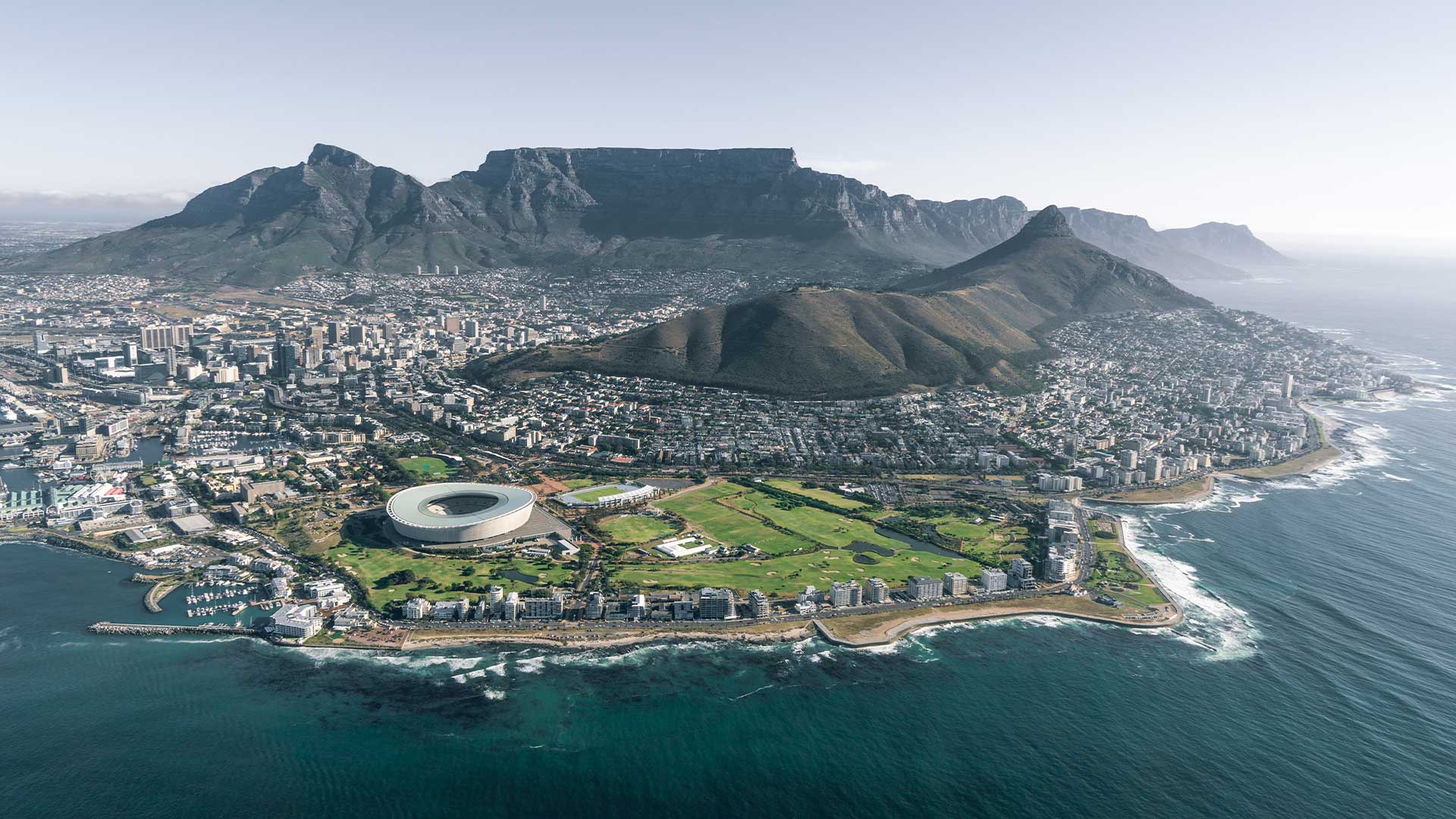
Yes, and this is one of the most popular itineraries in South Africa. Most Greater Addo reserves lie along or just off the N2 highway, connecting naturally with the Garden Route to the west. Gqeberha receives direct flights from Cape Town, making the combination straightforward by air or road.
A minimum of three nights per reserve is recommended. Most visitors spend between four and seven days in the region, combining two or three reserves. Pairing Greater Addo with the Garden Route or Cape Town extends a typical itinerary to ten days or more.
Our Greater Addo safaris typically cost from US$700 per person, per night, depending on the accommodation comfort level, time of year and activities. This price usually includes accommodation, all meals, game drives, experienced guides, airport transfers, and 24/7 support from our team.
Click here to schedule a no-obligation call with one of our Safari Experts or fill in our 2-minute form with your questions. Our team of experts are here to help! Whether you’re curious about the best time to travel, want to hear first-hand about an experience or need help planning your safari.
Explore more African destinations

Start planning your dream safari
Our travel experts will craft a no-obligation itinerary just for you. We have crafted over 5,000 safaris since 1991. Your personal details are protected; we only use this information to contact you.
Why book your safari with us?

Deep Experience & Knowledge
Handcrafted experiential safaris since 1991.
Travel in Africa is about knowing when and where to go, and with whom. A few weeks too early/late or a few kilometres off course, and you could miss the greatest show on Earth. And wouldn’t that be a pity?

Trust & Safety

Make A Difference
We donate a portion of the revenue from every safari sold to carefully selected conservation projects that make a significant difference at ground level.
YOUR safari choice does make a difference - thank you!