

Tailor-made safaris. Since 1991



Maasai Mara: a year-round wildlife extravaganza
Maasai Mara at a glance:
Location: Southwest Kenya, bordering Tanzania's Serengeti National Park | Access: Charter flight from Nairobi Wilson Airport (WIL) to Mara airstrip (~45–60 min) |
Size: ~1,500 km² (national reserve); ~3,000 km² including community conservancies | Best time to visit: Year-round; Great Migration river crossings August to mid-October |
Nearest international airport: Jomo Kenyatta International Airport, Nairobi (NBO) | Recommended stay: Minimum 3–4 nights |
Currency: Kenyan Shilling (KES) | Malaria risk: Yes – prophylaxis recommended; no yellow fever certificate required for direct entry |
Why visit the Maasai Mara?
Few places on earth are as immediately, viscerally rewarding for tourists as the Maasai Mara.
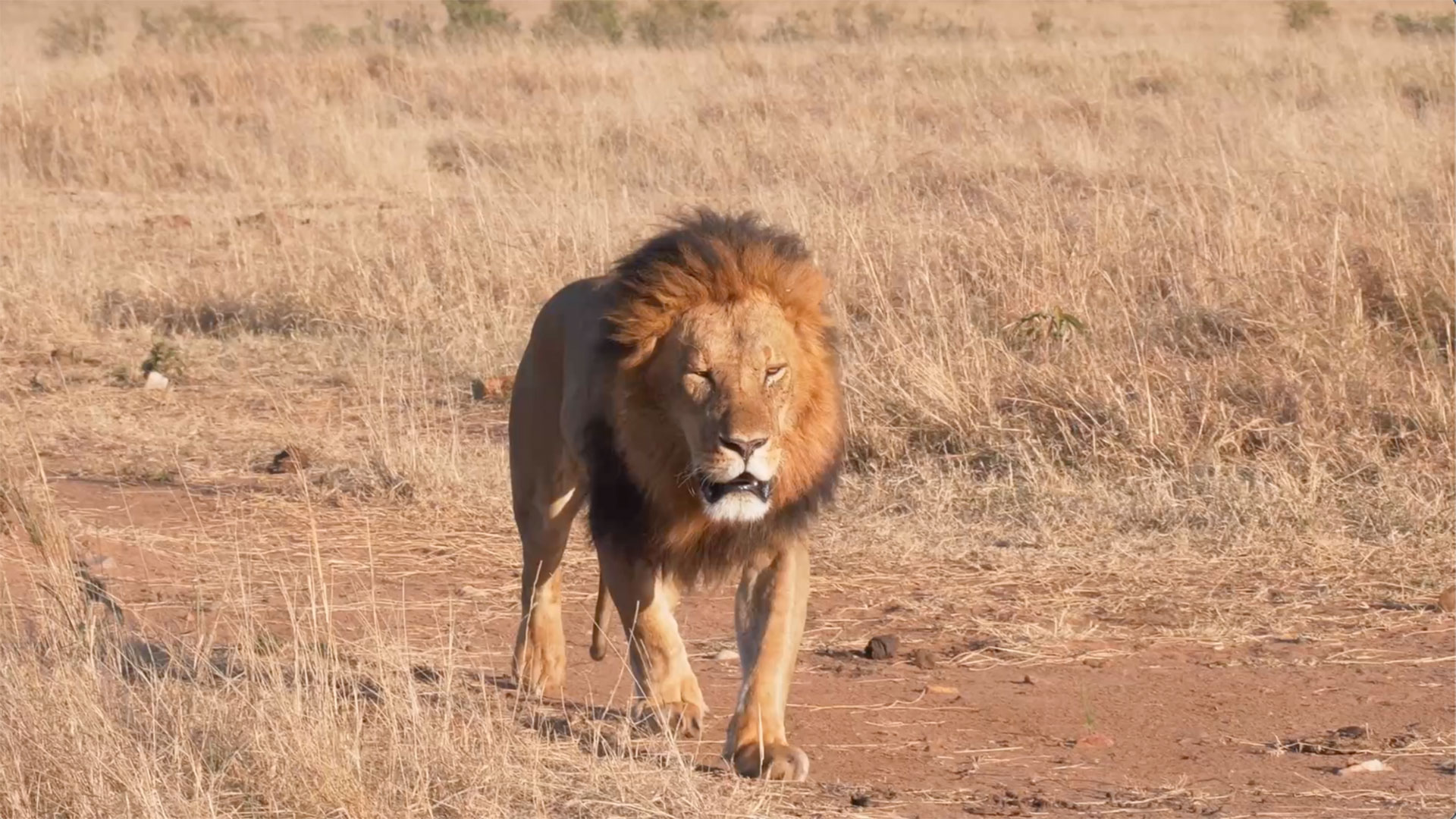
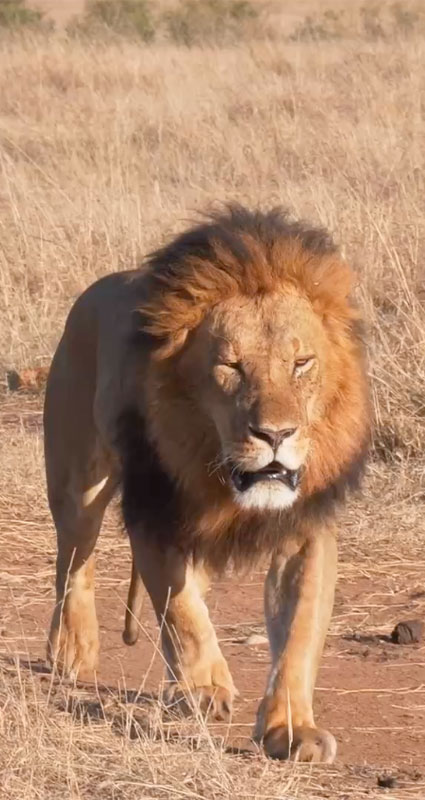
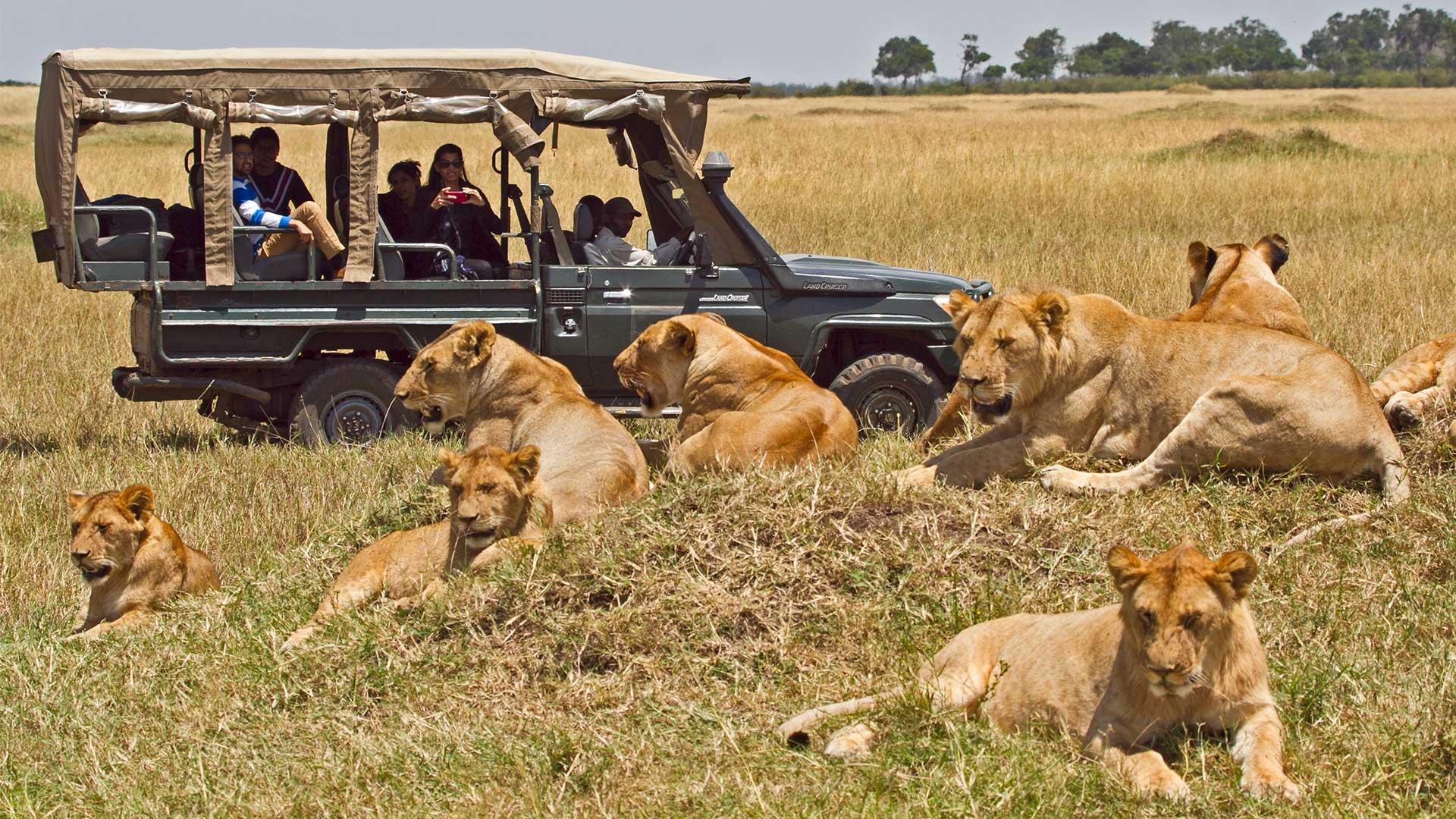
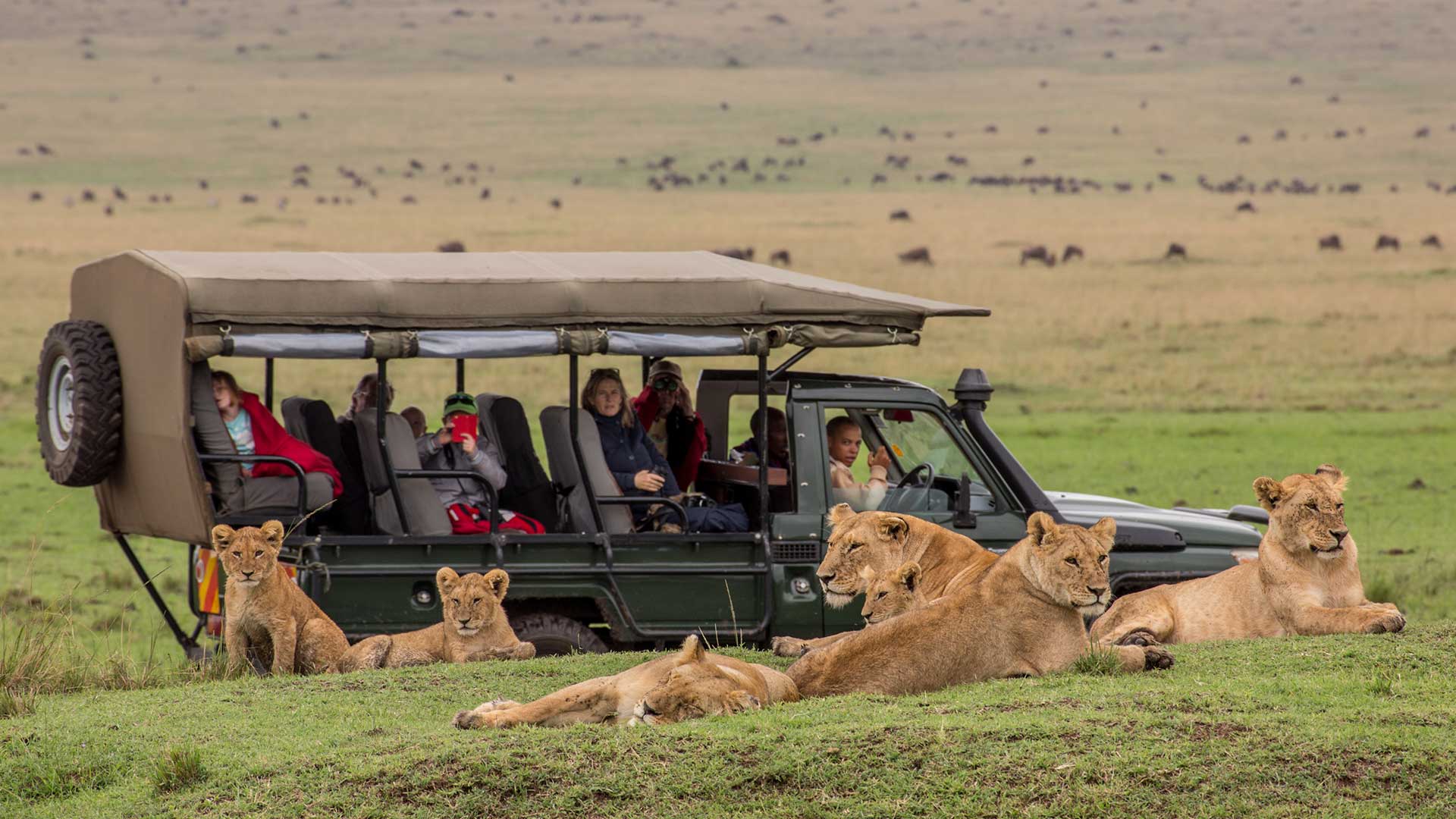
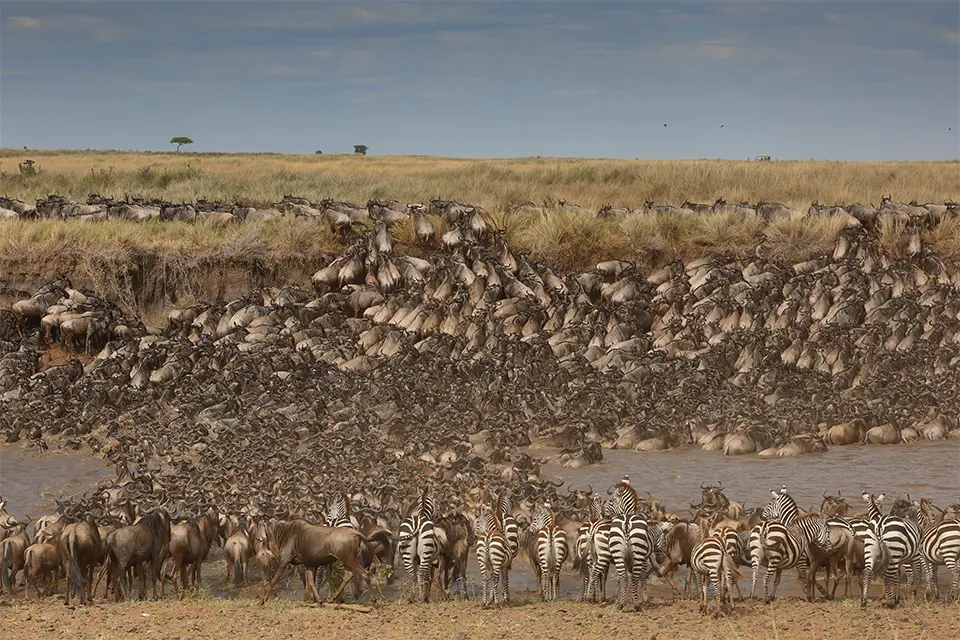
The Big Five wildlife viewing experience is year-round. The reserve and its surrounding community-owned conservancies host some of the highest predator densities in Africa. Lions are encountered with regularity; cheetahs, leopards, and hyenas are all well established. Each year from roughly August to mid-October, the Great Wildebeest Migration brings vast herds of wildebeest and zebra across the Mara River in one of the most dramatic wildlife spectacles on earth; chaotic, raw, and utterly unforgettable. But the Maasai Mara is equally compelling outside of the Great Migration months. The 'secret season', roughly late October through April, offers lush green landscapes, predator action on newborn prey, abundant birdlife, and dramatically fewer visitors. Locals and seasoned safari travellers know this well: the Mara is not a one-season destination.
For centuries, the Maasai people have shared this land with their wild neighbours, and their presence remains deeply woven into the character of the place. The community conservancies surrounding the national reserve are a direct result of Maasai stewardship, a model of conservation that supports wildlife while providing livelihoods for local communities.
The name itself comes from the Maa language of the Maasai people, translating loosely as "spotted " or "mottled ", a reference to the trees, the cloud shadows, and the ceaseless movement of animals that pepper the golden plains. From the vantage of the Oloololo (Siria) Escarpment, rising some 2,000 metres above sea level and 300 metres above the plains, the landscape unfolds in every direction: the Mara River threading south beneath riverine forest, red oat grass as far as the eye can see, and the unhurried procession of elephants, buffalo, and lions going about their ancient business.
The Maasai Mara is part of the unfenced Mara-Serengeti ecosystem, which stretches south across the Kenya-Tanzania border to encompass Tanzania's Serengeti National Park, a combined protected landscape of more than 40,000 km². This seamless connection is what makes the Mara's wildlife so extraordinary: the entire ecosystem breathes together, and the animals move freely within it.
Check out our additional resources on the Maasai Mara:
Private conservancy or national reserve? Find the best place to stay in the Maasai Mara.
Want to see more of Kenya? Discover the best Maasai Mara safari combinations.
How many days should you spend in the Maasai Mara? Find the ideal itinerary beyond migration season.
5 reasons we love the Maasai Mara
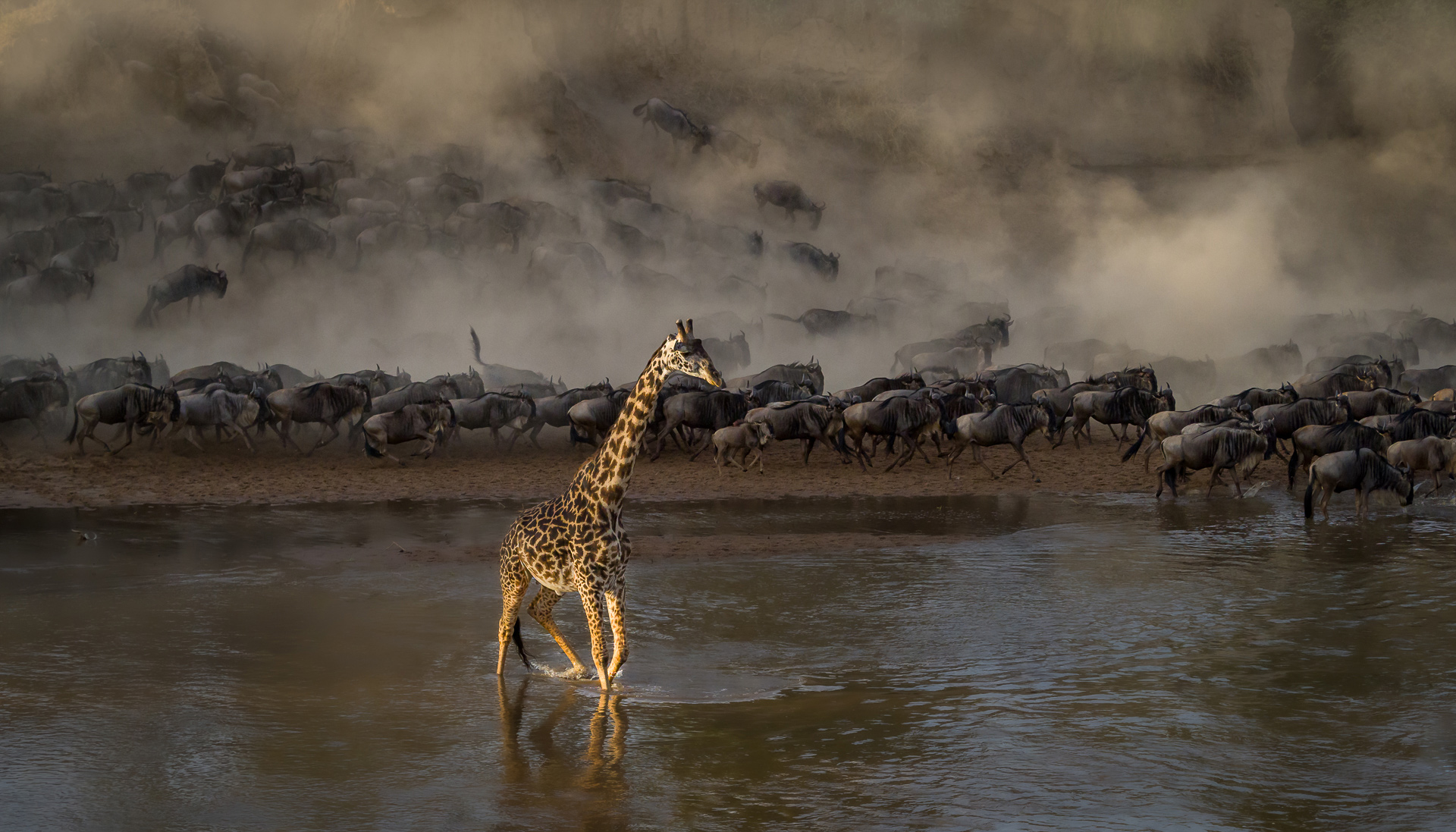
The Great Migration: Watching wildebeest and zebra hurl themselves across the crocodile-filled Mara River from August to mid-October is one of nature's most raw, unforgettable spectacles.
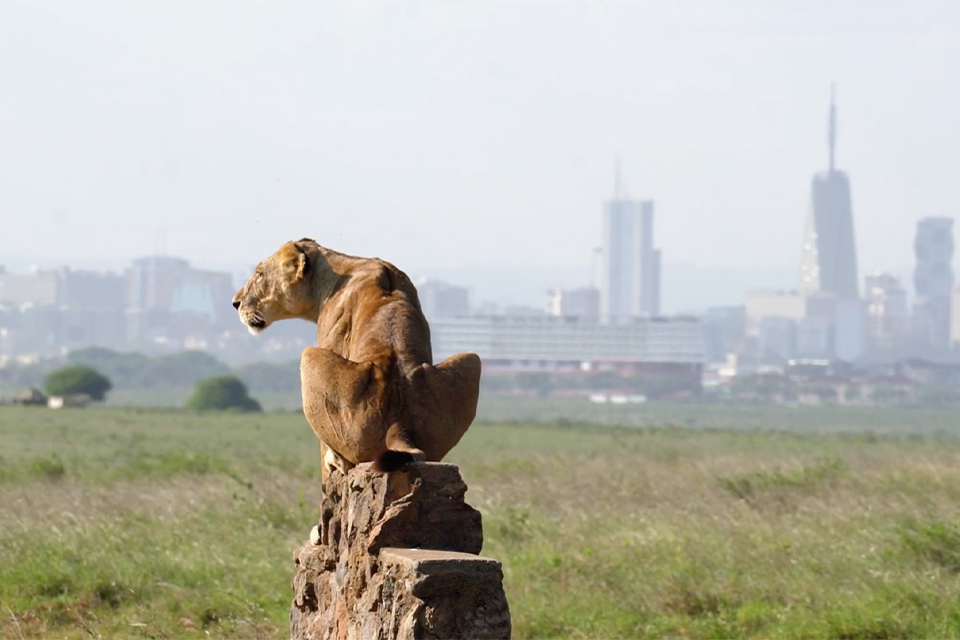
Year-round predator action: The Mara hosts one of Africa's highest concentrations of lions, cheetahs, and leopards, resulting in exceptional game drives in every season.
The secret season: From late October to April, lush green plains, fewer visitors, dramatic predator-on-calf sightings, and outstanding birding define this under-visited chapter of the Mara.
Private conservancies: Community-owned conservancies surrounding the reserve offer walking safaris, night drives, and exclusive areas with far fewer vehicles than the main reserve.
Maasai culture: An authentic visit to a Maasai community takes you beyond wildlife, offering a genuine connection with culture, tradition, and the people who have shaped this landscape.
Our favourite Maasai Mara safari ideas
All you need to know about the Maasai Mara
About the Maasai (Masai) Mara
The Maasai Mara National Reserve sits in the far southwest of Kenya, directly bordering Tanzania's Serengeti National Park to the south. It forms the northern extension of the Mara-Serengeti ecosystem — one of the largest and most intact unfenced wildlife areas on earth, spanning more than 40,000 km² across two countries.
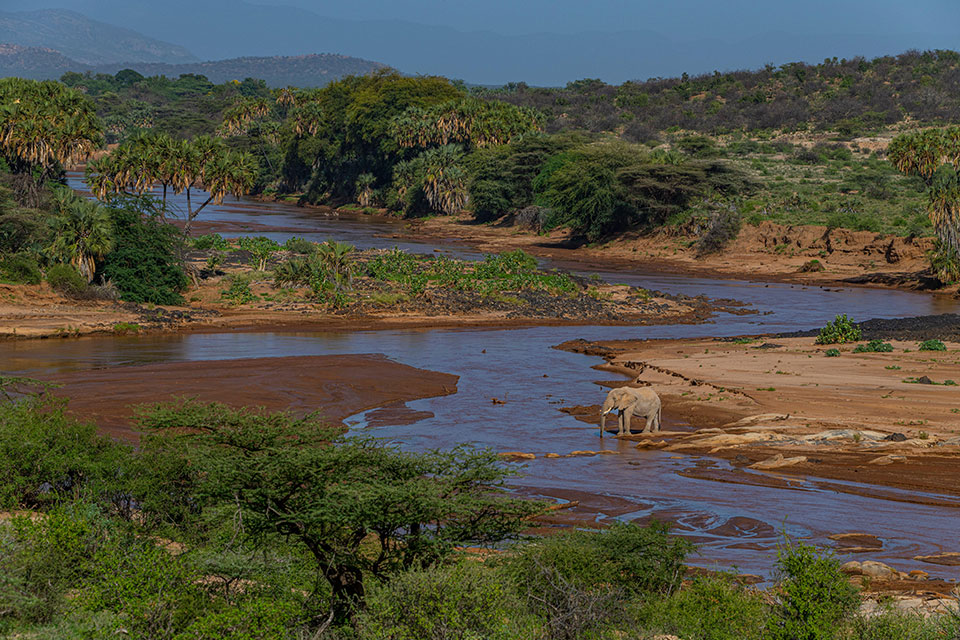
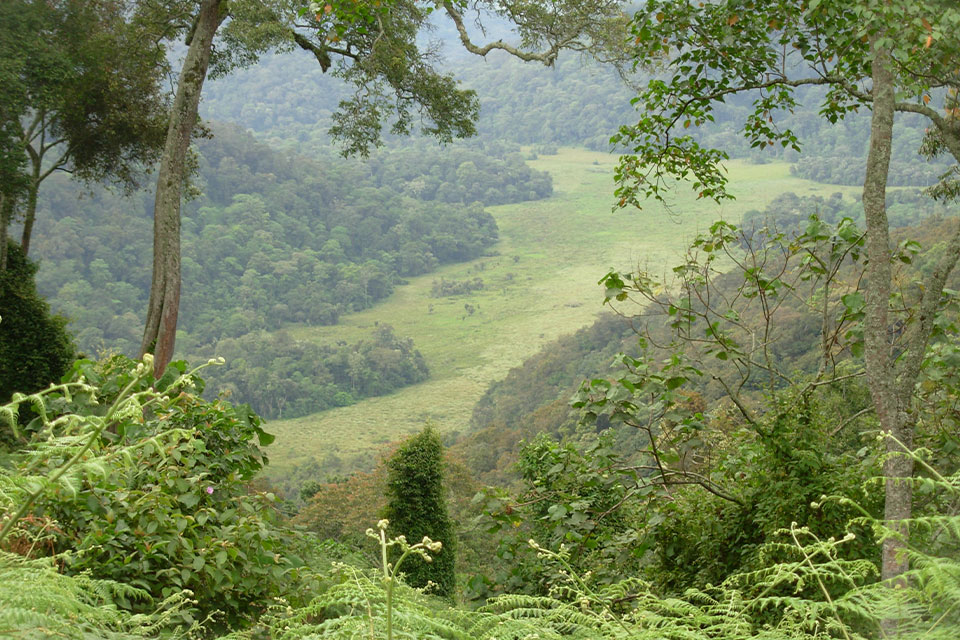
The landscape is dominated by sweeping savanna grasslands, riverine woodlands, and the Mara River, which winds its way southward beneath groves of towering trees. To the west, the Oloololo (Siria) Escarpment rises dramatically above the plains; to the east, the terrain rolls toward the Sekenani Hills; to the north, the Aitong Hills mark the boundary of the wider ecosystem.
Surrounding the 1,500 km² national reserve is a mosaic of community-owned conservancies that add significant protected habitat to the total Mara landscape, bringing the combined conservation footprint to approximately 3,000 km². These conservancies play a vital role in protecting wildlife corridors and supporting the Maasai communities whose land they occupy.
Things to do in the Maasai Mara
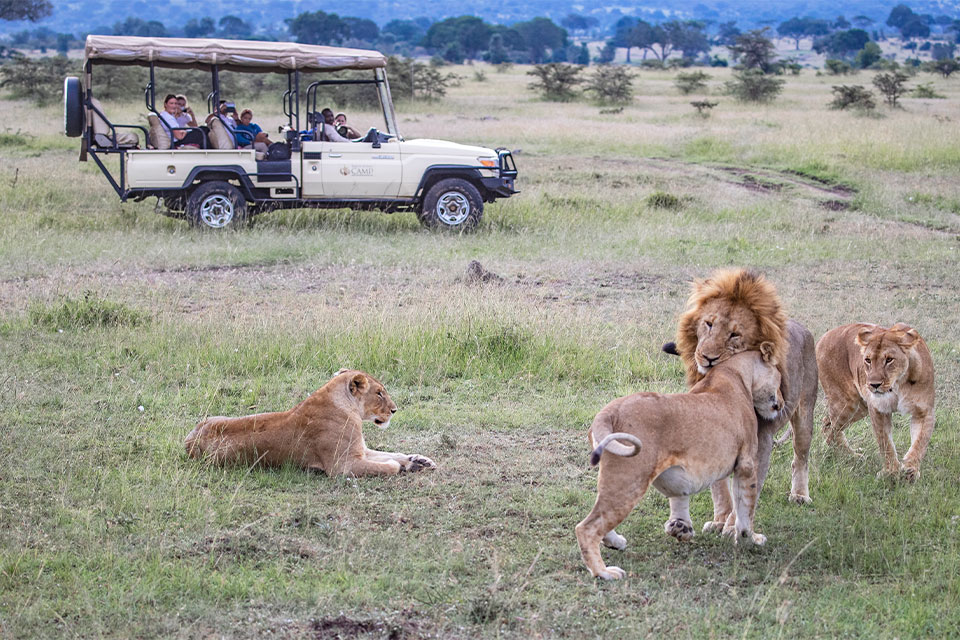
Game drives: Morning and afternoon drives across the open savanna reveal lions on kills, cheetahs stalking prey, elephant herds, buffalo, leopards in trees, and countless other species.
Mara River crossing viewings: From August to mid-October, position yourself at a known crossing point and witness wildebeest and zebra plunge into crocodile-filled waters.
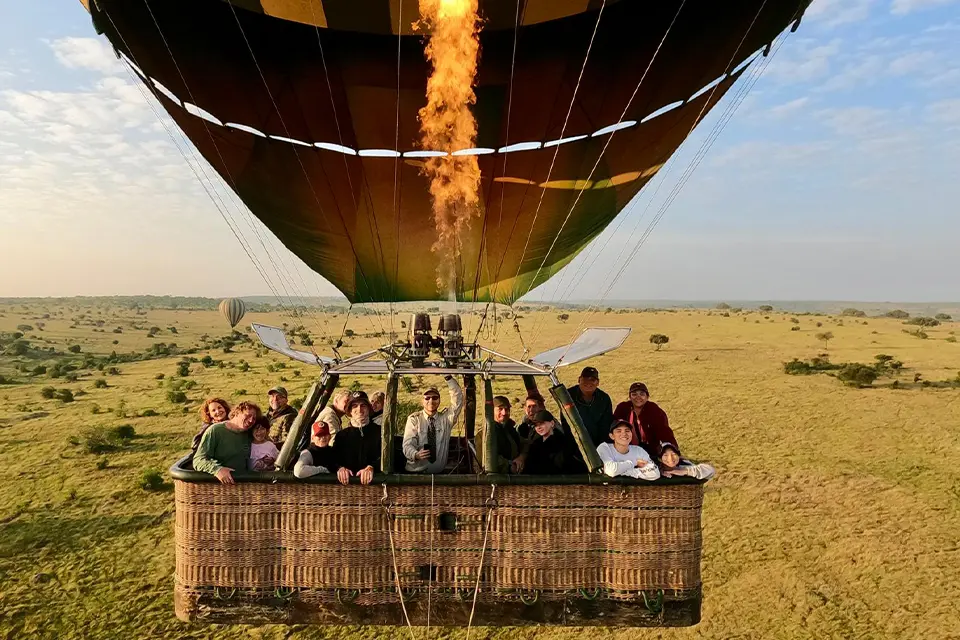
Hot air balloon safaris: A sunrise balloon flight above the Mara plains offers a serene bird's-eye perspective, typically followed by a bush breakfast on the savanna.
Walking safaris in conservancies: Guided on-foot experiences in community-owned conservancies offer a slower, more intimate reading of the landscape, tracks, and smaller wildlife.
Night drives: In the private conservancies, after-dark drives reveal a different cast: servals, honey badgers, bat-eared foxes, and other nocturnal species rarely seen by day.
Maasai cultural visits: A guided visit to a Maasai village introduces you to traditional homesteads, warrior culture, music, craftsmanship, and the pastoral life that has shaped the Mara for generations.
What wildlife will I see in the Maasai Mara?
The Maasai Mara offers a year-round wildlife spectacle, including:
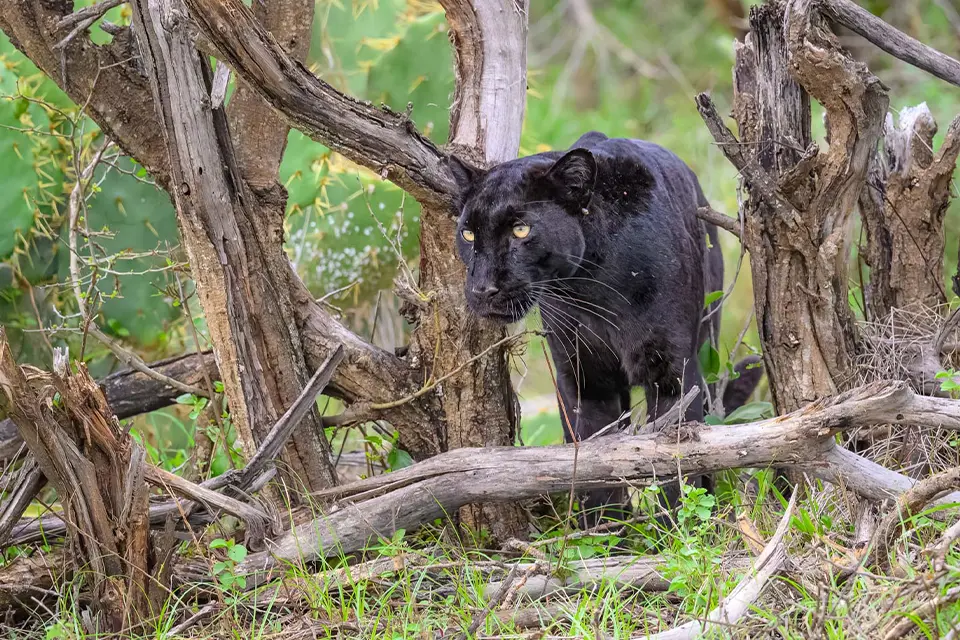
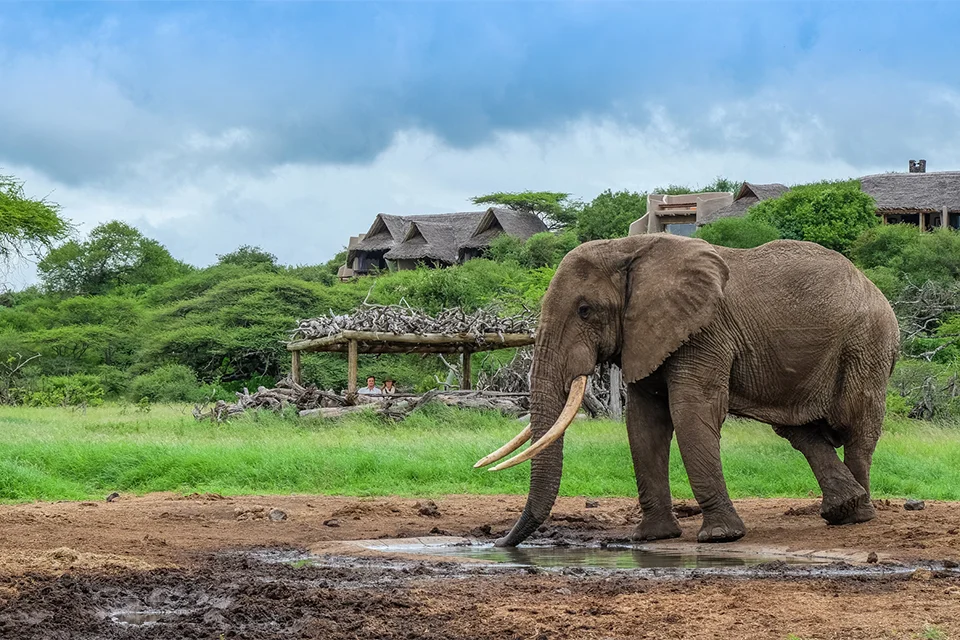
The Big Five: Lion, leopard, elephant, buffalo, and black rhino are all present. Rhino are the hardest to find, but the others are reliably encountered.
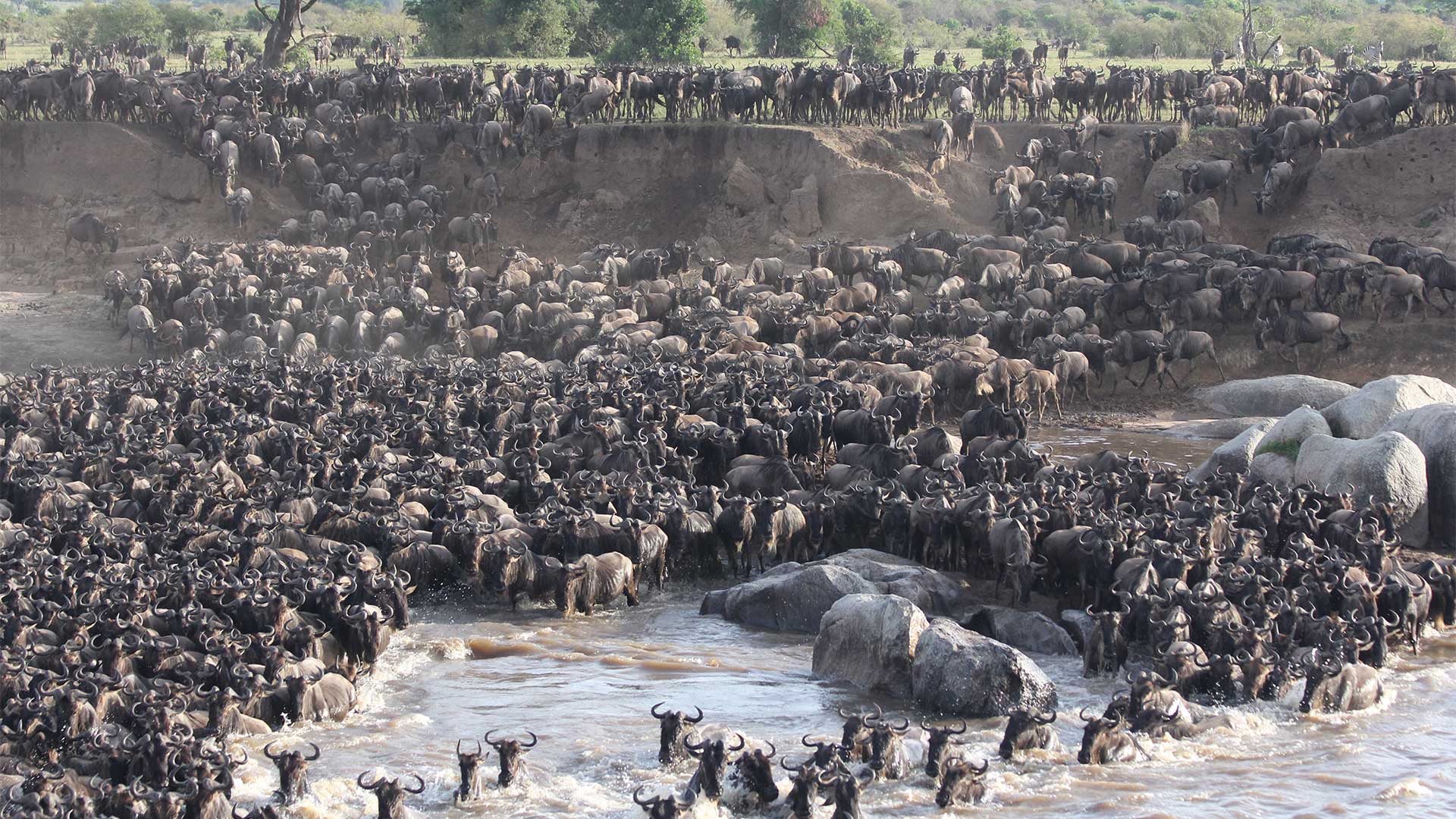
Great Migration herds: Between 1.3 and 2.5 million wildebeest, alongside large numbers of zebra, pour through the Mara between August and mid-October in an extraordinary annual spectacle.
Cheetahs and other predators: The Mara sustains healthy populations of cheetah, spotted hyena, serval, bat-eared fox, and caracal, with wild dog sightings occurring occasionally.
Plains wildlife: Giraffe, eland, topi, kongoni (Coke's hartebeest), Thomson's and Grant's gazelle, hippo, and Nile crocodile are all abundant and easy to find year-round.
Birdlife: Around 470 bird species have been recorded in the Mara, including Jackson's widowbird, grey-crested helmetshrike, Usambiro barbet, and rufous-tailed weaver.
Secret season wildlife: From late October to April, newborn antelope calves attract intense predator activity, and migrant bird species swell the resident population considerably.
The Great Wildebeest Migration in the Maasai Mara
The Great Wildebeest Migration is the most celebrated wildlife event associated with the Maasai Mara, and for good reason. Each year, an estimated 1.3 and 2.5 million wildebeest, alongside large numbers of zebra, move in a continuous clockwise circuit through Tanzania's Serengeti and Kenya's Maasai Mara in search of fresh grazing. The journey covers 800 kilometres or more per cycle.
The Mara River crossings, the chapter of the Migration that most visitors come to witness, take place roughly from August to mid-October, as the herds mass along the river's edge before plunging into crocodile-patrolled waters. The crossings can occur multiple times a day, or not at all: the herds follow the rains, not a schedule. Witnessing one requires patience, a good guide, and a willingness to wait.
The primary crossing points lie within the national reserve, where many vehicles can gather during peak weeks. For a more exclusive Migration experience, staying in a conservancy and driving to the river as conditions dictate, meaningfully more private encounter. Late September and early October are generally less crowded, and crossings continue into this period.
Beyond the Mara, this same Migration unfolds year-round across the Serengeti: calving season peaks in February on Tanzania's southern plains, and the Grumeti River crossings occur in May and June. See our Serengeti National Park guide and Great Migration safari guide for the full picture.
Where to stay in the Maasai Mara
The Maasai (Masai) Mara's accommodation landscape is one of the richest and most varied in Africa, ranging from intimate seasonal bush camps to established luxury lodges. Critically, where you stay determines your safari experience: the national reserve offers year-round access to the greatest wildlife concentrations but operates under shared park rules, with multiple vehicles possible at high-profile sightings. The private conservancies, by contrast, limit the number of guests per area, permit off-road driving, and allow walking safaris and night drives — experiences not available within the reserve itself.
The conservancies encircle the national reserve and are divided into several distinct areas, each with its own character.
The Mara Triangle and Oloololo Escarpment region includes properties such as Angama Mara, a celebrated lodge perched dramatically above the plains on the escarpment edge, and Mara Ngenche Safari Camp, positioned along the Mara River.
Continued below
Where to stay in the Maasai Mara
The Mara North Conservancy, one of the largest and best-established of the community conservancies, is home to a cluster of respected camps. Kicheche are known for exceptional guiding and a genuine commitment to low-impact safaris. Offbeat Camps offer intimate, small-group experiences with a strong emphasis on walking and cultural immersion. Saruni Camps deliver elevated, design-led stays, while Basecamps operate with a strong community and sustainability ethos. Porini Camps are long-established conservancy camps with excellent reputations for wildlife and guiding. Karen Blixen Camp and Speke's Camp round out this region's offering.
The Olare Motorogi and Naboisho Conservancies in the northeast are home to Hemingways Ol Seki, Kandili Camp, Saruni Wild, and Lerai Safari Camp, properties that benefit from private traversing rights over expansive land with some of the Mara's finest big cat sightings.
The Mara River and central reserve zone are home to iconic properties, including Governors and Naibor Camps, all offering exceptional proximity to the river crossings during the Migration. Sand River Masai Mara and Sentinel Mara Camp sit on the riverbank, making them prime positions for Great Migration viewing. Sala's Camp and Enkewa Camps provide more intimate alternatives in this zone, while Mara Siria Tented Bush Camp & Cottages, Aruba Mara Camp, Oltepesi Tented Safari Camp, and Roca River Camp offer further well-positioned choices.
Further afield, Soroi Camps, Tangulia Mara Camp, and Olonana Lodge each occupy a position within the wider ecosystem, catering to varied safari styles and budgets.
Trusted by thousands of ecstatic travellers
✔️ 5-Star Trustpilot Rating ✔️ Condé Nast Travel Specialist Award Winner
✔️ Accredited by SATSA ✔️ 5,000+ Exceptional Safaris Since 1991
Why choose Africa Geographic to plan your safari?

" ... an unforgettable and life-changing safari for me and my husband in the Kenyan Maasai Mara .... by far the best travel agent with whom we have worked in over 20 years of international travel ... personal, direct, prompt, efficient, and responsive ... extensive knowledge of Africa ... gave us a depth of understanding not usually gained by first-time visitors to a country..."
"I spent months ... looking for the perfect opportunity for a photo safari for myself and my husband. I found that with Africa Geographic ... who worked with me to arrange for a magical 8 days with Sentinel Mara Camp on the banks of the Mara River. Looking for a perfect safari experience? We can’t recommend Africa Geographic and Sentinel Mara Camp highly enough!"
"Booking a safari holiday to the Maasai Mara through Africa Geographic was an absolute game-changer for my travel experience. From start to finish, their service exceeded all expectations, and I can't praise them enough for helping me create memories that will last a lifetime. What truly sets Africa Geographic apart is their dedication to creating personalized itineraries ..."
Wish you were here?
Frequently asked questions
The Maasai Mara is a year-round destination. The Great Migration's Mara River crossings run roughly from August to mid-October and are the primary draw for most first-time visitors. This is peak season, with the highest visitor numbers and vehicle concentrations at crossing points. Late September and early October offer crossings with somewhat fewer crowds. From late October to April, the 'secret season' delivers lush, green landscapes, intense predator activity as cats target newborn antelope calves, dramatically lower visitor numbers, and outstanding birding. Experienced safari travellers often prefer this period precisely for its exclusivity and intimacy.
The Maasai Mara National Reserve is a government-managed protected area of approximately 1,500 km² where the public can view wildlife from vehicles. The surrounding community-owned conservancies, such as Mara North, Olare Motorogi, Naboisho, and others, are managed in partnership with local Maasai communities. Conservancy lodges operate under stricter guest limits, which means far fewer vehicles in the area. Importantly, conservancies permit off-road driving, walking safaris, and night drives- activities prohibited within the national reserve. For travellers who prioritise exclusivity and a broader range of activities, a conservancy stay is strongly recommended.
Both form part of one connected ecosystem. The Maasai Mara's Mara River crossings run from roughly August to mid-October; the Serengeti hosts the Migration year-round, including calving season (February–March) and the Grumeti River crossings (May–June). The Serengeti is approximately 10 times larger than the Maasai Mara, offering more space for privacy. The Mara's conservancy system provides exclusive, low-vehicle viewing on drives, though river crossing points within the national reserve can attract crowds during peak weeks. Combining both destinations in a single itinerary provides the most complete Migration experience.
Tanzania (Serengeti National Park) | Kenya (Maasai Mara National Reserve) |
Ten times larger than the Maasai Mara | Dense wildlife in a smaller area |
Great Migration is present year-round, including river crossings in the north (August-mid-October) and peak calving on the southern plains (February–March) | Great Migration from August to mid-October, with Mara River crossings, which occur simultaneously in Tanzania's northern Serengeti during this period |
Vast, open landscapes result in more opportunities to avoid the crowds | Private conservancy system offers exclusive, crowd-free viewing. Note that river crossings occur in the main reserve and are subject to crowding |
Big 5 are present, but combine with an Ngorongoro Crater safari for higher chances of seeing rhinos | Very high likelihood of sighting the entire Big Five (especially with Laikipia and its rhino sanctuaries as an add-on) |
Best for: photographers, wilderness seekers, experienced safari-goers | Best for: first-timers, families, shorter trips |
The Maasai Mara is home to all of the Big Five: lion, leopard, elephant, buffalo, and black rhino, though rhinos are the hardest to locate. Cheetah, spotted hyena, serval, bat-eared fox, and caracal are all present, and wild dog sightings occur occasionally. Common plains species including giraffe, eland, topi, kongoni, Thomson's gazelle, hippo, and Nile crocodile are easily seen year-round. Around 470 bird species have been recorded in the ecosystem.
Most international visitors fly into Jomo Kenyatta International Airport (NBO) in Nairobi, which is East Africa's largest aviation hub with connections from major international carriers. From Nairobi, the most convenient onward option is a scheduled or charter flight from Wilson Airport (WIL) to one of the Mara's grass airstrips, a journey of approximately 45 to 60 minutes. Road transfers are also available, though the drive from Nairobi takes several hours and a 4WD is required for the final approach to most camps.
Malaria is present in the Maasai Mara ecosystem, and prophylaxis is strongly advised. Kenya is not a yellow fever country, so a yellow fever certificate is not generally required for entry; however, if you are travelling to Kenya from a yellow fever-endemic country, you will need to present proof of vaccination at the border. Cover exposed skin in the evenings and use a quality insect repellent. Please consult your GP or a travel medicine clinic well in advance of departure for personalised, up-to-date medical advice.
Our safaris typically cost from US$700 per person, per night, depending on the accommodation comfort level, time of year and activities. This price usually includes accommodation, all meals, game drives, experienced guides, airport transfers, and 24/7 support from our team.
You only make your first payment when you book your holiday. Your second (last) payment is about 105 days before you travel.
Peak season bookings require 12–18 months of advance planning. Trips outside of peak season can be arranged 6–9 months ahead, with better rates and availability.
The 'secret season' refers broadly to the period from late October through April, when the majority of the Great Migration herds have returned to Tanzania and visitor numbers drop significantly. The plains are at their lushest and greenest following the rains, predator action intensifies as big cats target newborn antelope calves, and the birding is exceptional, with resident species joined by migrant arrivals. For travellers who prioritise a tranquil, exclusive safari experience over the drama of the river crossings, the secret season is a compelling alternative.
A minimum of three to four nights allows enough time to settle into the rhythm of game drives and explore different areas of the reserve or conservancy. For Migration-focused trips, particularly those hoping to witness multiple river crossings, a stay of five to six nights at the river is advisable, as individual crossings are unpredictable and may require patient waiting. Splitting nights between a conservancy and a reserve property gives you the best of both worlds.
Yes. The Maasai Mara pairs well with Kenya's other major wildlife areas. Laikipia to the north is an excellent addition for rhino tracking and wild dog sightings. The Kenyan coast, including Mombasa, Watamu, and Diani Beach, offers a natural bush-and-beach combination. Nairobi's Giraffe Centre and David Sheldrick Wildlife Trust are popular stops en route to or from the Mara.
Yes, the Maasai Mara is one of Kenya's most family-friendly wildlife destinations. Several camps and lodges within the conservancies accommodate children and offer tailored activities, including guided bush walks, cultural visits, and wildlife education. Families should note that some conservancy properties have minimum age requirements for certain activities such as walking safaris, so it is worth confirming with individual properties when booking.
Revenue from conservancy camps flows directly to the Maasai landowners whose properties form these protected areas. This economic model provides a compelling alternative to livestock farming on ecologically critical land, reducing human-wildlife conflict and maintaining wildlife corridors that the wider Mara-Serengeti ecosystem depends on. Many camps also support community projects including schools, healthcare, and skills development for local Maasai communities.
Neutral-toned, lightweight clothing is appropriate for game drives in all seasons. Mornings and evenings can be surprisingly cold, particularly during the dry season, so a warm fleece or light down jacket is recommended. Comfortable, closed-toe shoes or boots are useful for any walking activities. A quality camera and extra batteries are worth prioritising, as the Mara's golden morning light is legendary among wildlife photographers. Sun protection, a wide-brimmed hat, and a good insect repellent are essential.
Click here to schedule a no-obligation call with one of our Safari Experts or fill in our 2-minute form with your questions. Our team of experts are here to help! Whether you’re curious about the best time to travel, want to hear first-hand about an experience or need help planning your safari.
Start planning your dream safari
Our travel experts will craft a no-obligation itinerary just for you. We have crafted over 5,000 safaris since 1991. Your personal details are protected; we only use this information to contact you.
Why book your safari with us?

Deep Experience & Knowledge
Handcrafted experiential safaris since 1991.
Travel in Africa is about knowing when and where to go, and with whom. A few weeks too early/late or a few kilometres off course, and you could miss the greatest show on Earth. And wouldn’t that be a pity?

Trust & Safety

Make A Difference
We donate a portion of the revenue from every safari sold to carefully selected conservation projects that make a significant difference at ground level.
YOUR safari choice does make a difference - thank you!