

Tailor-made safaris. Since 1991


South Africa: Africa's most diverse safari destination
South Africa at a glance:
Location: Southernmost country in Africa; coastline spanning both the Atlantic Ocean (west) and Indian Ocean (east and south) | Main airports: Cape Town International (CPT); OR Tambo International, Johannesburg (JNB); King Shaka International, Durban (DUR) |
Best time to visit: May–September for safari; July–November for whale watching; Cape Town and the Cape rewarding year-round | Malaria risk: None in most travel regions; present in Greater Kruger and parts of KwaZulu-Natal. Consult a doctor before travel |
Currency: South African Rand (ZAR) | Recommended minimum stay: 10–14 days for a meaningful multi-destination itinerary |
Domestic connections: Well-developed internal flight network linking Cape Town, Johannesburg, Durban, Gqeberha, George and Hoedspruit | Visa: Requirements vary by nationality. Check with your nearest South African embassy or consulate before travel |
Why visit South Africa?
South Africa is the only country in Africa where a Big Five safari, a world-class city, world-renowned wine country, ancient geological landscapes, a UNESCO World Heritage mountain range and one of the planet's most celebrated coastlines are all within reach of a single itinerary.
The safari offering alone spans an extraordinary range. Greater Kruger is Africa's most reliable Big Five ecosystem: 22,000 square kilometres of unfenced bushveld. The Eastern Cape extends that into the Big Seven. Madikwe rewilded 75,000 hectares of degraded farmland into one of southern Africa's most principled conservation areas owned by the local people. The Waterberg, Pilanesberg and Tswalu Kalahari Reserve each offer something no other reserve on the continent can replicate. Most of these destinations are entirely malaria-free, a quality rare in African safari travel.
Beyond the wildlife reserves, South Africa rewards in ways few African countries can. Cape Town sits between a famous flat-topped mountain and two oceans, surrounded by one of Earth's six floral kingdoms. The Cape Winelands produce wines of genuine standing on estates that predate the country itself. The Whale Coast draws southern right whales to its sheltered bays each winter. The Drakensberg holds more than 25,000 individual San rock paintings, the highest known concentration on earth.
Few countries carry this breadth within a single itinerary. South Africa's wildlife story and its human story are inseparable, and both reward the traveller who looks closely.
5 Reasons We Love South Africa
Big Five safaris across extraordinary ecosystems: From the leopard-dense private reserves of Greater Kruger to rewilded Madikwe and Greater Addo, and Pilanesberg's ancient volcanic crater, with most destinations entirely malaria-free.
Cape Town and the Cape Peninsula: Between a UNESCO World Heritage mountain and two oceans, with penguin colonies, whale watching, one of Earth's richest floral kingdoms and wine country within reach.
Conservation with a genuine track record: Operation Rhino saved the white rhino from near-extinction; Operation Phoenix rewilded an entire game reserve from farmland. South Africa's safaris carry real conservation purpose.
A coastline of extraordinary variety: Southern right whales in Walker Bay, great white sharks off Gansbaai, the sardine run along the Wild Coast, coral reefs in iSimangaliso and ancient forest on the Garden Route.
Cultural depth few destinations match: San rock art spanning 10,000 years, Zulu heritage woven into Zululand's reserves, Robben Island, the Bo-Kaap and battlefields guided by descendants of those who fought.
All you need to know about South African safaris
About South Africa
South Africa occupies the southernmost tip of the African continent, where the Atlantic Ocean meets the Indian Ocean at Cape Agulhas. It is a country of extreme geographic variety: from the semi-arid Kalahari along the Botswana and Namibia borders to the subtropical coastline of KwaZulu-Natal, from the Cape Fold Mountains and fynbos of the Western Cape to the ancient sandstone ridges of the Waterberg in Limpopo and the Drakensberg escarpment along the Lesotho border.
South Africa's well-developed internal flight network connects Cape Town, Johannesburg, Durban, Gqeberha (formerly Port Elizabeth), George and Hoedspruit, making multi-destination itineraries straightforward to construct. International arrivals come through Cape Town International Airport or OR Tambo International Airport in Johannesburg, both receiving direct flights from Europe, the Middle East and African cities.
The country holds three UNESCO World Heritage Sites of direct relevance to travellers: the Cape Floral Region (including Table Mountain National Park), the uKhahlamba Drakensberg Park and iSimangaliso Wetland Park. Its private conservation sector is among the most sophisticated on the continent, with a long tradition of rewilding degraded land, community ownership and species recovery programmes that have changed the trajectory of entire populations.
Things to do in South Africa
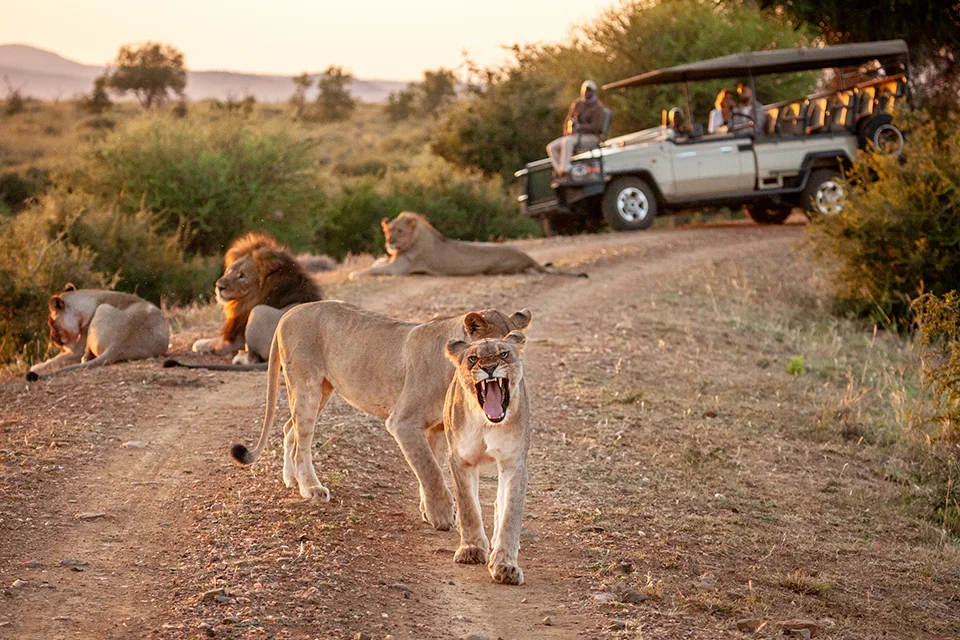
Guided Big Five safaris: In private reserves across Kruger, Madikwe, the Eastern Cape, Zululand and Waterberg, expert guides lead open-vehicle day and night drives with vehicle numbers strictly capped at sightings.
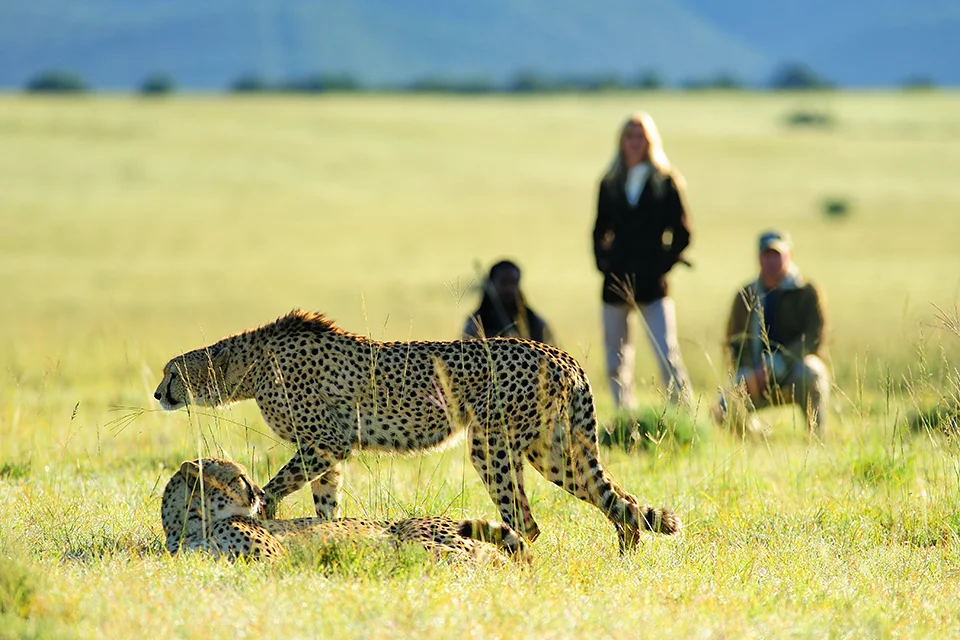
Walking safaris and specialist activities: Foot-led cheetah tracking in the Karoo, meerkat encounters at sunrise, San rock art walks in the Cederberg, and Big Five walks with armed rangers across multiple reserves.
Marine wildlife and whale watching: Southern right whales above Walker Bay, great white sharks off Gansbaai, the sardine run along the Wild Coast and coral reef diving at Sodwana Bay.
Explore the Cape: Table Mountain, the Cape Peninsula, African penguin colonies, whale watching at Hermanus and the wine estates of Stellenbosch and Franschhoek, all within reach of Cape Town.
Scenic self-drive routes: The Garden Route (N2), Route 62 through the Karoo, the Whale Route along the Overberg coast and the West Coast's R27 each reward an unhurried pace.
History and cultural encounters: Robben Island, the Bo-Kaap, Anglo-Zulu War battlefields and community-owned reserves in Madikwe and on the Wild Coast, where South Africa's human story runs as deep as its wildlife.
What wildlife can I see in South Africa?
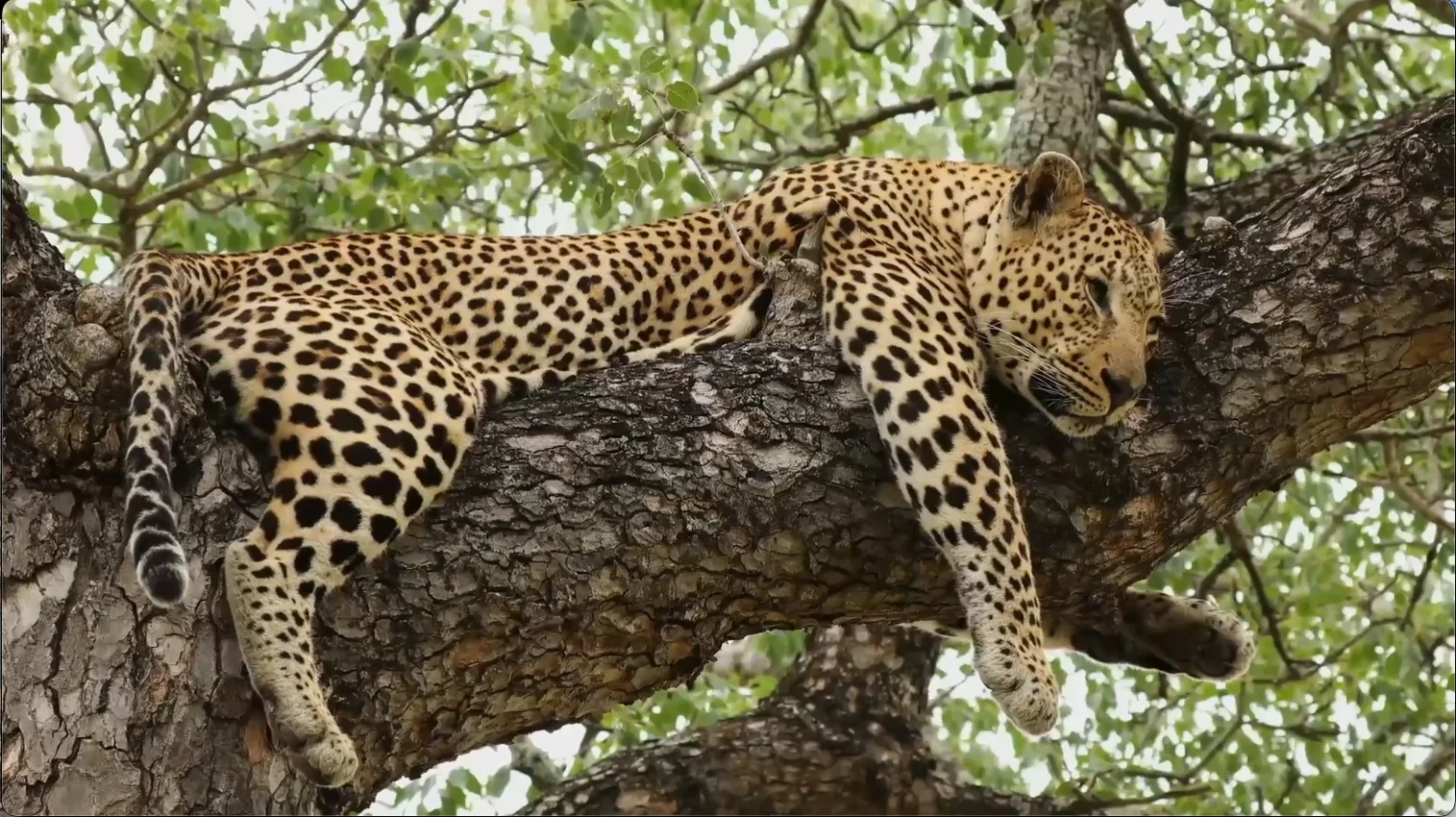
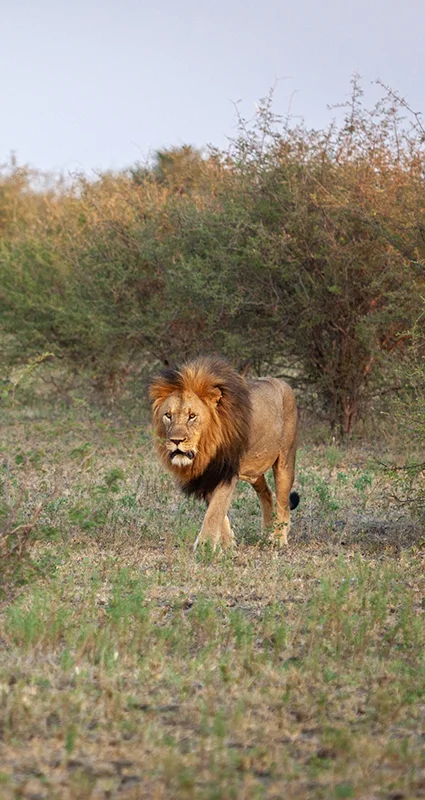
The Big Five: Lion, leopard, elephant, buffalo and rhino roam reserves across Greater Kruger, Madikwe, Eastern Cape, Waterberg, KwaZulu-Natal, Pilanesberg and Tswalu, among Africa's most reliable Big Five territories.
Rare and endangered species: African wild dog, cheetah, ground pangolin, brown hyena, desert-adapted black rhino and Cape mountain zebra are all confirmed across South Africa's reserves, a remarkable breadth of rare and elusive wildlife.
Marine megafauna: Southern right whales, great white sharks, humpback whales, loggerhead and leatherback turtles, bottlenose dolphins and the coelacanth all inhabit South Africa's Atlantic and Indian Ocean coastlines.
Wildlife rarities found nowhere else: White lions in Timbavati, the Big Seven and flightless dung beetles, found nowhere else on earth, in Greater Addo, the Cape Parrot, Africa's rarest parrot, in KwaZulu-Natal and vehicle-habituated leopards in Sabi Sand.
Exceptional bird diversity: From Pel's fishing owl in Kruger's riverine forests and Cape vultures nesting on Waterberg cliffs to the orange-breasted sunbird of the fynbos and the Knysna turaco in Garden Route forests.
Habituated wildlife for unique encounters: meerkat colonies in Tswalu and the Little Karoo, vehicle-habituated leopards in Sabi Sand and MalaMala, and penguins in Simonstown offer encounters impossible to replicate elsewhere in Africa.
Where to stay in South Africa
South Africa's accommodation spans a range matched by few other single destinations in Africa, from continent-leading Big Five lodges to community-owned camps, five-star wilderness retreats, coastal wine estates, boutique city hotels, and character-filled fishing village guesthouses.
The range of options across the region is vast, and we showcase many of them on each regional page linked below.
Explore South Africa's destinations
Cape Town & its winelands
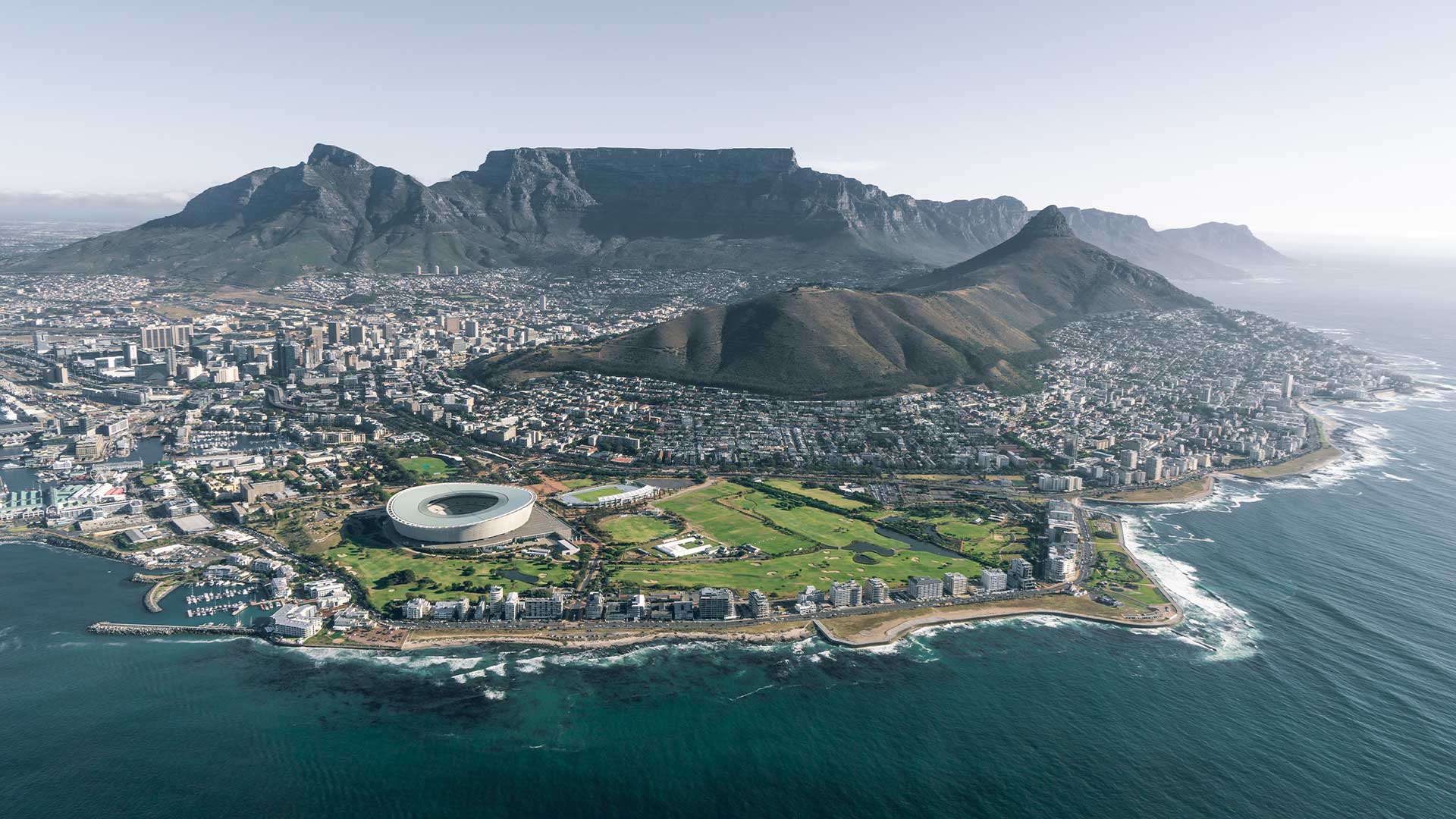
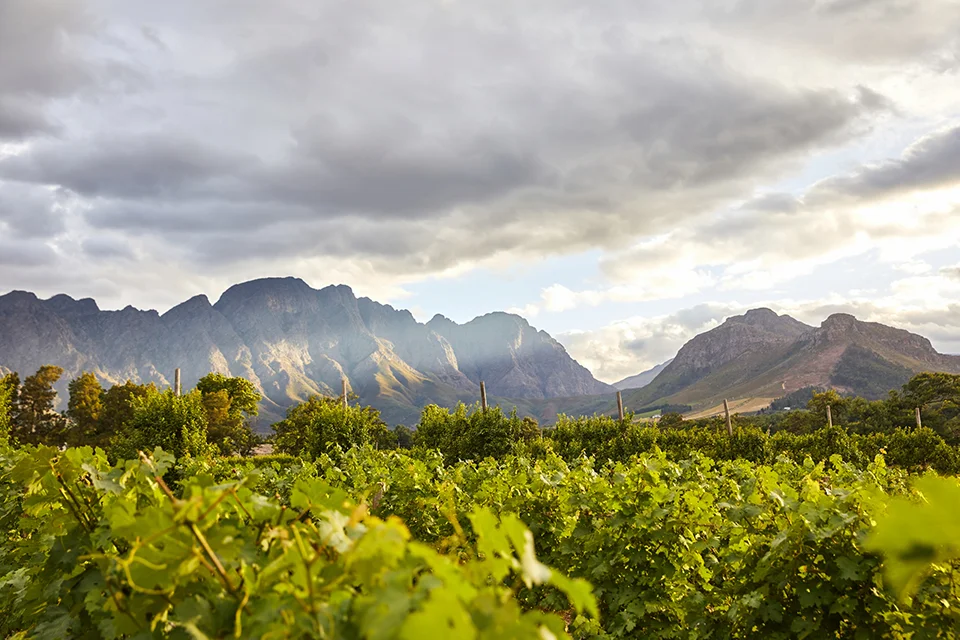
Cape Town is South Africa's oldest city and its most naturally dramatic, pressed between Table Mountain (a UNESCO World Heritage Site) and the cold Atlantic and warmer Indian oceans. Founded as a supply station by the Dutch East India Company in 1652, it carries that history in its architecture, its neighbourhoods and its food. The Cape Malay community of the Bo-Kaap has occupied these slopes for over three centuries, and District Six remains a vivid reminder of the apartheid-era forced removals that reshaped the city.
The Table Mountain cable car or a half-day hike reaches a summit overlooking the whole sweep of city, ocean and mountain. The Cape Peninsula drive south through Hout Bay, Chapman's Peak and Cape Point to the penguin colony at Boulders Beach fills a generous day. Robben Island, where Nelson Mandela spent 18 of his 27 years in prison, is toured by former political prisoners, giving it a weight no museum can replicate. The Cape Floristic Region packs over 9,600 plant species into the landscape surrounding the city. The Cape Winelands lie within an hour's drive; Hermanus, where southern right whales gather from June to December, is 90 minutes away.
Kruger National Park & Greater Kruger
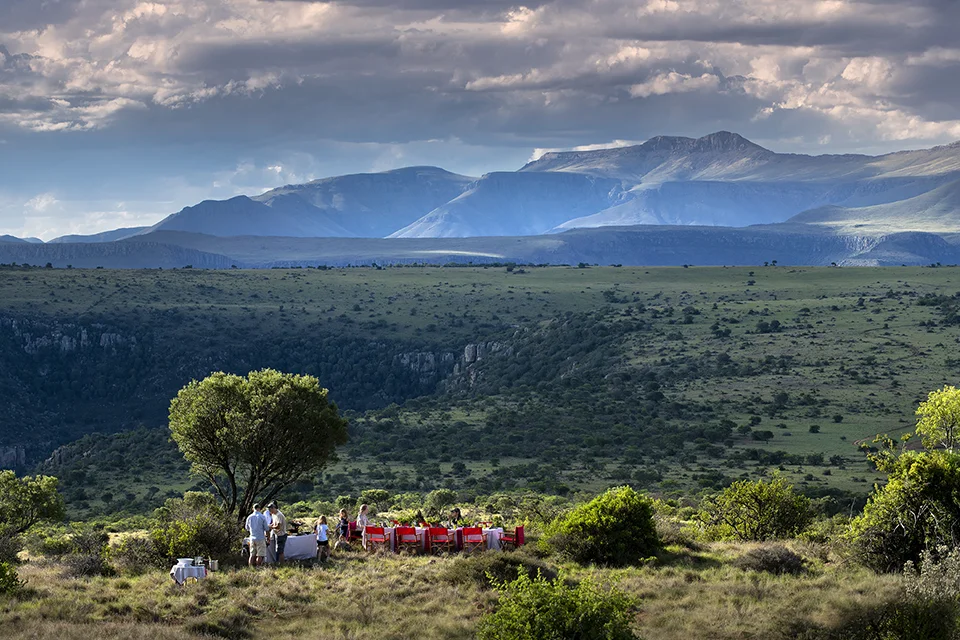
Greater Kruger is Africa's most celebrated Big Five ecosystem: a largely unfenced 22,000-square-kilometre wilderness in Limpopo and Mpumalanga where the national park and its adjoining private reserves share open borders with the Kruger National Park, and wildlife moves freely across both. Proclaimed in 1898, Kruger is one of Africa's oldest protected areas. In 1993, private landowners in Sabi Sand, MalaMala, Timbavati, Klaserie, Thornybush, Balule and Manyeleti dropped their fences with the park, creating a single managed wild area with the scale and diversity that wildlife needs to thrive.
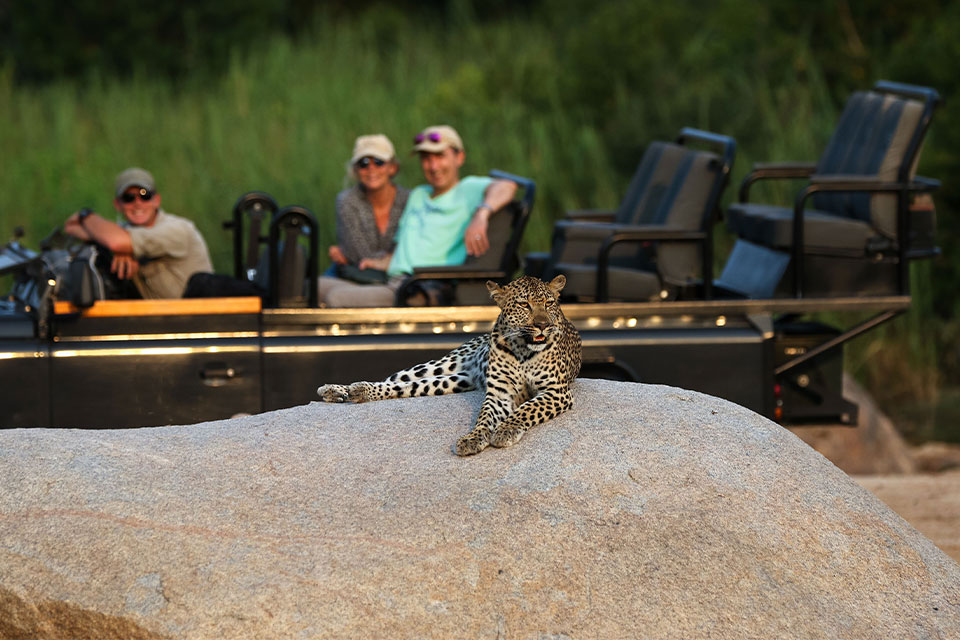
In private reserves, trained guides and trackers take guests off-road, day and night, in open vehicles with strict caps on numbers at any sighting. In Sabi Sand and MalaMala, decades of calm vehicle presence have produced leopard populations so relaxed that close, extended encounters are the norm. Timbavati is the only reserve where wild white lions have been consistently recorded, and the ecosystem holds one of Africa's largest African wild dog populations. Malaria prophylaxis is strongly recommended throughout the Greater Kruger area.
Madikwe Game Reserve
Thirty years ago, Madikwe Game Reserve was exhausted cattle farmland in South Africa's North West Province. A government study concluded that wildlife-based ecotourism would deliver far greater value to surrounding communities than farming ever could. Operation Phoenix followed: the translocation of nearly 10,000 animals from 28 species across 75,000 hectares of rewilded bush that now supports the Big Five, thriving African wild dog packs, cheetahs and brown hyenas.
Madikwe is entirely malaria-free and admits no day visitors or self-drive tourists. Every drive is guided and vehicle numbers at sightings are strictly controlled, producing unhurried encounters rare in national parks. It operates as a three-way partnership between the North West Parks Board, private lodge operators and local communities. Buffalo Ridge Safari Lodge, wholly owned by the Balete Ba Lekgophung community under a 45-year lease, is South Africa's first fully community-owned commercial safari lodge.
The Karoo
The Karoo is South Africa's vast semi-arid interior, dividing into two landscapes that reward separate itineraries. The Little Karoo is an intimate valley threaded by Route 62, home to wild meerkat sunrise encounters near Oudtshoorn, the ancient Cango Caves carved into the Swartberg, and Sanbona Wildlife Reserve near Barrydale, one of South Africa's very few malaria-free Big Five reserves.
The Great Karoo is something else entirely: a plateau of over 400,000 square kilometres, where 270 million years of geological record lie exposed beneath some of the clearest night skies in the Southern Hemisphere. Near Graaff-Reinet, Samara Karoo Reserve has rewilded 27,000 hectares into a functioning ecosystem carrying the Big Five alongside cheetah trackable on foot, one of the most distinctive wildlife encounters in South Africa. The same qualities that drew the MeerKAT and SKA telescope arrays here make the Great Karoo one of the Southern Hemisphere's premier stargazing destinations. Both regions are malaria-free.
Tswalu Kalahari Reserve
In Setswana, Tswalu means "a new beginning", a name that speaks precisely to what happened here. When the Oppenheimer family took on this collection of degraded Northern Cape farms in 1998, hunting stopped immediately, indigenous species were reintroduced and a long-term research programme was established. The 1,200-square-kilometre reserve that exists today, where ancient red dunes meet the Korannaberg Mountains, is one of the most ambitious private conservation projects in Africa.
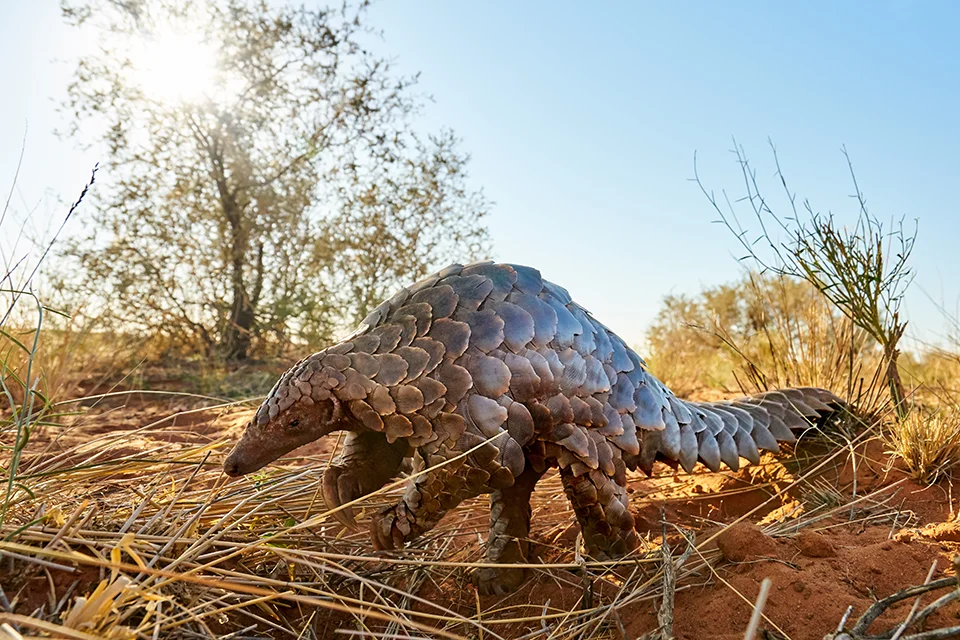
Tswalu's distinguishing offer is the Elusive Five: ground pangolin, aardvark, aardwolf, brown hyena and bat-eared fox, all nocturnal, all present, all tracked by dedicated guides on exclusive evening drives. Desert-adapted black rhino, reintroduced in 1995, are actively conserved here. Kalahari black-maned lions, cheetah, African wild dogs and three habituated meerkat colonies complete a wildlife portfolio unmatched by any single reserve in South Africa. The Malori sleep-out places guests on a raised platform above rolling red dunes under skies carrying no light pollution. Tswalu is entirely malaria-free.
Bushmans Kloof Wilderness Reserve
Tucked into the Cederberg Mountains about three hours north of Cape Town, portions of Bushmans Kloof's 7,500-hectare private reserve have been declared a Grade 1 South African National Heritage Site for the more than 130 ancient San rock art sites preserved within its boundaries, some dating back over 10,000 years. Access is exclusive to overnight guests and guided by a dedicated Rock Art Curator, giving each visit a depth of human encounter no other private reserve in the country can offer.
Since 1995, a wildlife reintroduction programme has returned Cape mountain zebra, red hartebeest and grey rhebok to the Cederberg. The reserve's fynbos forms part of the UNESCO Cape Floral Region World Heritage Site, carrying 755 indigenous plant species. The Clanwilliam Cedar Tree Project has seen 800 endemic trees planted within the reserve to date. Malaria-free and rewarding year-round, Bushmans Kloof also serves as a natural extension of the West Coast for travellers heading north from Cape Town.
The Garden Route
The Garden Route extends approximately 200 kilometres along the southern edge of South Africa, from Mossel Bay to Stormsrivier. Calling it a route misses the point. This is a series of layered worlds: the Outeniqua and Tsitsikamma mountain ranges, ancient indigenous forest, five interconnected lakes at Wilderness, the sweeping arc of Knysna Lagoon and the deep gorges of Tsitsikamma. The Garden Route National Park, formed in 2009, covers approximately 1,210 square kilometres and protects Africa's first marine national park, proclaimed in 1964.
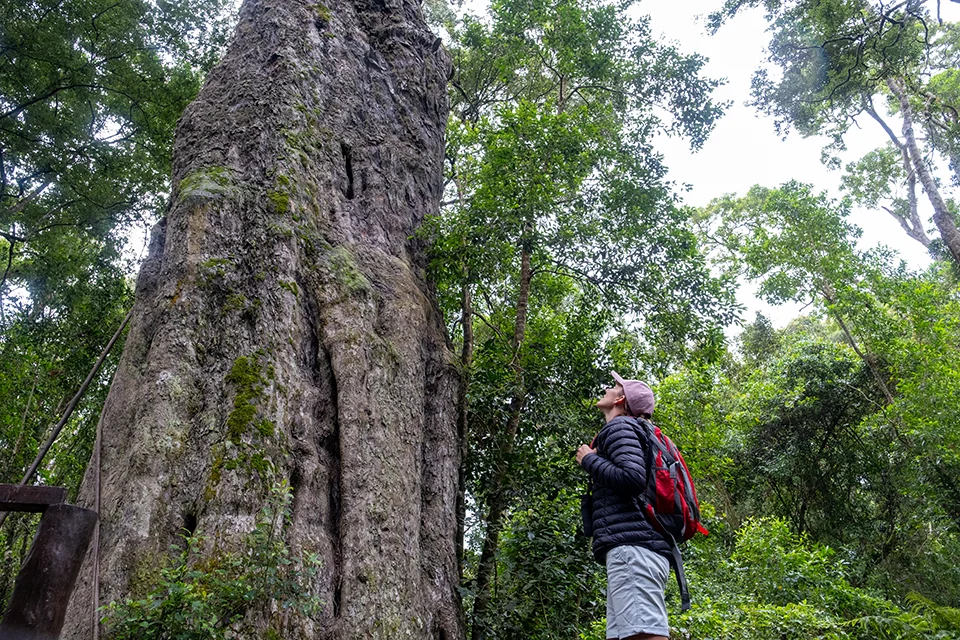
Knysna's forests shelter what may be the last surviving elephant of Africa's southernmost population, known mostly from tracks and camera images. An 800-year-old Outeniqua yellowwood stands in the Knysna forest as one of the region's most quietly powerful natural monuments. The Otter Trail covers 41 kilometres of cliff and coastal forest over five days; the Bloukrans Bridge bungee jump drops 216 metres above the Tsitsikamma gorge. Southern right, humpback and Bryde's whales are present in Plettenberg Bay's waters year-round. George Airport is the principal gateway.
Whale Coast
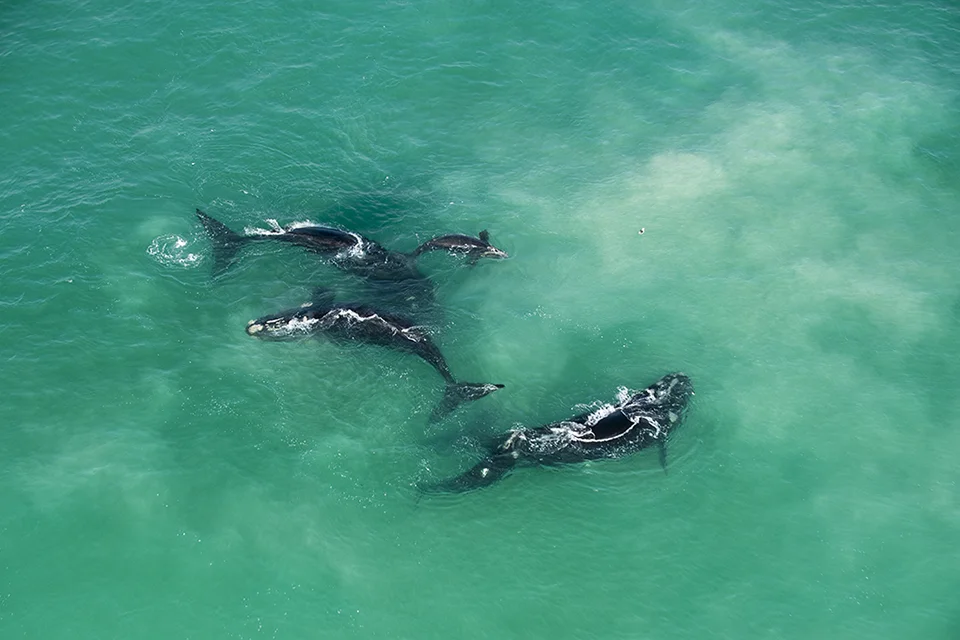
The Whale Coast stretches about 200 kilometres of Indian Ocean shoreline from Betty's Bay east to Cape Agulhas, roughly two hours from Cape Town. Between July and November, southern right whales migrate here to calve and nurse. At Hermanus, a clifftop path runs above Walker Bay at close range to the whales below, and the town's Whale Crier sounds a kelp horn at each new sighting, making it some of the world's finest free land-based whale watching.
Off Gansbaai, great white sharks and Cape fur seals congregate around Dyer Island year-round. De Hoop Nature Reserve is both a marine protected area and part of the UNESCO Cape Floral Region, protecting Cape mountain zebra, bontebok and a southern right whale nursery. The Hemel-en-Aarde Valley near Hermanus produces cool-climate Pinot Noir and Chardonnay of international standing. At the Whale Route's southern end, Cape Agulhas is the geographic southernmost point of Africa, where the Atlantic and Indian Oceans officially meet.
West Coast
South Africa's West Coast runs 400 kilometres north of Cape Town along the Atlantic, operating on entirely different terms from every other coastal destination in the country. The towns are quieter, the fishing communities older, the landscape more open. Paternoster, its whitewashed cottages facing the cold Atlantic, is the coast's most evocative village: resistant to hurry.
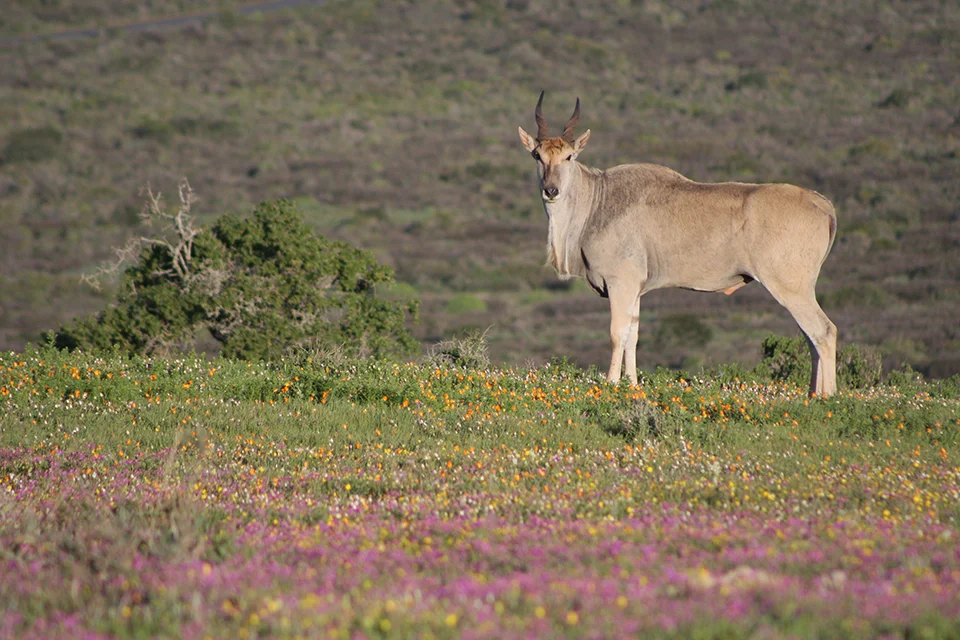
Each spring, from late July into October, Namaqualand daisies and fynbos transform the landscape into vivid carpets of orange, white, yellow and purple. Timing depends entirely on winter rainfall; the flowers follow no fixed schedule, and that unpredictability is precisely what makes witnessing them extraordinary. Langebaan Lagoon, a Ramsar-designated wetland, offers world-class kite-surfing, windsurfing and kayaking throughout the year. West Coast National Park records 281 bird species, including flamingos and the Cape gannet colony at Bird Island Nature Reserve near Lambert's Bay. In Velddrif, bokkom (dried salted harder fish, slow-cured along the Berg River) is the West Coast's most particular culinary tradition.
Waterberg
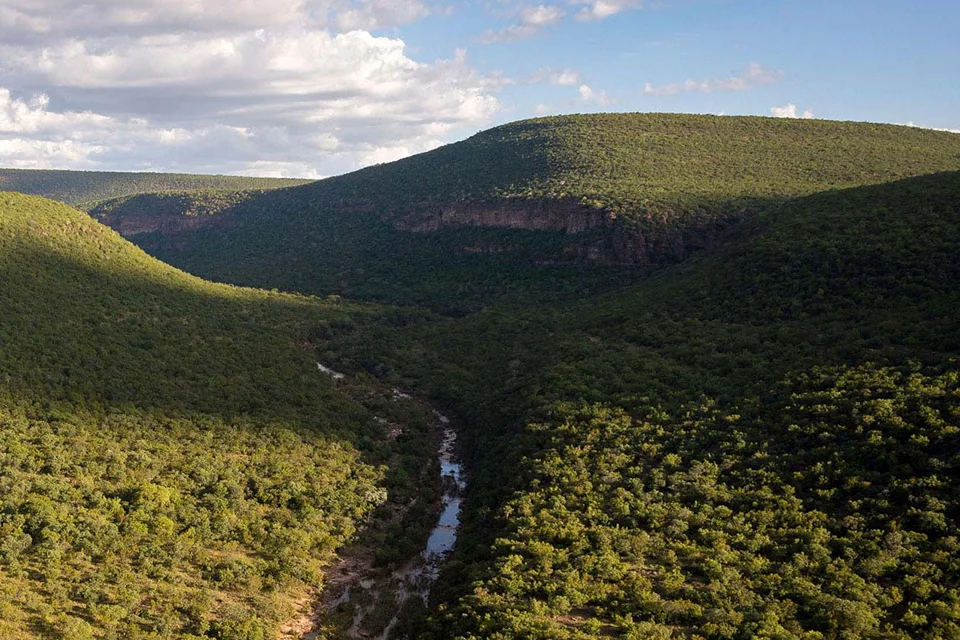
The Waterberg is a UNESCO Biosphere Reserve running 150 kilometres through Limpopo's ancient sandstone, rising from 1,050 metres on valley plains to 2,088 metres at the Kransberg summit. Malaria-free and two to three and a half hours from Johannesburg by road, it is largely unknown to travellers who default to Kruger, and that quiet is one of its most significant assets.
Three reserves anchor the Biosphere. Marakele National Park supports the full Big Five, African wild dogs and roughly 800 Cape vulture breeding pairs nesting on the Kransberg cliffs, one of the world's largest known colonies of this endangered species. Welgevonden Private Game Reserve covers 36,000 hectares with no self-driving permitted; all guests travel with qualified guides. Lapalala Wilderness, at 48,000 hectares the largest private protected area in the Biosphere, has led private rhino conservation since 1981 and became the first private reserve in South Africa to manage black rhino in 1990.
Eastern Cape
The Eastern Cape offers two entirely different experiences within a single malaria-free province. In the west, the Greater Addo region encompasses eight reserves within 50 to 160 kilometres of Gqeberha, anchored by Addo Elephant National Park. Proclaimed in 1931 to protect eleven surviving elephants, Addo now covers nearly 179,000 hectares and holds more than 600 elephants. Its boundaries extend into Algoa Bay, making it the only reserve in South Africa where the Big Five can be encountered alongside southern right whales and great white sharks in a single protected ecosystem: the Big Seven. The seven surrounding private reserves, among them Shamwari, Kwandwe, Kariega and Lalibela, were each rewilded from agricultural land over recent decades.
In the north-east, Mkambati Nature Reserve occupies 7,400 hectares of Wild Coast grassland and Indian Ocean shoreline within the Pondoland Centre of Endemism. Owned outright by seven local communities through land restitution in 2004, it is staffed and run for community benefit. The all-women Green Griffons anti-poaching unit patrols year-round.
KwaZulu-Natal
KwaZulu-Natal is the only province in South Africa where Big Five wildlife, a UNESCO mountain range, a UNESCO World Heritage coastline and one of Africa's great living cultures converge within a single coherent journey.
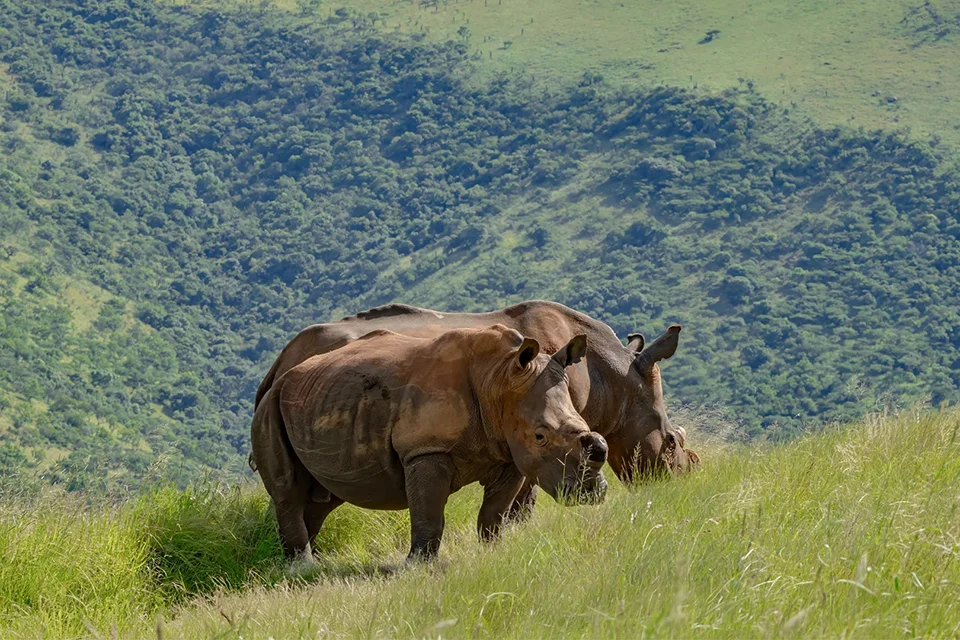
In Zululand, Hluhluwe-iMfolozi Park, proclaimed in 1895 on the royal hunting grounds of Zulu kings, is where Operation Rhino saved the white rhino from near-extinction, redistributing animals to repopulate reserves across the continent. Nearby, iSimangaliso Wetland Park, South Africa's first UNESCO World Heritage Site (1999), spans approximately 332,000 hectares across eight ecosystems, from Africa's largest estuarine system to the southernmost coral reefs on Earth at Sodwana Bay. The Drakensberg, a UNESCO World Heritage Site since 2000, rises as a 200-kilometre basalt wall sheltering more than 25,000 individual San rock paintings. The 82 battlefield sites across KwaZulu-Natal, including Isandlwana and Rorke's Drift, are guided by specialist historians and descendants of those who fought. Malaria risk varies by area; always consult a doctor before travel.
Pilanesberg National Park
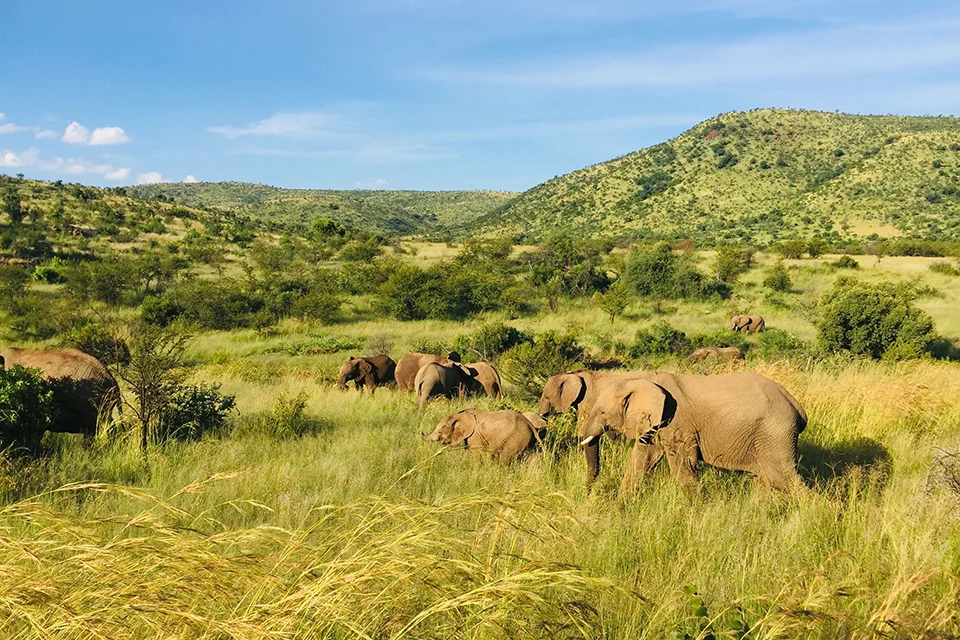
Approximately 200 kilometres from Johannesburg, Pilanesberg National Park sits inside the eroded crater of an ancient alkaline ring complex, a geological formation approximately 1.3 billion years old and one of only a handful of comparable structures on Earth. Mankwe Dam at its centre draws wildlife from across the reserve's 550 square kilometres. All five Big Five species are resident, including both white and black rhino, alongside African wild dogs, cheetah, brown hyena, 15 confirmed antelope species and more than 350 bird species.
Pilanesberg is entirely malaria-free and open to self-drive visitors on more than 200 kilometres of roads. Operation Genesis, launched in 1979, introduced approximately 6,000 animals to exhausted farmland in one of the most ambitious wildlife translocations ever attempted. The park also produced a landmark study in elephant behavioural ecology: young bulls without adult males present began killing white rhino in the 1990s until six mature bulls were introduced and the killings stopped. The adjacent Black Rhino Game Reserve shares an unfenced boundary with the park, with lodge vehicles carrying full traversing rights across both areas.
Trusted by thousands of ecstatic travellers
✔️ 5-Star Trustpilot Rating ✔️ Condé Nast Travel Specialist Award Winner
✔️ Accredited by SATSA ✔️ 5,000+ Exceptional Safaris Since 1991
Why choose Africa Geographic to plan your safari?

What a fabulous time we had in South Africa, booked seamlessly through Ro and Linda at Africa Geographic company. Our trip was to Madikwe National Park ... the game drives exceeded our expectations ... and Cape Town ... including Table Mountain, Boulders Beach and Robben Island ... Thank you AG, and I would highly recommend them.
My South African birthday was outstanding! I traveled from America to Cape Town & Kruger. I experienced a private VIP experience ... the best sights in Cape Town ... Kruger National Park was amazing! ... There was not a dull moment, and we received great value for our money. The trip was once-in-a-lifetime! Thank you!
... an unforgettable trip for my family and me to South Africa. We enjoyed two incredible safaris over eight nights, which struck the perfect balance between family-friendly ... and fun experiences for adults. Following the safaris, we spent four nights in Cape Town, soaking in the city’s beauty and culture, before embarking on a breathtaking tour of the Garden Route ...
Wish you were here?
Frequently asked questions
Yes. South Africa has well-developed infrastructure, English is widely spoken and most safari areas are accessible by domestic flight. Many reserves are entirely malaria-free, and Greater Kruger's private reserves are among the most reliably productive Big Five destinations on the continent.
Most major travel regions carry no malaria risk, including Cape Town, the Cape Winelands, the West Coast, the Garden Route, the Karoo, the Eastern Cape, Madikwe, Pilanesberg, the Waterberg and Tswalu. Greater Kruger is a malaria area; KwaZulu-Natal risk varies by reserve. Always consult a doctor before travel.
May to September is the dry season and the prime period for Big Five safari. July to November is whale watching season along the Whale Coast; wildflower season on the West Coast runs from late July to October. Cape Town and the Garden Route are rewarding year-round.
Yes. Lion, leopard, elephant, buffalo and rhino are confirmed across Greater Kruger, Madikwe, the Eastern Cape, KwaZulu-Natal, the Waterberg, Pilanesberg, Tswalu and both Karoo reserves at Sanbona and Samara. Most of these destinations are malaria-free.
Most international visitors arrive through Cape Town International Airport (CPT) or OR Tambo International Airport, Johannesburg (JNB), with direct flights from Europe, the Middle East and African cities. Domestic flights connect to George, Gqeberha, Hoedspruit, Durban and Richards Bay.
Yes, and it is one of South Africa's most popular itineraries. Most guests spend three to five nights in Cape Town or the Cape Winelands, then fly approximately two hours to Greater Kruger, Madikwe or the Eastern Cape. The combination works comfortably in ten to fourteen days.
The Big Seven extends the Big Five to include the southern right whale and the great white shark. It is specific to Addo Elephant National Park in the Eastern Cape, whose boundaries extend into Algoa Bay: the only reserve in Africa where all seven share one protected ecosystem.
Madikwe, the Eastern Cape's Greater Addo circuit, Pilanesberg and the Waterberg are all malaria-free Big Five destinations with dedicated family accommodation and children's programmes. Madikwe and Pilanesberg are within easy reach of Johannesburg; the Eastern Cape connects naturally with the Garden Route.
South Africa is the only African country combining reliable Big Five safari, a world-class city, world-renowned wine country, a diverse coastline, UNESCO-protected mountains and ancient rock art in a single itinerary, with most safari areas malaria-free. No other destination on the continent offers this breadth without significant compromise.
Cape Town warrants at least five nights. A Cape Town and safari combination takes ten to twelve days, and a fuller itinerary including the Garden Route, Eastern Cape or KwaZulu-Natal comfortably fills three weeks.
Malaria risk varies significantly across the province. Most popular destinations, including the Drakensberg, Babanango, Phinda and the South Coast, carry low to negligible risk, while Tembe Elephant Park and Ndumo Game Reserve carry medium-to-high risk year-round. Always consult a doctor before travel.
Several stand out. Operation Rhino at Hluhluwe-iMfolozi rescued white rhinos from near-extinction and redistributed animals across Africa. Operation Phoenix rewilded 75,000 hectares at Madikwe with nearly 10,000 animals reintroduced. The Mkambati community's choice of conservation over resettlement is equally compelling.
Our South African safaris typically cost from US$700 per person, per night, depending on the accommodation comfort level, time of year and activities. This price usually includes accommodation, all meals, game drives, experienced guides, airport transfers, and 24/7 support from our team.
Click here to schedule a no-obligation call with one of our Safari Experts or fill in our 2-minute form with your questions. Our team of experts are here to help! Whether you’re curious about the best time to travel, want to hear first-hand about an experience or need help planning your safari.
Explore more African destinations
Start planning your dream safari
Our travel experts will craft a no-obligation itinerary just for you. We have crafted over 5,000 safaris since 1991. Your personal details are protected; we only use this information to contact you.
Why book your safari with us?

Deep Experience & Knowledge
Handcrafted experiential safaris since 1991.
Travel in Africa is about knowing when and where to go, and with whom. A few weeks too early/late or a few kilometres off course, and you could miss the greatest show on Earth. And wouldn’t that be a pity?

Trust & Safety

Make A Difference
We donate a portion of the revenue from every safari sold to carefully selected conservation projects that make a significant difference at ground level.
YOUR safari choice does make a difference - thank you!