
Tailor-made safaris. Since 1991



Maasai Mara Conservancies: Kenya's private Mara, beyond the national reserve
Maasai Mara Conservancies at a glance:
Location: Narok County, southwestern Kenya; a network of community-owned private conservancies surrounding the Maasai Mara National Reserve. | Main access: Nairobi Wilson Airport; scheduled light aircraft to conservancy airstrips (45–60 minutes) |
Coverage: We feature the best seven conservancies - almost 90,000 hectares. | Best time to visit: Year-round; August to mid-October for the Great Wildebeest Migration river crossings; June–October dry season for peak wildlife viewing |
Conservation model: Private, community-owned; land leased from Maasai landowner families; fees fund livelihoods, education, healthcare and habitat protection | Key wildlife: Lions, leopards, cheetahs, elephants, endangered Maasai giraffe, spotted hyena; Great Wildebeest Migration August to mid-October |
Currency: Kenyan Shilling (KES); USD widely accepted at lodges | Health: Malaria risk; antimalarial medication strongly recommended; comprehensive travel and medical evacuation insurance essential |
Why visit the Maasai Mara conservancies?
The Maasai Mara is one of Africa's most celebrated wildlife landscapes, but the experience available inside the national reserve is only part of what this ecosystem offers. Surrounding the reserve on all sides, a network of private, community-owned conservancies extends the landscape into terrain where the rules are different and encounters are fundamentally different.
In the conservancies, activities unavailable inside the national reserve become part of an ordinary safari day. Night drives, guided walking safaris with Maasai guides and off-road driving are all permitted here and all prohibited across the national reserve boundary. Vehicle numbers at any sighting are strictly managed, with vehicle densities as low as as one vehicle per 850 hectares, so encounters with lion prides and hunting cheetahs are enjoyed without the clusters of vehicles that can characterise the peak-season national reserve.
The result is a safari that feels genuinely exclusive: not simply because of price or property, but because deliberate conservation models have kept these landscapes that way. This guide covers seven conservancies, each with its own character. Enonkishu is a pioneering rewilding project on the Mara River. Lemek is intimate, Maasai-owned and defined by solitude. Mara Naboisho enforces the strictest vehicle limits in the ecosystem. Mara North is the largest conservancy in the greater Mara, with an activity range that extends well beyond the standard. Ol Kinyei is the most independently certified conservancy in Kenya. Olare Motorogi is reputed to hold the highest concentration of big cats anywhere in Africa. Olderkesi guards a remote corridor on the Tanzanian border. No two tell the same story.
5 Reasons We Love the Maasai Mara Conservancies
Night drives, walking safaris and off-road driving: None are available inside the national reserve. In the conservancies, they are part of every safari day, opening the Mara to dimensions no reserve visit can replicate.
Big cats in undisturbed terrain: Several conservancies rank among Kenya's highest-density big cat destinations. Olare Motorogi is reputed to hold the greatest concentration of lions, leopards and cheetahs anywhere in Africa, and strict vehicle limits mean you experience them without competition.
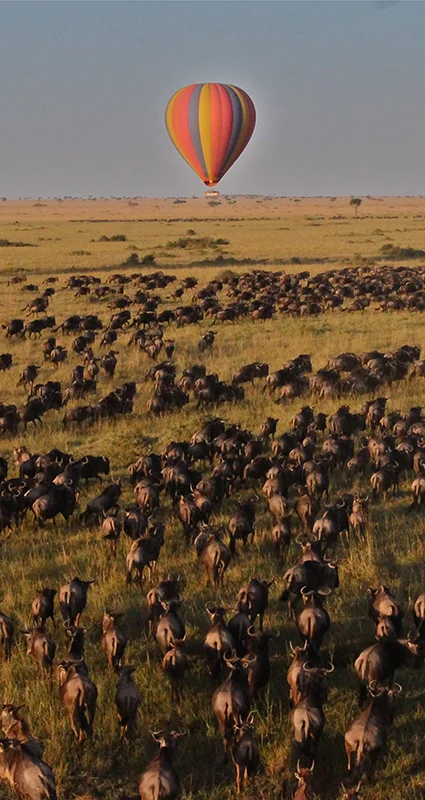
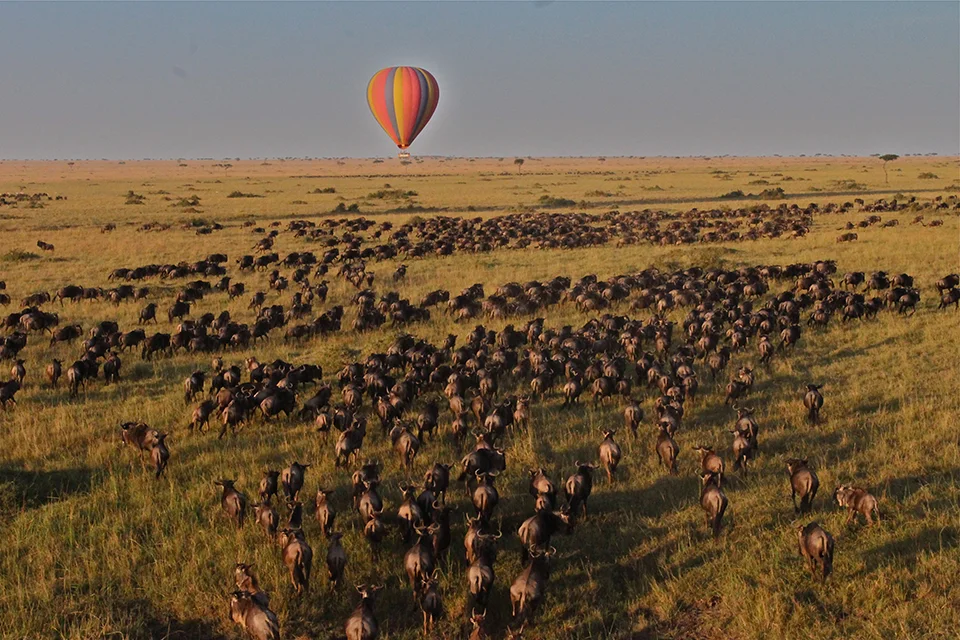
The Great Wildebeest Migration on private land: From August to mid-October, wildebeest and zebra herds move through the conservancies, drawing intense predator activity. Note that the popular Mara River crossings occur only in the national reserve, and your conservancy lodge will arrange excursions to view these dramatic crossings. A distinct migration from Kenya's Loita Plains also passes through several conservancies between January and March.
Conservation and community as one: Each conservancy leases land from Maasai families, who receive direct income from wildlife that funds education, healthcare, and livelihoods. Visiting here means choosing to participate in a conservation model that works because the people who own the land benefit directly from protecting it.
Seven conservancies, seven distinct experiences: From Enonkishu's pioneering rewilding project on the Mara River to Olare Motorogi's predator research hub, from Mara North's 30,000-hectare scale to Olderkesi's remote corridor on the Tanzanian border, no two conservancies tell the same story.
All you need to know about the Maasai Mara conservancies
Things to do in the Maasai Mara conservancies
Game drives on exclusive private land: All conservancies permit off-road driving and strict vehicle limits at sightings, so guides can follow a hunting cheetah or lion pride across open grassland without competing for position or disturbing the animals.
Night drives after dark: Once the national reserve closes to vehicles every day, the conservancies allow night drives to find spotted hyenas, aardwolves, servals, porcupines, bushbabies and bat-eared foxes that daylight hours never show.
Guided walking safaris with Maasai guides: On foot in big-cat country, the scale of the landscape changes entirely. Tracks in the dust, medicinal plants and birdsong are the focus, and the pace is relaxed.
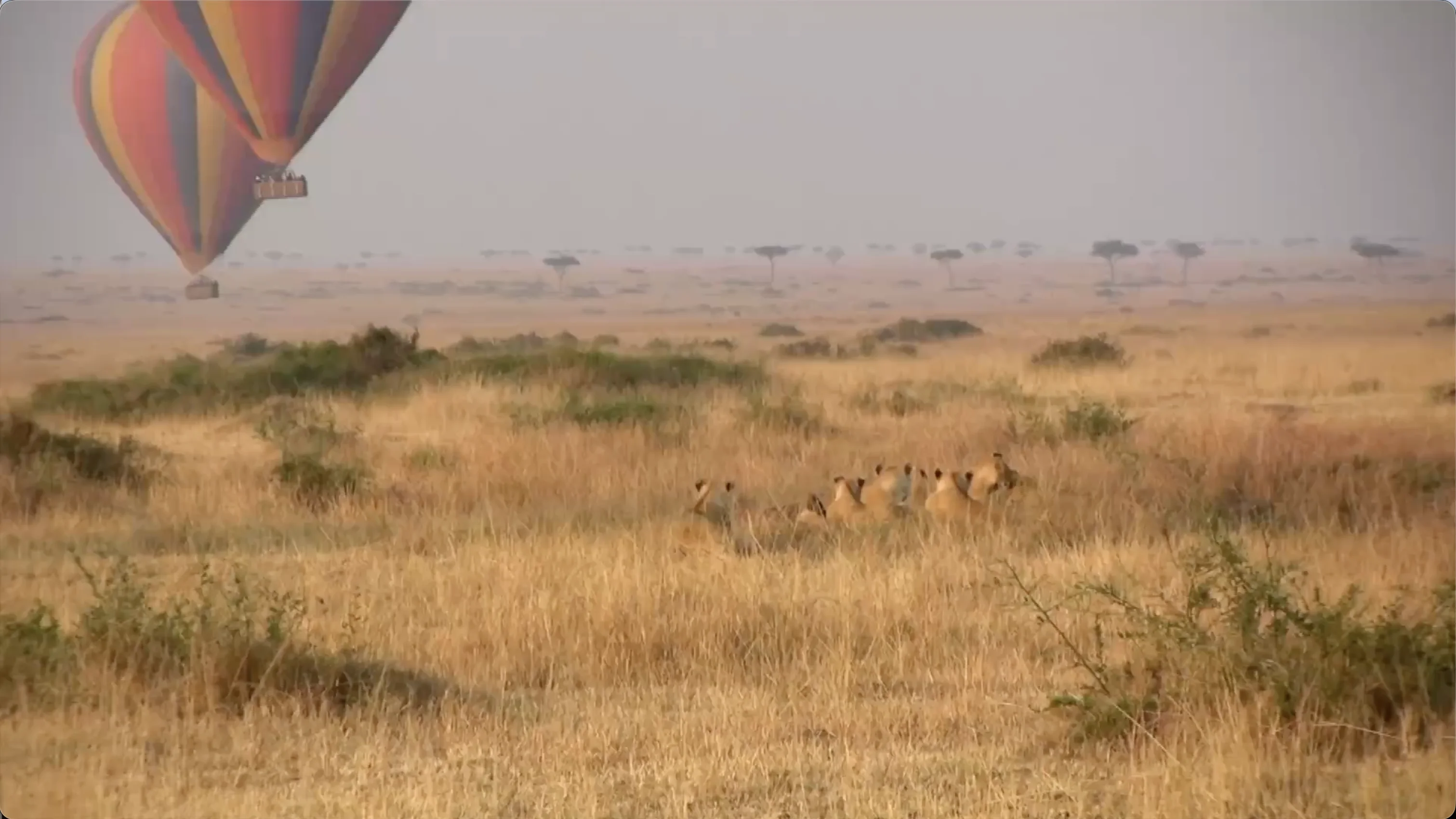
Hot air ballooning at dawn: Available across several conservancies, a balloon flight drifts above the plains as the light arrives, offering a unique perspective on the landscape and wildlife - followed by a bush breakfast.
Maasai cultural visits and community experiences: Homestead visits, overnight Maasai homestays, and cultural programmes offer genuine insight into the pastoral communities whose land this is: encounters shaped by genuine engagement and not performance.
Specialist and immersive experiences: Fly camping, predator research, rangeland science walks, and sanctuary white rhino encounters extend the experience well beyond the vehicle.
What wildlife can I see in the Maasai Mara conservancies?
The big cats: Lions, leopards, and cheetahs are resident across all seven conservancies year-round, with some of Kenya's highest big-cat densities.
The Great Wildebeest Migration: Between August and mid-October, wildebeest and zebra herds move through the conservancies, bringing intense predator activity. Mara River crossings take place within the national reserve. The smaller Loita wildebeest migration passes through some conservancies between January and March.
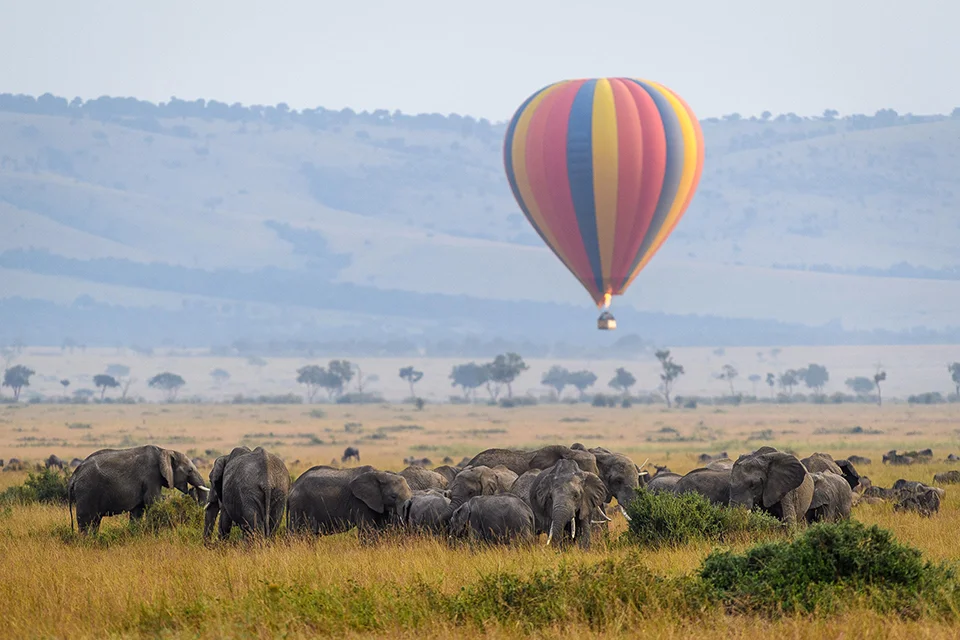
Elephants, endangered Maasai giraffe and plains species: Large breeding elephant herds are present year-round; rare Maasai giraffes, zebra, Cape buffalo, eland, topi, impala, and Thomson's and Grant's gazelles populate the open savannah year-round.
Nocturnal and rarely seen species: Night drives reveal spotted hyenas, aardwolves, servals, bushbabies, bat-eared foxes and porcupines. African wild dogs move through Mara North and the Lemek corridor; striped hyenas are occasionally recorded.
Hippos and crocodiles: Hippos and crocodiles inhabit the Mara, Talek, Olare Orok, Ntiakitiak, and Sand Rivers and are easy to find.
Around 470 bird species: The Maasai Mara area supports approximately 470 species, including Jackson's widowbird, Usambiro barbet, grey-crested helmetshrike and rufous-tailed weaver. November to April is the strongest birdwatching period, when migratory species join the resident population.
Where to stay in the Maasai Mara conservancies
Accommodation across the Maasai Mara conservancies covers a wide range: intimate river-level camps and remote valley bush camps sit alongside hilltop villas and panoramic tented lodges. The properties share private conservancy access, night drives, and guided walking safaris; what differentiates them is position, character, and what they prioritise.
The range of options across the region is vast, and we showcase many of them on each regional page linked below.
Explore the Maasai Mara conservancies
Enonkishu Conservancy
At 2,370 hectares, Enonkishu is the smallest and northernmost conservancy in the Mara, sitting on the Mara River in Narok County. It is also the most distinctive in its conservation model. Forty-two Maasai landowner families, working alongside partners including WWF and UNESCO-IHE, began rotating cattle through mobile bomas on a strict timed schedule: split hooves aerate compacted soil, dung fertilises recovering grassland, and degraded farmland has measurably returned to wildlife habitat. It was the first place in the Maasai Mara area where intensively farmed land was converted back to wildlife in this way.
The cattle-dung-termite chain produces one of East Africa's highest aardwolf densities, an encounter that is a direct and visible consequence of the land management. A single conservancy fee gives access to more than 20,000 hectares across Enonkishu, Lemek and Ol Chorro Oiroua. The adjacent Ol Chorro Rhino Sanctuary offers one of Kenya's few opportunities to approach white rhinos on foot with armed rangers.
Two lodges serve the conservancy. House in the Wild occupies the Mara River bank, while Wild Hill, opened in 2024 on the summit of Kileleoni Hill at 2,100 metres and the highest point in the Maasai Mara region, offers an exclusive-use hilltop experience of an entirely different order.
Lemek Conservancy
Covering more than 7,600 hectares in Narok County, Lemek Conservancy borders Mara North and is co-managed by Saruni Basecamp alongside approximately 500 Maasai landowners whose land this is and whose communities are its direct beneficiaries. The conservancy is a member of the Northern Rangelands Trust, and the tourism model is built to tie wildlife protection directly to community income.
The terrain is open savannah grassland with ribbons of riverine woodland where leopards favour the acacia canopy above the luggas and lion prides range year-round. The endangered Maasai giraffe is resident, and African wild dogs have historically moved through the conservancy, a marker of its health as a connected wildlife corridor. The Great Migration passes through between August and mid-October, and from Lemek, camps arrange day visits into the national reserve for Mara River crossings.
What most defines the experience here is what is not present: vehicle congestion, staged encounters, another camp on the horizon. With a single intimate camp and strict limits on visitor numbers, Lemek offers a quality of solitude that few places in the ecosystem can honestly claim. The same conservancy fee that covers Enonkishu also provides access to the broader connected landscape across Lemek and Ol Chorro Oiroua.
Mara Naboisho Conservancy
The name Naboisho means "coming together" in Maa, chosen by the more than 500 Maasai landowner families who collectively set aside their land to create this conservancy in 2010. At approximately 20,000 hectares, it sits adjacent to the Maasai Mara National Reserve in Narok County, sharing an unfenced boundary that allows wildlife to move freely between both areas.
Mara Naboisho operates one of the most strictly controlled tourism models in the ecosystem: no more than four vehicles may gather at any single wildlife sighting, and total bed numbers across the conservancy are deliberately capped. The result is one of Kenya's most reliable destinations for lions, with five resident prides placing Naboisho consistently among the country's highest lion-density areas, alongside one of Kenya's highest recorded cheetah densities and a Maasai giraffe population that is the largest in the Mara ecosystem. Night drives, walking safaris and off-road driving are all available, as they are across the conservancy network, but Naboisho's four-vehicle rule is specific to this conservancy and enforced at every sighting.
Five properties serve the conservancy, ranging from a remote bush camp in the Saddle Valley to a tented villa on a rocky bluff with a 270-degree panorama across the plains.
Mara North Conservancy
At approximately 30,000 hectares, Mara North is the largest conservancy in the greater Mara, occupying the northwestern boundary of the Masai Mara National Reserve in Narok County. It was founded in 2009 as a not-for-profit partnership between safari lodges and more than 800 Maasai landowners, the first time these families received direct, meaningful income from the wildlife on their land. That founding relationship remains the defining principle of how the conservancy operates.
Vehicle density is among the lowest in the region and the activity range extends beyond most: night drives are permitted until 10 pm, and guided walking safaris with armed rangers, fly camping, and hot air ballooning are all available. The open grasslands and wooded valleys hold outstanding densities of lions, leopards, and cheetahs, including the Acacia and Gorge lion prides made famous by BBC's Big Cat Diary, whose territory and predator density endure. Between January and March, Loita Plains wildebeest gather on the conservancy's short grasslands, extending exceptional wildlife viewing well beyond the main migration season. A Kundi Moja grazing management system maintains short grass year-round, concentrating plains species even when the reserve's taller grasses reduce visibility elsewhere.
Ol Kinyei Conservancy
Established in 2005 by 171 Maasai landowners and Porini Safari Camps, Ol Kinyei was the first community conservancy of its kind in the Maasai Mara ecosystem. It covers 7,500 hectares northeast of the Maasai Mara National Reserve in the Rift Valley, and in 2018 became one of only three sites in Kenya to achieve IUCN Green List status: a global benchmark for effective conservation management, reassessed every five years.
Access is exclusively reserved for Porini Safari Camps guests, with no more than one vehicle permitted per 560 hectares at any time. That exclusivity ensures that wildlife encounters are at the animals' own pace, without the pressure of competing vehicles. Two resident lion prides, several leopards with established territories and a cheetah population that has grown steadily since the conservancy's formation make Ol Kinyei one of the most reliable destinations in the Mara for all three large cats in a single stay. A 2016 study confirmed the conservancy as a critical elephant movement corridor across the wider Mara ecosystem.
Ol Kinyei is also the northernmost calving ground for the Loita wildebeest migration, a distinct annual movement from Kenya's Loita Plains separate from the broader Serengeti-Mara migration, with herds arriving from January and calving typically across February and March.
Olare Motorogi Conservancy
Covering 13,300 hectares on the northwestern edge of the Maasai Mara National Reserve, Olare Motorogi is owned by more than 300 Maasai landowners, each holding an individual freehold title deed to their parcel of land. The conservancy is managed by a not-for-profit company whose board gives equal representation to landowners, tourism operators and the Maa Trust. A maximum of 94 beds across five camps produces one vehicle per 850 hectares, the lowest vehicle density in the Maasai Mara region.
The conservancy is reputed to hold the highest concentration of big cats anywhere in Africa. Within its boundaries sits the Tony Lapham Mara Predator Hub, operated by the Kenya Wildlife Trust. The Hub is home to both the Mara Lion Project and the Mara Cheetah Project, concurrent long-term research programmes that have made Olare Motorogi one of the most significant predator landscapes in East Africa. Multiple lion pride territories converge and overlap here; territorial encounters between prides are not uncommon. Cheetahs are well-established residents, and leopards favour the ribbons of riverine forest lining the conservancy's seasonal streams.
Annual wildebeest and zebra herds move through between August and mid-October, and Loita Plains herds pass through Olare Motorogi en route to the reserve.
Olderkesi Conservancy
Olderkesi sits on the southeastern boundary of the Masai Mara National Reserve in Narok County, directly on the Kenya–Tanzania border, covering approximately 8,400 hectares. Established in 2016, it protects a wildlife corridor connecting the Masai Mara, Tanzania's Serengeti National Park and the Loita Hills: a function as ecologically vital as the reserve it borders.
The Cottar's Wildlife Conservation Trust, founded in 2006, manages the conservancy alongside the Maasai landowner community and the African Wildlife Foundation. Tourism lease payments reach approximately 6,000 landowner households. Twenty-nine community rangers protect the landscape, and the first women ranger programme in the Mara ecosystem was established here. The Oltulelei expansion, negotiated from 2024, adds further habitat and prevents the fragmentation of Maasai land parcels that would have disrupted wildlife movement across the corridor.
The Poleleti Plains within the conservancy serve as a recognised wildebeest calving ground. Olderkesi is not a Mara River crossing destination; for crossings, targeted drives into the national reserve can be arranged. Lions, leopards and cheetahs are the wildlife signature of the conservancy, alongside corridor elephants and Maasai giraffe. Dikdiks are regularly encountered here, a species seldom seen in the more vehicle-heavy sections of the national reserve, and both African wild dogs and black rhinos have been recorded, though both remain elusive.
Trusted by thousands of ecstatic travellers
✔️ 5-Star Trustpilot Rating ✔️ Condé Nast Travel Specialist Award Winner
✔️ Accredited by SATSA ✔️ 5,000+ Exceptional Safaris Since 1991
Why choose Africa Geographic to plan your safari?

"...the Mara North Conservancy...The first game drive to our lodge, Saruni Mara Camp, is from the airstrip, it is tucked away in a secluded and wooded area along a long bumpy road! In the conservancy, safari vehicles are allowed off the tracks so we were able to get very close to so many beautiful animals, this is not the case in the Masai Mara Reserve...Thank you...AG for arranging, everything went like clockwork."
"Trip to Kenya was planned and executed to perfection by...Africa Geographic. Enkewa Camp, Masai Mara, exceeded all our expectations. Comfortable and clean. Excellent food and service. Game viewing was superb. The camp Manager...went over and above the call of duty to make our stay comfortable and special. Many thanks to him...and all the staff. Would love to go back."
"...made a number of calls and managed to get us into two camps. Without his extensive network and knowledge tis wouldn't have been possible...The final stop was Saruni camp in the Naboisho conservancy. Notable sightings included newly born giraffe and buffalo. Considering the fact we had rain every day it was still a great trip. It could have been a disastrous start but...rescued it."
Wish you were here?
Frequently asked questions
The Maasai Mara conservancies are private, community-owned wildlife areas in Narok County, Kenya, surrounding the Maasai Mara National Reserve. Land is leased from Maasai landowner families, with tourism revenue funding direct community benefits. Each conservancy operates under its own governance and conservation model.
As private land, the conservancies permit night drives, guided walking safaris and off-road driving, all of which are prohibited inside the national reserve. Vehicle numbers at any sighting are strictly managed, ensuring encounters are uncrowded. Conservation fees flow directly to Maasai landowner families rather than to government.
The conservancies reward visits year-round. June to October brings dry conditions and concentrated wildlife; the Great Wildebeest Migration's Mara River crossings occur from August to mid-October. November to April offers fewer visitors, strong birdwatching and the Loita wildebeest migration across several conservancies between January and March.
Yes. Between August and mid-October, wildebeest and zebra herds move through the conservancies, bringing intense predator activity. The Mara River crossings take place within the national reserve. A separate Loita wildebeest migration passes through Ol Kinyei, Mara North and Olare Motorogi from January to March.
Lions, leopards and cheetahs are resident year-round across all seven conservancies. Olare Motorogi is reputed to hold the highest concentration of big cats anywhere in Africa, with the Mara Lion Project and Mara Cheetah Project based there. Mara Naboisho and Mara North are also exceptional for all three species.
Both are available across all seven conservancies and both are prohibited inside the Maasai Mara National Reserve. Night drives reveal spotted hyenas, aardwolves, servals, bushbabies and other nocturnal species. Walking safaris are led by Maasai guides, with armed rangers accompanying guests at certain properties.
Land lease payments flow directly to Maasai landowner families: from 42 families at Enonkishu to approximately 6,000 landowner households at Olderkesi. Tourism revenue funds employment, education, healthcare, water infrastructure and, at Olderkesi, the first women ranger programme in the Mara ecosystem.
The choice depends on priorities. Olare Motorogi and Mara Naboisho lead for predator density; Mara North offers the greatest scale and activity range; Ol Kinyei provides the most certified exclusivity; Olderkesi suits those seeking remoteness and conservation depth; Enonkishu is distinct for its rewilding story and nocturnal wildlife.
Conservancy fees, typically included in lodge rates, fund Maasai landowner lease payments, ranger patrols and habitat protection. At Enonkishu, fees are approximately US$150 per non-resident adult per night and cover access to more than 20,000 hectares across three connected conservancies.
Yes. Resident lions, leopards and cheetahs are present year-round. Between January and March the Loita wildebeest migration passes through several conservancies. Mara North's Kundi Moja-managed short grasslands concentrate plains wildlife throughout the year, and November to April is the strongest birdwatching period across the network.
Most guests fly by scheduled light aircraft from Nairobi Wilson Airport to conservancy airstrips, a journey of 45 to 60 minutes. A short 4×4 transfer connects each airstrip to camp. By road from Nairobi, the drive takes four to seven and a half hours depending on the conservancy; a 4×4 is essential.
Malaria is present in the region; antimalarial medication is strongly recommended and travellers should consult their doctor before departure. A Kenya Electronic Travel Authorisation is required for most nationalities. Comprehensive travel insurance including emergency medical evacuation cover is essential.
Rates range from approximately US$250 per person per night at entry-level properties to US$2,300 or more at peak luxury during high season. Most featured properties fall between US$600 and US$1,200 per person per night, typically including accommodation, all meals, game drives, guides and conservancy fees.
Click here to schedule a no-obligation call with one of our Safari Experts or fill in our 2-minute form with your questions. Our team of experts are here to help! Whether you’re curious about the best time to travel, want to hear first-hand about an experience or need help planning your safari.
Explore more African destinations
Start planning your dream safari
Our travel experts will craft a no-obligation itinerary just for you. We have crafted over 5,000 safaris since 1991. Your personal details are protected; we only use this information to contact you.
Why book your safari with us?

Deep Experience & Knowledge
Handcrafted experiential safaris since 1991.
Travel in Africa is about knowing when and where to go, and with whom. A few weeks too early/late or a few kilometres off course, and you could miss the greatest show on Earth. And wouldn’t that be a pity?

Trust & Safety

Make A Difference
We donate a portion of the revenue from every safari sold to carefully selected conservation projects that make a significant difference at ground level.
YOUR safari choice does make a difference - thank you!