

Tailor-made safaris. Since 1991



Seychelles: another world in the Indian Ocean
Seychelles at a glance:
Location: Indian Ocean, ~1,600km east of Kenya | Islands: 115, many uninhabited |
2 UNESCO World Heritage Sites: Vallée de Mai and Aldabra Atoll | Getting around: ferry, light aircraft, helicopter, private yacht |
Ideal trip length: 7 nights min; 10–14 days for safari combos | Best time to visit: May–October (peak); April & November (shoulder) |
Entry: e-Border Travel Authorisation required; permit granted on arrival for most nationalities | Currency: Seychellois Rupee (SCR); resorts transact in foreign currency |
Why visit Seychelles?
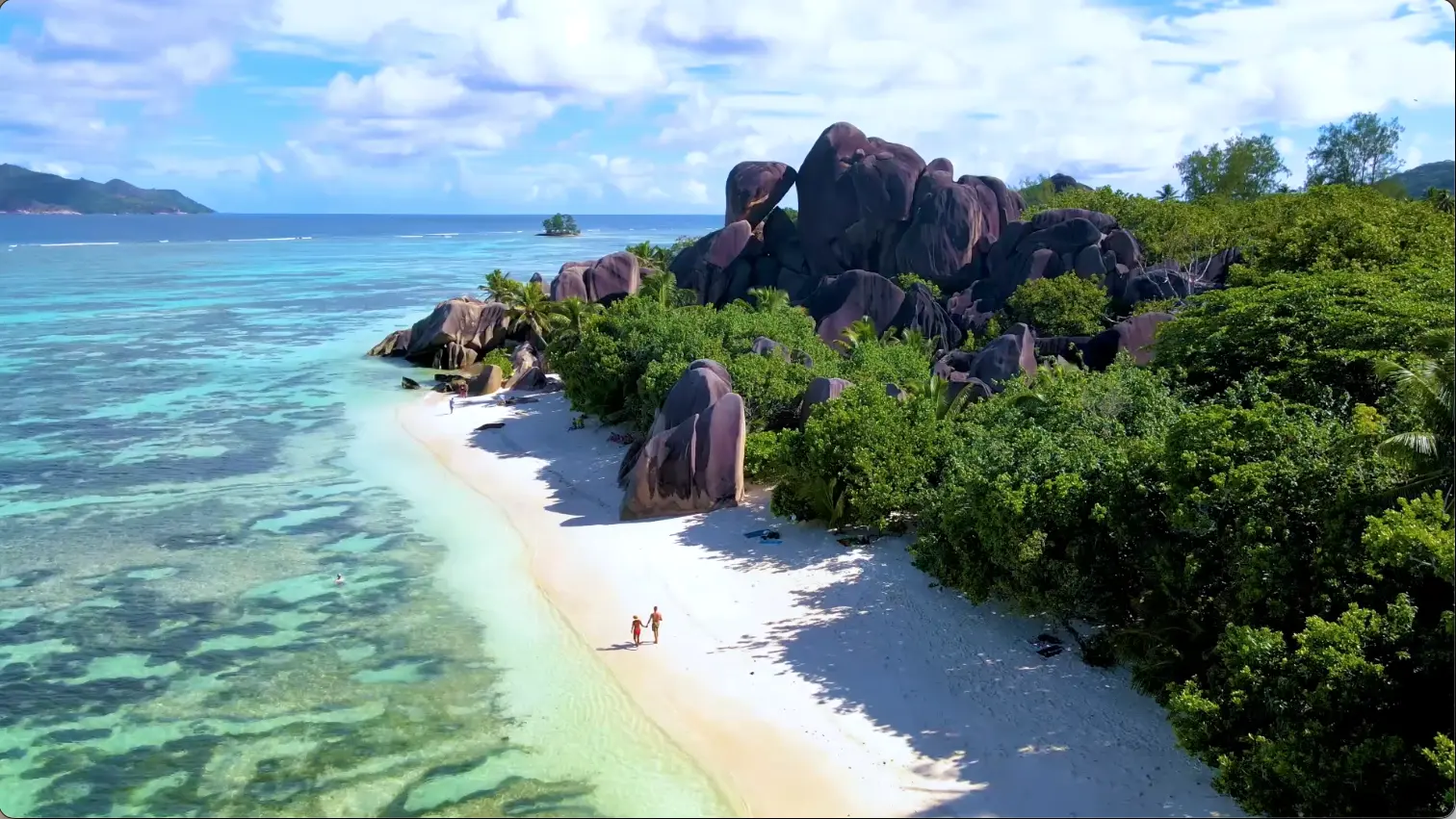
An archipelago of 115 islands scattered across the western Indian Ocean, Seychelles sits roughly 1,600 kilometres east of Kenya and a world away from ordinary. Jungle-draped granite peaks meet powder-white beaches fringed by seas that shift from turquoise to deep cobalt with the tide and the light.
What sets Seychelles apart from other Indian Ocean escapes is not beauty alone; it is intent. Built around a high-value, low-volume tourism model, the archipelago has committed to protecting its precious natural resources. That conservation-first philosophy shapes the entire experience: the beaches are uncrowded, the reefs are healthy, the wildlife is relaxed, and the sense of space is rare.
The inner islands, Mahé, Praslin, and La Digue, offer a seamless blend of barefoot luxury, Creole culture, and extraordinary natural heritage, from the ancient forest of Vallée de Mai to granite-boulder coastlines that feel sculpted rather than geological. Venture into the remote outer islands and the seclusion deepens: coral atolls, nesting sea turtles, and land untouched by development.
Seychelles pairs naturally with East Africa — sitting at the end of a logical travel arc that begins with gorillas in Rwanda or the great herds of the Great Migration in Tanzania, and ends with your feet in warm sand. The routing is seamless. The contrast is the point.
5 Reasons We Love Seychelles
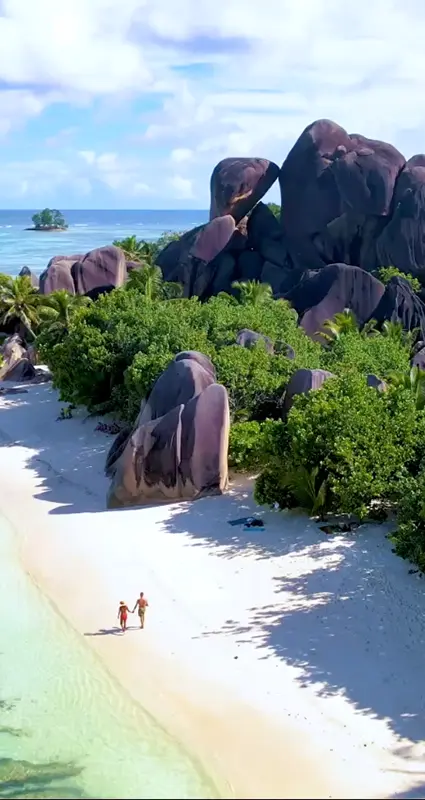
Beaches unlike anywhere else: Anse Source d'Argent on La Digue, with its rust-pink granite boulders and shallow crystalline waters, is one of the most photographed coastlines on Earth, and it earns every image. Anse Lazio on Praslin and Beau Vallon on Mahé are equally compelling.
Two UNESCO World Heritage Sites: Vallée de Mai on Praslin shelters the legendary coco de mer palm in its only near-natural habitat. Aldabra Atoll, one of the world's largest raised coral atolls, is home to approximately 125,000 giant Aldabra tortoises, the largest such population on Earth.
Marine encounters of rare quality: Healthy coral reefs, manta rays, reef sharks, and whale sharks migrating through between approximately September and November. Strict operating protocols ensure encounters are managed responsibly, protecting both the animals and the experience.
Endemic wildlife found nowhere else: From the coco de mer, the world's heaviest seed, and found wild in only two locations globally, to the critically endangered black paradise flycatcher, Seychelles is a stronghold for species that exist only here.
The perfect East African safari finale: The routing from Rwanda, Tanzania, or Kenya to Seychelles is straightforward and logical. The transition from savannah dust to Indian Ocean clarity is one of travel's great pleasures, not an afterthought, but the destination that completes the journey.
Our favourite Seychelles safari ideas
All you need to know about Seychelles
About Seychelles
Seychelles is an island nation in the western Indian Ocean, positioned northeast of Madagascar and approximately 1,600 kilometres east of Kenya. The archipelago comprises 115 islands grouped into the granitic inner islands and the coralline outer islands. Mahé is the largest, home to the capital Victoria — one of the smallest capital cities in the world — and to Seychelles International Airport. Praslin, the second-largest island, is famous for Vallée de Mai and some of the finest beaches in the Indian Ocean.
La Digue moves at a slower pace entirely, best explored by bicycle. The outer islands offer true remoteness: coral atolls, private island resorts, and wildlife encounters managed under strict conservation controls. Seychelles operates on a high-value, low-volume model — visitor numbers are kept down by design, and accommodation ranges from intimate boutique lodges on the inner islands to ultra-exclusive private island resorts.
What wildlife can I see in Seychelles?
Seychelles wildlife is intimate, often endemic, and shaped by millions of years of island isolation.
Giant Aldabra tortoises are found across several islands, with the greatest concentration on Aldabra Atoll, where the population reaches approximately 125,000, the largest in the world.
The coco de mer palm grows in near-natural conditions only in Vallée de Mai on Praslin and on Curieuse Island. Its seed is the largest in the plant kingdom, weighing up to 18 kilograms.
Endemic birds include the Seychelles Magpie Robin, the critically endangered black paradise flycatcher (veuve), the Seychelles warbler, and the Seychelles kestrel. Cousin Island Special Reserve near Praslin protects some of the most important endemic bird populations in the archipelago.
Marine life: Whale sharks migrate through the waters around Mahé and Praslin between approximately September and November. Manta rays, reef sharks, sea turtles, and diverse reef fish reward divers and snorkellers throughout the year across healthy, well-managed reefs.
Sea turtles, hawksbill and green, nest on several Seychelles beaches. The green season (November–March) coincides with nesting activity, making it a compelling time for wildlife-focused travellers and photographers.
Where to stay in Seychelles
Accommodation in Seychelles ranges from intimate boutique guesthouses on the inner islands to some of the most exclusive private island resorts in the Indian Ocean. The high-value, low-volume model means that even accessible properties offer genuine space, privacy, and a quality of hospitality well above the global norm.
Properties on Mahé provide the easiest airport access and the broadest range of activities. Praslin's lodges sit close to Vallée de Mai and the island's finest beaches. La Digue's offerings are smaller and often family-run, defined by the island's unhurried character.
The outer island private resorts combine five-star comfort with serious conservation work — many run active habitat restoration and wildlife monitoring programmes, and guests become part of the story of protecting Seychelles' natural heritage.
Trusted by thousands of ecstatic travellers
✔️ 5-Star Trustpilot Rating ✔️ Condé Nast Travel Specialist Award Winner
✔️ Accredited by SATSA ✔️ 5,000+ Exceptional Safaris Since 1991
Why choose Africa Geographic to plan your safari?

"Africa Geographic are the ULTIMATE in African trip planning! Thank you so much for our once in a lifetime experience! It was worth every penny spent!! Every detail about this trip were seamless from each meal to every transfer. We have already recommended Africa Geographic to many folks. God bless you all and thank you again for sharing your incredibly beautiful continent!!"
"Africa Geographic was amazing to work with. They tailored a trip specifically for us based on our wants and needs. They take the time to listen to you and understand what you are looking for from this sometimes once in a lifetime experience. They are professional, courteous, friendly and with you every step of the way. Their job does not end until you are home. If I could give them more than 5 stars I would!"
"AG organized an outstanding East African experience for me, my wife, and two friends. They set us up with great guides, lovely accommodations, and most importantly, incredible natural history experiences. Seamless travel. And when we wanted to make a last minute change, they were right there to timely accommodate us. 6/5 rating!"
Wish you were here?
Frequently asked questions
Seychelles combines natural elements found nowhere else. They offer the only mid-ocean granite islands on Earth, two UNESCO World Heritage Sites, and endemic species from the coco de mer to the Aldabra giant tortoise. Built around a high-value, low-volume model, Seychelles delivers a genuinely wild experience alongside sophisticated luxury. The result is a destination that protects what makes it extraordinary and lets travellers be part of that story.
Seychelles is a year-round destination shaped by two trade wind seasons. May to October is peak season, bringing drier and cooler conditions with excellent visibility for diving and snorkelling. April, May, October, and November are shoulder months — warm, settled, and often better value. November to March is the green season: warmer days, short tropical showers, lush scenery, and sea turtle nesting on select islands. There is no universally wrong time to visit.
A minimum of seven nights is recommended to explore Mahé, Praslin, and La Digue with any depth. For guests combining Seychelles with an East African safari, 10 to 14 days total allows a satisfying balance between bush and beach. Longer stays open up the outer islands and a more exploratory character.
Most nationalities receive a visitor's permit on arrival and do not require an advance visa. However, all visitors must obtain an e-Border Travel Authorisation before arrival. A valid passport, confirmed return ticket, proof of accommodation, and evidence of sufficient funds are also required. Entry requirements can change; always verify directly with the Seychelles immigration authority or your travel consultant before travelling.
On land: giant Aldabra tortoises, the critically endangered black paradise flycatcher (veuve), Seychelles Magpie Robin, Seychelles warbler, Seychelles kestrel, and the extraordinary coco de mer palm.
In the water: whale sharks (typically September–November), manta rays, reef sharks, sea turtles, and diverse reef fish year-round. Cousin Island Special Reserve near Praslin offers guided visits to some of the archipelago's most important endemic bird colonies.
Vallée de Mai is a UNESCO World Heritage Site on Praslin Island, protecting the near-natural habitat of the coco de mer palm, found wild in only this forest and on nearby Curieuse Island. The coco de mer produces the largest seed in the plant kingdom, weighing up to 18 kilograms. Walking through Vallée de Mai, with its enormous palms filtering cathedral light and endemic birds calling overhead, is one of the most distinctive nature experiences available in the Indian Ocean.
The coco de mer (Lodoicea maldivica) is a rare palm tree native exclusively to the Seychelles islands of Praslin and Curieuse. It is world-famous for producing the largest and heaviest seed in the plant kingdom, which can weigh up to 18 kg (40 pounds). The massive, double-lobed seed famously resembles a human pelvis or buttocks, earning it the Creole nickname coco fesse. Unlike regular coconuts, coco de mer seeds do not float; if they fall into the ocean, they sink to the bottom.
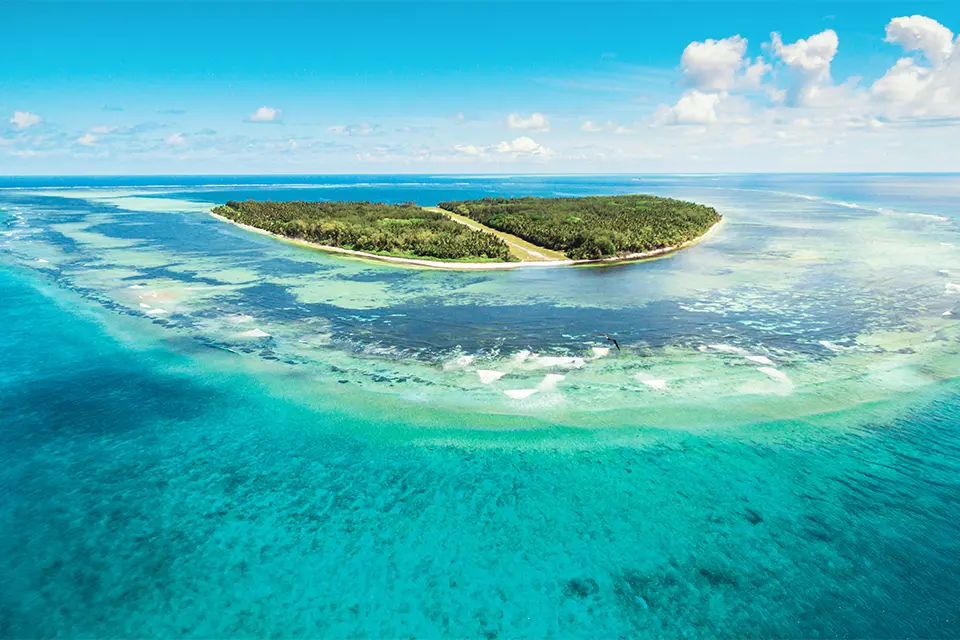
Aldabra Atoll is a UNESCO World Heritage Site more than 1,000 kilometres southwest of Mahé — one of the world's largest raised coral atolls, comprising four coral islands enclosing a shallow lagoon. It is home to approximately 125,000 giant Aldabra tortoises, the largest population on Earth. Access is tightly controlled and visitor numbers strictly limited to protect its exceptional ecological integrity. It represents one of the last places where nature operates almost entirely on its own terms.
Seychelles International Airport on Mahé receives long-haul and regional flights from London, Paris, Dubai, Johannesburg, and Nairobi via direct or one-stop routing.
Between the inner islands, regular ferry services connect Mahé, Praslin, and La Digue. Helicopter transfers and light aircraft serve more remote destinations and provide spectacular aerial perspectives. Private yacht charters offer the most exploratory option, allowing travellers to shape their itinerary around their own interests. On La Digue, bicycles are the primary means of getting around the island.
Yes — and this is one of the most rewarding travel combinations in the region. Seychelles sits naturally at the end of an East African journey: gorilla trekking in Rwanda, the Great Migration in Tanzania or Kenya, and the Indian Ocean as the final chapter. The routing avoids exhausting long-haul connections, and the transition from bush to beach is one of those experiences that stays with a traveller long after the trip ends. Africa Geographic designs these combinations regularly.
Seychelles offers excellent diving across a range of experience levels. Notable sites around Mahé include Shark Bank and the Ennerdale wreck. Praslin and La Digue offer coral gardens and granite formations supporting diverse marine life. Sainte Anne Marine National Park near Victoria is rewarding for both snorkellers and divers. Whale shark encounters between approximately September and November are managed by operators under protocols designed to protect the animals. Dive costs and site availability vary by season; confirm with your operator when booking.
Seychellois cuisine draws on Creole, French, Asian, and African culinary traditions, with seafood at the centre. Grilled red snapper with local spices, octopus curry, and ladob, plantain or breadfruit slow-cooked in coconut milk, are among the staples. The Sir Selwyn-Clarke Market in Victoria, Mahé, is the best introduction to local ingredients and daily life. Beau Vallon Beach hosts a Wednesday evening market with food stalls, music, and a relaxed local atmosphere.
The local currency is the Seychellois Rupee (SCR). Hotels, resorts, and hospitality expenses must be settled in foreign currency; Pounds Sterling, US Dollars, and Euros are most widely used. Credit cards (Visa, Mastercard, American Express) are accepted at established properties. Cash in SCR is useful for markets, taxis, and smaller shops. ATMs are available on the main islands; banking hours are typically Monday to Friday, 08:30–14:30, and Saturday, 08:30–11:00.
Our safaris typically cost from US$700 per person, per night, depending on the accommodation comfort level, time of year and activities. This price usually includes accommodation, all meals, game drives, experienced guides, airport transfers, and 24/7 support from our team.
You only make your first payment when you book your holiday. Your second (last) payment is about 105 days before you travel.
Peak season bookings require 12–18 months of advance planning. Trips outside of peak season can be arranged 6–9 months ahead, with better rates and availability.
Click here to schedule a no-obligation call with one of our Safari Experts or fill in our 2-minute form with your questions. Our team of experts are here to help! Whether you’re curious about the best time to travel, want to hear first-hand about an experience or need help planning your safari.
Explore more African destinations
Start planning your dream safari
Our travel experts will craft a no-obligation itinerary just for you. We have crafted over 5,000 safaris since 1991. Your personal details are protected; we only use this information to contact you.
Why book your safari with us?

Deep Experience & Knowledge
Handcrafted experiential safaris since 1991.
Travel in Africa is about knowing when and where to go, and with whom. A few weeks too early/late or a few kilometres off course, and you could miss the greatest show on Earth. And wouldn’t that be a pity?

Trust & Safety

Make A Difference
We donate a portion of the revenue from every safari sold to carefully selected conservation projects that make a significant difference at ground level.
YOUR safari choice does make a difference - thank you!