
Tailor-made safaris. Since 1991

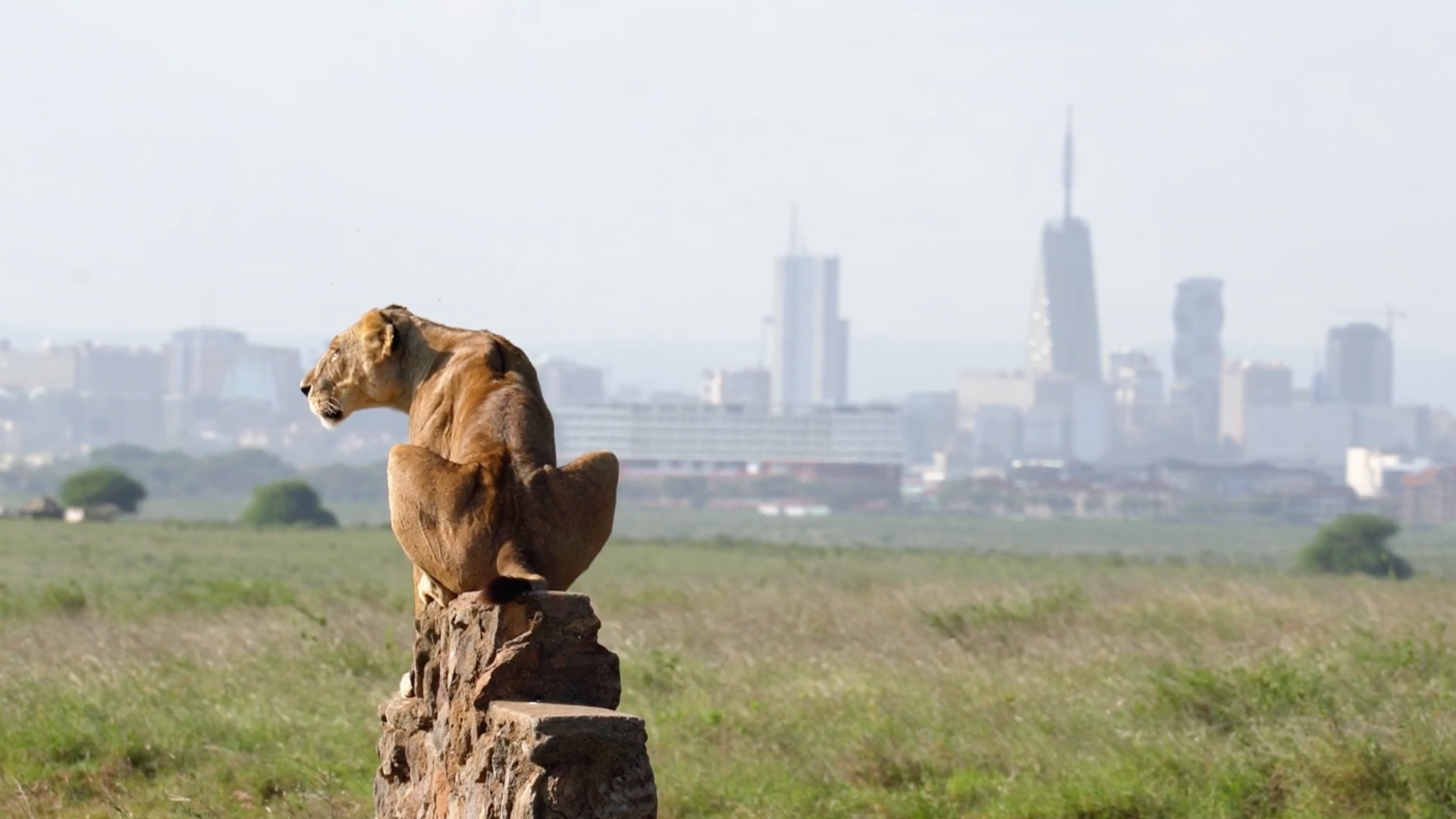


Nairobi: the park pressed against a capital city
Nairobi National Park at a glance:
Location: Southern Nairobi; JKIA runway less than 5km from park fence | Size: 117 km² (11,700 hectares), established 1946, one of Kenya's oldest parks |
Access: 20–30 minutes by road from Nairobi CBD; day trips and overnight stays both possible | Best time to visit: Year-round; dawn drives offer the best predator activity and photography light |
Wildlife highlights: Black and white rhino, lion, leopard, cheetah, serval, buffalo, giraffe, hippo, over 400 bird species | Key difference from other Kenya parks: The only national park within a capital city; Big Five minus elephant; open southern boundary connected to Athi-Kapiti ecosystem |
Accommodation: Ololo Safari Lodge and The Emakoko, both on the park boundary | Nickname: "Kifaru Ark" (kifaru = rhino in Swahili) for its rhino conservation programme |
Why visit Nairobi National Park?
If you're spending a few days in Nairobi, this is where your adventure begins. Nairobi National Park is exactly what the name suggests, a national park pressed against a capital city. The runway of Jomo Kenyatta International Airport lies less than five kilometres from the park's fence. Nairobi's busiest road networks run along the northern boundary. Schools and shopping malls stand within reach of an open savannah where lions stalk through the grass and wildebeest migrate with the seasons.
This is no zoo. The animals are as wild as those of remote safari regions. Yet the 117 km² (11,700 hectares) park exists in a state of extraordinary cognitive dissonance, and this incongruity attracts large numbers of visitors. No other protected area creates such an immediate metaphor for wildlife and humanity sharing space.
The park is fenced where it abuts the city. The southern boundary follows the Mbagathi River and remains open, connecting to the Kitengela Game Conservation Area and a wildlife corridor stretching to the Athi-Kapiti Plains. The park is vital to the greater Athi-Kapiti ecosystem.
Habitats include rolling plains, forests, marshlands, and riverine valleys. Of the Big Five, only elephants are absent. The park has earned the nickname "Kifaru Ark", kifaru being Swahili for rhino, for its success in protecting both black and white rhinos within earshot of a capital of several million people.
5 Reasons We Love Nairobi National Park
The ultimate contrast: Wildlife against a city skyline. Where else on Earth can you photograph a wild lion, giraffe, or rhino with a backdrop of modern glass skyscrapers?
Unmatched accessibility: You can step off an international flight and be on a game drive within 30 minutes. It is the ultimate "layover safari," making wild nature accessible to everyone, even those with only a half-day to spare.
A critical sanctuary for rhinos: Affectionately dubbed the Kifaru (Rhino) Ark, the park is one of Kenya's most successful sanctuaries for the highly endangered black rhino.
Breathtaking biodiversity in a compact space: Don't let its relatively small size (around 117 km2) fool you; this park packs an ecological punch. You will find four of the Big Five (only elephants are absent), alongside cheetahs, zebras, hippos, and crocodiles. You can meet elephant orphans at the neighbouring David Sheldrick Elephant Orphanage to complete your Big 5 list.
Deep-rooted conservation history: The park is home to the historic Ivory Burning Site Monument. It was here in 1989 that former President Daniel Arap Moi made a statement to the world by burning 12 tonnes of confiscated elephant ivory.
Our favourite Nairobi National Park safari ideas
All you need to know about Nairobi NP
About Nairobi National Park
Nairobi National Park covers 117 km² (11,700 hectares) and is the world's only national park within a capital city. It lies in southern Nairobi, with Jomo Kenyatta International Airport less than five kilometres from its fence.
Established in 1946, it is one of Kenya's oldest national parks. The northern, western, and eastern boundaries are fenced where they meet the city. The southern boundary follows the Mbagathi River and is open, connected to the Kitengela Game Conservation Area and the Athi-Kapiti Plains via a wildlife corridor.
Habitats include open grassland plains, Acacia bush, highland dry forest, and marshland. The IUCN Cat Specialist Group recognises Nairobi National Park as a Lion Conservation Unit, and its rhino conservation programme has earned it the nickname "Kifaru Ark" (kifaru: Swahili for rhino).
Things to do in Nairobi National Park
Game drives across open grassland and Acacia woodland, most rewarding at dawn when lion, cheetah, leopard, and serval are at their most active.
Photography: the park offers Africa's most distinctive image: wildlife against a city skyline. Dawn light on the plains with Nairobi behind is extraordinary.
Serval watching: Nairobi National Park is considered one of Kenya's finest serval locations; the cats are almost constantly hunting in the long grass.
Guided walks in the private conservancies surrounding the park, at boundary lodges, where wilderness extends beyond the park fence itself.
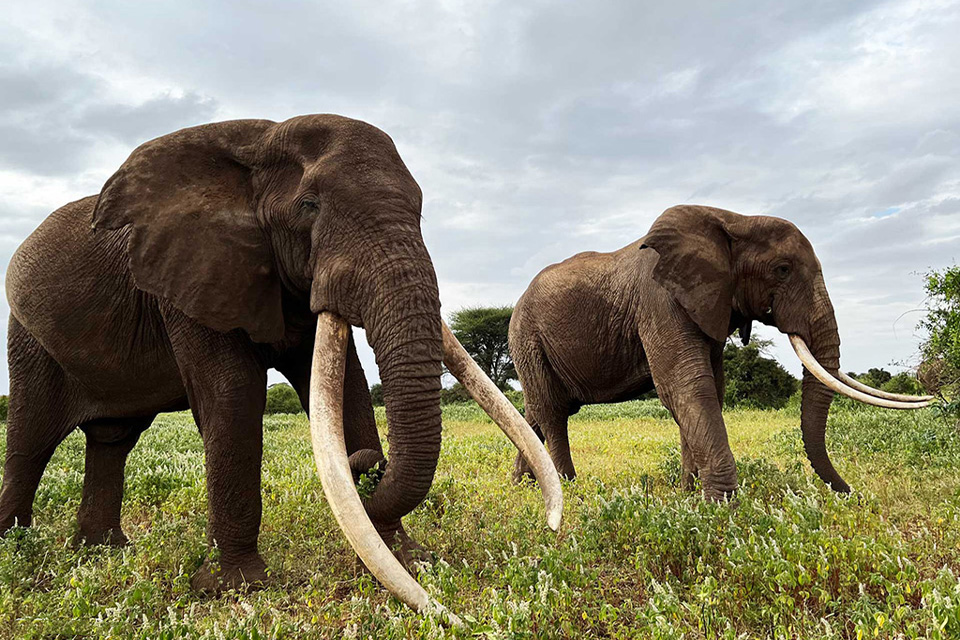
The David Sheldrick Wildlife Trust elephant orphanage is adjacent to the park, offering a moving conservation encounter where guests can meet orphaned baby elephants.
What wildlife will I see in Nairobi National Park?
Black rhinos: approximately 100 individuals, one of Kenya's highest concentrations, and southern white rhinos. The park's core conservation identity is built on rhino protection.
Lions: over 40 adult residents, recognised as a Lion Conservation Unit by the IUCN Cat Specialist Group. Prides are regularly seen on the open plains.
Serval: one of Kenya's best parks for this small spotted cat. Almost constantly on the move and hunting, serval are reliably encountered on game drives.
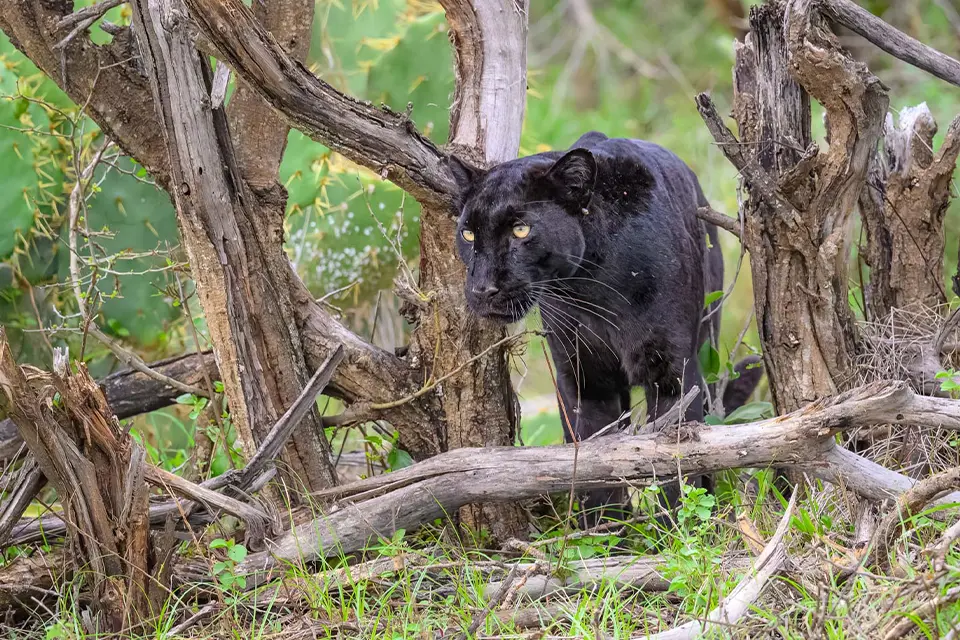
Leopards and cheetahs: both resident and regularly seen, though encounters are typically brief.
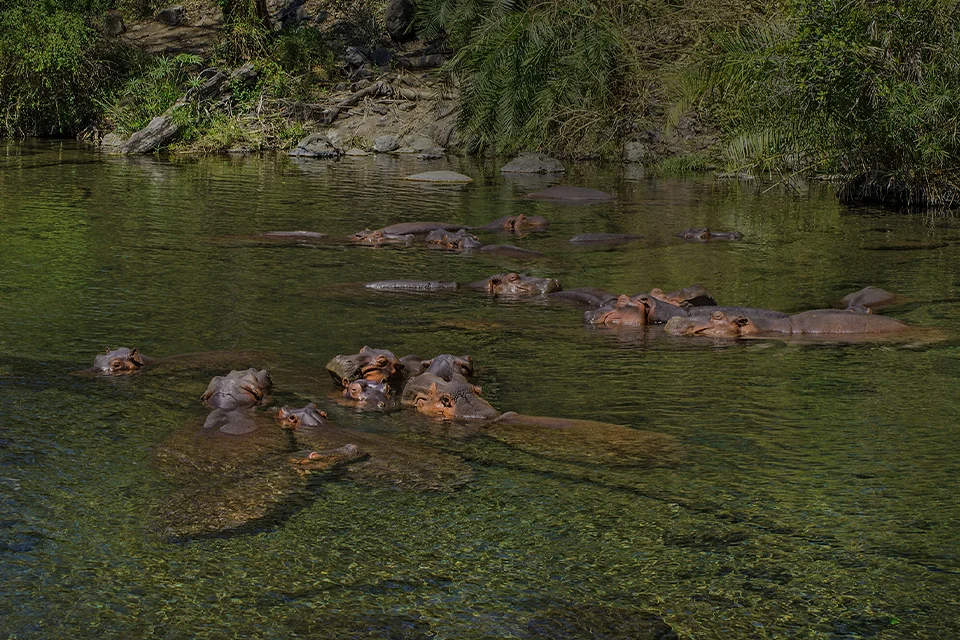
Buffaloes, giraffes, hippos, and crocodiles are common sights on the plains, rivers, and dams.
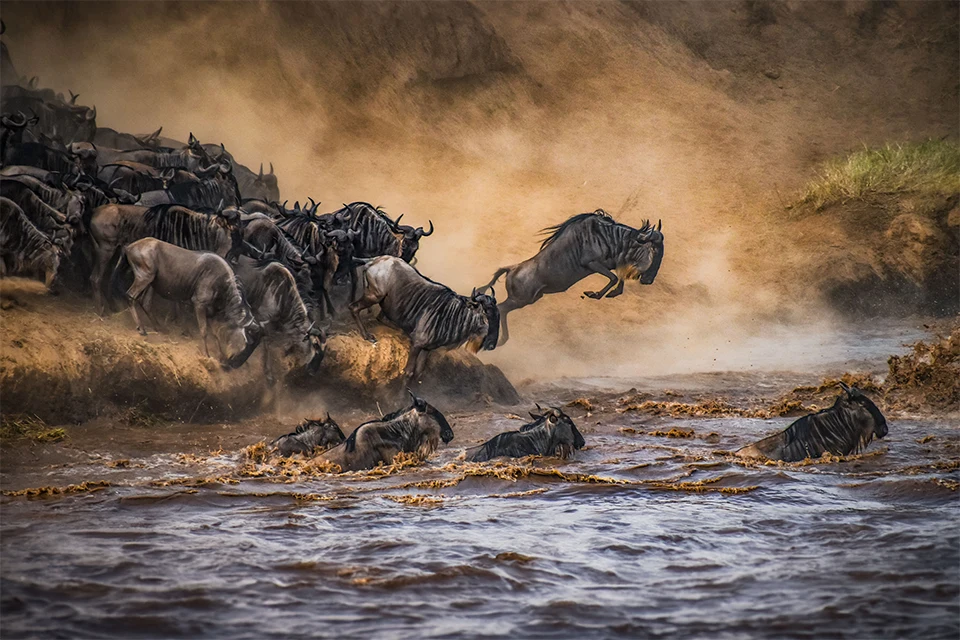
Plains species: eland, impala, hartebeest, wildebeest, zebra, ostrich, Thomson's and Grant's gazelles are all commonly encountered throughout the year.
Where to stay in Nairobi National Park
Two carefully positioned luxury lodges make Nairobi National Park a destination in its own right, rather than a transit pause between flights.
Ololo Safari Lodge sits on a 100-acre private conservancy on the park's northern boundary, set on a forested hillside overlooking the open plains below. The lodge combines intimacy and proximity in a way rarely found near a capital city. From its verandas, guests watch wildlife moving through the park while Nairobi's skyline frames the distance. Guided walks are offered on the conservancy itself, adding an on-foot dimension unavailable within the national park. The property is particularly well-suited to travellers seeking early-morning drives, when the park's predators are most active, and the city's sounds are most distant.
The Emakoko is positioned on a ridge above the Mbagathi River gorge along the park's open southern boundary. Its architecture is dramatic and considered, cantilevered over the gorge with the park's full complement of species visible from the terraces and decks. The southern open boundary means that lions, black rhinos, and other wildlife move directly below the lodge. It attracts guests who want a deeper, more contemplative engagement with the park, including serious wildlife photographers.
Trusted by thousands of ecstatic travellers
✔️ 5-Star Trustpilot Rating ✔️ Condé Nast Travel Specialist Award Winner
✔️ Accredited by SATSA ✔️ 5,000+ Exceptional Safaris Since 1991
Why choose Africa Geographic to plan your safari?

"All Africa Geographics planning ensured our trip came off seamlessly... From our 2 night stopover in Nairobi...My wife and I have taken many nature based trips around the world and this compares to the very best. Thank you again to all at Africa Geographic...for making this a truly memorable experience."

"Amazing Adventure made possible by Africa Geographic... and the rest of the team helped us realize our dream of an African Safari. Our guides...shared their vast knowledge of the wildlife and habitats. Such beautiful things we saw, memories to be shared and cherished. We can't recommend Africa Geographic highly enough."

"A top company to help organise and arrange your perfect safari trip... I would throroughly reccomend Africa Geographic, if you want peace of mine for your perfect once in a lifetime trip then this is the company for you. Will definitely be recommending them and using them again if and when we visit Africa!"
Wish you were here?
Frequently asked questions
Nairobi National Park is the world's only national park located within a capital city. Covering 117 km² (11,700 hectares) in southern Nairobi, it sits beside some of the city's busiest infrastructure. Jomo Kenyatta International Airport's runway lies less than five kilometres from the park fence. The animals are wild and unmanaged, moving freely through the same landscape where prides of lion hunted long before the city rose around them. Of the Big Five, only elephants are absent. The park has over 40 resident adult lions, approximately 100 black rhinos, and a full range of African predators and plains species.
The park can be visited year-round, and its proximity to Nairobi makes it a practical half-day or full-day excursion at any point in a Kenya itinerary. Dawn is consistently the best time for predator activity; lions, cheetahs, and servals are most active in the early morning hours.
The dry season (June–October and January–February) offers thinner vegetation and easier wildlife spotting, but the park's relatively open plains make wildlife visible in most conditions. The park's 400+ bird species reach their peak diversity during the rains.
Four of the Big Five are present; elephants are the only absent species. The park's most celebrated residents are its black rhinos, approximately 100 of which inhabit the park, making it one of the highest concentrations in Kenya. Over 40 adult lions are resident, alongside leopard, cheetah, and the park's famous serval population. Buffalo, Maasai giraffe, hippo, crocodile, eland, zebra, wildebeest, hartebeest, impala, ostrich, and both Thomson's and Grant's gazelles are all commonly encountered. Spotted hyena and black-backed jackal are regularly heard at dusk.
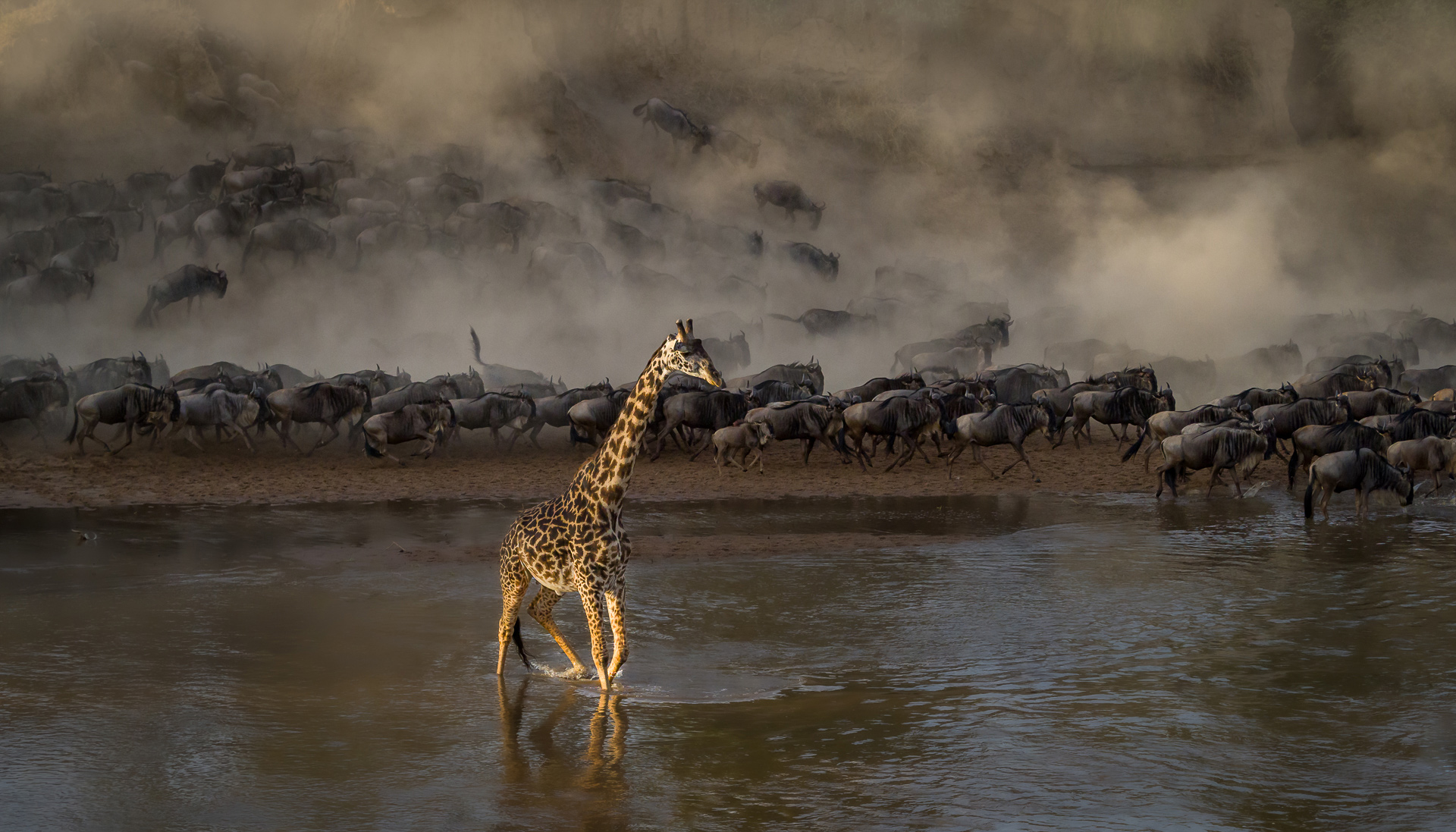
The park's southern boundary, which follows the Mbagathi River, is intentionally unfenced to allow wildlife to move freely between the park and the Kitengela Game Conservation Area and on to the Athi-Kapiti Plains to the southeast. This open boundary is critical to the park's ecological function; it facilitates the seasonal migration of wildebeest, zebra, and other plains species that move in and out of the park following rains and grass growth. Without this corridor, the park would effectively become a closed system with impaired capacity to sustain its wildlife populations.
Kifaru is the Swahili word for rhino, and "Kifaru Ark" is the nickname earned by Nairobi National Park for its remarkable success in protecting both black and white rhinos. With approximately 100 black rhinos, the park is considered one of the best places in Kenya to encounter this critically endangered species. The nickname reflects the park's role as a refuge for rhinos at scale, functioning as a living ark for one of Africa's most threatened mammals, in the heart of a major urban environment.
Yes. Nairobi National Park is specifically considered one of the best parks in Kenya for serval. These elegant, spotted cats are almost constantly active during the day, hunting rodents and birds through the long grasses. Unlike in denser bush environments where serval are rarely seen, Nairobi's open grassland makes them relatively easy to locate and observe at length. Watching a serval's spring-loaded pounce in action is one of the park's most reliably rewarding wildlife encounters.
Nairobi National Park is recognised by the IUCN Cat Specialist Group as a Lion Conservation Unit, a formal designation reflecting the biological significance of the park's lion population. With over 40 adult resident lions, the park supports a viable breeding population despite its compact size and proximity to one of Africa's largest cities. The lions are entirely wild and unmanaged, and their presence so close to major urban infrastructure is a symbol of what is possible in conservation when boundaries are maintained and habitat protected.
Yes, the park is accessible within 20–30 minutes from central Nairobi and is a practical and rewarding half-day or full-day excursion. Most visitors combine a dawn game drive with a visit to the David Sheldrick Wildlife Trust elephant orphanage adjacent to the park. Staying overnight at Ololo Safari Lodge or The Emakoko is also possible and offers access to the magical early-morning light that makes wildlife and photography in the park so compelling.
Two luxury properties are positioned directly on the park boundary: Ololo Safari Lodge, on a 100-acre forested conservancy on the northern boundary, and The Emakoko, a dramatic architectural lodge cantilevered above the Mbagathi River gorge on the open southern boundary. Both properties offer access to the park at dawn and dusk, the most productive hours, and provide a qualitatively different experience from returning to a city hotel after a half-day visit.
Ololo Safari Lodge is a luxury property on a 100-acre private conservancy on the northern boundary of Nairobi National Park. Its position on a forested hillside gives elevated views over the open plains below, with Nairobi's skyline visible in the distance. Guided walks are available on the conservancy itself, adding an on-foot experience not available within the national park. It is particularly well-suited to early morning drives and guests who want to experience the park's predator activity at the day's quietest hours.
The Emakoko is a luxury lodge positioned above the Mbagathi River gorge on the park's southern boundary, the open boundary that allows wildlife to move freely between the park and the Athi-Kapiti Plains. The lodge's architectural design is dramatic and considered, with wildlife visible directly below the terraces and decks. The open boundary means lion, black rhino, and plains species pass close by. It attracts serious wildlife photographers and travellers seeking a deeper engagement with the park than a half-day drive allows.
Yes, the park is most commonly combined with Amboseli, Samburu, or the Masai Mara. Its proximity to JKIA makes it a practical stop on arrival or departure, allowing guests to begin or end their Kenya safari with a dawn drive in the park before connecting to a domestic flight. Africa Geographic regularly incorporates a Nairobi park morning into broader Kenya itineraries.
Our safaris typically cost from US$700 per person, per night, depending on the accommodation comfort level, time of year and activities. This price usually includes accommodation, all meals, game drives, experienced guides, airport transfers, and 24/7 support from our team.
You only make your first payment when you book your holiday. Your second (last) payment is about 105 days before you travel.
Peak season bookings require 12–18 months of advance planning. Trips outside of peak season can be arranged 6–9 months ahead, with better rates and availability.
The park plays a vital role in the greater Athi-Kapiti ecosystem, protecting a large resident population of black rhinos and functioning as a Lion Conservation Unit. Its open southern boundary facilitates wildlife movement across a much larger landscape. By booking through Africa Geographic, a portion of every safari sold supports carefully selected conservation projects — including those that benefit the habitat and wildlife of Nairobi National Park's ecosystem.
Click here to schedule a no-obligation call with one of our Safari Experts or fill in our 2-minute form with your questions. Our team of experts are here to help! Whether you’re curious about the best time to travel, want to hear first-hand about an experience or need help planning your safari.

Start planning your dream safari
Our travel experts will craft a no-obligation itinerary just for you. We have crafted over 5,000 safaris since 1991. Your personal details are protected; we only use this information to contact you.
Why book your safari with us?

Deep Experience & Knowledge
Handcrafted experiential safaris since 1991.
Travel in Africa is about knowing when and where to go, and with whom. A few weeks too early/late or a few kilometres off course, and you could miss the greatest show on Earth. And wouldn’t that be a pity?

Trust & Safety

Make A Difference
We donate a portion of the revenue from every safari sold to carefully selected conservation projects that make a significant difference at ground level.
YOUR safari choice does make a difference - thank you!