

Tailor-made safaris. Since 1991



Tsavo West: wildlands with epic Kilimanjaro views
Tsavo West National Park at a glance:
Location: Southeastern Kenya; closer to the Tanzanian border than Tsavo East | Size: 9,000 km² (900,000 hectares); combined Tsavo ecosystem: 23,000+ km² |
Access: Road from Mombasa (approximately 2 hours); road from Nairobi (approximately 4 hours) | Best time to visit: June–October (dry season); January–March (second dry period) |
Wildlife highlights: Super tusker elephants, lion, leopard, hippo, crocodile, buffalo, Maasai giraffe, gerenuk, lesser kudu, black rhino (rare) and striped hyena (rare) | Signature attraction: Mzima Springs — underground viewing chamber, hippos, crocodiles, Chyulu Hills spring water |
Activities: Game drives, Mzima Springs, guided walks | Historical connection: Denys Finch Hatton died here; named for the Tsavo River flowing through the park |
Why visit Tsavo West National Park?
The Mzima Springs in the north of the park are a significant attraction for visitors to Tsavo West. Here, people can enter a glass viewing chamber to watch the life underneath the surface of a crystal-clear pool, including schools of fish, crocodiles, and the resident hippos. The pool is fed by runoff from Chyulu Hills volcanic rock, creating dense stands of date and raffia palms, along with various other fruiting trees, which attract a variety of birds and primates, making the springs a veritable oasis, especially during the drier months.
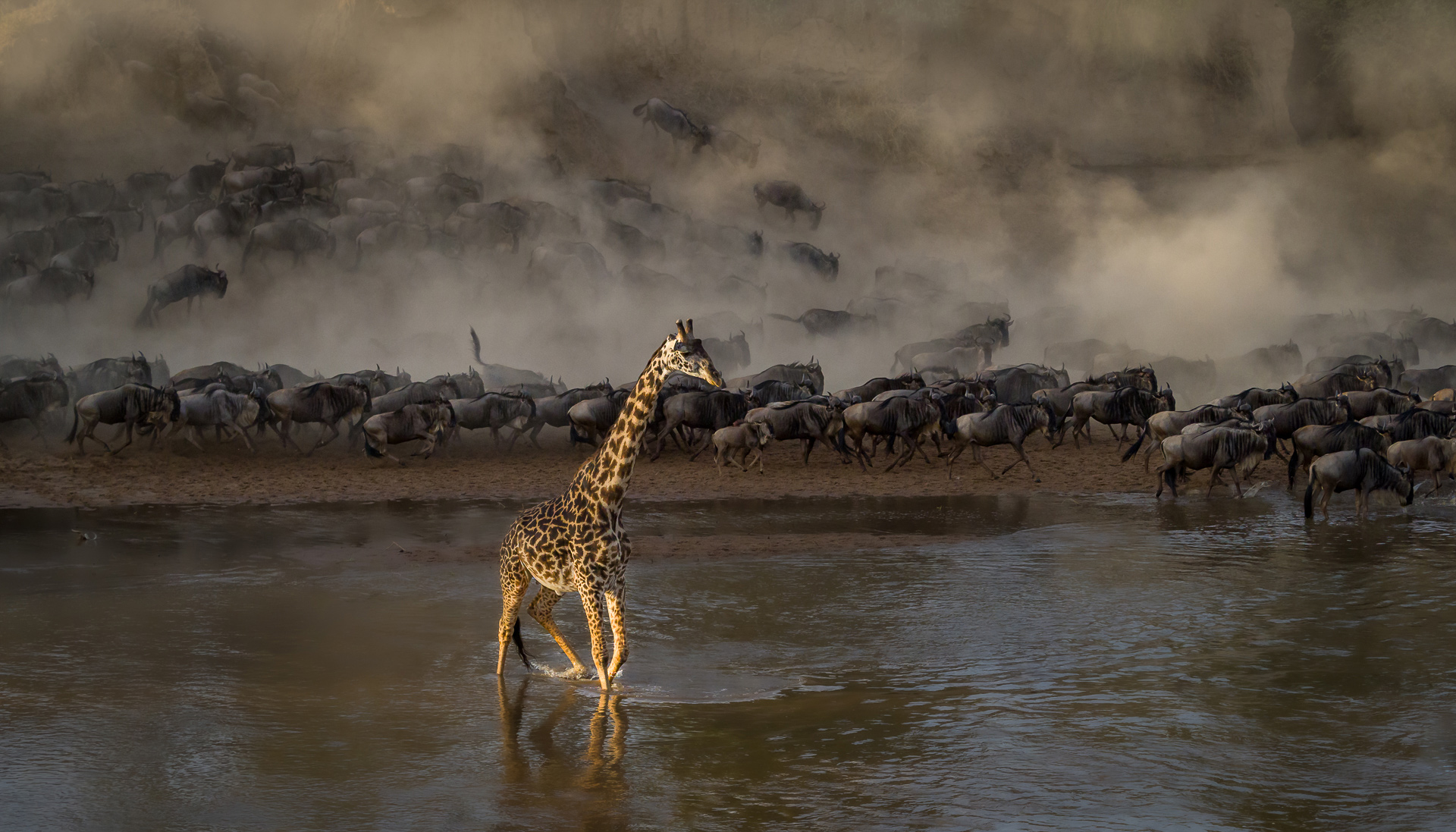
Aside from super tusker elephants, visitors can search for lions, leopards, bizarre long-necked gerenuks, lesser kudu, fringe-eared oryx, Maasai giraffe, buffalo, hippos and crocodiles. Sightings of black rhinos are rare but rewarding, as are sightings of striped hyenas. The bird variety is equally diverse, with over 530 species recorded, including golden-breasted starling, vulturine guineafowl, taita falcon, narina trogon, Fischer's starling, African orange-bellied parrot, and Somali ostrich.
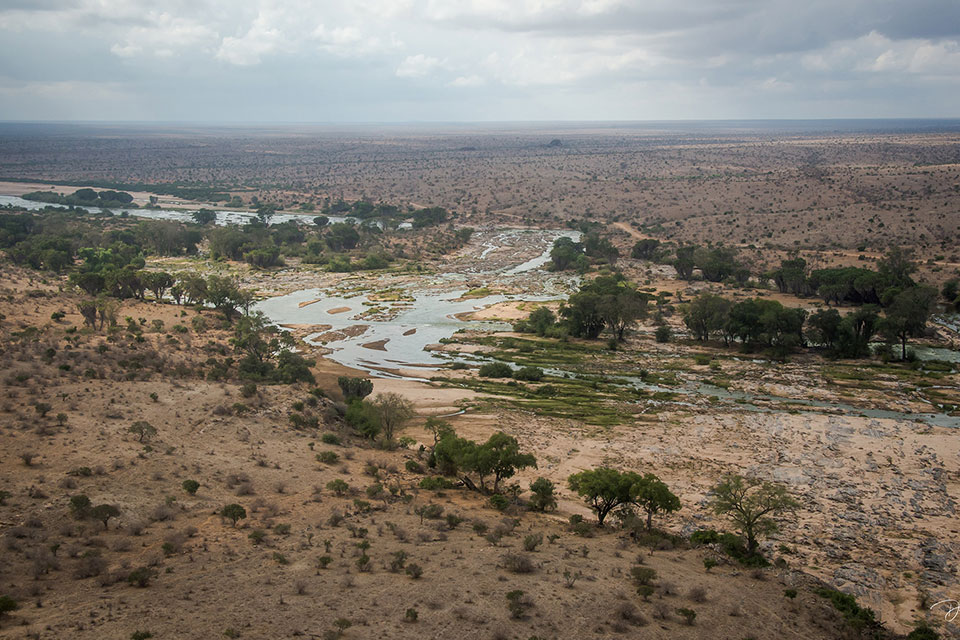
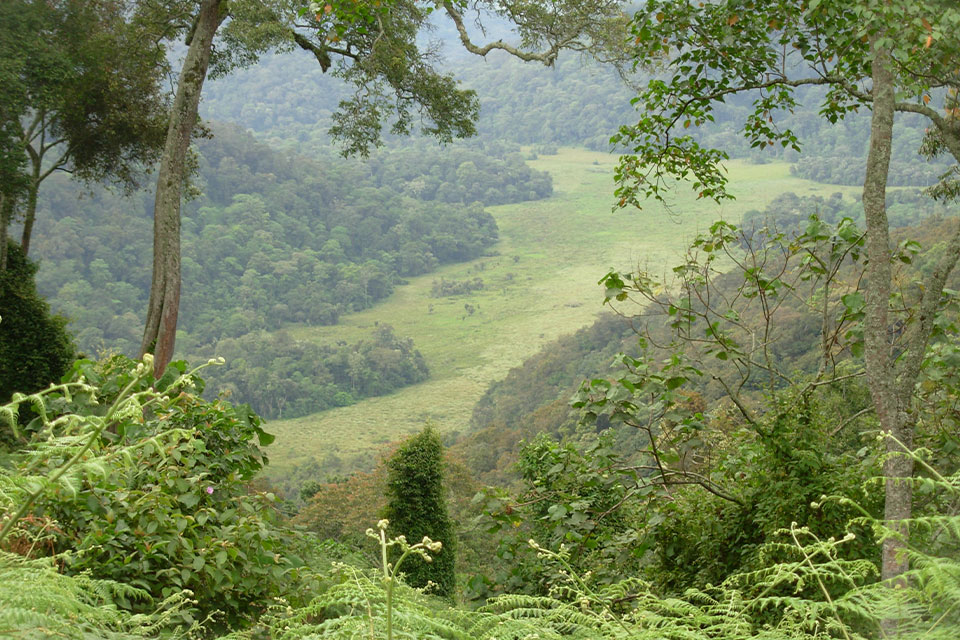
Tsavo West National Park covers 9,000 km² (900,000 hectares) of varied habitats, which are bisected by the riverine vegetation and gorges of the Tsavo River. Closer to the Tanzanian border and Mount Kilimanjaro than Tsavo East, Tsavo West is topographically fascinating. Its dramatic mountains, inselbergs, and sheer cliff faces result from ancient (and relatively recent) tectonic shifts and volcanic eruptions.
A combination of fertile volcanic soils and higher rainfall levels can make the vegetation of Tsavo West dense in places. This can make wildlife viewing slightly more challenging than in Tsavo East, but the scenery is even more spectacular.
5 Reasons We Love Tsavo West
Mzima Springs: a crystal-clear pool with an underwater chamber for watching hippos, crocodiles, and fish at eye level.
Kilimanjaro views: Africa's tallest mountain is visible from western parts of the park, rising above the Tanzanian border — a dramatic safari backdrop.
Volcanic drama: Tsavo West's inselbergs, sheer cliff faces, and rocky highlands are among the most topographically varied landscapes in all of Kenya.
The Denys Finch Hatton story: the adventurer immortalised in the book and movie Out of Africa loved this landscape above all others, and died here in a plane crash.
Tsavo West Rhino Sanctuary, covering approximately 3,200 km², offers a chance to spot rare black rhinos in the dense, hilly woodland if you hire a local guide.
Our favourite Tsavo West safari ideas
All you need to know about Tsavo West
About Tsavo West National Park
Tsavo West National Park covers 9,000 km² (900,000 hectares) in southeastern Kenya. It forms the western section of the broader Tsavo ecosystem, divided from Tsavo East by the railway line and the Nairobi-Mombasa Road. The park is closer to the Tanzanian border and Mount Kilimanjaro than Tsavo East is.
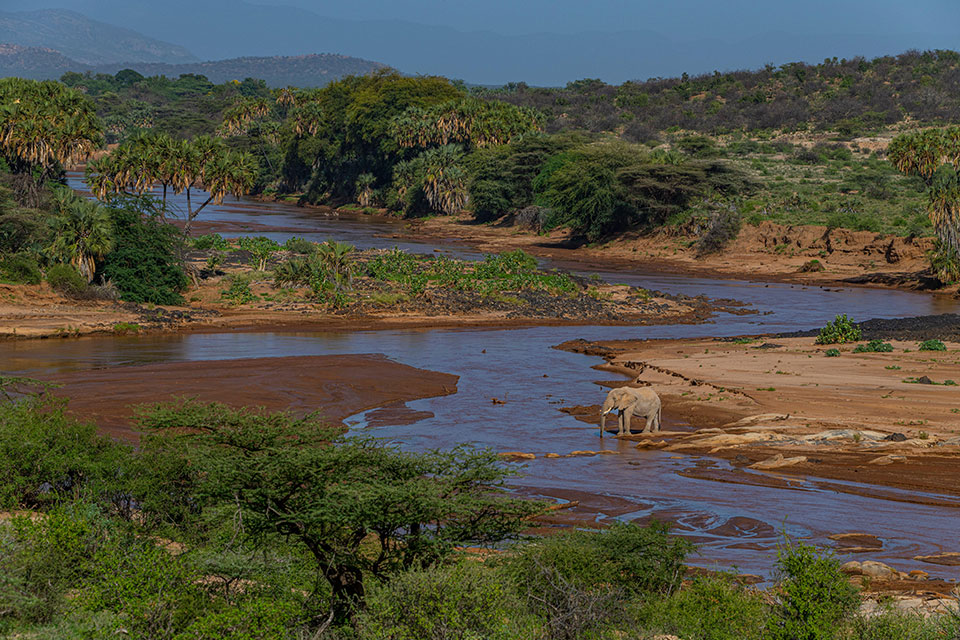
The Tsavo West landscape is shaped by volcanic activity and ancient tectonic shifts, producing dramatic mountains, inselbergs, and sheer cliffs. The Tsavo River runs through the park before joining the Athi River to form the Galana River, giving the park its name.
The park is more developed and accessible than Tsavo East, particularly in the northern area along the Tsavo River and Mombasa Highway. Mzima Springs is the park's signature attraction, a crystal-clear pool where underground water filters through porous volcanic rock from the Chyulu Hills before surfacing as springs.
Things to do in Tsavo West
Game drives through volcanic highlands, along the Tsavo River, and into rocky valleys with dense vegetation, with scenery more dramatic than Tsavo East's open plains.
Mzima Springs: enter the underground glass viewing chamber and watch hippos, crocodiles, and fish in the crystal-clear volcanic spring pool.
Rock climbing at Kitchwa Tembo: sharp granite and gneiss cliffs in the western park offer routes with views over the volcanic landscape and toward Kilimanjaro.
Kilimanjaro views: on clear mornings, Africa's tallest mountain is visible from the western sections of Tsavo West across the Tanzanian border.
Bush-and-beach combination: Tsavo West's proximity to Mombasa makes it a natural starting point or final leg for a Kenyan coast extension.
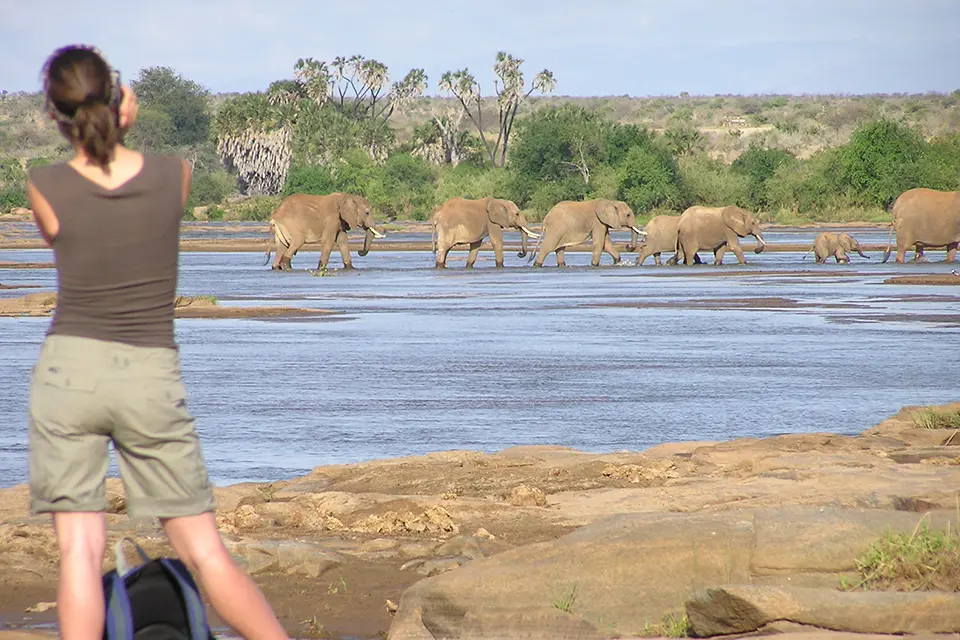
Guided walks: the park's varied volcanic terrain - rocky outcrops, river courses, and forested areas -rewards exploration by foot.
What wildlife will I see in Tsavo West?
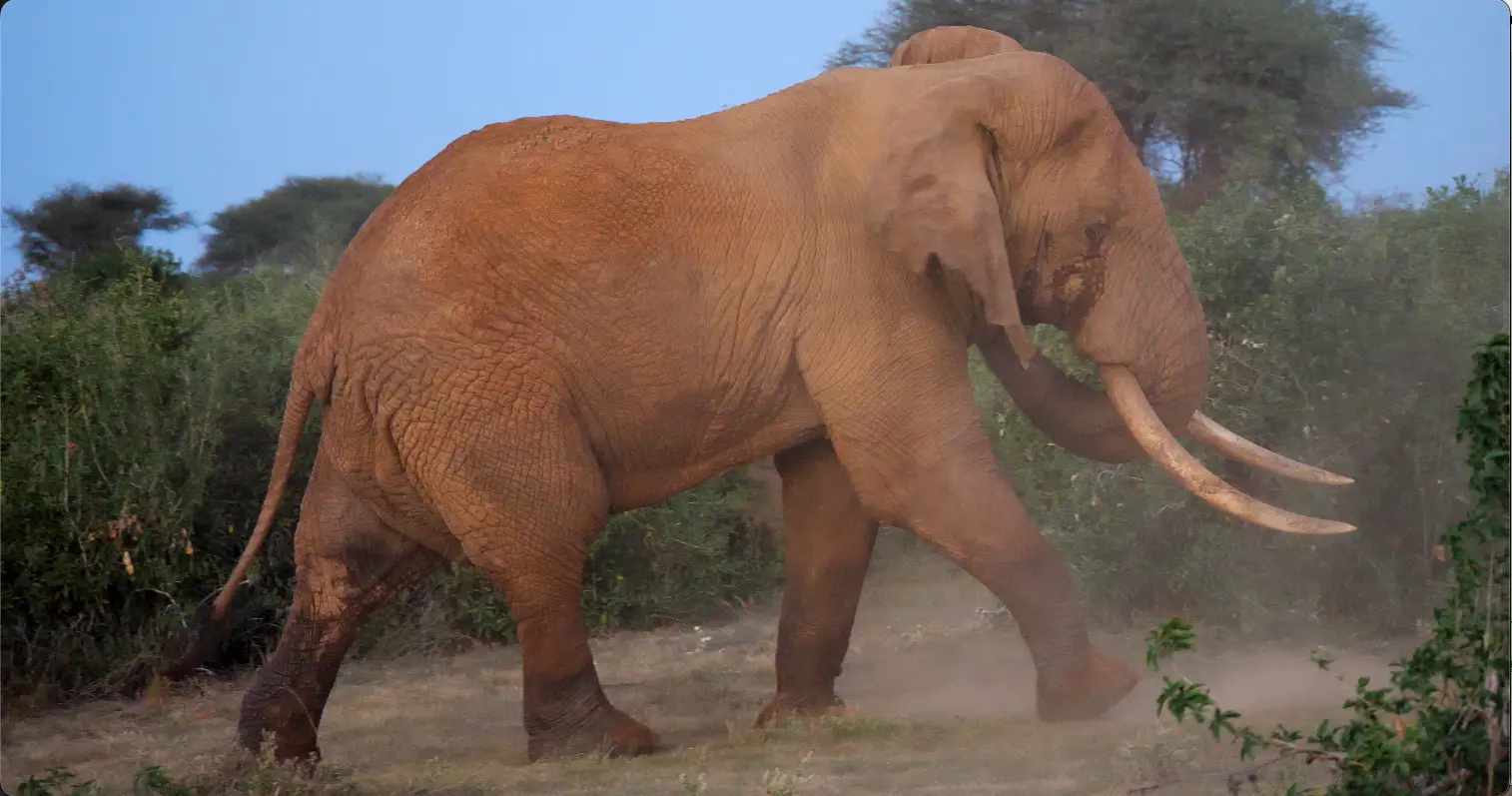
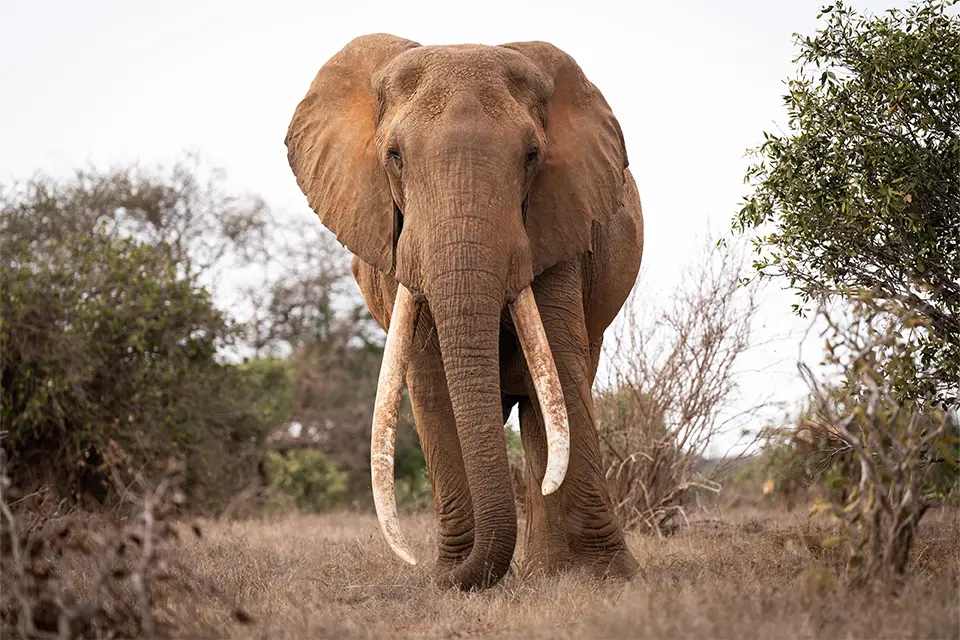
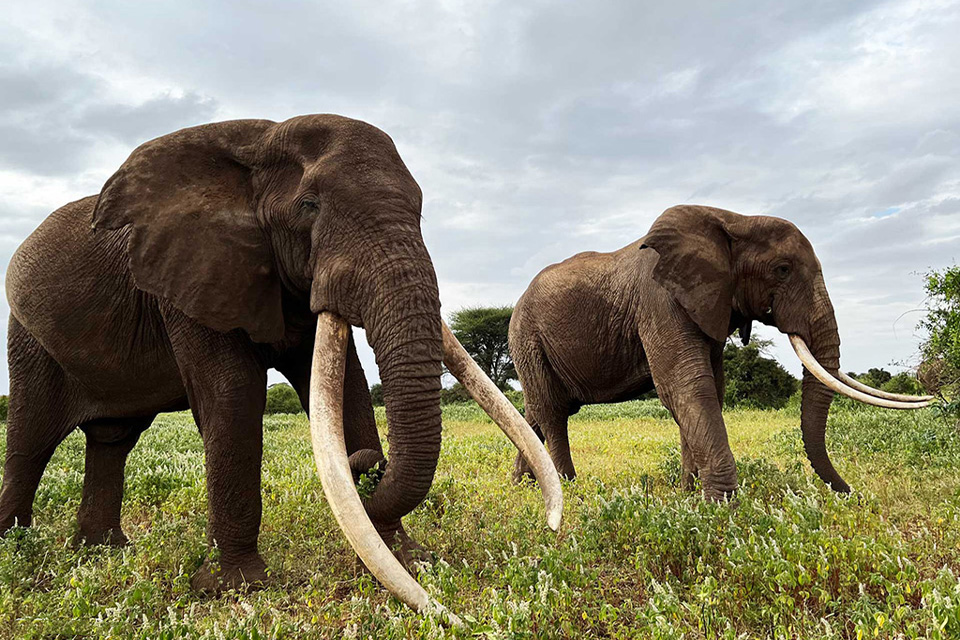
Super tusker elephants: Tsavo is famous for big-tusked bulls. The red-tinged elephant herds are one of the defining images of this ecosystem.
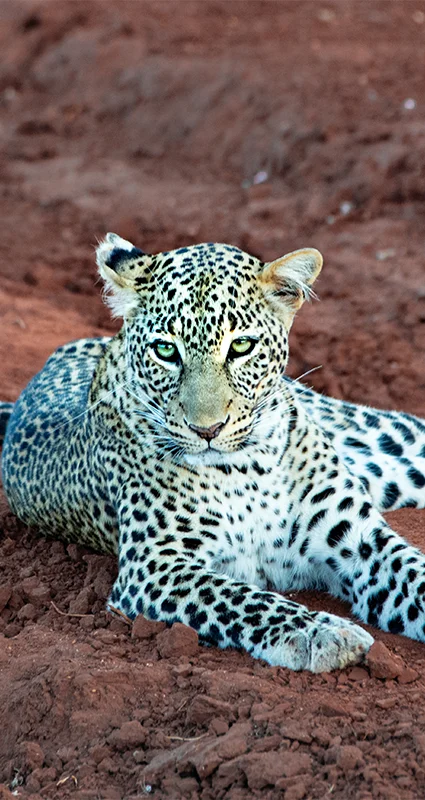
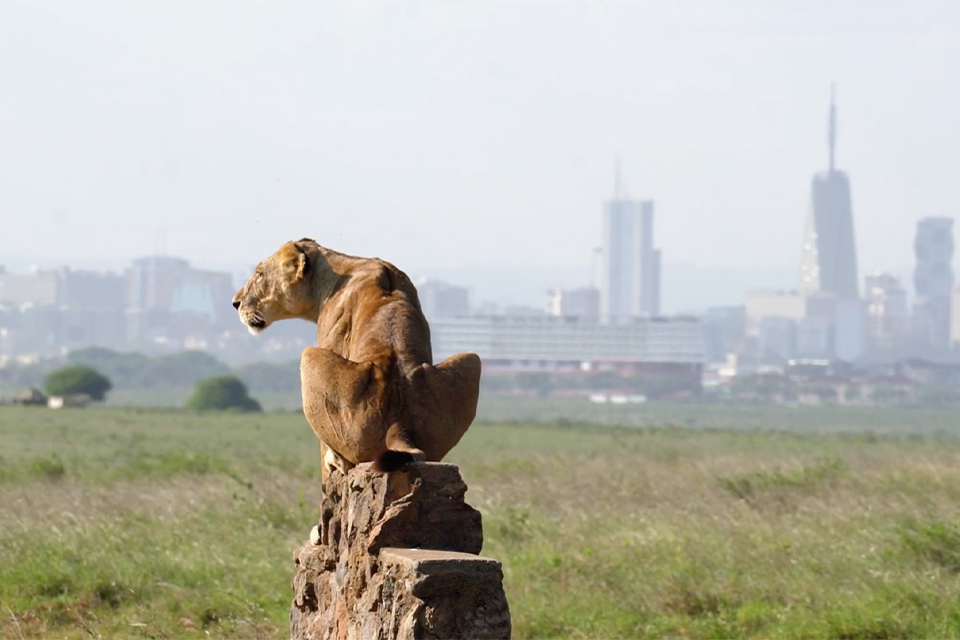
Lion and leopard: both resident and regularly encountered. Dense vegetation provides ideal leopard habitat across much of the park's interior.
Hippo and Nile crocodile: most dramatically seen at Mzima Springs, where the underwater viewing chamber places visitors at eye level with both.
Buffalo, Maasai giraffe, gerenuk, lesser kudu, fringe-eared oryx: the full range of Tsavo's plains species across diverse terrain
Black rhino: sightings are rare but recorded. Striped hyena is also present and occasionally encountered in the park's more arid areas.
Birdlife: Tsavo West hosts over 530 species, including golden-breasted starling, vulturine guineafowl, taita falcon, narina trogon, Fischer's starling, African orange-bellied parrot, and Somali ostrich. Mzima Springs' dense palms and fruiting trees attract primates and diverse birdlife, particularly in the dry season.
Where to stay in Tsavo West
Tsavo West offers more lodge options than Tsavo East. The four lodges here are our favourites, and provide access to Mzima Springs, game drives through the volcanic highlands, and clear-day views toward Kilimanjaro.
Finch Hattons is Tsavo West's most storied and atmospheric lodge; named after Denys Finch Hatton, the adventurer whose love for this landscape is woven into the park's mythology. Set in a remote area with a private waterhole, the camp offers classic East African safari romance and is preferred by guests who want to experience the park on its historical and emotional terms.
Severin Safari Camp is positioned in the park's accessible northern section and is one of Tsavo West's most established lodges. It offers reliable, comfortable accommodation with strong guiding, a focus on Mzima Springs as the centrepiece of the visit, and good access to the Mombasa highway, making it particularly well-suited to guests combining Tsavo West with a coastal extension.
Soroi Leopards Lair and Soroi Cheetah Tented Camp are intimate bush camps for guests seeking privacy and a flexible camp experience rather than the larger facilities of a traditional lodge.
Trusted by thousands of ecstatic travellers
✔️ 5-Star Trustpilot Rating ✔️ Condé Nast Travel Specialist Award Winner
✔️ Accredited by SATSA ✔️ 5,000+ Exceptional Safaris Since 1991
Why choose Africa Geographic to plan your safari?

"Africa Geographic are the ULTIMATE in African trip planning! Thank you so much for our once in a lifetime experience!...It was worth every penny spent!! Every detail about this trip were seamless from each meal to every transfer. We have already recommended Africa Geographic to many folks. God bless you all and thank you again for sharing your incredibly beautiful continent!!"

"This safari on foot through Tsavo National Park was the trip of a lifetime... AG, who assisted me assiduously from the initial enquiry through the whole administrative process to the final planning stage right up to departure. The safari itself was an unforgettable experience. I'm immensely grateful to AG...who managed everything on the ground in Kenya, for making this wonderful safari possible."

"A top company to help organise and arrange your perfect safari trip...was extremely helpful in tailoring our experience exactly how we wanted it... I would throroughly reccomend Africa Geographic, if you want peace of mine for your perfect once in a lifetime trip then this is the company for you. Will definitely be recommending them and using them again if and when we visit Africa!
Wish you were here?
Frequently asked questions
Tsavo West National Park covers 9,000 km² (900,000 hectares) in southeastern Kenya, forming the western half of the broader Tsavo ecosystem. Together with Tsavo East and Chyulu Hills, it forms more than 23,000 km² of protected land — one of the world's largest wildlife sanctuaries. Tsavo West is the more developed and more topographically dramatic of the three parks, with volcanic mountains, rocky inselbergs, and dense vegetation produced by higher rainfall and fertile soils. Its signature attraction is Mzima Springs.
Mzima Springs is the most iconic attraction in Tsavo West National Park. It is a series of crystal-clear pools fed by an underground water system: rainwater percolates through the porous volcanic rock of the Chyulu Hills, is naturally filtered, and emerges at Mzima as fresh springs. The pools are inhabited by hippos, Nile crocodiles, and schools of fish, and surrounded by dense date palms, raffia palms, and fruiting trees that attract vervet monkeys and diverse birdlife. An underground glass viewing chamber allows visitors to observe hippos and crocodiles from below the waterline, one of Kenya's most unusual wildlife experiences.
Tsavo East is larger, flatter, more arid, and less visited; a landscape of open savanna and red semi-desert ideal for wide-open wildlife viewing. Tsavo West is smaller, more dramatic, and more developed, with volcanic mountains, sheer cliff faces, dense vegetation, and Mzima Springs as its centrepiece. Wildlife viewing in Tsavo West can be more challenging because of the denser vegetation, but the scenery is considerably more varied. Tsavo West is closer to the Tanzanian border and Mount Kilimanjaro, which is visible on clear days.
Denys Finch Hatton, the British explorer and adventurer who became known as Karen Blixen's lover and the subject of the book and film Out of Africa, had a profound connection to Tsavo. He loved this landscape above all others. He was killed when the plane he was piloting crashed in the park. His story is part of the mythology that surrounds Tsavo West, and Finch Hattons camp takes his name in tribute.
Yes, on clear days, Mount Kilimanjaro is visible from the western sections of Tsavo West National Park. Africa's tallest mountain, at 5,895 metres, stands just across the Tanzanian border, and the volcanic highlands of Tsavo West, positioned closer to Tanzania than Tsavo East, provide elevated viewpoints from which Kilimanjaro's snow-capped summit appears on the horizon.
Tsavo West supports the full Tsavo wildlife assemblage: super tusker elephants, lions, leopards, hippos, Nile crocodiles, buffalo, Maasai giraffes, gerenuk, lesser kudus, fringe-eared oryx, and black rhinos (rare). Striped hyenas are occasionally encountered in the park's more arid areas. Mzima Springs concentrates hippos, crocodiles, and diverse birdlife. The denser vegetation of Tsavo West provides excellent leopard habitat, and sightings are more reliable here than on Tsavo East's open plains.
Kitchwa Tembo is a notable rocky cliff formation within Tsavo West National Park. Rock climbing is hugely popular in Tsavo, and the sharp cliffs of Kitchwa Tembo in the west are a recognised climbing destination. Climbers ascending the cliffs encounter soaring birds of prey and, on clear days, are rewarded with views of snow-capped Kilimanjaro.
The dry season from June to October is the primary game-viewing window, when wildlife concentrates around permanent water sources, vegetation thins slightly, and Mzima Springs is at its most productive. January to March provides a second dry period. The park can be visited year-round; the wet seasons (April–May and November) bring green scenery and fewer visitors. The dry months are particularly good for Mzima Springs encounters as wildlife is drawn to the water.
Tsavo West offers a different photographic character from Tsavo East. The landscape is more dramatically varied — volcanic mountains, sheer cliffs, and dense vegetation create compelling compositions. Mzima Springs provides the opportunity for underwater photography through the glass viewing chamber. Kilimanjaro views add a unique backdrop. The denser vegetation makes open plains wildlife photography less consistent than in Tsavo East, but landscape and habitat photography is exceptional.
Yes, Tsavo West is approximately two hours by road from Mombasa, with convenient onward road or air transfers to the Kenyan coast. It is one of Kenya's most natural bush-and-beach combinations. An itinerary that moves from the volcanic drama of Tsavo West to a few nights on the Indian Ocean coast is well-established and widely practised.
Finch Hattons is the most atmospheric and storied lodge in Tsavo West, named for Denys Finch Hatton, who fell deeply in love with this landscape. Set in a remote section of the park with a private waterhole, it combines classic East African safari romance with serious wildlife viewing. It is the property most directly associated with the park's historical and emotional identity, and is the natural choice for guests who want to experience Tsavo West at its most immersive.
Our safaris typically cost from US$700 per person, per night, depending on the accommodation comfort level, time of year and activities. This price usually includes accommodation, all meals, game drives, experienced guides, airport transfers, and 24/7 support from our team.
You only make your first payment when you book your holiday. Your second (last) payment is about 105 days before you travel.
Peak season bookings require 12–18 months of advance planning. Trips outside of peak season can be arranged 6–9 months ahead, with better rates and availability.
By booking through Africa Geographic, a portion of every safari sold supports carefully selected conservation projects at ground level, alongside our conservation publishing work. Our chosen properties in Tsavo West adhere to strict environmental practices, including limited vehicle numbers and sustainable operations.
Click here to schedule a no-obligation call with one of our Safari Experts or fill in our 2-minute form with your questions. Our team of experts are here to help! Whether you’re curious about the best time to travel, want to hear first-hand about an experience or need help planning your safari.
Start planning your dream safari
Our travel experts will craft a no-obligation itinerary just for you. We have crafted over 5,000 safaris since 1991. Your personal details are protected; we only use this information to contact you.
Why book your safari with us?

Deep Experience & Knowledge
Handcrafted experiential safaris since 1991.
Travel in Africa is about knowing when and where to go, and with whom. A few weeks too early/late or a few kilometres off course, and you could miss the greatest show on Earth. And wouldn’t that be a pity?

Trust & Safety

Make A Difference
We donate a portion of the revenue from every safari sold to carefully selected conservation projects that make a significant difference at ground level.
YOUR safari choice does make a difference - thank you!