

Tailor-made safaris. Since 1991



Kenya Beaches: The Complete Coastal Guide
Kenya's beaches at a glance:
Location: Indian Ocean coastline from Diani (south) to Lamu (north) | Best time to visit: December–March and June/July–October (dry seasons, calm seas) |
Key areas: Diani Beach, Mombasa/Nyali/Bamburi, Watamu/Malindi/Kilifi/Vipingo, Lamu Archipelago | Minimum recommended stay: 4–7 nights, depending on destination |
Currency: Kenyan Shilling (KES) | Malaria risk: Yes across all coastal areas – prophylaxis recommended |
Marine highlights: Coral reefs, sea turtles, dolphins, dugongs, seasonal whale sharks | Visa: Electronic Travel Authorisation (eTA) required for most visitors |
Why visit Kenya's beaches?
Kenya's Indian Ocean coast offers four distinct personalities within one accessible stretch of shore.
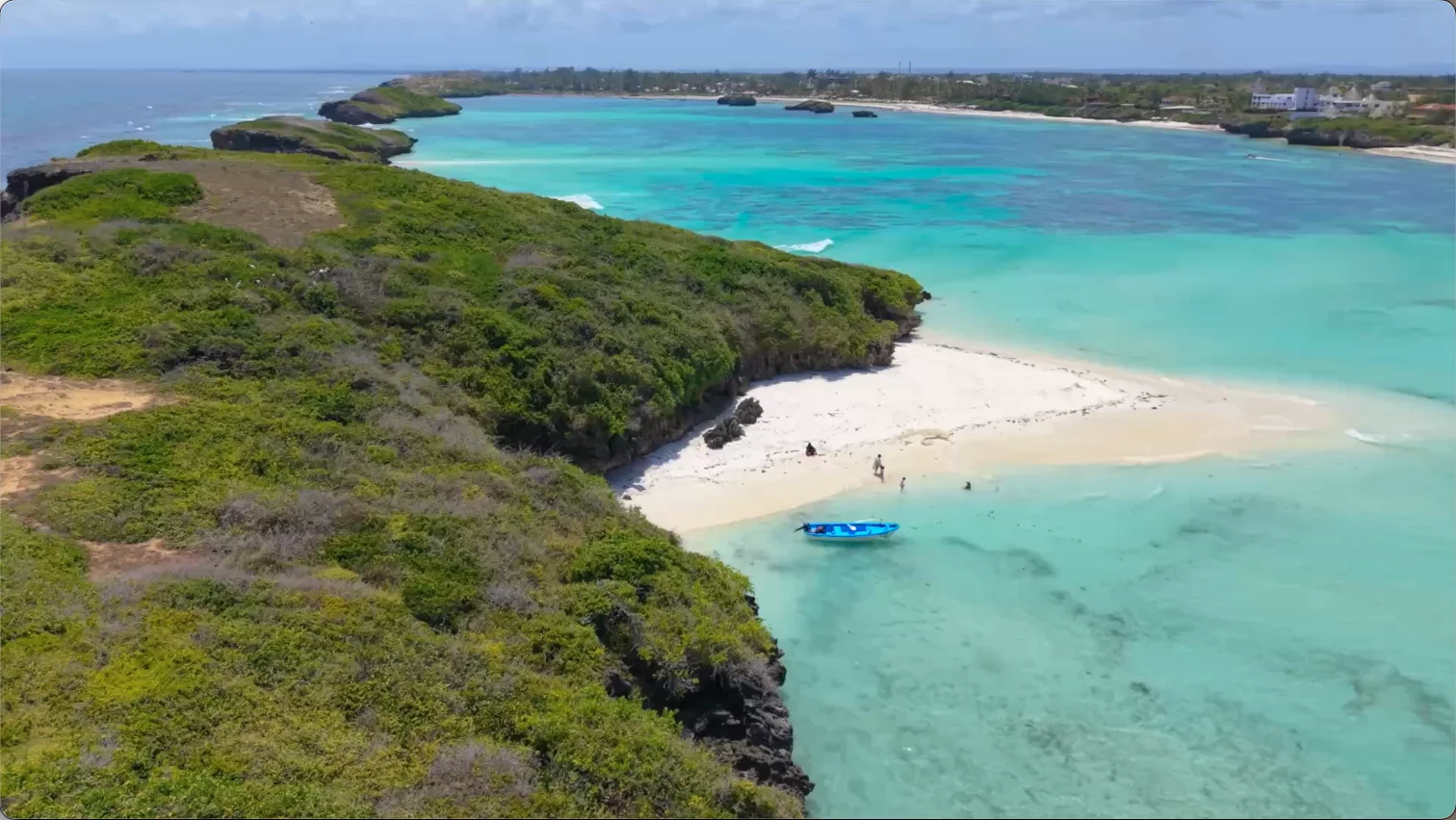
Diani Beach, south of Mombasa, pairs 17km of powdered white sand with a living coral reef, and shelters the endangered Angolan black-and-white colobus monkey in its coastal forest.
Mombasa, Kenya's ancient port city, anchors the coast in centuries of Swahili, Arabic and Indian trade, its Old Town and 16th-century Fort Jesus giving way north to the reef-protected beaches of Nyali and Bamburi.
Further north, Watamu and Malindi hold two of Africa's first marine parks, established in 1968, alongside Arabuko-Sokoke Forest's endemic birds and the Gede Ruins' coral-stone city remnants. Kilifi's tidal creek community and Vipingo Ridge's championship golf course complete this run of the northern coast.
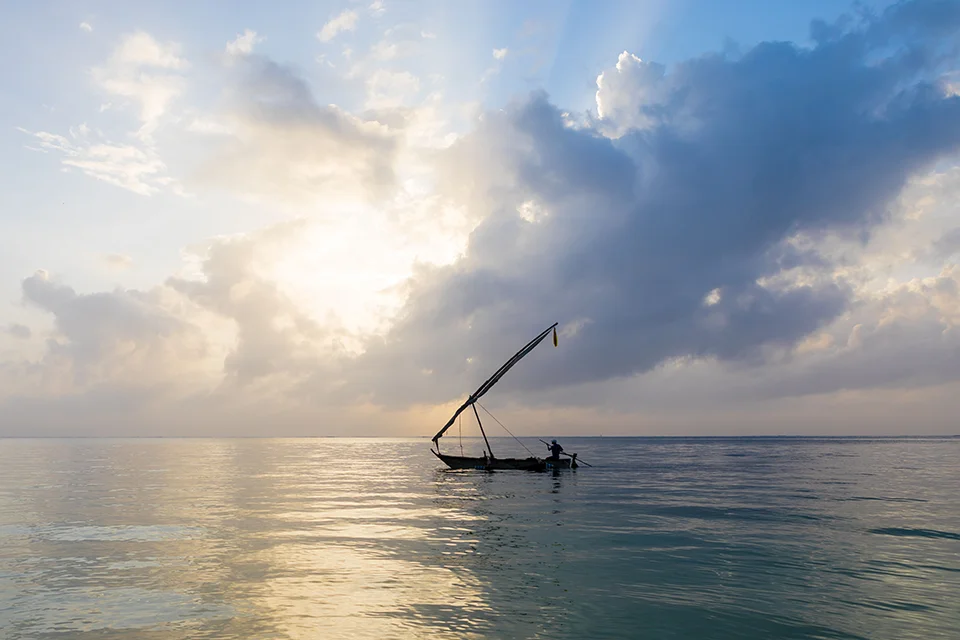
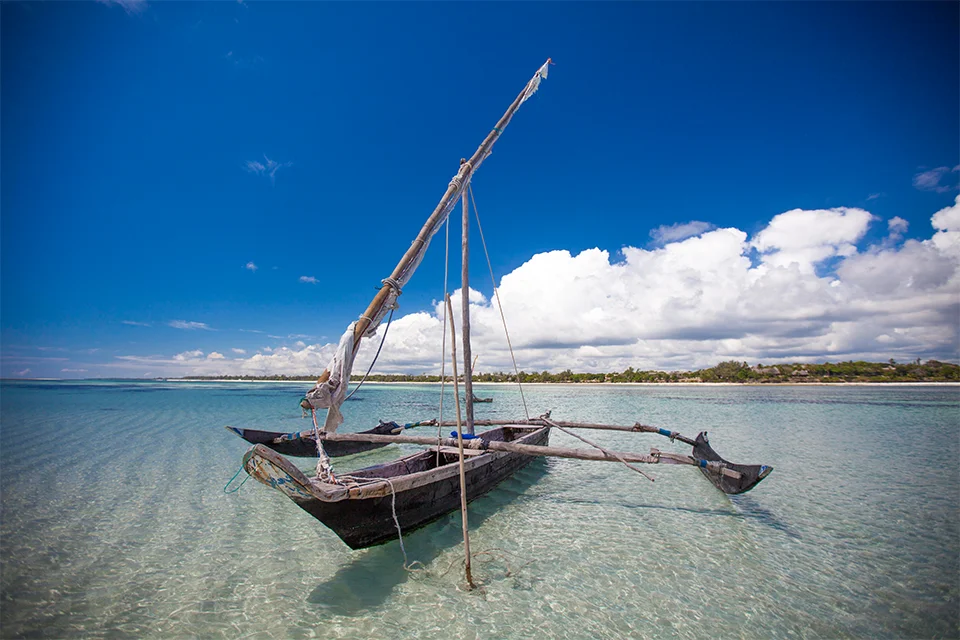
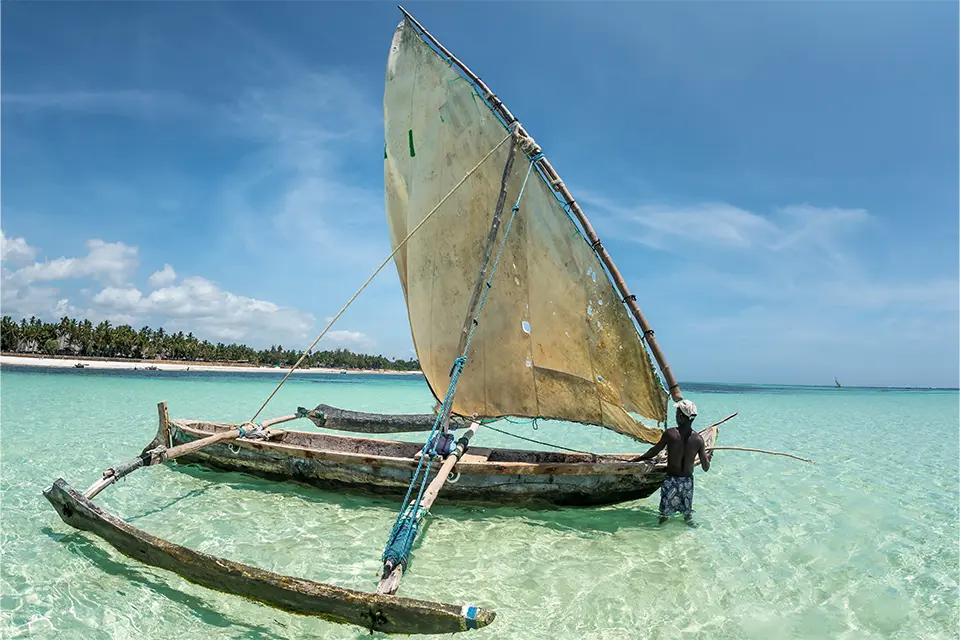
Furthest north, Lamu Archipelago, a UNESCO-listed island chain where vehicles are banned, donkeys and traditional dhows provide transport, and turtles, dugongs and whale sharks move through remarkably unspoilt waters. Together, these coasts let travellers combine beach time with marine conservation, Swahili culture and, often, an inland safari extension, all within one seamless Kenyan itinerary.
5 Reasons We Love Kenya's Beaches
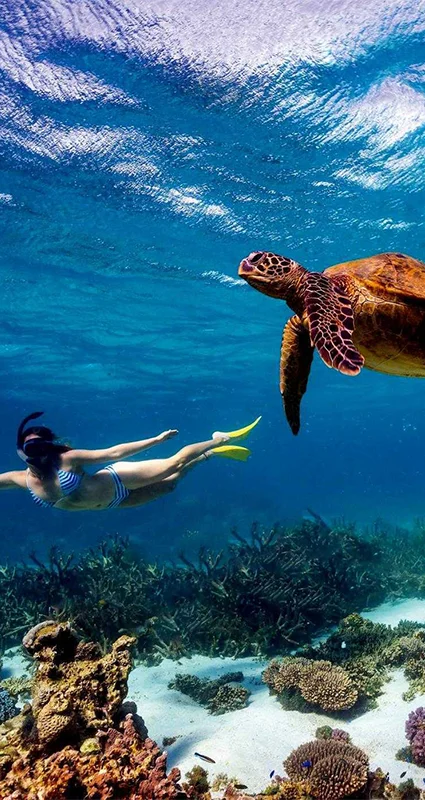
Marine parks and megafauna: Coral reefs off Diani, Watamu and Lamu shelter turtles, dolphins, dugongs and whale sharks in protected waters.
Living Swahili heritage: Lamu's UNESCO Old Town and Mombasa's Fort Jesus reveal centuries of Arabic, Indian and African coastal culture.
Conservation on the coast: Colobus Conservation, Kuruwitu Marine Conservancy and Watamu's turtle programmes invite visitors into active projects.
Safari and sea combined: Tsavo East and Tsavo West sit within reach of the north coast, pairing savannah wildlife with beach time.
Something for every traveller: From Lamu's car-free islands to Vipingo's golf course and Diani's kitesurfing, this coast rewards every style.
All You Need to Know About Kenya's Beaches
About Kenya's Beach Destinations
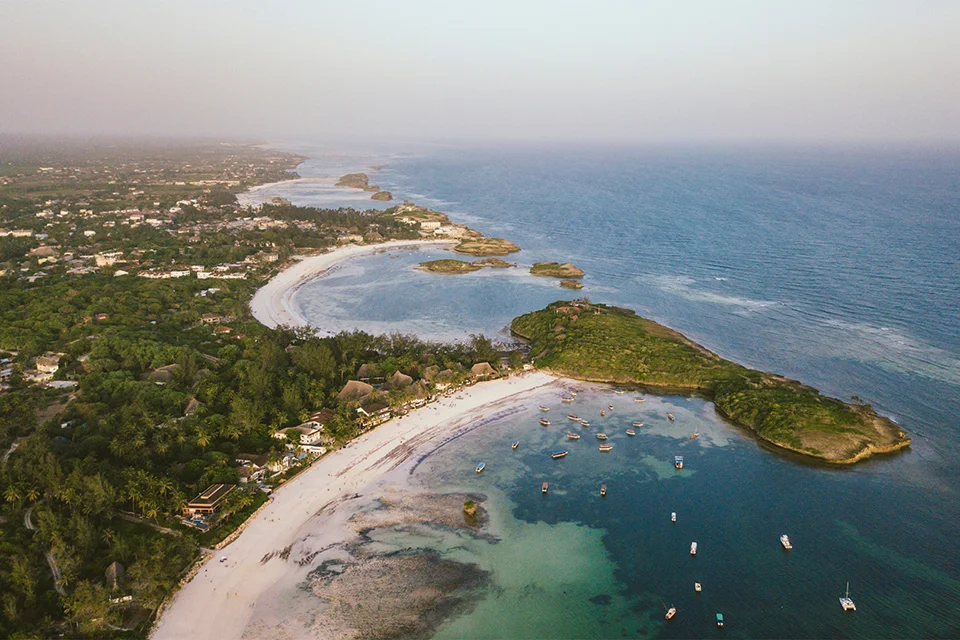
Kenya's beach destinations span a broad stretch of Indian Ocean coastline. Diani lies roughly 30km south of Mombasa, a 17km run of reef-protected white sand backed by coastal forest. Mombasa itself, Kenya's ancient port city, sits partly on an island linked to the mainland by the Nyali Bridge and the Likoni Ferry, with the beaches of Nyali and Bamburi extending northward along the shore. Further north again, Watamu and Malindi hold protected marine parks on either side of the Sabaki River mouth, while Kilifi's tidal creek community and Vipingo Ridge's golf estate lie between Mombasa and Watamu. Furthest north of all, the Lamu Archipelago sits offshore, its Old Town founded in 1370. A fringing coral reef runs along much of this coastline, creating calm, generally swimmable lagoons, though tides significantly affect conditions and should always be checked before entering the water.
Things to Do Along Kenya's Beaches
Snorkel Diani's reef and Kisite Mpunguti Marine Park: Dhow trips reach 39km of waters home to dolphins, turtles and 250-plus fish species.
Explore Mombasa's Fort Jesus and Old Town: Wander this 16th-century fortification and its carved-door Swahili quarter, a UNESCO site.
Snorkel Watamu Marine National Park: Established 1968, its coral gardens sit 200–400m offshore, with turtles, rays and reef sharks nearby.
Walk Lamu's car-free Old Town: Founded in 1370, its 26 mosques and carved doors are explored on foot, by donkey, or aboard a dhow.
Visit Colobus Conservation in Diani: This centre protects endangered Angolan black-and-white colobus monkeys and welcomes guided visits.
Play golf at Vipingo Ridge's Baobab Course: East Africa's only PGA-accredited course sits across 2,500 acres of coastal habitat.
Marine Parks and Reef Access at Kenya's Beaches
Kisite Mpunguti Marine Park: Reached by dhow from Diani, this reserve protects 39km of waters with 250-plus fish species, dolphins and turtles.
Watamu Marine National Park: Established in 1968, among Africa's first marine parks, its reef begins just 200–400m offshore.
Malindi Marine Reserve: Complements Watamu's fully protected park, extending marine conservation along the adjoining stretch of coast.
Mombasa Marine National Park: Boat operators at Nyali and Bamburi run half-day snorkelling trips to its offshore coral reef.
Kuruwitu Marine Conservancy: This community-led project near Vipingo Ridge restores coral and welcomes snorkellers to see the results.
Lamu's reef ecosystem: Coral reefs, mangroves and seagrass beds around the archipelago remain remarkably undisturbed by mass tourism.
Where to Stay Along Kenya's Beaches
In Diani, Soroi Blue sits on the beach with understated luxury. Water Lovers Beach Resort suits active travellers, with snorkelling and kitesurfing nearby. Kinondo Kwetu is Swahili-inspired and community-focused, known for organic food and horseback rides. Chale Island offers boat-access stays among mangroves; Alfajiri Beach Villa overlooks the reef from a clifftop, its villas suited to groups.
Mombasa's north coast hotels are typically large and resort-style. Sarova Whitesands anchors Bamburi with pools and watersports. Serena Beach Resort & Spa, in Shanzu, stands out for Swahili-influenced design. EnglishPoint Marina Hotel & Spa offers a marina-facing setting, and Voyager Beach Resort suits families with a pirate-themed pool and kids' club.
In Watamu & Malindi, Hemingways Watamu offers beachfront suites, Watamu Treehouse sits in the forest canopy, and The Charming Lonno Lodge suits couples. Kilili Baharini Resort & Spa and Ocean Beach Resort & Spa are established resorts, while The Kasa Malindi suits those wanting proximity to Swahili heritage. Kilifi favours rental villas suited to larger groups; Vipingo Ridge ranges from rooms to signature villas, with access to golf, a beach club and the Kuruwitu conservancy.
In the Lamu Archipelago, Manda Bay, on Manda Island, is boat-access only and focused on the marine environment. Peponi Hotel, in Shela, is one of Lamu's most enduring hotels, with water views two ways. The Cabanas offers an intimate, villa-style stay in Shela, opening onto the beach.
Trusted by thousands of ecstatic travellers
✔️ 5-Star Trustpilot Rating ✔️ Condé Nast Travel Specialist Award Winner
✔️ Accredited by SATSA ✔️ 5,000+ Exceptional Safaris Since 1991
Why choose Africa Geographic to plan your safari?

"The advice we got while planning our trip was spot-on and delivered in all aspects. We really felt understood in what African experience we were looking for. This type of expert advice from people who know what they are talking about is what we appreciated: people that understand our values and..."

"We had an absolutely incredible trip to Kenya on Safari and beach getaway thanks to Africa Geographic...They made the process so easy from initial planning...incredible wildlife, incredible people we met and incredible food! We will definitely be using AG again when we return to Africa!"

"I had the most wonderful time in Kenya...I can't thank...enough for answering all my many questions before I confirmed my booking - it made me certain the trip was being planned with the utmost care. I appreciated the constant communication and openness before and during my trip. Thank you"
Wish you were here?
Frequently asked questions
Kenya's coast has two dry seasons that offer the most reliable conditions across all four destinations: roughly December to March, and June/July through October. Diani and Mombasa favour January–March and June–October; Watamu, Malindi, Kilifi and Vipingo favour December–March and July–October; Lamu favours December–March and July–August. April, May and the shorter November rains bring rougher seas and reduced marine visibility.
Diani is a long, reef-protected beach south of Mombasa known for its coral reef, colobus monkeys and watersports. Mombasa, Nyali and Bamburi offer Swahili history, Fort Jesus and resort-style beach stays just north of the city. Watamu, Malindi, Kilifi and Vipingo combine marine parks, forest birding, ruins and a golf estate. Lamu is a car-free UNESCO island archipelago reached by boat, with the quietest, most cultural experience of the four.
Yes. Diani and Lamu are both positioned as natural beach extensions to an inland Kenya safari, typically reached from Nairobi or the Maasai Mara by short domestic flight. The Watamu, Malindi, Kilifi and Vipingo stretch sits within reach of Tsavo East and Tsavo West national parks, making a combined coast-and-safari itinerary straightforward.
Fringing coral reefs create calm, generally swimmable lagoons at Diani, Nyali, Bamburi, Watamu and Malindi. Tides significantly affect conditions everywhere on this coast: at low tide, reef shelves and sandbanks can be exposed, making some areas unsuitable for swimming. Checking tide times with your accommodation before entering the water is recommended at every destination.
Most international visitors require an Electronic Travel Authorisation (ETA) applied for online before departure. Requirements can change, so confirm current entry rules with your tour operator or Kenya's official immigration channels well ahead of travel. A yellow fever certificate may also be required depending on your transit route.
Dolphins are regularly seen on dhow and boat excursions at Kisite Mpunguti Marine Park and Watamu Marine National Park. Sea turtles nest and feed in reefs and seagrass beds from Diani to Lamu. Dugongs occur in Lamu's seagrass beds, and whale sharks pass Watamu's waters mainly between December and March. Reef fish diversity is exceptional across all four destinations.
Diani, Mombasa's north coast and the Watamu/Malindi stretch all offer reef-protected swimming and family-oriented resorts; Voyager Beach Resort in Bamburi has a dedicated kids' club. Lamu is also genuinely family-friendly thanks to its car-free environment and wide, empty beaches, though its pace suits families who enjoy boat trips and cultural exploration over structured resort activities.
Tides have a significant effect on swimming conditions across the entire Kenyan coast. At low tide, reef shelves and sandbanks are exposed, reducing water depth and, in some areas, making swimming difficult. Marine park excursions and snorkelling trips are generally planned around mid- to high-tide windows. Local accommodation providers can advise on daily tide schedules.
Lamu is reached by flying to Manda Airport, located on Manda Island across the channel from Lamu Town. From Nairobi, the flight takes approximately one and a half hours, followed by a short boat transfer across the channel to Lamu Island.
You must, cars are banned from general use on Lamu Island. Transport within the island is by foot or donkey, while traditional Arab dhows connect Lamu to Manda Island, the Takwa Ruins and other parts of the archipelago. This absence of vehicles is central to Lamu's quiet, unhurried character.
Colobus Conservation in Diani protects the Angolan black-and-white colobus monkey and offers guided tours of its rehabilitation centre. The Kuruwitu Marine Conservancy near Vipingo Ridge is a community-led coral restoration project open to snorkellers. Watamu's turtle conservation programmes support nesting green and hawksbill turtles and offer direct visitor engagement.
Recommended minimum stays vary by destination: four to five nights for Diani or Mombasa's north coast, five to seven nights for the Watamu, Malindi, Kilifi and Vipingo stretch. Lamu rewards a slower pace suited to its unhurried character. Combining two destinations, or pairing the coast with an inland safari, typically requires a longer overall itinerary.
Our safaris typically cost from US$700 per person, per night, depending on the accommodation comfort level, time of year and activities. This price usually includes accommodation, all meals, game drives, experienced guides, airport transfers, and 24/7 support from our team.
Click here to schedule a no-obligation call with one of our Safari Experts or fill in our 2-minute form with your questions. Our team of experts are here to help! Whether you’re curious about the best time to travel, want to hear first-hand about an experience or need help planning your safari.
Explore more African destinations

Start planning your dream safari
Our travel experts will craft a no-obligation itinerary just for you. We have crafted over 5,000 safaris since 1991. Your personal details are protected; we only use this information to contact you.
Why book your safari with us?

Deep Experience & Knowledge
Handcrafted experiential safaris since 1991.
Travel in Africa is about knowing when and where to go, and with whom. A few weeks too early/late or a few kilometres off course, and you could miss the greatest show on Earth. And wouldn’t that be a pity?

Trust & Safety

Make A Difference
We donate a portion of the revenue from every safari sold to carefully selected conservation projects that make a significant difference at ground level.
YOUR safari choice does make a difference - thank you!