

Tailor-made safaris. Since 1991



Amboseli: in the shadow of Kilimanjaro
Amboseli at a glance:
Location: Kajiado County, southern Kenya, near the Tanzanian border | Size: 392 km² (39,206 hectares); Greater Amboseli ecosystem ~8,000 km² |
Access: Light aircraft from Nairobi to Amboseli airstrip; road transfer approximately 4–5 hours from Nairobi | Best time to visit: June–October (dry season, clear Kilimanjaro views); January–February (short dry season) |
Wildlife highlights: Elephant (including super tuskers), lion, cheetah, leopard, hippo, buffalo, Maasai giraffe, gerenuk, over 550 bird species | Key features: Amboseli Elephant Research Project (50+ years); three major marshes (Enkongo Narok, Ol Tukai, Olokeya); Mount Kilimanjaro backdrop |
Accommodation: Angama Amboseli, Tortilis Camp, Porini Amboseli, Tawi Lodge, Ol Tukai Amboseli, Elerai Camp | 2nd-most-visited park in Kenya; Maasai communities are custodians of the surrounding land |
Why visit Amboseli?
Amboseli National Park covers 392 km² (39,206 hectares) in Kajiado County, Kenya, a compact reserve shaped by water, dust, and Africa's largest land animals.
The name derives from the Maa word "Empusel," meaning "salty, dusty place." Arid and low in rainfall, the park is fed by groundwater originating on Mt Kilimanjaro, 50 kilometres away in Tanzania, flowing through porous soils and rising as freshwater springs. These create the species-rich marshes that are the engine of Amboseli's wildlife density: Enkongo Narok, Ol Tukai, and Olokeya are the three largest.
Super tusker elephants are the defining presence. Alongside them: hippos, buffalo, lions, cheetahs, leopards, spotted hyenas, wildebeest, zebras, Maasai giraffes, and gerenuks. The habitat supports over 550 bird species.
Amboseli is a core part of the Greater Amboseli ecosystem — approximately 8,000 km² — encompassing the Chyulu Hills, Tsavo East and West, and Kilimanjaro National Park. Conservancies on the park's outskirts expand the protected land, supported by the Amboseli Ecosystem Trust, which maintains wildlife corridors and reduces human-wildlife conflict along ancient migratory routes.
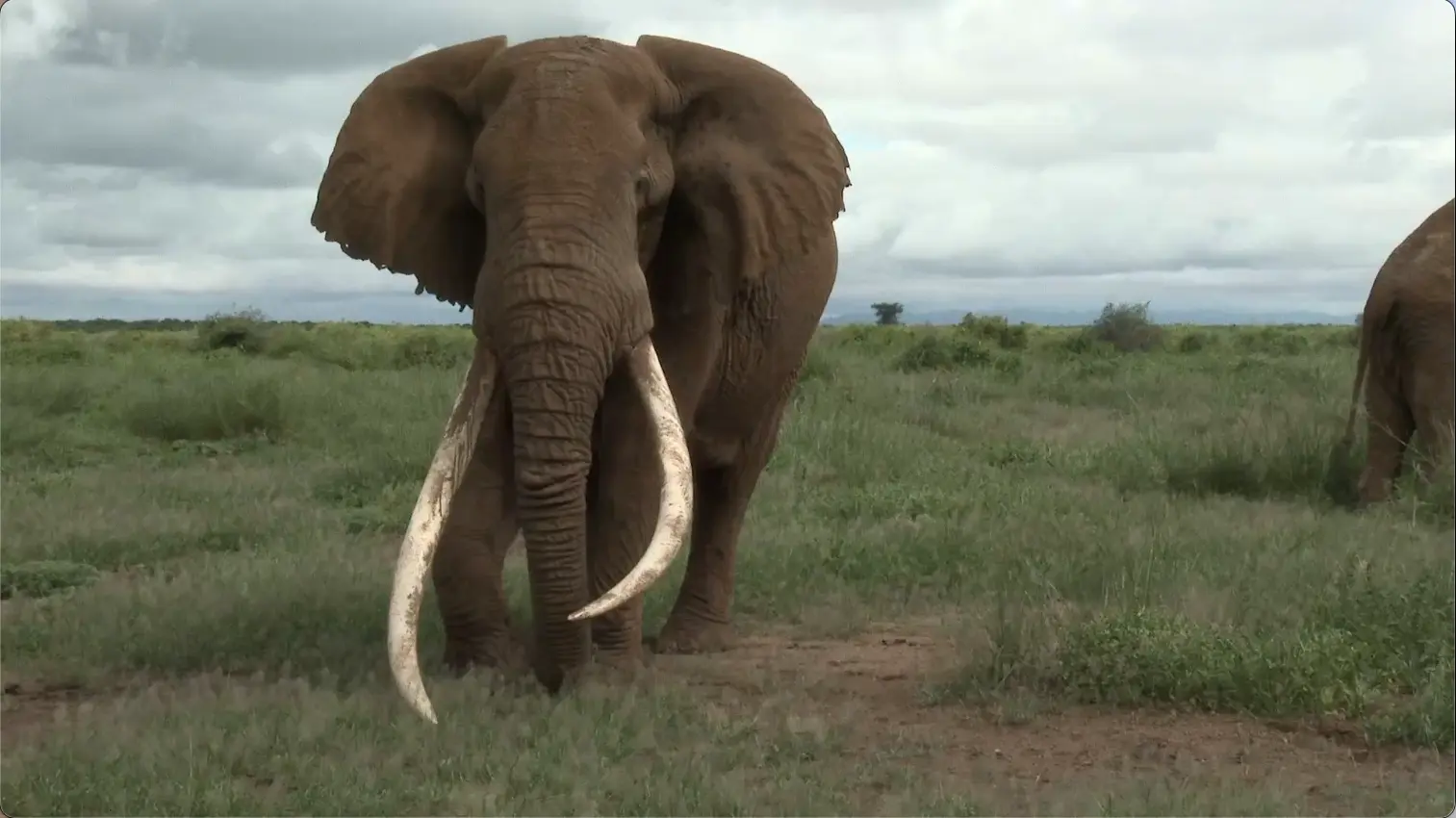
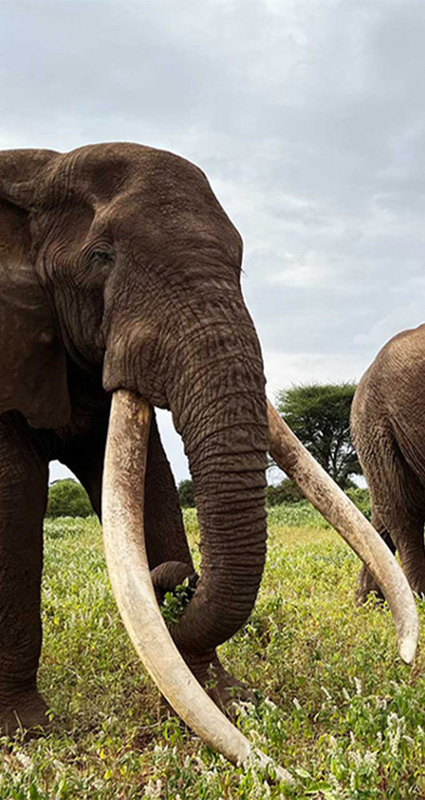
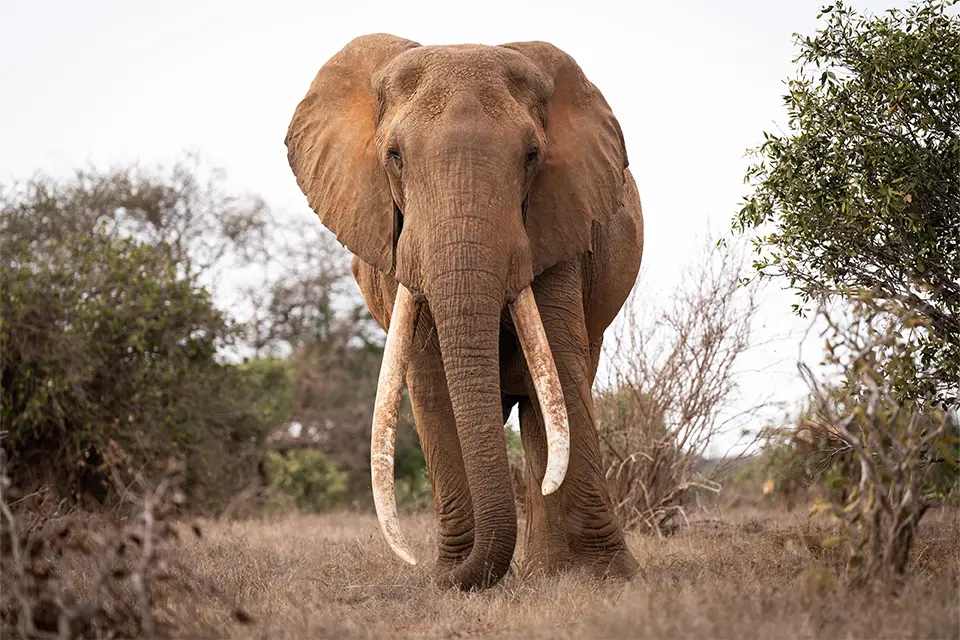
Amboseli's most celebrated residents are the elephants, the subjects of the longest-running study of elephant behaviour in the wild, conducted by the Amboseli Elephant Research Project. The story of matriarch Echo, who led her family for over forty years before she died in 2008, captivated people worldwide and changed perceptions of elephants’ complex emotional lives. Deceased ‘super tusker’ Tim was popular amongst tourists, as was Craig, another gentle giant tusker, who passed away in early 2026. There are still a handful of super tuskers roaming this area.
5 Reasons We Love Amboseli
Super tuskers still roam here: Extraordinarily large-tusked bulls, increasingly rare across Africa, are encountered in the Amboseli-Tsavo ecosystem more reliably than anywhere else. Amboseli's herds, large-tusked and studied for over 50 years, offer encounters of genuine emotional depth in a landscape defined by their presence.
The postcard Mount Kilimanjaro as backdrop: Africa's tallest peak at 5,895 metres rises above a foreground of elephants, one of the continent's most iconic and enduring images.
The world's longest elephant study: The Amboseli Elephant Research Project has documented individual life histories across generations, making these herds the world's most studied.
The Miracle of the Swamps: During the dry season, the wetlands created by runoff from Kilimanjaro become massive wildlife magnets. You will look out over hundreds of elephants, hippos, and buffalo standing belly-deep in the reeds to feed and cool off.
Panoramic Views at Observation Hill: Stretch your legs on a walk up this pyramid-shaped volcanic hill. The summit offers a flawless 360-degree aerial perspective of the entire park, allowing you to trace the exact boundaries of the dry plains and the thriving marshes.
All you need to know about Amboseli
About Amboseli National Park
Amboseli National Park was formerly known as Maasai Amboseli Game Reserve. It covers 392 km² (39,206 hectares) in Kajiado County, in southern Kenya, close to the Tanzanian border. Kilimanjaro, Africa's tallest mountain at 5,895 metres, stands just 50 km to the southeast and dominates the park skyline on clear mornings.
The park's western section encompasses part of a dry Pleistocene lake basin. Lake Amboseli is typically dry but fills with shallow alkaline water during heavy rains — accompanied by opportunistic flamingos. The rest of the park is characterised by sparse vegetation, dusty volcanic soils, and the three large marshes fed by Kilimanjaro's glacial meltwater. Amboseli is the second most-visited national park in Kenya after the Masai Mara, and forms the core of the 8,000 km² Greater Amboseli ecosystem.
Things to do in Amboseli
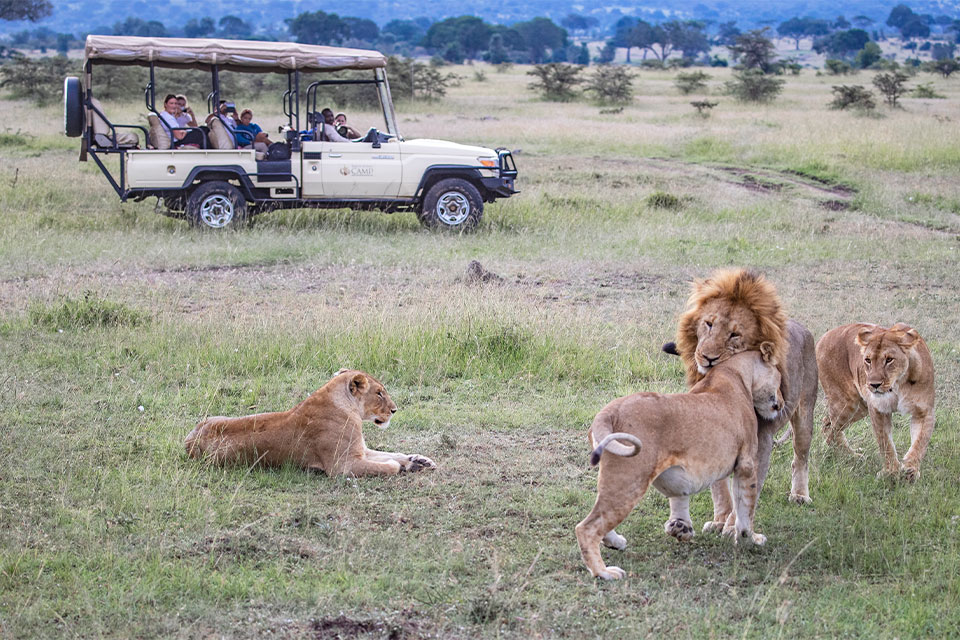
Game drives through open plains and along swamp margins are the best way to locate elephants, all resident predators, and large mixed-species concentrations.
Maasai cultural visits: semi-nomadic Maasai communities live alongside wildlife, and lodge-arranged village visits offer a direct, living cultural encounter.
Photography: Amboseli delivers one of Africa's most iconic images; elephants in the foreground, Mount Kilimanjaro's snow-capped peak rising behind them.
Birdwatching across 550+ species — Malagasy pond heron, Pangani longclaw, steel-blue whydah, Hartlaub's bustard, and dry-country specials of east Kenya.
Night drives and bush walking at properties like Porini Amboseli, in the adjacent Selengei Conservancy, permit walking safaris and night drives unavailable inside the national park.
Photograph super tuskers beneath Kilimanjaro: Few wildlife experiences rival watching an enormous bull elephant stride across Amboseli's plains with Africa's highest mountain rising behind him.
What wildlife will I see in Amboseli?
Elephants: the park's defining species, present in high densities around the marshes, studied for 50+ years by the Amboseli Elephant Research Project.
Super tuskers: extraordinarily large-tusked elephant bulls; Amboseli and Tsavo together hold some of the last individuals remaining in Africa.
Big cats: lion, cheetah, and leopard are all resident and encountered regularly. The park has a notably high predator density relative to its compact size.
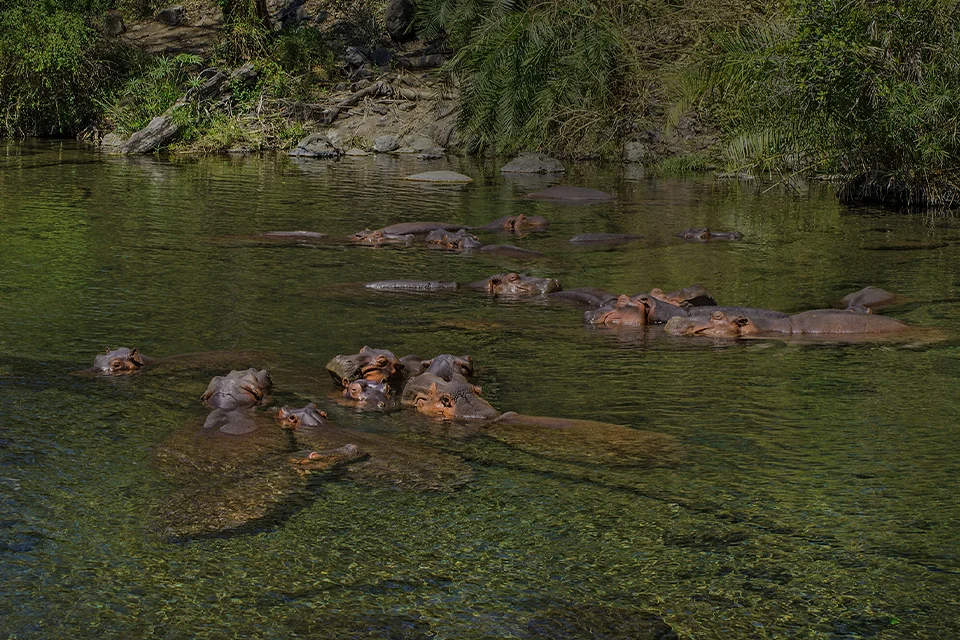
Hippo and buffalo: both abundant year-round around the marshes; hippos are particularly visible at Enkongo Narok and the central swamp areas.
Maasai giraffe and gerenuk: Amboseli's giraffes are the Maasai subspecies; gerenuk, the long-necked browsing antelope, are seen regularly in open areas.
Birdlife: over 550 species include the Malagasy pond heron, Pangani longclaw, steel-blue whydah, Hartlaub's bustard, and the Eurasian thick-knee.
Where to stay in Amboseli
Lodge designs range from architecturally striking luxury lodges to intimate tented camps
Angama Amboseli is one of the park's most dramatic properties; elevated tented suites with unobstructed Kilimanjaro views and exceptional photography opportunities across the open plains.
Tortilis Camp is one of Amboseli's most established luxury lodges, set beneath acacia tortilis trees on the park's outskirts, offering classic tented chalets, proximity to the swamp, and experienced guiding.
Porini Amboseli Camp is a small community camp in the Selengei Conservancy adjacent to the national park. Community ownership means tourism revenue flows to local Maasai families.
Tawi Lodge occupies a private conservancy on the northern boundary, with sweeping Kilimanjaro views and a strong focus on sustainability and community.
Ol Tukai Amboseli is centrally located within the park, close to the Ol Tukai swamp, one of the best spots for year-round elephant and waterbird viewing.
Elerai Camp sits on a private concession on the southern edge of the ecosystem, offering seclusion and dramatic views across the Amboseli plains to Kilimanjaro.
Trusted by thousands of ecstatic travellers
✔️ 5-Star Trustpilot Rating ✔️ Condé Nast Travel Specialist Award Winner
✔️ Accredited by SATSA ✔️ 5,000+ Exceptional Safaris Since 1991
Why choose Africa Geographic to plan your safari?

"Africa Geographic Travel organised a 5 day bird hide session near Amboseli National Park specifically to photograph a number of waxbill species. The hide was basic (I was told this in advance) but the number and species that visited the hide was remarkable and all target species-and more - photographed. Nearby Sentrim Resort was fantastic and an excellent choice."

"As a photographer I have been interested in wide and hook-lipped (black) rhinos in different conservancies and in meeting some of the last remaining super tuskers in Amboseli etc. My dreams became true. And at Ol Pejeta Tented Camp in Mara North Conservancy, a special camp for photographers, I had amazing adventures."

"Yet another fabulous trip arranged...this time to Kenya...The experience with one of the super tuskers was breathtaking; it came within touching distance! In addition, so many other amazing encounters with numerous animals and birds. The final day in Amboseli provided iconic shots of elephants with Kilimanjaro in the background...I can't wait for the next trip in September!!"
Wish you were here?
Frequently asked questions
Amboseli is famous above all for its elephants, especially the largest-tusked individuals, which are present in high densities and have been studied continuously by the Amboseli Elephant Research Project for over five decades. The park is also among the best places in the world to photograph elephants against the backdrop of Mount Kilimanjaro, which rises 50 kilometres away in Tanzania. It is the second most-visited national park in Kenya after the Masai Mara.
Amboseli is a year-round destination, but two dry periods offer the most reliable wildlife viewing and the clearest Kilimanjaro views.
June to October is the primary dry season, when vegetation is sparse, animals concentrate around the marshes, and predator sightings are most consistent.
January and February provide a second dry window.
The long rains run from March to May, and the short rains from November to December, which herald periods of lower visitor numbers, good availability, and sometimes lush, photogenic scenery.
The Amboseli Elephant Research Project was initiated by Cynthia Moss and Harvey Croze and is operated by the Amboseli Trust for Elephants. It is the longest-running study of elephant behaviour in the wild. The life histories of individual herds and bulls have been painstakingly documented across generations, contributing immeasurably to the global understanding of elephant behaviour, social bonds, and family dynamics. The story of Echo, the matriarch who led her family for over forty years before her death in 2008, became internationally known and changed perceptions of elephants' complex emotional lives.
Super tuskers are bull elephants whose tusks are so large they reach or touch the ground, an increasingly rare genetic trait. The Amboseli and Tsavo ecosystems together represent a significant repository of super tusker genetics in Africa. Tim and Craig, two of Amboseli's most recognised super tuskers, passed away, but a small number of super tuskers remain in the broader ecosystem.
Yes, on clear mornings, Kilimanjaro's snow-capped peak dominates the Amboseli skyline. Africa's tallest mountain at 5,895 metres, Kilimanjaro stands just 50 kilometres to the southeast across the Tanzanian border. The classic Amboseli image, elephants in the foreground, Kilimanjaro behind, is among the most reproduced wildlife photographs in the world. Cloud typically obscures the summit by mid-morning, so dawn and early morning drives offer the clearest views.
The Greater Amboseli ecosystem covers approximately 8,000 km² and encompasses Amboseli National Park, the Chyulu Hills, Tsavo East and West National Parks, Mount Kilimanjaro National Park, and the land between them. The Amboseli Ecosystem Trust was established to maintain this larger landscape, reduce human-wildlife conflict, and ensure that wildlife can continue to move along ancient migratory routes between the various formally protected areas.
Amboseli's singular quality is its combination of extraordinarily habituated, well-documented elephants with the Kilimanjaro backdrop. No other destination in Kenya delivers both. The park also offers a high predator density for its compact size, a rich birdlife list of over 550 species, and a living cultural encounter with Maasai communities who share the land with wildlife. Its proximity to Nairobi also makes it accessible as a first or final leg of a broader Kenya circuit.
Yes. Several conservancies on the park's outskirts, including the Selengei Conservancy, where Porini Amboseli Camp is based, expand the protected area and allow activities not permitted within the national park, such as walking safaris and night drives. These conservancies are supported by the Amboseli Ecosystem Trust and provide an important buffer zone between the park and surrounding farmland and settlements. Community ownership models at several conservancies direct tourism revenue to Maasai families. Many of the best safari experiences around Amboseli take place in community-owned conservancies, where tourism revenue directly supports Maasai landowners while preserving critical wildlife corridors.
Amboseli supports over 550 bird species, benefiting from its unique combination of semi-arid savannah and species-rich marshland. Highlights include the Malagasy pond heron, Pangani longclaw, steel-blue whydah, rufous chatterer, Hartlaub's bustard, and Eurasian thick-knee. The marshes attract herons, egrets, ibis, and large numbers of waterfowl. When Lake Amboseli fills during heavy rains, flamingos appear in opportunistic numbers.
All major predators are present. Lion, cheetah, and leopard are all resident; spotted hyena are common around the marshes. The park has a high predator density relative to its compact size. Predator sightings are most reliable during the dry season when vegetation thins and prey concentrations increase around permanent water. Cheetah are regularly seen on the open plains; leopard favour the acacia woodland areas.
Most visitors fly from Nairobi's Wilson Airport by light aircraft to the Amboseli airstrip — a journey of approximately 45 minutes. Road transfer from Nairobi takes approximately four to five hours. Africa Geographic arranges all logistics as part of any booked itinerary.
Yes — Amboseli is a natural partner for the Masai Mara, Samburu, Laikipia, and the Kenyan coast. Most guests arrive in Kenya through Nairobi and travel by light aircraft between destinations. A Kenya circuit combining Amboseli with the Masai Mara or Laikipia delivers contrasting wildlife experiences — the intimate elephant world of the south and the predator-rich open savanna of the north or west. Africa Geographic designs these combinations regularly.
Our safaris typically cost from US$700 per person, per night, depending on the accommodation comfort level, time of year and activities. This price usually includes accommodation, all meals, game drives, experienced guides, airport transfers, and 24/7 support from our team.
You only make your first payment when you book your holiday. Your second (last) payment is about 105 days before you travel.
Peak season bookings require 12–18 months of advance planning. Trips outside of peak season can be arranged 6–9 months ahead, with better rates and availability.
By booking through Africa Geographic, a portion of every safari sold supports carefully selected conservation projects at ground level, alongside our conservation publishing work. Several Amboseli-area lodges operate within community conservancy frameworks — particularly Porini Amboseli — where tourism revenue flows directly to Maasai communities who are the custodians of the land.
Click here to schedule a no-obligation call with one of our Safari Experts or fill in our 2-minute form with your questions. Our team of experts are here to help! Whether you’re curious about the best time to travel, want to hear first-hand about an experience or need help planning your safari.
Start planning your dream safari
Our travel experts will craft a no-obligation itinerary just for you. We have crafted over 5,000 safaris since 1991. Your personal details are protected; we only use this information to contact you.
Why book your safari with us?

Deep Experience & Knowledge
Handcrafted experiential safaris since 1991.
Travel in Africa is about knowing when and where to go, and with whom. A few weeks too early/late or a few kilometres off course, and you could miss the greatest show on Earth. And wouldn’t that be a pity?

Trust & Safety

Make A Difference
We donate a portion of the revenue from every safari sold to carefully selected conservation projects that make a significant difference at ground level.
YOUR safari choice does make a difference - thank you!