

Tailor-made safaris. Since 1991



Loita Hills: Kenya's last sacred forest, on foot with the Maasai
Loita Hills at a glance:
Location: Narok County, southern Kenya; east of the Maasai Mara National Reserve, on the edge of the Great Rift Valley | Access: Reached by road from the Maasai Mara; approximately a five-hour drive on unsealed roads from the northern Mara |
Elevation: 2,000–2,600 metres above sea level | Temperatures: Daytime up to 25°C; nights and early mornings around 10°C. Carry warm layers |
Best time to visit: June–October (dry season); January–March (dry season and Loita Migration) | Avoid: April–May and November–December. Rainy seasons bring muddy trails and difficult camping conditions |
Experience type: Multi-day guided walking trails through Naimina Enkiyio with local Maasai guides; mobile tented camps | Group size and duration: 1–14 people; standard trail 4 days/3 nights; bespoke options up to 7+ days |
Why visit the Loita Hills?
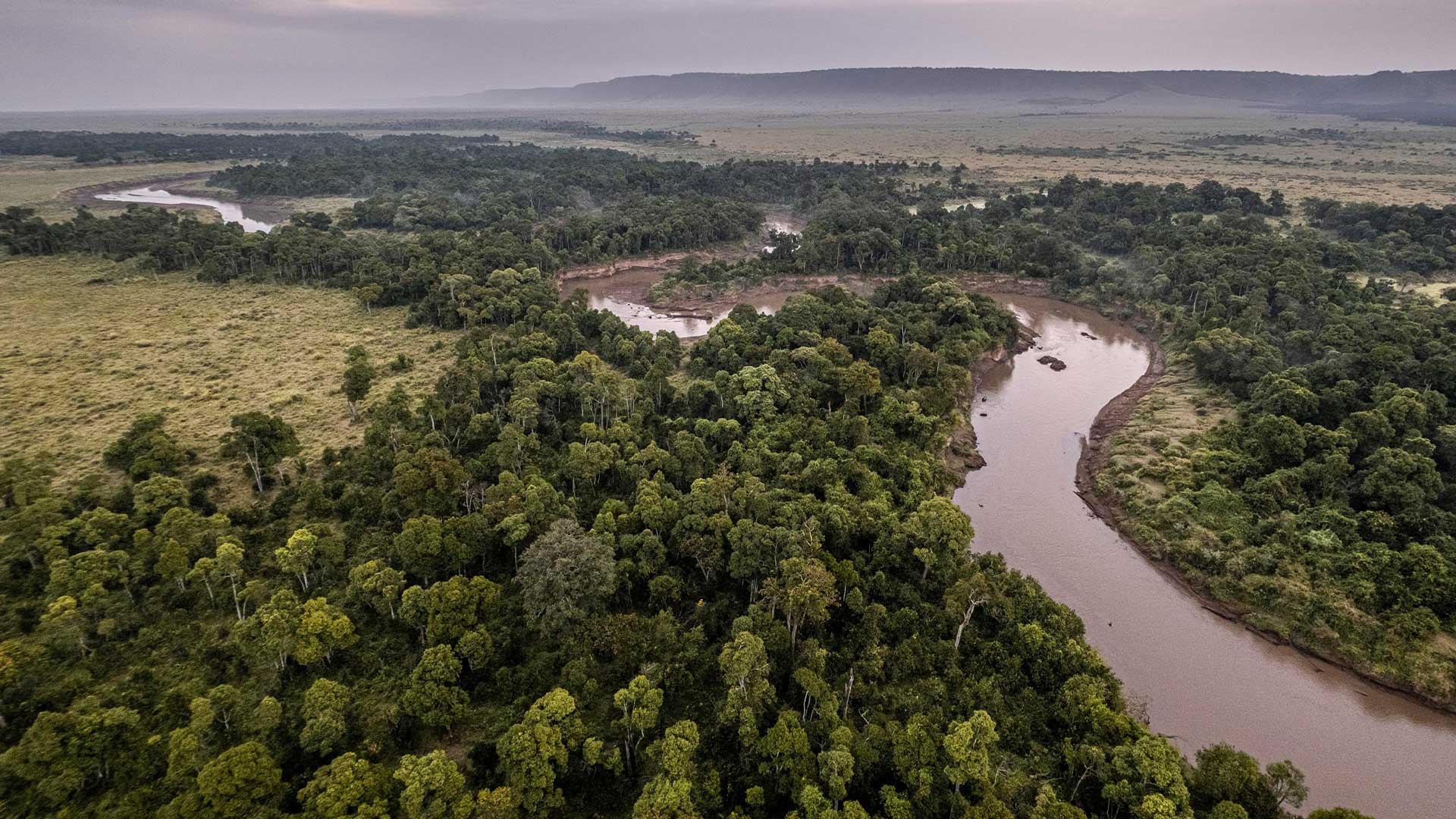
The eastern highland fringe of the Maasai Mara ecosystem, away from the vehicles and visitor circuits that define mainstream Kenya safari travel, the Loita Hills rise quietly in Narok County. At their heart sits Naimina Enkiyio: an ancient cloud forest that the Loita Maasai have conserved for generations, not through legislation but through indigenous custodianship guided by the Oloibon, the community's spiritual leader. It is a place with its own rules, its own history and its own relationship to the people who live alongside it.
What makes the Loita Hills singular is not any single feature but the combination: a landscape of genuine ecological importance, a culture with deep roots in that landscape, and an experience that can only be reached on foot and only understood slowly. There are no game drives here, no lodges with infinity pools, no crowds gathering at a crossing. The Loita Hills ask something different of a traveller, and they give something different in return.
For those drawn to Africa not only for its wildlife but for the complexity of the relationships between people, land and conservation, this is a destination with few equivalents on the continent. The walking trails, the Maasai guides, and the forest itself are not separate attractions; they form a single, interlocking experience that takes several days to fully reveal itself.
5 reasons we love Kenya's Loita Hills
The sacred forest of Naimina Enkiyio: One of Kenya's last surviving indigenous community forests, ancient, roadless and conserved by the Loita Maasai under a tradition of custodianship that predates any formal protection system.
Walking as the only way in: No roads enter the Loita Hills. Every experience here is enjoyed at a human pace, through elephant trails and highland glades, in one of East Africa's genuinely untouched landscapes.
Four days with Loita Maasai guides: This is not a cultural add-on; it is the experience. Guides share plant knowledge, legends, fire-making, and tracking skills across days of walking that build into a rare, sustained human connection.
True off-grid solitude: No phone signal, no other tourists, no electricity. Just forest, escarpment views and the kind of quiet that takes a full day of walking to reach. The Loita Hills remain one of Kenya's least-visited destinations.
The Loita Migration: Each January to March, tens of thousands of wildebeest and zebra move west from the Loita Plains into the Mara conservancies: Kenya's lesser-known migration, unfolding with far fewer visitors than the famous Mara crossings.
All you need to know about the Loita Hills
Things to do in the Loita Hills
Walk Naimina Enkiyio's ancient forest trails: Follow pathways worn by elephants and buffalo through old-growth cedar and yellowwood forest, guided by Loita Maasai who have known these trails since childhood.
Learn the forest's medicinal language: As you walk, guides identify the plants their people have used for generations: trees with healing properties, poisonous bark, herbs for ceremony, knowledge held within the community and passed on orally.
Swim below Entasopia Falls: A detour on the second day's trail leads to Entasopia Falls, the most accessible waterfalls in the Loita Hills, where natural pools beneath the cascade offer a cold, clear reward mid-hike.
Hike to the Nguruman Escarpment: From the high plateau of the Hills, panoramic views open across the Great Rift Valley, reaching toward Lake Natron and, on clear days, into Tanzania before the descent to the valley floor.
Watch out for forest bird species, including Abyssinian ground thrush, black-headed mountain greenbul, Waller’s starling, black-fronted bushshrike, Sharpe’s starling, lemon dove, Hartlaub’s turaco, narina trogon, African crowned eagle, red-fronted parrot, white-headed woodhoopoe, chestnut-throated apalis, African hill babbler, and silvery-cheeked hornbill.
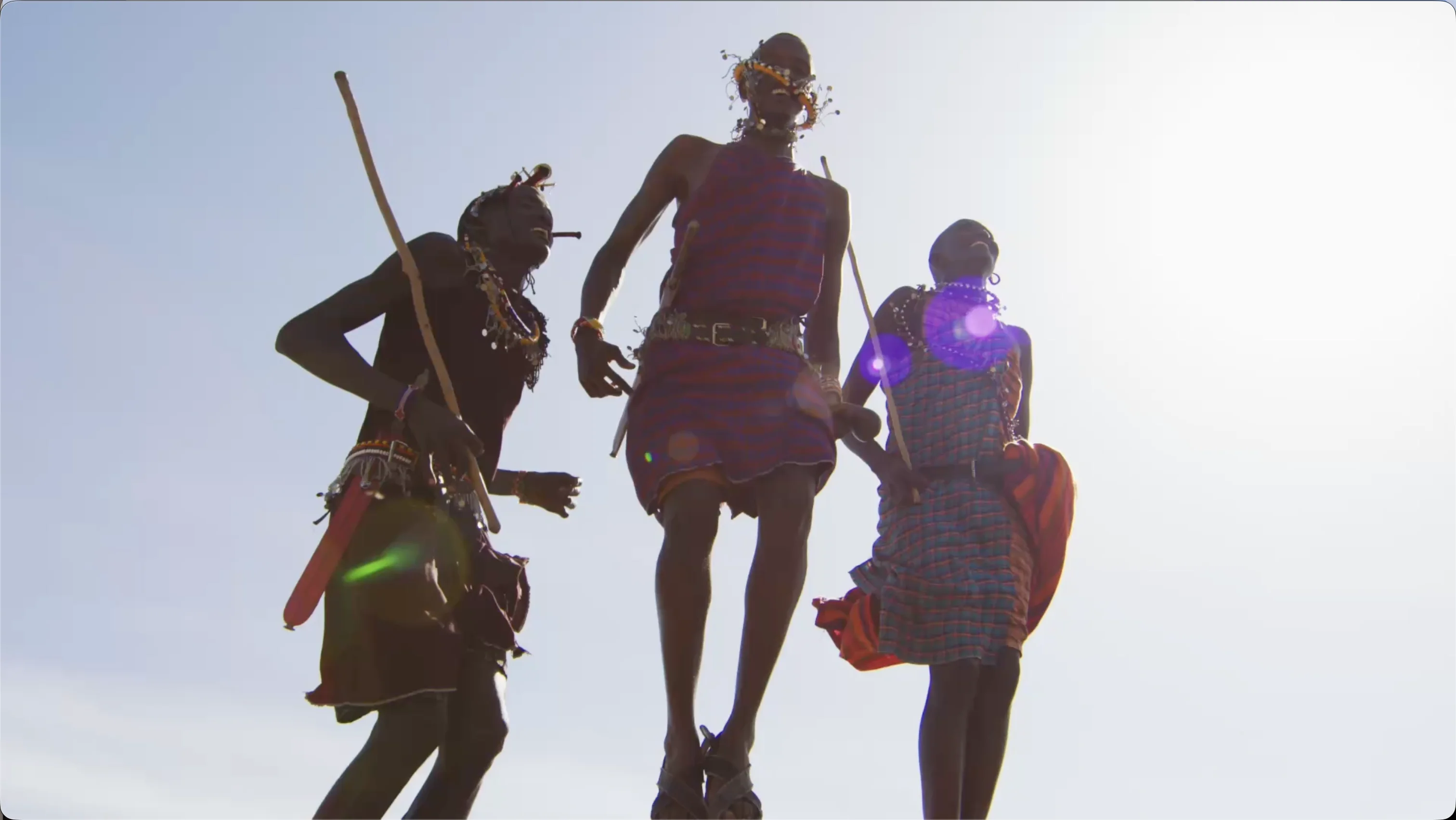
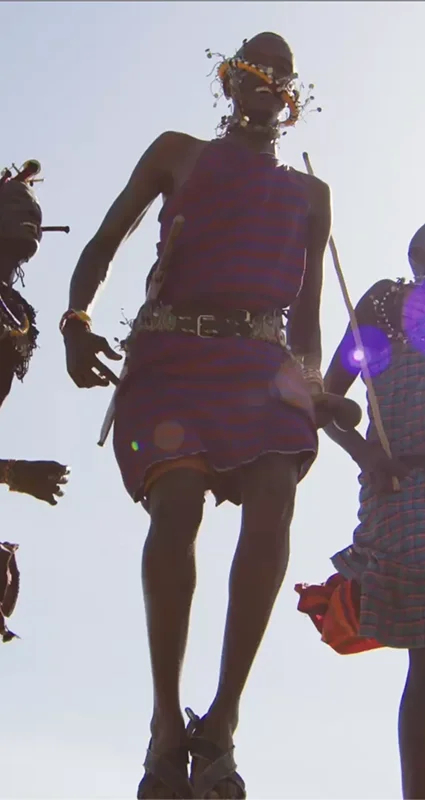
Spend an evening with Maasai tradition: On the trail's final night, guides share fire-making and tracking knowledge before the camp comes alive with Maasai song and the adumu, a high-jumping dance whose roots in Maasai culture run far deeper than any tourism itinerary.
Where to stay in the Loita Hills
There are no lodges, fixed camps or permanent structures in the Loita Hills. The only accommodation is mobile walking camps, built from the ground up around the land, the people, and the journey itself.
Local Loita Maasai guides and staff draw on a network of identified campsites across the Hills. Each day, an advance party travels ahead to set up camp before the walking group arrives; each morning, the camp is fully struck, and nothing is left behind. The route is not fixed. Guides assess group fitness, terrain, and weather daily, adjusting the trail accordingly, so no two Loita Hills journeys are quite the same.
The camps are more comfortable than their leave-no-trace ethos might suggest. Bell tents are spacious enough to stand in, fitted with camp beds, proper bedding, towels and hot water bottles for the highland nights. Hot bucket showers and well-maintained bush toilets keep the experience comfortable without compromising its wildness. Meals are cooked over open fires from locally sourced ingredients: substantial breakfasts, picnic lunches carried by guides and campfire dinners eaten in the open.
All camp equipment and guest luggage travels by donkey. The animals are rented from local farmers, properly loaded, and free to graze at each campsite. Their participation means income from every trail flows directly to the families who own them, as well as to the guides and camp staff hired from surrounding Maasai villages. It is a working model of conservation through community benefit, in which the forest's continued protection is inseparable from the livelihoods it sustains. Groups range from one to fourteen people; the standard trail runs four days and three nights, with bespoke options available up to seven days or more.
The Loita Plains and the Loita Migration
North of the Loita Hills, the land drops away and opens into a different kind of landscape. The Loita Plains stretch out as the wet-season range and calving grounds of the Maasai Mara's resident wildebeest and zebra: a vast, grass-covered expanse that comes alive each year as the long rains arrive. During the wet season, these herds spread across the plains in their thousands, calves born into the tall grass as the season peaks and the land reaches its greenest.
There’s no fixed calendar for the Loita Migration, but the general pattern is seasonal:
Wet season (roughly November to May). The resident herds spread out across the Loita Plains northeast of the reserve to graze and calve on the short, nutritious grass. This area overlaps with portions of the eastern and northern Maasai Mara conservancies, including Naboisho, Ol Kinyei, Olare Motorogi, Lemek and Mara North, offering good Loita Migration viewing from January to March.
Dry season (roughly June to October). As the plains dry out, the herds move south and west through the conservancies and into the reserve. There they overlap with the herds of the Serengeti migration, which arrive at about the same time.
At the end of the dry season, triggered by the onset of the short rains, usually in November, the herds move back north and east to the Loita Plains and the cycle continues.
The Loita Migration is not the Great Migration. That world-famous spectacle, the Serengeti–Maasai Mara river crossings of August to mid-October, the churning columns of wildebeest at the Mara River, the crocodiles and the chaos, is a different phenomenon entirely, drawing different animals from the south. The Loita Migration moves east-west and belongs to the Mara's own resident herds rather than the great Tanzanian–Kenyan circuit. It is quieter, less documented and far less visited. In a landscape that can feel impossibly crowded in peak season, the Loita Migration occurs with a fraction of the vehicles and none of the pressure.
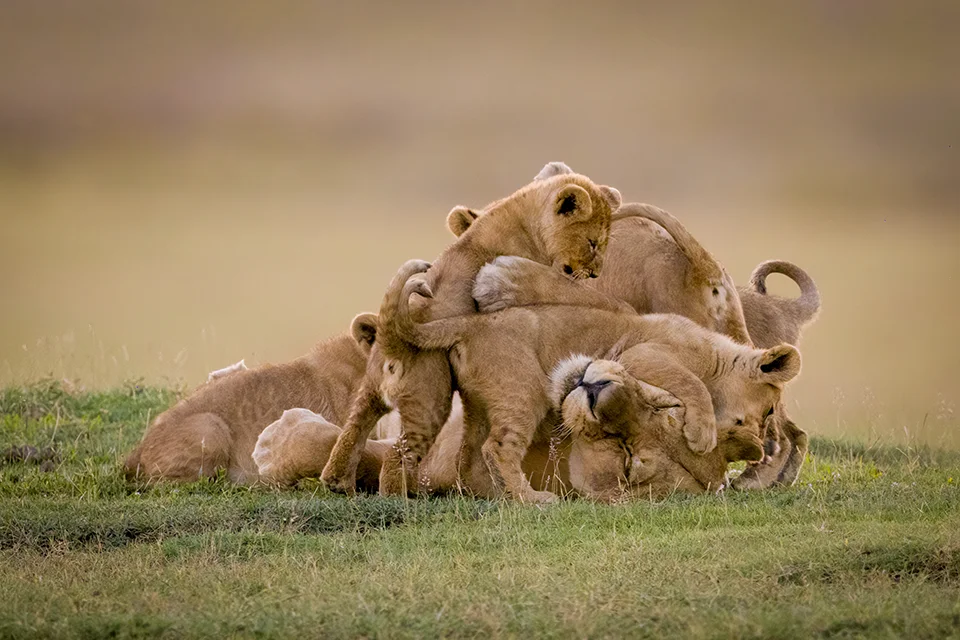
What it lacks in scale, it more than makes up for in intimacy and predator activity. Because calving peaks during the migration, the conservancies fill with vulnerable young animals and the predators that follow them. Lions grow bolder and more active, hunting more frequently as prey becomes easier to reach. Cheetahs and hyenas concentrate around the moving herds. Jackals work the edges. African wild dogs, drawn by the unusual abundance of prey, have been recorded moving into the conservancies during this period: a sighting rare enough anywhere in the Mara ecosystem to mark an exceptional day. It is the kind of layered, predator-rich theatre the Maasai Mara is celebrated for, available here in the green season, with the landscape at its most lush and the light at its most dramatic.
For travellers combining a Loita Hills walking trail with time in the Mara conservancies, the January-to-March window offers a compelling double experience: the ancient forest and Maasai culture of the Hills, followed by the open-plains spectacle of the migration as it moves through, all without the high-season crowds that define the Mara between August and mid-October.
Trusted by thousands of ecstatic travellers
✔️ 5-Star Trustpilot Rating ✔️ Condé Nast Travel Specialist Award Winner
✔️ Accredited by SATSA ✔️ 5,000+ Exceptional Safaris Since 1991
Why choose Africa Geographic to plan your safari?

"Exceeded all expectations! Great communication and organization of the itinerary. Gave us two very experienced and personable guides...All transfers and pick ups were right on time, seamless and worry free. Hundreds of great photo memories! Enjoyed learning about the history, culture and customs from our guides as well as exploring and..."

"We had an absolutely incredible trip to Kenya...thanks to Africa Geographic...They made the process so easy from initial planning, to booking and making payments toward out trip to the actual trip itself and throughout our stay in Kenya. Incredible communication, incredible wildlife...We will definitely be using AG again when we return to Africa!"

"...Africa Geographic put together an unforgettable safari in Kenya...She was able to create an incredible itinerary...the amazing wildlife, culture, and landscapes together; giving us an incredible experience that we look back on fondly (and often!). I highly recommend...Africa Geographic team to anyone planning an African safari."
Wish you were here?
Frequently asked questions
The Loita Hills are in Narok County, southern Kenya, east of the Maasai Mara National Reserve and on the edge of the Great Rift Valley. They sit within the broader Mara ecosystem, near the Tanzanian border.
Naimina Enkiyio is the Maa name for the Loita Forest, meaning "the forest of the lost child": a reference to a Maasai legend in which a girl chased stray calves into the forest and never returned. The name reflects the deep sacred significance the forest holds for the Loita Maasai.
The Loita Hills are reached by road. From the northern Maasai Mara, the drive takes approximately five hours on unsealed roads. There are no roads within the Hills themselves; the landscape is entirely accessed on foot.
The dry seasons offer the best conditions: June to October and January to March. Trails are drier, views are clearer and the January-to-March window coincides with the Loita Migration. Avoid April to May and November to December, when heavy rain makes trails muddy and camping difficult.
The Loita Migration is an annual east-west migration of tens of thousands of wildebeest and zebra west from the Loita Plains into the Mara conservancies and back. Unlike the Serengeti–Mara Great Migration, it unfolds during calving season, draws high predator activity, and attracts far fewer visitors.
The trails are rated moderate to difficult. Daily walks range from three to four hours on the first and last days to six to eight hours in between, at altitudes around 2,000 metres. Guides continuously assess group fitness and adapt the pace and route accordingly.
All trails are led by local Loita Maasai guides working with Maasai Trails. They are armed with spears, experienced in this landscape and share plant knowledge, oral legends, traditional skills and aspects of Maasai life throughout each day's walk.
Camps are mobile, fully struck and relocated each day. Spacious bell tents come with camp beds, bedding, towels and hot water bottles. Hot bucket showers and maintained bush toilets are provided. Meals are cooked over open fires using locally sourced ingredients.
The standard trail runs four days and three nights. Bespoke trails can extend to seven days or more, allowing for a slower pace, additional detours or a longer immersion in the forest and escarpment landscape.
The two destinations complement each other naturally, with the Loita Hills offering a walking, cultural and forested experience that contrasts well with the open-plains wildlife of the Mara. The drive between the northern Mara and the Loita Hills takes approximately five hours.
Every guide and camp staff member is hired from local Loita Maasai villages. Campsite fees go to the landowners who grant access, and donkeys are rented from local farmers. Each trail is structured so that the income it generates flows directly back into the communities whose land and knowledge make it possible.
Yes. Land subdivision, accelerated by Kenya's 2010 constitution which moved community group ranches toward individual title deeds, has increased encroachment pressure on the forest. WWF-Kenya is working with local communities on spatial planning to help secure the forest's future.
Warm layers are essential; nights reach around 10°C at altitude. Pack a waterproof jacket, sun protection, hiking footwear and a small daypack. Main luggage travels by donkey. Walking poles are supplied. Bring a portable charger as there is no electricity on the trail.
Loita Hills walking safaris typically cost US$665 per person per day. This price includes full-board accommodation in mobile camps, tea/coffee/drinking water, soft drinks and a limited selection of house wines/beers, all safari equipment, staff, guides, and donkey transport for camp equipment.
Click here to schedule a no-obligation call with one of our Safari Experts or fill in our 2-minute form with your questions. Our team of experts are here to help! Whether you’re curious about the best time to travel, want to hear first-hand about an experience or need help planning your safari.
Explore more African destinations

Start planning your dream safari
Our travel experts will craft a no-obligation itinerary just for you. We have crafted over 5,000 safaris since 1991. Your personal details are protected; we only use this information to contact you.
Why book your safari with us?

Deep Experience & Knowledge
Handcrafted experiential safaris since 1991.
Travel in Africa is about knowing when and where to go, and with whom. A few weeks too early/late or a few kilometres off course, and you could miss the greatest show on Earth. And wouldn’t that be a pity?

Trust & Safety

Make A Difference
We donate a portion of the revenue from every safari sold to carefully selected conservation projects that make a significant difference at ground level.
YOUR safari choice does make a difference - thank you!