

Tailor-made safaris. Since 1991

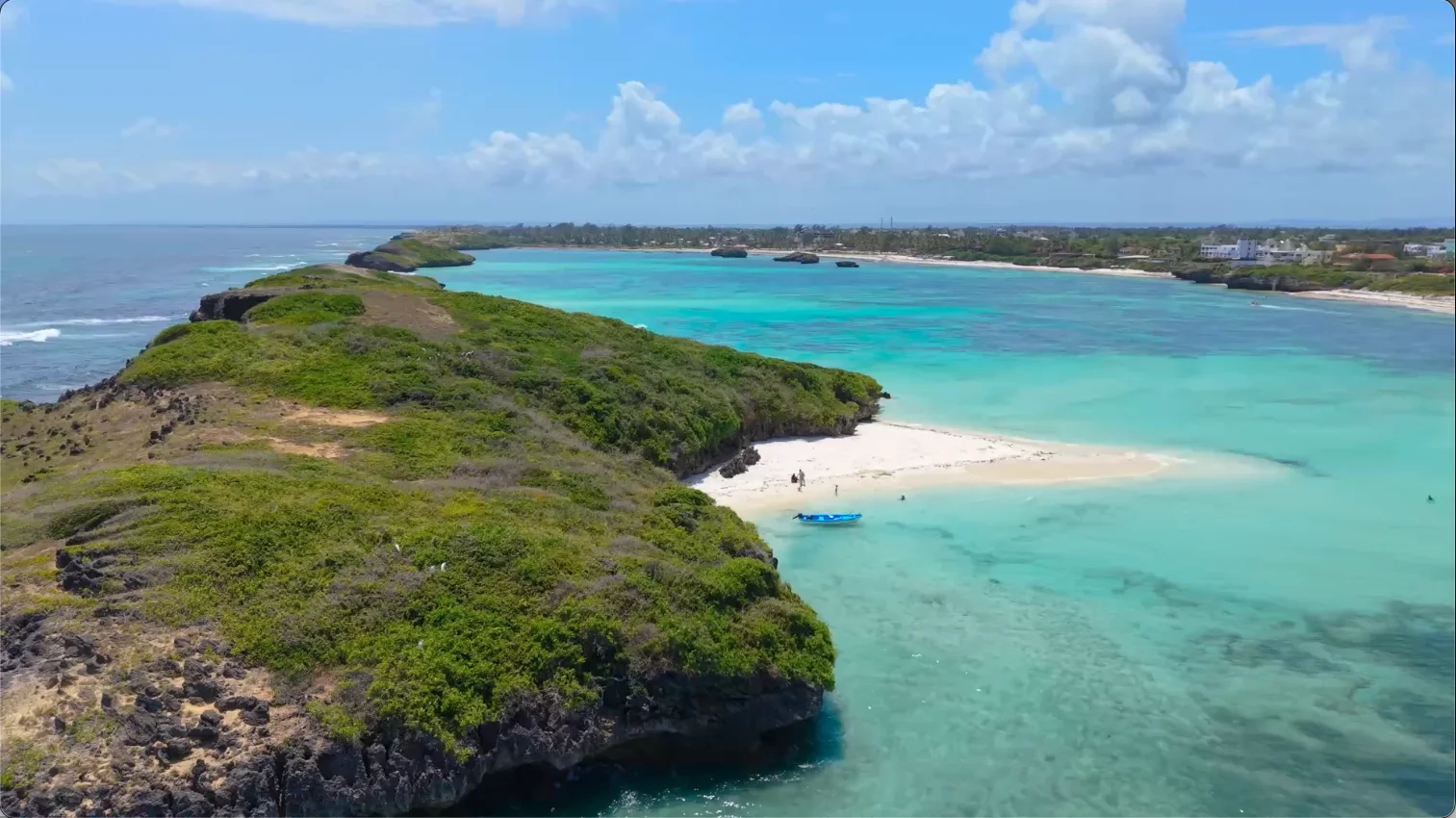
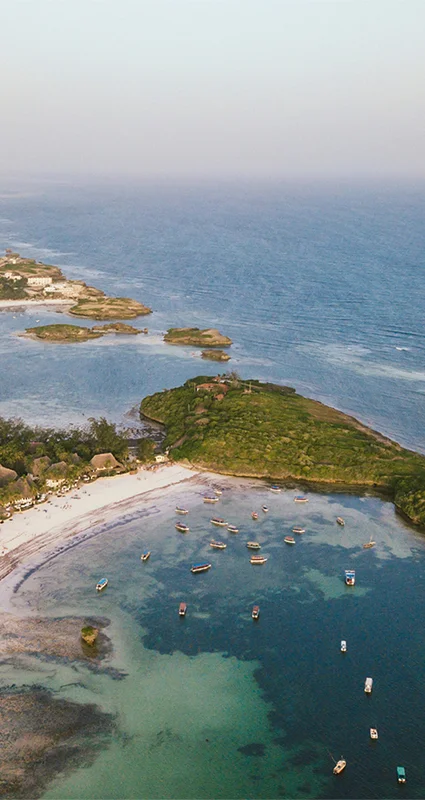


Watamu, Malindi, Kilifi & Vipingo: Four destinations, one extraordinary coastline
Kenya's north coast at a glance:
Location: Kenya's north coast, stretching from Vipingo (36 km north of Mombasa) to Malindi (120 km north of Mombasa) | Access from Nairobi: ~45-min domestic flight to Malindi Airport, or ~1hr flight to Mombasa; Vipingo has its own private airstrip with twice-daily Safarilink service from Nairobi |
Watamu Marine National Park: 10 km², established 1968, among Africa's first marine parks | Best time to visit: December–March and July–October (dry seasons, calm seas) |
Nearest airports: Malindi Airport (MYD) for Watamu and Malindi; Mombasa (MBA) or Vipingo airstrip for Kilifi and Vipingo | Minimum recommended stay: 5–7 nights |
Currency: Kenyan Shilling (KES) | Malaria risk: Yes – prophylaxis recommended; confirm visa and eTA requirements before travel |
Why visit Kenya's north coast?
There are coastal destinations in Africa that look the part, and then there are those that fundamentally change the way you move through a day. This stretch of the Kenyan coast, running from the exclusive ridge estates of Vipingo through the tidal soul of Kilifi Creek, north past Watamu's marine park and on to Malindi's Swahili monuments, does both. Its Swahili name, "Home of the sweet people," indicates, from the outset, that something is different here. By day three, most visitors have stopped consulting their phones and started checking the tides instead. That quiet, unhurried recalibration is what people return for, year after year.
What makes this stretch genuinely exceptional is its layering. Watamu Marine National Park, established in 1968 as one of Africa's first marine protected areas, shelters coral reef ecosystems of extraordinary diversity -angelfish, parrotfish, butterflyfish, green and hawksbill turtles, spinner and bottlenose dolphins, and seasonal whale sharks arriving between December and March. Inland, the Arabuko-Sokoke Forest, one of Africa's most important remaining coastal forests, protects endemic species found nowhere else on earth: the Sokoke scops owl, Clarke's weaver, and the golden-rumped elephant shrew among them. Between coast and forest, Mida Creek's mangrove waterways draw over 350 recorded bird species and reward slow paddlers and dhow passengers in equal measure.
Twenty-five kilometres south, Kilifi sits on the banks of a vast tidal creek - calm, sheltered, shaped not by mass tourism but by artists, musicians, and wellness practitioners who came for a week and built a life. Bofa Beach here is among the finest and least crowded on the entire Kenyan coast. Further south still, Vipingo Ridge occupies 2,500 acres of elevated coastal land, centred on East Africa's only PGA-accredited championship golf course, with a private beach club and a marine conservation project at its shoreline.
The Gede Ruins, a coral-stone city built in the 13th century and abandoned under circumstances still debated, sit surrounded by ancient baobabs at the edge of the Arabuko-Sokoke. Tsavo East and Tsavo West national parks are within reach, making a coast-and-safari combination that few destinations in Africa can offer with such ease and geographical logic.
Read the travel diary "Forest Whisperers" to the Watamu area by our CEO, Simon Espley
5 reasons we love Kenya's north coast
Africa's first marine parks: Watamu and Malindi Marine Parks were established in 1968 among the first of their kind in Africa, protecting coral kingdoms teeming with tropical fish and seasonal megafauna including whale sharks, dolphins and humpback whales.
Arabuko-Sokoke Forest: One of Africa's most important remaining coastal forests sits minutes from the beach, sheltering endemic species such as the Sokoke scops owl and Clarke's weaver - found nowhere else on earth.
Kilifi Creek at dusk: Paddling or drifting by dhow through the vast tidal inlet as the light turns gold - with a creative, welcoming community on its banks and extraordinary birdlife overhead - is one of Kenya's quiet, unrepeatable travel experiences.
Safari and sea in one itinerary: Tsavo East and Tsavo West national parks are within reach, making a coast-and-safari combination that few destinations in Africa can offer with such ease and geographical logic.
Swahili history underfoot: The 13th-century Gede Ruins and the Vasco da Gama Pillar place this coastline on one of Africa's oldest maritime trade routes - a living historical dimension that elevates the experience far beyond the beach.
All you need to know about Kenya's north coast
About Watamu, Malindi, Kilifi & Vipingo
Kenya's north coast extends from 36 to 120 km north of Mombasa.
Watamu is the marine heartland of this coastline. Its national park protects reefs with exceptional biodiversity, as well as nesting beaches used by green and hawksbill sea turtles. Malindi, slightly larger and with a longer recorded history, lies where the Sabaki River meets the Indian Ocean. Its Malindi Marine Reserve complements Watamu's fully protected park, and the surrounding area encompasses the Arabuko-Sokoke Forest, the Gede Ruins, and the Vasco da Gama Pillar, one of Africa's oldest remaining Portuguese monuments, erected in 1498.
Kilifi, the capital of Kilifi County, sits 55 kilometres north of Mombasa on a vast tidal creek that stretches inland like a lake. The town has been shaped less by tourism than by those who chose to stay; artists, families, wellness practitioners, and small-business owners who have built a community of genuine warmth and creative energy. Bofa Beach is among the whitest and least crowded on the Kenya coast.
Vipingo Ridge occupies elevated coastal land between Mombasa and Kilifi. It is anchored by East Africa's only PGA-accredited golf course, the 18-hole Baobab Course, and backed by a marine conservation project, Kuruwitu.
Things to do along Kenya's north coast
Snorkel and dive the marine parks: Watamu Marine National Park's coral gardens begin 200–400 metres from shore, with approximately 15 accessible dive sites and regular sightings of turtles, rays, reef sharks, and shoaling tropical fish.
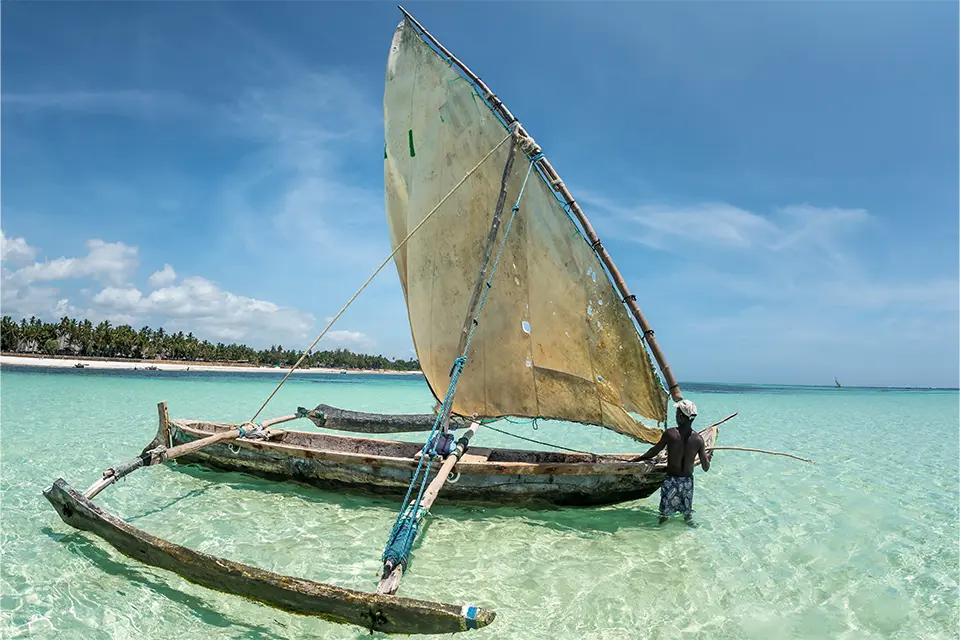
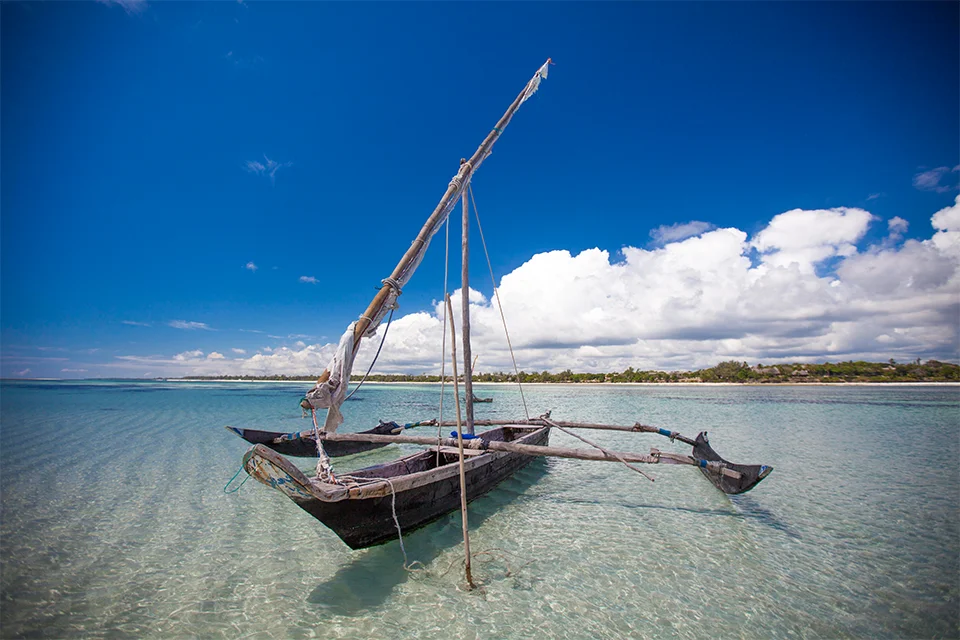
Kayak and dhow through Mida Creek and Kilifi Creek: Navigate Watamu's mangrove waterways by paddle or traditional dhow for birdlife and conservation stories; in Kilifi, dhow rides at sunset on the vast tidal creek are a different but equally compelling experience.
Explore the Gede Ruins: Wander among the coral-stone remains of a 13th-century Swahili merchant city set within dense forest; the palace, mosques, and ancient street plan are evocative and unusually well preserved.
Track endemic species in Arabuko-Sokoke Forest: Guided walks reveal Clarke's weaver, the Sokoke scops owl, and the golden-rumped elephant shrew in one of coastal Africa's most biodiverse forests.
Play the PGA Baobab Course at Vipingo Ridge: East Africa's only PGA-accredited championship golf course, set over 2,500 acres of coastal habitats with views towards the Indian Ocean and the Chodari Hills.
Kitesurf, snorkel, and join turtle conservation: Garoda Beach and Bofa Beach both offer kitesurfing; Vipingo's Kuruwitu Marine Conservancy provides community-led snorkelling over actively restored coral; and Watamu's turtle programmes offer direct engagement with sea turtle conservation.
What wildlife can I see along Kenya's north coast?
Sea turtles: Green and hawksbill turtles nest on Watamu's beaches between May and August, with hatchlings emerging July–October; active conservation projects support population recovery and offer visitor engagement.
Whale sharks: Seasonal visitors arriving primarily between December and March, encountered during guided marine park excursions in the deeper waters beyond the reef at Watamu.
Dolphins: Resident pods of spinner and bottlenose dolphins are regularly spotted in the Watamu Marine National Park; early-morning glass-bottom boat and snorkel trips offer the best encounter opportunities.
Humpback whales: Seasonal sightings reported in the waters off Watamu and Malindi between July and September as they migrate through the Indian Ocean.
Coastal and migratory birds: Mida Creek records 350-plus species including flamingos, herons, and numerous Palearctic migrants; Arabuko-Sokoke shelters the endemic Sokoke scops owl and Clarke's weaver; Kilifi Creek supports its own rich birdlife within a sheltered tidal environment.
Arabuko-Sokoke forest species: The golden-rumped elephant shrew, one of Africa's most endangered small mammals, inhabits the forest alongside a rich diversity of forest birds and invertebrates.
Where to stay along Kenya's north coast
In Watamu, Hemingways Watamu offers sophisticated beachfront suites with private terraces and direct beach access. Watamu Treehouse provides an elevated nature-immersive setting in the coastal forest canopy for travellers drawn to birdlife and a quieter form of coastal lodging. The Charming Lonno Lodge delivers intimate, characterful accommodation ideal for couples seeking calm and personal service rather than a large-resort atmosphere. Kobe Suite Resort offers well-appointed suites with access to Watamu's beaches and marine activities.
In Malindi, Kilili Baharini Resort & Spa and Ocean Beach Resort & Spa offer established resort experiences with spa facilities and beachfront locations, the latter featuring freshly caught seafood. The Kasa Malindi offers a more intimate experience suited to travellers who want proximity to the town's Swahili history. Lion in the Sun Billionaire Retreat caters to those for whom discretion, privacy, and bespoke service are the primary considerations.
In Kilifi, accommodation is more limited but what exists is characterful. The town has a number of beautiful rental villas, particularly suited to groups of ten to twelve.
At Vipingo Ridge, accommodation ranges from hotel rooms to signature villas within the gated estate, all with access to the golf course, beach club, watersports facilities, and the Kuruwitu marine conservation site.
Trusted by thousands of ecstatic travellers
✔️ 5-Star Trustpilot Rating ✔️ Condé Nast Travel Specialist Award Winner
✔️ Accredited by SATSA ✔️ 5,000+ Exceptional Safaris Since 1991
Why choose Africa Geographic to plan your safari?

"...I’ve been dreaming about this trip for years, and the reality was even better than I could imagine...Africa Geographic tailored the trip specifically to what I was looking for—every component of the trip was thoughtful and demonstrated their knowledge of the services and experiences available...work with Africa Geographic to create your perfect trip."

"My team at Africa Geographic was amazing. They took the time to listen to what I wanted to experience on my trip and designed the perfect itinerary for me. They were always available when I had a question and made sure I was well prepared from the time I booked all the way through my trip. They even checked on me after I returned home....an amazing and unforgettable experience"

"Just had an amazing trip to Africa that AG put together for us based on a list of things that we wanted to see/do. They did it all and did an amazing job that exceeded our expectations all the way. Four countries, three safaris, flights, transfers, guides and drivers, over 3.5 weeks and everything went to plan with no issues. Phenomenal job ..."
Wish you were here?
Frequently asked questions
The two dry seasons offer the most reliable conditions: December to March and July to October. During these periods, seas are calmer, visibility for snorkelling and diving is at its best, and beach conditions are most consistent. The long rains (April–June) and short rains (October–November) bring rougher seas and reduced marine park access, though accommodation rates are typically lower. July and August are particularly good for Kilifi, when humidity drops and the wind picks up.
The most efficient route is a domestic flight from Nairobi to Malindi Airport, a journey of approximately 45 minutes. Multiple airlines serve this route daily. Malindi Airport is a 30-minute drive from Watamu. Flying to Mombasa is also possible but adds approximately 2.5 to 3 hours of road transfer.
Kilifi is approximately 55 kilometres north of Mombasa, about 1.5 hours by road. Flying to Mombasa and transferring by taxi is the most common approach from Nairobi. Vipingo Airport is also an option, just 30 minutes from Kilifi, when flights are available.
Vipingo Ridge has its own private airstrip served by Safarilink from Nairobi twice daily, making it the most direct access point on the coast. The estate is also approximately one hour's drive from Mombasa International Airport and two hours from Malindi Airport.
Yes. Glass-bottom boat tours offer excellent views of the coral reefs and marine life without entering the water, and are suitable for all ages. Snorkelling areas in the shallowest parts of the reef are also accessible to confident beginners.
Whale sharks are most commonly encountered between December and March, when they are drawn into the warmer inshore waters. Sightings are not guaranteed, but guided marine excursions during this period offer the best opportunity.
Kilifi Creek is a vast tidal inlet stretching inland from the Indian Ocean, forming the geographical and social heart of Kilifi town. It is calm, sheltered, and strikingly beautiful - ideal for dhow rides at sunset, birdwatching, kayaking, and simply sitting at its edge. The community that has grown around the creek - artists, wellness practitioners, musicians, and families - gives Kilifi a character distinct from any other destination on the coast.
Vipingo Ridge is a 2,500-acre holiday and lifestyle destination set on elevated coastal land between Mombasa and Kilifi. It is centred around the PGA Baobab Course, East Africa's only PGA-accredited championship golf course, and includes a beach club, watersports facilities, a wildlife sanctuary, and the Kuruwitu Marine Conservancy. It accommodates visitors in hotel rooms and signature villas within the gated estate.
The Gede Ruins are the coral-stone remains of a Swahili merchant city founded in the 13th century and mysteriously abandoned in the 17th. Located near Watamu at the edge of the Arabuko-Sokoke Forest, the site includes a palace, several mosques, and residential structures set among ancient baobab trees. It is one of the few significant archaeological sites on the Kenya coast and provides a compelling historical complement to the marine and forest experiences.
Kuruwitu is a community-led marine conservation project adjacent to Vipingo Ridge, established in 2003. It works with local fishermen to protect coral and marine life, and today supports active coral restoration. Visitors can snorkel over the conservancy and observe one of the most abundant areas of marine life on the Kenya coast, with the knowledge that the fee paid directly supports community conservation.
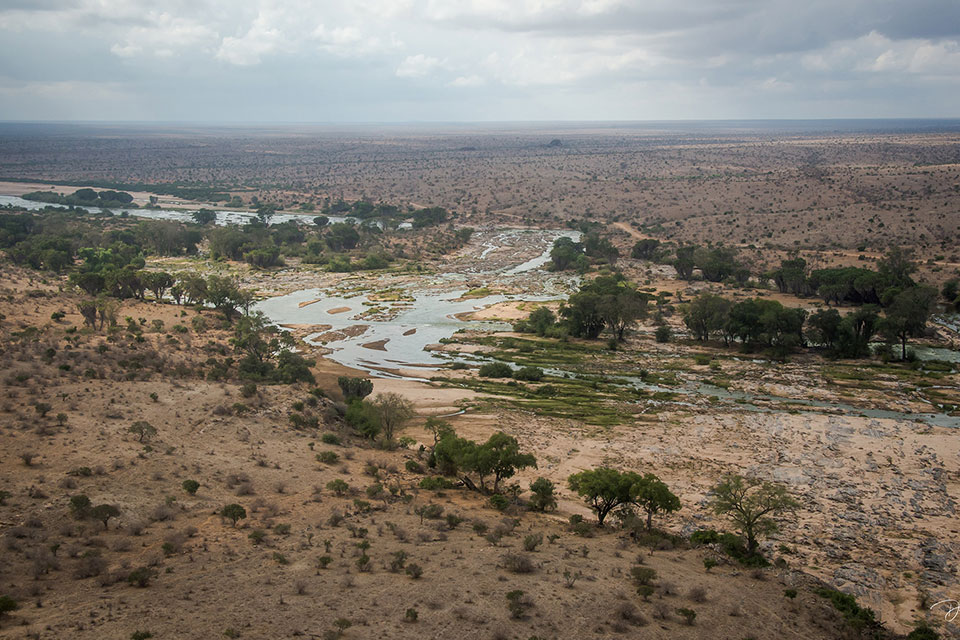
Yes, and this stretch of the north coast is among the best-positioned for such a combination. Tsavo East and Tsavo West national parks are accessible within a few hours by road from both Watamu and Kilifi, and operators throughout the region can arrange multi-night safari packages as extensions to a coast stay.
Tides along this stretch of coast are significant and directly affect the beach and marine experience. At low tide, broad sandbanks and reef flats are exposed - beautiful to explore on foot, but unsuitable for swimming. Marine park excursions and snorkelling are planned around high-tide windows. Experienced operators and accommodation staff will advise on daily tide schedules.
All international visitors to Kenya are required to obtain an Electronic Travel Authorisation (eTA) before arrival. Requirements and processes are subject to change; travellers should confirm current entry requirements through Kenya's official immigration channels well in advance of travel. Yellow fever vaccination certificates may be required depending on countries of transit.
Our safaris typically cost from US$700 per person, per night, depending on the accommodation comfort level, time of year and activities. This price usually includes accommodation, all meals, game drives, experienced guides, airport transfers, and 24/7 support from our team.
Click here to schedule a no-obligation call with one of our Safari Experts or fill in our 2-minute form with your questions. Our team of experts are here to help! Whether you’re curious about the best time to travel, want to hear first-hand about an experience or need help planning your safari.
Explore more African destinations

Start planning your dream safari
Our travel experts will craft a no-obligation itinerary just for you. We have crafted over 5,000 safaris since 1991. Your personal details are protected; we only use this information to contact you.
Why book your safari with us?

Deep Experience & Knowledge
Handcrafted experiential safaris since 1991.
Travel in Africa is about knowing when and where to go, and with whom. A few weeks too early/late or a few kilometres off course, and you could miss the greatest show on Earth. And wouldn’t that be a pity?

Trust & Safety

Make A Difference
We donate a portion of the revenue from every safari sold to carefully selected conservation projects that make a significant difference at ground level.
YOUR safari choice does make a difference - thank you!