
Tailor-made safaris. Since 1991



Samburu: Kenya's wild northern frontier
Samburu at a glance:
Location: North-central Kenya; Samburu and Isiolo counties | Size: Samburu NR 165 km²; total ecosystem approaching 12,000 km² (1,200,000 ha) |
Access: Light aircraft from Nairobi's Wilson Airport to reserve and conservancy airstrips | Best time to visit: June–September and January–February (dry season; peak wildlife viewing) |
Wildlife highlights: Samburu Special Five, leopard, elephant, lion, buffalo, lesser kudu, over 450 bird species | Key protected areas: Samburu NR, Buffalo Springs NR, Shaba NR, Sera, Namunyak, Kalama, Westgate, Kirisia, Ndoto Mountains, Mount Nyiru |
Lodges include: Soroi Larsens Camp, Sarara Camp, Sasaab Samburu, Saruni Samburu, Elephant Watch Camp and more | Climate: Hot and arid; two wet seasons (April–May long rains, November–December short rains) |
Why visit Samburu?
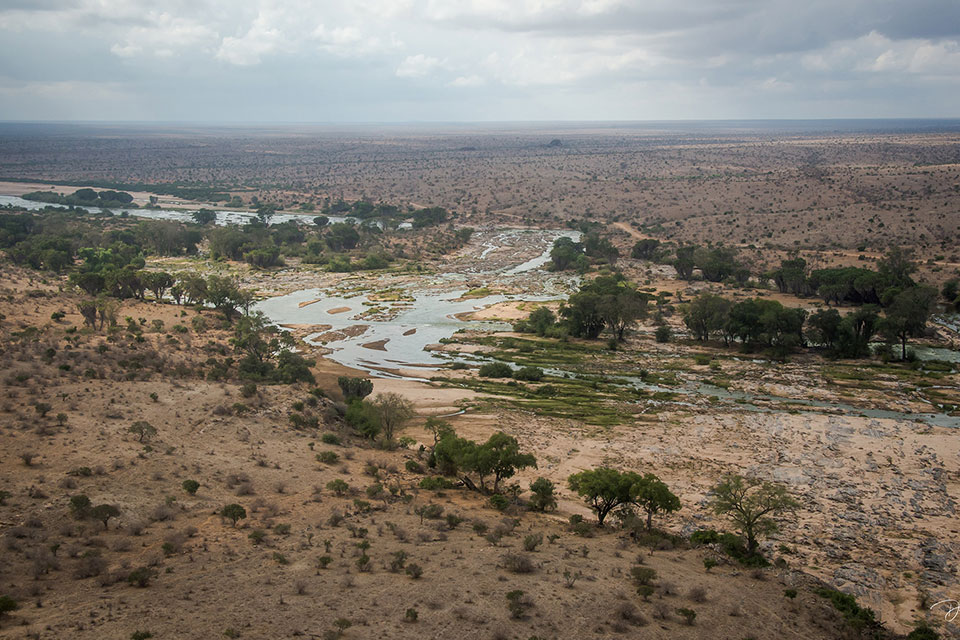
Samburu lies in north-central Kenya at the dramatic transition between the lush savannas of the south and the vast deserts that extend into the Horn of Africa. At a lower altitude than neighbouring Laikipia, the climate is hot, and rainfall is sparse, producing a rugged, austere beauty overlooked by magnificent outcrops and rolling hills.
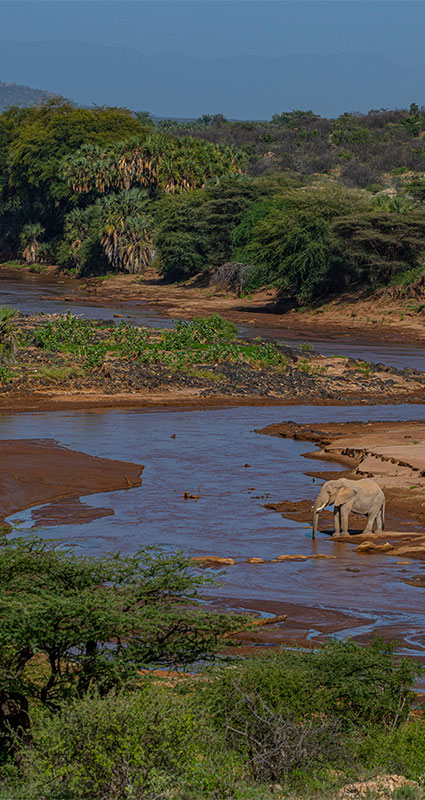
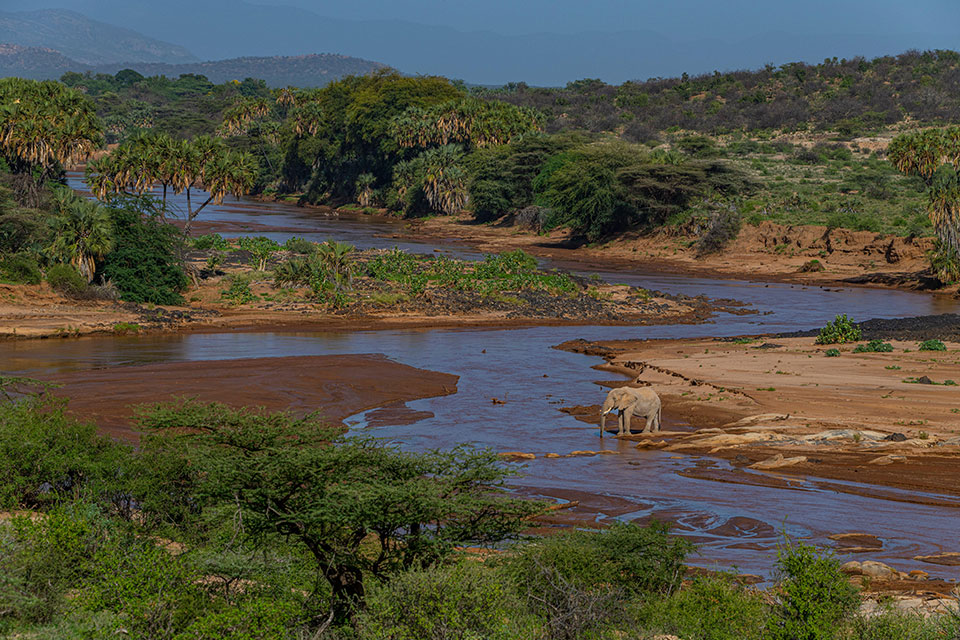
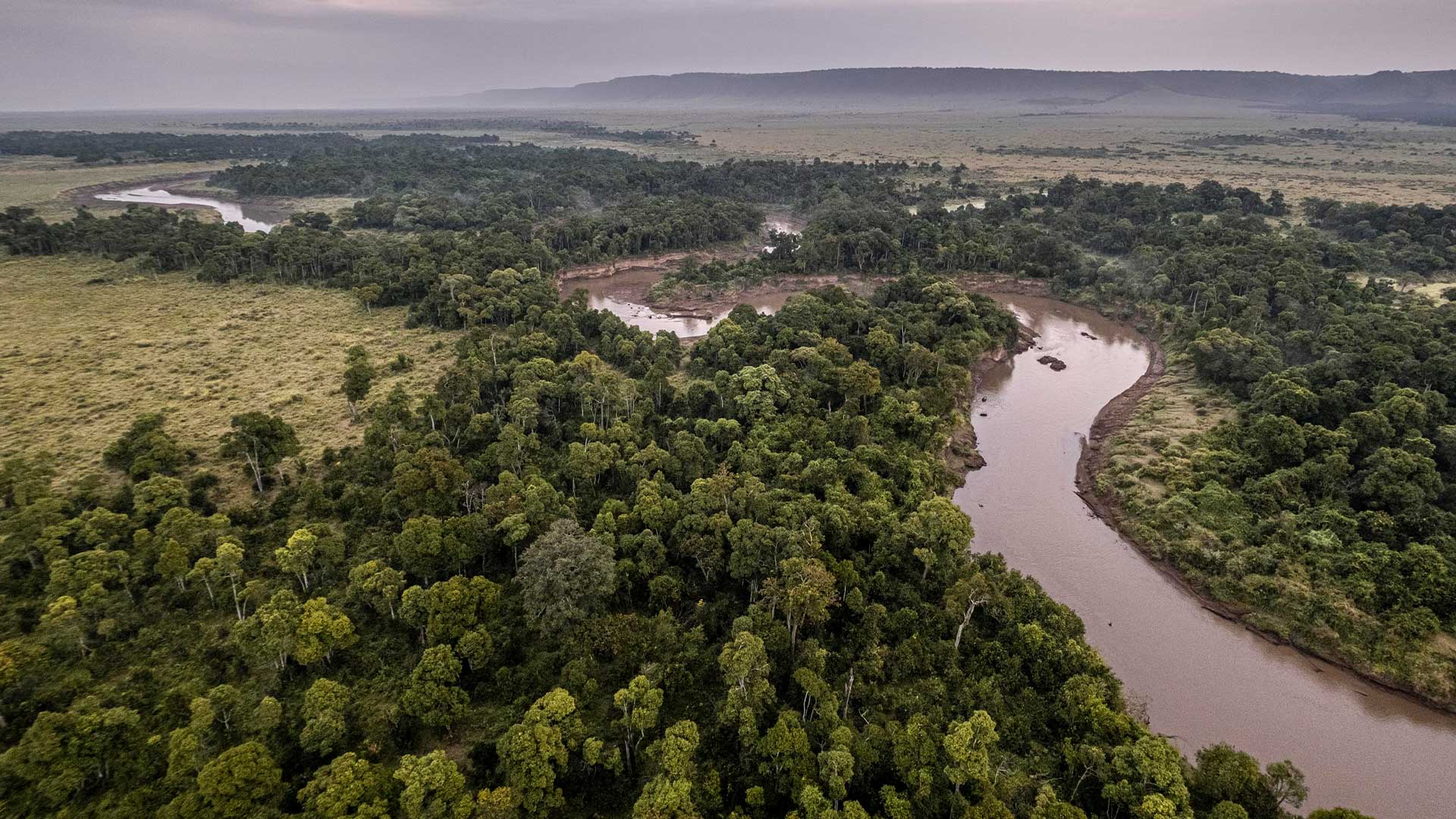
At its heart, the Ewaso Ng'iro River rises from streams on the slopes of Mount Kenya and flows northeast, fed year-round by glacial meltwater. Even when the river slows to a trickle, underground water sustains groves of doum palms and dense riverine forest along its banks, drawing wildlife from the surrounding arid plains. Where desert meets green corridor, the transition is startling.
The total combined area approaches 12,000 km² (1,200,000 hectares), comprising national reserves, forest reserves, and community conservancies. Since 65% of Kenya's wildlife exists outside formal parks, these conservancies are essential to the country's conservation story.
5 Reasons We Love Samburu
The Samburu Special Five: gerenuk, Grévy's zebra, reticulated giraffe, Beisa oryx, and Somali ostrich are found here and almost nowhere else in Kenya.
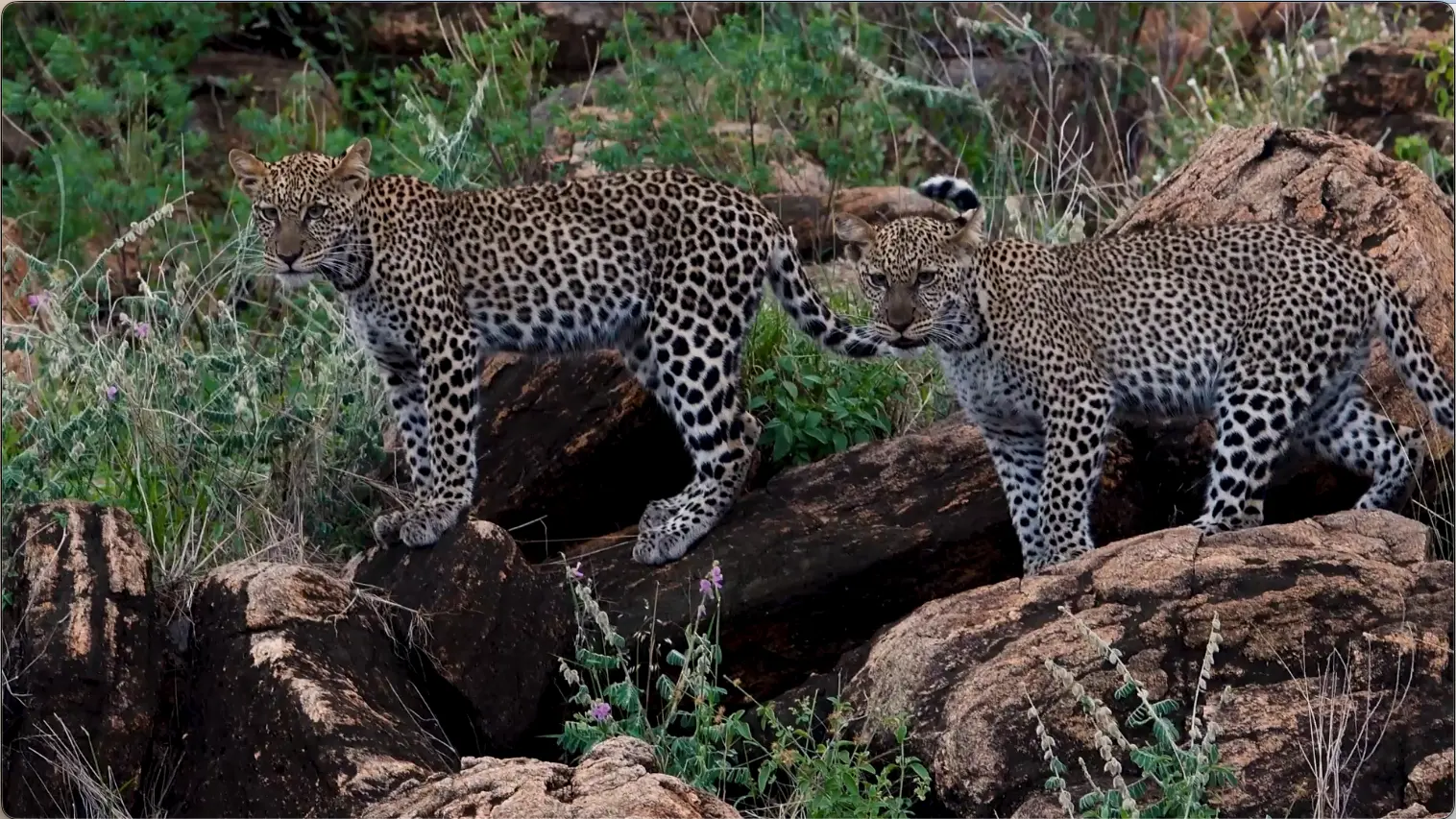
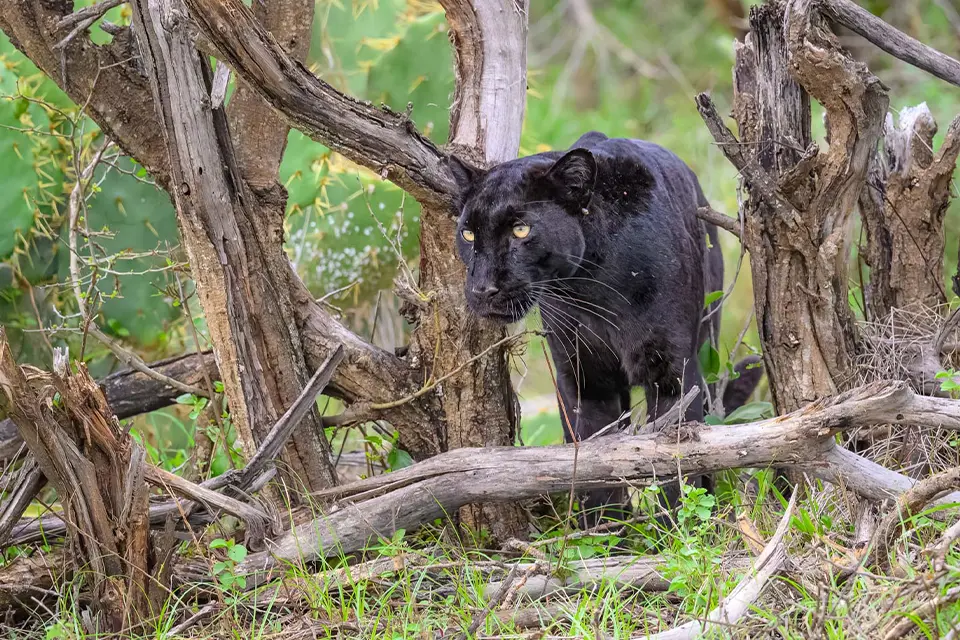
Leopard sightings at Samburu are among Kenya's most consistent, with riverine forest and rocky terrain offering high-quality encounters along the Ewaso Ng'iro.
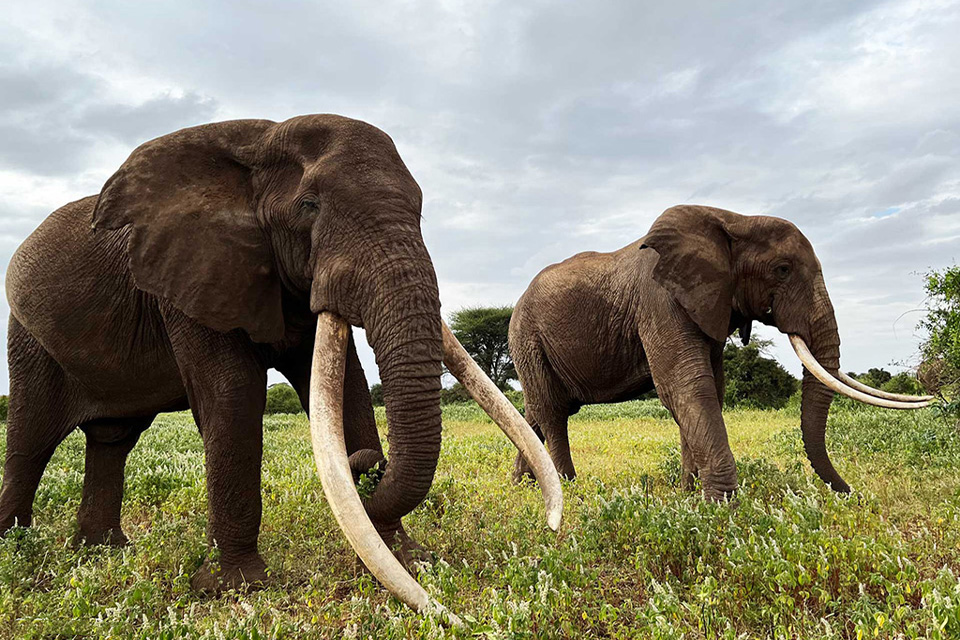
World-renowned elephant research has made Samburu's herds exceptionally well-studied and habituated, enabling extraordinary close observation and the documentation of individual life stories.
A vast ecosystem covering almost 12,000 km²: three national reserves, community conservancies, and forest reserves, managed under the Northern Rangelands Trust.
The Ewaso Ng'iro River is the lifeblood of this arid region: doum palms, riverine forest, and year-round water draw extraordinary concentrations of wildlife to its banks.
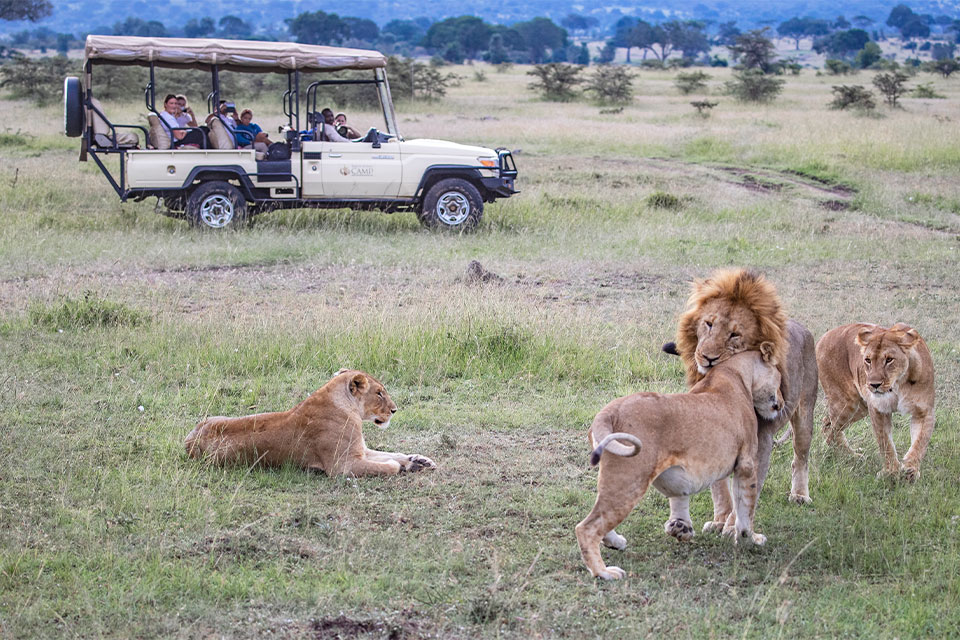
All you need to know about Samburu
About Samburu
Three national reserves, Samburu (165 km²), Buffalo Springs, and Shaba, form the core of the Samburu ecosystem, with one entry permit covering all three. Surrounding them, a mosaic of community conservancies under the Northern Rangelands Trust expands the ecosystem: Sera (3,400 km²), Namunyak (3,940 km²), Kalama (500 km²), Westgate (362 km²), and others. Forest reserves at Kirisia, Ndoto Mountains, and Mount Nyiru complete the landscape. The total combined area approaches 12,000 km² (1,200,000 hectares).
The broader ecosystem is managed under the Northern Rangelands Trust and includes community conservancies: Sera, Namunyak, Kalama, Westgate, Ltungai, Nkoteiya, and Meibae. This mosaic of land uses, wildlife tourism, livestock farming, and community livelihoods stretches from Laikipia in the south to Lake Turkana in the north.
Things to do in Samburu
Game drives through Samburu's riverine forest and open plains, best in the dry season for leopard sightings along the Ewaso Ng'iro and finding the Samburu Special Five.
Night drives in conservancies surrounding the national reserves reveal nocturnal species, including genet, bush baby, and aardvark, after dark.
Walking safaris in community conservancies, a direct on-foot encounter with the landscape, guided by Samburu tribesmen, community trackers with local knowledge.
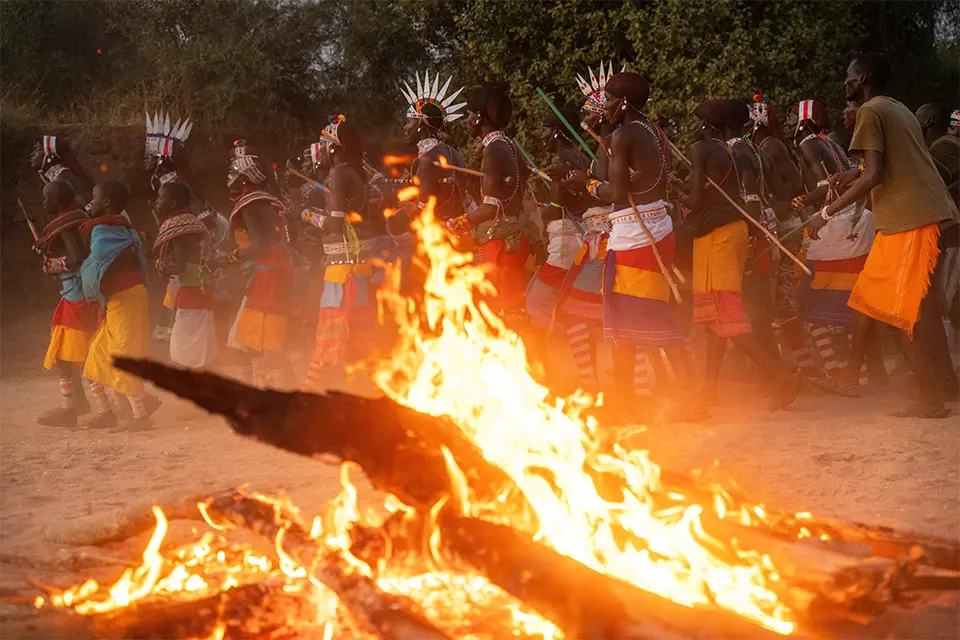
Cultural visits to Samburu manyattas (homesteads): the area's culture and human-elephant traditions are as compelling as the wildlife encounters.
Birdwatching: over 450 species recorded across the Samburu ecosystem, including dry-country specials found nowhere else on Kenya's safari circuit.
Conservation research encounters: Samburu's long-term elephant research has produced exceptionally habituated herds, allowing close, documented sightings.
What wildlife will I see in Samburu?
Samburu Special Five: gerenuk, Grévy's zebra, reticulated giraffe, Beisa oryx, and Somali ostrich: five northern specials found only in this arid ecosystem.
Leopard: one of Kenya's finest destinations for this species. Individuals are regularly sighted along the Ewaso Ng'iro River and among rocky terrain.
Elephant: one of Kenya's largest populations, with well-studied herds habituated by decades of research, allowing exceptionally close observation.
Four of the Big Five: elephant, lion, buffalo, and leopard are all present and regularly encountered. Rhinos are absent from the ecosystem.
Lesser kudu: Samburu is one of the very few places in Kenya where this shy, spiral-horned antelope can be reliably encountered on a game drive.
Birding: over 450 species recorded, including vulturine guineafowl, Somali ostrich, golden-breasted starling, orange-bellied parrot, rosy-patched bush-shrike, golden Pipit, fan-tailed raven, Abyssinian scimitarbill, Somali bee-eater, and Donaldson-Smith's sparrow-weaver.
Where to stay in Samburu
Accommodation in Samburu spans intimate luxury camps to community-owned lodges across the national reserves and conservancies.
We regularly place our guests into the following lodges: Soroi Larsens Camp and Soroi Samburu Lodge within Samburu National Reserve; Sarara Camp and Sarara Treehouses in Namunyak Conservancy; Elephant Watch Camp and Sasaab Samburu on the Ewaso Ng'iro River and Ol Malo Lodge on a rocky escarpment overlooking the river; Saruni Samburu high on a hill overlooking northern conservancy plains; Kitich Forest Camp in Matthews Range; and Kalepo in the remote north.
All properties are accessible by light aircraft from Nairobi's Wilson Airport. The conservancy model means each lodge is embedded in a living community landscape; wildlife and people coexist, and tourism revenue feeds directly into local livelihoods and habitat protection.
Trusted by thousands of ecstatic travellers
✔️ 5-Star Trustpilot Rating ✔️ Condé Nast Travel Specialist Award Winner
✔️ Accredited by SATSA ✔️ 5,000+ Exceptional Safaris Since 1991
Why choose Africa Geographic to plan your safari?

"Our second trip with Africa Geographic to Samburu...The Surana Buffalo Springs lodge at Samburu has a beautiful setting overlooking the Ewaso and Isiolo river confluence with units having their own plunge pools for cooling off in the heat. Staff very friendly, food great and our guide excellent... We would certainly use Africa Geographic again."

"Two fabulous lodges: Enkewa and Saruni Samburu, wonderful service, great guides. Breathtaking accommodation and scenery at Saruni. New, unusual mammals for us and dozens of new birds. Teenage grandchildren loved the whole adventure. Well arranged by Africa Geographic as usual"

"AG organized an outstanding East African experience for me, my wife, and two friends. They set us up with great guides, lovely accommodations, and most importantly, incredible natural history experiences. Seamless travel. And when we wanted to make a last minute change, they were right there to timely accommodate us. 6/5 rating!"
Wish you were here?
Frequently asked questions
The Samburu Special Five are five species of wildlife found in this arid northern Kenya ecosystem and largely absent from the country's more southern safari destinations. They are: gerenuk (the long-necked antelope that stands on its hind legs to browse), Grévy's zebra (the largest and most endangered zebra species), reticulated giraffe (distinguished by its bold, geometric coat pattern), Beisa oryx (the long-horned antelope built for desert conditions), and Somali ostrich (the only ostrich species found north of the equator in Kenya). Finding all five is a primary goal for many Samburu visitors.
June to September is the primary dry season, when vegetation is sparse, animals concentrate at the Ewaso Ng'iro River, and leopard sightings are most consistent. January and February provide a second dry window with excellent wildlife viewing and typically lower visitor numbers. The long rains run from approximately April to May, and the short rains from November into December. Samburu can be visited year-round, but the dry periods deliver the most reliable wildlife encounters.
No. Rhinos are absent from the Samburu ecosystem. Four of the Big Five: elephant, lion, leopard, and buffalo are present and regularly encountered. Visitors specifically seeking rhino viewing within Kenya should consider Ol Pejeta Conservancy in Laikipia, where both black and white rhino are easily seen.
Samburu offers a fundamentally different safari experience. While the Masai Mara is defined by the Great Migration, open grassland, and high visitor numbers, Samburu is arid and remote, with low tourist traffic and a unique set of northern Kenya specialist species not found in the south. The Samburu Special Five: gerenuk, Grévy's zebra, reticulated giraffe, Beisa oryx, and Somali ostrich, cannot be seen in the Masai Mara. Samburu also offers a living cultural encounter with the Samburu people, whose traditions and relationship with elephants are integral to any visit.
The broader Samburu ecosystem is managed under the Northern Rangelands Trust, an umbrella body supporting community-run conservancies across northern Kenya. Conservancies such as Sera (3,400 km²), Namunyak (3,940 km²), Kalama (500 km²), and Westgate (362 km²) are owned and managed by local communities who earn revenue from tourism while continuing to live alongside wildlife and raise livestock. Since 65% of Kenya's wildlife exists outside formal national parks, this model is considered vital to Kenya's wider conservation success.
The Sera Community Conservancy encompasses the Sera Rhino Sanctuary within its 3,400 km², a community-run protected area established to reintroduce black rhino to northern Kenya. It is one of the key conservation milestones within the broader Samburu ecosystem and is managed by the Reteti community under the Northern Rangelands Trust.
Samburu National Reserve covers 165 km² (16,500 hectares) — a relatively compact reserve that nonetheless delivers exceptional biodiversity. It is contiguous with Buffalo Springs National Reserve in Isiolo County and together with Shaba National Reserve forms a trio in which a single entry permit grants access to all three. The much larger surrounding conservancy system expands the broader unfenced ecosystem to approximately 12,000 km² (1,200,000 hectares).
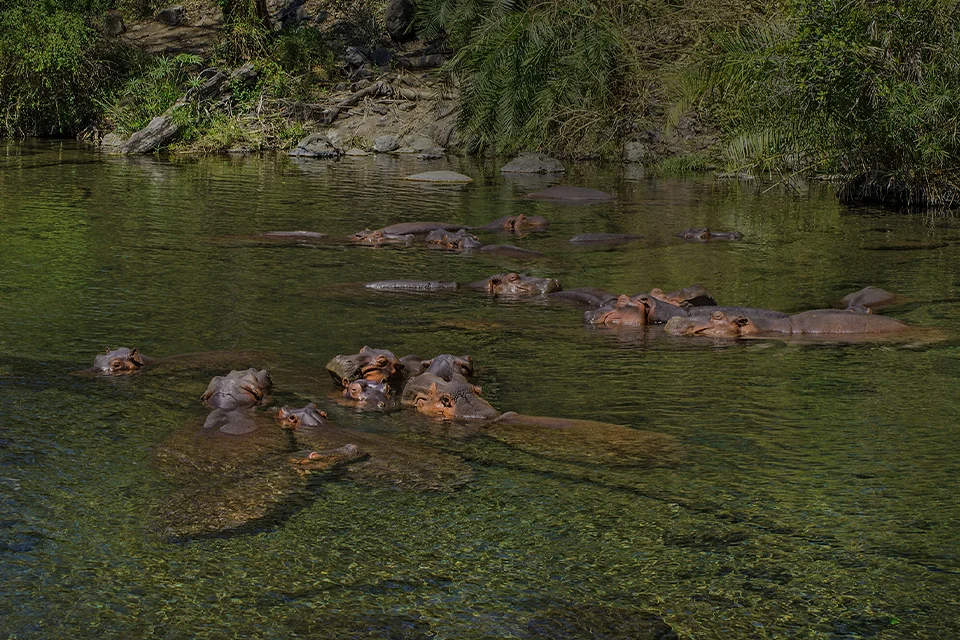
The Ewaso Ng'iro River is the lifeblood of the Samburu ecosystem. Rising from streams on Mount Kenya's slopes, it flows northeast through Samburu, fed year-round by glacial meltwater. Without its waters, wildlife could not survive in this arid region. Even during the driest periods, underground water sustains doum palm groves and dense riverine forest along its banks, drawing elephants, leopards, crocodiles, and hundreds of bird species year-round. The river forms the southern boundary of Samburu National Reserve.
A Samburu safari is as much about the people as the wildlife. The Samburu are a semi-nomadic people whose traditions, cattle culture, and deep relationship with elephants make for some of Kenya's most enriching cultural encounters. The Samburu legend of the first elephant, the story of a girl who disobeyed her father and transformed into an elephant, reflects a profound spiritual connection that shapes the community's relationship with wildlife. Cultural visits to manyattas (homesteads) are offered by several conservancy lodges.
Yes — Samburu is a natural partner destination within a Kenya safari circuit. It is commonly combined with Laikipia (for a similar northern Kenya experience with additional activities, including horse safaris and rhino tracking) and the Masai Mara (for a contrast between northern and southern Kenya's ecosystems). Most guests fly between destinations by light aircraft from Nairobi's Wilson Airport. Africa Geographic regularly designs Kenya circuits that include Samburu.
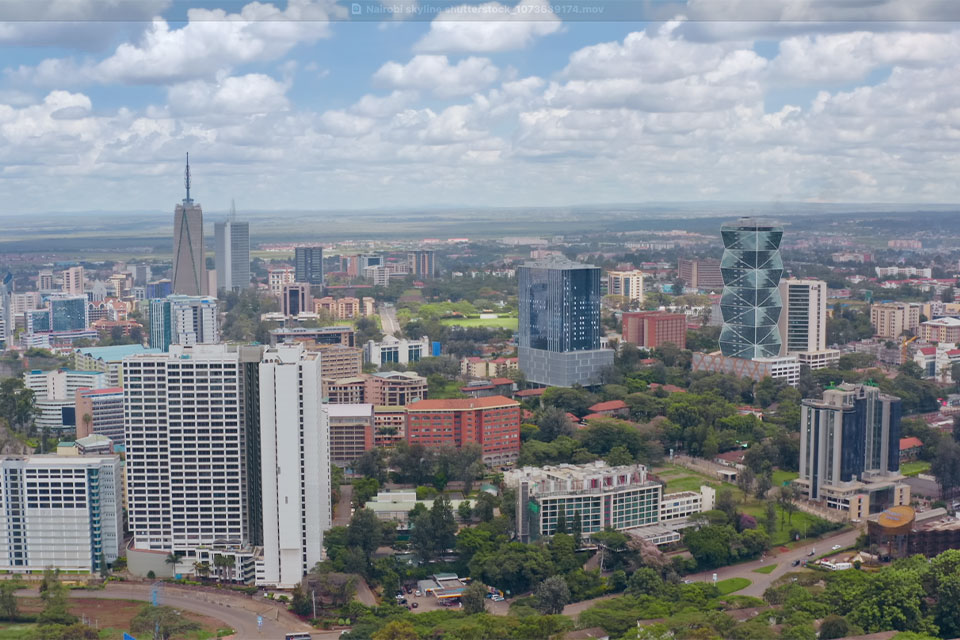
Most guests fly to Samburu from Nairobi's Wilson Airport by scheduled light aircraft charter to airstrips within or adjacent to the national reserve and conservancies. Journey time is approximately one hour. Africa Geographic arranges all flight logistics as part of any booked safari itinerary.
Our safaris typically cost from US$700 per person, per night, depending on the accommodation comfort level, time of year and activities. This price usually includes accommodation, all meals, game drives, experienced guides, airport transfers, and 24/7 support from our team.
You only make your first payment when you book your holiday. Your second (last) payment is about 105 days before you travel.
Peak season bookings require 12–18 months of advance planning. Trips outside of peak season can be arranged 6–9 months ahead, with better rates and availability.
Yes. Every conservancy in the broader Samburu ecosystem directs tourism revenue toward community livelihoods and habitat protection. The Northern Rangelands Trust model explicitly links tourism income to conservation outcomes and community development, meaning every night spent in the ecosystem contributes directly. By booking through Africa Geographic, a portion of every safari sold additionally supports conservation projects at ground level, alongside our conservation publishing work.
Click here to schedule a no-obligation call with one of our Safari Experts or fill in our 2-minute form with your questions. Our team of experts are here to help! Whether you’re curious about the best time to travel, want to hear first-hand about an experience or need help planning your safari.
Start planning your dream safari
Our travel experts will craft a no-obligation itinerary just for you. We have crafted over 5,000 safaris since 1991. Your personal details are protected; we only use this information to contact you.
Why book your safari with us?

Deep Experience & Knowledge
Handcrafted experiential safaris since 1991.
Travel in Africa is about knowing when and where to go, and with whom. A few weeks too early/late or a few kilometres off course, and you could miss the greatest show on Earth. And wouldn’t that be a pity?

Trust & Safety

Make A Difference
We donate a portion of the revenue from every safari sold to carefully selected conservation projects that make a significant difference at ground level.
YOUR safari choice does make a difference - thank you!