

Tailor-made safaris. Since 1991



Lamu: no cars allowed, where Swahili culture meets the Indian Ocean
Lamu Archipelago at a glance:
Location: Off Kenya's northern coast in the Indian Ocean | Access: Fly to Manda Airport; short boat transfer across the channel to Lamu Island |
UNESCO World Heritage: Lamu Old Town, for traditional Swahili culture and architecture | Founded: 1370, one of Africa's oldest continuously inhabited towns |
Transport: Donkeys and traditional dhow sailboats; cars banned for general use | Marine highlights: Coral reefs, turtles, dugongs, whale sharks, mangrove and seagrass ecosystems |
Key areas: Lamu Town, Shela village, Manda Island (Takwa Ruins), Kiwayu | Best time to visit: December–March and July–August (dry seasons; calm seas for sailing and marine activities) |
Why visit Lamu Archipelago?
Lamu Archipelago lies off Kenya's northern coast, an ancient chain of islands where the Indian Ocean meets over a thousand years of Swahili civilisation. At its heart is Lamu Town, founded in 1370 as one of Africa's oldest continuously inhabited places. For centuries, Portuguese, British, and Omani merchants competed for control of the archipelago, and their layered legacy is visible in every carved door, coral-stone wall, and winding alleyway.
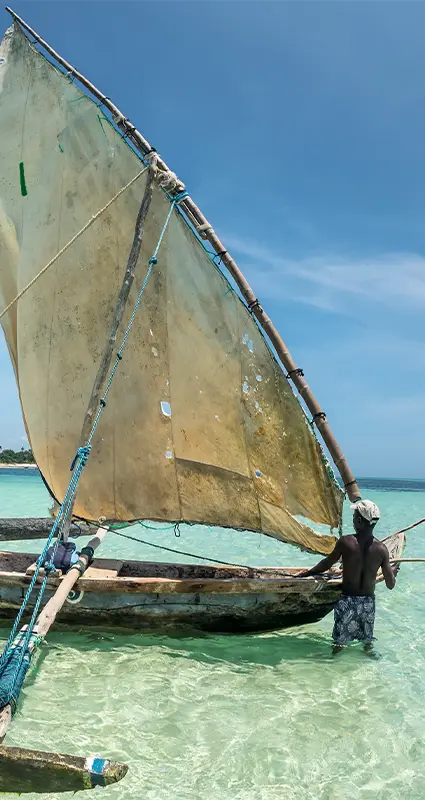
Transport is by donkey and traditional Arab dhow. Cars are banned from general use, and their absence gives the island a quiet that modernity has erased from most places. Narrow paths open into courtyards, mosques call across rooftops, and spice aromas drift through the heat.
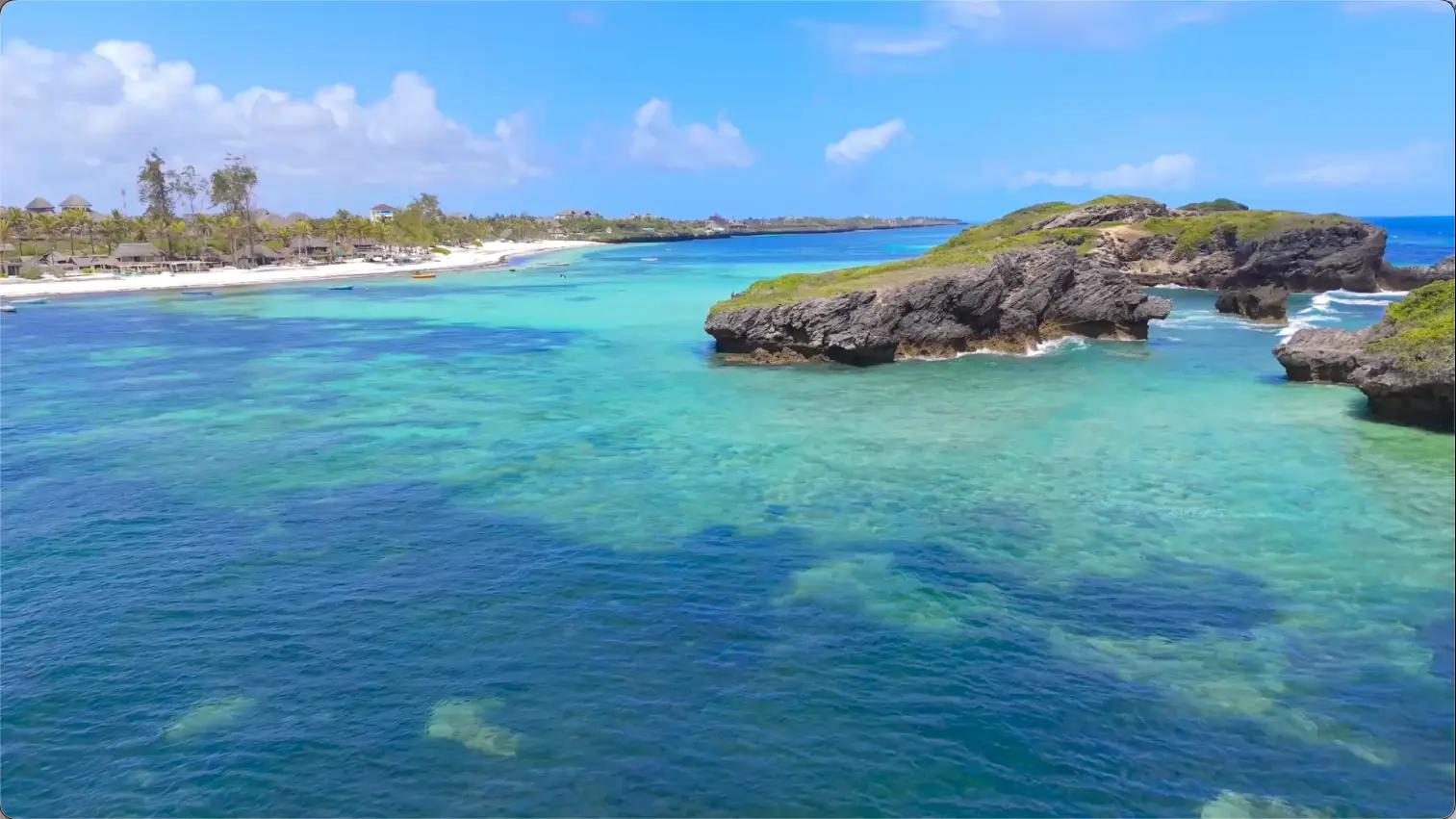
Lamu Old Town is a UNESCO World Heritage Site for its preservation of Swahili culture and architecture: coral stone, mangrove timber, inner courtyards, and elaborately carved wooden doors encoding centuries of influence. In the surrounding waters, coral reefs support a rich marine ecosystem: mangroves and seagrass host turtles, dugongs, and whale sharks. Shela Beach, 13 kilometres of golden sand flanked by silent dunes, lies within walking distance of Old Town.
5 Reasons We Love Lamu Archipelago
Lamu Old Town's UNESCO heritage: Founded in 1370 with 26 mosques and coral-stone architecture; a thousand years of Swahili trade culture, largely unchanged.
No cars: Transport is by donkey or traditional dhow; the island's ban on vehicles lends it a quietness that no other destination in Kenya can offer.
Shela Beach: Thirteen kilometres of golden sand flanked by silent dunes, one of East Africa's most unspoilt and consistently uncrowded stretches of coast.
Marine life: Coral reefs, mangroves, and seagrass beds support turtles, dugongs, and whale sharks in a remarkably intact Indian Ocean ecosystem.
The perfect safari finale: Lamu pairs naturally with Kenya's safari circuit; a total contrast of sand, sea, Swahili culture, and Indian Ocean light.
Our favourite Lamu safari ideas
All you need to know about Lamu
About Lamu Archipelago
Lamu Archipelago lies in the Indian Ocean off Kenya's northern coast. Lamu Island hosts the archipelago's cultural centre, accessible by air via Manda Airport across the channel, with a short boat transfer to reach Lamu Town.
Lamu Old Town, founded in 1370, is Kenya's oldest living town and a UNESCO World Heritage Site inscribed for its preservation of Swahili culture and architecture. The town contains 26 mosques and many examples of traditional Swahili domestic building, with elaborately carved wooden doors as its most celebrated physical feature.
Adjacent to Old Town is the small beach community of Shela, a quiet refuge within walking distance. The Takwa Ruins on nearby Manda Island preserve a 15th-century Swahili town settlement, accessible by boat. Kiwayu is among the more remote islands in the archipelago reachable from Lamu.
Things to do in Lamu Archipelago
Explore Lamu Old Town on foot or with a local guide: narrow Swahili alleyways, 26 mosques, the Fort, the museum, and intricately carved doors.
Dhow cruise at sunset on a traditional Arab sailboat, or take a longer trip around the island, stopping at small villages along the coast.
Shela Beach: walk 13km of golden sand flanked by silent dunes, almost always deserted, from Shela village south to Kizingo.
Island hopping by boat to Manda Island, the 15th-century Takwa Ruins, and the remote island of Kiwayu further into the archipelago.
Snorkelling and diving on coral reefs surrounding the islands, encountering turtles and, seasonally, whale sharks in the clear Indian Ocean water.
Swahili cuisine at local eateries and rum and pineapple juice at the Floating Bar, Lamu's most unconventional and most enjoyable institution.
What wildlife will I see in Lamu?
Marine turtles: sea turtles nest and feed around the archipelago's coral reefs and seagrass beds in the clear waters surrounding the islands.
Dugongs: the seagrass beds of the Lamu Archipelago support rare dugong populations in the Indian Ocean waters around the islands.
Whale sharks: the largest fish in the ocean pass through waters surrounding the archipelago, offering encounters for divers and snorkellers.
Reef fish and marine life: the coral reefs around the islands support diverse tropical marine species in clear, relatively undisturbed water.
Dolphins: the channel and open waters around Lamu attract dolphins, which are visible on dhow cruises and boat excursions.
Mangroves and seagrass: intact mangrove forests and seagrass beds form the base of the marine ecosystem, providing vital habitat for nesting sea turtles, a myriad of other sealife and birdlife.
Where to stay in Lamu Archipelago
These are the most popular properties we include in our Lamu itineraries:
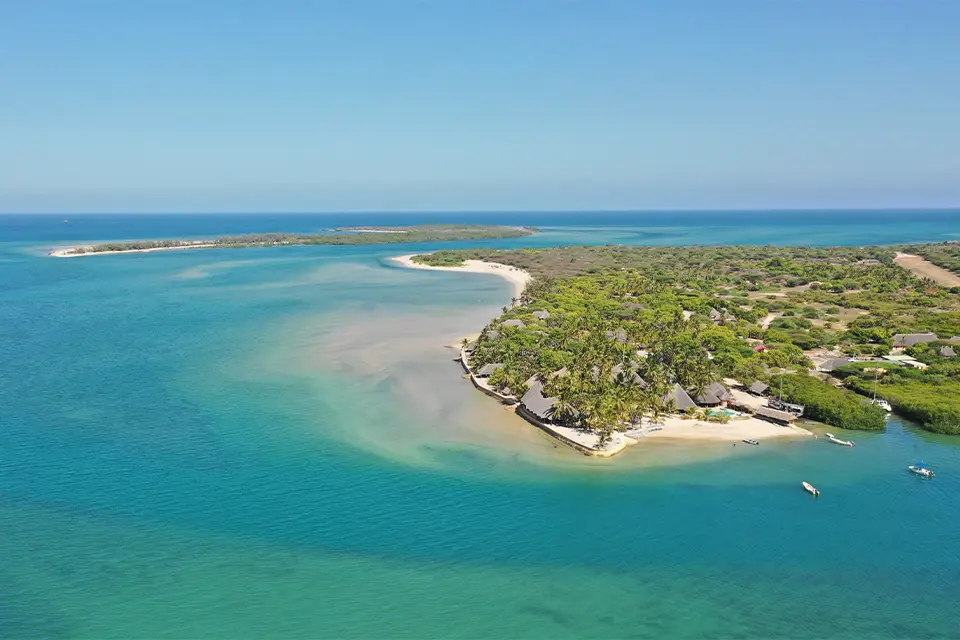
Manda Bay is on Manda Island, directly across the channel from Lamu Town and accessible only by boat. It is positioned for guests who want the archipelago's beaches and waters as their primary experience, with the cultural pull of Old Town a short dhow ride away. The lodge emphasises its connection to the marine ecosystem and the islands' low-impact character.
Peponi Hotel is one of Lamu's most enduring hotels, in Shela at the point where Old Town meets the beach and the channel meets the sea, giving it water views in two directions. It is the hotel most associated with Shela's long-standing reputation as a retreat for travellers who appreciate the village's quiet character and proximity to the 13-kilometre beach.
The Cabanas offers a more intimate, villa-style stay within the Shela community. Its architecture draws on coral-stone building traditions and opens directly onto the beach. For guests seeking privacy and an unhurried base rather than a structured hotel experience, The Cabanas embodies Lamu's character.
Trusted by thousands of ecstatic travellers
✔️ 5-Star Trustpilot Rating ✔️ Condé Nast Travel Specialist Award Winner
✔️ Accredited by SATSA ✔️ 5,000+ Exceptional Safaris Since 1991
Why choose Africa Geographic to plan your safari?

"Africa Geographic was amazing to work with. They tailored a trip specifically for us based on our wants and needs. They take the time to listen to you and understand what you are looking for from this sometimes once in a lifetime experience. They are professional, courteous, friendly and with you every step of the way. Their job does not end until you are home. If I could give them more than 5 stars I would!"

"Africa Geographic are the ULTIMATE in African trip planning! Thank you so much for our once in a lifetime experience! ... It was worth every penny spent!! Every detail about this trip were seamless from each meal to every transfer. We have already recommended Africa Geographic to many folks. God bless you all and thank you again for sharing your incredibly beautiful continent!!"

"...Kenya was one of my best experiences so far. The planning went smoothly – everything was arranged exactly as I had imagined. The accommodations were excellent and met all my expectations. The diversity of landscapes and wildlife was impressive, with new highlights every day. Overall, this was my best trip yet – perfectly organized and unforgettable."
Wish you were here?
Frequently asked questions
The Lamu Archipelago is a group of islands in the Indian Ocean, off Kenya's northern coast. The main island, Lamu, hosts Lamu Town, founded in 1370, one of Africa's oldest continuously inhabited places and a UNESCO World Heritage Site. The archipelago also includes Manda Island (home to the Takwa Ruins and the airport), the more remote island of Kiwayu, and other smaller islands. The area is known for preserving Swahili culture and architecture, its ban on cars, and its Indian Ocean marine ecosystem, which supports turtles, dugongs, and whale sharks.
Lamu Old Town was inscribed on the UNESCO World Heritage List for its outstanding preservation of traditional Swahili culture and architecture. Founded in 1370, it is one of the oldest and best-preserved Swahili settlements in East Africa. Its buildings are constructed from coral stone and mangrove timber, with inner courtyards, verandas, and elaborately carved wooden doors that encode centuries of Omani, Indian, and Portuguese cultural influence. The town contains 26 mosques and has maintained a living cultural continuity across centuries of occupation and trade.
Correct, the use of cars by the general public is banned on Lamu Island. Transport within the island is by foot or by donkey, and between islands by traditional Arab dhow. This ban is one of the most significant factors in the island's character: the absence of engine noise gives Lamu a quality of quiet and an unhurried pace that has largely disappeared from comparable coastal destinations.
A dhow is a traditional Arab sailing vessel, used for centuries across the Indian Ocean for trade, fishing, and travel. In Lamu, dhows remain the primary means of inter-island transport and are still built by hand by local craftsmen following traditional construction methods. Ask your Africa Geographic safari planner to arrange a visit to one of these artisans. A dhow cruise at sunset across the Lamu channel, watching Old Town's skyline shift from gold to deep red, is one of the most memorable activities the archipelago offers.
Shela is a small beach community within walking distance of Lamu Old Town. It has developed a reputation as a quiet refuge for travellers seeking privacy and proximity to the sea, and has become a favourite among celebrities and European visitors who appreciate its low-key character. Shela's beach is a 13-kilometre stretch of golden sand flanked by silent dunes, one of the most unspoilt coastlines in East Africa. The walk from Old Town to the far end of Shela Beach and on to the village of Kizingo takes approximately three hours.
The Takwa Ruins are the preserved remains of a 15th-century Swahili town on nearby Manda Island, accessible from Lamu by boat. They represent one of the archipelago's most significant archaeological sites, providing physical evidence of the long history of Swahili urban settlement in this part of the Indian Ocean coast. A visit to the Takwa Ruins is typically combined with a dhow trip and island exploration.
The coral reefs, mangroves, and seagrass beds surrounding the Lamu Archipelago support a diverse marine ecosystem. Sea turtles nest and feed in the reefs and seagrass. Dugongs, rare and elusive Indian Ocean mammals, are present in the seagrass beds. Whale sharks, the largest fish in the ocean, pass through the surrounding waters and can be encountered by divers and snorkellers. The intact mangrove and seagrass habitat is itself a significant feature, forming the base of the food chain for the archipelago's marine life.
Lamu can be visited year-round, but the two dry seasons offer the most favourable conditions. December to March provides warm, dry weather and the calmest seas — ideal for dhow sailing and marine activities. July and August offer a second dry window with reliable conditions. The long rains (April to June) and short rains (October to November) bring higher humidity and occasionally rough sea conditions, though the archipelago's cultural character makes it a rewarding destination in any season.
Yes, Lamu is a natural beach extension to any Kenya safari itinerary. The contrast between the savannah wildlife of Amboseli, Samburu, or the Masai Mara and the Swahili cultural depth and Indian Ocean coastline of Lamu is one of Kenya's most compelling travel combinations. Most guests fly from Nairobi to Manda Airport, then take a short boat transfer to Lamu Island. Africa Geographic designs these combinations regularly.
The Floating Bar is one of Lamu's most distinctive institutions: a bar that serves, among other things, rum and pineapple juice, and is referenced in multiple accounts of the Lamu experience as a local landmark and gathering point. It reflects the relaxed, idiosyncratic character of the island's hospitality culture, where personality and local tradition define the experience.
The three properties reflect very different approaches to the archipelago. MandaBay is on Manda Island, across the channel from Lamu Town, accessible only by boat, and focused on the water and marine experience. Peponi Hotel is in Shela, at the junction of Old Town and the sea, and is the most established property with water views in two directions. The Cabanas is a villa-style property in Shela, opening directly onto the beach and offering a more private, unstructured base for guests who want to experience the island on their own terms.
Lamu is accessed by flying to Manda Airport, located on Manda Island across the channel from Lamu Town. From Nairobi, the flight takes approximately one and a half hours. At the pier, boat transfers carry guests across the channel to Lamu Island. Africa Geographic arranges all logistics as part of any booked itinerary.
Our safaris typically cost from US$700 per person, per night, depending on the accommodation comfort level, time of year and activities. This price usually includes accommodation, all meals, game drives, experienced guides, airport transfers, and 24/7 support from our team.
You only make your first payment when you book your holiday. Your second (last) payment is about 105 days before you travel.
Peak season bookings require 12–18 months of advance planning. Trips outside of peak season can be arranged 6–9 months ahead, with better rates and availability.
Yes, Lamu's safe, car-free environment and the wide, empty beaches of Shela make it genuinely family-friendly. The island's pace is slow, and the activities are largely self-directed. Children who enjoy boat trips, beach exploration, and cultural engagement with a living historic town will find the archipelago rich in interest. Dhow sailing, snorkelling on the reefs, and wandering the Old Town's alleyways all adapt naturally to family travel.
Click here to schedule a no-obligation call with one of our Safari Experts or fill in our 2-minute form with your questions. Our team of experts are here to help! Whether you’re curious about the best time to travel, want to hear first-hand about an experience or need help planning your safari.

Start planning your dream safari
Our travel experts will craft a no-obligation itinerary just for you. We have crafted over 5,000 safaris since 1991. Your personal details are protected; we only use this information to contact you.
Why book your safari with us?

Deep Experience & Knowledge
Handcrafted experiential safaris since 1991.
Travel in Africa is about knowing when and where to go, and with whom. A few weeks too early/late or a few kilometres off course, and you could miss the greatest show on Earth. And wouldn’t that be a pity?

Trust & Safety

Make A Difference
We donate a portion of the revenue from every safari sold to carefully selected conservation projects that make a significant difference at ground level.
YOUR safari choice does make a difference - thank you!