

Tailor-made safaris. Since 1991



Diani Beach: where the Indian Ocean meets barefoot luxury
Diani Beach at a glance:
Location: South Kenya coast, approx. 30 km south of Mombasa | Nearest airport: Ukunda Airstrip (Diani), with connections via Nairobi's Wilson Airport |
Best time to visit: January–March and June–October (dry seasons) | Minimum recommended stay: 4–5 nights |
Currency: Kenyan Shilling (KES) | Malaria risk: Yes, prophylaxis recommended |
Visa: Required — Electronic Travel Authorisation (ETA) available online | Languages: Swahili and English |
Why visit Diani Beach?
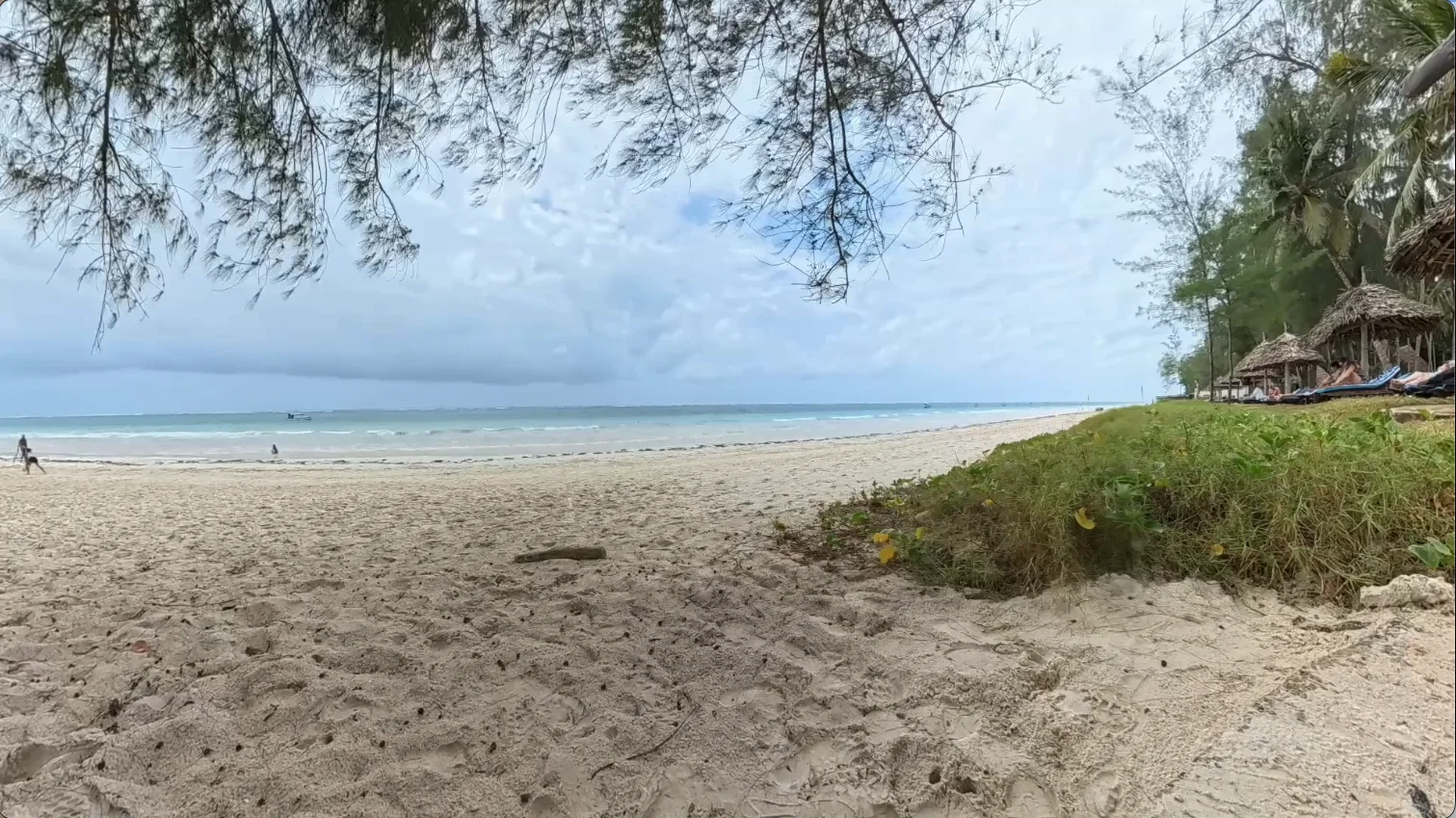
Few stretches of coastline on the African continent manage to hold this much in one place. Diani Beach runs for roughly 17 kilometres along Kenya's southern Indian Ocean shore: a near-unbroken corridor of powdered white sand, backed by ancient coastal forest and fringed by a living coral reef that shelters the shallows into the colour of shallow glass.
What sets Diani apart from other East African beach destinations is the layering of experience on offer. The reef system lying just offshore means world-class snorkelling and diving are built into every visit. The Kisite Mpunguti Marine National Park and Reserve, accessible by dhow from the coast, protects 39 kilometres of marine waters and supports populations of dolphins, sea turtles and an extraordinary diversity of reef fish. The forest immediately behind the beach is home to the Angolan black-and-white colobus monkey, one of the most visually striking primates in Africa, protected by the Colobus Conservation organisation based in Diani itself.
This is also one of Kenya's most developed beach destinations, yet it carries that development lightly. Boutique properties, private villas, and a small number of carefully positioned lodges share the shoreline with quiet stretches of sand and a lively beach culture shaped by the local Swahili coast. The Kaya Kinondo Sacred Forest, the first of the Mijikenda sacred kaya forests to open to ecotourism, brings genuine cultural depth, while Shimba Hills National Reserve sits visible on the inland horizon, offering wildlife encounters within an easy day's reach. Diani rewards those who look beyond the beach as much as those who never want to leave it.
5 Reasons We Love Diani Beach
The reef: A living coral reef shelters the entire coastline, creating calm, clear water ideal for snorkelling, diving and glass-bottomed boat excursions to witness an extraordinary marine world.
Colobus Conservation: The Colobus Conservation centre in Diani protects endangered Angolan black-and-white colobus monkeys and rehabilitates injured primates, a conservation visit unlike any other beach destination in Africa.
Kisite Mpunguti Marine Park: Accessible by traditional dhow, this protected marine reserve shelters dolphins, sea turtles, and more than 250 fish species across 39 kilometres of Indian Ocean waters.
Cultural depth: The Kaya Kinondo Sacred Forest, maintained by Mijikenda community elders, offers guided ecotourism walks through one of Kenya's most significant protected cultural heritage sites.
The combination: Few African destinations pair a beach of this quality with wildlife, cultural heritage, watersports, and access to a national reserve, all within a single seamless coastal geography.
All you need to know about Diani Beach
About Diani Beach
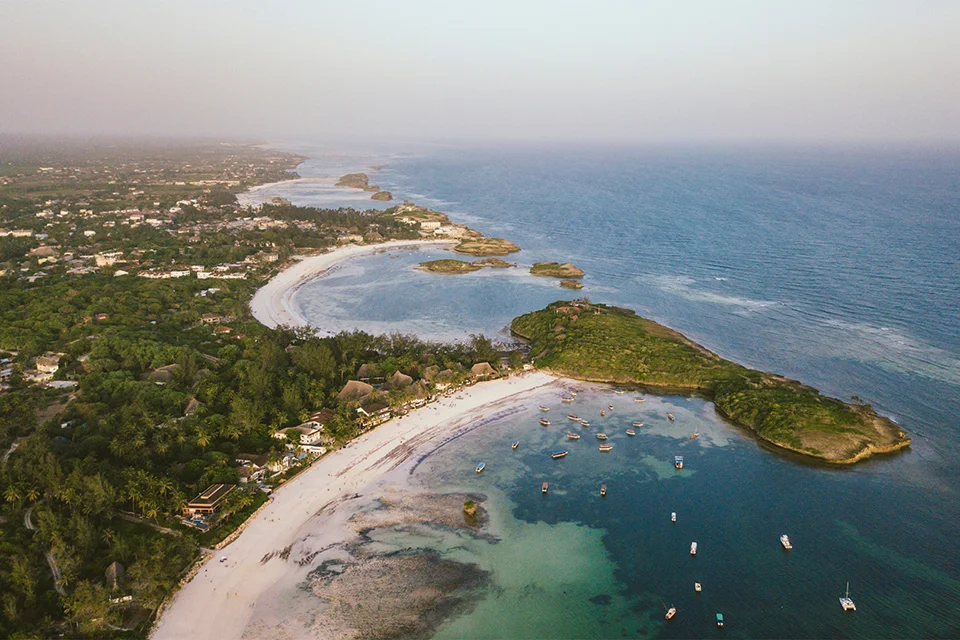
Diani Beach sits on Kenya's southern coast, approximately 30 kilometres south of Mombasa, along the western edge of the Indian Ocean. The beach stretches around 17 kilometres, flanked by coastal forest and a fringing coral reef that runs the length of the shore. The reef creates the calm, shallow lagoon conditions that make Diani safe for swimming across most tidal states, though tides significantly affect water depth and swimming conditions, so conditions should be checked before heading into the water.
The town of Ukunda lies just inland, connected to the beach strip by several access roads. The surrounding area encompasses small fishing communities, Swahili cultural heritage, and the protected Kaya forests of the Mijikenda people. Shimba Hills National Reserve rises to the west, visible from the beach, providing a natural anchor for the inland landscape that frames this stretch of coast.
Things to do in Diani Beach
Snorkel and dive the coral reef: The fringing reef along Diani's coastline is home to colourful reef fish and marine life such as turtles, sharks, rays, dolphins, whales, and whale sharks. while PADI-certified dive centres along the beach cater to all experience levels.
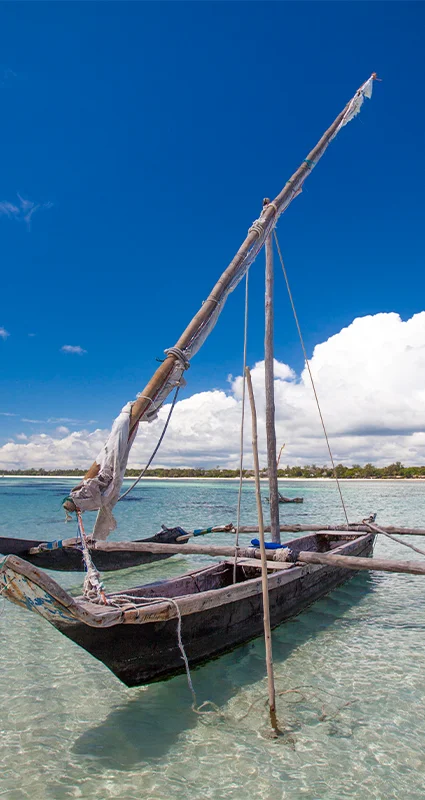
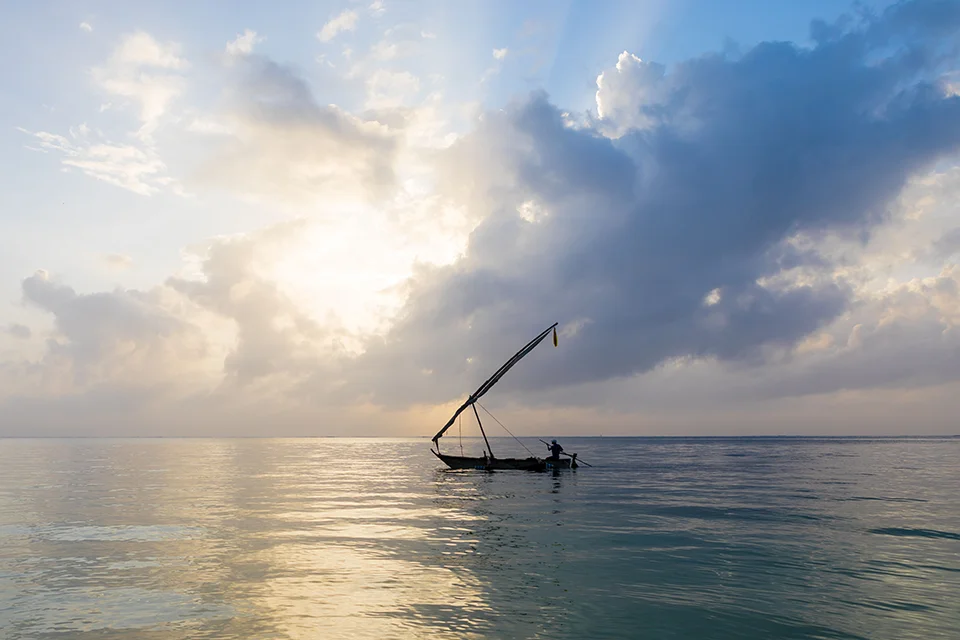
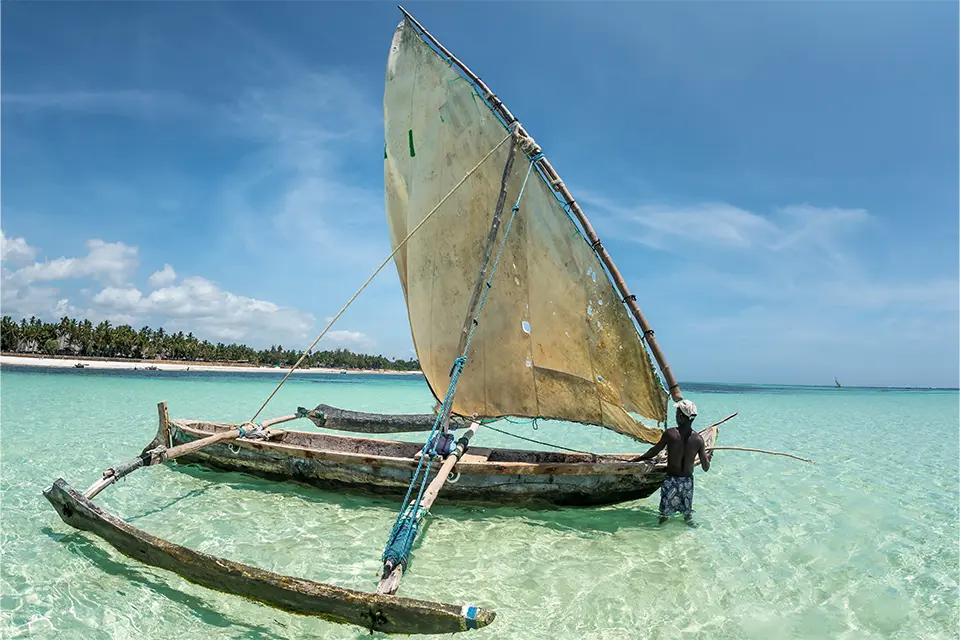
Dhow excursion to Kisite Mpunguti Marine Park: Traditional wooden dhows carry visitors to 39 km of protected waters where dolphins, sea turtles and over 250 fish species inhabit the reef.
Visit Colobus Conservation: The Diani-based conservation and research centre protects Angolan black-and-white colobus monkeys and offers guided visits, including tours of the rehabilitation centre.
Kitesurfing and watersports: Consistent Indian Ocean winds and calm reef-sheltered shallows make Diani one of Kenya's most accessible kitesurfing and windsurfing destinations.
Walk Kaya Kinondo Sacred Forest: Community-led guided walks through this Mijikenda sacred forest offer insight into one of Kenya's oldest traditions of conservation-led land stewardship.
Day trip to Shimba Hills National Reserve: The 300-square-kilometre reserve, visible from the beach, protects sable antelope, elephants, black-and-white colobus monkeys and diverse birdlife.
What wildlife can I see in Diani Beach?
Angolan black-and-white colobus monkeys are the most iconic wildlife species at Diani, regularly seen in the coastal forest and at the Colobus Conservation centre along the beach strip.
Dolphins: 2 species are frequently encountered on dhow excursions to Kisite Mpunguti Marine Park; the reserve is known as one of Kenya's most reliable dolphin-watching destinations.
Sea turtles: 5 species (including 3 nesting species) inhabit the protected marine waters of Kisite Mpunguti, with sightings recorded on most snorkelling and diving excursions to the marine park.
Sable antelope and African elephants: can be seen in Shimba Hills National Reserve; one of only a few protected areas in Kenya where the rare sable antelope occurs.
Reef fish: more than 300 recorded species populate the coral reef system along Diani's coastline, including an array of tropical species visible on snorkelling and diving trips.
Birds: The coastal forests and coastal marine environment support about 400 bird species.
Where to stay in Diani Beach
Diani Beach offers a diverse collection of accommodation, from intimate conservation-focused lodges and Swahili-inspired boutique hotels to luxurious beachfront villas. These five properties stand out for our guests seeking exceptional experiences.
Soroi Blue sits directly on the beach, offering understated luxury in a relaxed setting. Ideal for couples and small groups, it focuses on personalised service and effortless beach access.
Water Lovers Beach Resort is perfect for travellers wanting to immerse themselves in the beach lifestyle. With snorkelling, diving and kitesurfing on its doorstep, it's an excellent base for active visitors.
Kinondo Kwetu, on the quieter Kinondo Beach, is Swahili-inspired and deeply committed to community and conservation. It is renowned for organic cuisine, horseback rides along the beach and warm, authentic hospitality.
Chale Island offers secluded island accommodation reached by boat. Surrounded by mangroves and coral reefs, it combines tranquillity with excellent snorkelling just offshore, making it ideal for those seeking a more private coastal escape.
Alfajiri Beach Villa overlooks the coral reef from a dramatic clifftop setting with spectacular ocean views. Its exclusive-use villas provide exceptional privacy for families and groups.
Trusted by thousands of ecstatic travellers
✔️ 5-Star Trustpilot Rating ✔️ Condé Nast Travel Specialist Award Winner
✔️ Accredited by SATSA ✔️ 5,000+ Exceptional Safaris Since 1991
Why choose Africa Geographic to plan your safari?

"Amazing Adventure made possible by Africa Geographic...the team helped us realize our dream of an African Safari. Our guides...shared their vast knowledge of the wildlife and habitats. Such beautiful things we saw, memories to be shared and cherished. We can't recommend Africa Geographic highly enough."

"A top company to help organise and arrange your perfect safari trip... I would thoroughly recommend Africa Geographic, if you want peace of mine for your perfect once in a lifetime trip then this is the company for you. Will definitely be recommending them and using them again if and when we visit Africa!"

"...I’ve been dreaming about this trip for years, and the reality was even better than I could imagine...Africa Geographic tailored the trip specifically to what I was looking for—every component of the trip was thoughtful and demonstrated their knowledge of the services and experiences available...work with Africa Geographic to create your perfect trip."
Wish you were here?
Frequently asked questions
Diani Beach is one of Kenya's most visited coastal destinations and is generally considered safe for international tourists. As with any destination, basic precautions apply, particularly on the beach at night. The main beach strip is well-travelled during the day and early evening.
Diani has two dry seasons that offer the most reliable beach weather. January to March is warm, sunny and relatively uncrowded. June to October brings the cooler, drier southeast monsoon breeze, ideal conditions for both beach activities and watersports. April and May bring the long rains; November to mid-December bring the short rains.
Diani Beach is approximately 30 kilometres south of Mombasa. The journey takes between 45 minutes and over an hour depending on traffic and the route taken across the Likoni Ferry.
The fastest option is to fly into Ukunda Airstrip directly from Nairobi's Wilson Airport or connect via Mombasa's Moi International Airport. Alternatively, the Madaraka Express train runs from Nairobi to Mombasa, from where road transfers to Diani take roughly one hour. Road travel from Nairobi takes the better part of a full day.
Most international visitors require a visa or Electronic Travel Authorisation (ETA) to enter Kenya. The ETA is applied for online prior to departure. Confirm current requirements with your tour operator or the official Kenya immigration authority well before travel.
Diani is an excellent snorkelling and diving destination. The fringing coral reef shelters the coastline along its entire length, and PADI-certified dive centres operate along the beach strip. Excursions to Kisite Mpunguti Marine National Park and Reserve, accessed by traditional dhow, offer some of the best marine wildlife encounters on the Kenyan coast.
Kisite Mpunguti Marine National Park and Reserve is home to more than 250 species of fish, dolphins, sea turtles, and seasonal whale and whale shark sightings. It is one of Kenya's most significant marine protected areas, managed by the Kenya Wildlife Service.
Diani Beach is ideally positioned as a beach extension after an inland Kenya safari. Nairobi and the Maasai Mara are accessible by short domestic flight, making a combined safari and beach itinerary straightforward and highly recommended.
The consistent Indian Ocean winds and the protected lagoon created by the coral reef make Diani particularly well-suited to kitesurfing, windsurfing, paddleboarding, kayaking and sailing. Glass-bottomed boat trips are available for those who prefer to experience the reef without getting in the water.
Colobus Conservation is a non-profit organisation based on the Diani beach strip dedicated to the protection of the Angolan black-and-white colobus monkey and other primates. The centre welcomes visitors and offers guided tours, one of the most genuinely engaging conservation experiences on the Kenyan coast.
The Kaya Kinondo Sacred Forest is a protected forest near Diani maintained by Mijikenda community elders. It is the first of Kenya's sacred kaya forests to open to ecotourism. Guided walks led by community members offer visitors insight into the forest's ecological and cultural significance.
Tides have a significant effect on the experience at Diani Beach. The reef creates very shallow water at low tide, making swimming difficult in some sections. Checking tide times before planning swimming activities is strongly recommended; most local accommodation providers can advise on daily conditions.
A minimum of four to five nights allows time to experience the beach, complete a snorkelling or diving excursion to Kisite Mpunguti, visit Colobus Conservation, and explore the Kaya forest or Shimba Hills. Travellers who want to include watersports, a dhow sunset cruise and more relaxed beach time should plan for seven nights or more.
Our safaris typically cost from US$700 per person, per night, depending on the accommodation comfort level, time of year and activities. This price usually includes accommodation, all meals, game drives, experienced guides, airport transfers, and 24/7 support from our team.
You only make your first payment when you book your holiday. Your second (last) payment is about 105 days before you travel.
Peak season bookings require 12–18 months of advance planning. Trips outside of peak season can be arranged 6–9 months ahead, with better rates and availability.
Click here to schedule a no-obligation call with one of our Safari Experts or fill in our 2-minute form with your questions. Our team of experts are here to help! Whether you’re curious about the best time to travel, want to hear first-hand about an experience or need help planning your safari.
Explore more African destinations

Start planning your dream safari
Our travel experts will craft a no-obligation itinerary just for you. We have crafted over 5,000 safaris since 1991. Your personal details are protected; we only use this information to contact you.
Why book your safari with us?

Deep Experience & Knowledge
Handcrafted experiential safaris since 1991.
Travel in Africa is about knowing when and where to go, and with whom. A few weeks too early/late or a few kilometres off course, and you could miss the greatest show on Earth. And wouldn’t that be a pity?

Trust & Safety

Make A Difference
We donate a portion of the revenue from every safari sold to carefully selected conservation projects that make a significant difference at ground level.
YOUR safari choice does make a difference - thank you!