
Tailor-made safaris. Since 1991



Namibia offers remote exclusivity
Why visit Namibia?
Vast open landscapes stretch to the horizon, from the towering red dunes of Sossusvlei to the rugged mountains and ancient valleys of Damaraland. This is a place where space, silence, and solitude redefine luxury.
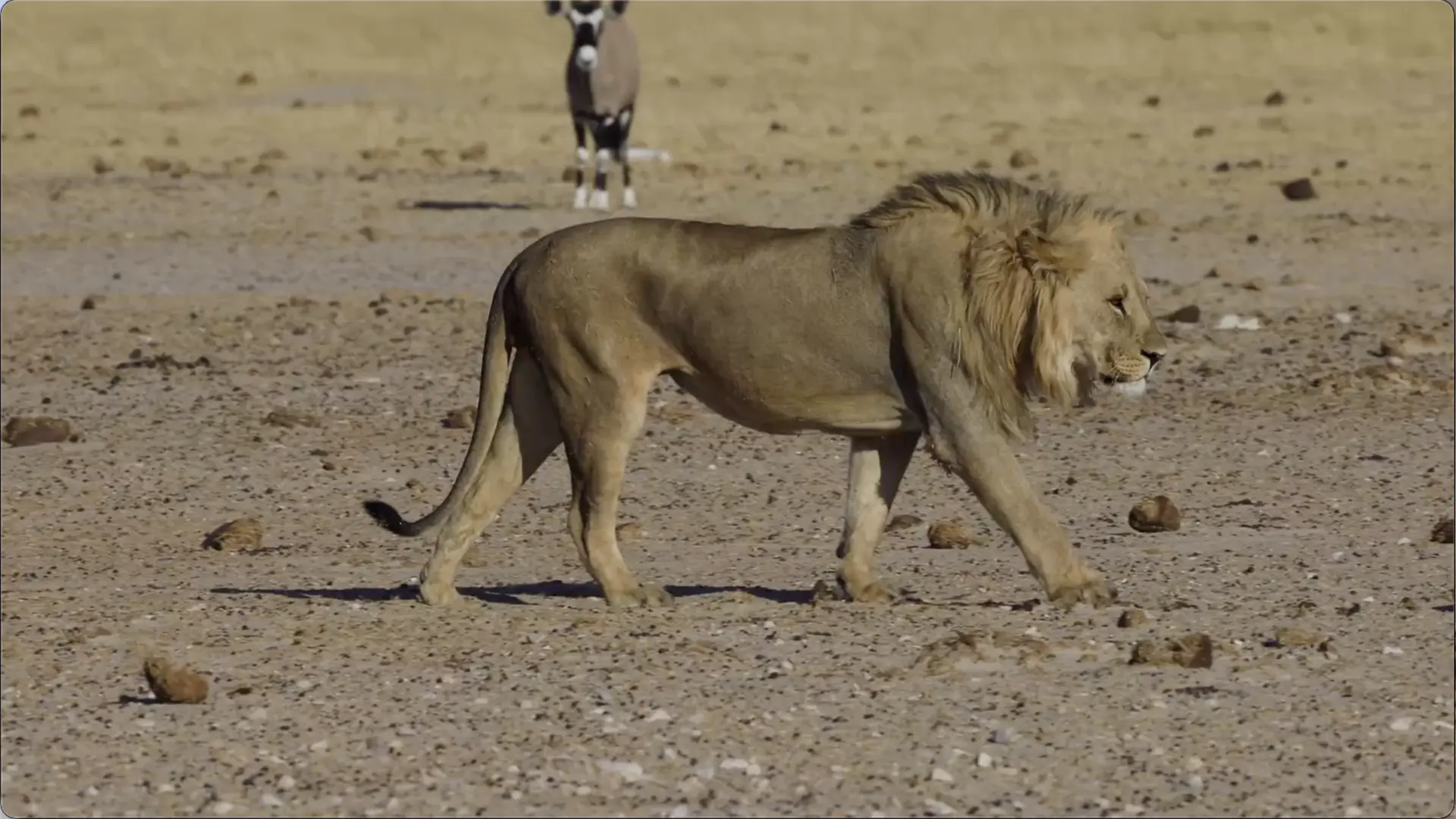
Imagine tracking desert-adapted elephants across dry riverbeds, spotting rare black rhino in wild, remote terrain, or watching lions roam the stark, skeletal coastline of the Skeleton Coast. In Etosha National Park, wildlife gathers around waterholes in staggering numbers.
Namibia is perfect for those seeking exclusivity, vast private concessions, and lodges set in breathtaking isolation. The pace is unhurried, and every moment feels deeply personal. Whether you’re flying between remote camps or self-driving scenic routes through ever-changing landscapes, Namibia delivers a safari experience that is both adventurous and profoundly restorative.
5 Reasons We Love Namibia
Desert-adapted wildlife: Unique, resilient populations of desert-adapted rhinos, elephants, brown hyenas and lions roam the arid savannas of Damaraland and the Hoanib River. Etosha National Park features a massive 4,760km² salt pan so enormous it is visible from space, acting as a dramatic backdrop for immense herds of wildlife during the dry season.
Surreal Sossusvlei dunes: Spectacular, dynamic sand dunes coloured bright red and orange by oxidised iron, including towering giants like Dune 7 and Big Daddy, set against stark white chalky lake beds and ancient tree skeletons etched against the sky.
Haunting coastline: Namibia's remote coastline is home to haunted shipwrecks, abandoned diamond-mining towns reclaimed by shifting sands, and wildlife adapted to survive in a rainless environment.
Himba culture: The Himba people are semi-nomadic pastoralists still living according to ancient customs. They are known for their striking appearance, particularly the use of red ochre (otjize) on their skin and hair.
Swakopmund: Swakopmund is Namibia’s most sought-after coastal town by local and international tourists alike. This one-of-a-kind location is known for its German colonial architecture, great beaches, and desert-adapted plant and animal species.
Our favourite Namibia safari ideas
All you need to know about Namibia
Where to go in Namibia
Namibia hosts many incredible safari destinations. Here are some of the top destinations to include in your Namibia safari:
Damaraland: home of desert-adapted rhinos, elephants and lions and the largest gallery of prehistoric rock art in Southern Africa.
Etosha National Park: Known for its vast salt pan and excellent waterhole wildlife viewing – a wildlife safari and photographer’s dream.
Sossusvlei: A surreal landscape of red sand dunes in the Namib Desert, and one of the most photographed places in sub-Saharan Africa.
Swakopmund & Walvis Bay: Popular coastal towns with German colonial architecture, great beaches, and desert-adapted plant and animal species.
Kaokoveld: a vast, remote region in northwestern Namibia, home to the semi-nomadic Himba people, known for preserving traditional ways of life, and hosts a surprising diversity of wildlife.
Skeleton Coast: A remote, hauntingly beautiful area with shipwrecks and desert-adapted wildlife such as brown hyena and desert-adapted lions.
Caprivi Strip: A lush, water-rich region offering traditional wetland safaris to see the Big 5 except for rhino.
What wildlife will I see in Namibia?
Namibia specialises in species that are adapted to arid conditions, as well as species found in wetlands:
The Big Five (rhino, lion, elephant, leopard, and buffalo) are present, but you will need to visit two or more protected areas to view all five. Buffaloes are not found in the arid regions of Namibia, but they are found in the eastern part of the country.
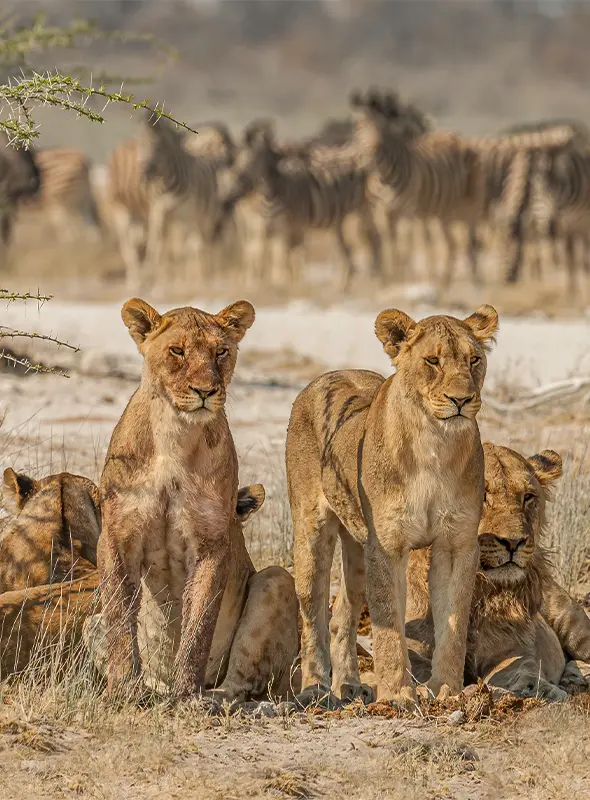
A high number of predators. The open plains are well suited to the highest population of cheetahs in the world, and the savannahs host good numbers of lions, leopards and hyenas.
Desert-adapted lions, elephants, rhinos, oryx and brown hyenas occur in the arid western regions of Namibia.
Endemic bird species such as bare-cheeked babbler, violet wood-hoopoe, Carp’s tit, Monteiro's hornbill, rockrunner, Rüppell's parrot and Angola cave chat are listed amongst Namibia's 700 species.
Namibia's hotels, lodges and camps
Namibia has relatively few accommodation options due to the size and remoteness of the country. Cities have excellent boutique hotels, and wilderness areas play host to luxury lodges and bush camps that evoke the romance and adventure of an African safari.
Every property we select for your handcrafted journey meets our exacting standards for comfort, character, and service. Just as importantly, each lodge is deeply committed to protecting Namibia's precious wildlife, supporting local communities, and preserving the extraordinary ecosystems that make your safari possible.
Check out our safari ideas above to see some of the hotels, lodges and camps with proven track records that we regularly send our guests to.
Trusted by thousands of ecstatic travellers
✔️ 5-Star Trustpilot Rating ✔️ Condé Nast Travel Specialist Award Winner
✔️ Accredited by SATSA ✔️ 5,000+ Exceptional Safaris Since 1991
Why choose Africa Geographic to plan your safari?

Our second trip using Africa Geographic. This was an 12 day itinerary including Windhoek, Sossusvlei, Walvis bay, Brandberg, Etosha, Okonjima. Excellent planning, communication, information package, and advice. Accommodation absolutely as we expected. Private guide was superb and vehicle was excellent. Fabulous experience. Highly recommended.
This was an epic trip to Namibia over 4 weeks. Every day there were highlights but our favourites included Fish River Canyon, kayaking among seals and driving over dunes near Walvis Bay, rafting in the Kunene River and incredible game viewing in Etosha. Our driver/guide was excellent as were all accommodations
We are Canadians and had a wonderful trip to Namibia and Botswana with Africa Geographic Travel ... We saw all of our target species including Pel’s Fishing Owl and much more. Everything from logistics to food and lodging was beyond our expectations.Africa Geographic Travel has done such a great job for us that we now feel Africa pulling us back.
Wish you were here?
Frequently asked questions
Namibia’s dry climate makes it a year-round destination, but the best wildlife viewing occurs during the dry season (May to October). The rainy season (November to April) transforms the desert into a green oasis, attracting migratory birds and offering unique photographic opportunities and vibrant landscapes. Here's a detailed breakdown:
January to March: This is the peak of the rainy season, characterised by occasional afternoon thunderstorms. The desert blooms, and migratory birds arrive, but wildlife is more dispersed.
April to May: The rains subside, and temperatures cool. This is a shoulder season with fewer crowds and stunning landscapes.
June to August: Dry season at its peak. Cooler mornings and evenings make for comfortable travel, and wildlife gathers around waterholes in Etosha National Park.
September to October: Temperatures rise, and wildlife viewing reaches its zenith. This is the best time to visit Etosha and other parks.
November to December: Early rains begin, revitalising the landscapes and bringing migratory birds. It’s also a great time for photography
Namibia has most of the usual species you would expect to see in Africa, plus many adapted to living in arid, desert-like ecosystems. So look out for the Big 5 (rhino, lion, elephant, leopard, and buffalo), cheetahs, brown and spotted hyenas, ostriches, oryx and many more. There are also many endemic bird species, such as the bare-cheeked babbler, Rüppell’s parrot, and Angola cave chat.
We recommend at least 10–14 days to experience Namibia properly. Distances by road are long, and the country offers diverse highlights — from Etosha’s wildlife and the towering dunes of Sossusvlei to the Skeleton Coast, Damaraland, and the remote Kunene region. A longer itinerary allows for a more relaxed pace and deeper immersion.
Yes, Namibia is considered one of Africa’s safest and most stable safari destinations. The country has good tourism infrastructure, friendly people, and low population density. As with any destination, please take sensible precautions, especially in cities and when self-driving.
Namibia is one of the very few African destinations where self-driving is both practical and rewarding. The road network is good, most key destinations are accessible in a standard 4x4, and driving between camps gives you an unfiltered sense of the country's scale. That said, distances are long – it is a country larger than France – and flying between regions saves time and opens up more remote destinations, such as the Skeleton Coast and Damaraland's more remote camps.
As a general guide, self-driving suits travellers who want flexibility, are comfortable with long driving days, and are working to a tighter budget. Fly-in safaris are better suited to those who want maximum wildlife time, less travel fatigue, and access to lodges that are not accessible by road. Many travellers combine both – self-driving Sossusvlei and the south, then flying north to Etosha or Damaraland.
Yes, Namibia is one of the safest and best countries in Africa for self-driving, especially for travellers comfortable with long distances and remote landscapes. It’s extremely popular for self-drive safaris because:
Roads are well-maintained by African standards
Infrastructure is reliable
Traffic is sparse outside towns
English is widely spoken
Crime levels affecting tourists are relatively low compared with many destinations
That said, Namibia is not an “easy” road trip in the European sense. The main risks are environmental and logistical rather than criminal.
Key considerations:
The real dangers are the roads
Most tourist routes involve long gravel roads. These can look smooth but become dangerous at speed. Common causes of accidents:
driving too fast on gravel
tyre blowouts
losing control while braking suddenly
driving at dawn/dusk/night when animals cross roads
Single-vehicle rollovers are the biggest issue for tourists.
A good rule:
Never drive after dark
Keep speeds conservative on gravel (often 70–90 km/h max, even if locals go faster)
Stop every few hours because fatigue creeps in
Distances are huge
Namibia looks manageable on a map but travel days are long. A “5-hour drive” can become 8 hours with gravel, wildlife, photography stops, and fuel breaks.
Overplanning is the most common mistake.
You should rent the right vehicle
For classic safari circuits (Sossusvlei, Swakopmund, Etosha, Damaraland), a high-clearance SUV is strongly recommended. A 4x4 becomes important if:
travelling in the rainy season
heading to remote Kaokoland
crossing sandy riverbeds
doing serious off-grid travel
Always get:
two spare tyres
good insurance
satellite navigation/offline maps
compressor and recovery basics if remote
Fuel and supplies
Fuel stations can be hundreds of kilometres apart. Never pass a fuel station with less than half a tank in remote areas.
Carry:
plenty of water
snacks
paper map backup
basic medical kit
Wildlife awareness
In Etosha and some communal conservancies, animals can appear on roads unexpectedly:
Kudu and warthogs are notorious accident causes
Elephants occasionally use roads to scratch their itches
Livestock and donkeys are common near villages
Crime
Violent crime against tourists is extremely rare and normal precautions are enough:
Don’t leave bags visible in Windhoek or Swakopmund
Avoid isolated urban areas at night
Lock vehicles at fuel stops
Is Namibia suitable for first-time Africa travellers?
Yes — probably more than almost anywhere else in sub-Saharan Africa.
Namibia is ideal if you:
enjoy solitude and landscapes
are comfortable driving
like independent travel
are organised and safety-conscious
It is less suitable if you:
dislike long drives
want spontaneous luxury without planning
are nervous about remote areas
For many travellers, Namibia becomes one of the greatest road trips of their lives. The sense of space, silence, and freedom is extraordinary.
Namibia pairs well with Botswana, Victoria Falls (Zimbabwe), and South Africa. Botswana adds a contrasting wetland safari experience through the Okavango Delta and Chobe National Park, and the Caprivi Strip connects the two countries easily. Victoria Falls is a short flight from northern Namibia and suits travellers wanting dramatic scenery alongside their safari. South Africa is the most common gateway: many travellers fly into Johannesburg or Cape Town and include a few nights there at the start or end of their trip. We can build combined itineraries around any of these combinations.
Yes, Namibia is one of Africa's better family destinations.
The self-drive format is well-suited to family groups, there is no minimum age for most activities, and the variety of experiences – from dune climbing and stargazing to seal colonies and desert wildlife – engages children across a wide age range.
That said, some remote lodges set minimum ages (typically 8–12 years), and tented camps in unfenced areas require children to be accompanied by an adult at all times. We can recommend family-friendly properties and create an itinerary tailored to your children's ages and interests.
Please get in touch with your local GP or travel clinic well before your trip to obtain professional medical advice and discuss up-to-date vaccination requirements for the areas you will visit.
Yellow fever
Namibia is not a yellow fever country, so a yellow fever vaccine is not mandatory. However, if you are entering Namibia from a yellow fever country (such as Rwanda), you will need to present your vaccination certificate upon entry.
Malaria
Malaria is prevalent in many parts of Namibia, and we advise you to consult your GP before you depart about taking prophylaxis. It’s also essential to cover up in the evenings when the malaria-carrying Anopheles mosquito usually feeds. The malaria incubation period is 1-3 weeks, so if you experience any flu-like symptoms, headaches, aching joints and back or nausea and diarrhoea, it is recommended that you get tested at the earliest opportunity and let the medical people know you’ve recently travelled to Africa.
Our safaris typically cost from US$700 per person, per night, depending on the accommodation comfort level, time of year and activities. This price usually includes accommodation, all meals, game drives, experienced guides, airport transfers, and 24/7 support from our team.
You only make your first payment when you book your holiday. Your second (last) payment is about 105 days before you travel.
Peak season bookings require 12–18 months of advance planning. Trips outside of peak season can be arranged 6–9 months ahead, with better rates and availability.
Click here to schedule a no-obligation call with one of our Safari Experts or fill in our 2-minute form with your questions. Our team of experts are here to help! Whether you’re curious about the best time to travel, want to hear first-hand about an experience or need help planning your safari.
Explore more African destinations
Start planning your dream safari
Our travel experts will craft a no-obligation itinerary just for you. We have crafted over 5,000 safaris since 1991. Your personal details are protected; we only use this information to contact you.
Why book your safari with us?

Deep Experience & Knowledge
Handcrafted experiential safaris since 1991.
Travel in Africa is about knowing when and where to go, and with whom. A few weeks too early/late or a few kilometres off course, and you could miss the greatest show on Earth. And wouldn’t that be a pity?

Trust & Safety

Make A Difference
We donate a portion of the revenue from every safari sold to carefully selected conservation projects that make a significant difference at ground level.
YOUR safari choice does make a difference - thank you!