
Tailor-made safaris. Since 1991

Kruger: Africa's greatest Big Five wilderness
Kruger at a glance:
Location: Limpopo & Mpumalanga - the "Lowveld" - northeastern South Africa | Access from Johannesburg: ~1 hour by charter flight; ~5 hours by road to the southern gates |
Size: Kruger National Park ~19,485 km²; with the Greater Kruger private reserves~22,000 km² | Best time to visit: May–September (dry season); October–November also excellent |
Nearest airports: OR Tambo International, Johannesburg; Hoedspruit Eastgate Airport (HDS); Kruger Mpumalanga International Airport (MQP) | Minimum recommended stay: 4 nights |
Currency: South African Rand (ZAR) | Malaria risk: Yes – prophylaxis strongly recommended; yellow fever certificate not required for South Africa |
Why Visit Kruger National Park?
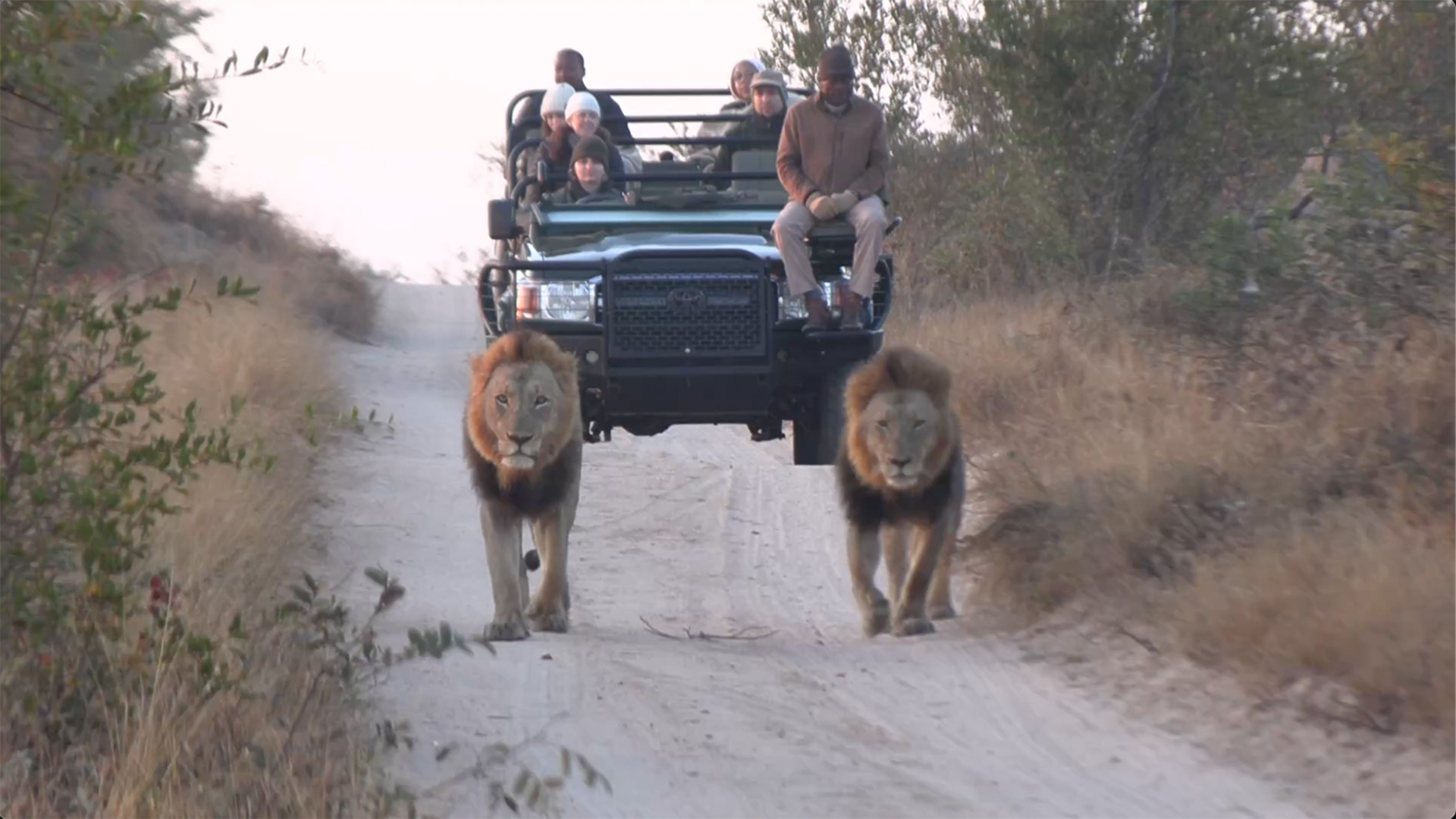
Few safari destinations deliver what Greater Kruger does with such consistency. This is the Africa of wildlife documentaries made real; lion prides at river crossings at dawn, leopards across leadwood branches at dusk, elephant herds raising dust across open savannah. The 22,000 km² ecosystem works because it is largely unfenced. Proclaimed in 1898, Kruger National Park in South Africa's Limpopo and Mpumalanga shares open borders with private reserves: Sabi Sand, MalaMala, Timbavati, Klaserie, Thornybush, Balule and others, that form a conservation area almost the size of Belgium.
This free movement of wildlife gives Greater Kruger its extraordinary density. The Big Five - lion, leopard, elephant, buffalo and rhino (black and white) - exist here at some of Africa's highest concentrations. Private reserve guests travel off-road and at night with skilled guides and trackers, following animals at close range with vehicle numbers strictly capped. Sixteen distinct habitats support over 147 mammal species and about 600 bird species, from African wild dog and cheetah to the endangered southern ground hornbill. It rewards first-timers with reliable Big Five encounters and returning travellers with fresh depth; a new reserve, a different season, a guide who reads the same extraordinary landscape differently.
5 reasons we love a Greater Kruger safari
Africa's most reliable Big Five territory: lion, leopard, elephant, buffalo and rhino. Many Africa Geographic guests see all five within a single day.
Off-road access and night drives change everything: private guides leave the road, day and night, to follow tracks and position you metres from a leopard on a kill.
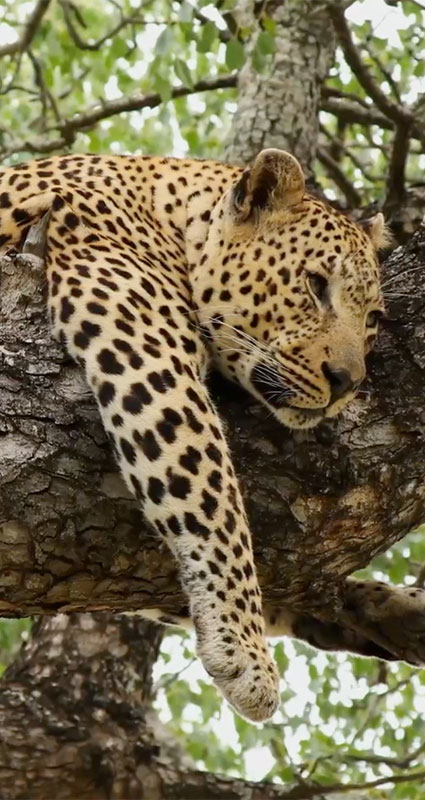
Leopards unlike anywhere else: Sabi Sand and MalaMala hold Africa's most vehicle-habituated leopard populations; close sightings are the norm.
White lions of Timbavati: the only reserve in Africa where wild white lions have been consistently recorded.
Extraordinary guiding standards: Greater Kruger rangers are continental benchmarks, trackers who read the bush with instinctive depth and precision.
Our favourite Kruger safari ideas
All you need to know about the Kruger
About the Greater Kruger
"Greater Kruger" names the private reserves - Sabi Sand, MalaMala, Timbavati, Klaserie, Thornybush, Balule and Manyeleti (community-owned) - that share an open, unfenced border with Kruger National Park in South Africa. Proclaimed in 1898, Kruger is one of the oldest national parks in Africa. In 1993, private land owners took down the fences with the park, forming a vast, managed wild area almost the size of Belgium. All wildlife now moves freely across this open system.
The ecosystem includes the Sand, Sabie, Timbavati, Klaserie, Olifants and Limpopo rivers. Bushveld shifts from mopane in the north to marula savannah in the south, with jackalberry and fig tree forests along the Sabie, Sand, Timbavati and Klaserie Rivers. Across its sixteen distinct zones, the system holds over 147 types of mammal and over 500 bird species. This makes it one of the most wildlife-rich and most visited safari areas in all of Africa.
Things to do in Greater Kruger
Morning and evening game drives: open vehicles at dawn and dusk, with guides and trackers following animals across private traversing land.
Night drives: after-dark excursions using spotlights to reveal leopards, hyenas, genets and owls, a dimension of the bush exclusive to private reserves.
Walking safaris: FGASA-qualified rangers guide guests on foot through Big Five country, reading tracks, plants and animal behaviour up close.
Specialist activities such as bird watching, tree identification, stargazing and bush skills training.
Wildlife photography: off-road access and animals habituated to game drive vehicles in private reserves create exceptional conditions for close-range photography.
What wildlife will I see in Greater Kruger?
Greater Kruger offers a wide variety of habitats and wildlife species:
The Big Five: lion, leopard, elephant, buffalo and rhino are all present; private reserves reliably deliver sightings of all five in a stay.
Leopards in Sabi Sand and MalaMala: the most vehicle-habituated leopard populations in Africa. Close, extended encounters are the norm.
African wild dog: Greater Kruger holds one of Africa's largest populations of this endangered species; active packs regularly range across Timbavati and Klaserie.
White lions of Timbavati: a leucistic colour variant first documented here in the 1970s; the most likely wild sighting location on earth.
A bird tally of about 600 species can be found, including Pel’s fishing owl, southern ground-hornbill, Cape vulture, Dickinson's kestrel, Stierling’s wren-warbler, black coucal and bat hawk.
Beyond the Big Five: cheetah, spotted hyena, zebra, giraffe, hippo, pangolin and roan antelope complete a wildlife list few destinations can match.
Where to stay in Greater Kruger
Greater Kruger offers accommodation across a wide range, including some of the finest private lodges in Africa.
Kruger National Park offers a handful of private concession lodges within the park boundary, such as Elephant Tented Camp, which offers exclusive traversing rights, guided drives, night drives and walks. The remote Makuleke Concession in the far north is a community-owned area home to The Outpost Lodge and Pafuri Camp.
The renowned Sabi Sand offers popular luxury lodges such as the Sabi Sabi lodges, Lion Sands River Lodge, Notten's Bush Camp, Savanna Lodge, Dulini River, Ulusaba and Simbambili Game Lodge.
MalaMala offers private traverse over a large area, with guests staying at Mala Mala Camp, Rattray's Camp and Sable Camp.
Thornybush hosts Thornybush Game Lodge, Kwambili Game Lodge and Shumbalala Game Lodge, providing strong Big Five viewing in a compact, well-managed setting convenient to Hoedspruit Airport.
Klaserie is home to lodges such as Camp George, Ximuwu Lodge and Senalala Safari Lodge, with genuine remoteness and very few vehicles at sightings.
Continued below
Where to stay in Greater Kruger (continued)
In Timbavati, the choice varies significantly by luxury level. Ngala Safari Lodge, Kings Camp, and Tanda Tula offer the highest luxury levels, followed by Walkers Plains Camp, Kambaku Safari Lodge, and Thabamati Luxury Tented Camp, with Shindzela Tented Camp, Umlani Bushcamp, and Bateleur Safari Camp offering prices at the lower end of the spectrum.
Balule offers rustic lodges such as Chacma Bush Camp, Nambu Camp and Nyala Safari Lodge.
In Manyeleti, a community-owned reserve near the Sabi Sand, offers more accessible prices than their famous neighbour, at Khoka Moya, Mantobeni and the rustic Pungwe Safari Camp.
Private fenced reserves bordering but outside of the Greater Kruger:
Makalali offers a Big Five experience at Garonga Safari Camp
In Selati, Nkuwa Wilderness Camp offers deeply private, off-grid seclusion for those who want to step away from the main tourist circuit entirely.
Planning your first Kruger safari
The Kruger ecosystem covers roughly 22,000 km² across South Africa's Limpopo and Mpumalanga, making it one of Africa's largest and most accessible Big Five safari areas. Most visitors fly into OR Tambo Airport in Johannesburg, then take a road transfer of about five hours to the southern gates, or a charter of roughly one hour to Hoedspruit Eastgate or Kruger Mpumalanga Airport.
Four to seven nights is the right range for a first visit. Three nights is the bare minimum, but wildlife viewing rewards patience. If time is short, concentrate it: four nights in one well-chosen area beats four days moving between sections. A popular first-timer structure pairs three to four nights in a private reserve with two to three more in a second lodge.
Morning drives start at or before sunrise and are back for mid-morning brunch. Afternoon drives go out around 16:00, run into the dark with spotlighting and return for dinner. Guide and tracker work together on every drive: one reads tracks on the ground, and the other reads animal behaviour. This team approach is what makes predator tracking in Greater Kruger so reliable. Private lodges start at around US$400 per person per night all-inclusive and increase to over US$3,000.
Greater Kruger reserve comparison
Greater Kruger's reserves share the same wildlife but differ in size, feel and price. Sabi Sand and MalaMala are famous above all for leopards. Decades of calm vehicle presence have made its leopard population the most relaxed in Africa, so close views are normal rather than rare. No public gate access, strict vehicle limits and reliable Big Five sightings make it the top pick for first-timers, couples and wildlife photographers.
Timbavati is the home of the white lion, first seen here in the 1970s. Wild dog sightings are more common than in Sabi Sand, and its low visitor numbers suit those who want depth over density.
Klaserie is the largest reserve but has few lodges, giving a sense of true wild space.
Thornybush works well for short stays, with good Big Five viewing and easy access from Hoedspruit.
Kruger safaris month by month
Greater Kruger rewards a safari at any time of year. The key question is what kind of experience you want, since the two main seasons are very different from each other.
The dry season from May to October is peak safari season. Rain drops to near zero from June through October, bush thins out, and wildlife gathers along the permanent waterholes and rivers: the Sabie, Sand, Timbavati and Klaserie. Sightings reach their best in September and October as water gets scarce. July and August are the busiest months; book twelve months ahead for the top Sabi Sand and MalaMala lodges. May and early June give good dry-season viewing with fewer other guests.
The wet season from mid-November to April brings dramatic green landscapes, over 100 migratory bird species and high predator activity as impala lambs flood the bush. Dense leaf cover makes wildlife harder to find on your own, but skilled guides in private reserves deal with this well. January and February are the toughest months for finding large animals. March and April offer improving views at lower rates. Wild dog denning begins in Timbavati and the wider system in late April and May, a strong reason to visit in this quieter period.
Kruger National Park or a private reserve?
Kruger National Park and its private reserves hold the same wildlife because the ecosystem is unfenced, so animals move freely. The difference lies entirely in how you see them.
In the national park, you drive yourself along more than 2,000 km of tar and gravel road. Gates open at sunrise and close at sunset; no off-road or night driving is allowed. Popular sightings can draw 15 or more vehicles in peak season. SANParks camps offer guided morning drives and walks that can be booked ahead.
In the private reserves, trained guides and trackers take you off-road in open vehicles for day and night drives, with vehicle numbers capped at two or three per sighting. Night drives, guided walks and full guided game drives are all part of the lodge rate. You have no logistics to manage; the team handles everything so you can focus on having a great time.
Private concessions within the national park offer a middle ground: small luxury lodges with exclusive traversing rights inside the park boundary, giving guided access to Kruger's vast landscapes without the self-drive crowd.
Trusted by thousands of ecstatic travellers
✔️ 5-Star Trustpilot Rating ✔️ Condé Nast Travel Specialist Award Winner
✔️ Accredited by SATSA ✔️ 5,000+ Exceptional Safaris Since 1991
Why choose Africa Geographic to plan your safari?

Africageo travel group started and ended strong. Our travel consultant, Nadia, was detailed, responsive and thorough in plans for our recent safari- this is our second with her ... We spent 4 nights in Mala-Mala Sable Camp abutting Kruger National Park ... every leopard that we saw- 11 different ones ...
We had a marvellous family trip during the Christmas holidays. AG tailor-designed a perfect trip for us. The choice of lodges in the Kruger area was very good and well sequenced; we met very professional and smily staff everywhere ... We highly recommend AG travel agency!
... I also did a self-drive in Kruger up to The Outpost - a stunning lodge with unbelievable views and exceptional game drives. You don't get the big 5 here, but I did get the most fantastic bird sightings and the fever tree forest and lake is breathtaking... Many thanks, AG.
Wish you were here?
Frequently asked questions
Kruger National Park, proclaimed in 1898, is a state-managed protected area covering approximately 19,485 km² in Limpopo and Mpumalanga. Greater Kruger refers to the neighbouring private and community reserves - Sabi Sand, MalaMala, Timbavati, Klaserie, Thornybush, Balule, Manyeleti, and others - that agreed to remove fences with the national park in 1993. Wildlife moves freely across the entire unfenced landscape. In the national park, visitors self-drive or book guided activities at extra cost. In private reserves, all activities are fully guided, off-road driving and night drives are permitted, and vehicle numbers at sightings are strictly limited.
May to September is the dry season and offers the best wildlife viewing. Vegetation thins, water concentrates at rivers and waterholes, and animals are easier to find. July and August are peak months; book twelve months ahead for top Sabi Sand and MalaMala lodges. November to April brings lush landscapes, migratory birds, high predator activity and lower rates at many private reserves.
All of the Big Five - lion, leopard, elephant, buffalo, and white and black rhino - are present. African wild dog, cheetah, spotted hyena, giraffe, hippo, Nile crocodile, zebra, roan and sable antelope, and over 140 other mammal species are also found here. About 600 bird species have been recorded. Leopard sightings in Sabi Sand and MalaMala are among the most consistent and close-range anywhere on the continent.
Yes. Greater Kruger is one of Africa's most accessible first-safari destinations. South Africa has well-developed infrastructure, and private reserve lodges handle all logistics. Africa Geographic recommends four to seven nights for a first visit, with a minimum of three nights in any single reserve to allow wildlife encounters to accumulate naturally.
A private reserve, such as Sabi Sand or Timbavati, is privately owned land bordering the national park with an open, unfenced boundary, operating its own conservation and tourism management. A private concession is a lodge operating within the national park itself on land leased from SANParks, with exclusive traversing rights over a designated area. Both offer guided activities, off-road driving and night drives; the distinction is geographic.
Sabi Sand and MalaMala lead for leopard viewing, honeymooners and first-timers wanting reliable Big Five encounters. Timbavati suits conservation-minded travellers, families with older children and photographers; it is also the reserve most associated with white lions. Klaserie offers genuine remoteness at lower price points. Thornybush suits shorter stays with easy access from Hoedspruit. Africa Geographic's safari experts can match you to the right reserve for your dates, budget and interests.
Kruger National Park is a malaria area. Prophylaxis is strongly recommended; consult your GP or travel clinic before departure. You do not require yellow fever vaccinations as Kruger is not a yellow fever area.
Private reserve stays typically include two guided drives per day - a morning drive at or before sunrise and an afternoon drive running into the dark with spotlighting. Guided walking safaris with qualified FGASA rangers are available at most lodges. Some reserves offer photography vehicles, wilderness trails and cultural experiences. All meals and most drinks are included in the all-inclusive lodge rate.
Our safaris typically cost from US$700 per person, per night, depending on the accommodation comfort level, time of year and activities. This price usually includes accommodation, all meals, game drives, experienced guides, airport transfers, and 24/7 support from our team.
You only make your first payment when you book your holiday. Your second (last) payment is about 105 days before you travel.
Peak season bookings require 12–18 months of advance planning. Trips outside of peak season can be arranged 6–9 months ahead, with better rates and availability.
Neutral-coloured, light clothing (khaki, olive, beige) is recommended for game drives – avoid blue and white, which attract insects. Layering is important as mornings can be cold, particularly from May to August. Essential items include a good insect repellent (DEET-based for malaria areas), sunscreen, a sun hat, binoculars, and a camera. Soft-sided luggage is required if flying by charter aircraft. See our comprehensive packing list.
Yes, this is one of South Africa's most popular itineraries. Most guests spend three to four nights in a Greater Kruger private reserve and then fly to Cape Town for three to five nights. The two destinations complement each other well: wildlife and wilderness in the bush, followed by coastline, wine country and Table Mountain in the Cape.
Most international visitors fly into OR Tambo International Airport in Johannesburg. From there, the southern Kruger gates are approximately five hours by road. Hoedspruit Eastgate Airport (HDS) and Kruger Mpumalanga International Airport (MQP) are served by domestic flights from Johannesburg and Cape Town. Charter aircraft connect most private reserves directly. Africa Geographic handles all transfers and logistics as part of your safari itinerary.
For peak dry season (July–August) at top Sabi Sand and MalaMala properties, twelve months' advance booking is strongly recommended. Shoulder season (May, June, September) requires approximately six months. Green-season travel (November–April) has more flexibility, though popular lodges still require advance planning.
Yes. Private reserve tourism funds anti-poaching operations, wildlife monitoring, ranger training and community development. The Associated Private Nature Reserves (APNR), comprising Timbavati, Klaserie, Balule, and Thornybush, coordinates conservation with SANParks under the Great Limpopo Transfrontier Conservation Area framework. Timbavati funds active pangolin and rhino protection programmes and one of South Africa's most significant ground hornbill monitoring initiatives. The Makuleke Concession in the park's far north is community-owned, with tourism revenues flowing directly to the Makuleke people. By booking through Africa Geographic, you additionally support conservation publishing and the projects we contribute to through a portion of every safari sold.
Click here to schedule a no-obligation call with one of our Safari Experts or fill in our 2-minute form with your questions. Our team of experts are here to help! Whether you’re curious about the best time to travel, want to hear first-hand about an experience or need help planning your safari.
Explore more African destinations
Start planning your dream safari
Our travel experts will craft a no-obligation itinerary just for you. We have crafted over 5,000 safaris since 1991. Your personal details are protected; we only use this information to contact you.
Why book your safari with us?

Deep Experience & Knowledge
Handcrafted experiential safaris since 1991.
Travel in Africa is about knowing when and where to go, and with whom. A few weeks too early/late or a few kilometres off course, and you could miss the greatest show on Earth. And wouldn’t that be a pity?

Trust & Safety

Make A Difference
We donate a portion of the revenue from every safari sold to carefully selected conservation projects that make a significant difference at ground level.
YOUR safari choice does make a difference - thank you!