

Tailor-made safaris. Since 1991



Trust us to find you the rarest animals, the most spectacular wildlife events, the remotest landscapes and deeply meaningful cultural encounters!
The Karoo: Two landscapes. One extraordinary journey.
The Karoo at a glance:
Location: South Africa's interior, with the Little Karoo in the Western Cape and the Great Karoo spanning the Eastern, Western and Northern Cape | Access from Cape Town: Approximately 3–4 hours to the Little Karoo via Route 62; approximately 4 hours to the Great Karoo (Beaufort West or Prince Albert) |
Nearest airports: George Airport (GRJ) for the Little Karoo; George (GRJ), Port Elizabeth/Gqeberha (PLZ) and Cape Town (CPT) for the Great Karoo | Best time to visit: Little Karoo: year-round; Great Karoo: May–September for wildlife and stargazing |
Malaria risk: None; both regions are malaria-free | Currency: South African Rand (ZAR) |
Minimum recommended stay: 3 nights (Little Karoo); 3–4 nights (Great Karoo); 7+ nights for a combined journey | Recommended experiences: Big Five safaris, meerkat encounters, Cango Caves, fossil trails, dark-sky stargazing |
Why visit the Karoo?
Few landscapes in southern Africa ask as much of a traveller's attention, or reward it as generously. The Karoo is South Africa's vast, semi-arid interior: a place of enormous skies, folded mountain passes, ancient geology and quietly remarkable wildlife. It divides into two distinct regions. The intimate Little Karoo is a narrow valley of vineyards, ostrich farms and dripstone caves threaded by Route 62. The immense Great Karoo is a plateau stretching across three provinces, where 270 million years of geological record lie exposed beneath one of the clearest night skies in the Southern Hemisphere.
Both regions are malaria-free, making the Karoo one of South Africa's most accessible wilderness destinations for families and for travellers who want meaningful wildlife encounters without the health considerations of more tropical safari destinations. The Little Karoo is a year-round destination; the Great Karoo is at its finest between May and September, when warm days give way to cool, luminous nights.
What the Karoo offers most distinctively is depth. In the Little Karoo, Big Five reserves sit alongside working ostrich farms and habituated wild meerkat colonies. In the Great Karoo, one of South Africa's most ambitious rewilding projects has returned cheetahs and black rhinos to Big 5 landscapes that hadn't known them for generations. Neither region announces its best qualities quickly. Both belong to those who travel slowly enough to look.
5 Reasons We Love the Karoo
Malaria-free Big Five rewilding reserves: Both Sanbona Wildlife Reserve in the Little Karoo and Samara Karoo Reserve in the Great Karoo carry the Big Five, with no antimalarial medication required.
The Cango Caves: A vast, ancient system of stalactites, dripstone chambers and narrow passages carved into the Swartberg Mountains near Oudtshoorn, and one of South Africa's most extraordinary natural sites.
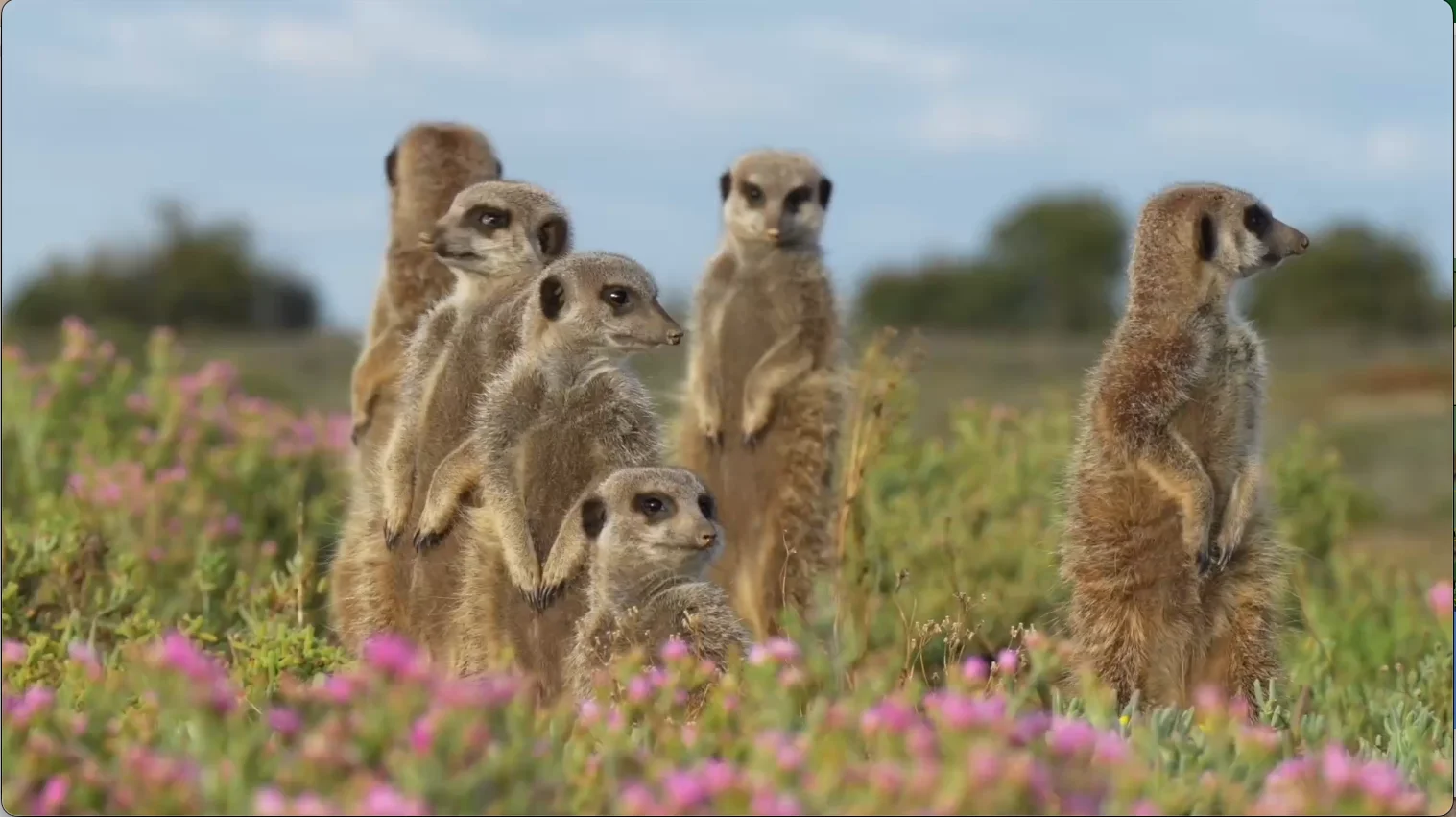
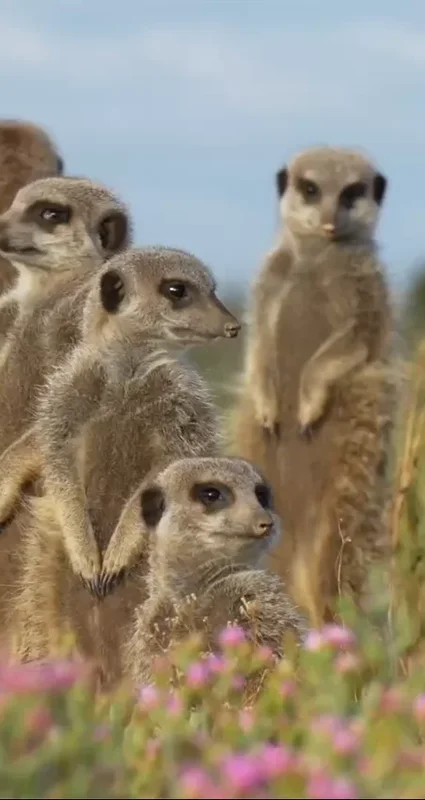
Wild meerkats at sunrise: Habituated wild colonies near Oudtshoorn allow guided sunrise encounters with natural meerkat behaviour in open semi-desert scrubland: intimate, photogenic and entirely unscripted.
Dark skies above ancient fossil country: The Great Karoo sits within the MeerKAT/SKA telescope region and holds one of the world's most significant fossil records, a landscape where deep time is visible above and below.
Route 62 and the wine route: One of the world's longest wine routes, winding through Robertson, Montagu, Barrydale, and Calitzdorp, with mountain passes and preserved historic towns along the way.
Our favourite Karoo safari ideas
All you need to know about the Karoo
Things to do in the Karoo
Explore the Cango Caves: The Heritage Tour moves through grand dripstone chambers; the Adventure Tour requires crawling through narrower passages. No prior caving experience is needed.
Join a wild meerkat sunrise tour: Habituated wild colonies near Oudtshoorn allow close observation as meerkats emerge, sun themselves and begin foraging in the semi-desert scrubland.
Visit a working ostrich farm: Oudtshoorn's working farms trace the story of the Victorian feather trade, the ornate sandstone feather palaces it built and the full life cycle of the world's largest bird.
Track cheetahs on foot at Samara: Rangers with detailed knowledge of individual animals guide guests through the semi-arid terrain of Samara Karoo Reserve for close encounters with these wide-ranging predators. Vehicle-based tracking is also available.
Stargaze in the MeerKAT telescope region: The Great Karoo's high-altitude plateau and near-absent light pollution place it among the Southern Hemisphere's premier stargazing environments, the same qualities that drew the MeerKAT and SKA telescope arrays and the Sutherland observatory here.
Hunt fossils with specialist guides: Ancient sedimentary outcrops across the Great Karoo's rocky slopes contain creatures from 270 million years ago, among them sabre-toothed gorgonopsians and the reptile-like Diictodon.
Drive Route 62 through the mountain passes: The Little Karoo's wine route threads through Robertson, Montagu, Barrydale and Calitzdorp, with the Swartberg Pass and Cogmanskloof cutting through intensely folded sandstone along the way.
What wildlife can I see in the Karoo?
The Big Five across both regions: Sanbona Wildlife Reserve in the Little Karoo and Samara Karoo Reserve in the Great Karoo both have lions, leopards, elephants, buffalo, and rhinos in malaria-free wilderness settings.
Cheetah: Reintroduced to the Karoo after a lengthy absence, cheetahs at Samara Karoo Reserve can be tracked on foot, one of the most distinctive and sought-after wildlife encounters in South Africa.
Habituated wild meerkats: Wild colonies near Oudtshoorn have been slowly accustomed to the presence of guides, allowing natural behaviour observation at close range in the semi-desert scrubland of the Little Karoo.
Arid-adapted plains species: Springbok, gemsbok, mountain zebra, and ostriches roam the open landscapes of both regions, including within Karoo National Park near Beaufort West, where lions and black rhinos are also present.
Secretive and nocturnal species: Aardvark, aardwolf, Cape leopard, caracal and porcupine are all present across the Karoo but rarely seen, reminding us how much this landscape quietly holds.
Exceptional birdlife: The Karoo region supports over 400 species, including the Cape rockjumper, Karoo eremomela, Karoo korhaan, orange-breasted sunbird, blue crane, Cape vulture, Ludwig's bustard, Karoo, red, Sclater's and Barlow’s larks, black-eared sparrowlark, cinnamon-breasted warbler and Namaqua warbler.
Where to stay in the Karoo
Few destinations in South Africa ask travellers to think as carefully about where they base themselves. In the Karoo, the accommodation is often as much a part of the experience as the landscape around it.
In the Little Karoo, Sanbona Wildlife Reserve near Barrydale is one of South Africa's very few malaria-free Big Five reserves, combining wildlife encounters with significant Khoisan rock art and botanically rich succulent fynbos. TheLAB Robertson brings a design-led sensibility to wine-country travel: guests explore the Langeberg foothills by bicycle and on foot, visiting family-owned cellars in a property shaped by the landscape around it. Seven kilometres from Oudtshoorn, De Zeekoe Guest Farm offers working-farm warmth alongside guided wild meerkat encounters and easy access to the Cango Caves and Swartberg Pass. In Montagu, The Montagu Country Hotel occupies one of South Africa's rare surviving art deco hotels, with gardens, a spa, evening piano and chauffeured classic car drives completing the experience.
In the Great Karoo, all three featured properties sit within Samara Karoo Reserve near Graaff-Reinet. Karoo Lodge, a restored historical farmstead, carries the reserve's rewilding journey in its Story Room alongside a wine cellar, library and indigenous garden. The Manor suits exclusive-use groups of up to eight, its 21-metre infinity pool and Karoo antiques creating understated elegance with mountain views from every suite. Plains Camp is the Karoo at its most elemental: entirely off-grid, lit by candlelight and oil lanterns, with open-air bucket showers and wide views across open plains to dolerite-capped mountains.
Explore the Karoo destinations
The Little (Klein) Karoo
The Little Karoo stretches roughly 245 kilometres east to west between the Swartberg Mountains to the north and the Langeberg and Outeniqua ranges to the south. Three rivers, the Gourits, Groot and Kammanassie, flow through the valley, sustaining orchards and vineyards alongside dry fynbos and succulents. The result is a landscape of surprising fertility: mountain shadows falling across vineyards, roadside farm stalls stacked with dried fruit, and towns that time has treated gently.
Route 62, the tar road threading through the valley's towns, has given the Little Karoo a second name and a coherent identity. Oudtshoorn is its capital, the world centre for ostrich farming in the Victorian era, home to the Cango Caves and still the base for wild meerkat encounters today. Montagu, reached through the dramatic folds of Cogmanskloof Pass, is celebrated for its natural hot springs and mountain scenery. Barrydale has become a hub for artisan producers and is the closest Route 62 town to Sanbona Wildlife Reserve. Calitzdorp carries the distinction of being South Africa's port wine capital. Robertson, at the valley's western edge, anchors the wine route in lime-rich, Langeberg-sheltered soils. The Klein Karoo National Arts Festival, held annually in Oudtshoorn, draws visitors from across South Africa.
The Great Karoo
The Great Karoo does not arrive as a single revelation. It accumulates through a long drive north from Cape Town, through flattening terrain and widening skies and the slow disappearance of everything familiar. Covering more than 400,000 square kilometres across the Eastern, Western and Northern Cape, it is South Africa's vast interior heartland: a semi-arid plateau ringed by mountain escarpments that intercept the rain-bearing coastal winds, leaving the interior famously dry.
What this landscape conceals behind its apparent emptiness is one of the most significant geological and palaeontological records on Earth. The Karoo Supergroup, a sedimentary succession roughly ten kilometres thick and divided into the Dwyka, Ecca, Beaufort and Stormberg series, preserves some 270 million years of planetary history. Creatures such as the sabre-toothed gorgonopsians and the reptile-like Diictodon left their remains in these ancient rocks. The same landscape became the canvas for San rock art, the site of some of South Africa's oldest European settlements, and more recently the location of the MeerKAT/SKA telescope array, chosen precisely because the Great Karoo's skies remain among the clearest in the Southern Hemisphere. Samara Karoo Reserve, near Graaff-Reinet and the gateway to Camdeboo National Park, stands as the most compelling expression of what this landscape can become when given the space to recover. Nieu-Bethesda, Beaufort West and Prince Albert each offer their own compelling reasons to stop.
Trusted by thousands of ecstatic travellers
✔️ 5-Star Trustpilot Rating ✔️ Condé Nast Travel Specialist Award Winner
✔️ Accredited by SATSA ✔️ 5,000+ Exceptional Safaris Since 1991
Why choose Africa Geographic to plan your safari?

"A top company to help organise and arrange your perfect safari trip...extremely helpful in tailoring our experience exactly how we wanted it from the initial conversations, to suggested changes, to the organisation whilst on the trip...Will definitely be recommending them and using them again ..."
"Africa Geographic helped craft the perfect 60th Birthday trip for my husband. All the arrangements were made exactly as we asked and when we had a query during the trip they were immediately available with an answer. We'll definitely be using them again for future safaris!"
"Amazing Adventure made possible by Africa Geographic...helped us realize our dream of an African Safari. Our guides...shared their vast knowledge of the wildlife and habitats. Such beautiful things we saw, memories to be shared and cherished. We can't recommend Africa Geographic highly enough."
Wish you were here?
Frequently asked questions
The Karoo is South Africa's semi-arid interior, divided into two distinct regions: the Little Karoo, a narrow Western Cape valley known for Route 62, and the Great Karoo, a plateau of 400,000-plus square kilometres spanning three provinces.
The Little Karoo is a narrow, intimate Western Cape valley, bounded by mountain ranges, threaded by Route 62 and known for the Cango Caves and ostrich, wine and olive farms. The Great Karoo is a vast plateau of 400,000-plus square kilometres, shaped by 270 million years of geology.
Yes. Both the Little Karoo and the Great Karoo are entirely malaria-free. No antimalarial medication is required, making the Karoo well suited to families with children and travellers who prefer to avoid medication.
The Little Karoo can be visited year-round; spring (September–October) brings wildflowers, and summer suits the wine harvest. The Great Karoo is best between May and September, when days are warm (20–25°C) and nights are clear and cool.
Yes. Sanbona Wildlife Reserve in the Little Karoo and Samara Karoo Reserve in the Great Karoo both carry the Big Five. Both are malaria-free. Samara also offers cheetah, aardvark and giraffe alongside its Big Five wildlife.
Route 62 is the tar road that threads through the Little Karoo's towns, connecting Robertson, Montagu, Barrydale, Calitzdorp and Oudtshoorn. The name has become synonymous with the destination and is widely regarded as one of South Africa's most scenic self-drive routes.
The Cango Caves are a system of caverns, tunnels and dripstone formations carved into the Swartberg Mountains near Oudtshoorn. Two guided tours are available: the Heritage Tour through the grandest chambers and the more physical Adventure Tour. No prior experience is required.
Yes. Habituated wild colonies near Oudtshoorn allow guided sunrise observation of natural meerkat behaviour in semi-desert scrubland. These are not captive animals; the colonies have been gradually accustomed to guides. Tours are weather-dependent and begin at sunrise.
Samara is a 27,000-hectare rewilded reserve near Graaff-Reinet in the Eastern Cape. Restored from overgrazed farmland, it now carries the Big Five, cheetah, aardvark and giraffe across five vegetation types, and forms the nucleus of a conservation corridor linking Camdeboo National Park and Mountain Zebra National Park.
Yes, at Samara Karoo Reserve. Rangers with knowledge of individual animals guide guests through the semi-arid terrain for close encounters with cheetah on foot. Vehicle-based cheetah drives are also available within the reserve.
The Great Karoo's high-altitude plateau, low rainfall and near-absent light pollution produce some of the clearest night skies in the Southern Hemisphere. The MeerKAT and SKA telescope arrays are located here for precisely these conditions, and the town of Sutherland hosts a major astronomical observatory.
The Little Karoo is approximately three to four hours by self-drive via the N1 and R60, joining Route 62 near Robertson. The Great Karoo is roughly four hours to Beaufort West or Prince Albert. George Airport is approximately one hour from Oudtshoorn.
Both combinations work well. Oudtshoorn is approximately one hour from George on the Garden Route via the Outeniqua Pass. Robertson and Montagu at the western end of Route 62 connect naturally with the Cape Winelands, and many travellers combine all three regions in a single trip.
Karoo accommodation typically costs from R850 per person per night on a bed-and-breakfast basis at a good town hotel to R9,500 at Sanbona and R16,000 at Samara, depending on comfort level, time of year, and activities.
Click here to schedule a no-obligation call with one of our Safari Experts or fill in our 2-minute form with your questions. Our team of experts are here to help! Whether you’re curious about the best time to travel, want to hear first-hand about an experience or need help planning your safari.
Explore more African destinations
Start planning your dream safari
Our travel experts will craft a no-obligation itinerary just for you. We have crafted over 5,000 safaris since 1991. Your personal details are protected; we only use this information to contact you.
Why book your safari with us?

Deep Experience & Knowledge
Handcrafted experiential safaris since 1991.
Travel in Africa is about knowing when and where to go, and with whom. A few weeks too early/late or a few kilometres off course, and you could miss the greatest show on Earth. And wouldn’t that be a pity?

Trust & Safety

Make A Difference
We donate a portion of the revenue from every safari sold to carefully selected conservation projects that make a significant difference at ground level.
YOUR safari choice does make a difference - thank you!