

Tailor-made safaris. Since 1991



KwaZulu-Natal: Safaris, Mountains & Indian Ocean
KwaZulu-Natal at a glance:
Location: Eastern South Africa, stretching from the Drakensberg escarpment to the Indian Ocean | Main gateway: King Shaka International Airport, Durban |
Regions: Zululand, Drakensberg, Battlefields, Midlands Meander, South Coast, Durban | Best time to visit: May–Sep for wildlife; Nov–Mar for turtles; May–Jul for sardine run |
Conservation status: Includes Africa's oldest proclaimed reserve and South Africa's first UNESCO World Heritage Site | Malaria risk: Varies significantly by region; moderate to low in most areas. Consult a doctor before travel |
Recommended stay: 7–14 days to experience more than one region | Currency: South African Rand (ZAR) |
Why visit KwaZulu-Natal?
KwaZulu-Natal is the only province in South Africa where Big Five wildlife, a UNESCO mountain range, a World Heritage coastline and one of Africa's great living cultures converge within a single, coherent journey. From the rhino-dense reserves of Zululand in the north to the Drakensberg's 200-kilometre basalt escarpment along the Lesotho border, and from the battlefield grasslands of Isandlwana to the subtropical shores of the Hibiscus Coast, the province rewards travellers who want depth alongside drama.
The Zulu nation the province is named after is not background history. It is present in the landscape, the reserves and the communities that make much of Zululand function. At Babanango, three community trusts own three-quarters of the reserve. At Tembe Elephant Park, the Tembe Tribal Authority declared the park and local people run it. At Thanda Safari, most of the team are Zulu. Cultural depth here is structural, not decorative.
On the coast, the province offers a different scale entirely. iSimangaliso Wetland Park spans approximately 332,000 hectares across eight interlinking ecosystems, from Africa's largest estuarine system to the southernmost coral reefs on Earth. Each winter, the sardine run transforms the South Coast into one of the ocean's great annual spectacles, drawing sharks, dolphins and seabirds into a feeding spectacle visible from the shore.
Few destinations in Africa ask so little compromise. KwaZulu-Natal does not ask a traveller to choose between wilderness and culture, mountain and ocean, or adventure and contemplation. It simply offers all of it.
5 Reasons We Love KwaZulu-Natal
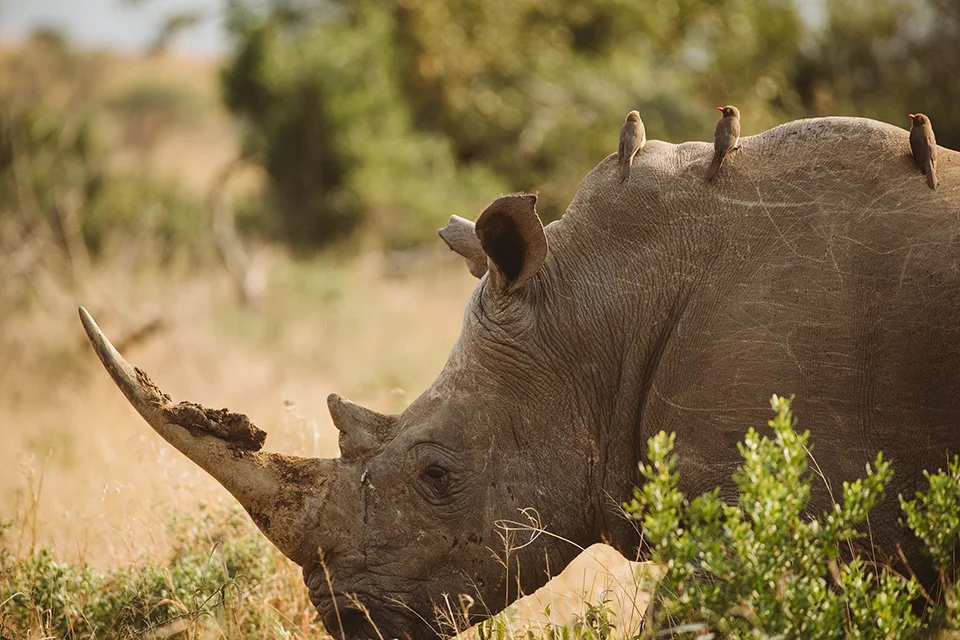
Rhino stronghold: Hluhluwe-iMfolozi Park, birthplace of Operation Rhino, holds one of the world's densest concentrations of both black and white rhino, a conservation legacy that changed the species' story across an entire continent.
Two UNESCO World Heritage Sites: The Drakensberg's ancient basalt escarpment and iSimangaliso Wetland Park's eight interlinking ecosystems each carry World Heritage status, together defining the province's two most extraordinary natural extremes.
Seventy years of layered history: Eighty-two battlefield sites spanning Zulu, Voortrekker and British conflicts await across central and northern KwaZulu-Natal, guided by historians and descendants who bring the past to life.
Birdlife among Africa's best: iSimangaliso records 500+ bird species, Manyoni 450+ and Ndumo around 430, placing KwaZulu-Natal among the continent's premier birding provinces, with regional specials found nowhere else in South Africa.
Bush, beach and Zulu heritage in one journey: Wildlife reserves, Indian Ocean reefs, the sardine run and one of Africa's great living cultures sit within hours of each other, a combination found nowhere else in South Africa.
Our favourite KwaZulu-Natal safari ideas
All you need to know about KwaZulu-Natal
Things to do in KwaZulu-Natal
Track rhino on foot in Zululand: Join conservation teams at Phinda or Manyoni to monitor black rhino on foot, an encounter defined by patience and silence in the thornveld of northern KwaZulu-Natal.
Walk into iMfolozi's roadless wilderness: Spend days on foot in the unfenced iMfolozi interior, sleeping at trail camps beside the Black and White iMfolozi rivers under open Zululand skies.
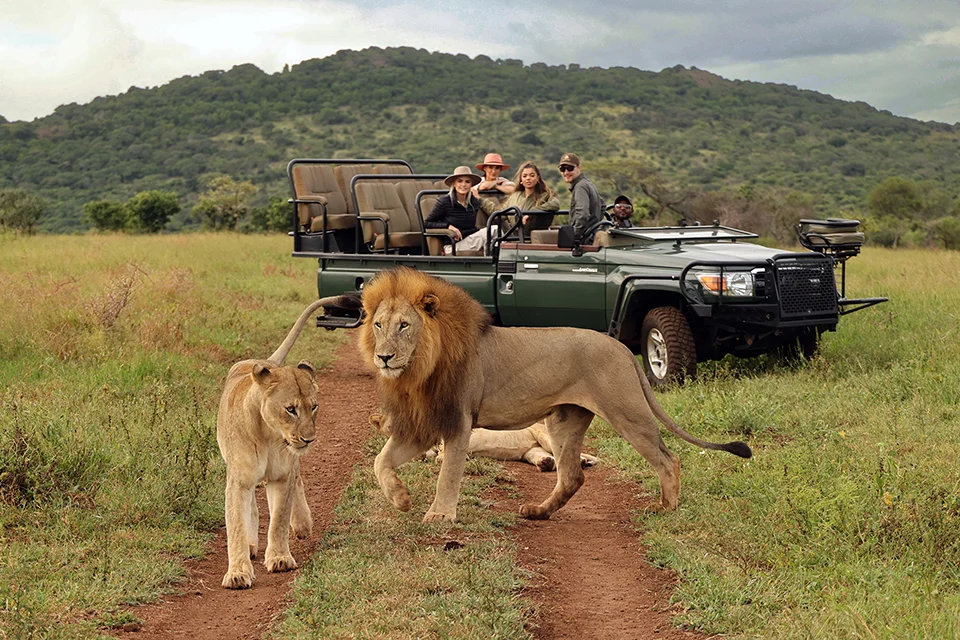
Search for the Big 5 and more on game drives led by experienced guides who know the Zululand bushveld like the back of their hand.
Stand at Isandlwana and Rorke's Drift: Walk the battlefields where 19th-century history turned on its axis, and where specialist guides and descendants of those who fought still bring the past to life.
Dive the southernmost coral reefs on Earth: Descend to Sodwana Bay, where more than 1,200 fish species and the ancient coelacanth share reefs that extend to the very edge of the tropical Indo-Pacific.
Watch the sardine run from the South Coast shore: From May to July, vast sardine shoals move north along the coast, drawing sharks, dolphins and seabirds into a feeding spectacle visible from boats and the beach alike.
What wildlife can I see in KwaZulu-Natal?
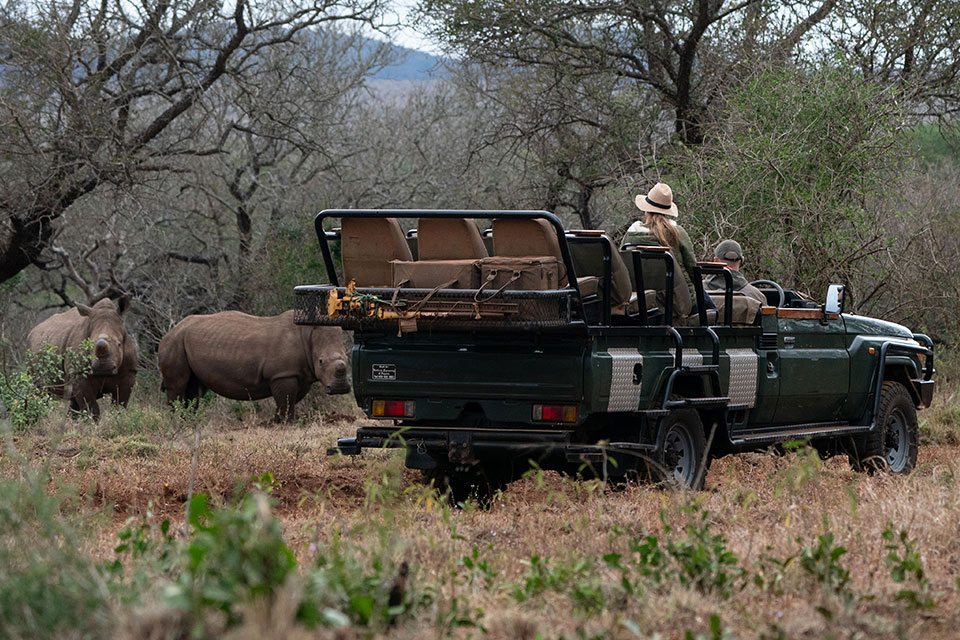
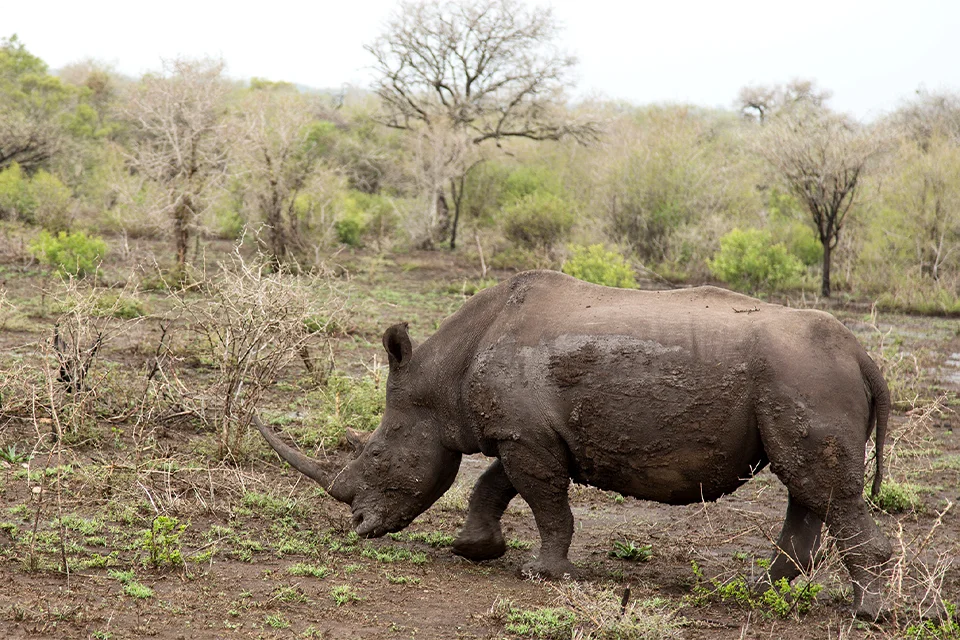
Rhino (black and white): Hluhluwe-iMfolozi holds one of the world's densest rhino concentrations; iSimangaliso's uMkhuze section holds the world's highest black rhino density, a direct legacy of decades of active conservation.
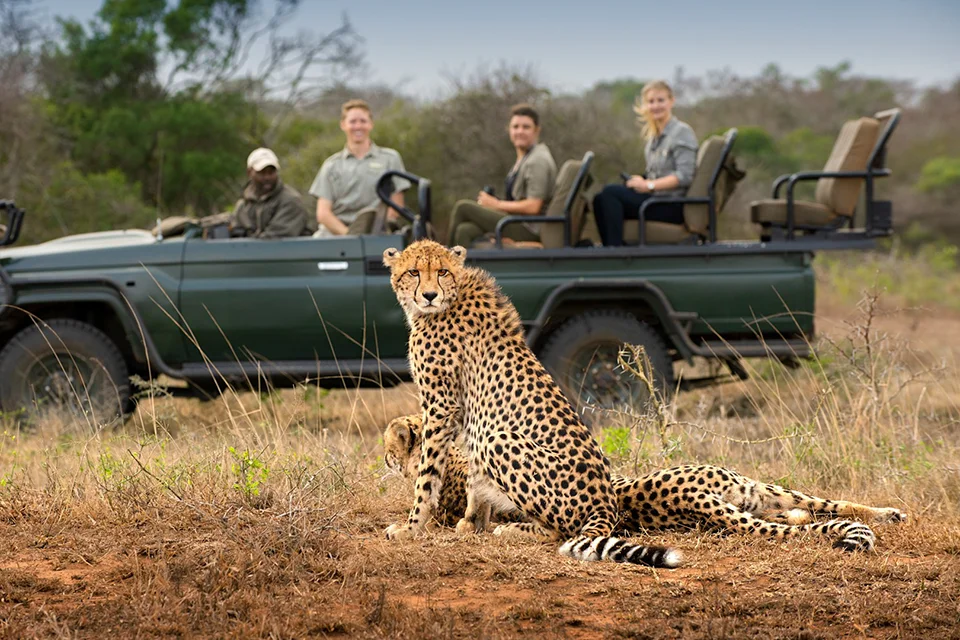
The Big Five and beyond: Lion, leopard, elephant, buffalo and rhino roam seven of Zululand's eight reserves, alongside African wild dog, cheetah and pangolin at Phinda and Manyoni, and Babanango's rewilded Big Five.
Marine megafauna: Loggerhead and leatherback turtles nest on the iSimangaliso coast each summer; humpback and southern right whales pass offshore from June to November; the sardine run brings sharks, dolphins and seabirds each winter.
Rare and endangered species: Phinda's sand forest shelters the suni and red duiker, two miniature antelope seldom seen elsewhere; critically endangered black rhino and oribi roam Babanango's rewilded grasslands and granite outcrops.
About 680 bird species can be found, including pink-throated twinspot, green barbet, Cape parrot, Rudd’s lark, Eastern bronze-naped pigeon, Woodward’s batis, Livingstone’s turaco, Neergaard’s sunbird, southern banded snake-eagle, spotted ground thrush, blue swallow, Drakensberg rockjumper, Drakensberg siskin, Gurney’s sugarbird, lemon-breasted canary, Pel's fishing-owl, palmnut vulture, and African broadbill.
Where to stay in KwaZulu-Natal?
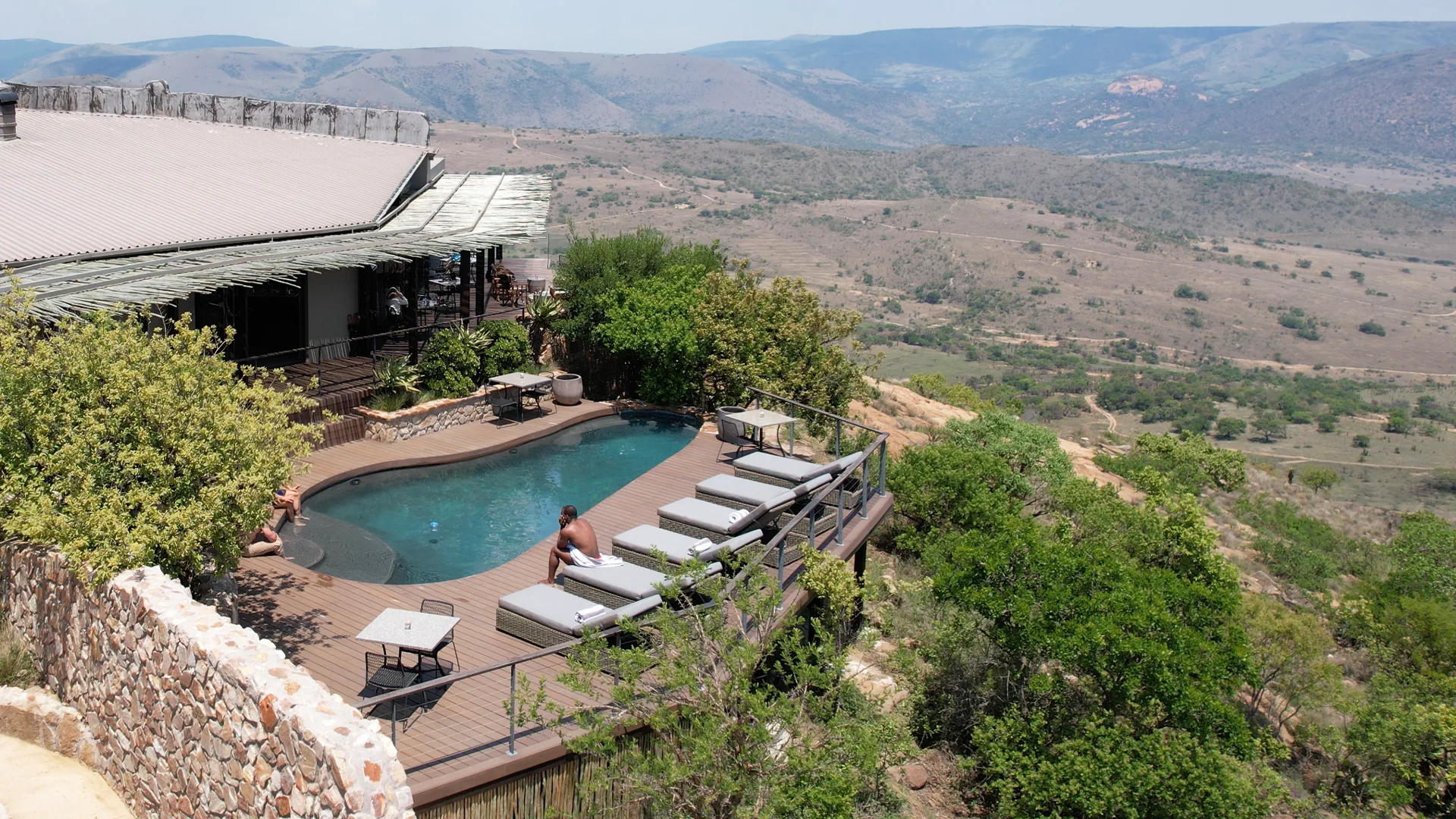
Accommodation across KwaZulu-Natal spans every style of African travel, from community-run tented camps deep in Tembe's sand forest to cliff-edge suites overlooking Babanango's rewilded valleys, colonial-era hotels on Durban's lighthouse promontory and farmhouse retreats in the Midlands.
The range of options across the region is vast, and we showcase many of them on each regional page linked below.
Explore KwaZulu-Natal's regions
Zululand: Wildlife, wetlands and wild coast
Zululand is a belt of eight distinct protected areas in northern KwaZulu-Natal where ancient state parks, pioneering private reserves and a UNESCO World Heritage coastline sit within a few hours of each other.
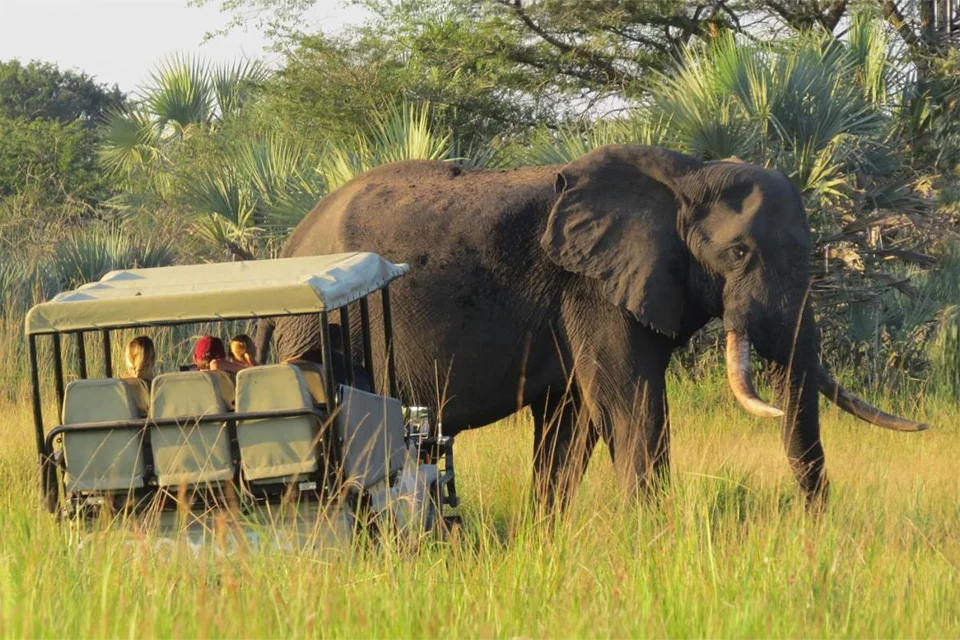
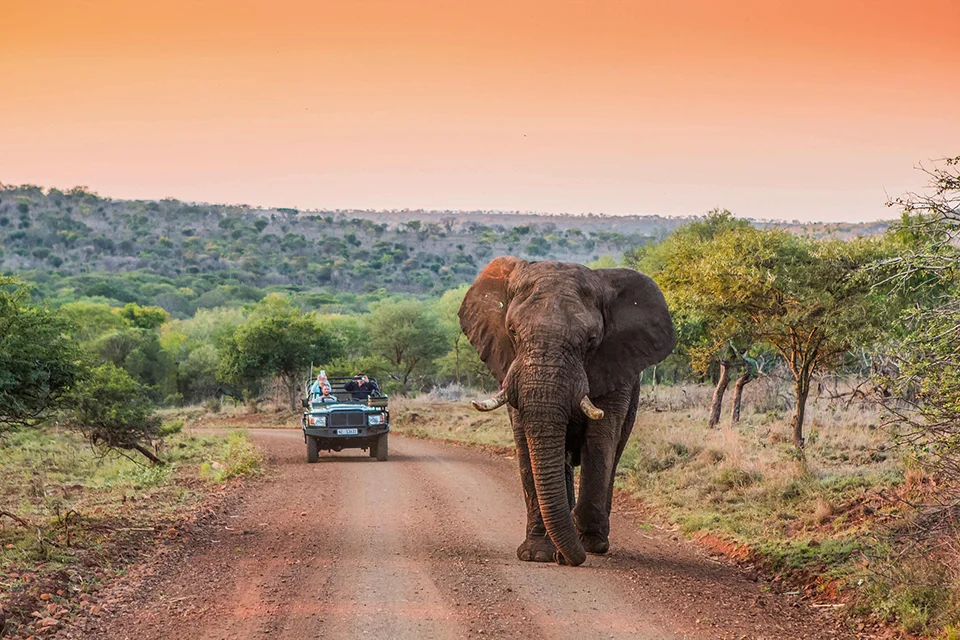
Proclaimed in 1895 on land that once served as the royal hunting grounds of Zulu kings, Hluhluwe-iMfolozi Park is where Operation Rhino saved the white rhino from near-extinction in the 1950s and 1960s, a legacy that has since repopulated reserves across Africa. Alongside it, iSimangaliso Wetland Park spans 332,000 hectares across eight ecosystems, from Lake St Lucia's estuary to Sodwana Bay's coral reefs. Its uMkhuze section holds the world's highest density of black rhino, and its coastline and wetlands host 500+ bird species. Private reserves including Phinda, Manyoni, Thanda and Babanango each add a distinct character, from Phinda's seven ecosystems and close-up cheetah encounters to Babanango's ambitious rewilding story, where over 4,000 large mammals have been reintroduced since 2017. Further north, Tembe Elephant Park protects some of Africa's largest-tusked elephants in rare sand forest on the Mozambique border, while Ndumo Game Reserve, a Ramsar Wetland of International Importance with around 430 bird species, offers something rarer still: the birding, the fever trees and the quiet that only the most remote corners of South Africa still provide.
The Drakensberg: South Africa's mountain wall
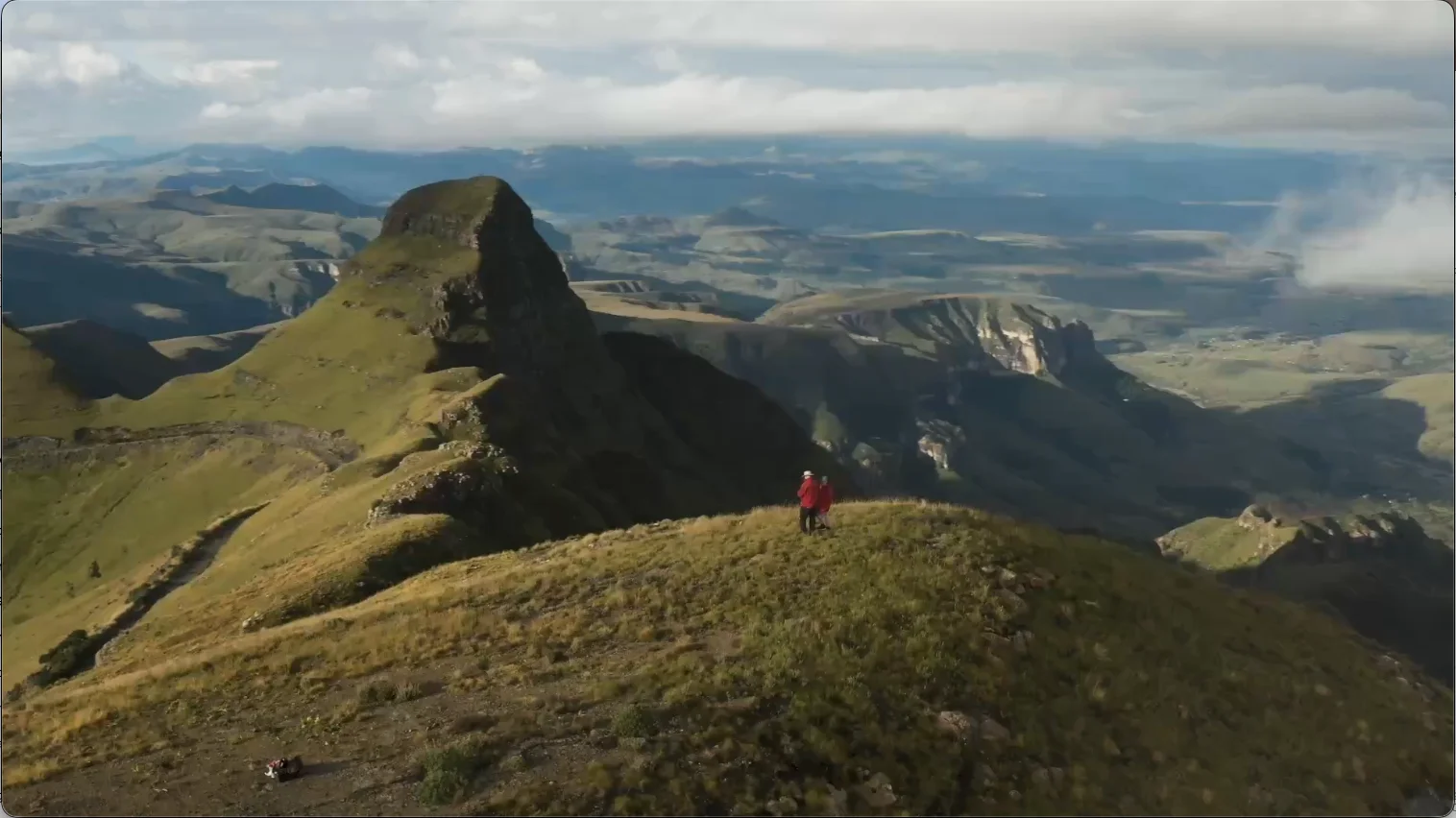
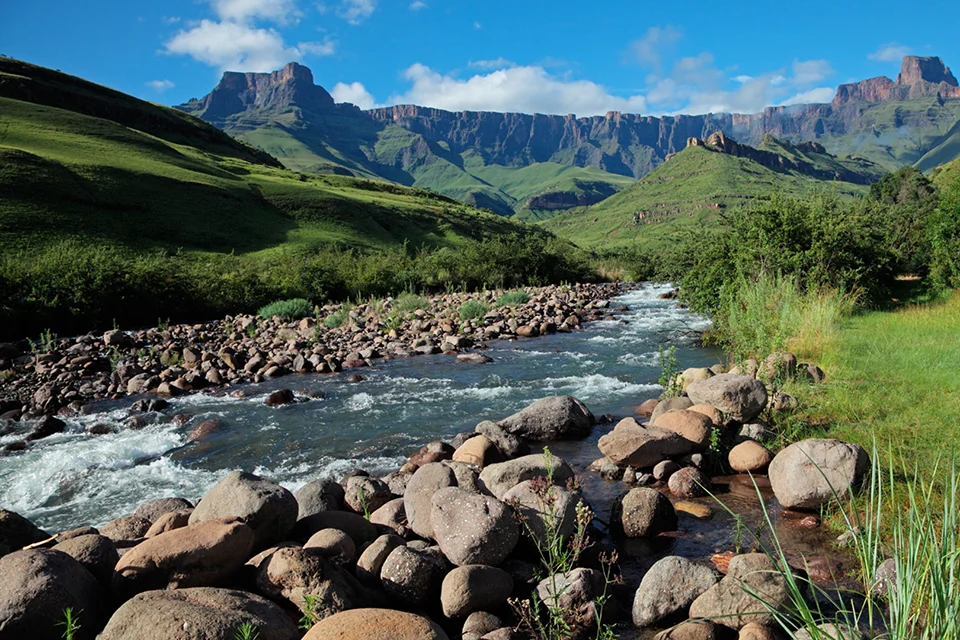
Rising as a 200-kilometre wall of basalt along the Lesotho border, the Drakensberg is one of the continent's great mountain landscapes. Declared the uKhahlamba Drakensberg Park UNESCO World Heritage Site in 2000, it is also one of its richest repositories of human history: caves throughout the range shelter more than 25,000 individual San rock paintings, some more than 2,000 years old, among the highest concentrations on Earth.
The escarpment divides into three distinct regions. In the north, Royal Natal National Park holds the range's most celebrated scenery, centred on the Amphitheatre, a 5-kilometre curve of encircling rock over which the Tugela River plunges approximately 500 metres to form the Tugela Falls. Trails range from gentle valley walks to the strenuous full-day ascent of Mont-aux-Sources above the Amphitheatre. The central Drakensberg opens across Cathedral Peak, Champagne Valley and the Giant's Castle area, with multi-day trekking routes, trout fishing and birdwatching extending deep into the range. In the south, the Sani Pass, a 9-kilometre switchback climb gaining 1,332 metres to the Lesotho border at 2,876 metres above sea level, is one of southern Africa's most exhilarating 4x4 routes. The Drakensberg's 299 recorded bird species include bearded and Cape vultures, while around 48 mammal species, among them serval, caracal and eland, roam its grasslands and rocky slopes.
The KwaZulu-Natal Battlefields
Few regions compress as much history into as compact a footprint as central and northern KwaZulu-Natal. The largest concentration of battlefields in the southern hemisphere spans 82 sites, including museums, forts, memorials and open plains, tracing roughly 70 years of 19th-century conflict between Zulu, Voortrekker and British forces.
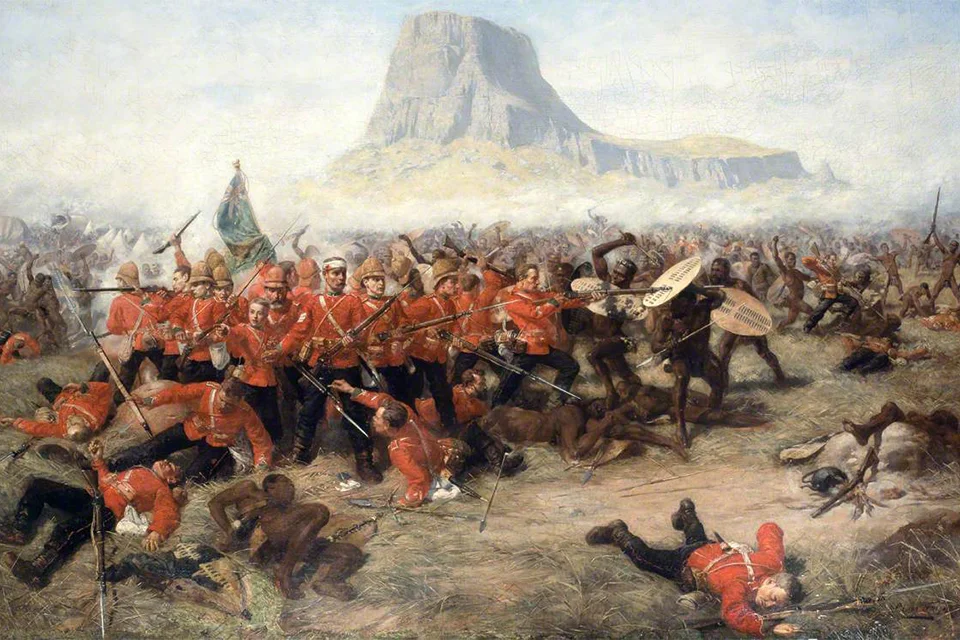
The Anglo-Zulu War of 1879 produced the region's most visited sites. At Isandlwana on 22 January 1879, a Zulu army of approximately 20,000 warriors overran a British camp, killing 1,357 Imperial troops, colonial volunteers and native levies, one of the most devastating defeats in British colonial military history. The same evening, around 4,000 Zulu warriors attacked the British garrison at Rorke's Drift, where roughly 100 soldiers held the mission station for eleven hours, earning eleven Victoria Crosses, the most ever awarded for a single action.
The Voortrekker-Zulu War of 1838 is commemorated at Blood River and Ncome by two separate museums facing each other across the river, each telling the battle from the perspective of the community whose history it carries, a deliberately dual approach that repays a visit to both. The Anglo-Boer War left its own marks, most famously the 118-day Siege of Ladysmith. Many sites are guided by specialist historians and descendants of those who fought, whose first-hand knowledge of these landscapes, the people who shaped them and what was at stake on each hillside gives the experience a weight that no museum exhibit alone can replicate.
The Midlands Meander
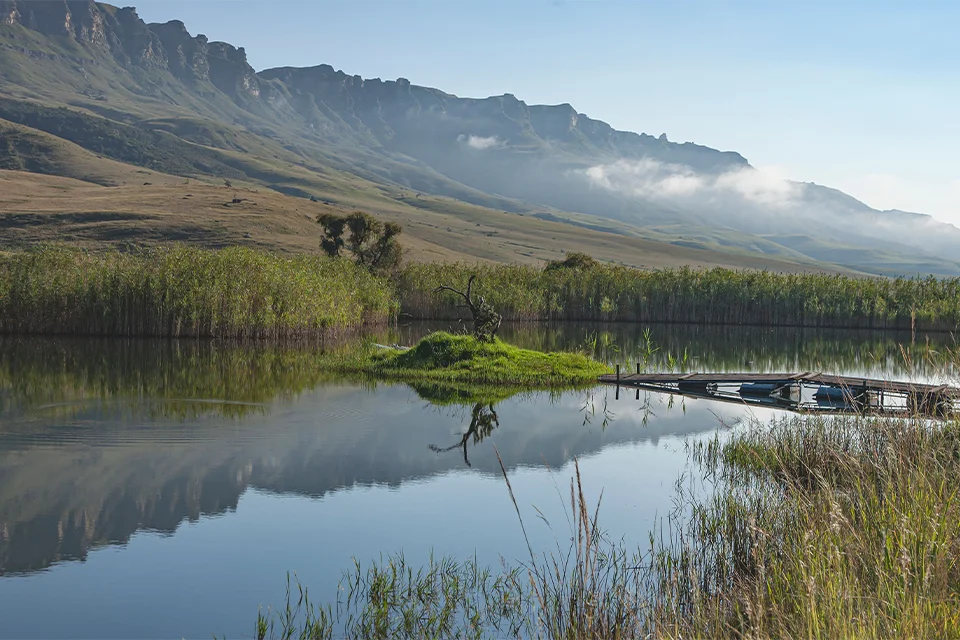
The Midlands Meander unrolls across the rolling hills between Pietermaritzburg and the Drakensberg foothills, where mist drifts over green pastures and rural roads wind past potteries, trout streams and country farms. Since 1985, when a handful of potters and weavers opened their studios to visitors, this network of five scenic routes has grown into one of South Africa's most celebrated arts and crafts trails, with more than 150 galleries, farms, eateries and places to stay spread across roughly 80 kilometres of countryside.
The Meander is defined by its unhurried pace. Travellers move between working studios, including Ardmore Ceramics, where potters, weavers and leatherworkers produce goods on-site, and farm stalls offering homemade preserves, fresh bread and artisanal cheese. The farm-to-fork dining here is rooted in what grows on the surrounding estates: trout sourced from the stream beside the dining room, honey from the hives on the estate. The region is also outstanding for birding, with around 400 recorded species across its grasslands, wetlands and indigenous mistbelt forest, including the Critically Endangered blue swallow, all three South African crane species at the Karkloof Conservation Centre, and the Cape parrot, one of Africa's rarest. The Karkloof Canopy Tour threads through indigenous forest on twelve platforms and ten slides past a 15-metre waterfall, while the Nelson Mandela Capture Site near Howick adds a layer of national heritage to an already rich itinerary.
South Coast: Beaches, reefs and the sardine run
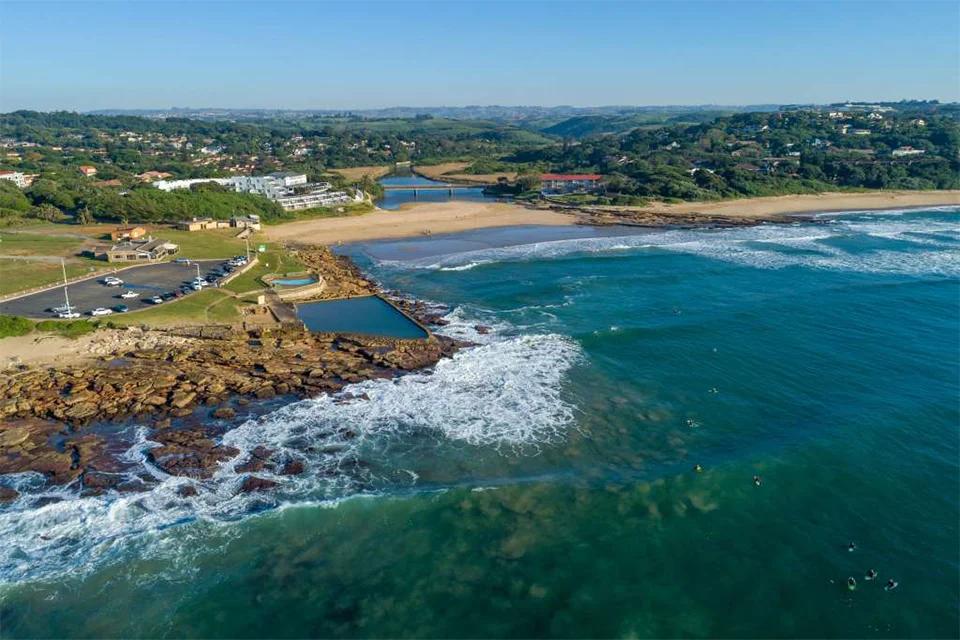
The KwaZulu-Natal South Coast stretches from Durban's outskirts south to Port Edward, where the province meets the Eastern Cape's Wild Coast. Subtropical warmth, around 320 sunny days a year and average temperatures between 16°C and 23°C, gives this coastline its easy rhythm, and 58 named beaches, eight of which hold Blue Flag status, the highest number in KwaZulu-Natal, line an Indian Ocean shore that ranges from family lagoons to serious surf breaks.
Offshore, Aliwal Shoal and Protea Banks rank among the world's most respected shark-diving destinations, drawing divers for encounters with bull, tiger, hammerhead and blacktip sharks in warm, clear water. Each year from May to July, the sardine run transforms this coast: vast shoals move northward, triggering a chain reaction of predators including sharks, dolphins and billfish, alongside diving seabirds, in a feeding spectacle that ranks among the largest biomass migrations on the planet and is visible from boats and the beach alike.
Inland, Oribi Gorge runs 27 kilometres through rock formations dated at 365 million years old, reaching 400 metres deep. Adventure travellers come for the world's highest gorge swing from the top of Lehr's Falls, the world's highest natural commercial abseil, and a Cape Vulture colony visible from a dedicated viewing hide. For those who prefer their drama on a fairway, the South Coast claims eleven golf courses, including the top-30-ranked San Lameer in Southbroom.
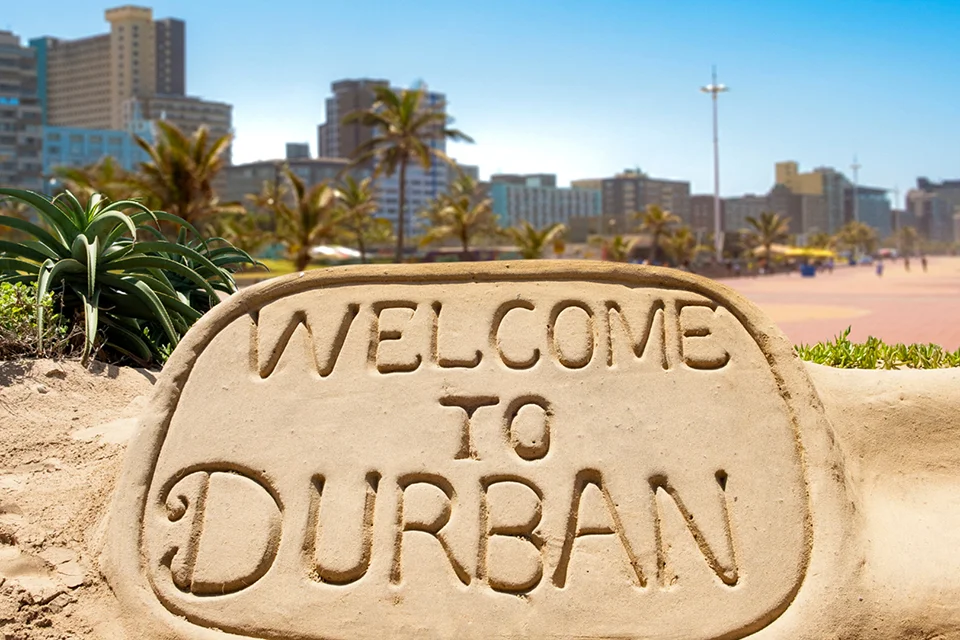
Durban: Gateway to KwaZulu-Natal
Durban is where South Africa's Zulu heartland meets the largest population of Indian descendants outside India, a cultural fusion that plays out in the city's markets, food and street life in ways that reward a stay of two nights or more. Six kilometres of golden beachfront make up the famous Golden Mile, where warm Indian Ocean water laps year-round and rickshaw pullers in elaborate beaded Zulu headdresses still work the promenade. Inland, Victoria Street Market's fragrant spice towers and bunny chow, a hollowed-out loaf filled with curry that emerged from the city's Indian community, offer an introduction to Durban's layered identity.
The KwaMuhle Museum traces the city's apartheid history. The Gandhi Settlement at Inanda marks years that shaped a future global figure. Glenwood, an up-and-coming district of street art and contemporary galleries, offers a view of the city's creative present. Beyond its own considerable character, Durban earns its place on any KwaZulu-Natal itinerary as the province's principal gateway. The Drakensberg lies roughly three hours west, the Battlefields three hours north, the Midlands about an hour inland, and Hluhluwe-iMfolozi Park around three hours north by road. King Shaka International Airport, approximately 20 minutes north of the city centre, handles international and domestic arrivals. Most international travellers connect through OR Tambo International Airport in Johannesburg before flying on to Durban. Pietermaritzburg is the provincial capital, though most travellers to the province begin and end their journey in Durban.
Trusted by thousands of ecstatic travellers
✔️ 5-Star Trustpilot Rating ✔️ Condé Nast Travel Specialist Award Winner
✔️ Accredited by SATSA ✔️ 5,000+ Exceptional Safaris Since 1991
Why choose Africa Geographic to plan your safari?

"Africa Geographic Travel organised a great trip for three experienced photographers...We had some specific requests including nights at Zimanga in KZN...and then recommended Rhino River Lodge in Manyoni, a reserve we had not previously considered. Everything was very well-planned...Very happy to recommend AG..."
"As a bucket list trip this did not disappoint. Africa Geographic staff planned an amazing South African adventure to help me see as many small mammal species as were willing to show themselves during my visit...Every step worked without a hitch, much to my amazement!...A trip I will never forget, with a company I would highly recommend."
"I wanted to celebrate an important birthday and asked AG to come up with an itinerary... They came up with a superb itinerary that meant we were looked after completely in three very different destinations with transfers, tours and accommodation. It was outstanding. They are worthy of trust and will not let you down."
Wish you were here?
Frequently asked questions
KwaZulu-Natal covers six distinct regions: Zululand in the north, the Drakensberg along the Lesotho border, the Battlefields across the central and northern interior, the Midlands Meander, the South Coast stretching to the Eastern Cape, and Durban as the province's main gateway city.
May to September is best for wildlife viewing across Zululand. November to March is peak season for turtle nesting on the iSimangaliso coast. April to May and September to October are the most comfortable months in the Drakensberg, and the sardine run runs from May to July.
Malaria risk varies significantly by area. Most areas, including the Drakensberg, Midlands, South Coast, Durban, Babanango, Phinda and Thanda, carry low to negligible risk. Tembe Elephant Park and Ndumo Game Reserve are medium-to-high risk year-round. Always consult a doctor before travel.
Yes. Seven of Zululand's eight reserves are Big Five destinations, with Hluhluwe-iMfolozi holding one of the world's densest rhino populations and Babanango completing its Big Five in June 2023. The exception is Ndumo, which is primarily a birding and wetland reserve.
Zululand is more compact and significantly less crowded than Kruger, and its reserves hold two of the world's densest rhino populations. It also offers a UNESCO World Heritage coastline, community-owned reserves and Indian Ocean reef diving, none of which Kruger can provide.
Operation Rhino was a conservation programme launched at Hluhluwe-iMfolozi Park in the 1950s and 1960s that rescued white rhinos from the brink of extinction and redistributed animals to repopulate reserves across Africa. Its legacy directly shapes what travellers see in Zululand today.
South Africa's first UNESCO World Heritage Site, inscribed in December 1999, iSimangaliso spans approximately 332,000 hectares across eight interlinking ecosystems, from Lake St Lucia's estuary to the southernmost coral reefs on Earth at Sodwana Bay, alongside 500+ bird species and turtle nesting beaches.
The sardine run occurs from May to July, when vast sardine shoals move north along the KwaZulu-Natal South Coast, triggering a chain reaction of sharks, dolphins, billfish and seabirds. It is one of the ocean's great annual migrations and is visible from the shoreline.
Yes, and it is one of the province's most compelling itinerary options. Phinda Private Game Reserve sits close enough to the Indian Ocean to combine safari with reef diving, and iSimangaliso's turtle nesting beaches lie within easy reach of Zululand's inland reserves.
The Drakensberg is known for dramatic mountain scenery including the Amphitheatre and Tugela Falls, the Sani Pass into Lesotho, world-class hiking, and more than 25,000 individual San rock paintings preserved in its caves, among the highest concentrations of such art on Earth.
On 22 January 1879, approximately 20,000 Zulu warriors overran the British camp at Isandlwana, killing 1,357 troops in one of the worst defeats in British colonial history. That same evening, roughly 100 soldiers held Rorke's Drift for eleven hours, earning eleven Victoria Crosses.
The Midlands Meander is a network of five scenic routes linking more than 150 arts and crafts studios, farms, restaurants and places to stay across roughly 80 kilometres of KwaZulu-Natal countryside between Pietermaritzburg and the Drakensberg foothills. It was founded in 1985 by local potters and weavers.
Most travellers arrive at King Shaka International Airport in Durban, with many connecting through OR Tambo International Airport in Johannesburg. Most Zululand reserves are around three hours from Durban by road; Richards Bay Airport is roughly one hour from Hluhluwe-iMfolozi Park.
Our safaris typically cost from US$700 per person, per night, depending on the accommodation comfort level, time of year and activities. This price usually includes accommodation, all meals, game drives, experienced guides, airport transfers, and 24/7 support from our team.
Click here to schedule a no-obligation call with one of our Safari Experts or fill in our 2-minute form with your questions. Our team of experts are here to help! Whether you’re curious about the best time to travel, want to hear first-hand about an experience or need help planning your safari.
Explore more African destinations
Start planning your dream safari
Our travel experts will craft a no-obligation itinerary just for you. We have crafted over 5,000 safaris since 1991. Your personal details are protected; we only use this information to contact you.
Why book your safari with us?

Deep Experience & Knowledge
Handcrafted experiential safaris since 1991.
Travel in Africa is about knowing when and where to go, and with whom. A few weeks too early/late or a few kilometres off course, and you could miss the greatest show on Earth. And wouldn’t that be a pity?

Trust & Safety

Make A Difference
We donate a portion of the revenue from every safari sold to carefully selected conservation projects that make a significant difference at ground level.
YOUR safari choice does make a difference - thank you!