

Tailor-made safaris. Since 1991


Cape Winelands: Where wine, food and history converge
Cape Winelands at a glance:
Location: Western Cape, South Africa, a short drive from Cape Town | Best time to visit: Year-round; summer (Nov–Mar) for outdoor dining; autumn (Apr–May) for harvest colour |
Distance from Cape Town: 20 minutes (Constantia) to 1 hour (Franschhoek) by road | Climate: Mediterranean: warm, dry summers; mild, wet winters |
Nearest airport: Cape Town International Airport (CPT) | Minimum recommended stay: 2–3 nights |
Currency: South African Rand (ZAR) | Malaria risk: None |
Why visit the Cape Winelands?
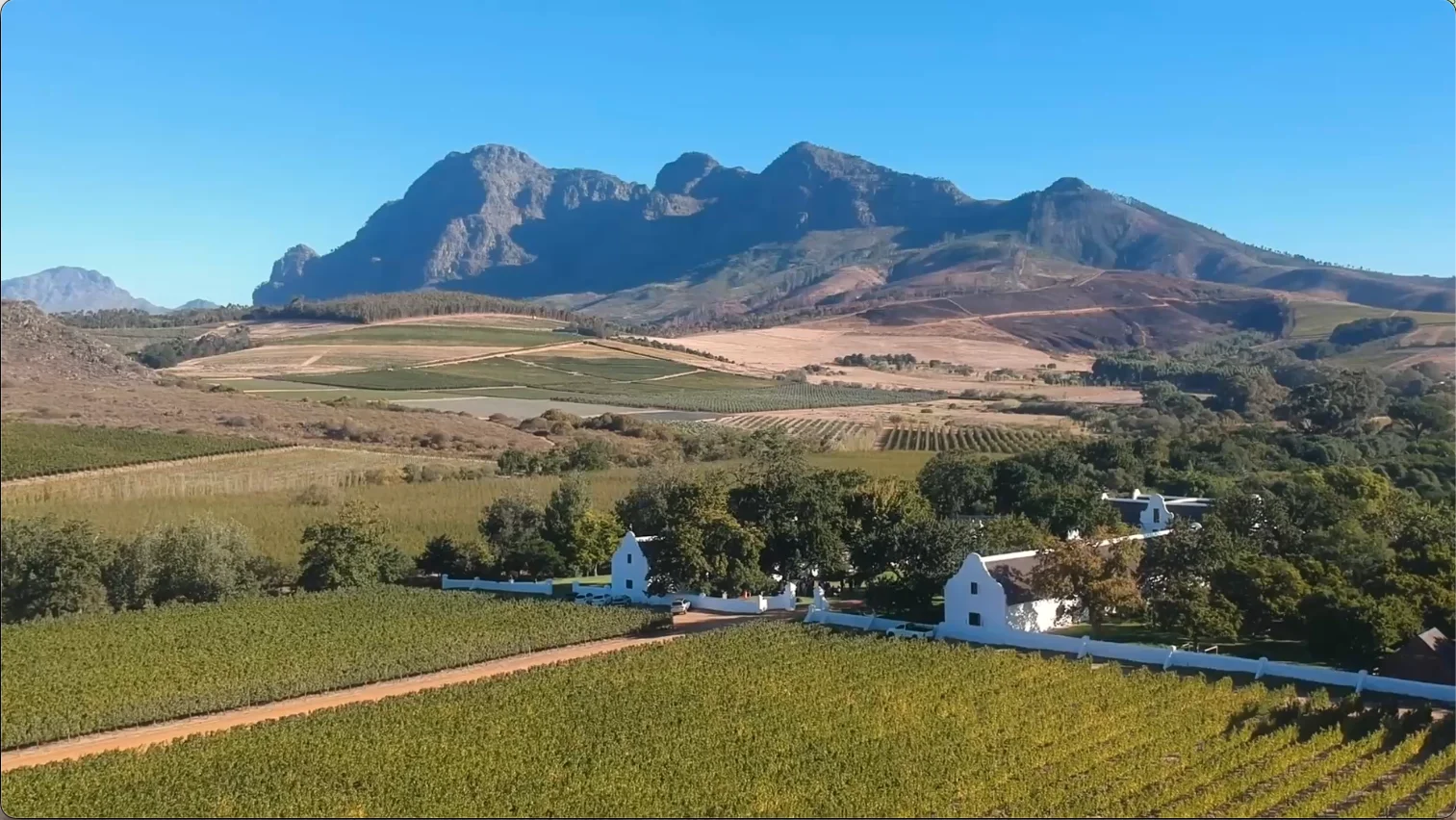
The Cape Winelands are a short drive from Cape Town - as little as 20 minutes to the nearest wine farms - where the city gives way to mountain passes, vineyard valleys, and the kind of afternoon that stretches unhurried into evening. Famous wine-producing areas include Constantia, Stellenbosch, Franschhoek, Paarl and Robertson - each distinct in character, landscape and the wines they produce.
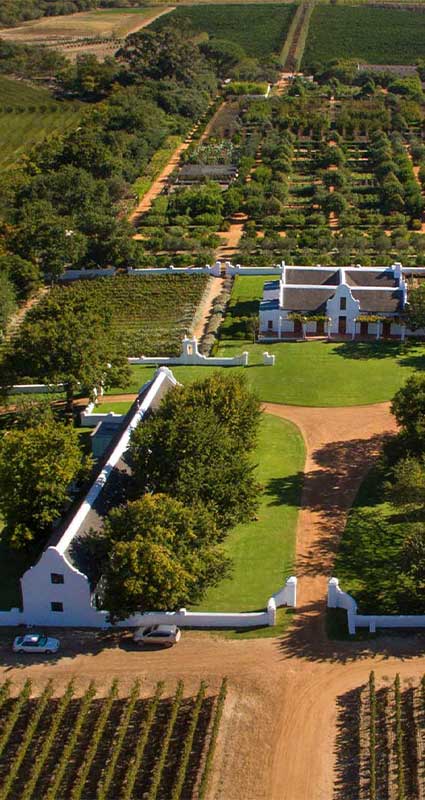
Many of the vineyards here were planted hundreds of years ago. The historic estates carry that weight lightly. Their Cape Dutch, Georgian and Victorian architecture wears well against mountain backdrops, and their restaurants, cellars and farm-to-table kitchens attract visitors who come initially for the wine and invariably stay for much more.
Beyond the glass, the Cape Winelands offer locally made cheeses, chocolates, charcuterie and olives. Guides run themed tours covering food and wine pairings, estate histories and cellar techniques. In Stellenbosch, oak-lined streets and galleries reward an afternoon on foot. In Franschhoek, some of South Africa's most celebrated restaurants draw diners from across the world. Along the Constantia Wine Route, the country's oldest, which runs through the cool southern suburbs of Cape Town, nine farms offer tastings within reach of the city. And at the Hemel-en-Aarde Valley (heaven and earth valley) near Hermanus, the vineyards sit close enough to the coast that a southern right whale may be visible from the hillside as you sip.
The Cape Winelands share the same Mediterranean climate as Cape Town and pair naturally with a stay in Cape Town. A night or two in the Winelands, rather than treating it as a day trip, transforms the experience entirely: mornings start among vines, and evenings carry little urgency.
5 reasons we love the Cape Winelands
Centuries of winemaking: Many Cape vineyards were planted hundreds of years ago, producing some of the world's finest Sauvignon Blanc, Chenin Blanc, Pinotage and Cabernet Sauvignon on historic Cape Dutch estates.
Franschhoek's food scene: Established by French Huguenots in 1688, Franschhoek ("French Corner") is South Africa's culinary capital, home to a remarkable concentration of award-winning restaurants and boutique winemakers.
Harvest and festival culture: From the Stellenbosch Wine Festival and Franschhoek Summer Wines to harvest celebrations with grape stomping and barrel tastings, the Cape Winelands' calendar rewards visitors in every season.
Diversity of landscapes and towns: From Stellenbosch's oak-lined university streets to Robertson's jacaranda-filled Victorian avenues and the cool Hemel en Aarde Valley near the coast, each town offers a distinct character.
Year-round appeal: Summer brings open-air tastings and long lunches; autumn turns the vines gold and red; winter offers cellar fires and bolder reds; spring arrives fresh with wildflowers and lighter whites.
Our favourite Cape Winelands safari ideas
All you need to know about the Cape Winelands
About the Cape Winelands
The Cape Winelands cover a broad swathe of the Western Cape, stretching eastward from Cape Town's southern suburbs through a series of mountain valleys shaped by rugged ranges and a Mediterranean climate ideal for growing grapes. Wine production here has a history of some 350 years, from the early years of viticulture in Constantia, South Africa's oldest wine-producing area, through to the establishment of picturesque towns such as Stellenbosch, Paarl and Franschhoek.
The landscape shifts as you move between wine regions: the cool hillside vineyards of Constantia, the mountain-framed estates of Stellenbosch, the French-inflected village of Franschhoek, the granite-backed valleys of Paarl, and the sun-saturated plains of Robertson, which sits at the unofficial start of Route 62, described as the longest wine route in the world. Further south, the Hemel-en-Aarde Valley near Hermanus offers coastal-cooled vineyards and the occasional whale sighting from the hillside. Each valley produces wines shaped by its own soils, altitudes and local conditions, which is why a single visit to the Winelands rarely feels complete.
Things to do in the Cape Winelands
Wine tasting and cellar tours: From boutique estates where the owner pours your glass to sprawling farms with guided cellar tours and barrel tastings, there are hundreds of vineyards across the region offering tailored experiences.
The Franschhoek Wine Tram: An iconic hop-on, hop-off tram system ferrying guests between a selection of Franschhoek Valley estates on various routes, combining old-fashioned rail charm with farm stops and estate tastings.
Food and wine pairings: Specialised tastings pairing wine with locally made cheeses, chocolate, charcuterie or biltong are a Winelands staple. Estate kitchens and dedicated pairing menus make this a standout culinary experience.
Hiking and cycling: Mountain trails wind through Stellenbosch's Jonkershoek Nature Reserve and the slopes above Franschhoek, while cycling along farm paths and vineyard estates is a popular, scenic way to explore.
Horseback riding in the vineyards: Guided rides through vine rows at sunset, particularly around Franschhoek and Stellenbosch, offer a slower perspective on the Winelands landscape and the mountain ranges that frame it.
Exploring heritage towns: Stellenbosch's oak-lined streets, Cape Dutch architecture and museums, Franschhoek's galleries and boutiques, and Robertson's Victorian streetscapes invite unhurried exploration on foot between estate visits.
Food and wine experiences
World-class wine tasting: The Cape Winelands produce some of South Africa's finest Sauvignon Blanc, Chenin Blanc, Pinotage and Cabernet Sauvignon. Tailored tastings range from informal cellar pours to private winemaker sessions.
Food and wine pairings: Estates across Stellenbosch, Franschhoek and Paarl offer thoughtfully matched pairings of local wines with cheeses, chocolate, charcuterie and biltong; an experience that rewards a dedicated afternoon.
Farm-to-table dining: Many estates grow much of what lands on the plate. From herb gardens and orchards to pasture-raised cattle, producing meals as rooted in the landscape as the wines themselves.
Franschhoek's restaurant scene: South Africa's culinary capital concentrates a remarkable number of award-winning restaurants in a single village, from relaxed estate lunches to tasting menus that draw diners from across the country.
Méthode Cap Classique: South Africa's answer to champagne, Cap Classique sparkling wines are produced across the Winelands using traditional methods.
Estate markets and artisan producers: Several estates host regular outdoor markets featuring locally made breads, preserves, olives and fresh produce alongside wine sales. Stellenbosch's Saturday market is a well-loved Winelands institution.
Where to stay in the Cape Winelands
Accommodation in the Cape Winelands ranges from intimate village guesthouses to sprawling working wine farms with pools, spas and restaurants that could anchor an entire visit on their own.
Franschhoek is home to the region's most celebrated properties. Babylonstoren is a 200-hectare working Cape Dutch farm, where restored cottages sit among vineyards, orchards and a legendary kitchen garden that supplies the estate's acclaimed Babel restaurant. Le Quartier Français lies on Franschhoek's main street, home to one of the country's finest dining rooms. Leeu House offers individually styled rooms with vineyard and garden views, a winery, and a wellness spa. Mont Rochelle Hotel delivers views across the entire valley from its hillside perch. La Petite Ferme is a comfortable, elegant property in a stunning vineyard setting. Boschendal Farm offers spacious, family-friendly cottages on one of the region's oldest farms. La Cotte Farm, La Clé, Rickety Bridge and Ashbourne House round out a diverse and high-quality selection across the Franschhoek Valley.
Stellenbosch offers some of the region's most iconic addresses. Lanzerac Hotel and Spa is a historic Cape Dutch manor house turned opulent hotel, with its own winery and first-rate cuisine. Spier Hotel is a well-known, family-friendly estate with extensive grounds and biodynamic farming.
Robertson is home to TheLAB Robertson, a characterful stay in a town that wears its wine-making credentials without pretension, set against the Langeberg Mountains where the vines produce rich, intense reds.
Month-by-month guide to the Cape Winelands
The Cape Winelands rewards visitors year-round, and the season profoundly shapes the experience.
November to January brings summer sunshine, long outdoor lunches and the year's most sociable atmosphere. Book restaurants and popular estates well in advance, particularly through December.
February is the hottest month, with little to no rainfall. The Franschhoek Summer Wines Festival takes place on the Leopard's Leap Family Vineyard this month.
March and April are arguably the most beautiful: harvest is underway, autumn colour creeps through the vines, and the Eikendal Weintaufe Harvest Celebration in early March brings grape stomping and barrel tastings.
May through August is the wet season: rainfall increases, temperatures drop, and evenings call for fires and bolder reds. The Robertson Slow Food and Wine Festival takes place in August, and Bastille Day celebrations in Franschhoek in July draw crowds to the valley.
September and October signal the return of warmth, with the Robertson Wine on the River and Wellington's Pinotage on Tap festivals in October marking the start of a new cycle. November, just before peak season, is widely considered one of the best months: warm, uncrowded, and filled with outdoor possibilities.
Towns of the Cape Winelands
Stellenbosch
South Africa's second-oldest European settlement, Stellenbosch was established in 1679 and remains the most layered of the Winelands towns. Its majestic oak-lined streets are punctuated by Cape Dutch, Georgian and Victorian buildings; Dorp Street, preserved as a national monument, is a fine place to begin a morning. The town has a university, and its streets carry the energy of a place that is simultaneously historic and alive. Wine estates are concentrated in the surrounding mountains, where expert-led tastings, vineyard picnics, and food pairings, including the celebrated chocolate-and-wine experience at Waterford, can fill a generous number of days. Jonkershoek Nature Reserve, on the town's edge, offers hikes through mountain scenery to waterfalls and picnic spots.
Franschhoek
Established by French Huguenots in 1688, Franschhoek takes its name from the Dutch for "French Corner" and has become South Africa's culinary capital. The village is small and polished, with art galleries, boutiques, espresso stops and some of the finest restaurants in the country concentrated along one elegant main street. The Franschhoek Wine Tram, an old-fashioned hop-on, hop-off system ferrying guests between valley estates, is one of the most enjoyable ways to spend a day in the region. The Huguenot Memorial Museum traces the town's settler heritage, and the surrounding valley, cradled by dramatic mountain peaks, produces estate wines that attract serious collectors.
Paarl
Paarl sits just north of Franschhoek and Stellenbosch in the heart of the Western Cape's third-largest wine valley, sheltered by the Groenberg, Limietberg and Hawekwa mountain ranges. The granite bulk of Paarl Rock, sometimes compared to Australia's Uluru, dominates the landscape, crowned by the Taal Monument, an architectural homage to the Afrikaans language. Twenty-eight wine farms make up the Paarl Wine Route, including estates known for innovative techniques, such as the world's first white Pinotage, produced here. Fairview draws visitors for its wines and its celebrated cheese operation; Spice Route offers charcuterie tastings and craft beers from the CBC brewery beneath the trees.
Constantia
Constantia is South Africa's oldest wine-producing area and sits within Cape Town's southern suburbs, making it the most accessible winelands destination from the city. Nine farms make up the Constantia Wine Route, set in cool, sheltered hillsides with views towards the ocean and Table Mountain. The area suits guests who want a wine experience close to Cape Town without having to drive farther east.
Robertson
Robertson is unlike the other Winelands towns — unpretentious, sun-drenched and proud of it. The jacaranda-filled streets are lined with Victorian architecture, and the wine produced here is rich and intense, shaped by some of the highest annual sunshine hours in the Western Cape. Robertson is the unofficial start of Route 62, the longest wine route in the world, and the Breede River offers the option of a languid afternoon cruise alongside a tasting. The Robertson Slow Food and Wine Festival in August is an intimate, locally loved event where menus are paired with wines poured by the winemakers themselves.
Hemel-en-Aarde Valley
The-Hemel-en-Aarde Valley (Heaven and Earth) lies near Hermanus on the coastal side of the Winelands, where maritime conditions and cool breezes shape wines of genuine distinction. The setting is beautiful: rolling vineyards descend toward the southern coast, and in season - June to November - southern right whales are visible from valley hillsides. The valley is less developed than Stellenbosch or Franschhoek, which is much of its appeal; estates are spread and unhurried, and the wines attract those who seek something beyond the main wine routes.
Tulbagh
Tulbagh is a small historic town that offers a window into the quieter rhythms of the Western Cape countryside. Church Street is one of the best-preserved streets of 18th-century Cape Dutch, Georgian and Victorian architecture in South Africa, restored after a significant earthquake in 1969. Tulbagh is less well-known than the larger Winelands centres, which suits visitors who value space, history and an authentic slice of slow country life, alongside wine tastings at local farms.
Trusted by thousands of ecstatic travellers
✔️ 5-Star Trustpilot Rating ✔️ Condé Nast Travel Specialist Award Winner
✔️ Accredited by SATSA ✔️ 5,000+ Exceptional Safaris Since 1991
Why choose Africa Geographic to plan your safari?

"Exceeded all expectations! Great communication and organization of the itinerary. Gave us two very experienced and personable guides. Lodging met all our requirements. All transfers and pick ups were right on time, seamless and worry free. Hundreds of great photo memories! Enjoyed learning about the history, culture and customs from our guides...""

"My team at Africa Geographic was amazing. They took the time to listen to what I wanted to experience on my trip and designed the perfect itinerary for me. They were always available when I had a question and made sure I was well prepared....Thank you...for making my dream vacation an amazing and unforgettable experience."

"...Africa Geographic organized an awesome trip for us - safari, Cape Town and wine country. Too many highlights to fit them all in a review, but suffice to say that our family of 4 enjoyed every minute! Everything went very smoothly and without a hitch...The only thing left now is to decide when we will be back!"
Wish you were here?
Frequently asked questions
Some Cape Winelands areas, such as Constantia, are as close as 20 minutes from Cape Town city. Stellenbosch and Paarl are roughly 45 minutes away, while Franschhoek is closer to an hour. Robertson sits further east, around two hours from Cape Town.
A rental car offers the most flexibility and allows you to move freely between wine estates and towns. Private transfers or guided tour vehicles are a sensible alternative if you plan to taste wine across multiple estates in a day. The Franschhoek Wine Tram provides a popular hop-on, hop-off option within the Franschhoek Valley. Uber is also available in the region.
The Winelands are rewarding year-round. Summer (November to March) brings warm sunny days ideal for outdoor dining and terrace tastings. Harvest season (February to April) adds activity and colour, with grape stomping and barrel tastings at estates. Autumn (April to May) turns the vines gold and red and the pace becomes more relaxed. Winter (June to August) brings fires, bolder reds and reduced visitor numbers. Spring (September to October) sees the region freshened and beginning to fill ahead of peak season.
Franschhoek is widely considered South Africa's culinary capital, with a high concentration of award-winning restaurants along its main street and on the estates of the surrounding valley. Stellenbosch is also a serious foodie destination with its own range of acclaimed restaurants, food and wine pairings, and estate dining experiences.
The Franschhoek Wine Tram is a hop-on, hop-off transport system that moves guests between a selection of wine estates in the Franschhoek Valley using a combination of tram cars and tram-bus vehicles on various colour-coded routes. Guests buy a day ticket, choose a route, and disembark at participating farms for tastings and food throughout the day.
A day trip from Cape Town allows you to visit one or two areas, but the Winelands consistently rewards a longer stay. Two to three nights gives you time to explore multiple estates, eat well across more than one town, and absorb the particular character of the landscape and pace of life. We recommend spending at least one night on a wine estate.
Pinotage is a red wine grape variety created in South Africa, produced by crossing Cinsaut and Pinot Noir. It is exclusive to South Africa and produces wines that range from light and fruity to full-bodied and smoky. Paarl is notable as the birthplace of the world's first white Pinotage.
Yes. The Cape Winelands are frequently combined with a stay in Cape Town and a Big Five safari - often in the Kruger National Park or its surrounding private reserves, or in the malaria-free Eastern Cape. Africa Geographic Travel specialises in designing multi-destination itineraries that pair the Winelands with wildlife experiences across South Africa.
The Constantia Wine Route encompasses nine wine farms in the southern suburbs of Cape Town, the oldest wine-producing area in South Africa. It sits in the shadow of the Cape Mountains and is easily accessible from the city, making it an ideal starting point for those short on time or visiting as part of a stay in Cape Town.
Harvest typically runs from February to April, with February and early March being the most active period at the estates. Cellar doors hum with picking, pressing and early winemaking. Some estates offer harvest experiences including grape stomping and barrel tastings during this period.
Yes. Several estates actively cater to families with non-alcoholic pairing experiences, grape juice and chocolate pairings, for example, alongside animal encounters, farm walks and activities suited to children. Estates like Boschendal and Spier are particularly known for their family-friendly atmosphere.
Cape Town International Airport is well-positioned for the Winelands. Stellenbosch and Paarl are approximately 45 minutes by road. Franschhoek is around one hour. Private transfers can be arranged by Africa Geographic Travel for a seamless arrival, and many estate hotels offer their own transfer services on request.
Our safaris typically cost from US$700 per person, per night, depending on the accommodation comfort level, time of year and activities. This price usually includes accommodation, all meals, game drives, experienced guides, airport transfers, and 24/7 support from our team.
Click here to schedule a no-obligation call with one of our Safari Experts or fill in our 2-minute form with your questions. Our team of experts are here to help! Whether you’re curious about the best time to travel, want to hear first-hand about an experience or need help planning your safari.
Start planning your dream safari
Our travel experts will craft a no-obligation itinerary just for you. We have crafted over 5,000 safaris since 1991. Your personal details are protected; we only use this information to contact you.
Why book your safari with us?

Deep Experience & Knowledge
Handcrafted experiential safaris since 1991.
Travel in Africa is about knowing when and where to go, and with whom. A few weeks too early/late or a few kilometres off course, and you could miss the greatest show on Earth. And wouldn’t that be a pity?

Trust & Safety

Make A Difference
We donate a portion of the revenue from every safari sold to carefully selected conservation projects that make a significant difference at ground level.
YOUR safari choice does make a difference - thank you!