

Tailor-made safaris. Since 1991



Eastern Cape: Big Five, Wild Coast and malaria-free
Eastern Cape at a glance:
Location: Eastern Cape province, South Africa. Greater Addo's Big Five safari circuit near Gqeberha and Wild Coast nature reserve between Port Edward and Port St Johns | Access: Chief Dawid Stuurman International Airport, Gqeberha (PLZ), with daily direct flights from Johannesburg and Cape Town |
Wildlife: Big Five across Greater Addo's eight reserves; Big Seven in Addo Elephant National Park's marine section; humpback whales, sardine run and about 500 bird species | Best time to visit: Year-round; June–September for drier conditions and clearer wildlife viewing; mid-June to end-July for the sardine run |
Malaria risk: None. The entire Eastern Cape is malaria-free; no prophylaxis required for any reserve or nature reserve in the province | Nearest city: Gqeberha (formerly Port Elizabeth). Greater Addo reserves within 50–160 km |
Currency: South African Rand (ZAR) | Recommended minimum stay: 3 nights per reserve in Greater Addo; combine with Mkambati for a full Eastern Cape itinerary |
Why visit the Eastern Cape?
South Africa's Eastern Cape is unlike any other safari province in the country. It offers two experiences that share almost nothing in common beyond what matters most to serious travellers: a genuine conservation foundation, a malaria-free landscape, and wildlife that earns its reputation without embellishment.
In the west, the Greater Addo region anchors one of southern Africa's most accessible and compelling safari circuits. Eight reserves range from the vast national park estate of Addo Elephant National Park to intimate private reserves where rewilded bushveld now sustains the full Big Five across land that was farmland a generation ago. In the north-east, Mkambati Nature Reserve occupies a stretch of Wild Coast grassland and Indian Ocean shoreline so ecologically significant it sits within one of the world's 34 most important biodiversity hotspots. It is also the only provincial reserve in South Africa owned outright by the local communities who reclaimed it through the country's land restitution process.
Both destinations reflect what sustained conservation commitment achieves over time: the slow recovery of species, the rebuilding of ecosystems, the return of land to those it belongs to. The Eastern Cape is the only province in South Africa where a Big Five safari, a Big Seven marine experience and a community-owned coastal nature reserve are all within reach of the same airport, all entirely malaria-free, and all open to families travelling with children of any age.
5 reasons we love the Eastern Cape
Malaria-free from the bushveld to the ocean: The entire Eastern Cape carries no malaria risk, no prophylaxis, no age restrictions, and no barriers for families or health-conscious travellers anywhere across the province's safari landscape.
Two completely different safari experiences, one province: Greater Addo's rewilded reserves and national park circuit contrast sharply with Mkambati's ocean-facing Wild Coast grasslands and coastal forests, offering a diversity of safari experience that few African provinces can match within a single itinerary.
Conservation built over decades, not months: From the eleven elephants that gave Addo its purpose in 1931 to private reserves rewilded from farmland and a community-restitution reserve on the Wild Coast, conservation is the Eastern Cape's foundation story, not its marketing copy.
Wildlife found nowhere else in South Africa: The Big Seven in Addo's Algoa Bay, white lions at Pumba, the Addo flightless dung beetle, and the sardine run off Mkambati's Pondoland coast are genuine rarities that belong to no other province.
Conservation you can take part in directly: Rhino monitoring drives at Kwandwe, wildlife rehabilitation visits at Shamwari, Green Griffons anti-poaching patrols at Mkambati and community engagement across the region go well beyond the conventional game drive.
Our favourite Eastern Cape safari ideas
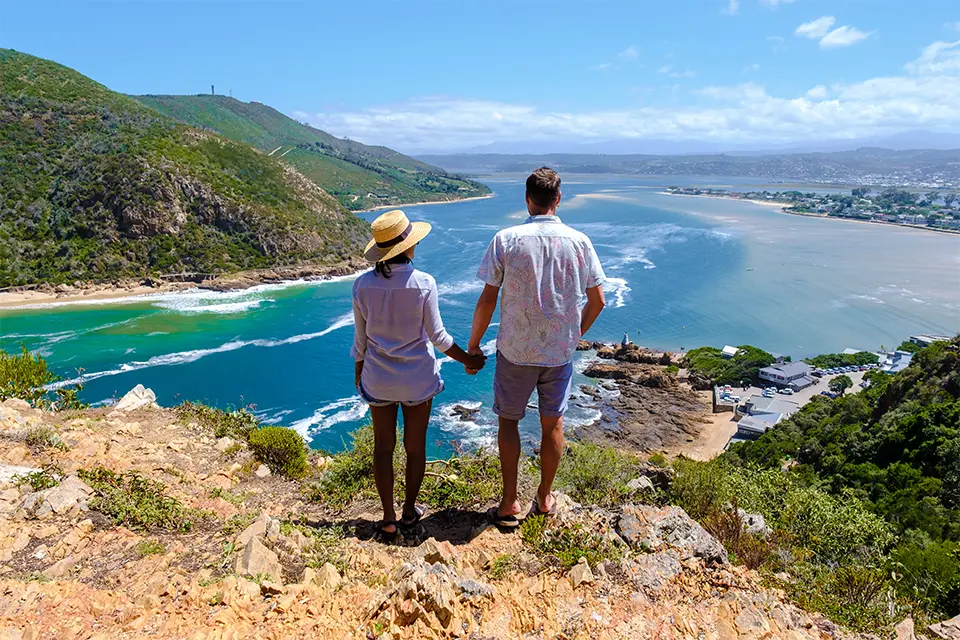
All you need to know about the Eastern Cape
Things to do in the Eastern Cape
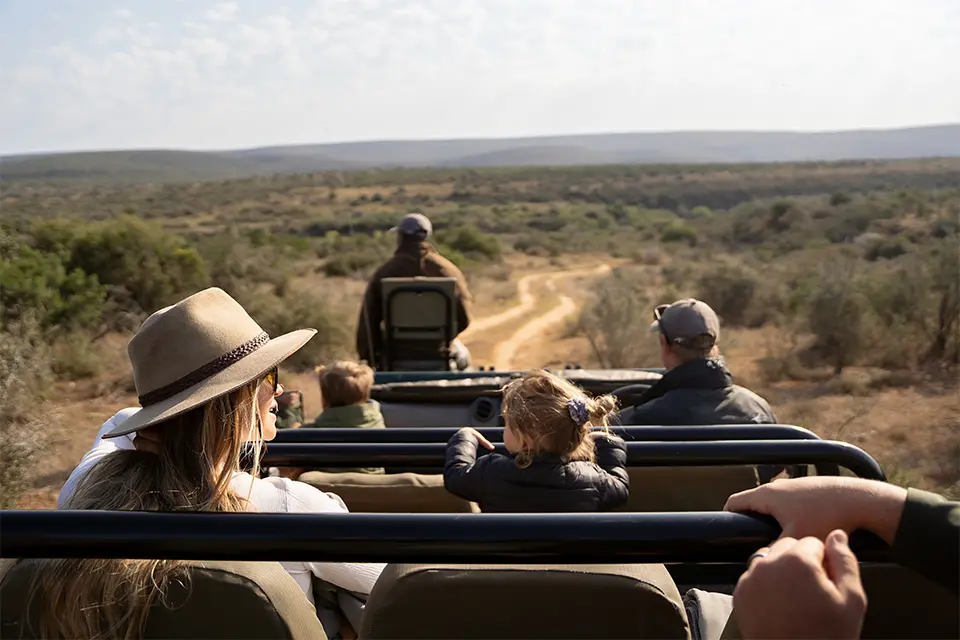
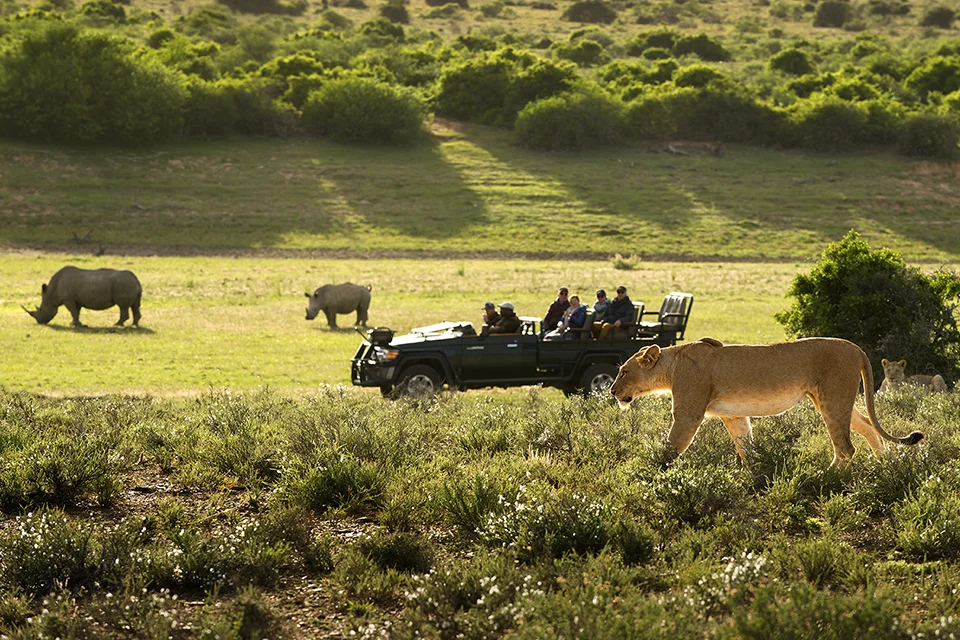
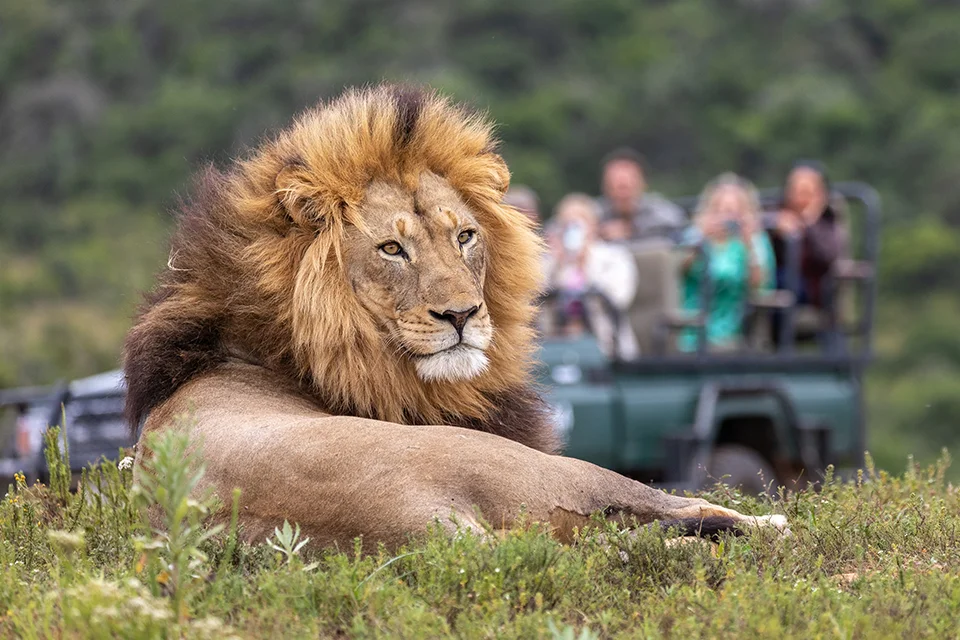
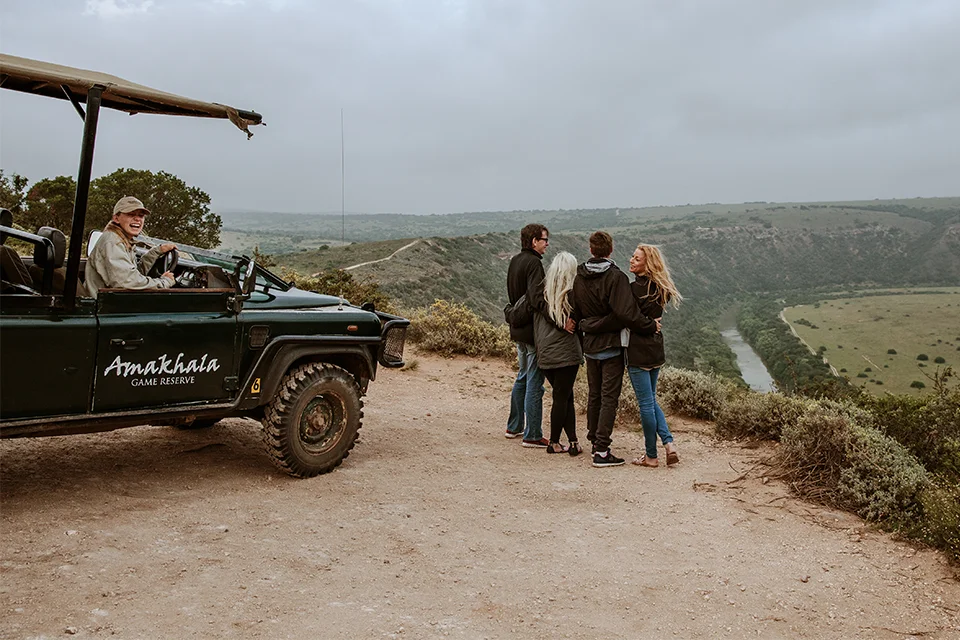
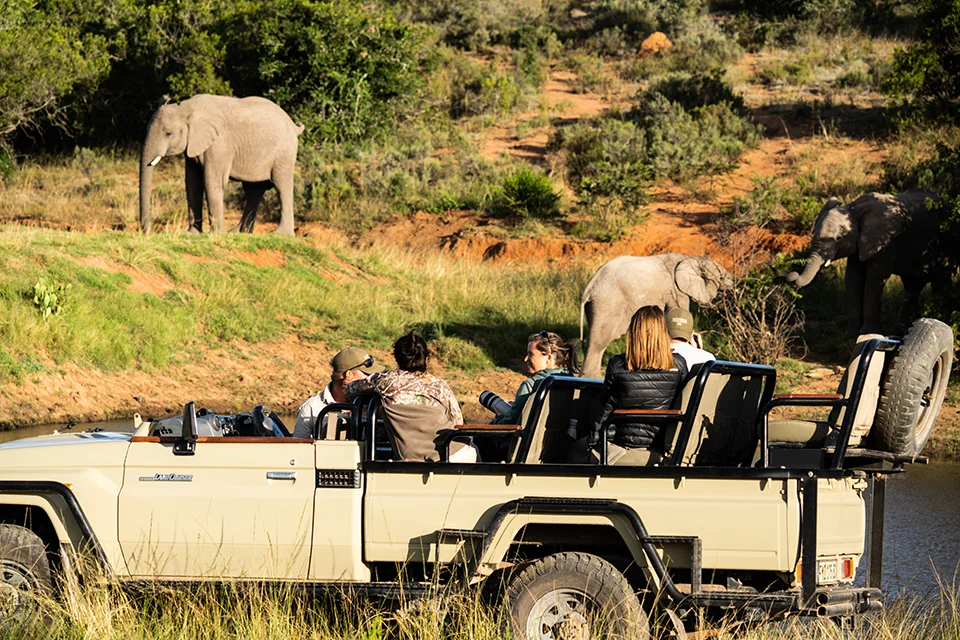
Track wildlife on open-vehicle game drives: All eight Greater Addo reserves run twice-daily drives at dawn and dusk in open 4x4 vehicles, while Addo Elephant National Park also offers a signed self-drive road network for independent exploration.
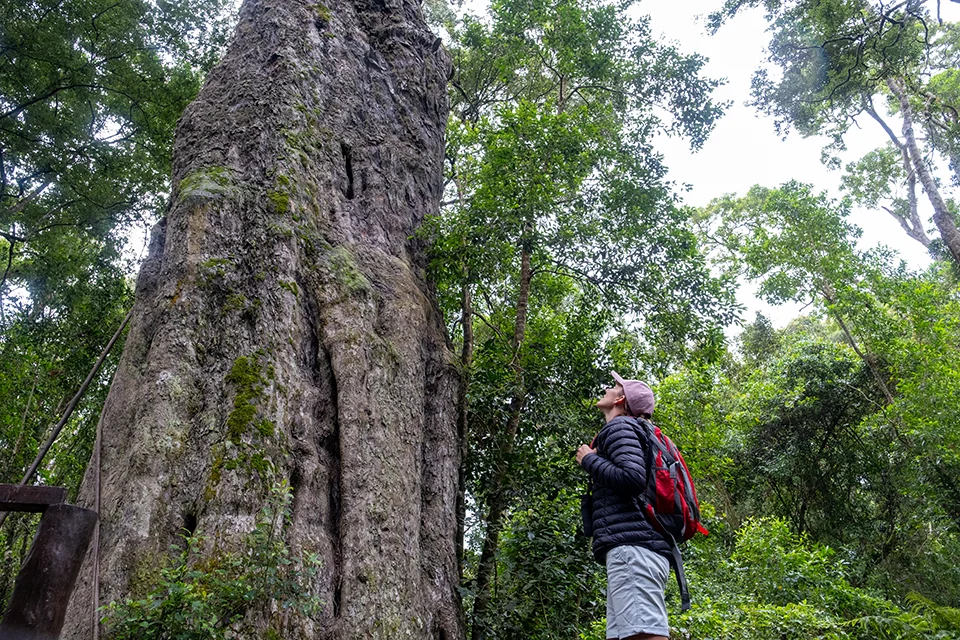
Walk the bush with armed rangers: Walking safaris with armed rangers run across multiple reserves, including Big Five walks at Kwandwe and Lalibela and guided bush walks at Shamwari, Kariega, Amakhala and Sibuya.
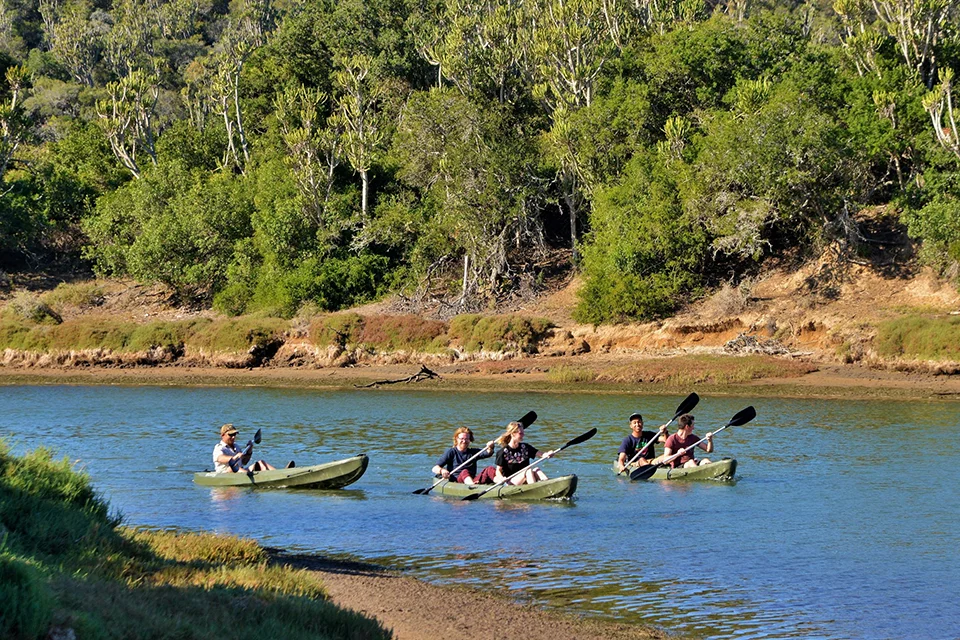
Take to the rivers and estuary by boat and canoe: The Kariega and Bushmans rivers offer boat cruises, canoeing and sundowner trips past hippos, fish eagles and otters, and every stay at Sibuya begins with a 45-minute boat transfer up the Kariega Estuary.
Take part in hands-on conservation: Join rhino monitoring drives at Kwandwe, visit Shamwari's Wildlife Rehabilitation Centre and Born Free big-cat sanctuary, or accompany Mkambati's Green Griffons on an ecological monitoring patrol.
Watch whales, witness the sardine run and explore Addo's ocean: Humpback whales migrate past Mkambati's coastline between June and October; the sardine run occurs from mid-June to end-July; great white sharks and southern right whales are encountered in Addo's Algoa Bay year-round.
Walk Mkambati's Wild Coast on foot: Guided trails lead through grassland, gorge and indigenous forest to all twenty-one waterfalls, with shore-based birding and visits to the Cape vulture colony above the Msikaba River.
What wildlife can I see in the Eastern Cape?
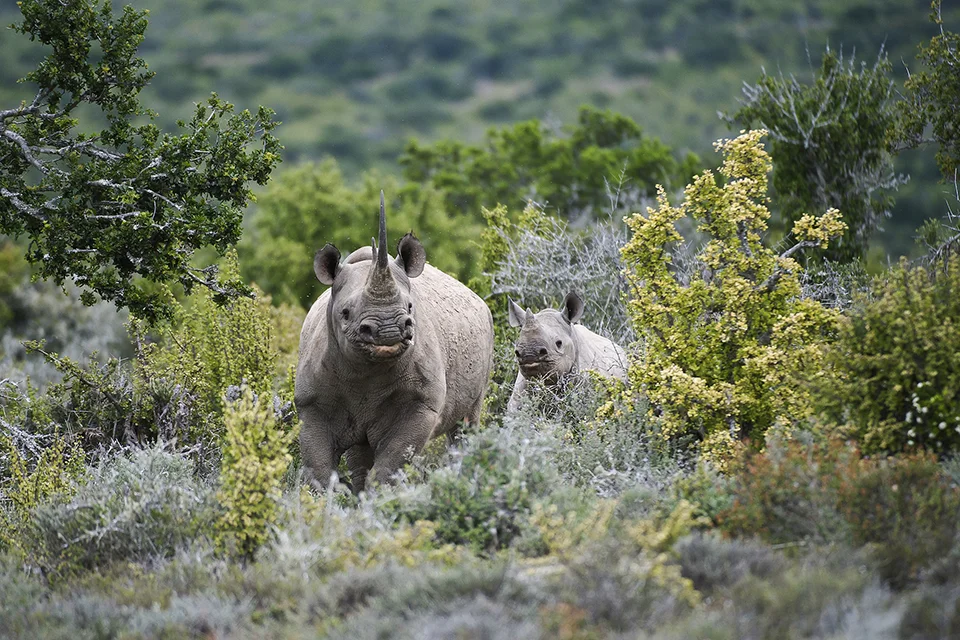
The Big Five, across the Greater Addo circuit: Lion, elephant, buffalo, leopard and both white and black rhino are confirmed across all eight reserves, with Kwandwe among South Africa's most consistent destinations for black rhino sightings.
Marine wildlife across two destinations: Southern right whales and great white sharks in Addo's Algoa Bay extend the Big Five into the Big Seven; humpback whales migrate past Mkambati's coastline from June to October, with dolphins close inshore near the GweGwe River mouth.
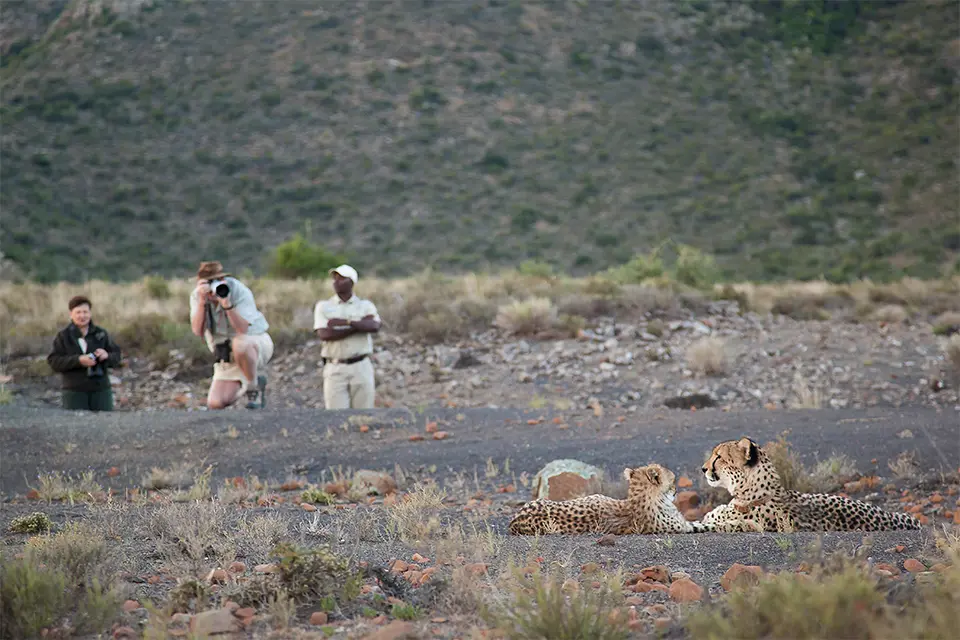
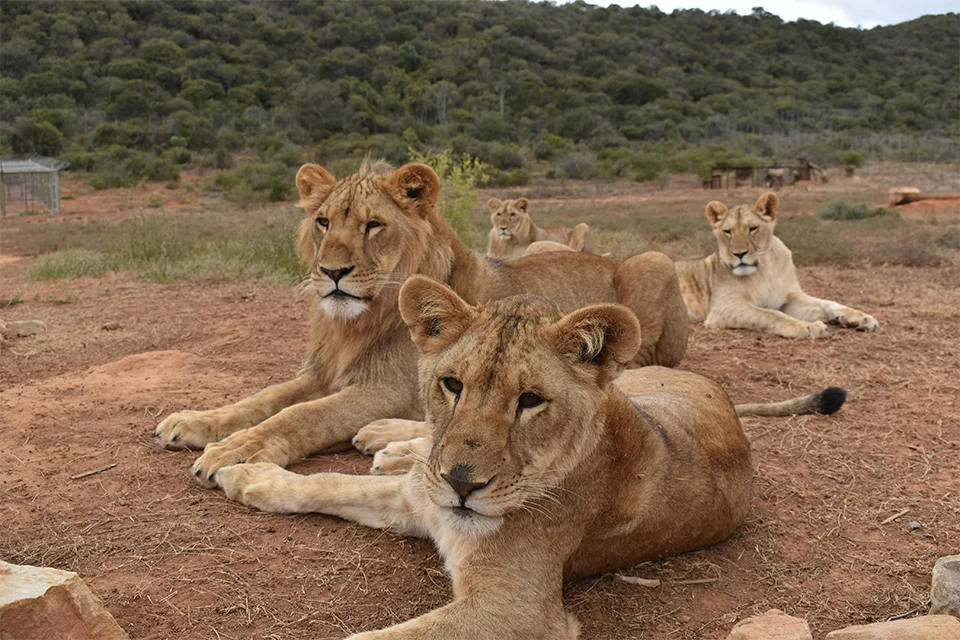
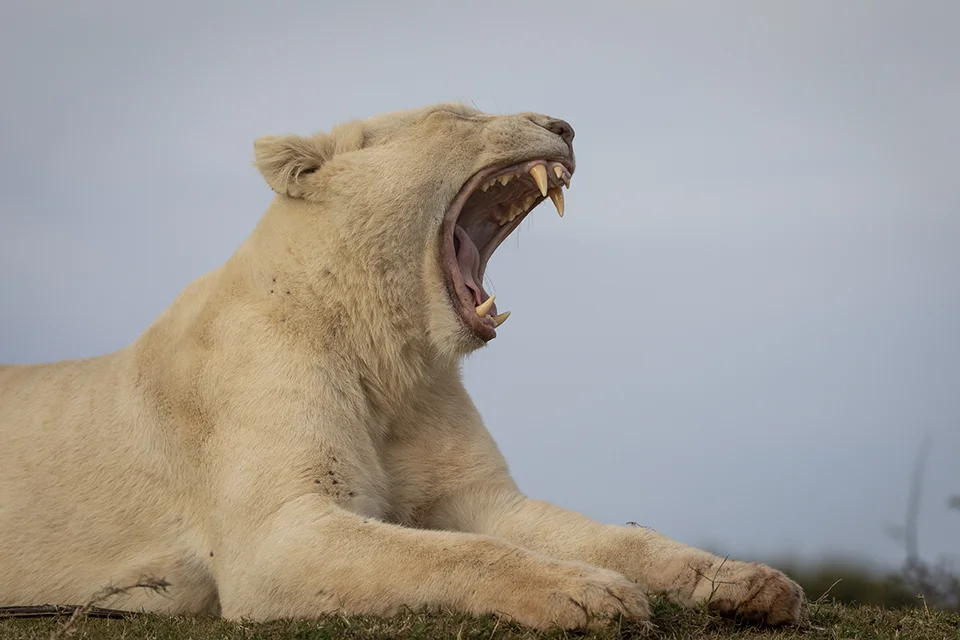
Cheetahs, predators and the stories behind them: Cheetahs roam multiple reserves; a free-roaming white lion pride lives at Pumba.
The sardine run and Mkambati's ocean spectacle: Each winter, vast sardine shoals move up the Wild Coast pursued by dolphins in one of the ocean's great predator-driven events, while otters inhabit the region's rivers and hippos are present across multiple reserves.
The Addo flightless dung beetle: Endemic to the Eastern Cape and unique to Addo Elephant National Park, this beetle holds formal right of way on Addo's roads, a telling symbol of the park's commitment to every species within its boundaries.
About 500 bird species across the region, including Narina trogon, Knysna woodpecker, Knysna warbler, Knysna turaco, Cape parrot, Damara tern, southern ground-hornbill, spotted ground-thrush, blue crane, African penguin, Cape gannet, Denham’s bustard, African crowned eagle, olive bush-shrike, African finfoot, mangrove kingfisher, gorgeous bush-shrike, roseate tern, and barratt’s warbler.
Where to stay in the Eastern Cape
The Eastern Cape's accommodation spans national park concessions, exclusive private reserves and a single off-grid community lodge on the Wild Coast.
The region offers an impressive range of options, and we showcase many of them on each regional page linked below.
Explore the Eastern Cape
Greater Addo
Greater Addo is the collective name for a safari region in South Africa's Eastern Cape, anchored by Addo Elephant National Park and extending across seven privately owned reserves: Shamwari, Kwandwe, Kariega, Amakhala, Sibuya, Pumba and Lalibela. All eight sit within 50 to 160 kilometres of Gqeberha, making this one of the most accessible Big Five safari circuits in southern Africa.
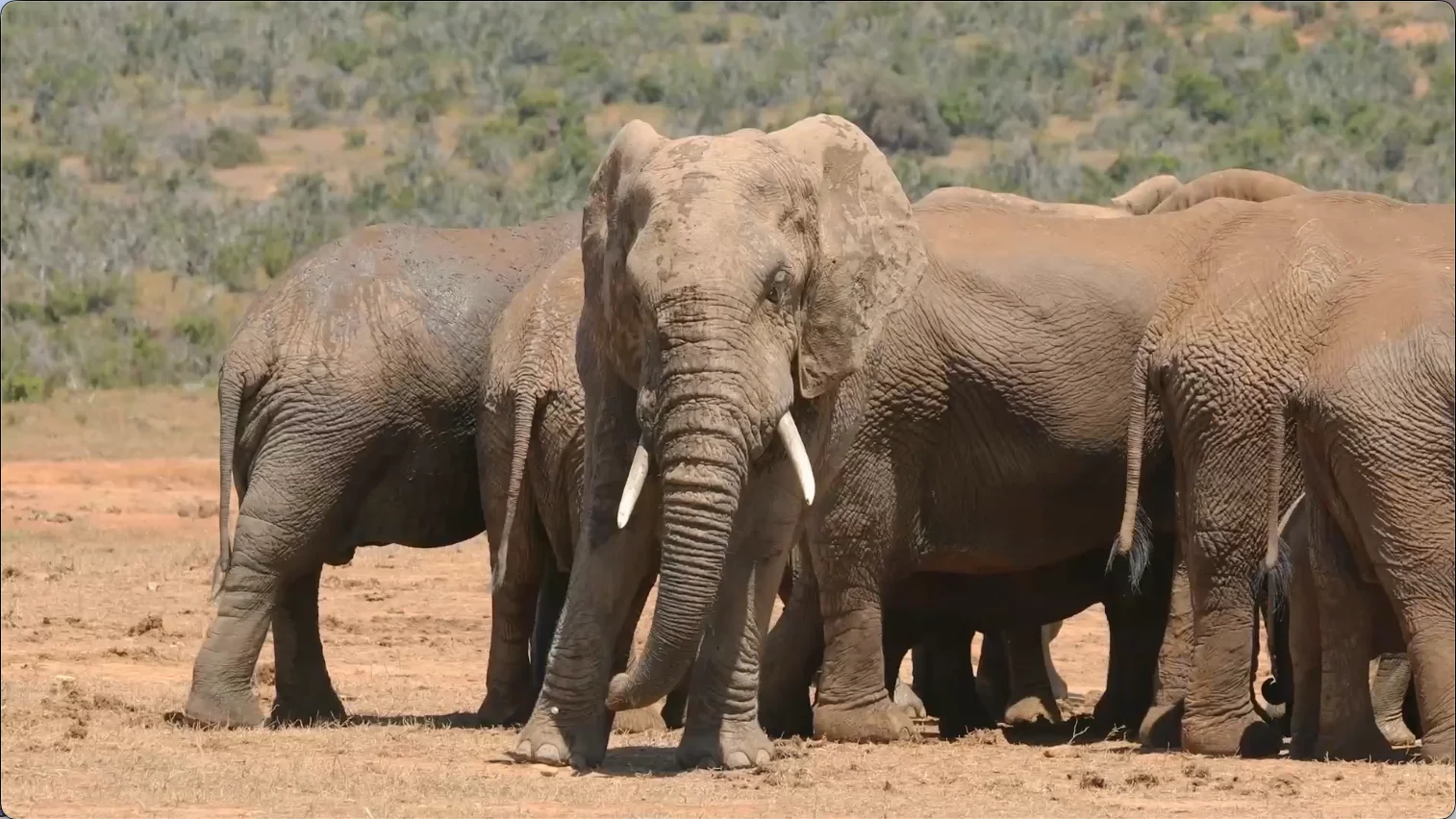
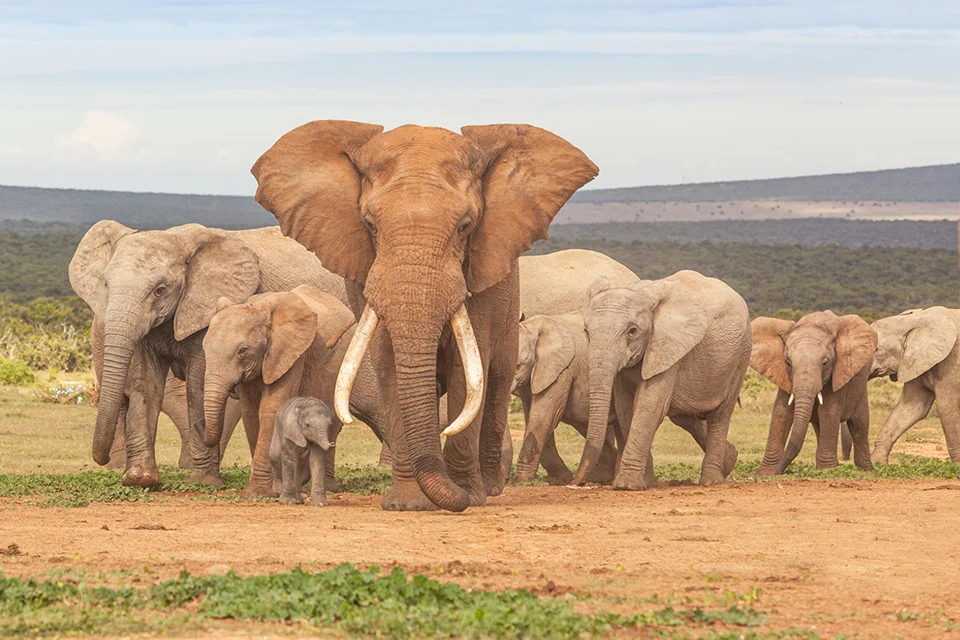
The conservation achievement behind this circuit is considerable. Addo Elephant National Park was proclaimed in 1931 to protect eleven surviving elephants in the Eastern Cape; it now covers nearly 179,000 hectares and is home to more than 600 elephants. Over subsequent decades, the private reserves were rewilded from agricultural land, with internal fences removed, species reintroduced, and ecosystems rebuilt from the ground up. Today, the Big Five are confirmed across all eight reserves, and Addo's boundaries extend into Algoa Bay, encompassing the marine section that makes it the only Big Seven reserve in South Africa. No other safari circuit in the country holds this combination of national park scale, private reserve intimacy and ocean wildlife within a single malaria-free region.
Mkambati Nature Reserve
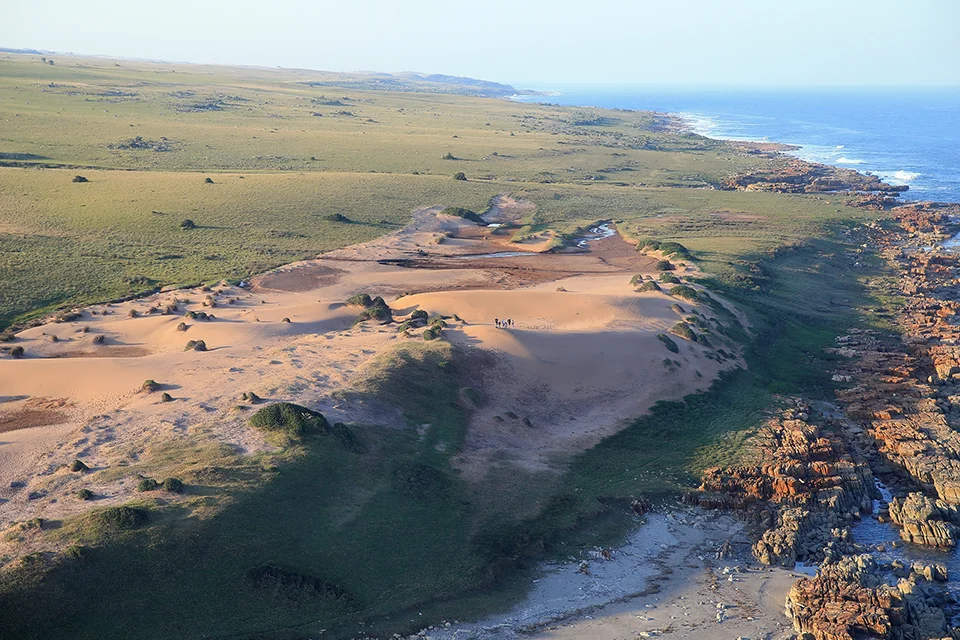
On South Africa's Wild Coast, Mkambati Nature Reserve occupies 7,400 hectares of grassland, gorge, indigenous forest and Indian Ocean shoreline between Port Edward and Port St Johns. Twenty-one waterfalls thread through the reserve, including Mkambati Falls, which plunges directly into the sea. The reserve lies within the Pondoland Centre of Endemism, one of the world's 34 most significant biodiversity hotspots, home to over 2,200 plant species, among them the Mkambati palm, found only along the Mtentu and Msikaba rivers.
Mkambati holds a distinction found nowhere else among South Africa's provincial reserves: it is owned outright by seven local communities who reclaimed the land through the country's restitution process in 2004, choosing conservation over resettlement. GweGwe Beach Lodge, the reserve's sole tourism operation, is staffed almost entirely by people from surrounding rural communities and returns nine percent of gross revenue to the Mkambati Land Trust, directly funding conservation and protected-area governance. The Green Griffons, an all-women anti-poaching and ecological monitoring unit mentored by the Black Mamba Anti-Poaching Unit, patrol the reserve year-round. There is no Big Five here, but there are humpback whales offshore, the sardine run each winter, a protected Cape vulture colony, and grassland wildlife against an ocean backdrop that no other reserve in South Africa can replicate.
Trusted by thousands of ecstatic travellers
✔️ 5-Star Trustpilot Rating ✔️ Condé Nast Travel Specialist Award Winner
✔️ Accredited by SATSA ✔️ 5,000+ Exceptional Safaris Since 1991
Why choose Africa Geographic to plan your safari?

"My first experience planning a safari from overseas and a skeptic by nature, and here I am a week back from one of the best trips of my entire life! It was seemless and perfect from start to finish with no stress...serious about setting up a perfect trip within your budget. Will use again for the next trip!"
"I wanted to celebrate an important birthday and asked AG to come up with an itinerary within a specific budget. They came up with a superb itinerary that meant we were looked after completely in three very different destinations...It was outstanding. They are worthy of trust and will not let you down."
"...was excellent at planning and keeping me informed. Our guide, tracker, camp manager, and chef were all extremely kind, generous, and knowledgeable. We saw incredible wildlife, ate delicious food, and met other friendly travellers. I highly recommend Africa Geographic for any African travel destination you would like to embark on."
Wish you were here?
Frequently asked questions
Yes. The entire Eastern Cape province carries no malaria risk, and no antimalarial prophylaxis is required for any reserve or nature reserve in the region, making it one of South Africa's most accessible malaria-free safari destinations for families, children and travellers with health considerations.
Greater Addo is a safari region in South Africa's Eastern Cape, anchored by Addo Elephant National Park and extending across seven private reserves: Shamwari, Kwandwe, Kariega, Amakhala, Sibuya, Pumba and Lalibela, all within 50 to 160 kilometres of Gqeberha.
Yes. Lion, elephant, buffalo, leopard and both white and black rhino are confirmed across all eight reserves in the Greater Addo circuit, one of the few safari circuits in South Africa where every property carries the full complement, on twice-daily open-vehicle drives throughout the year.
The Big Seven extends the traditional Big Five to include southern right whale and great white shark. It is specific to Addo Elephant National Park, whose boundaries extend into Algoa Bay in the Indian Ocean, making Addo the only Big Seven reserve in South Africa.
Mkambati is a 7,400-hectare provincial nature reserve on South Africa's Wild Coast, between Port Edward and Port St Johns. It lies within the Pondoland Centre of Endemism, is owned outright by seven local communities through land restitution, and offers grassland wildlife, ocean spectacles and 290-plus bird species, all malaria-free.
The sardine run is an annual migration of sardine shoals along the east coast, pursued by dolphins in one of the ocean's great predator events. Off Mkambati's Wild Coast it occurs from mid-June to end-July, sometimes into August, viewable from shore or by boat.
Fly into Chief Dawid Stuurman International Airport in Gqeberha, which receives daily direct flights from Johannesburg and Cape Town. Greater Addo's reserves are 50 to 160 kilometres from the airport by road. Mkambati is reached by light aircraft on a 1,500-metre grass airstrip, by road, or by helicopter.
Both Greater Addo and Mkambati are year-round destinations. In Greater Addo, the dry winter months from June to September bring thinner vegetation and wildlife concentrated around water. At Mkambati, mid-June to end-July is prime sardine run season, and humpback whales are seen from June through to October, sometimes into November.
Yes. The entire province is malaria-free, removing the most common health concern for travelling families. Several Greater Addo reserves welcome children of all ages, with dedicated children's programmes at Kariega, Amakhala and Shamwari's Riverdene. GweGwe Beach Lodge at Mkambati also welcomes family safaris of all ages.
The Wild Coast is the name given to the Eastern Cape coastline stretching from East London toward the KwaZulu-Natal border, one of South Africa's least developed and most ecologically significant shorelines. Mkambati Nature Reserve occupies its northern reaches, within the Pondoland Marine Protected Area.
Most Greater Addo reserves connect naturally with the Garden Route along the N2 highway. Gqeberha also receives direct flights from Cape Town, making the combination easy by air or road and typically extending an itinerary to ten days or more.
Mkambati is owned outright by seven local communities who reclaimed the land through South Africa's restitution process in 2004, choosing conservation over resettlement. It is the only provincial nature reserve in South Africa held under this form of community ownership.
A minimum of three nights per reserve is recommended in Greater Addo, with most visitors spending four to seven days across two or three reserves. Adding Mkambati, the Garden Route or Cape Town extends the trip to ten days or considerably more.
Our safaris typically cost from US$700 per person, per night, depending on the accommodation comfort level, time of year and activities. This price usually includes accommodation, all meals, game drives, experienced guides, airport transfers, and 24/7 support from our team.
Click here to schedule a no-obligation call with one of our Safari Experts or fill in our 2-minute form with your questions. Our team of experts are here to help! Whether you’re curious about the best time to travel, want to hear first-hand about an experience or need help planning your safari.
Explore more African destinations
Start planning your dream safari
Our travel experts will craft a no-obligation itinerary just for you. We have crafted over 5,000 safaris since 1991. Your personal details are protected; we only use this information to contact you.
Why book your safari with us?

Deep Experience & Knowledge
Handcrafted experiential safaris since 1991.
Travel in Africa is about knowing when and where to go, and with whom. A few weeks too early/late or a few kilometres off course, and you could miss the greatest show on Earth. And wouldn’t that be a pity?

Trust & Safety

Make A Difference
We donate a portion of the revenue from every safari sold to carefully selected conservation projects that make a significant difference at ground level.
YOUR safari choice does make a difference - thank you!