

Tailor-made safaris. Since 1991



Tswalu Kalahari: South Africa's largest private game reserve
Tswalu Kalahari at a glance:
Location: Northern Cape, South Africa, on the southernmost edge of the Kalahari Desert, surrounded by the Korannaberg mountains | Access: Direct chartered or private flights to Tswalu's private airstrip; approximately 2 hours from Cape Town by air |
Size: 1,200 km² (120,000 hectares) - South Africa's largest private game reserve | Best time to visit: April–October (dry season); open year-round |
Nearest airports: Upington (UTN) and Johannesburg OR Tambo (JNB) | Minimum recommended stay: 3–4 nights |
Currency: South African Rand (ZAR) | Malaria risk: None - Tswalu is completely malaria-free |
Why visit Tswalu Kalahari Reserve?
South Africa's largest private reserve earns its reputation quietly. Tswalu Kalahari stretches across 1,200 square kilometres of the Northern Cape, where ancient red dunes meet the dramatic Korannaberg mountains. In Setswana, Tswalu means 'a new beginning' – a name that speaks directly to this place's remarkable story.
What was once overgrazed farmland, assembled by British businessman Stephen Boler across dozens of farms, was offered to the Oppenheimer family on Boler's death. They took ownership in 1998. Hunting stopped overnight. Indigenous species were reintroduced, habitats were restored, and breeding programmes for rare species such as roan and sable antelope were established. Academic researchers were welcomed, and the Kalahari slowly began to return to itself.
Today, Tswalu is a bold conservation project supported by sustainable ecotourism. It is completely malaria-free, making it one of the most accessible luxury safari destinations in South Africa. With 85 mammals and 264 bird species across five distinct habitats – from red dune Duneveld to Korannaberg foothills – and the guarantee of a private vehicle, guide and tracker with every single booking, the safari experience here is shaped entirely around you. No shared vehicles, no other lodges on the property, and no fixed itinerary to follow.
6 reasons we love Tswalu Kalahari
The Elusive Five: South Africa's largest private reserve protects five of Africa's most elusive species – pangolin, aardvark, brown hyena, aardwolf and bat-eared fox.
Meerkat encounters: Three habituated meerkat colonies offer close-range encounters, allowing you to watch daily colony rituals unfold naturally without disrupting their behaviour.
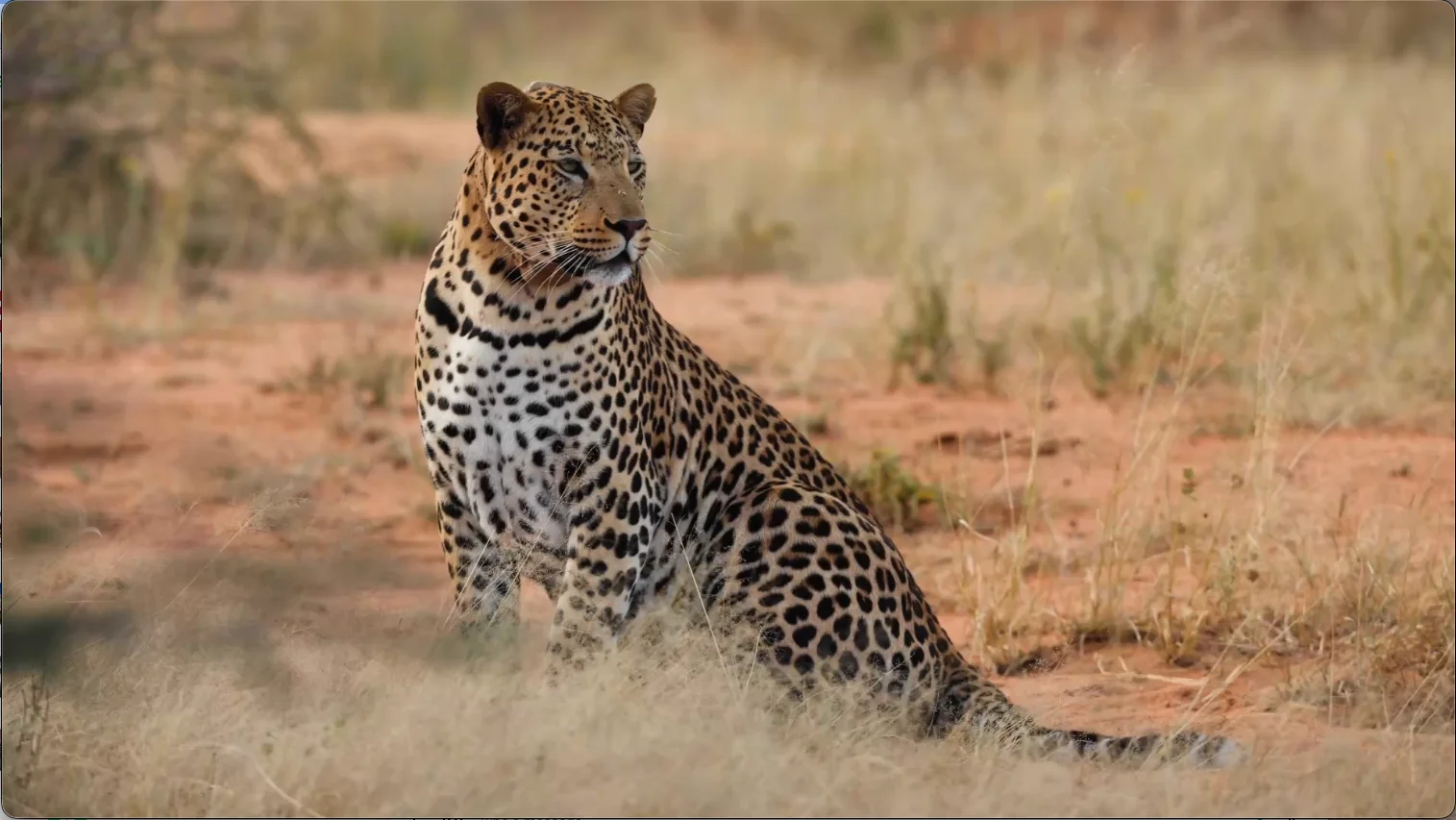
Unrivalled big cat and wild dog sightings: Two lion prides, cheetahs, leopards and African wild dogs (among other predators listed below) make for outstanding sightings during exclusive game drives.
Rare black rhinos: Desert-adapted black rhinos were reintroduced in 1995, and the Tswalu population now accounts for a significant portion of South Africa's remaining population.
Sleep under the stars: Sleep under a diamond-bright Kalahari sky at Malori, Tswalu's raised sleep-out with panoramic dune views and a personalised evening bush dinner.
Conservation with depth: Engage with Tswalu Foundation research – from pangolin ecology to climate studies – adding rare scientific depth to your conservation safari.
All you need to know about Tswalu Kalahari
About Tswalu Kalahari Reserve
Tswalu occupies a transition zone between true Kalahari and arid savannah in South Africa's Northern Cape, where five distinct habitats - bushveld, plains shrubveld, mountain shrubveld, duneveld and calcrete scrubveld - support extraordinary species diversity. The Korannaberg Mountains bisect the reserve, and winters here are cold and dry; summer rain between October and April can transform dune fields into flowering grassland, earning the region its name: the green Kalahari.
The land carries deep human history. Evidence of activity extends back at least 500,000 years, and over 300 San rock engraving sites survive across the reserve. The Oppenheimer family's acquisition in 1998 set Tswalu on its modern conservation course - returning overgrazed farmland to wilderness, reintroducing indigenous species and establishing the Tswalu Foundation to support long-term ecological research.
Things to do in Tswalu Kalahari Reserve
Private game drives: Exclusive wildlife viewing with your dedicated guide and tracker – unlimited time at sightings, with no other vehicles on the reserve's 1,200 km².
Track the Elusive Five: Early evening drives for pangolin, aardvark, brown hyena, aardwolf and bat-eared fox – sightings sought after even by seasoned Big Five safari travellers.
Meerkat visits: Visit habituated meerkat colonies on an early morning excursion and observe the colony's social routines undisturbed in their natural environment.
Rock art walks: Explore ancient San rock engraving sites in the Korannaberg foothills on a guided cultural walk spanning over 500,000 years of human history.
Horseback safaris: Ride across red dunes and grassy plains on horseback – the approach lets you get close to skittish species like Hartmann's mountain zebra.
Malori sleep-out: Sleep under a canopy of stars at Malori – the dry Kalahari air carries no light pollution; weather-proof blinds and a thatched overhang keep you safe from wild animals.
What wildlife can I see at Tswalu Kalahari?
Black-maned lions and cheetahs: Kalahari black-maned lions in two distinct prides, and cheetahs, making Tswalu one of southern Africa's most reliable destinations for these big cats.
Other predators: Track African wild dogs, brown and spotted hyenas, leopards and smaller carnivores such as aardwolves, bat-eared foxes, African wild cats, and Cape foxes.
Desert black rhino: Desert-adapted black rhino, a critically endangered subspecies, are actively conserved here as part of a long-term species recovery programme.
The Elusive Five: Ground pangolin, aardvark, aardwolf, brown hyena, and bat-eared fox – all nocturnal and difficult to find across Africa – require expert tracking skills to locate.
Kalahari ungulates: Giraffe, oryx, eland, sable, roan, springbok and red hartebeest thrive across Tswalu's five distinct habitat types throughout the reserve.
Birds: 264 species, including sociable weavers, pygmy falcons, red-crested korhaan, kori bustard and secretary birds, across five distinct Kalahari habitats.
Butterflies: 75 butterfly species are resident, and the summer brown-veined white butterfly migration is one of the most spectacular seasonal natural events here.
Where to stay in Tswalu Kalahari Reserve
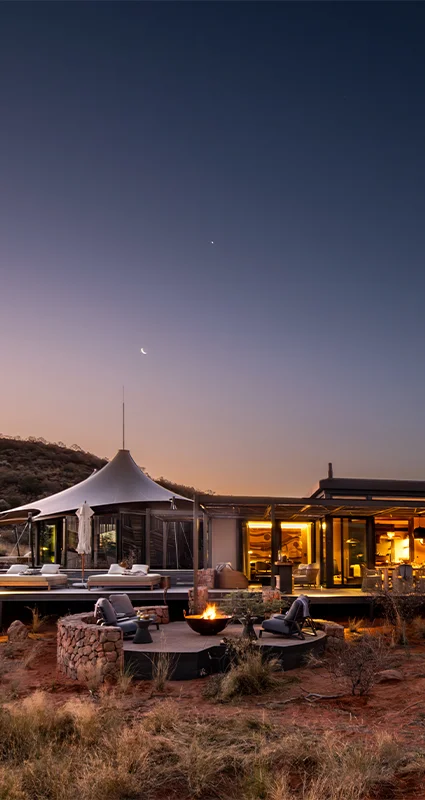
Tswalu Loapi: a collection of six stand-alone safari homes set among open savannah grasslands at the foot of the Korannaberg mountains. Each home operates as its own entirely private camp, with no communal areas, no shared spaces. Every home includes a dedicated homathi (house manager) and private chef, an interactive kitchen with a stocked pantry and bar, a private study, plunge pool and fire pit. For couples and small private groups seeking a genuine wilderness sanctuary, Loapi offers complete, self-contained privacy.
Tswalu Motse: Tswalu's social camp, accommodating up to 18 adults across nine legae (suites) and designed for individual couples and families. Generous communal spaces include covered verandas, two swimming pools, a firepit, a mezzanine library and a walk-in wine cellar stocked with premium South African wines. A boma provides the setting for outdoor dinners under the stars. The Tswalu Spa, gym, photographic studio and boutique gallery are all situated at Motse.
Tswalu Tarkuni: an exclusive-use homestead for up to 10 guests across five suites, all under one thatched roof and entirely yours for the duration of your stay. A dedicated house manager and private chef handle every detail. A double-sided fireplace anchors the living and dining areas; a mezzanine lounge sits above. Outdoors, a fire pit overlooks a waterhole, a private boma hosts dinner under the stars, and a tsala with daybeds offers a quieter retreat. An indoor spa treatment room is available at any time.
Trusted by thousands of ecstatic travellers
✔️ 5-Star Trustpilot Rating ✔️ Condé Nast Travel Specialist Award Winner
✔️ Accredited by SATSA ✔️ 5,000+ Exceptional Safaris Since 1991
Why choose Africa Geographic to plan your safari?

"...Final stop was Tswalu. During my visit last year we spent a lot of time with the dogs but didn't see them make a successful hunt. The priority this time was to see my first hunt to the conclusion. The guide made sure this was fulfilled...Other great sightings included a black rhino with two equally long horns, caracal, aardvark, brown hyena. Tswalu certainly delivered on this visit. I can't wait to return..."

"Stayed at Twsalu for 3 nights a fortnight ago. A magic experience. Arranged by and booked through African Geographic. AG found us the perfect guide as requested (birding and photography expert). Also a private vehicle and a special night on a sleep-out platform with personal catering at no extra cost. Communications and pre-trip info were spot on."

"A top company to help organise and arrange your perfect safari trip...extremely helpful in tailoring our experience exactly how we wanted it, from the initial conversations, to suggested changes, to the organisation whilst on the trip. I would throroughly reccomend Africa Geographic...Will definitely be recommending them and using them again if and when we visit Africa!"
Wish you were here?
Frequently asked questions
Yes. Tswalu Kalahari is entirely malaria-free, which makes it a particularly attractive safari destination for families travelling with young children, for travellers who prefer not to take antimalarial medication, and for those who want to combine a Kalahari safari with a visit to the Cape Winelands or another malaria-free area in South Africa.
Tswalu covers 1,200 square kilometres (120,000 hectares) of the Northern Cape, making it the largest privately protected conservation area in South Africa. Because there are no other lodges or safari vehicles on the property, guests have exclusive access to this vast wilderness. The low guest-to-land ratio means wildlife encounters are quiet, unhurried and genuinely exclusive.
The reserve was originally created by British businessman Stephen Boler, who acquired 35 farms across the southern Kalahari with a vision to return overgrazed land to its natural state. When Boler died, his will specified that the property should be offered first to Nicky Oppenheimer. The Oppenheimer family took ownership in 1998 and the transformation was immediate: hunting stopped, indigenous species were reintroduced, degraded habitats were restored, and breeding programmes for rare species such as roan and sable antelope were established. The reserve is now one of the most significant conservation success stories in southern Africa.
The Elusive Five is the collective name for five of Africa's most difficult-to-find species, all of which are present at Tswalu: the ground pangolin, aardvark, aardwolf, brown hyena and bat-eared fox. All five are nocturnal, which means dedicated evening and night drives - guided by your personal tracker - give you the best chance of an encounter. Tswalu is widely regarded as one of the finest places in Africa to see the ground pangolin, a rare species subject to ongoing research at the reserve.
Tswalu protects 85 mammal species, including Kalahari black-maned lions, desert-adapted black rhino, cheetah, African wild dogs, leopard, brown and spotted hyenas, giraffe, Cape buffalo, eland, sable, roan, oryx, springbok, red hartebeest, kudu and Hartmann's mountain zebra. The Elusive Five - pangolin, aardvark, aardwolf, brown hyena and bat-eared fox - are all present. Three habituated meerkat colonies offer exceptional close-range encounters. The reserve holds 264 bird species and 75 butterfly species.
Yes. Tswalu is malaria-free, family-friendly and particularly well-suited to multi-generational travel. The Motse camp accommodates families with three dedicated family units, each with two bedrooms linked by a living room. Tarkuni, the exclusive-use homestead, can accommodate up to 10 guests and is entirely private, making it ideal for families or groups travelling together. Children of all ages are welcome at Tarkuni; minimum age requirements may apply at other camps.
Tswalu is open year-round. The dry season from April to October is generally considered the best time for wildlife sightings, as reduced vegetation makes animals easier to spot and wildlife concentrates around water sources. Winter days (June–August) are sunny and cold at night, which is when the Elusive Five are more active in daylight hours and easier to encounter. The summer months (October–April) bring rain, lush green landscapes, and an extraordinary butterfly migration, with resident wildlife just as accessible.
Tswalu has a private airstrip that accommodates charter and private flights. The most common access routes are by chartered flight from Cape Town (approximately 2 hours), Johannesburg (approximately 1.5 hours), or by private jet from the Oppenheimer's private terminal at Cape Town International Airport, Fireblade Aviation. Commercial scheduled flights operate to Upington Airport (UTN) in the Northern Cape, from where a road transfer can be arranged to the reserve.
The Tswalu Foundation was established in 2009 to facilitate and fund long-term environmental research at the reserve. Based at the Dedeben Research Centre - a complex of repurposed historic buildings within the Korannaberg hills, originally a remote outpost of the Cape Mounted Rifles built in the late 1880s - the Foundation supports research teams from leading institutions across Africa and beyond. Studies cover biodiversity, regenerative land management, pangolin ecology, the impact of climate change on the Kalahari ecosystem, butterfly migration, and much more. Guests can engage directly with researchers during their stay.
Every Tswalu booking includes a private safari vehicle, dedicated guide and personal tracker. Experiences include private game drives, early evening elusive species drives, immersive bush walks, visits to three habituated meerkat colonies, guided walks to San rock engraving sites, horseback safaris across grassy plains and red dunes (suitable for beginners and advanced riders alike), stargazing sessions, and the Malori sleep-out. Photographic safaris and spa treatments at The Tswalu Spa are also available.
Malori means 'dreamer' in Setswana, and the experience lives up to its name. Tswalu's sleep-out is a raised platform with panoramic views of rolling red dunes, fitted with a thatched overhang and weather-proof blinds. The dry Kalahari air carries virtually no light pollution, making the night sky one of the most star-filled in southern Africa. Guests sleep in a safe, fully outfitted environment with a luxury bed and all the comforts of camp. An evening meal prepared by your guide completes the experience.
Tswalu is first and foremost an ambitious conservation project, supported by ecotourism revenue. The reserve has restored overgrazed farmland to functioning Kalahari habitat; reintroduced rare and endangered species; maintained breeding programmes for roan and sable antelope; established South Africa's first Vulture Safe Zone; and actively supported long-term research through the Tswalu Foundation. In 2024, the reserve earned Global Ecosphere Resort (GER) status from The Long Run - the most advanced sustainability standard in nature-based tourism. Every night spent at Tswalu contributes directly to this ongoing conservation work.
Tswalu safaris typically cost from R46,000 per person, per night, depending on the accommodation comfort level, time of year and activities. This price includes accommodation, all meals, game drives, experienced guides, and 24/7 support from our team.
Click here to schedule a no-obligation call with one of our Safari Experts or fill in our 2-minute form with your questions. Our team of experts are here to help! Whether you’re curious about the best time to travel, want to hear first-hand about an experience or need help planning your safari.
Explore more African destinations
Start planning your dream safari
Our travel experts will craft a no-obligation itinerary just for you. We have crafted over 5,000 safaris since 1991. Your personal details are protected; we only use this information to contact you.
Why book your safari with us?

Deep Experience & Knowledge
Handcrafted experiential safaris since 1991.
Travel in Africa is about knowing when and where to go, and with whom. A few weeks too early/late or a few kilometres off course, and you could miss the greatest show on Earth. And wouldn’t that be a pity?

Trust & Safety

Make A Difference
We donate a portion of the revenue from every safari sold to carefully selected conservation projects that make a significant difference at ground level.
YOUR safari choice does make a difference - thank you!