

Tailor-made safaris. Since 1991

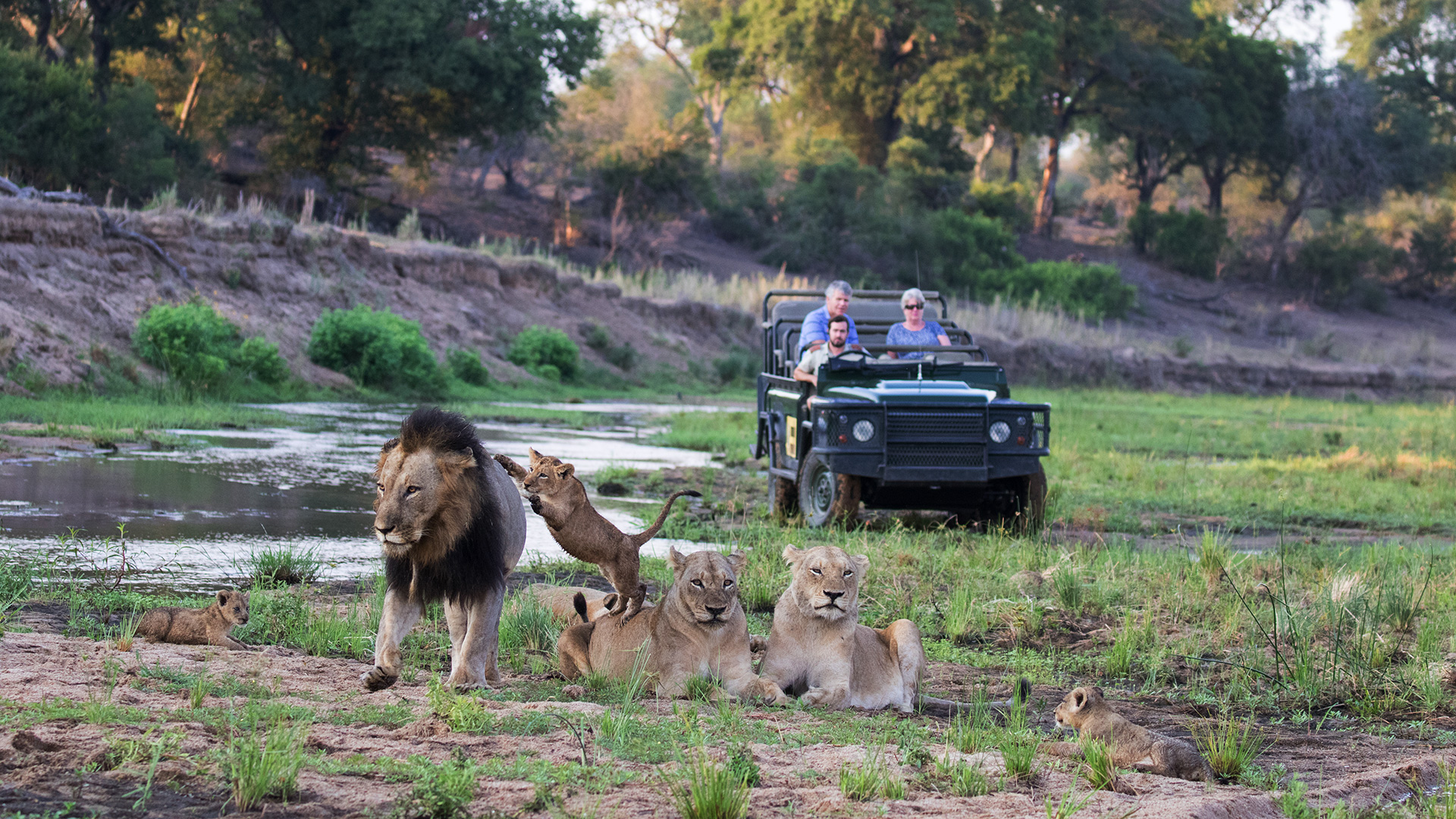


Trust us to find you the rarest animals, the most spectacular wildlife events, the remotest landscapes and deeply meaningful cultural encounters!
Wildlife to spot in the Greater Kruger area
Greater Kruger is one of the largest and most wildlife-rich ecosystems in Africa. Covering roughly 20,000 km² when the national park and its neighbouring private reserves are combined, it supports an immense variety of large African mammals alongside some of the continent's most rewarding birdwatching. Whether you're on a self-drive in the national park or on guided drives in a private reserve, the diversity here is hard to match.
The private reserves that border Kruger – including Sabi Sand, Timbavati, MalaMala, Klaserie and Thornybush – share unfenced boundaries with the national park, allowing wildlife to move freely across the entire ecosystem. This free movement is one reason why Greater Kruger's wildlife viewing is so consistently productive.
The Big Five in Greater Kruger
All of the Big Five – lion, leopard, elephant, buffalo and rhino (black and white) – live within Greater Kruger, and the ecosystem holds some of the continent's highest densities of each.
Species | Greater Kruger population (approx.) | Best reserve for sightings | Notes |
Lion | 2,000+ | Throughout | Prides often tracked daily in private reserves |
Leopard | 1,000+ | Sabi Sand, MalaMala, Timbavati | Sabi Sand has Africa's highest habituated leopard density |
Elephant | 17,000+ | Throughout | Increasing populations |
White and black rhino | Under pressure | Sabi Sand, MalaMala, Timbavati | Poaching has reduced numbers significantly |
Buffalo | 37,000+ | Throughout | Large herds common in the south |
Of the Big Five, leopard sightings are what draw many visitors specifically to the private reserves. The Sabi Sand and MalaMala leopard populations are among the most vehicle-habituated anywhere in Africa, producing relaxed sightings with notable regularity.
Luis Gama, Africa Geographic safari expert, puts it plainly: "At MalaMala I found the perfect blend of comfort and wilderness – unfenced with Kruger, leopard sightings around every corner, and effortless Big Five encounters. It felt like a secret safari haven I'll always treasure."
Safaris we love
Greater Kruger rewards time and expert guidance. These three Africa Geographic safaris pair some of the ecosystem's most productive wildlife areas with experienced guides and quality accommodation.
Classic Big 5 safari in South Africa: A 9-day journey through Timbavati in the Greater Kruger and Madikwe Game Reserve, tracking lion, leopard, elephant, rhino and buffalo in two of South Africa's finest Big Five reserves. Explore this safari →
Mashatu and MalaMala Big 5 safari: A 10-day Big Five journey combining MalaMala Game Reserve in the Greater Kruger – one of Africa's premier leopard locations – with Botswana's Tuli Block and the dramatic Blyde River Canyon escarpment. View this safari →
Chobe, Victoria Falls and Timbavati: A 10-day luxury safari through Botswana, Zimbabwe and the Greater Kruger's Timbavati reserve, combining Chobe's legendary elephant herds, the Zambezi River and some of Timbavati's best Big Five wildlife viewing. See this safari →
Iconic cats, wild dogs and hyenas
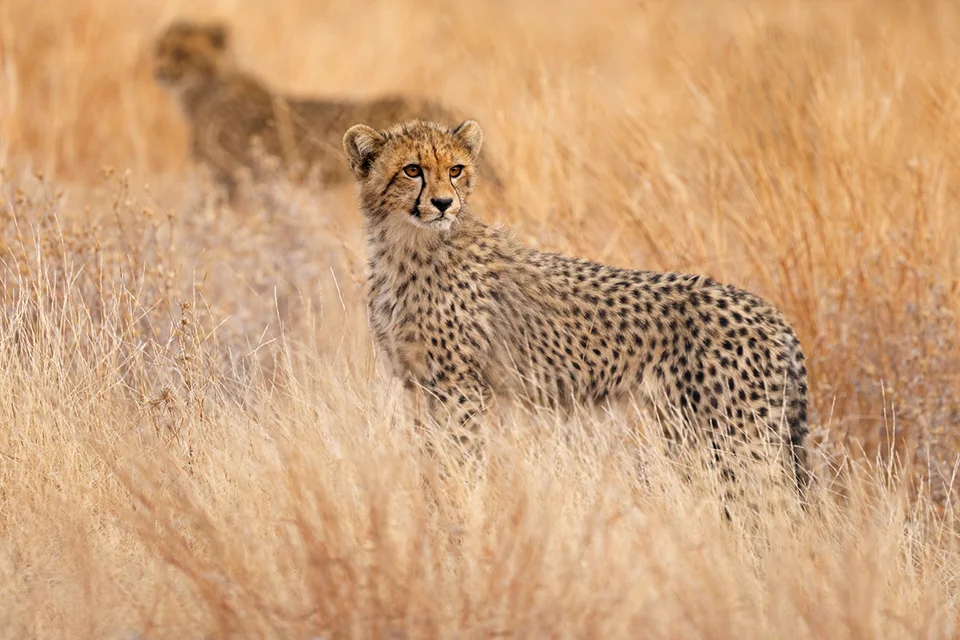
Cheetah
Cheetahs occur in Greater Kruger but at relatively low densities. They favour the more open terrain of the central and southern regions of the national park. Sightings in private reserves are less frequent than lion or leopard, but not unusual. Early morning is the most reliable time, as cheetahs are diurnal hunters.
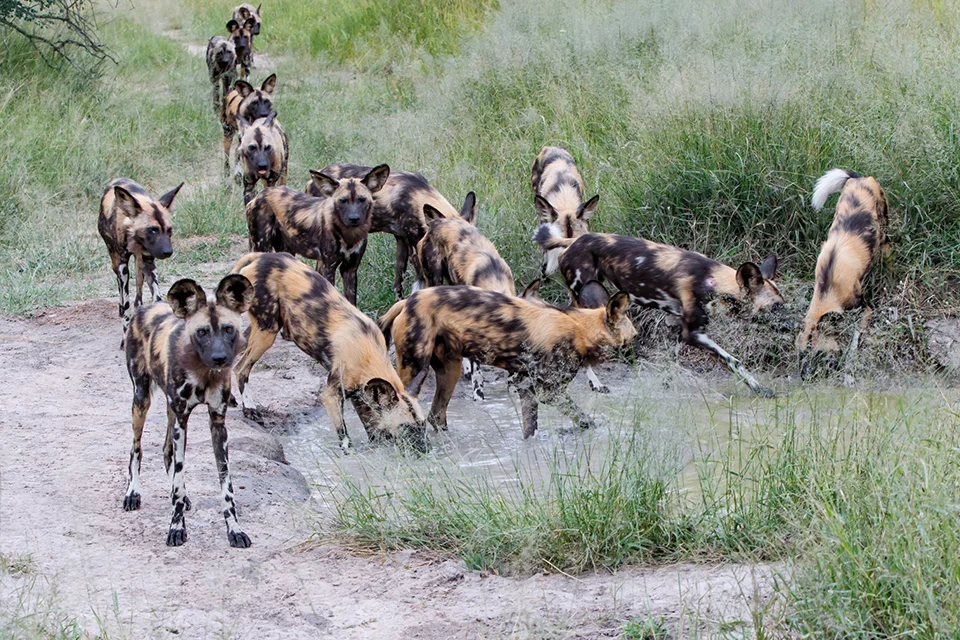
African wild dog
Greater Kruger is one of the best places in Africa to see African wild dogs (also called painted wolves). The species is listed as Endangered on the IUCN Red List, with fewer than 6,600 individuals estimated to remain continent-wide. Kruger holds one of the largest remaining populations – around 350 to 450 individuals in packs that range widely across the ecosystem. Timbavati and Klaserie have active packs, and sightings, while never guaranteed, are among the most sought-after in the bushveld.
Roger Whittle, a repeat Africa Geographic guest from the UK, describes the variety of his last visit to Timbavati: "The first stop was Tanda Tula, and as usual, the wildlife viewing was excellent. Great sightings of lions bringing down a buffalo, rhino and calf, leopards, and the first sighting of a harrier hawk attempting to break into a hornbill nest in a tree trunk, to name a few. Looking forward to the next visit."
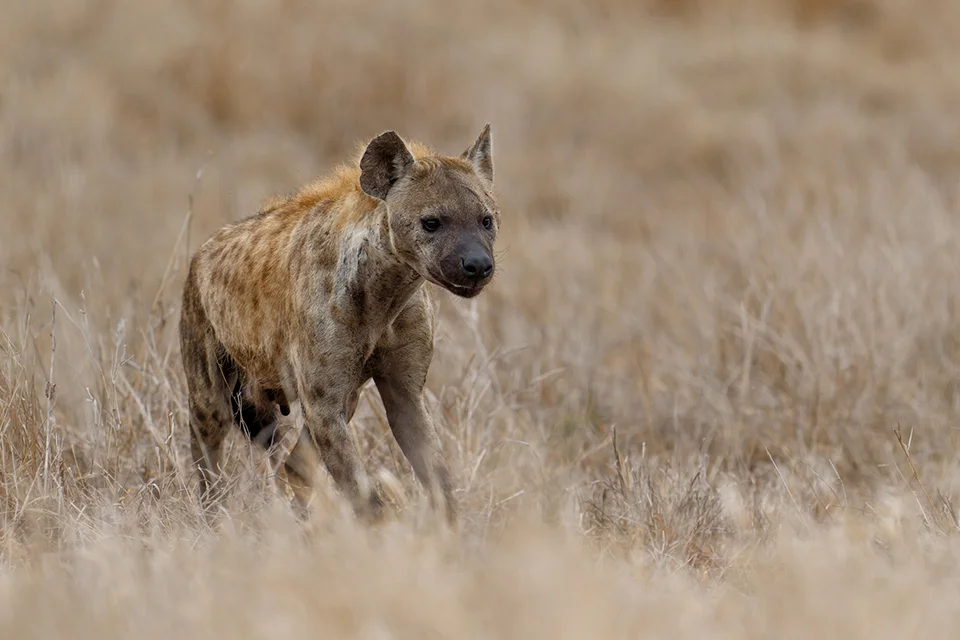
Spotted hyena
Spotted hyenas are common throughout the Greater Kruger and are often underestimated as an intriguing wildlife-viewing subject. Largely nocturnal but frequently seen at dusk and dawn, they are most likely encountered near lion kills or around waterholes after dark on night drives in private reserves.
Animals beyond the Big Five
Greater Kruger supports more than 140 mammal species and over 110 reptile species. Below are some of the animals most commonly encountered on a Kruger safari, along with what to know about spotting them.
Hippopotamus – found in permanent rivers, dams and large waterholes throughout Greater Kruger
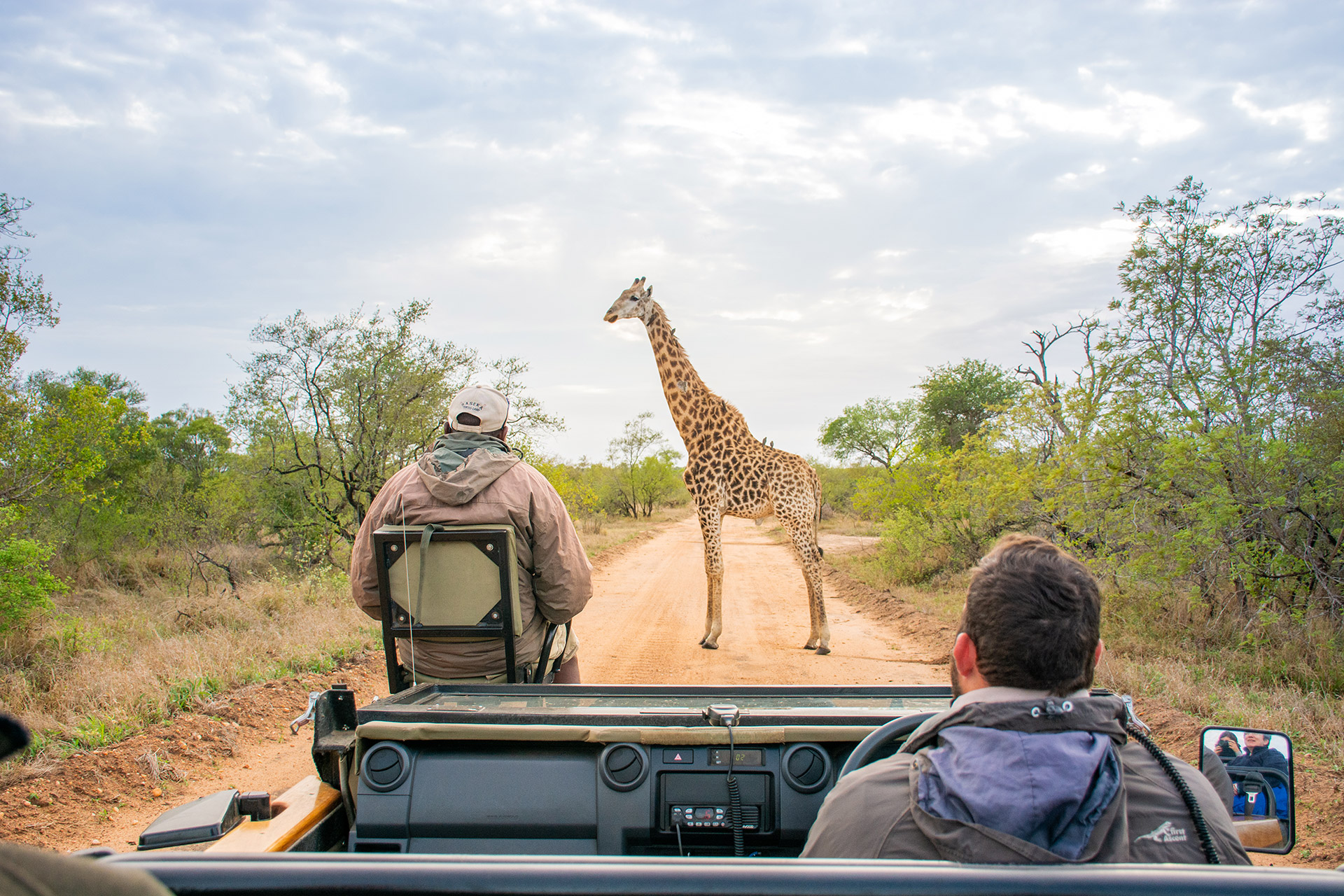
Southern giraffe – widespread across woodland and savanna
Plains zebra – abundant in open grasslands and mixed savanna throughout Greater Kruger
Blue wildebeest – common in open plains and grassy woodland, often grazing alongside zebra
Waterbuck – found close to rivers and permanent water
Greater kudu – widespread in woodland and bushveld; mature bulls carry impressive spiral horns
Impala – the most abundant antelope in Greater Kruger, thriving in woodland and open savanna
Warthog – commonly seen grazing open grasslands and road verges
Chacma baboon – widespread throughout; highly social troops are often seen along roads and riverbeds
Vervet monkey – common in woodland and riverine forests, especially around camps and picnic sites
Honey badger – solitary and uncommon; occasionally seen searching for food
Caracal – exceptionally elusive; this secretive cat is usually spotted only during night drives
Nile crocodile – found in all permanent rivers and dams
All the small things
Greater Kruger's biodiversity extends far beyond its famous megafauna. From elusive small predators to remarkable reptiles and nocturnal specialists, these lesser-known species add another dimension to every safari.
African wild cat – widespread but seldom seen; resembles a domestic cat but is leaner with longer legs and a distinctive ringed tail
Banded mongoose – frequently seen in active family groups foraging
Nile monitor – Africa's largest lizard; commonly seen along rivers, dams and waterholes
Rock monitor – found in rocky outcrops and woodland; an excellent climber and opportunistic predator
Leopard tortoise – the largest tortoise in southern Africa; frequently seen crossing roads after summer rains
Hinged terrapin – common in dams, rivers and seasonal pans; often seen basking on logs and rocks
Bats – more than 45 bat species occur in Greater Kruger, emerging at dusk to feed on insects, fruit and nectar
Southern African python – On of Africa's largest snakes; uncommon but occasionally encountered near rivers and wetlands
Black mamba – one of Africa's longest venomous snakes; shy and rarely seen despite its fearsome reputation
Mozambique spitting cobra – one of the region's most frequently encountered venomous snakes, especially around water and camps
Puff adder – widespread and well camouflaged; one of the snakes most commonly encountered on safari
Boomslang – an arboreal snake often seen in trees; recognised by its large eyes and striking green or brown colouration
Southern African python – a powerful non-venomous constrictor found in dense vegetation near water
Endangered or rare species
Black rhino
Black rhinos are present in Greater Kruger but far less commonly seen than white rhinos. They are browsers rather than grazers and prefer denser vegetation. Sightings are a genuine highlight for any visitor. Numbers have been affected by poaching across the ecosystem.
Temminck's ground pangolin
Pangolins are present in Greater Kruger but nocturnal and exceptionally elusive. Most sightings are fleeting or accidental. Some private reserves, including in Timbavati, are involved in active pangolin monitoring and protection programmes. A pangolin sighting remains one of the most unusual encounters a guide can offer a guest.
Roan antelope
Roan antelope are among Africa's rarest large antelope and occur only in a few isolated parts of the Greater Kruger ecosystem. They favour open woodland and grassland and are usually found in small herds. Their striking facial markings and impressive curved horns make them one of the most sought-after antelope sightings.
Sable antelope
Sable antelope have recovered in parts of Greater Kruger following conservation efforts but remain uncommon compared with more widespread antelope species. Mature bulls are instantly recognisable by their glossy black coats and long, sweeping horns. They are most often encountered in lightly wooded savanna.
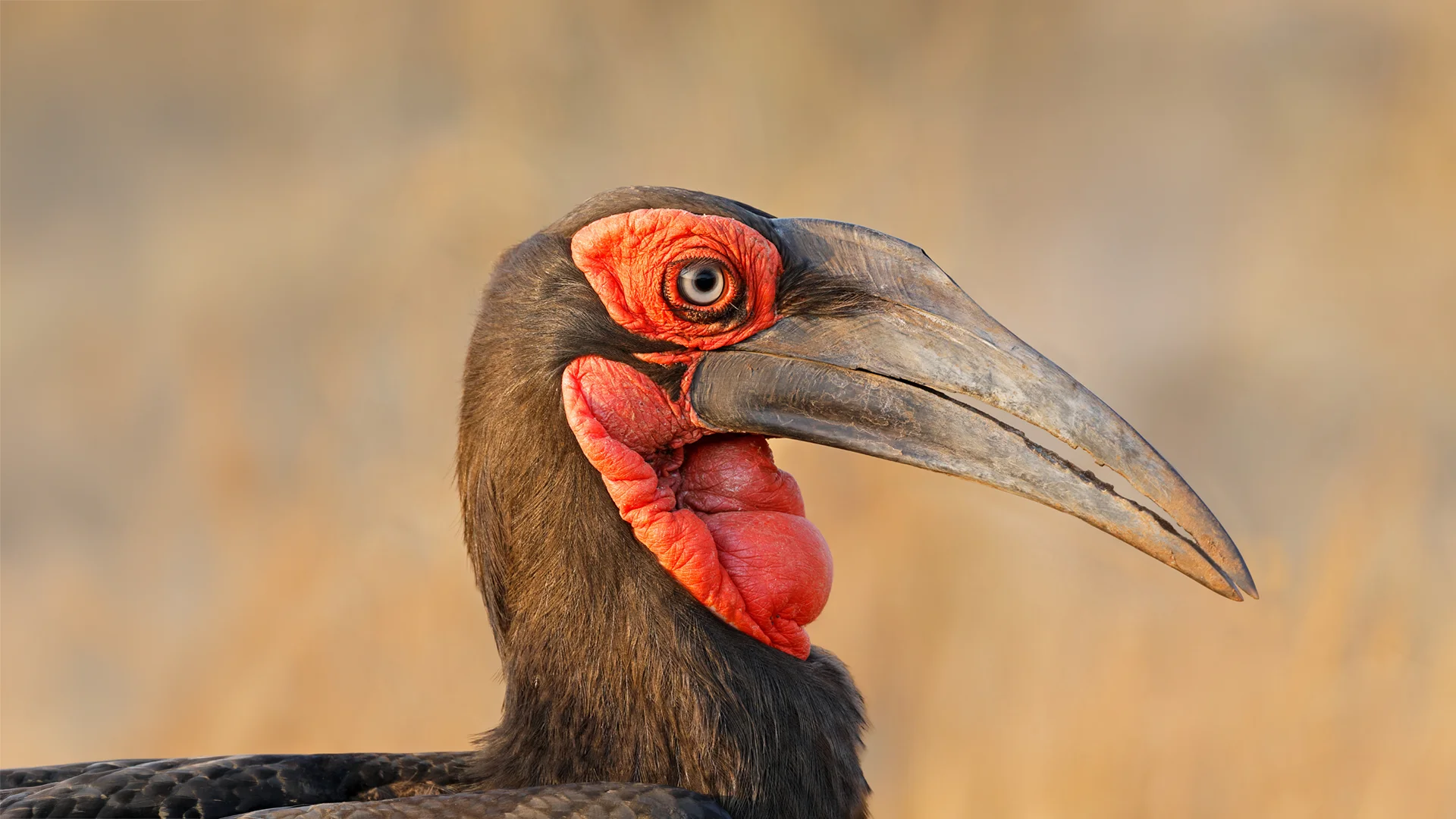
Southern ground-hornbill
The southern ground-hornbill is one of Africa's largest flying birds and is listed as Endangered. Greater Kruger is a stronghold for the species, thanks to extensive conservation efforts and nest protection programmes. These striking birds are often seen striding through open woodland in family groups, searching for reptiles, insects and small mammals.
Lappet-faced vulture
The lappet-faced vulture is Africa's largest vulture and is classified as Endangered. Although never common, Greater Kruger remains one of its key southern African refuges. Its enormous size, powerful bill and distinctive bare head make it an impressive sight at carcasses.
Martial eagle
The martial eagle is Africa's largest eagle and is listed as Endangered. Greater Kruger remains one of the best places to see this magnificent raptor, although it occurs at naturally low densities. With a wingspan exceeding two metres, it hunts everything from hares and monitor lizards to small antelope.
Saddle-billed stork
The saddle-billed stork is one of Africa's most spectacular wetland birds and is considered Endangered in South Africa. Greater Kruger's rivers, pans and seasonal wetlands provide important breeding and feeding habitat. Its striking black-and-white plumage, vivid red bill and towering height make it unmistakable.
Bird watching in Greater Kruger
Greater Kruger is a premier birding destination, with more than 500 recorded species across the ecosystem. The range of habitats – riverine forests, open savannah, mopane woodland, granite koppies and lowveld thornveld – supports an extraordinary diversity. Birding is rewarding year-round, though the summer months (November to March) bring an influx of Palearctic and intra-African migrants, dramatically increasing species counts.
Signature species to look for
African fish eagle – commonly heard and seen over rivers and dams; arguably the most recognisable bird call in Africa
Lilac-breasted roller – widespread and frequently perched on dead trees and power lines; among the most photographed birds on the continent
Southern ground hornbill – large, endangered ground-dwelling bird; usually seen in family groups; distinctive booming call at dawn
Southern yellow-billed hornbill – widespread in woodland and one of Greater Kruger's most familiar safari birds
Southern red-billed hornbill – common woodland species often seen foraging on the ground in pairs or small groups
Kori bustard – Africa's heaviest flying bird; seen in open areas
Martial eagle – Africa's largest eagle; powerful and increasingly scarce
Saddle-billed stork – striking large wader found near permanent water
Pel's fishing owl – nocturnal; one of the most sought-after species for serious birders; found in riverine forest
Lappet-faced vulture – massive and unmistakable; a species that faces ongoing pressure
Bateleur – striking short-tailed eagle with distinctive rocking flight; commonly seen soaring over open savanna
Secretarybird – long-legged raptor that hunts snakes and small prey on foot across open grasslands
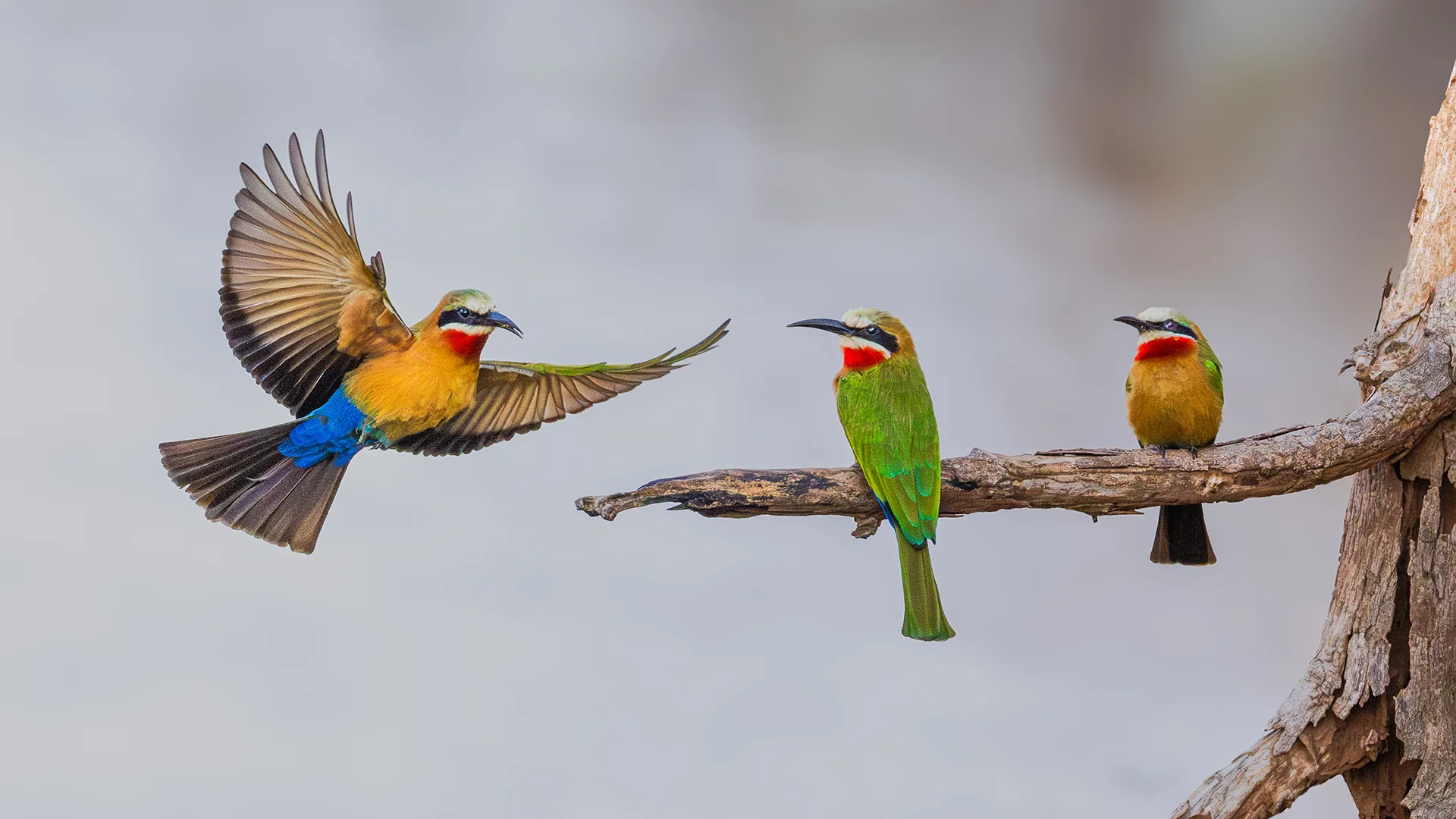
White-fronted bee-eater – colourful insect hunter commonly seen along rivers and sandy banks in small colonies
Goliath heron – the world's largest heron; found stalking fish in quiet rivers, dams and wetlands
Grey crowned crane – elegant, crowned wetland bird that occurs locally in suitable marshes and floodplains
White-backed vulture – the most frequently encountered vulture in Greater Kruger, often gathering in large numbers at carcasses
Tawny eagle – widespread raptor of open woodland, frequently seen perched on dead trees or circling overhead
Southern carmine bee-eater – one of Africa's most spectacular birds; seasonal colonies can be found nesting in sandy riverbanks
Woodland kingfisher – brilliant turquoise-blue kingfisher that arrives with the summer rains and is known for its distinctive call
African jacana – easily recognised by its exceptionally long toes, allowing it to walk across floating water lilies
When birding is at its best
The dry season (May to October) offers reliable sightings of resident species and excellent visibility. The summer wet season (November to March) brings migrants including woodland kingfishers, European rollers, steppe eagles and dozens of warblers. Serious birders often prioritise the wet season specifically for migrant diversity, despite the denser vegetation making larger mammals harder to spot.
Frequently asked questions
The dry season, from May to October, is generally best for wildlife viewing. Vegetation is thinner and animals concentrate around permanent water sources such as rivers and dams, making them easier to find and observe. Lions, elephants and buffalo are particularly visible during this period. The wet season brings lush vegetation and migrant birds but makes locating mammals more challenging.
Yes. Greater Kruger holds one of Africa's most significant African wild dog (painted wolf) populations, estimated at 350 to 450 individuals. The species is classified as Endangered by the IUCN. Packs range across Timbavati, Klaserie and the broader national park. Sightings are not guaranteed, but when they occur, wild dog hunts at dawn are among the most dramatic wildlife events in the bush.
Leopards are present throughout Greater Kruger, but the Sabi Sand private reserves – including MalaMala and Lion Sands – are particularly renowned for close, regular leopard sightings. The population here is among the most habituated to vehicles of anywhere in Africa, the result of decades of consistent, non-intrusive wildlife viewing from open 4x4 vehicles. A self-drive in the national park can also produce leopard sightings, though they are less predictable.
Greater Kruger has recorded more than 500 bird species, making it one of the most species-rich birding destinations on the continent. Highlights include the African fish eagle, lilac-breasted roller, southern ground hornbill, martial eagle, saddle-billed stork and the rarely seen Pel's fishing owl. The summer wet season brings an influx of migrants that significantly adds to the species count.
Greater Kruger is home to several species listed as Endangered or Vulnerable by the IUCN. African wild dogs (Endangered) occur in one of Africa's healthiest remaining populations. White and black rhinos are both present, though rhino numbers have been significantly reduced by poaching pressure across the ecosystem. Pangolins are present but rarely seen. Southern ground hornbills, a species in decline across southern Africa, are also found here, with Timbavati running active protection programmes.
Cheetahs are present in Greater Kruger but at lower densities than lions or leopards. The open plains and central regions of the national park offer the best probability of a sighting. Cheetahs are diurnal hunters, so early morning drives give the best opportunity. Private reserves do record cheetah sightings, but these are less consistent than in more open ecosystems such as the Serengeti or Kgalagadi Transfrontier Park.
Start planning your dream safari
Our travel experts will craft a no-obligation itinerary just for you. We have crafted over 5,000 safaris since 1991. Your personal details are protected; we only use this information to contact you.
Why book your safari with us?

Deep Experience & Knowledge
Handcrafted experiential safaris since 1991.
Travel in Africa is about knowing when and where to go, and with whom. A few weeks too early/late or a few kilometres off course, and you could miss the greatest show on Earth. And wouldn’t that be a pity?

Trust & Safety

Make A Difference
We donate a portion of the revenue from every safari sold to carefully selected conservation projects that make a significant difference at ground level.
YOUR safari choice does make a difference - thank you!