

Tailor-made safaris. Since 1991


Trust us to find you the rarest animals, the most spectacular wildlife events, the remotest landscapes and deeply meaningful cultural encounters!
Your first Kruger safari: what to know before you go
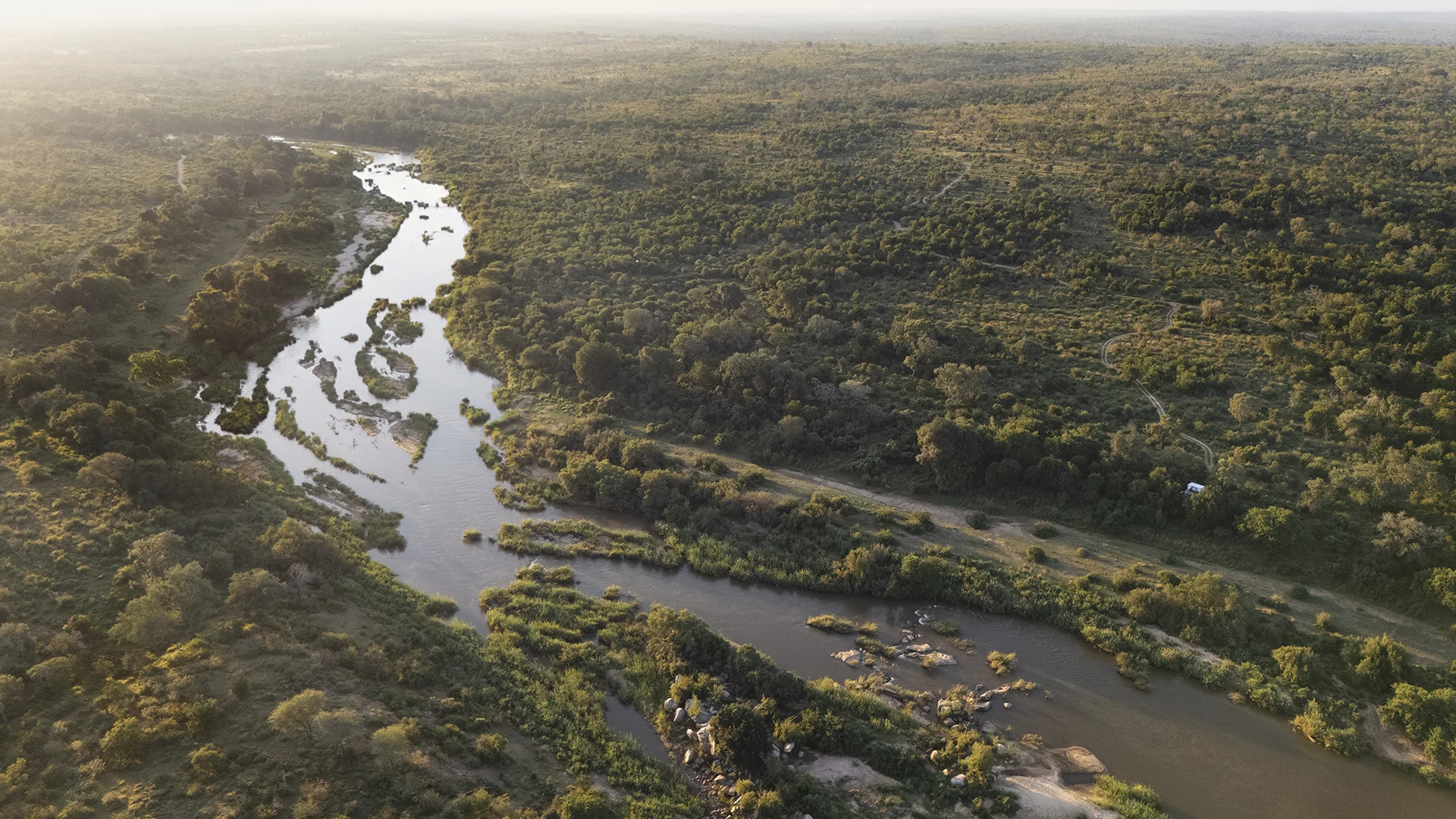
Kruger National Park is one of Africa's most accessible and rewarding first-safari destinations. It covers roughly 19,485 km² in South Africa, making it roughly the same size as Wales. It shares unfenced borders with a series of private reserves collectively known as Greater Kruger, and reliably delivers Big Five sightings across a well-managed road network. Some key things to note prior to planning your visit:
Most visitors fly into Johannesburg and connect to the park in under two hours via a flight transfer.
The dry season from May to September gives the best wildlife viewing conditions.
A first visit of four to seven nights is the Africa Geographic team's standard recommendation.
Thankfully, because South Africa is so well-developed for tourists, a Kruger safari doesn't require you to have any prior experience – especially if you work with safari experts to iron out your logistics. The national park has good infrastructure, the road network is navigable in an ordinary car, and wildlife is genuinely abundant. What it does require is a few decisions made in the right order: when to go, how long to stay, how you want to experience it, and how to get there.
This guide focuses on those decisions – the logistics, the practicalities and the ground-level realities of a first visit. For help choosing among the private reserves, see our guide to Sabi Sand, Timbavati, and MalaMala.
Greater Kruger safaris we love
Greater Kruger is one of Africa's most versatile safari landscapes. These three Africa Geographic itineraries cover the range from classic Big Five to multi-country adventure:
Classic Big Five safari in South Africa: Nine days across Timbavati in the Greater Kruger and Madikwe Game Reserve – guided drives, off-road access, night drives, and expert naturalist guiding throughout. View this safari →
MalaMala and Madikwe Big Five safari: An exclusive nine-day journey tracking lion, leopard, elephant, rhino and buffalo across MalaMala's Sabi River frontage and Madikwe's rewilded thornveld. Explore this itinerary →
Timbavati, Victoria Falls and Chobe: Ten days combining guided Big Five wildlife activities in Timbavati with the spectacle of Victoria Falls and boat-based wildlife viewing on the Chobe River. Read more about this itinerary →
How long to spend in Kruger
Four to seven nights is the right range for most first-timers. A three-night minimum gives you enough drives to build up a reasonable tally of species – but wildlife viewing rewards patience, and the difference between three nights and five is significant.
If your time is limited, concentrate it. Four nights in one area of the park delivers more than four days trying to cover the whole park.
If you have five nights or more, consider splitting your stay between two different areas of the Greater Kruger ecosystem. Combining, for example, two lodges within different private Greater Kruger reserves, such as Sabi Sands and Timbavati, or pairing a private reserve with a concession within the borders of Kruger National Park, gives you access to different habitats, guiding styles and wildlife densities. No two areas are exactly alike, and changing locations often adds noticeably more variety to your safari without requiring long travel distances.
Trip length | Recommended structure | Notes |
3 nights | One lodge | Minimum viable; choose one area and stay put |
5 nights | 3 nights in a Greater Kruger private reserve + 2 nights in a concession within the park | A common first-timer combination |
7 nights | 4 nights in a Greater Kruger private reserve + 3 nights in a concession within the park | Allows time in multiple sections |
10+ nights | Two reserves + a concession, or combined with Cape Town | See our multi-destination South Africa itineraries |
When to visit
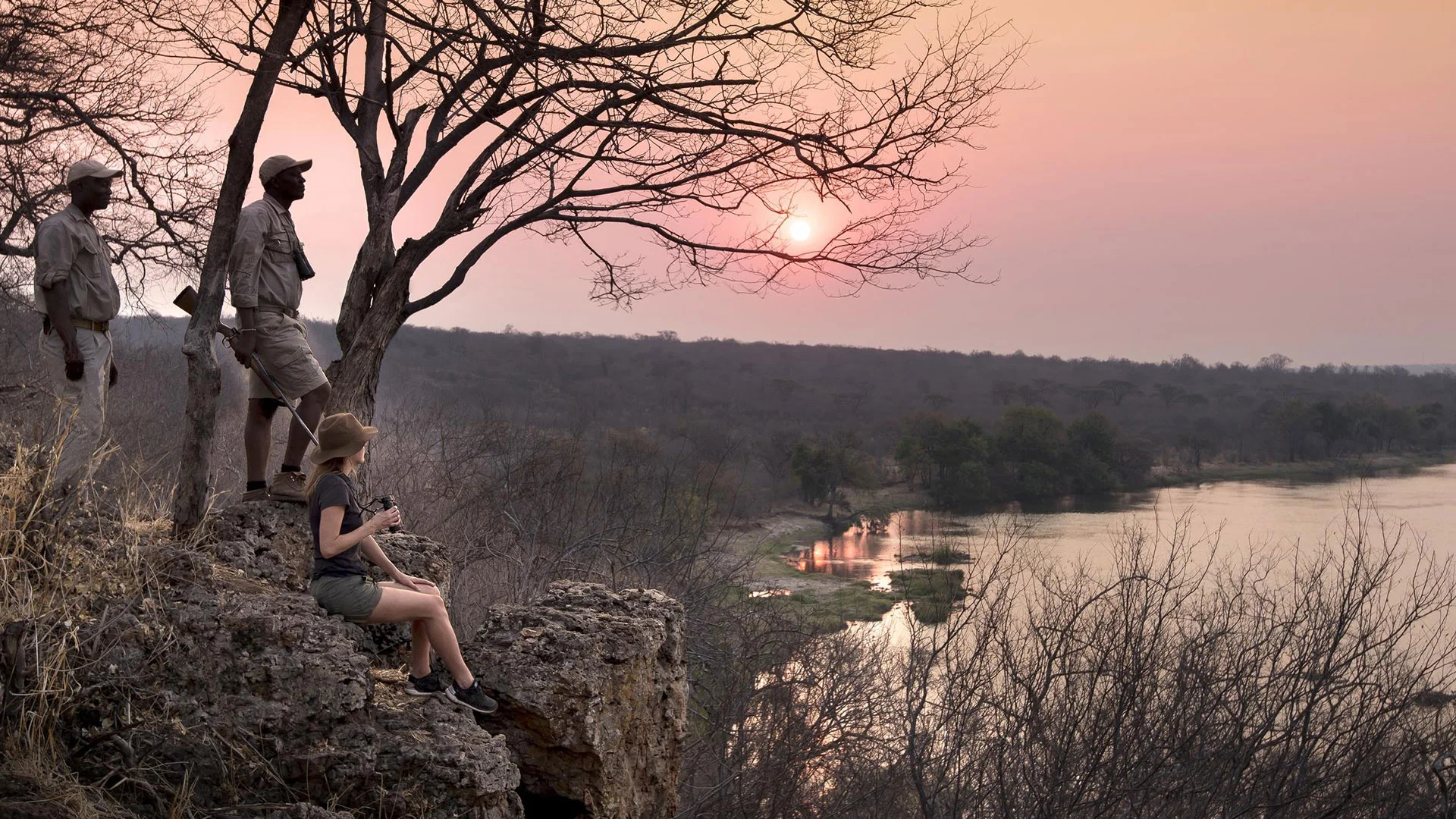
Dry season: May to September
This is the best period for wildlife viewing in Kruger. Vegetation thins out as rainfall drops, animals concentrate around permanent water sources, and the lack of grass cover makes spotting much easier. Temperatures are mild to warm during the day but can drop sharply on early-morning drives in an open vehicle – pack a warm layer even in June and July. July and August are peak season: excellent conditions but higher demand, so book early.
Green season: October to April
The wet season brings dramatic landscapes, outstanding birdwatching and noticeably lower prices. Predator activity is often high in October and November as young prey animals are born. The trade-off is dense vegetation, which makes spotting more difficult. This is also the higher-risk period for malaria. Many experienced travellers rate December and January very highly for atmosphere and value.
Malaria considerations
Kruger and the adjacent private reserves are in a malaria-risk area. Risk is lower in the dry season and higher from October through April. Consult a travel health clinic before your trip – prophylaxis, DEET-based repellent and long sleeves at dusk and dawn are the standard measures. Travellers who prefer to avoid the malaria zone entirely have good options in malaria-free reserves; our safari specialists can advise.
What a Kruger safari costs
Costs vary considerably depending on the type of experience. Staying in the national park-managed accommodation (self-drive, SANParks rest camps) is the most budget-friendly option, but this requires additional planning such as vehicles, food and self driving. Private reserve lodges are priced higher but are fully all-inclusive – accommodation, all meals, two guided wildlife drives per day, and most other activities.
Option | Approximate cost per person per night | What's included |
SANParks rest camps (self-drive) | US$ 30 – US$ 180 | Accommodation + park conservation fee (food not included) |
Mid-range private lodge | US$ 400 – US$ 700 | All-inclusive: meals, drives, park fees |
Premium private lodge (Sabi Sands, Timbavati, MalaMala) | US$ 1,000 – US$ 2,500+ | All-inclusive; private vehicle available at some lodges |
Flights, transfers and any pre- or post-safari accommodation are additional. Africa Geographic provides full cost breakdowns and can package itineraries across all price points. Speak to our safari team for a personalised quote.
What to expect on safari
Your safari day in a private reserve
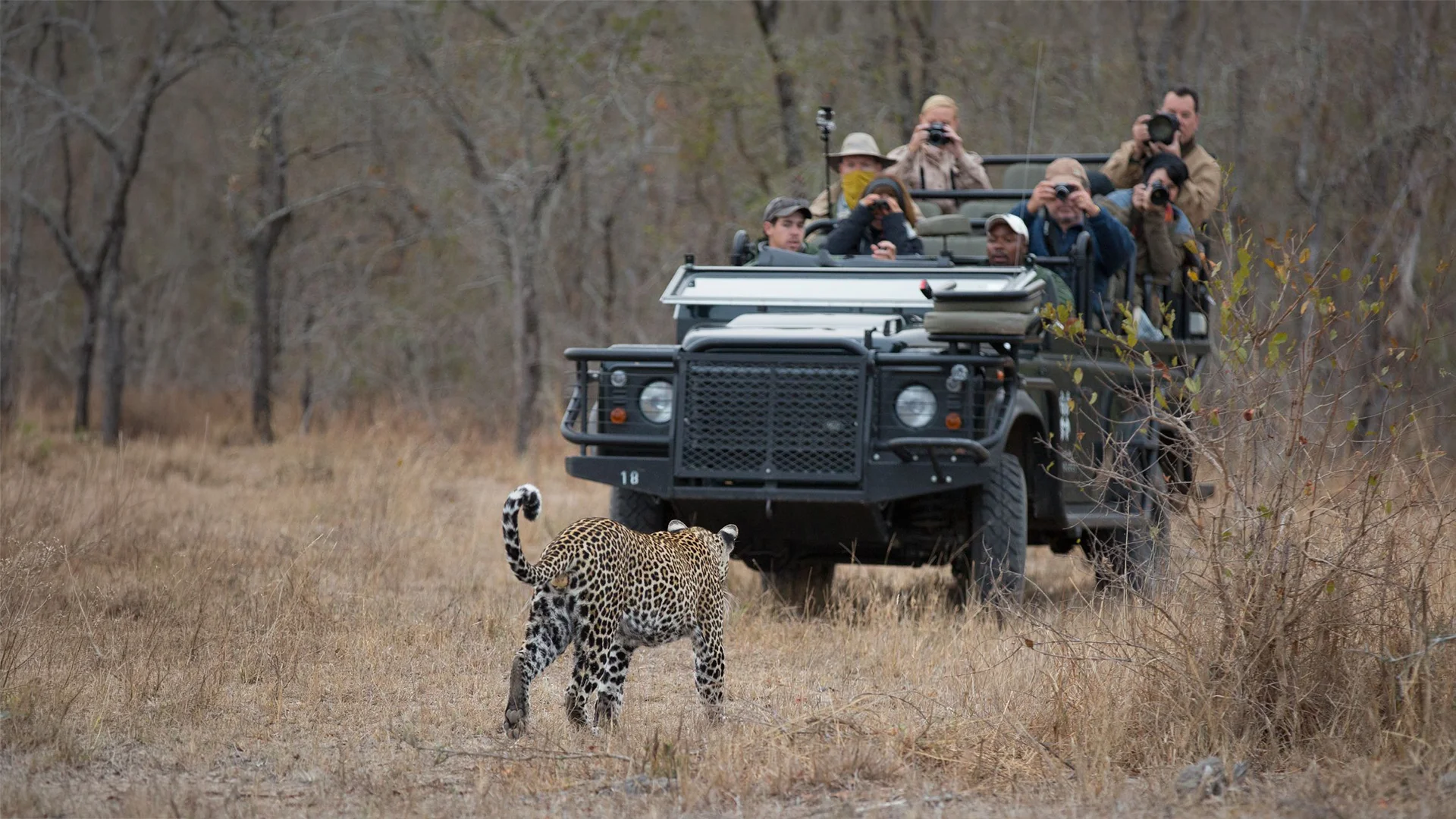
Private reserve stays are structured around two wildlife drives per day. The morning drive departs at or just before sunrise – typically 05:30 – and returns mid-morning for brunch. The afternoon drive departs around 16:00, continues after dark with a spotlight, and returns in time for dinner. Drives last two to four hours. Between drives, guests eat, rest, lie around the pool, or join optional walking activities.
Your guide and tracker work together on every drive. The tracker reads the ground – prints, broken branches, fresh dung – while the guide interprets behaviour and context. This combination is what makes predator tracking in Greater Kruger so effective, and it's not something a self-driver can replicate on their own.
Your safari day in the national park
Self-drive visitors set their own pace and route. Gates open at sunrise and close at sunset; arriving after closing time incurs a fine, so plan distances carefully. The most productive driving is in the early morning and late afternoon when animals are active. Midday is slower – use that time to stop at a picnic site, check in at a rest camp, or look for species that are harder to spot on the move, such as birds of prey.
Guided morning drives and night drives are available from most SANParks rest camps and are worth booking, particularly for first-timers. They give you access to an experienced guide's knowledge without the full cost of a private lodge stay.
A self-drive safari can be hugely rewarding, but it requires considerably more planning and self-sufficiency than many first-time visitors expect. You'll need to book accommodation well in advance, navigate the park yourself, manage gate opening and closing times, and rely on your own wildlife-spotting skills. For most first-time visitors, staying at a safari lodge is the easier and more rewarding choice. Experienced guides know where to look, interpret animal behaviour, maximise every game drive and take care of all the logistics, allowing you to focus entirely on enjoying the safari.
Wish you were here?
Safety and bush behaviour
Rules in the national park
Remain in your vehicle at all times except at designated rest camps, picnic sites and viewpoints. Never approach animals on foot. Keep noise to a minimum and switch your engine off when watching wildlife – this shows respect for both the animals and other visitors. Speed limits are 50 km/h on tarred roads and 40 km/h on gravel. These are actively enforced.
On a guided safari
Your guide's instructions are not suggestions. Follow them precisely, especially around elephant, lion and buffalo. Do not stand up in the vehicle or lean out of it. When on a walking safari, stay behind the guide, move quietly and do exactly as instructed. Tipping guides and trackers is standard practice; our team can advise on appropriate amounts for the lodges we use.
Stefan Winterboer, South Africa safari expert at Africa Geographic, describes the quality of guiding in Greater Kruger as one of its defining features: "You couldn't ask for a stronger Big Five safari pairing: exceptional wildlife viewing, outstanding guiding, warm, polished hospitality, and beautiful accommodation. MalaMala delivers a complete, world-class safari experience."
Read more about safety on safari in this comprehensive article.
Frequently asked questions
Kruger National Park in South Africa covers approximately 19,485 km² across Limpopo and Mpumalanga, making it one of Africa's largest game reserves and a reliable first-safari destination. The park supports the Big Five – lion, leopard, elephant, buffalo and rhino – plus over 500 bird species and 147 mammal species. Visitors can self-drive within the national park or book a guided stay at a concession within the park, or at one of the private reserves bordering Kruger, such as Sabi Sands, Timbavati or MalaMala. The dry season from May to September offers the best wildlife viewing conditions. Most international visitors fly into OR Tambo International Airport in Johannesburg, then connect by road (approximately five hours to the southern gates) or flight (approximately one hour to Hoedspruit or Kruger Mpumalanga International Airport). A private lodge stay costs from around US$ 400 per person per night; self-drive rest camps within the public park are available from approximately US$ 30 per person per night.
Yes. Kruger is one of the most straightforward safari destinations in Africa for first-timers. The national park has a well-maintained road network, established infrastructure, and many airports nearby for easy access. Private reserve lodges handle all logistics from arrival and provide a full safety briefing before each activity. There is no prior experience required. The main preparation is practical: confirm your health precautions, pack appropriately, and plan your route or lodge stay in advance.
Africa Geographic recommends four to seven nights for a first visit. Three nights is the workable minimum but leaves little margin for the patience that leads to the best wildlife encounters. A popular structure is three to four nights in one lodge, paired with two to three nights in another lodge. If time is tight, concentrate it: four nights in one well-chosen location outperforms four days moving between sections.
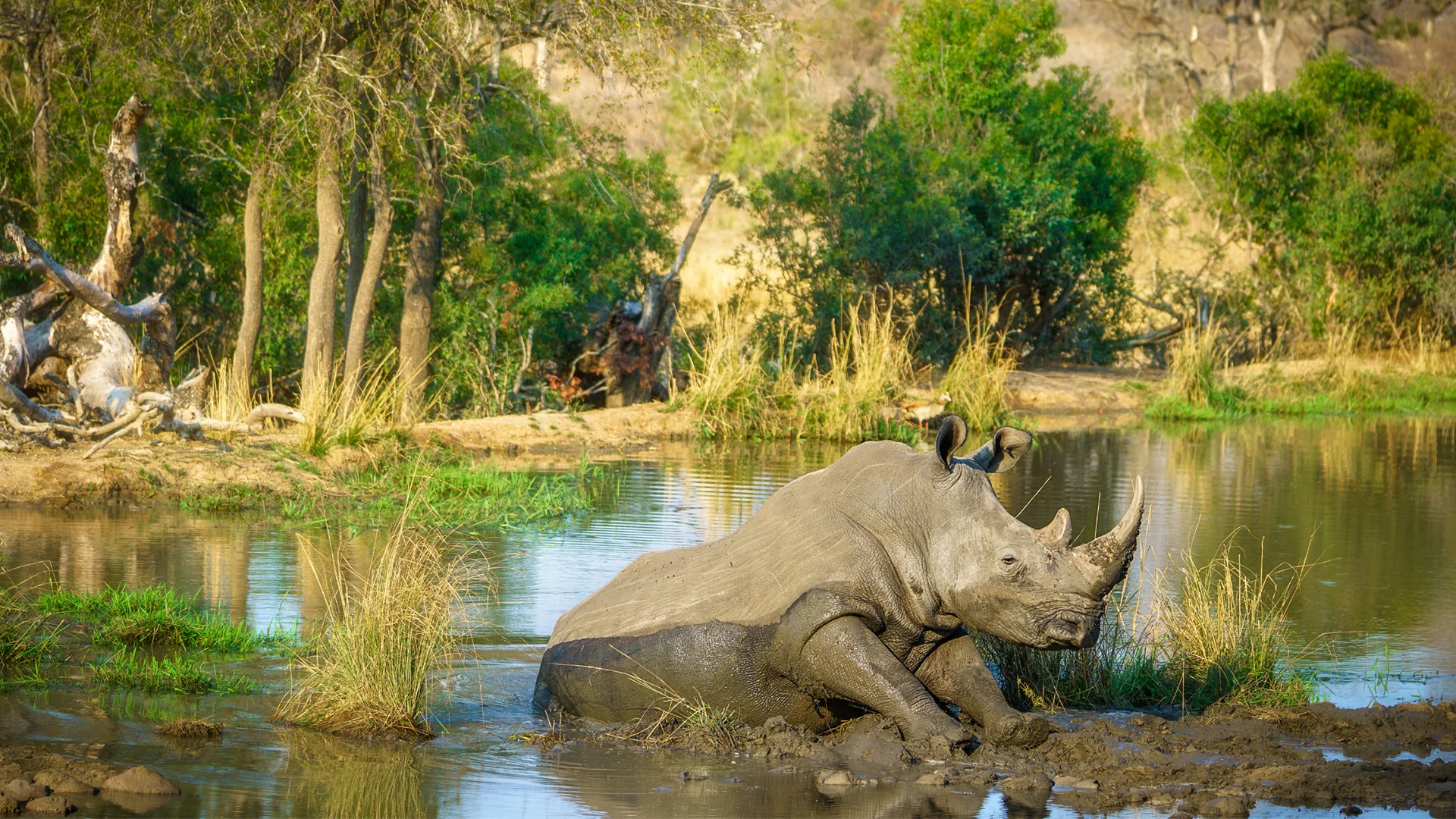
Elephant and buffalo are reliably seen throughout the park in all seasons. Lion sightings are frequent, particularly in the south. White rhino encounters are achievable but less predictable than in previous years. Leopards are frequently seen; and private reserve guides tracking known individuals deliver far more consistent sightings. Giraffe, zebra, hippo, crocodile, impala and warthog are seen on virtually every drive. For a full breakdown of what to look for and where, see our Kruger wildlife guide.
May to September is the recommended window for first-timers. Wildlife is most visible in the dry season: vegetation is thin, water is concentrated, and animals are easier to locate. July and August are peak months – book at least six months ahead for private lodges. October and November can also be excellent, particularly for predator activity, though vegetation is beginning to thicken. The full wet season (December to March) suits experienced visitors and birdwatchers more than absolute beginners.
Kruger is considered safe for visitors who follow the park's rules. Within the national park, you stay in your vehicle throughout wildlife activities; SANParks manages roads and camps to a consistent standard. In private reserves, trained guides and trackers manage all wildlife encounters. Standard precautions apply: drive in daylight enroute to your lodge destination, secure valuables at camps, and carry a fully charged phone. The main health risk is malaria, which is manageable with appropriate prophylaxis and repellent.
Self-drive in the public park using SANParks rest camps costs approximately US$ 30 to US$ 180 per person per night. Mid-range all-inclusive private lodges start from around US$ 400 to US$ 700 per person per night. Premium lodges in Sabi Sands, Timbavati and MalaMala range from US$ 1,000 to US$ 2,500 per person per night, fully inclusive. International flights to Johannesburg are separate. Africa Geographic can package itineraries and provide transparent pricing across all levels.
Sabi Sands, Timbavati and MalaMala each have different ecosystems, wildlife profiles, lodge styles and price points. Choosing between them depends on your budget, your priorities for species sightings, and how exclusive an experience you want. Africa Geographic has first-hand knowledge of all the major Greater Kruger reserves and can advise based on your specific travel dates and preferences. See our dedicated guide to choosing a Kruger private reserve for a full comparison.
Start planning your dream safari
Our travel experts will craft a no-obligation itinerary just for you. We have crafted over 5,000 safaris since 1991. Your personal details are protected; we only use this information to contact you.
Why book your safari with us?

Deep Experience & Knowledge
Handcrafted experiential safaris since 1991.
Travel in Africa is about knowing when and where to go, and with whom. A few weeks too early/late or a few kilometres off course, and you could miss the greatest show on Earth. And wouldn’t that be a pity?

Trust & Safety

Make A Difference
We donate a portion of the revenue from every safari sold to carefully selected conservation projects that make a significant difference at ground level.
YOUR safari choice does make a difference - thank you!