
Tailor-made safaris. Since 1991

Trust us to find you the rarest animals, the most spectacular wildlife events, the remotest landscapes and deeply meaningful cultural encounters!
Kruger National Park vs private reserve or concession – same wildlife, two very different experiences
South Africa’s Kruger National Park is one of Africa’s great wildlife destinations – and it shares its western boundary with a ring of private and community reserves that have committed to managing the land as a single conservation landscape. Sabi Sand, MalaMala, Timbavati, Klaserie, Thornybush, Balule and the community-owned Manyeleti all cooperate with Kruger under agreements that keep fences down and animals moving freely. Within the national park itself, several privately operated concessions also offer exclusive safari experiences. Although these concessions lie inside the national park and remain subject to SANParks' conservation management, they combine access to Kruger's vast wilderness with smaller lodges, guided activities and lower guest densities. Together, this ecosystem covers an area about the size of Belgium. It is, by almost any measure, one of the finest places in Africa to see wildlife.
The question most travellers face is which part of that landscape to visit – and how. In the national park, you drive yourself along 2,000km of tar and gravel roads, stop at a waterhole and watch what arrives. In the private reserves next door, a trained guide takes you off-road in an open vehicle at dawn and at night, reads tracks in the sand, and positions you a few metres from a leopard on a kill. Both deliver genuine wildlife encounters. They are not the same experience, and this guide explains the difference clearly so you can choose the right one for your trip.
At a glance – the key differences
Factor | Kruger National Park | Private concessions within Kruger National Park | Greater Kruger private reserves |
Access | Open to any visitor; self-drive or guided day tours | Lodge guests only; no day visitors | Lodge guests only; no day visitors |
Activities | Self-drive; guided day drives and walks available at extra cost | Guided morning and evening drives, guided walks, night drives – all included | Guided morning and evening drives, guided walks, night drives – all included |
Off-road driving | Not permitted | Permitted | Permitted |
Night drives | Limited – as guided outings at extra cost | Included | Included |
Walking safaris | Wilderness trails (advance booking, minimum 2 nights); day walks from some rest camps | Available | Available |
Accommodation | SANParks rest camps (budget–mid-range) | Private lodges from mid-range to ultra-luxury | Private lodges from mid-range to ultra-luxury |
Cost per person/night | US$50–US$300 for rest camps | US$450–US$4,000+ all-inclusive | US$500–US$4,000+ all-inclusive |
Vehicle numbers at sightings | Unrestricted – can be 10–20+ vehicles at popular sightings | Typically limited to 2–3 vehicles per sighting by concession agreement | Typically limited to 2–3 vehicles per sighting by reserve agreement |
Big Five availability | Present throughout; sightings not guaranteed | High sighting rates for Big Five in certain private concessions, while some fall out of range for certain species | High sighting rates for all Big Five; some reserves have exceptional leopard and lion density |
Malaria risk | Moderate; precautions advised | Moderate; precautions advised | Moderate; precautions advised |
Who should choose which?
Choose Kruger National Park if:
• You are on a budget ($50–$300/night) or prefer self-driving.
• You enjoy the flexibility of setting your own schedule and staying in SANParks rest camps.
Choose a Greater Kruger Private Reserve if:
• You want guaranteed off-road tracking (especially for leopards and lions).
• You prefer luxury all-inclusive stays with guided morning/night open 4x4 game drives.
• You want strict limits on vehicle numbers at sightings (max 2–3 vehicles).
Safaris we love
The Greater Kruger ecosystem offers some of Africa's most accessible and rewarding Big Five wildlife viewing, whether you're tracking leopards in the Sabi Sand or exploring the vast open landscapes of Timbavati. Here are three Africa Geographic safaris to consider:
Mashatu and MalaMala Big Five safari: Combines two of Africa's most celebrated Big Five destinations – Mashatu in Botswana's Tuli Block and MalaMala in the Sabi Sand – for a 10-day luxury journey of exceptional wildlife encounters, baobab landscapes and unforgettable guided experiences. View this safari
Chobe, Victoria Falls and Timbavati: A 10-day luxury safari pairing the wildlife-rich Chobe Riverfront and iconic Victoria Falls with a private reserve stay in Timbavati in the Greater Kruger – combining guided Big Five wildlife viewing with one of Africa's great natural landmarks. Explore this safari
Classic Big Five safari in South Africa: A 9-day guided journey through Timbavati in the Greater Kruger and Madikwe Game Reserve, tracking lion, leopard, elephant, rhino and buffalo with expert guides across two of South Africa's finest reserves. Read more about this safari
Wildlife viewing – is there a difference?
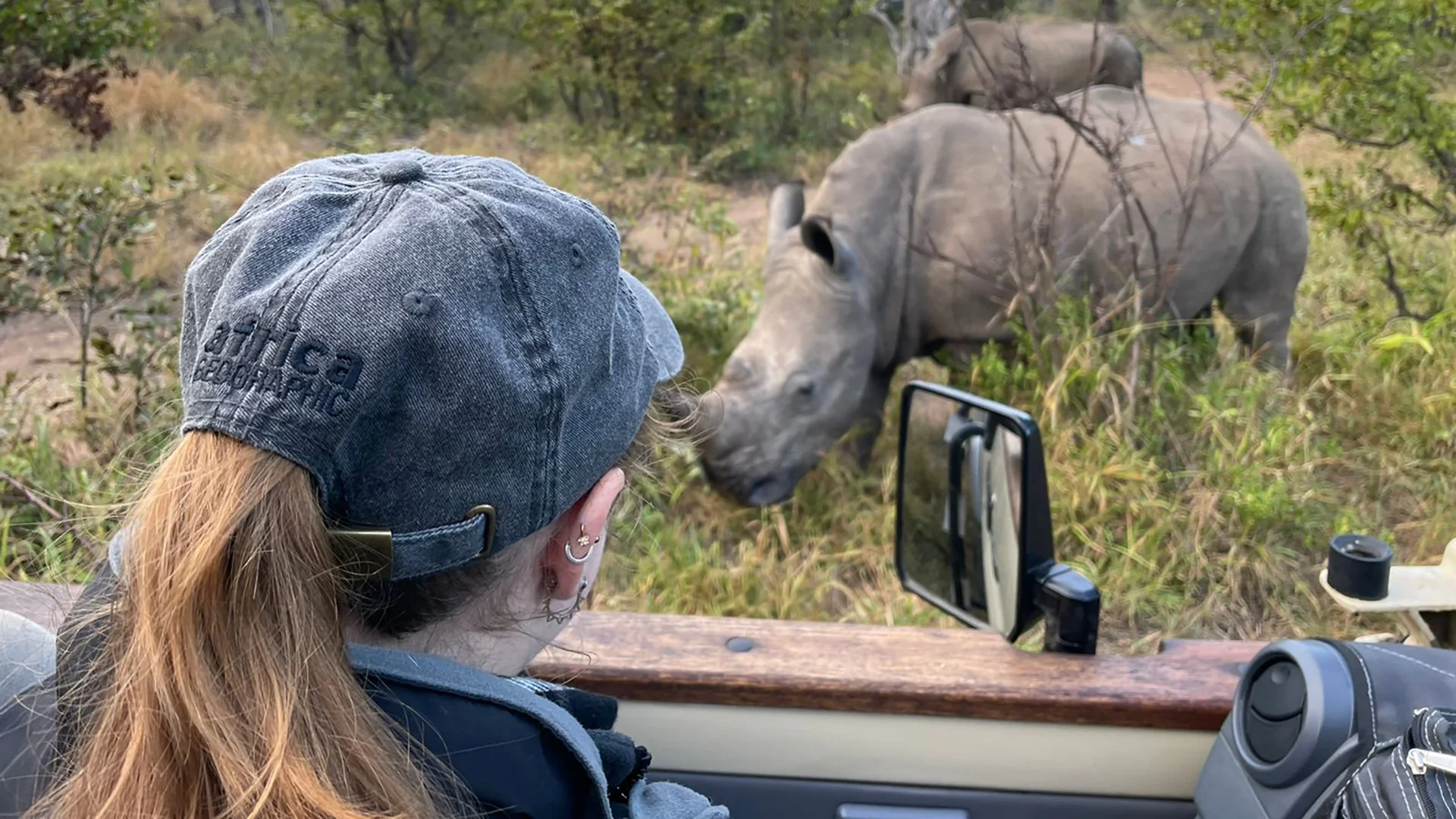
Both of these parks hold the same wildlife – they’re in the same ecosystem. The Kruger animals move freely between the national park and the private reserves, which share unfenced boundaries. The difference lies in how you encounter them.
In the national park
Wildlife viewing in Kruger relies on your patience, good timing and knowing which roads to drive.
The park holds large numbers of lion, elephant, buffalo, white rhino and leopard, along with cheetah, wild dog and close to 500 bird species.
Sightings are frequent and often spectacular.
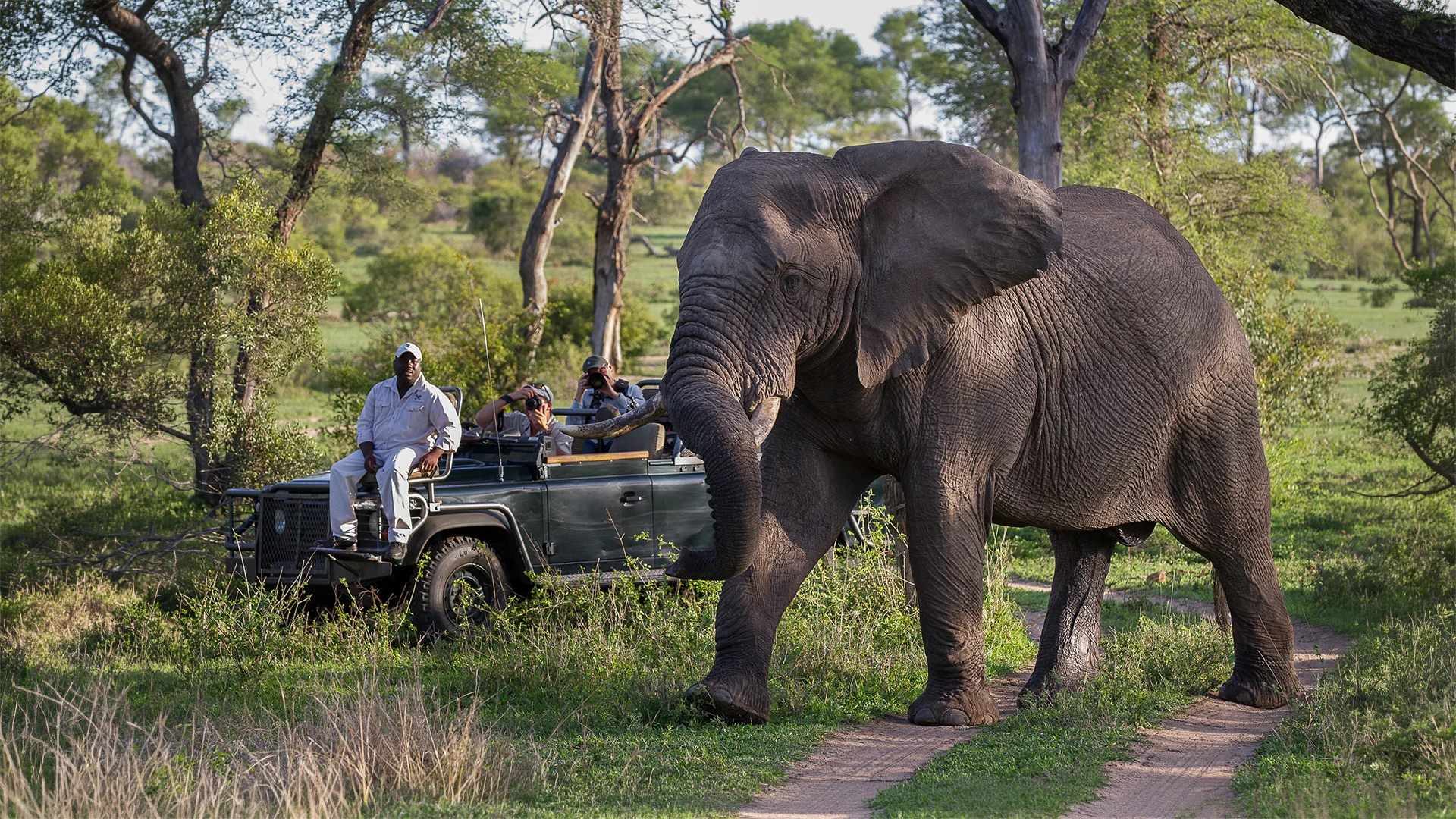
The challenge is other vehicles: popular sightings can attract 15 or more cars, particularly in peak season (July to September). You cannot leave the road to reposition, and you must be back at camp gates by sunset.
In the private reserves and concessions
Private reserves and concessions offer off-road access, which changes the quality of wildlife encounters considerably.
Guides follow tracks through the bush and approach animals from the optimal angle, often in near-silence.
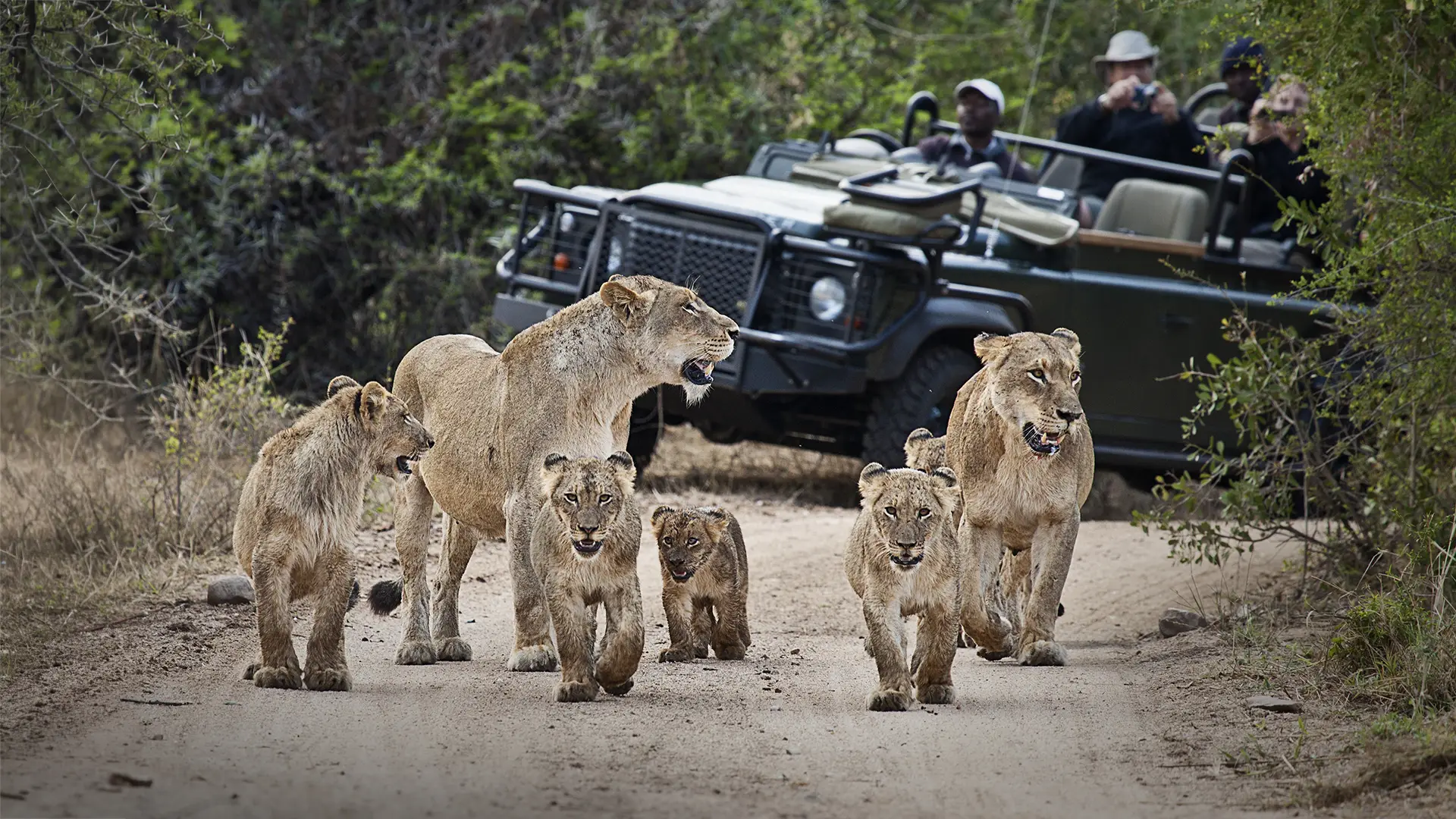
Vehicle numbers at any sighting are capped – typically two or three – by reserve agreements.
Sightings that would become a traffic jam in the national park remain intimate in private reserves and concessions.
Night drives open up a different dimension entirely: leopard, hyena, lion, genet, civets and owls are all active after dark.
Stefan Winterboer, Africa Geographic's South Africa safari expert, describes Lion Sands River Lodge in the Sabi Sand as 'one of Africa's most consistently productive wildlife areas, with exceptional game viewing year-round.'
Wish you were here?
Activities and accommodation
Kruger National Park
Self-driving is Kruger's defining experience: the freedom to set your own route and pace across an enormous landscape is genuinely rewarding. SANParks also offers guided morning drives and guided walks from most rest camps (book in advance), and multi-day wilderness walking trails with armed rangers. The southern Kruger section around Skukuza and Lower Sabie is the most wildlife-dense and most visited; the northern section is quieter with wilder scenery.
SANParks rest camps range from basic camping to comfortable en-suite chalets and bush cottages. Facilities vary by camp – Skukuza, Lower Sabie, Berg-en-Dal and Satara are the largest and best-equipped. Within the park boundaries, a small number of private concession lodges operate at mid-range to luxury pricing, with exclusive traversing rights over their concession area. These lodges include guided drives and walks within the park – a middle-ground option worth considering.
Greater Kruger private reserves
Private reserve lodges typically price on an all-inclusive basis covering accommodation, all meals, alcoholic drinks, and all wildlife activities. The Sabi Sand and MalaMala, which share a long unfenced border with Kruger and are particularly renowned for leopard sightings, sit at the premium end. Timbavati, Klaserie and Thornybush offer a range of options from mid-range tented camps to luxury lodges, often at lower prices than Sabi Sand.
Our community manager, Sarah Goodman, puts the conservation value of the Timbavati in context: "For me, choosing the Timbavati means backing hands-on conservation and community work. Eco-tourism directly funds anti-poaching and sustainability projects that protect rhinos, pangolins, and Southern Ground Hornbills – making it a meaningful safari choice."
Private reserves typically include two guided wildlife drives per day (morning and late afternoon/evening, running into the dark), a guided walk, and a sundowner stop in the field. The guide-to-guest ratio is low – usually one guide per vehicle, with a tracker in some reserves. Meals, drinks and all activities are included in most lodge rates. The structure suits travellers who want maximum wildlife exposure without the logistics of planning their own drives.
Private concessions within Kruger National Park offer a similar fully guided lodge experience, but within the boundaries of the national park itself. These concessions are leased from SANParks and operate under strict conservation regulations, with exclusive traversing rights over designated areas. They combine the intimacy of small luxury lodges and expert-guided game drives with access to Kruger's renowned wildlife and landscapes.
Which experience suits which traveller
Traveller profile | Recommended option | Reason | Key consideration |
Budget traveller | Kruger National Park | Self-drive delivers excellent wildlife viewing at low cost | Book rest camps well in advance for peak season |
First-timer wanting a comprehensive experience | Greater Kruger private reserve or concession | Guided activities, high sighting rates, and immersive structure suit first visits | Budget for all-inclusive rates; 3 nights minimum recommended |
Honeymoon couple | Luxury private reserve (Sabi Sand or Timbavati) | Privacy, intimacy, remote setting and premium service | Many lodges offer honeymoon add-ons; confirm at booking |
Family with children under 12 | Kruger self-drive or family-friendly lodge in Klaserie or Thornybush | Self-drive allows flexibility; check lodge minimum age policies | Most luxury lodges have minimum age of 12 for night drives and walks |
Wildlife photographer | Private reserve (Sabi Sand or Timbavati) with dedicated photography vehicles | Off-road access, vehicle positioning and no crowd pressure | Enquire specifically about photography vehicles and photographic guides |
Traveller with limited time (2–3 nights) | Private reserve or concession | All-inclusive structure maximises wildlife time; no planning required | Self-drive Kruger rewards longer stays to cover different areas |
Frequently asked questions
Kruger National Park is a self-drive safari destination offering accessible wildlife viewing at low cost with rest camps from around US$50 per person per night. The Greater Kruger private reserves and concessions – including Sabi Sand, Timbavati, MalaMala and Klaserie – are privately managed, unfenced areas bordering Kruger that offer guided wildlife activities, off-road driving, night drives and walking safaris. Private reserves and concessions cost significantly more, typically from US$450 to US$4,000+ per person per night all-inclusive, but deliver a more structured, exclusive and activity-rich safari experience. The right choice depends on budget, travel style, group composition and the type of wildlife experience sought.
Yes. Kruger National Park is one of Africa's great self-drive wildlife destinations, offering excellent wildlife viewing at a lower price than that of private reserves. The park has a very large population of lions, elephants, buffalo, white rhinos, leopards, cheetahs, and wild dogs. For travellers prepared to spend time driving different roads and learning the park's rhythms, the experience is genuinely rewarding. It suits independent travellers, those on tighter budgets, and those who prefer the freedom of self-directed exploration over structured guided programmes.
Yes, private reserves and concessions offer a better quality and consistency of wildlife encounters. Off-road access, vehicle positioning, trackers, night drives and limited vehicle numbers at sightings combine to produce a more immersive and often more intimate wildlife experience. For species such as leopard in the Sabi Sand and MalaMala, sighting rates in the private reserves are substantially higher than in the open national park.
Yes, and this is a popular approach for travellers wanting the breadth of Kruger National Park alongside the depth of a private reserve or concession. A practical combination is two to three nights in the national park (self-drive) followed by two to three nights in a private reserve. Some itineraries position Kruger at the beginning to orient travellers with the landscape and species, then use the private reserve stay to get closer to specific animals. Africa Geographic's experts will build combined itineraries to suit most budgets.
Off-road driving means leaving the designated road network to follow wildlife directly into the bush. In Kruger National Park, all vehicles must stay on the road at all times. In private reserves with their own traversing agreements, guides can drive off-road across the reserve land to track animals and position vehicles for optimal viewing. This makes a significant difference to sighting quality – guides can approach from downwind so as not to disturb the animal or sit quietly in the right position as a predator moves toward prey.
Yes. The Greater Kruger region – the national park, its concessions and all adjoining private reserves – falls within a malaria-risk zone. Antimalarial precautions (prophylactics and insect repellent) are recommended for all visitors, regardless of whether they stay in the park or a private reserve. The risk is lower during the dry winter months (May to September) and higher during the summer wet season (November to April). Consult a travel health professional before your trip.
For peak dry season (July to September), most reputable private reserve lodges book up twelve months in advance, particularly for sought-after properties like those in the Sabi Sand. School holiday periods – South African summer holidays in December and the UK/US summer window in July–August – are particularly competitive. Mid-range lodges and lesser-known reserves in Klaserie and Thornybush often have more availability. For wet season travel, shorter lead times of two to three months are typically sufficient for most lodges.
Kruger National Park is well-suited to families with children of all ages. Self-drive allows you to set your own pace, stop when children need a break, and visit at the times that suit your group. Most SANParks rest camps have family accommodation and basic facilities. In the private reserves, most lodges set a minimum age of 10 to 12 for walking safaris and night drives, and some luxury properties have minimum ages of 12 or 16 for all activities. Check individual lodge policies with an Africa Geographic travel planner before booking if you're travelling with young children.
The Greater Kruger ecosystem refers to the expanded conservation area made up of Kruger National Park and the privately managed reserves that share unfenced borders with it. These include the Sabi Sand, Timbavati, MalaMala, Klaserie, Thornybush and several others. Animals – including elephant, lion, leopard and wild dog – move freely across the entire area. The ecosystem covers roughly 22,000 km² in total, making it one of the largest protected wildlife areas in Africa.
Start planning your dream safari
Our travel experts will craft a no-obligation itinerary just for you. We have crafted over 5,000 safaris since 1991. Your personal details are protected; we only use this information to contact you.
Why book your safari with us?

Deep Experience & Knowledge
Handcrafted experiential safaris since 1991.
Travel in Africa is about knowing when and where to go, and with whom. A few weeks too early/late or a few kilometres off course, and you could miss the greatest show on Earth. And wouldn’t that be a pity?

Trust & Safety

Make A Difference
We donate a portion of the revenue from every safari sold to carefully selected conservation projects that make a significant difference at ground level.
YOUR safari choice does make a difference - thank you!