

Tailor-made safaris. Since 1991



Durban: South Africa's Vibrant Coastal City
Durban at a glance:
Location: Eastern coast of South Africa, KwaZulu-Natal province | Climate: Sub-tropical, warm year-round, hot and humid summers (October–March) |
Coastline: Six kilometres of golden beach with bathwater-warm Indian Ocean | Known for: Zulu and Indian heritage, surfing, uShaka Marine World, bunny chow |
Gateway to: Drakensberg mountains, the Battlefields, the Midlands and Zululand reserves | Recommended stay: At least two nights in the city |
Currency: South African Rand (ZAR) | Best time to visit: Outside October–March, when conditions are milder and sunnier |
Why visit Durban?
Durban is where South Africa's Zulu heartland meets the largest population of Indian descendants outside India itself, a fusion that plays out vividly in the city's food, festivals and everyday street life. Wrapped around a sheltered natural bay on the warm Indian Ocean, Durban is South Africa's third-largest city and the principal gateway to KwaZulu-Natal, yet it rewards travellers who choose to linger rather than pass straight through on their way further afield.
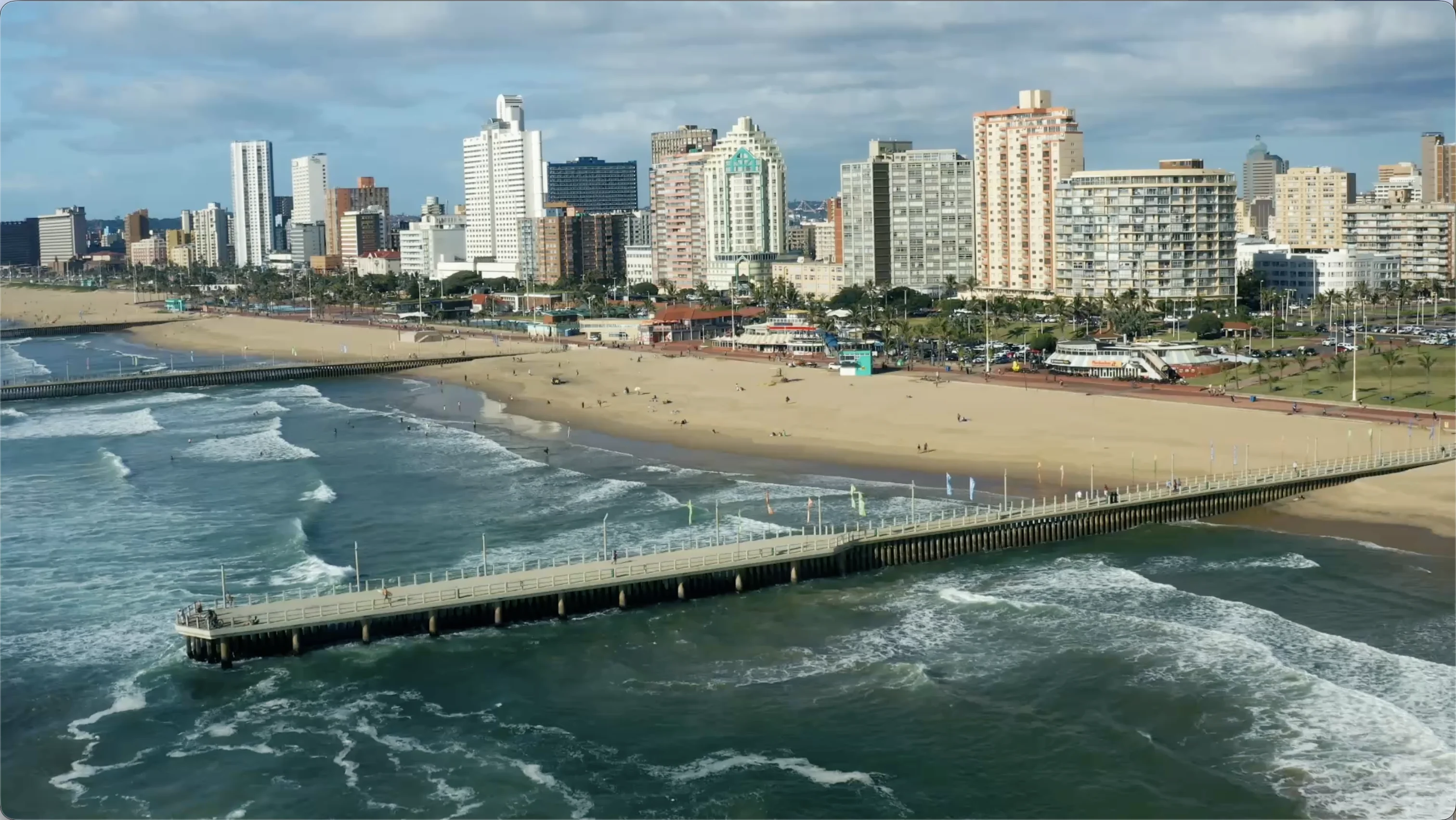
Six kilometres of golden beachfront make up the famous Golden Mile, where surfers ride bathwater-warm Indian Ocean waves year-round, and rickshaw pullers in elaborate beaded Zulu headdresses still work the promenade, much as they have for generations. Inland, grand colonial villas with Victorian lacework balconies stand alongside striking Art Deco buildings, sidewalk cafés and boutiques, giving the historic core genuine architectural character.
Spend even a single day with a local guide, and you can sample bunny chow, wander the spice-scented towers of Victoria Street Market, explore the contemporary galleries springing up in up-and-coming Glenwood, and learn about the city's apartheid history. Add craft breweries, craft markets, uShaka Marine World, surfing and diving spots, City Hall, and the Durban Botanic Gardens, and Durban emerges as a coastal destination with genuine depth.
5 Reasons We Love Durban
Zulu and Indian fusion: Sample bunny chow and Bombay-inspired flavours shaped by the largest Indian community outside India.
The Golden Mile: Enjoy six kilometres of warm-water beach, surfers, rickshaw rides and a boardwalk humming with street performers.
Layered history: Explore apartheid-era museums, Gandhi's formative Durban years and colonial architecture, all within the compact city centre.
Creative Glenwood: Discover street art, contemporary galleries and a young artistic community that give this up-and-coming district real character.
Gateway location: Fly into Durban and reach the Drakensberg mountains, Battlefields, Midlands and Zululand game reserves within just a few hours' drive.
All You Need to Know About Durban
Things to do in Durban
Rickshaw rides: Ride a traditional rickshaw down the Golden Mile, pulled by drivers in elaborate beaded Zulu headdresses and costumes.
Victoria Street Market: Browse fragrant spice towers and market stalls, then settle in for an authentic bunny chow lunch.
uShaka Marine World: Explore aquarium exhibits and marine displays at this attraction set along the Golden Mile waterfront promenade.
Glenwood galleries: Wander vivid street art and small contemporary galleries, a growing creative hub for the city's young artists.
KwaMuhle Museum: Learn about the city's apartheid history and its lasting impact on residents at this historic-centre museum.
Moses Mabhida SkyCar: Ride the SkyCar up the stadium's towering arch for panoramic views stretching across the city and ocean.
Culture and heritage in Durban
Gandhi Settlement: Visit this Inanda site, closely linked to Mahatma Gandhi's formative years spent living and working in Durban.
Ohlange Institute: Tour this important and historically significant landmark in Inanda tied to South African political history.
Juma Masjid Mosque: Step inside one of the enduring historic religious landmarks located in central Durban's city centre.
Phezulu Safari Park: Discover Zulu heritage and watch traditional dancing performances in the scenic Thousand Hills area.
Victoria Street Market: Browse handcrafted goods and colourful spices, long associated with Durban's vibrant Indian community.
Walking tours: Take a guided walking tour through central Durban to uncover layered colonial history and cultural landmarks.
Where to stay in Durban
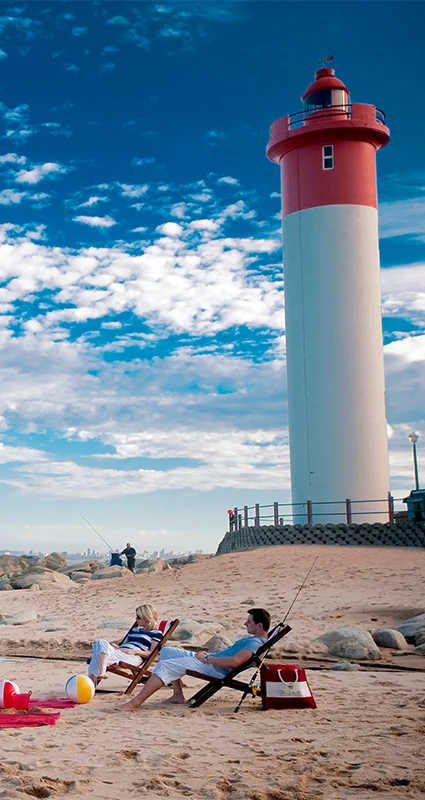
Umhlanga: Just north of the city centre, The Oyster Box is the area's landmark choice: a colonial-era hotel dating back to 1947, perched on the rocks beside the historic Umhlanga lighthouse, with an infinity pool that appears to spill directly into the Indian Ocean beyond. Its 86 rooms combine the hotel's original architectural lines with a contemporary polish gained through years of careful renovation, and even rooms without a sweeping sea view benefit from shared pools, dining rooms, terraces, a lounge and bars that all make full use of the setting. The location is a short walk from Umhlanga village and around 20 minutes from central Durban, making it equally suited to a relaxed, longer stay or a shorter stopover before heading further along the coast. Also in Umhlanga, The Beverly Hills Hotel and Teremok Lodge & Spa offer further beachfront and boutique alternatives within the same sought-after coastal suburb, known for its promenade, pier and landmark lighthouse, and for functioning as one of the region's premier beachfront destinations in its own right, distinct in style and setting from Durban's central beachfront.
Durban North: For travellers who prefer a quieter, more residential setting north of the city centre, Endless Horizons Boutique Hotel provides an alternative base set back from the busier beachfront strip, while still remaining within easy reach of the city's principal attractions, restaurants and the Golden Mile itself.
Berea: In one of Durban's established and leafy inner-city suburbs known for its tree-lined streets and proximity to the city centre, Essenwood House offers boutique-style accommodation suited to travellers who want a residential base close to Glenwood's galleries, the waterfront and the historic Durban Botanic Gardens.
Explore Durban & Its Surrounding Areas
Durban is made up of distinct districts and neighbouring suburbs, each with its own character, making the city easy to explore in sections.
Golden Mile
The Golden Mile is Durban's iconic beachfront strip, a stretch of golden sand and warm Indian Ocean water lined by a boardwalk reminiscent of a California promenade. Surfers, rickshaw rides and street performers give it constant energy, and the promenade is at its calmest and most atmospheric in the early morning, when the Indian Ocean rises to beside the path. It remains the most visited stretch of coastline in the city, running along beaches including North Beach, historically watched over by the Durban Surf Lifesaving Club.
Point Waterfront
Adjacent to the harbour, Point Waterfront anchors uShaka Marine World and forms part of Durban's redeveloped seafront precinct at the entrance to South Africa's busiest port. The area blends marine attractions with a waterfront promenade of shops, restaurants and bars, and its yacht basin lends a more sophisticated, marina-side atmosphere. uShaka Beach sits close by, a family-friendly stretch of sand where dolphins are sometimes seen riding the waves offshore.
Berea
Berea is one of Durban's oldest and most established suburban belts, built on a ridge above the sea and known for its colonial-era villas, Victorian and Edwardian architecture, and jacaranda-shaded, tree-lined avenues. It offers a quieter, leafier alternative to beachfront accommodation while staying close to the city centre, Glenwood's galleries, and the Durban Botanic Gardens, with Musgrave Road among its most sought-after residential addresses.
Florida Road
Florida Road, in the Morningside area, is Durban's best-known restaurant and nightlife strip, its Victorian-era buildings now filled with cafés, bars, boutiques, galleries and studios. The buzz begins each morning as sidewalk cafés fill with locals, building through the day into a lively evening scene of restaurants and bars that has earned the street its reputation as one of the city's top night spots, drawing residents and visitors alike.
Glenwood
Glenwood has become a creative hub, home to a growing community of young artists. Vivid street art marks its streets, and small contemporary galleries showcase locally made work, some fresh from the easel. Bordering Berea and close to the Durban Botanic Gardens, Glenwood's relaxed, artistic character makes it a favourite stop for visitors keen to see a different, more contemporary side of the city.
The Bluff
The Bluff is Durban's most prominent natural landmark: a thick, green headland that forms the southern side of the harbour entrance and marks the port's edge for ships arriving from the Indian Ocean. Made up of several smaller suburbs, it offers wide, uncrowded beaches, including Anstey's and Brighton Beach, along with fishing, surfing and swimming, plus panoramic views over the harbour and passing container ships from the headland itself.
Umhlanga
Just north of Durban, Umhlanga is a coastal suburb known for its promenade, pier and landmark lighthouse. It has developed into one of the region's premier beachfront destinations, home to hotels including The Oyster Box, The Beverly Hills Hotel and Teremok Lodge & Spa. Umhlanga Village lies within easy walking distance of the beachfront, while central Durban is roughly a 20-minute drive south along the coast.
Valley of a Thousand Hills
Inland from Durban, the Valley of a Thousand Hills is a scenic rural landscape in the 1000 Hills area, with rolling green ridges that give the region its name. It is home to attractions such as Phezulu Safari Park, where visitors can experience Zulu cultural displays and traditional dancing set against the valley's sweeping backdrop, offering a rural counterpoint to Durban's coastal energy.
Trusted by thousands of ecstatic travellers
✔️ 5-Star Trustpilot Rating ✔️ Condé Nast Travel Specialist Award Winner
✔️ Accredited by SATSA ✔️ 5,000+ Exceptional Safaris Since 1991
Why choose Africa Geographic to plan your safari?

"The most amazing bucket list vacation ever. Everything was planned, organized and explained so well. I didn’t have one worry or concern while on another continent. I completely trust the folks at Africa Geographic to plan all future trips!"
"My team at Africa Geographic was amazing. They took the time to listen to what I wanted to experience on my trip and designed the perfect itinerary for me...Thank you...for making my dream vacation an amazing and unforgettable experience."
"Our family holiday to...South Africa, organized by Africa Geographic, was nothing short of extraordinary...experience that perfectly suited our family...It was a journey filled with awe, laughter, and lifelong memories — one our family will cherish forever."
Wish you were here?
Frequently asked questions
No. Durban is KwaZulu-Natal's largest city and main coastal hub, but Pietermaritzburg is the provincial capital.
Bunny chow is a Durban specialty consisting of a hollowed-out loaf of bread filled with curry, a dish that emerged from the city's Indian community.
Durban has a sub-tropical climate that is warm year-round. Summer, from October to March, is hot, humid and wet, so visiting outside this period tends to bring milder, sunnier conditions.
At least two nights allows time to explore the city's beaches, markets, museums and neighbourhoods before continuing to the Drakensberg or Battlefields.
The Golden Mile offers six kilometres of beach, warm-water swimming and surfing, rickshaw rides, and a boardwalk with street performers and cafés.
Yes. Durban serves as a convenient gateway to the Drakensberg mountains and the Battlefields region, both reachable within a few hours' drive.
Victoria Street Market is known for its towers of colourful spices and stalls linked to Durban's Indian heritage, making it a popular stop for food and shopping.
uShaka Marine World is a marine-themed attraction on Durban's Golden Mile waterfront, featuring aquarium exhibits and marine displays.
Glenwood is an up-and-coming Durban district known for street art and contemporary galleries run by the city's young creative community.
The KwaMuhle Museum in central Durban focuses on the history and impact of apartheid on the city's residents.
It is a scenic inland landscape near Durban in the 1000 Hills area, home to attractions including Phezulu Safari Park and its Zulu cultural displays.
Umhlanga is a coastal suburb just north of central Durban, known for its beachfront hotels, promenade, pier and lighthouse.
Durban's culture reflects a blend of Zulu tradition, British colonial history and the largest population of Indian descendants outside India, visible in its food, architecture and festivals.
Click here to schedule a no-obligation call with one of our Safari Experts or fill in our 2-minute form with your questions. Our team of experts are here to help! Whether you’re curious about the best time to travel, want to hear first-hand about an experience or need help planning your safari.
Explore more African destinations

Start planning your dream safari
Our travel experts will craft a no-obligation itinerary just for you. We have crafted over 5,000 safaris since 1991. Your personal details are protected; we only use this information to contact you.
Why book your safari with us?

Deep Experience & Knowledge
Handcrafted experiential safaris since 1991.
Travel in Africa is about knowing when and where to go, and with whom. A few weeks too early/late or a few kilometres off course, and you could miss the greatest show on Earth. And wouldn’t that be a pity?

Trust & Safety

Make A Difference
We donate a portion of the revenue from every safari sold to carefully selected conservation projects that make a significant difference at ground level.
YOUR safari choice does make a difference - thank you!