

Tailor-made safaris. Since 1991



Zululand: Wildlife, wetlands and Zulu heritage
Zululand at a glance:
Location: Northern KwaZulu-Natal, South Africa | Main gateway: King Shaka International Airport, Durban |
Reserves: 8 featured reserves spanning inland bushveld to the Mozambique border | Coastline: ~220 km within iSimangaliso Wetland Park |
Best time to visit: May–September for general wildlife viewing; November–March for turtle nesting and peak birding | Malaria risk: Low to medium-high - varies significantly by reserve and time of year |
Highlights: Big Five, rhino, wetlands, sand forest, birding, coral reefs, Zulu cultural heritage | Conservation status: Includes Africa's oldest proclaimed reserve and South Africa's first UNESCO World Heritage Site |
Why visit Zululand?
Zululand is not a single reserve but a region - a belt of eight distinct protected areas in northern KwaZulu-Natal where ancient state parks, pioneering private reserves and a UNESCO World Heritage coastline sit within a few hours of each other, and of the Indian Ocean.
What makes it unusual is the accumulation. Nowhere else in South Africa can a single itinerary move between the roadless wilderness trails of Hluhluwe-iMfolozi, the fever tree pans of Ndumo and the coral reefs of Sodwana Bay without leaving a coherent geographical region. The reserves differ in character: some are intimate and birding-focused, others built around Big Five wildlife and active conservation experiences - and that variety is the point.
Much of Zululand's land is community-owned or co-managed, and Zulu cultural heritage runs through the reserves rather than being added on. At Babanango, community trusts own three-quarters of the land. At Tembe, its tribal authority declared the park, and local people still run it. At Thanda, most of the team are Zulu. The cultural dimension here is essential and structural, not cosmetic.
The crowds are genuinely elsewhere. Durban is three hours away. The reserves are accessible without being overrun, and several, Ndumo especially, remain among the least-visited genuinely wild places in South Africa.
5 Reasons We Love Zululand
Rhino stronghold: Zululand holds one of the densest rhino populations on Earth, the direct legacy of Operation Rhino, which saved white rhinos from near-extinction.
Eight ecosystems in one UNESCO site: iSimangaliso Wetland Park spans wetlands, estuary, sand forest and coral reef across 332,000 hectares - South Africa's first UNESCO World Heritage Site.
Conservation you can witness and join: From Babanango's rewilding to Manyoni's pangolin release site and Phinda's black rhino tracking on foot, guests can witness and join in conservation efforts.
Birdlife is exceptional: iSimangaliso holds 500+ species, Manyoni 450+ and Ndumo around 430 - among the highest counts of any single reserve in South Africa.
Bush, beach and Zulu heritage: Zululand's reserves, Indian Ocean reefs and one of Africa's great living cultures sit within hours of each other - a combination found nowhere else in South Africa.
Our favourite Zululand safari ideas
All you need to know about Zululand
About Zululand
Zululand: KwaZulu-Natal's Northern Reserve Belt
North of the Tugela River, KwaZulu-Natal changes character. The sugar estates and holiday towns of the coast give way to thornveld, sand forest and the low Lebombo range running up towards Eswatini and Mozambique. This is Zululand, a belt of wildlife reserves spread across the region, from Hluhluwe-iMfolozi in the south to Tembe and Ndumo on the Mozambican border.
It is the most concentrated protected-area landscape in South Africa outside the Lowveld, and the oldest. Hluhluwe-iMfolozi was proclaimed in 1895 on ground that had been the hunting preserve of Zulu kings, and it became, six decades later, the place where white rhinos were pulled back from near-extinction and shipped out to repopulate the continent. Almost everything protected in Zululand today traces back to that work. iSimangaliso Wetland Park, where the reserve belt meets the Indian Ocean, hippos, turtles and whales occupy the same protected area.
What surrounds the formal protected areas is newer and more interesting - landscapes of rewilding and a huge success story for rhino conservation. Much of it is community-owned or co-managed. This is not a landscape where conservation happened to empty country - it happened to land people had lived on, been removed from, and in some cases have since won back.
Malaria risk is low, Durban is three hours away, and the crowds are elsewhere.
Things to do in Zululand
Big Five game drives: Track lion, leopard, elephant, buffalo, and rhino (black and white) across multiple reserves in an open vehicle, guided by rangers who read the bushveld spoor, flight patterns, and the weight of a falling silence.
Multi-day wilderness trails: Walk into iMfolozi's roadless wilderness on a multi-day trail, sleeping at trail camps beside the Black and White iMfolozi rivers under Zululand skies.
Birding across world-class habitats: Search for Pel's fishing-owl, African broadbill and palmnut vulture in Ndumo's fever tree pans and Manyoni's BirdLife-accredited birding habitats.
Marine and coastal experiences: Dive Sodwana Bay's coral reefs, watch nesting turtles after dark and join whale-watching trips along the iSimangaliso coast from June to November.
Conservation experiences: Join conservation teams for rhino monitoring, elephant collaring or pangolin tracking at Phinda and Manyoni, or enrol in a conservation volunteer programme.
Zulu cultural encounters: Visit traditional Zulu homesteads at Thanda and Babanango, tour the battlefields of Isandlwana and Rorke's Drift, or watch traditional performances at Tembe.
What wildlife can I see in Zululand?
Rhino: Both black and white rhinos are present across multiple reserves. Hluhluwe-iMfolozi and iSimangaliso hold two of the world's densest populations, the legacy of decades of active conservation.
The Big Five: The full Big Five roam seven of Zululand's eight reserves; Ndumo has no lions or elephants but offers a wetland wildlife experience of a different and equally absorbing kind.
Predators beyond the Big Five: African wild dog, cheetah, spotted hyena, serval and caracal are all present, with reliable sightings at Manyoni, Phinda and Hluhluwe-iMfolozi.
Exceptional birdlife: Bird diversity is among the highest on the continent: 500+ species in iSimangaliso, 450+ in Manyoni and around 430 in Ndumo, with Pel's fishing-owl and palmnut vulture among the regional specials.
Wetland and aquatic wildlife: Hippos and Nile crocodiles fill iSimangaliso's waterways and Ndumo's pans; loggerhead and leatherback turtles nest on the iSimangaliso coast from November to March.
Marine life: Sodwana Bay's coral reefs shelter more than 1,200 fish species and the ancient coelacanth, rediscovered alive in Jesser Canyon in 2000.
Where to stay in Zululand
Across Zululand's reserves, accommodation spans every style of African safari stay, from community-run tented camps in the sand forest to clifftop suites and private riverside lodges.
The range of options across the region is vast, and we showcase many of them on each regional page linked below.
Explore Zululand's safari reserves
Each of Zululand's featured reserves has its own character, conservation history and wildlife focus. What follows is a guide to each, with links to more detailed information.
Hluhluwe-iMfolozi Park
Proclaimed in 1895 on land that had been the royal hunting grounds of Zulu kings, Hluhluwe-iMfolozi Park is Africa's oldest proclaimed nature reserve. It covers 96,000 hectares in two contrasting sections: the hilly, greener Hluhluwe in the north, prized for rhino, elephant and leopard, and the drier, more open iMfolozi in the south, where multi-day walking trails take guests into roadless terrain along the Black and White iMfolozi rivers.
The park's defining conservation achievement is Operation Rhino - the programme that rescued white rhinos from near-extinction in the 1950s and 1960s and redistributed them to repopulate reserves across Africa. That work endures: Hluhluwe-iMfolozi holds one of the world's densest concentrations of black and white rhino, alongside the full Big Five, African wild dog, cheetah and more than 400 bird species. Durban is roughly three hours by road.
iSimangaliso Wetland Park
South Africa's first UNESCO World Heritage Site, inscribed in December 1999, iSimangaliso Wetland Park spans approximately 332,000 hectares of land and sea along the Zululand coast; its name means 'miracle and wonder' in isiZulu. Eight interlinking ecosystems, from Africa's largest estuarine system at Lake St Lucia to the southernmost coral reefs on Earth at Sodwana Bay, support extraordinary ecological diversity.
The Big Five roam the park's western sections and the uMkhuze section, which holds the world's highest density of black rhino. Loggerhead and leatherback turtles nest on the beaches from November to March; humpback and southern right whales pass offshore from June to November. More than 500 bird species have been recorded. Five cultural groups call iSimangaliso home, and community enterprises are central to how the park operates. Durban is about 2.5 hours by road.
Phinda Private Game Reserve
Phinda Private Game Reserve was created in 1991 on former pineapple, cattle and sisal farmland - the first private game reserve established in KwaZulu-Natal. Spanning 29,866 hectares, it compresses seven distinct ecosystems into one traversable landscape: dry sand forest, open savanna, riverine woodland and palm floodplain.
That range shapes the wildlife experience. Alongside reliable Big Five sightings, Phinda is known for close-up cheetah and black rhino encounters, and its endangered sand forest shelters the suni and red duiker - two miniature antelope rarely found elsewhere. Over 430 bird species have been recorded. Guests can join Phinda's team in the field on rhino monitoring outings, elephant collaring operations and pangolin research, making conservation something experienced rather than observed from a distance. Proximity to the Indian Ocean allows scuba diving and turtle nesting within the same itinerary.
Manyoni Private Game Reserve
Manyoni Private Game Reserve was formed in 2004 when seventeen landowners dropped their fences to create a contiguous 23,000-hectare protected area. Previously known as the Zululand Rhino Reserve, its identity remains inseparable from black rhino conservation: WWF selected Manyoni as a release site for the Black Rhino Range Expansion Project, and a founder population was released here in 2005.
Since then, lions have been reintroduced to complete the Big Five, and endangered cheetahs and African wild dogs have returned. The reserve also serves as a release site for rehabilitated pangolins rescued from poachers. With 450+ bird species, including rare Zululand specials, Manyoni is BirdLife South Africa-accredited through one of its lodges. The Zululand Conservation Trust runs community development and a volunteer programme that guests can join.
Thanda Safari
Thanda Safari occupies 16,500 hectares of plains, valleys and mountains in northern KwaZulu-Natal, about 260 kilometres north of Durban and an hour from the Indian Ocean. The Big Five move freely across the reserve, tracked by guides in small, unhurried groups. Cheetah, African wild dog, spotted hyena and serval are also present, alongside more than 400 bird species.
What distinguishes Thanda is its Zulu identity. Most of the team are Zulu, and guests visit neighbouring communities to witness traditional practices in exchanges that are rooted in community life. Conservation work covers landscape rehabilitation, water monitoring and wildlife translocations. Guided boat excursions into the neighbouring iSimangaliso Wetland Park extend the experience beyond the reserve boundary. Thanda sits in a low-risk malaria zone with a warm tropical climate year-round.
Babanango Game Reserve
Set in the upper White Umfolozi River Valley, Babanango Game Reserve spans more than 20,000 hectares of rehabilitated Zululand wilderness. An 800-metre altitude difference creates a landscape of granite outcrops, mistbelt grasslands and cliff faces unlike anything else in the region. Once degraded by overgrazing, it has undergone one of southern Africa's most ambitious rewilding projects: more than 4,000 large mammals reintroduced since 2017, with elephants arriving in June 2023 to complete the Big Five.
Three Zulu community trusts - Emcakwini, Esibongweni and KwaNgono - own 75% of the land, with more than 150 local people employed at the reserve. Beyond the Big Five, Babanango holds critically endangered black rhino and oribi, cheetah, serval, caracal and 330+ bird species. The battlefields of Isandlwana and Rorke's Drift lie within reach.
Tembe Elephant Park
Declared in 1983 by the Tembe Tribal Authority, Tembe Elephant Park is one of South Africa's earliest community conservation areas. It covers 30,000 hectares of rare sand forest, open woodland and seasonal floodplain in northern KwaZulu-Natal on the Mozambique border, co-managed by the Tembe Tribal Authority and Ezemvelo KZN Wildlife.
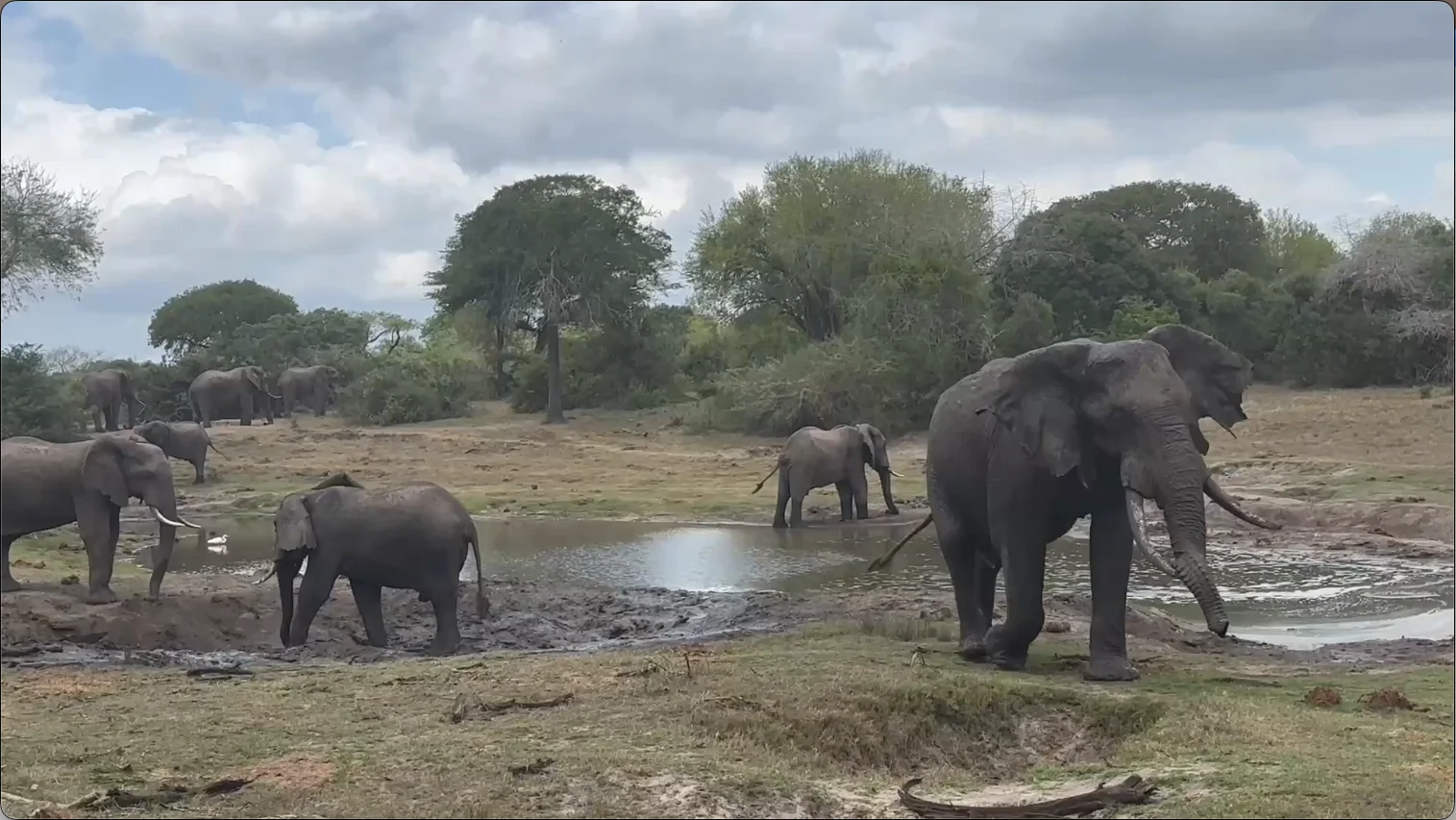
Tembe is famed for producing some of Africa's largest-tusked elephants - animals descended from a population that once migrated freely between Maputaland and Mozambique. Three legendary bulls, Isilo, Induna and Makobona, all now deceased, established its global reputation. Tembe is a Big Five reserve, though dense sand forest makes sightings refreshingly unpredictable. More than 340 bird species reward patient exploration, and Ndumo Game Reserve lies about 40 kilometres away. Malaria risk is medium to high year-round; a 4x4 is recommended for self-driving.
Ndumo Game Reserve
Ndumo Game Reserve occupies 11,800 hectares in the far northeastern corner of KwaZulu-Natal, where the Pongola and Usuthu Rivers converge on the Mozambique border. Proclaimed in 1924 and designated a Ramsar Wetland of International Importance in 1997, Ndumo is managed by Ezemvelo KZN Wildlife. Its habitats - fever tree-lined pans, acacia savanna, reedbeds and riverine forest - support around 430 recorded bird species, among the highest counts of any reserve in South Africa.
Pans such as Nyamithi, Shongwe and Shokwe draw hippos, Nile crocodiles and vast waterbird gatherings. Ndumo has no lions or elephants, and rhinos were removed in 2017 due to poaching risk, so it is not a Big Five reserve. What it offers is intimacy: an uncrowded encounter with a wetland landscape of genuine rarity, where the birding, the fever trees and the quiet are the point. Tembe Elephant Park lies about 40 kilometres away.
Trusted by thousands of ecstatic travellers
✔️ 5-Star Trustpilot Rating ✔️ Condé Nast Travel Specialist Award Winner
✔️ Accredited by SATSA ✔️ 5,000+ Exceptional Safaris Since 1991
Why choose Africa Geographic to plan your safari?

"My first experience planning a safari from overseas and a skeptic by nature, and here I am a week back from one of the best trips of my entire life! It was seemless and perfect from start to finish with no stress...Will use again for the next trip!"
"I wanted to celebrate an important birthday and asked AG to come up with an itinerary within a specific budget. They came up with a superb itinerary that meant we were looked after completely...It was outstanding. They are worthy of trust and will not let you down."
"Planning and execution...were excellent for a family safari...We were 11 family members, with ages ranging from 4 to 80. Ensuring everyone was comfortable, safe, and having a great experience was a top priority. Everyone did have a memorable experience..."
Wish you were here?
Frequently asked questions
Zululand is the northern region of KwaZulu-Natal in South Africa, encompassing a belt of wildlife reserves from Hluhluwe-iMfolozi in the south to Tembe and Ndumo on the Mozambique border, alongside iSimangaliso Wetland Park on the Indian Ocean coast.
Zululand is a historical and geographic name for the northern part of KwaZulu-Natal. The full South African province is KwaZulu-Natal; Zululand refers specifically to its northern region, the heartland of the Zulu nation and home to its most significant wildlife reserves.
Eight major reserves feature in Zululand, each with a distinct character. Hluhluwe-iMfolozi is the oldest and most rhino-rich; iSimangaliso the most ecologically diverse; Phinda and Manyoni the best for hands-on conservation. Tembe is famed for large-tusked elephants; Ndumo for birding; Babanango for rewilding; Thanda for Zulu cultural depth.
Malaria risk varies significantly across Zululand. Babanango, Hluhluwe-iMfolozi, Phinda and Thanda are classified as low-risk, particularly in the dry winter months. Tembe and Ndumo carry medium to high risk year-round. Always consult a doctor before travel for current guidance.
May to September offers the best general wildlife viewing, when drier conditions concentrate animals near water. November to March is peak season for turtle nesting and birding at Ndumo. Humpback and southern right whales pass the iSimangaliso coast from June to November.
Yes. Seven of Zululand's eight featured reserves are Big Five destinations. The exception is Ndumo Game Reserve, which has no lions, rhino or elephants and is primarily a birding and wetland destination.
Zululand is more compact and significantly less crowded than Kruger. Hluhluwe-iMfolozi and iSimangaliso hold two of the world's densest rhino populations. The region also offers a UNESCO World Heritage coastline, community-owned reserves and Indian Ocean reef diving - experiences Kruger cannot provide.
Yes. iSimangaliso Wetland Park runs along approximately 220 kilometres of Indian Ocean coastline. Scuba diving at Sodwana Bay, turtle nesting walks, whale watching and beach accommodation are all within easy reach of Zululand's inland reserves.
Hluhluwe-iMfolozi Park holds one of the world's densest concentrations of both black and white rhino - the direct result of Operation Rhino, launched here in the 1950s. iSimangaliso Wetland Park holds the world's highest density of black rhino specifically.
iSimangaliso records more than 500 species across its eight ecosystems, Ndumo Game Reserve records around 430 species, and Manyoni records 450+ species and holds a BirdLife South Africa-accredited lodge.
Yes. Hluhluwe-iMfolozi Park offers multi-day wilderness trails through the roadless iMfolozi interior, sleeping at trail camps beside the Black and White iMfolozi rivers. Guided walks are also available at Babanango, Phinda, Tembe, Manyoni and Ndumo.
Babanango's Valley Lodge is designed for families, with minimum ages from six years on game drives. Phinda Mountain Lodge offers a WILDchild programme. Rhino River Lodge at Manyoni accommodates families in loft chalets and private safari houses, with twice-daily game drives.
King Shaka International Airport in Durban is the main gateway, with most reserves around three hours by road. Richards Bay Airport is roughly an hour from Hluhluwe-iMfolozi. Ndumo and Tembe are about five hours from Durban. Some reserves have private airstrips for charter flights.
Our safaris typically cost from US$700 per person, per night, depending on the accommodation comfort level, time of year and activities. This price usually includes accommodation, all meals, game drives, experienced guides, airport transfers, and 24/7 support from our team.
Click here to schedule a no-obligation call with one of our Safari Experts or fill in our 2-minute form with your questions. Our team of experts are here to help! Whether you’re curious about the best time to travel, want to hear first-hand about an experience or need help planning your safari.
Explore more African destinations
Start planning your dream safari
Our travel experts will craft a no-obligation itinerary just for you. We have crafted over 5,000 safaris since 1991. Your personal details are protected; we only use this information to contact you.
Why book your safari with us?

Deep Experience & Knowledge
Handcrafted experiential safaris since 1991.
Travel in Africa is about knowing when and where to go, and with whom. A few weeks too early/late or a few kilometres off course, and you could miss the greatest show on Earth. And wouldn’t that be a pity?

Trust & Safety

Make A Difference
We donate a portion of the revenue from every safari sold to carefully selected conservation projects that make a significant difference at ground level.
YOUR safari choice does make a difference - thank you!