

Tailor-made safaris. Since 1991


Mkambati Nature Reserve: Wild Coast Sanctuary
Mkambati Nature Reserve at a glance:
Location: Eastern Cape's "Wild Coast," between Port Edward and Port St Johns | Size: 7,400 hectares |
Access: By air (1,500m grass airstrip), road, helicopter or boat | Best time to visit: Year-round; sardine run mid-June to end-July |
Malaria risk: None – malaria-free reserve | Bird species: 290+ |
Mammal species: 50–60 | Where to stay: GweGwe Beach Lodge |
Why visit Mkambati Nature Reserve?
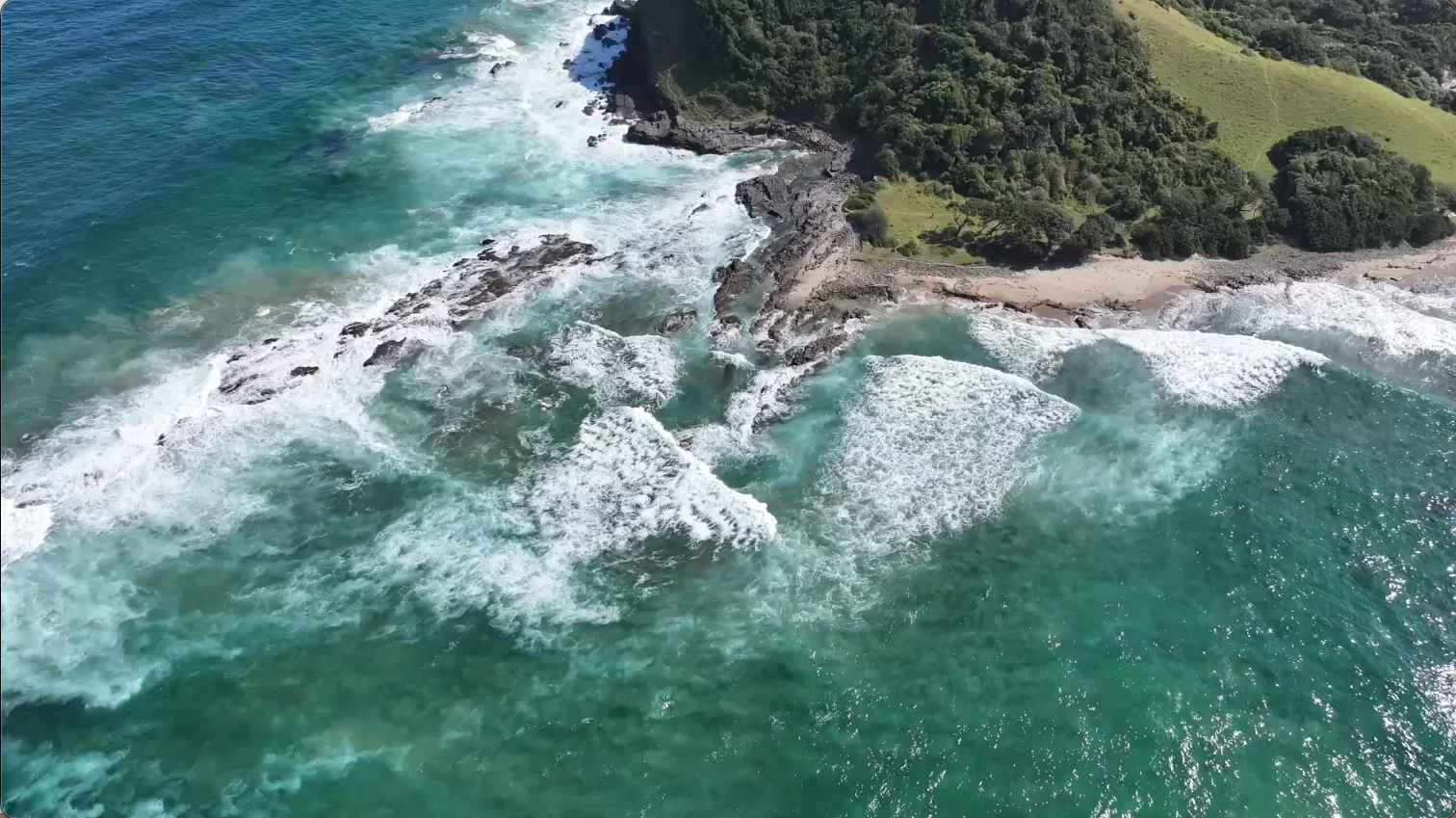
Where South Africa's Wild Coast reaches its wildest expression, Mkambati Nature Reserve unfolds across 7,400 hectares of grassland, gorges and untouched shoreline. Herds of eland, zebra and hartebeest graze against crashing Indian Ocean surf, while humpback whales and dolphins move through waters just offshore. Twenty-one waterfalls thread through the reserve, including Mkambati Falls, tumbling straight into the sea below.
Mkambati sits within the Pondoland Centre of Endemism, one of the world's most significant biodiversity hotspots, home to over 2,200 plant species, many found nowhere else on Earth at all. Offshore, the Pondoland Marine Protected Area shelters the annual sardine run, one of nature's great predator-driven spectacles, drawing dolphins and whales close inshore each winter along this coast.
Beyond its natural riches, Mkambati carries a rare distinction: the only South African provincial reserve owned outright by the local community, following a successful land restitution claim. Every safari here directly supports conservation and rural livelihoods, making a visit as meaningful as it is beautiful, and entirely malaria-free for travelling families of all ages.
5 Reasons We Love Mkambati Nature Reserve
Untouched Wild Coast scenery: Rolling grasslands meet dramatic cliffs, 21 waterfalls and secluded beaches along an unspoiled stretch of coastline.
Community-owned conservation: Mkambati is the only provincial reserve in South Africa owned outright by the communities that were once dispossessed of their land.
Whales, dolphins and the sardine run: Watch marine wildlife breach offshore, or witness the sardine run's dramatic winter feeding frenzy.
A globally significant biodiversity hotspot: Home to over 2,200 plant species within the Pondoland Centre of Endemism, many entirely endemic.
Malaria-free safaris: Explore Mkambati's stunning coastal landscape year-round without the need for antimalarial precautions.
All You Need to Know About Mkambati
About Mkambati Nature Reserve
Mkambati Nature Reserve stretches across 7,400 hectares of South Africa's Wild Coast, between Port Edward and Port St Johns in the Eastern Cape province. Rolling grasslands run down to dramatic cliffs and secluded beaches, cut through by rivers tumbling over waterfalls into the Indian Ocean below. Deep gorges shelter pockets of indigenous forest, and the coastline forms part of the Pondoland Marine Protected Area, safeguarding vital marine ecosystems along this coast.
The reserve lies within the Pondoland Centre of Endemism, one of the world's 34 most important biodiversity hotspots. In 2004, descendants of communities historically forcibly removed from this land regained ownership through restitution, choosing conservation over resettlement for future generations.
Things to Do in Mkambati Nature Reserve
Scenic wildlife drives: Explore Mkambati's rolling grasslands by vehicle, spotting eland, zebra and hartebeest against Indian Ocean views.
Guided nature walks and waterfalls: Follow trails through grassland, gorges and forest, discovering waterfalls and Mkambati's remarkable plant diversity on foot. Seek out Mkambati's 21 waterfalls, including Mkambati Falls, which plunges dramatically straight into the ocean.
Shore-based whale watching: Look out for humpback whales migrating past the coastline between June and October, and into November.
Birding along cliffs and wetlands: Search for Cape vultures, southern ground hornbills and secretary birds across grassland and gorge habitats.
Beach sundowners: Watch the sun set over the Indian Ocean from one of Mkambati's secluded beaches, a signature end to any day.
Sardine run viewing: Witness the sardine run from shore or by boat between mid-June and end-July, sometimes extending into August.
Join a Green Griffons patrol: Accompany Mkambati's all-women anti-poaching unit on an ecological monitoring patrol across the reserve.
What Wildlife Can I See at Mkambati?
Eland, zebra and hartebeest: Large herds roam Mkambati's open grasslands, offering a scene reminiscent of East Africa against an ocean backdrop.
Humpback whales and dolphins: Whales breach offshore during migration season, while dolphins frequent the bay near the GweGwe River mouth.
Cape vultures: A protected colony nests on the cliffs above the Msikaba River, one of the region's most significant vulture populations.
Southern ground hornbill: This endangered species hunts across Mkambati's marshy lowlands alongside secretary birds and black-headed herons.
Over 290 bird species, including trumpeter hornbill, swamp nightjar, spotted ground thrush, African grass-owl, Gurney's sugarbird and fan-tailed grassbird.
Endemic Mkambati palm: Found only along the Mtentu and Msikaba rivers, alongside more than 2,000 recorded plant species reserve-wide.
Where to Stay in Mkambati Nature Reserve
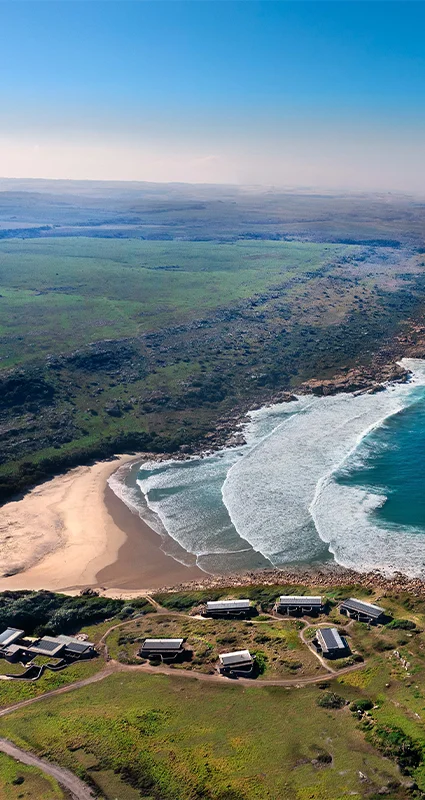
GweGwe Beach Lodge is Mkambati's sole tourism operation and commercial engine behind its conservation model. GweGwe offers nine rooms and operates entirely off-grid, powered by renewable energy and designed to minimise ecological impact.
The lodge favours understated luxury over excess: comfortable accommodation and furnishings that never compromise the ecological integrity of this rare landscape. Nearly all staff are drawn from surrounding rural communities, among the most economically marginalised in South Africa, with many women at GweGwe entering formal employment for the first time. Skills training is built into daily operations, translating Pondo hospitality into a genuinely community-rooted experience.
Beyond the guest experience, GweGwe directly underwrites Mkambati's conservation and community programmes. In addition to a fixed monthly rental, nine percent of gross revenue is paid to the community via the Mkambati Land Trust and conservation authorities, supporting biodiversity management and protected area governance. This has made GweGwe central to Mkambati's long-term ambitions, including the eventual reintroduction of white rhino to the reserve's grasslands.
Trusted by thousands of ecstatic travellers
✔️ 5-Star Trustpilot Rating ✔️ Condé Nast Travel Specialist Award Winner
✔️ Accredited by SATSA ✔️ 5,000+ Exceptional Safaris Since 1991
Why choose Africa Geographic to plan your safari?

"I could not believe how responsive Africa Geographic was during the planning of our 22 day trip...I had contacted six other companies trying to put this trip together and they were head and shoulders above everyone else...The itinerary they put together was unbelievable!...You will be so happy and thankful to have Africa Geographic plan your exciting safari."

"Africa Geographic was amazing to work with. They tailored a trip specifically for us based on our wants and needs. They take the time to listen to you and understand what you are looking for from this sometimes once in a lifetime experience. They are professional, courteous, friendly and with you every step of the way...If I could give them more than 5 stars I would!"

"I wanted to celebrate an important birthday and asked AG to come up with an itinerary within a specific budget. They came up with a superb itinerary that meant we were looked after completely in three very different destinations with transfers, tours and accommodation. It was outstanding. They are worthy of trust and will not let you down."
Wish you were here?
Frequently asked questions
Yes. Mkambati is a malaria-free reserve, making it a suitable destination for families and travellers who prefer to avoid antimalarial medication while still enjoying a wildlife-rich coastal safari.
Mkambati Nature Reserve lies on South Africa's Eastern Cape "Wild Coast," between Port Edward to the north-east and Port St Johns to the south-west.
The reserve covers 7,400 hectares, encompassing grasslands, forested gorges, rivers, waterfalls and a stretch of unspoiled Indian Ocean coastline.
Visitors can expect to see eland, zebra and red hartebeest across open grasslands, alongside Cape vultures, southern ground hornbills and, along the coast, humpback whales and dolphins.
The sardine run typically occurs from mid-June to the end of July, and in some years extends into August, and can be viewed from the shore or by boat.
Humpback whales are seen migrating past Mkambati's coastline primarily from June to October, with sightings sometimes continuing into November.
Mkambati is owned outright by seven local communities who regained the land through South Africa's restitution process in 2004, making it unique among the country's provincial reserves.
GweGwe Beach Lodge is the reserve's sole tourism accommodation, a nine-room, off-grid property occupying a private 5,000-hectare sector in Mkambati's north.
Mkambati can be reached by light aircraft (a 1,500-metre grass airstrip accommodates a Pilatus PC12, Cessna Caravan or certain King Airs), by road, by helicopter, or by boat.
Driving from Durban or Mthatha (Umtata) to Mkambati takes approximately five to six hours.
It is one of the world's 34 most significant biodiversity hotspots, home to over 2,200 plant species, many of which occur nowhere else on Earth, including the endemic Mkambati palm.
The Green Griffons are an all-women anti-poaching and ecological monitoring unit, mentored by the Black Mamba Anti-Poaching Unit, working to safeguard Mkambati's wildlife and engage local communities in conservation.
Yes. GweGwe Beach Lodge pays a fixed monthly rental plus nine percent of gross revenue to the community via the Mkambati Land Trust and conservation authorities, directly funding biodiversity management and protected area governance.
Your safari at Mkambati typically costs from R12,950 per person, per night, depending on the time of year. This price usually includes accommodation, all meals, activities, experienced guides, and 24/7 support from our team.
Click here to schedule a no-obligation call with one of our Safari Experts or fill in our 2-minute form with your questions. Our team of experts are here to help! Whether you’re curious about the best time to travel, want to hear first-hand about an experience or need help planning your safari.
Explore more African destinations
Start planning your dream safari
Our travel experts will craft a no-obligation itinerary just for you. We have crafted over 5,000 safaris since 1991. Your personal details are protected; we only use this information to contact you.
Why book your safari with us?

Deep Experience & Knowledge
Handcrafted experiential safaris since 1991.
Travel in Africa is about knowing when and where to go, and with whom. A few weeks too early/late or a few kilometres off course, and you could miss the greatest show on Earth. And wouldn’t that be a pity?

Trust & Safety

Make A Difference
We donate a portion of the revenue from every safari sold to carefully selected conservation projects that make a significant difference at ground level.
YOUR safari choice does make a difference - thank you!