

Tailor-made safaris. Since 1991



Battlefields: Where History Shaped a Nation
Battlefields at a glance:
Location: Central and northern KwaZulu-Natal, South Africa | Historic sites: 82 battlefields, museums, forts and memorials |
Conflicts covered: Early Zulu conflicts, Voortrekker-Zulu War, Anglo-Zulu War, Anglo-Boer War | Time span: Roughly 70 years of 19th-century conflict |
Key sites: Isandlwana, Rorke's Drift, Fugitives' Drift, Blood River, Ncome | Nearby towns: Dundee, Ladysmith, Ulundi |
Access: Self-drive using local tourism maps and brochures | Guiding: Specialist historians and descendants offer on-site tours |
Why Visit the Battlefields Region?
Few regions on earth compress so much history into so small a footprint. Central and northern KwaZulu-Natal holds the largest concentration of battlefields in the southern hemisphere, spanning roughly 70 years of conflict between Zulu, Voortrekker and British forces. Here, Zulu regiments under kings Shaka, Dingane and Cetshwayo rose to shape one of Africa's most formidable nations; Voortrekker families crossed the Drakensberg in search of new territory; and British columns marched into Zululand, only to suffer one of the most devastating defeats in imperial military history at Isandlwana. Every hillside, river drift and monument carries its own story, from Shaka's tactical genius at Gqokli Hill to the "heroic hundred" who held Rorke's Drift against thousands, and the drawn-out sieges and guerrilla campaigns of the Anglo-Boer War at Ladysmith and Spioenkop. Visitors can trace this layered history across dozens of preserved battlefields, memorials and museums, many still guided by specialist historians and descendants of those who fought there, bringing the sweeping grasslands and Drakensberg foothills vividly to life. Beyond the battlefields, the region lies close to Hluhluwe-iMfolozi Park, offering Big Five sightings and excellent birdwatching, and the mountains of the uKhahlamba-Drakensberg World Heritage Park, combining profound cultural depth with dramatic scenery within a single unforgettable journey.
5 Reasons We Love the Battlefields
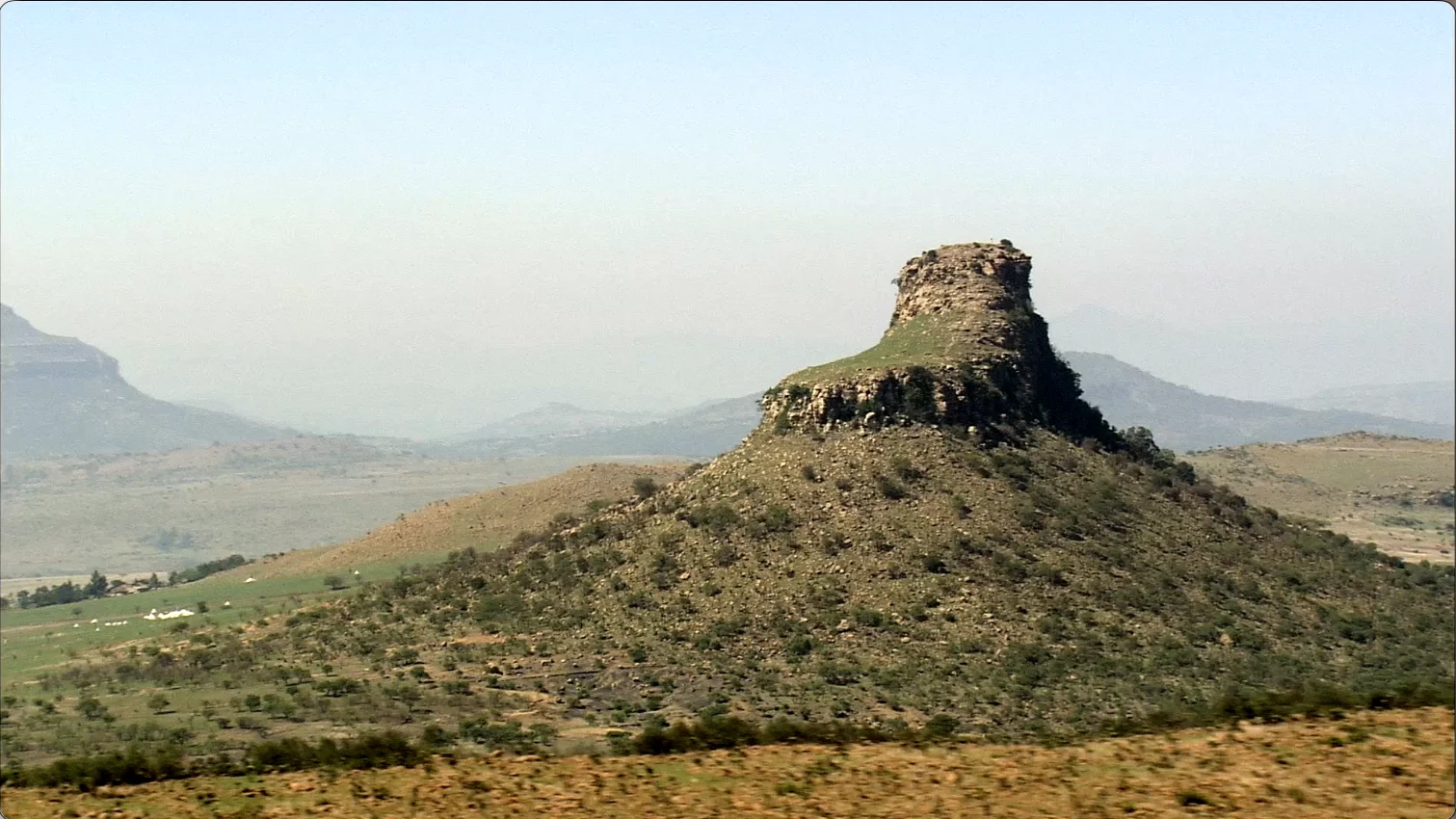
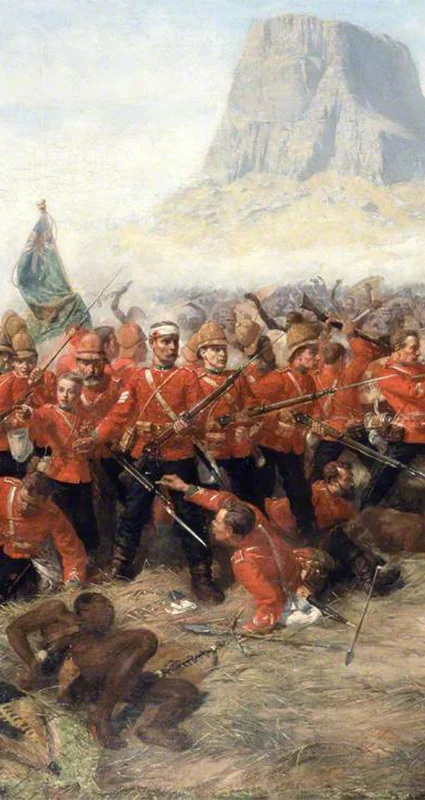
Isandlwana's haunting battlefield: Stand where 20,000 Zulu warriors overran a British camp in 1879, a decisive colonial-era defeat.
Rorke's Drift's legendary defence: Discover where a British garrison held off thousands of Zulu warriors for 11 hours, earning eleven Victoria Crosses.
Blood River's dual perspective: Visit two museums facing each other across the river, each telling the same 1838 battle from opposing sides.
The Siege of Ladysmith's scale: Explore where Boer forces besieged the town for 118 days, an event that dominated world headlines.
Shaka's Zulu nation legacy: Trace the rise of King Shaka, whose military innovations and leadership built one of Africa's most powerful nations.
All You Need to Know About Battlefields
Things to Do in the Battlefields Region
Tour Isandlwana and Rorke's Drift: Walk the battlefields where Zulu forces overran a British camp, then held a mission station under siege.
Follow the Fugitives' Trail: Trace the route survivors of Isandlwana took to Fugitives' Drift, where two officers died saving the Queen's Colour.
Visit Blood River and Ncome: Cross between two facing museums presenting the 1838 battle from Voortrekker and Zulu perspectives.
Explore Ladysmith's siege sites: See where Boer forces besieged the town for 118 days, an event that captured world headlines.
Visit Talana and Elandslaagte: See the sites of the earliest Anglo-Boer War clashes in Natal, near the town of Dundee.
Join a specialist battlefield guide: Many sites are best explored with historians who provide detailed, first-hand storytelling on location.
Zulu Heritage Sites Worth Visiting
Uncover Zulu royal heritage: Visit the graves of kings Shaka, Mpande and Cetshwayo, along with Mgungundlovu, Dingane's former royal residence.
Stand at Gqokli Hill: See where Shaka's forces defeated a numerically superior Ndwandwe army in April 1818, securing Zulu dominance.
Explore eMakhosini Ophathe Heritage Park: Wander the "Valley of the Kings," burial ground of early Zulu monarchs and heritage monuments.
Visit Ondini Cultural Museum: See the reconstructed royal residence of King Cetshwayo and exhibits on Zulu history near Ulundi.
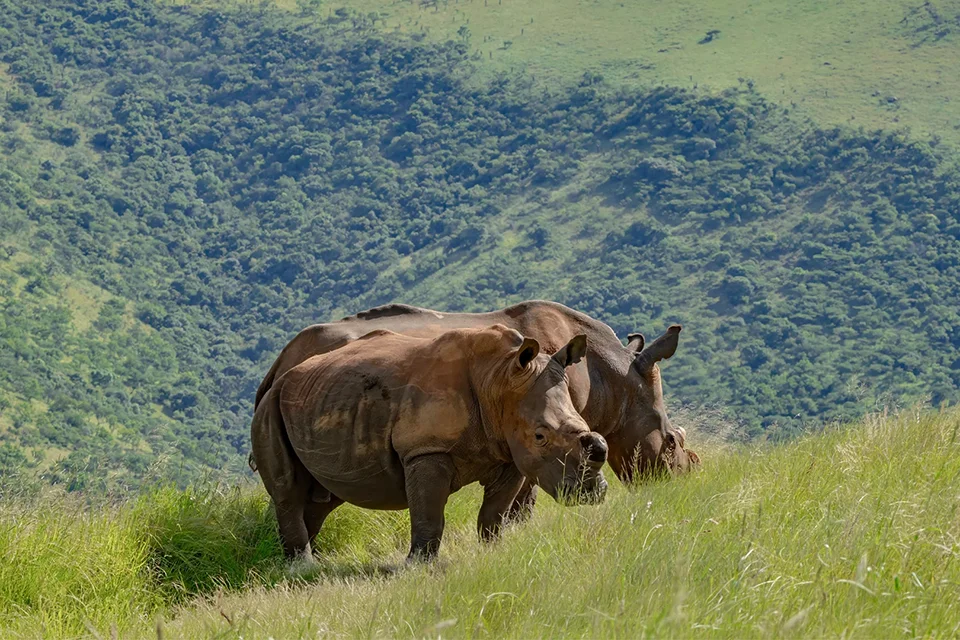
Visit Hluhluwe-iMfolozi Park: Just outside Ulundi, this park offers Big Five sightings and excellent birdwatching near the battlefields.
Experience Zulu culture firsthand: Explore heritage sites and monuments that trace the customs and traditions of the Zulu nation.
Where to Stay in the Battlefields Region
Accommodation across the Battlefields region is closely tied to its history, with many lodges positioned near the conflicts they help interpret.
Around Blood River and Ncome, Blood River Museum Guesthouse and Ncome Lodge sit close to the twin museums, while Battlefields Country Lodge offers a base for exploring the wider Voortrekker-Zulu sites in the area.
For the Anglo-Zulu War sites, Fugitives' Drift Lodge overlooks the Buffalo River near the trail taken by survivors of Isandlwana, and is renowned for guides steeped in the history of the surrounding battlefields. Isandlwana Lodge sits within view of the battlefield itself, while Entendeni B&B provides a comfortable, more understated option for visiting Rorke's Drift and Isandlwana.
Around the Anglo-Boer War sites near Ladysmith and Spionkop, Three Tree Hill Lodge and Spionkop Lodge both place guests close to the Thukela Heights battlegrounds, while The Royal Hotel in Ladysmith itself offers a historic town-based stay within reach of the siege sites, Talana and Elandslaagte.
Across all three conflict areas, lodges double as informal museums, often furnished with maps, relics and first-hand accounts, and many offer guided battlefield tours led by historians or descendants of those who fought there. This personal, storytelling-led approach to hospitality is a defining feature of a Battlefields stay, setting it apart from more conventional South African accommodation.
The 4 Defining Conflicts
Early Zulu Conflicts (Early 1800s)
In the early nineteenth century, King Shaka transformed a small, insignificant Nguni clan into one of Africa's most formidable nations. Born the illegitimate son of King Senzangakhona and Nandi, and rejected by both his parents' communities, Shaka found refuge with a paternal uncle among the Mtetwa people, ruled by Dingiswayo. There he trained in Dingiswayo's iziCwe Regiment, gaining the military experience that would define his leadership, and introduced the iklwa stabbing spear to Zulu warfare, replacing the long throwing spear with a weapon designed for close combat.
When Senzangakhona died, Dingiswayo backed Shaka's claim to the Zulu throne. Shaka assassinated his half-brother to secure his position, then absorbed the Mtetwa into the Zulu after Dingiswayo was defeated and killed by the rival Ndwandwe under Chief Zwide. Zwide later turned on the Zulus, but in April 1818, at the Battle of Gqokli Hill, Shaka's forces defeated the numerically superior Ndwandwe army after concealing their civilian population and livestock in the Mhlatuze River valley, ending the Ndwandwe threat for good. By 1828, Shaka's Zulu nation had extended its power across what is now KwaZulu-Natal. That year, Shaka was assassinated by his half-brothers Dingane and Mhlangana, and succeeded by Dingane.
Dingane grew increasingly wary of the growing influence of white settlers at Port Natal, a concern sharpened by the arrival of Voortrekker parties crossing the Drakensberg escarpment, setting the stage for the conflict that followed. Shaka's twelve-year reign remains a source of pride among the Zulu people; historians credit him with the "horns of the beast" encircling battlefield tactic and note that contemporary accounts from shipwrecked sailors and early travellers described the Zulu people of the time as prosperous and law-abiding.
Sites from this era include King Shaka's Grave, where he was buried in 1828 near a monument funded by the Zulu nation; Mgungundlovu, Dingane's partially restored royal residence and also the site of Piet Retief's mass grave; Gqokli Hill Battlefield, scene of the 1818 victory over the Ndwandwe; eMakhosini Ophathe Heritage Park, the "Valley of the Kings," burial ground of several early Zulu monarchs; and the Ondini Cultural Museum, housing the reconstructed royal residence of King Cetshwayo near Ulundi.
Voortrekker–Zulu War, 1838 – Blood River and Ncome
Dissatisfied with British rule imposed on the Cape Colony in 1806, Afrikaner families of Dutch descent began migrating into the interior in search of self-governance and religious and cultural independence. In 1838, a party led by Piet Retief crossed the Drakensberg into Natal, where English settlers at Port Natal advised that land could only be acquired with the Zulu king Dingane's consent. Retief and his party travelled to Dingane's royal residence, Mgungundlovu, to negotiate.
Dingane, already suspicious of the newcomers, tasked Retief with recovering cattle stolen from him by a rival chief, Sikonyela, hoping the mission would remove a threat on his own terms. Retief completed the task with relative ease, but the success placed Dingane in a difficult position. During Retief's subsequent visit to Mgungundlovu, Dingane had Retief and his entire party executed. Zulu regiments were then sent to drive the remaining Voortrekker families from Natal, attacking their encampments between 12 and 19 February 1838 and killing several hundred settlers before survivors regrouped and repelled further assaults. A Voortrekker commando seeking retribution and stolen cattle was ambushed in the eThaleni Valley, where 14-year-old Dirkie Uys died fighting beside his father as the commando was forced to flee.
Eventually, a larger force under Andries Pretorius was assembled, and on 16 December 1838 it decisively defeated the Zulu army at the Battle of Blood River. Dingane fled his capital, Mgungundlovu, and was later defeated by his own half-brother, Mpande, at the Battle of Maqongqo in 1840.
The Battle of Blood River is commemorated today by two separate museums standing on opposite banks of the river: the Blood River Museum, built on the Voortrekker side and centred on a full-size bronze replica of the historic laager of ox-wagons, and the Ncome Museum, built on the Zulu side. Opened independently, the two museums recount the same day in markedly different ways, each reflecting its own community's history and memory of the battle, making a visit to both sites a uniquely layered way to understand the events of 1838.
Other documented sites from the wider conflict include Kerkenberg, where Voortrekker parties camped in late 1837 while scouting a route down the escarpment; Veglaer, the site of a three-day Zulu attack on a Voortrekker laager in February 1838, now beneath the Wagendrift Dam, with an on-site diorama explaining Voortrekker battle tactics; Bloukrans, where Zulu regiments attacked Voortrekker families who had left the protection of the larger laagers; the Grave of Piet Retief, near Mgungundlovu; and Ophathe Battlefield, where the returning Voortrekker commando, the Wenkommando, was deceived by a Zulu guide named Bongoza and ambushed while attempting to recover captured livestock from the oPhathe gorge.
Anglo-Zulu War, 1879 – Isandlwana, Rorke's Drift, Fugitives' Drift and Ulundi
By the late 1870s, the continued strengthening of the independent Zulu nation under King Cetshwayo was viewed as a growing threat to the Colony of Natal by British High Commissioner Sir Bartle Frere. In December 1878, Frere issued an ultimatum demanding, among other conditions, that the Zulu army be disbanded and Cetshwayo swear allegiance to Queen Victoria: terms the Zulu nation could not accept. When the ultimatum was rejected, three British columns under the overall command of Lieutenant-General Lord Chelmsford crossed the Thukela and Buffalo rivers on 12 January 1879 and invaded Zululand.
On 22 January 1879, a Zulu army of approximately 20,000 warriors attacked and overran the British camp at Isandlwana, killing 1,357 Imperial troops, colonial volunteers and native levies, one of the most devastating defeats in British colonial military history. Survivors fled along a punishing route later known as the Fugitives' Trail, crossing the swollen Buffalo River at Fugitives' Drift. Among them were Lieutenant Teignmouth Melvill, who had attempted to save the Queen's Colour, and Lieutenant Nevill Coghill, who went to his assistance; both were killed on the Natal bank as they scrambled up the hillside and were posthumously awarded the Victoria Cross.
Following the victory at Isandlwana, an additional Zulu force of around 4,000 warriors under Prince Dabulamanzi, King Cetshwayo's half-brother, advanced on the British garrison at Rorke's Drift, a Swedish mission station being used as a supply depot and hospital. There, roughly 100 British soldiers, later dubbed the "heroic hundred," held off the attack in an eleven-hour battle. The British lost 17 men but were awarded 11 Victoria Crosses, the most ever given for a single action.
The war continued,
at Nyezane, where the British coastal column crossed the Nyezane River on 22 January 1879 before advancing towards Eshowe;
at the Siege of Fort KwaMondi, where Colonel Pearson's column fortified an abandoned Norwegian mission station from 23 January until it was relieved on 3 April 1879;
at Hlobane, where on 28 March 1879 two British columns attacking the abaQulusi stronghold on Hlobane Mountain were themselves attacked by abaQulusi warriors and allies;
at Khambula, where some 22,000 Zulu warriors assaulted the fortified British position on 29 March 1879 in a battle lasting from early afternoon until early evening before the Zulu forces were driven off;
at Gingindlovu, where the Zulu army attacked Lord Chelmsford's fortified relief column on 2 April 1879 as it marched to relieve the besieged garrison at Eshowe.
and finally, on 4 July 1879, where Chelmsford's forces crossed the White Mfolozi River and defeated the Zulu army at the Battle of Ulundi, bringing the war to a close.
Anglo-Boer War, 1899–1902 – Talana, Elandslaagte, Ladysmith, Colenso and Spioenkop
The discovery of gold in the Transvaal, then the Zuid-Afrikaansche Republiek, in 1886 drew large numbers of foreign prospectors known as uitlanders. Fearing their growing influence, the Boer government amended its voting laws, prompting protests from the uitlanders on the goldfields. Tensions escalated, and on 11 October 1899, war broke out between Britain and the Zuid-Afrikaansche Republiek, supported by the Orange Free State.
Northern Natal, bordering both Boer republics, proved especially vulnerable. Within the first two months of the war, fighting broke out at Talana, near the town of Dundee, and at Elandslaagte, before British forces were pushed back below the Thukela River line. The town of Ladysmith was then besieged. The Siege of Ladysmith lasted 118 days and dominated headlines around the world as British forces repeatedly attempted to break through to relieve the town along the Thukela River line, fighting at Colenso, iNthabamnyama, Spioenkop and Vaalkrans, but were held off each time.
The deadlock was eventually broken by a fourteen-day British offensive known as the Battle of the Thukela Heights, the largest battle the British fought in Africa until the Second World War. Following this defeat, Boer forces abandoned conventional warfare entirely in favour of guerrilla tactics, deploying small, highly mobile mounted commando units for the remainder of the conflict. The three-year war that followed proved the longest, costliest, bloodiest, and most humiliating Britain had fought since the Napoleonic era, fought by a British Army that entered the conflict expecting a swift victory but instead faced a hard-won, drawn-out campaign.
Trusted by thousands of ecstatic travellers
✔️ 5-Star Trustpilot Rating ✔️ Condé Nast Travel Specialist Award Winner
✔️ Accredited by SATSA ✔️ 5,000+ Exceptional Safaris Since 1991
Why choose Africa Geographic to plan your safari?

"Exceeded all expectations! Great communication and organization of the itinerary. Gave us two very experienced and personable guides. Lodging met all our requirements. All transfers and pick ups were right on time, seamless and worry free. Hundreds of great photo memories! Enjoyed learning about the history, culture and customs..."
"My team at Africa Geographic was amazing. They took the time to listen to what I wanted to experience on my trip and designed the perfect itinerary for me. They were always available when I had a question and made sure I was well prepared...Thank you...for making my dream vacation an amazing and unforgettable experience."
"Amazing Adventure made possible by Africa Geographic...the rest of the team helped us realize our dream of an African Safari. Our guides...shared their vast knowledge of the wildlife and habitats. Such beautiful things we saw, memories to be shared and cherished. We can't recommend Africa Geographic highly enough."
Wish you were here?
Frequently asked questions
The Battlefields region lies across central and northern KwaZulu-Natal, South Africa, an area that also borders wildlife reserves and the Drakensberg mountains.
The region contains 82 documented battlefields, museums, forts and memorials, the largest concentration of such sites anywhere in South Africa.
Four major conflicts unfolded here over roughly 70 years: early Zulu conflicts, the Voortrekker-Zulu War, the Anglo-Zulu War and the Anglo-Boer War.
On 22 January 1879, around 20,000 Zulu warriors overran a British camp, killing 1,357 Imperial troops, colonial volunteers and native levies.
A small British garrison at this mission station held off around 4,000 Zulu warriors for eleven hours, earning 11 Victoria Crosses, the most for a single action.
On 16 December 1838, Voortrekker forces under Andries Pretorius defeated the Zulu army here. Two museums, Blood River and Ncome, now face each other across the river, each telling the battle from a different perspective.
Boer forces besieged the British-held town of Ladysmith for 118 days during the Anglo-Boer War, an event that captured worldwide attention.
King Shaka built the Zulu nation into a powerful force in the early 1800s, introducing new weapons and tactics, including his decisive victory at Gqokli Hill in 1818.
Yes, self-drive exploration is possible using maps and brochures from local tourism associations, though specialist guides offer deeper historical context.
Fugitives' Drift is the crossing point on the Buffalo River used by survivors fleeing the Battle of Isandlwana, including two officers who died trying to save the Queen's Colour.
Further battles took place at Nyezane, Khambula, Hlobane and Gingindlovu, before the war concluded at the Battle of Ulundi on 4 July 1879.
Lodges including Three Tree Hill Lodge, Spionkop Lodge and The Royal Hotel in Ladysmith place guests close to the Thukela Heights and siege-era battlegrounds.
Key sites include King Shaka's Grave, Mgungundlovu, Gqokli Hill Battlefield, eMakhosini Ophathe Heritage Park and the Ondini Cultural Museum.
Click here to schedule a no-obligation call with one of our Safari Experts or fill in our 2-minute form with your questions. Our team of experts are here to help! Whether you’re curious about the best time to travel, want to hear first-hand about an experience or need help planning your safari.
Explore more African destinations

Start planning your dream safari
Our travel experts will craft a no-obligation itinerary just for you. We have crafted over 5,000 safaris since 1991. Your personal details are protected; we only use this information to contact you.
Why book your safari with us?

Deep Experience & Knowledge
Handcrafted experiential safaris since 1991.
Travel in Africa is about knowing when and where to go, and with whom. A few weeks too early/late or a few kilometres off course, and you could miss the greatest show on Earth. And wouldn’t that be a pity?

Trust & Safety

Make A Difference
We donate a portion of the revenue from every safari sold to carefully selected conservation projects that make a significant difference at ground level.
YOUR safari choice does make a difference - thank you!