

Tailor-made safaris. Since 1991



iSimangaliso Wetland Park: Miracle and Wonder
iSimangaliso Wetland Park at a glance:
Location: Zululand coast, KwaZulu-Natal, South Africa | Access: Good tar roads from Durban (2.5 hours) or Richards Bay (1 hour) |
Size: Approximately 332,000 hectares of land and sea | Best time to visit: May–September for game viewing; November–March for turtle nesting |
Nearest airports: King Shaka International (Durban) or Richards Bay Airport | World Heritage status: South Africa's first UNESCO World Heritage Site, inscribed December 1999 |
Ecosystems: Eight interlinking ecosystems, including wetlands, lakes, coral reefs and dunes | Coastline: Approximately 220 kilometres, from Maphelane to Kosi Bay |
Why visit iSimangaliso Wetland Park?
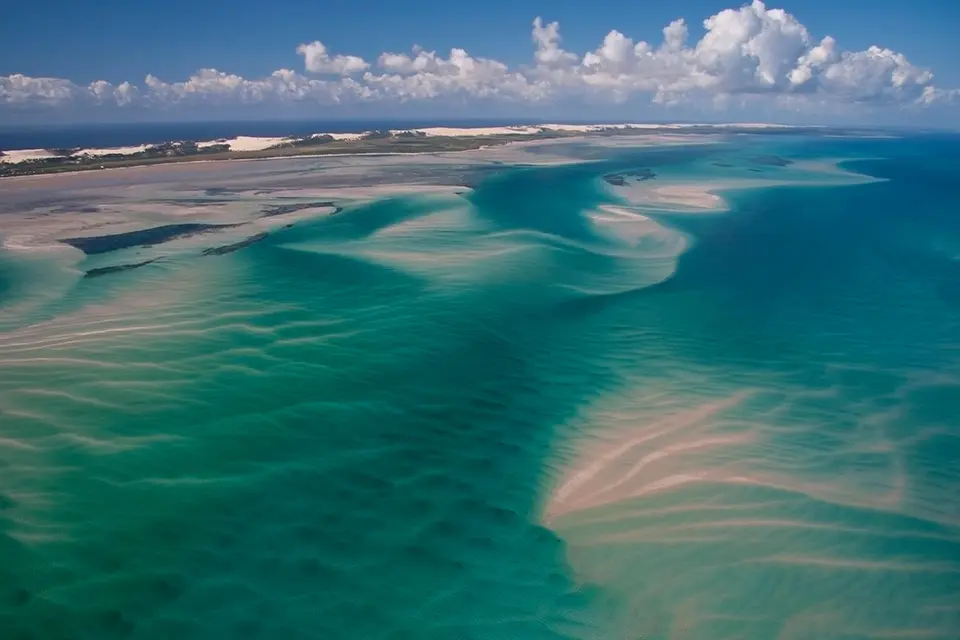
Along the Zululand coast of KwaZulu-Natal lies a landscape unlike any other in Africa: iSimangaliso Wetland Park, where wetlands, lakes, coral reefs, beaches, savannah, grassland and ancient dune forest converge across eight interlinking ecosystems. Declared South Africa's first UNESCO World Heritage Site in December 1999, iSimangaliso spans roughly 332,000 hectares of protected land and sea, its name meaning 'miracle and wonder' in isiZulu.
Nelson Mandela once described it as the only place on the globe where the oldest land mammal, the rhinoceros, and the world's biggest terrestrial mammal, the elephant, share an ecosystem with the world's oldest fish, the coelacanth, and the ocean's largest mammal, the whale. The Big 5 roam the bushveld; hippos and Nile crocodiles fill Lake St Lucia, Africa's largest estuarine system, while more than 500 bird species move through its wetlands, pans and coastal forests. Offshore, Sodwana Bay's coral reefs and the world's second-highest vegetated dunes complete a mosaic found nowhere else. This is also a park built around its people: five cultural groups call it home, and their guiding, hospitality and craft skills sustain both landscape and community, making every visit an investment in conservation as much as adventure.
5 Reasons We Love iSimangaliso Wetland Park
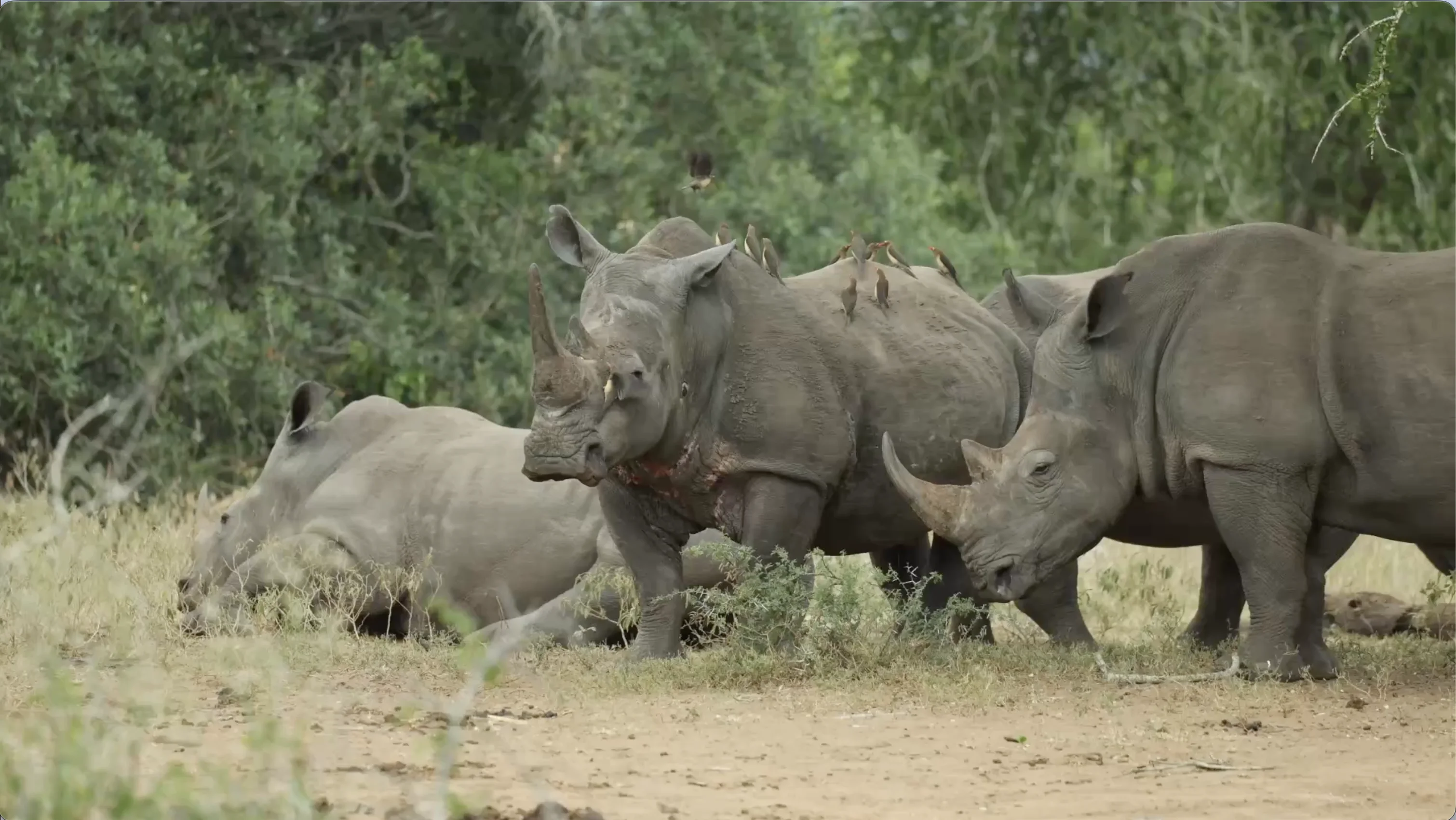
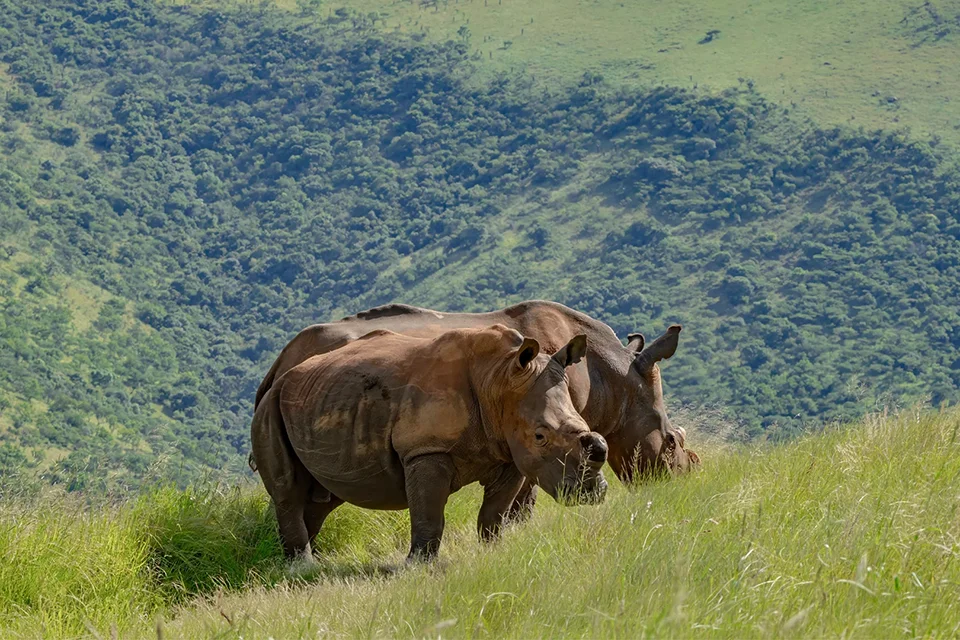
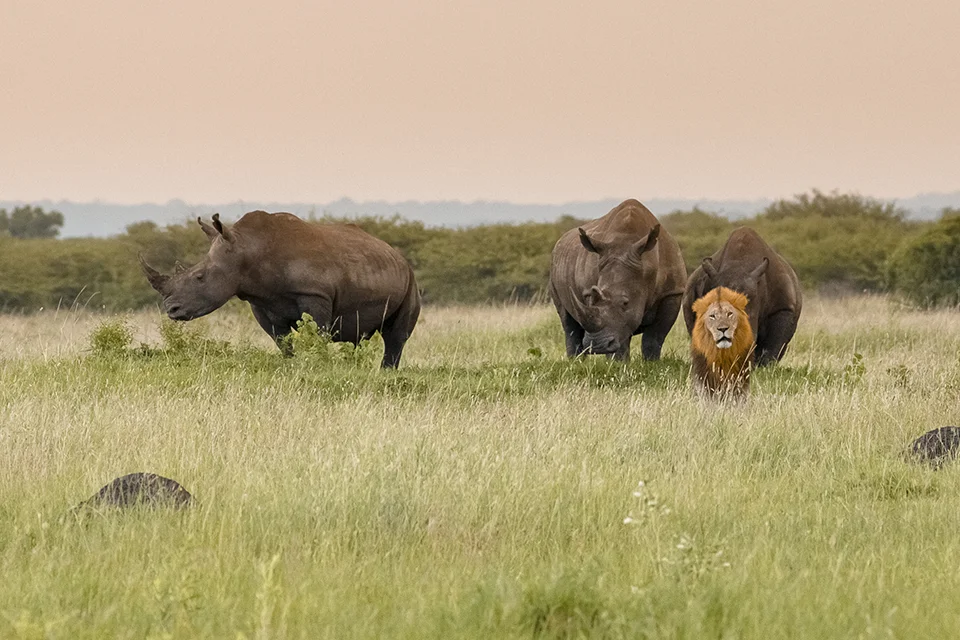
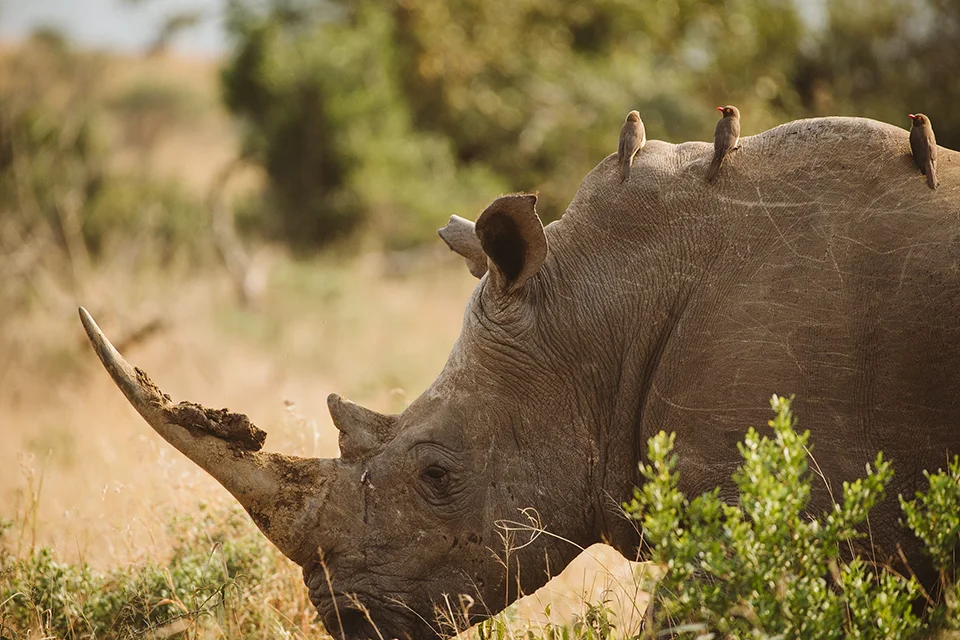
Rhino stronghold: The world's highest density of black rhinos roams alongside elephants, leopards, and buffalo across the western shores and uMkhuze's ancient woodlands.
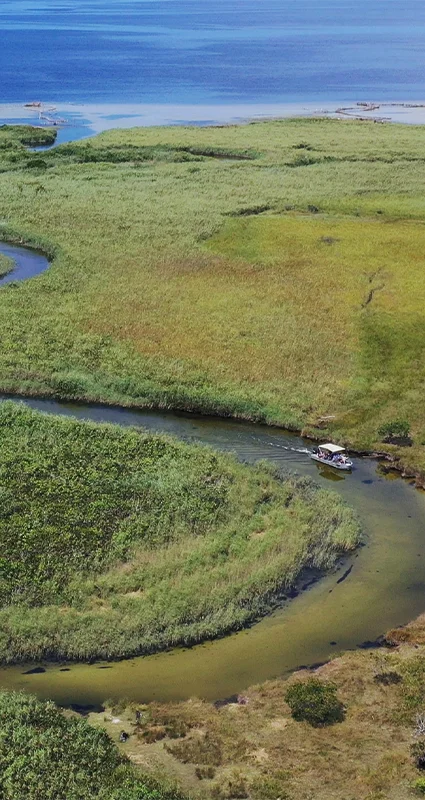
Africa's largest estuary: Lake St Lucia, Africa's largest estuarine system, shelters hippos, crocodiles and more than half of KwaZulu-Natal's waterbirds along its shores.
World-class reefs: Sodwana Bay's coral reefs hide over 1,200 fish species and the prehistoric coelacanth, rediscovered alive in Jesser Canyon in 2000.
Ancient nesting rituals: Loggerhead and leatherback turtles nest on iSimangaliso's beaches each summer, an ancient ritual guests can witness on guided night walks.
A park for the people: Five distinct cultural groups call this UNESCO World Heritage Site home, so every safari, cruise or craft purchase supports local livelihoods.
All You Need to Know About iSimangaliso
About iSimangaliso Wetland Park
iSimangaliso Wetland Park runs some 220 kilometres along the Zululand coast, from Maphelane in the south to Kosi Bay at the Mozambique border in the north. Spanning roughly 332,000 hectares of land and sea, it protects eight interlinking ecosystems: coral reefs, coastal dunes, wetlands, lakes, papyrus swamps, sand forest, savannah and open marine habitat. It holds South Africa's largest marine protected area and its largest estuarine system, Lake St Lucia, home to hippos, crocodiles and prolific waterbirds. Coastal dunes here date back some 25,000 years, and Thonga fishing traditions at Kosi Bay span more than 700 years, making this park as culturally rich as it is ecologically vital. Five cultural groups live within its boundaries, and community tourism, craft and education programmes remain central to how it is managed.
Places to visit in iSimangaliso Wetland Park
Mission Rocks: Explore tidal rock pools and dramatic coastal views south of Cape Vidal, alive with marine life at low tide.
Bats Cave walk: Follow a low-tide beach walk near Mission Rocks to a colony of roosting Egyptian fruit bats in a coastal cave.
uMthoma Aerial Boardwalk: Walk above the forest canopy on the Western Shores for sweeping panoramic views across Lake St Lucia.
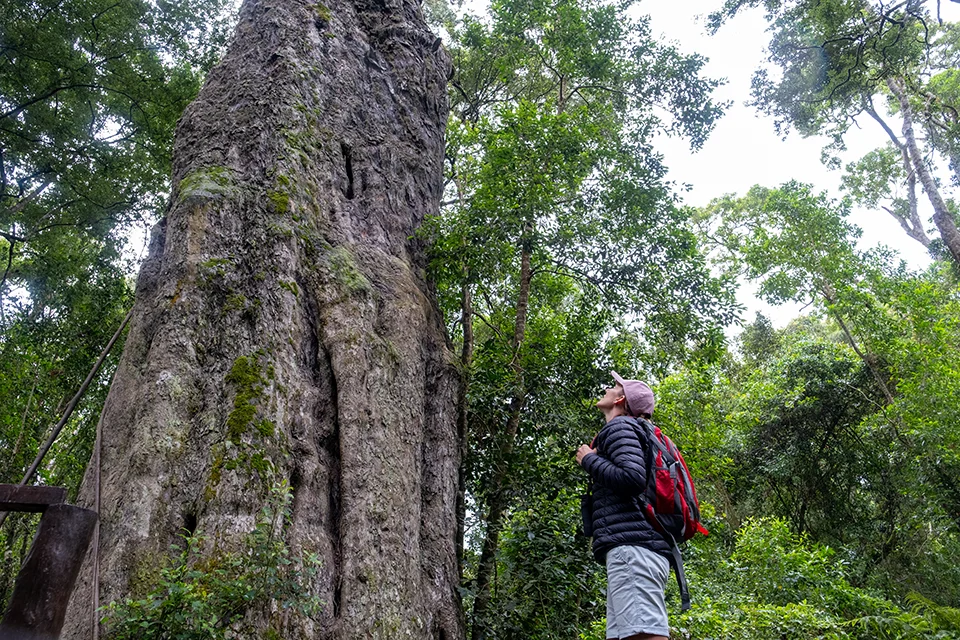
Sycamore Fig Forest: Wander beneath fig trees over 400 years old in uMkhuze's unspoilt indigenous fig forest, unique in Africa.
Jesser Point: Snorkel this protected marine reserve at Sodwana Bay at low tide.
What Wildlife Can I See in iSimangaliso?
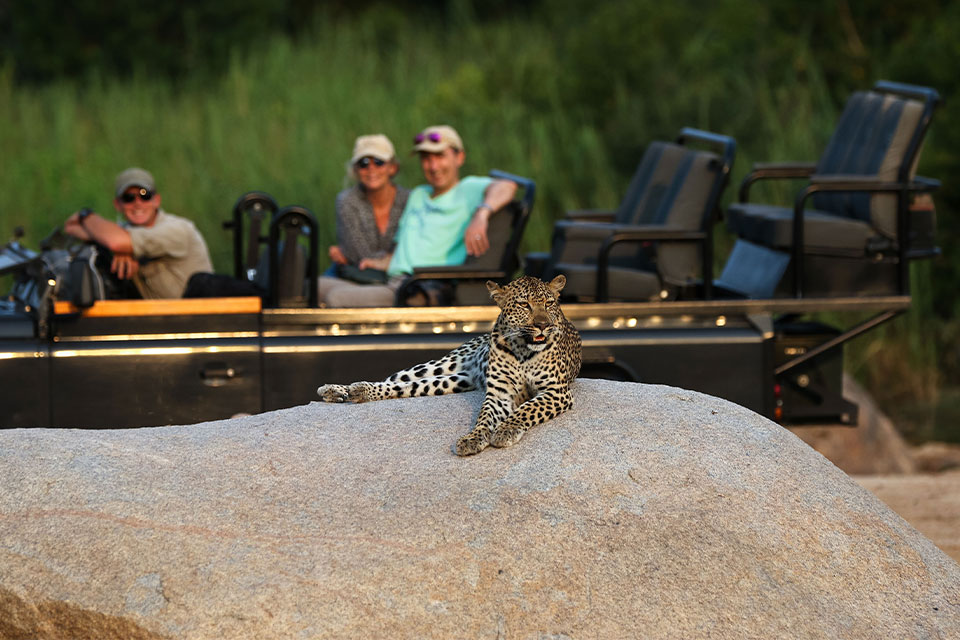
Big Five wildlife: Elephants, rhinos, buffalo, leopards, and lions roam the iSimangaliso ecosystem.
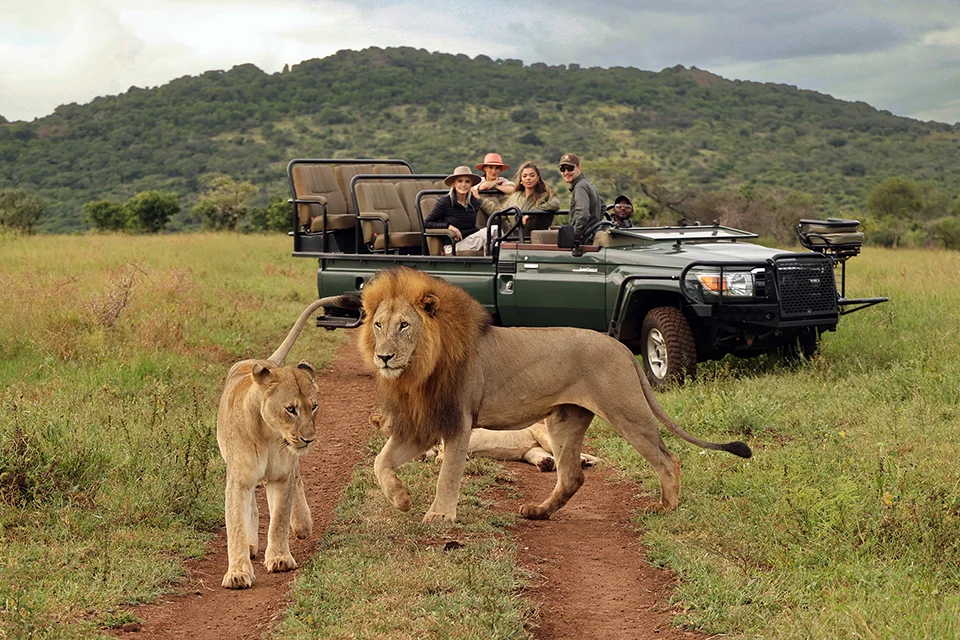
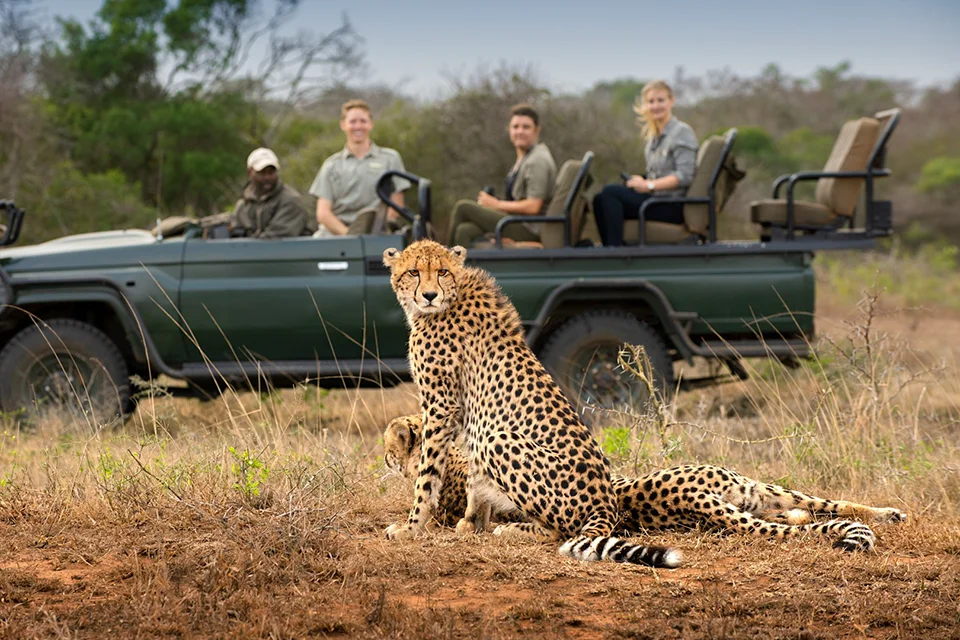
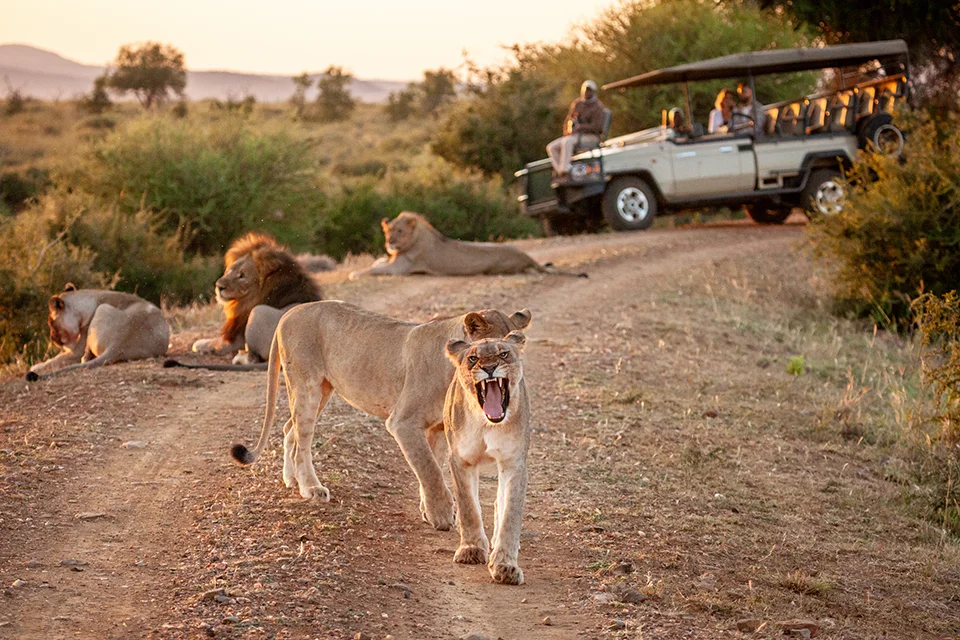
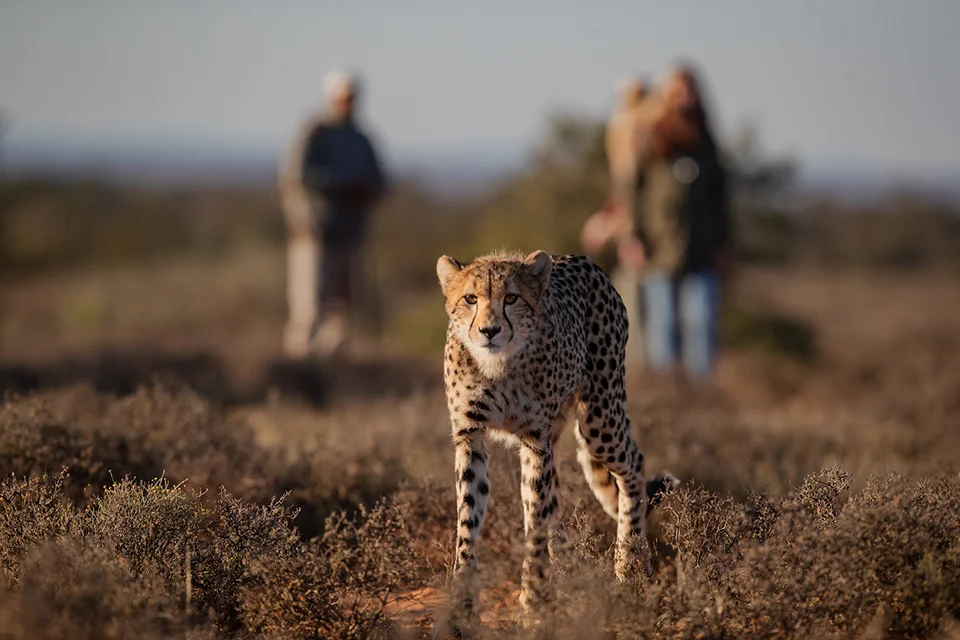
Other predators: Lions, cheetahs and African wild dogs (painted wolves) inhabit uMkhuze Game Reserve, with reintroduced lion prides growing each season.
Hippos and crocodiles: Nile crocodiles and hippos are abundant across Lake St Lucia, Lake Sibaya and the Kosi Bay lake system.
Birdlife: More than 500 bird species have been recorded, including southern banded snake-eagle, Woodward’s batis, pink-throated twinspot, Neergaard’s sunbird, Rudd’s apalis, narina trogon, Livingstone’s Turaco, African broadbill, green twinspot, Pel’s fishing owl and palm-nut vulture.
Marine life: Sodwana Bay's reefs hold over 1,200 fish species, nesting turtles, dolphins and the ancient coelacanth fish.
Other species: Giraffe, zebra, nyala, kudu, waterbuck, reedbuck, impala and red duiker roam the park's grasslands, pans and coastal dune forests.
Where to Stay in iSimangaliso Wetland Park
Thonga Beach Lodge, accessible only by suitable 4x4 vehicle, offers 12 thatched rooms tucked into dune forest above Mabibi Beach, with reef snorkelling and turtle nesting walks right on its doorstep.
Kosi Forest Lodge sits deep within ancient sand forest on the Kosi lake system, its raised timber suites reached along canoe-friendly waterways rich in birdlife and Thonga fishing heritage.
Makakatana Bay Lodge offers an intimate base on Lake St Lucia's western shore, ideally positioned for boat cruises and estuary wildlife encounters with hippos and crocodiles.
Rocktail Beach Camp lies within the remote Coastal Forest Reserve, prized for its solitude, turtle nesting season and untouched beaches far from the crowds.
Hluhluwe River Lodge provides a comfortable, accessible gateway to the park's game-viewing sections, well placed for exploring the Western Shores and Charters Creek by vehicle.
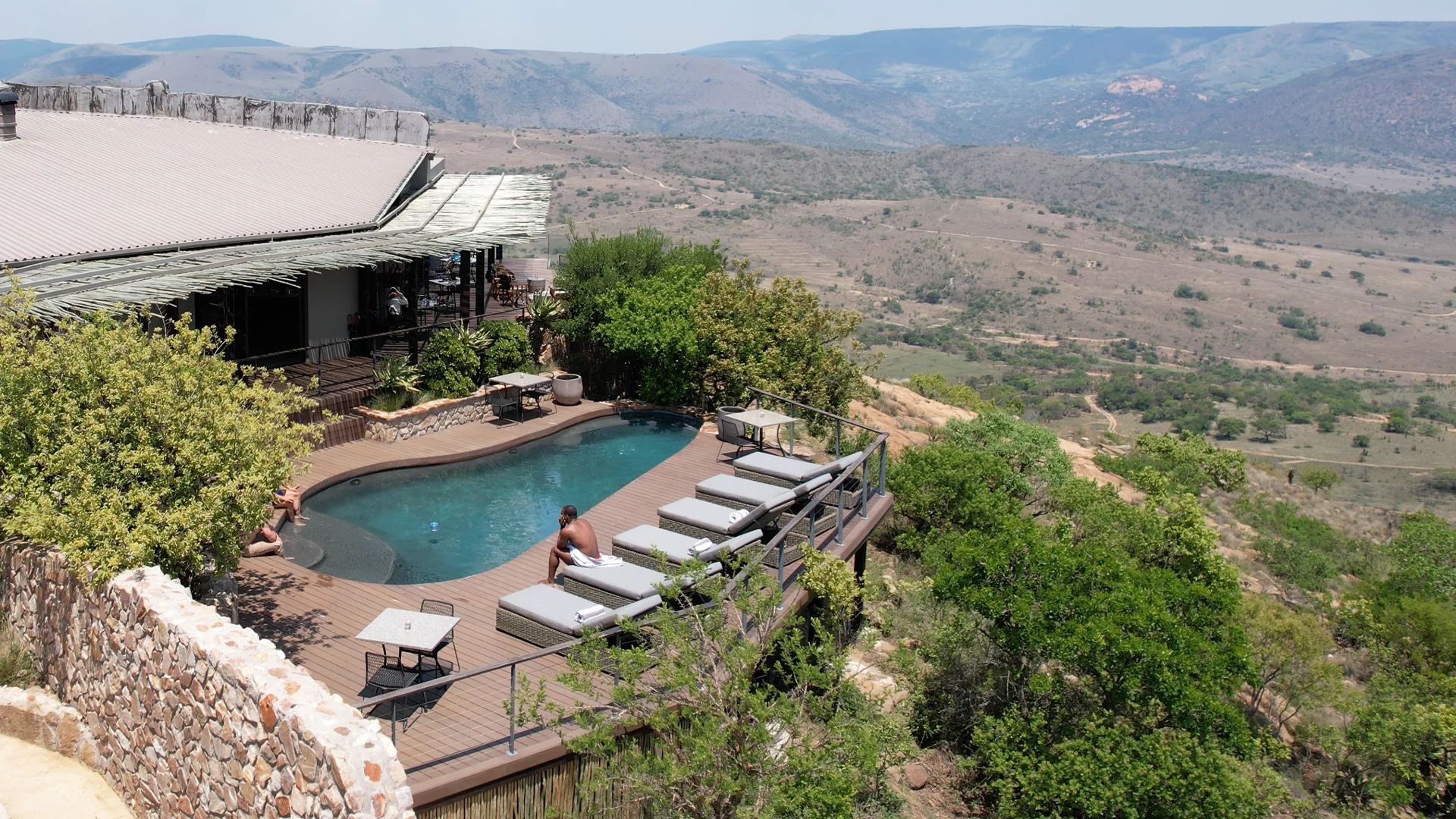
Mkhuze Trails sits in a previously inaccessible southern portion of uMkhuze Game Reserve, offering just four luxury tents for up to eight guests, with guided game walks and game drives exploring the reserve for the Big Five and other iconic species.
Activities in iSimangaliso Wetland Park
iSimangaliso's activities are as varied as its ecosystems, letting visitors move between ocean, lake, forest and grassland within a single stay.
Boat cruises: Cruise Lake St Lucia's estuary and the Kosi lake system to watch hippos and Nile crocodiles at close range.
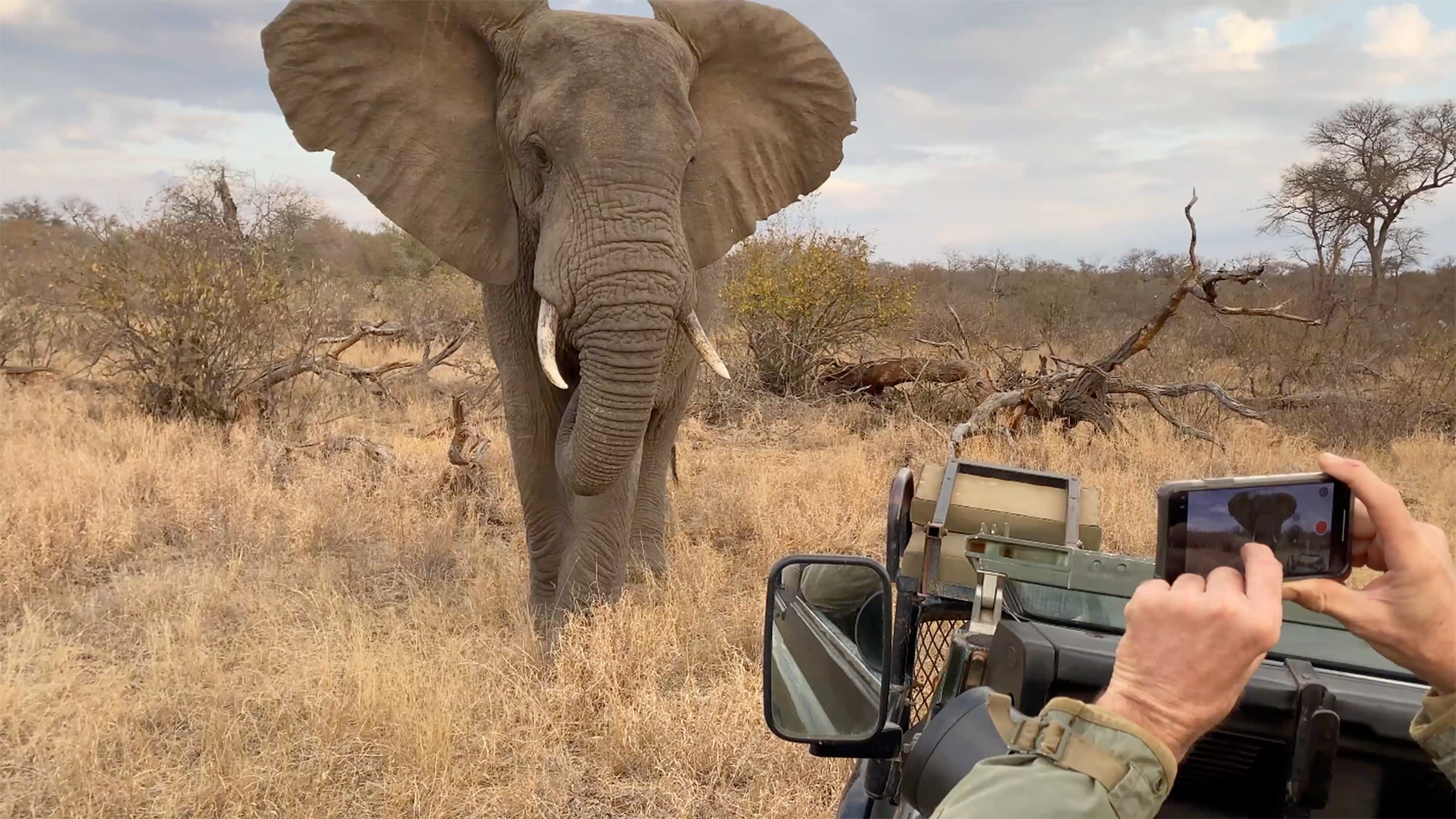
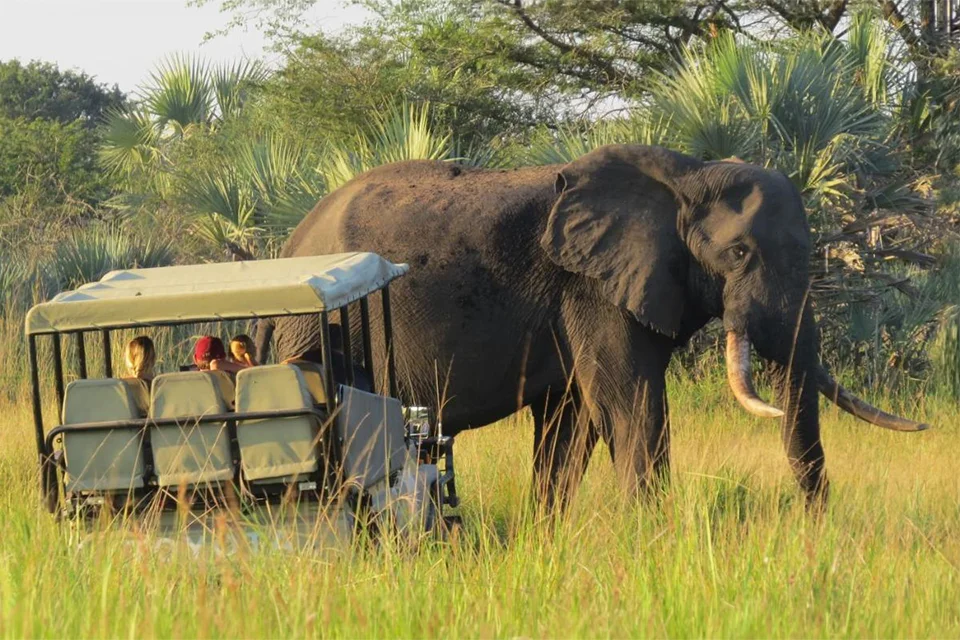
Game drives: Track the Big Five and other species.
Hiking and guided walks: Follow trails through sand forest, ancient fig forest and coastal dunes with experienced local rangers.
Kayaking and canoeing: Paddle papyrus-lined channels and palm-fringed waterways for a quieter, intimate wildlife encounter.
Turtle tours: Watch loggerhead and leatherback turtles nest on remote beaches each summer, typically November to March.
Whale watching: See humpback and southern right whales migrate past the coast between June and November each year.
Horse riding: Explore both beach and bush from St Lucia on horseback, cantering alongside zebra, wildebeest and warthog.
Bird watching: Spot over 500 species in varied ecosystems.
Mountain biking: Cycle multi-day trails through eight interlinking ecosystems on guided mountain bike challenges through Maputoland.
Together, these activities make iSimangaliso one of the few places in Africa where a single itinerary can combine a Big Five game drive, a coral reef dive and a turtle nesting walk in one unforgettable trip.
Places to Explore Within iSimangaliso
iSimangaliso is often described through its ten "jewels" — distinct destinations within the park, each offering a different way to experience its ecosystems, wildlife and coastline.
Lake St Lucia – The heart of the park and Africa's largest estuarine system, where more than half of KwaZulu-Natal's waterbirds feed and nest, and 71 of its 155 recorded fish species use the lake as a nursery.
Eastern Shores & Cape Vidal – Where bush meets ocean: elephants, rhinos and hippos inland, with whales, dolphins and nesting turtles just offshore, plus the rocky tidal pools of Mission Rocks.
Western Shores & Charters Creek – Big Four country, where elephant, rhino, buffalo and leopard roam grassland and woodland above Lake St Lucia, with the treetop uMthoma Aerial Boardwalk for lake views.
Sodwana Bay – A world-renowned dive destination, home to the southernmost coral reefs on Earth, the rediscovered coelacanth, and access to uMkhuze's Big Five inland.
uMkhuze – A wildlife-rich reserve of pans, fig forest and bird hides, with reintroduced lion, cheetah, wild dog and one of southern Africa's few unspoilt sycamore fig forests.
Kosi Bay – Four interlinked lakes at the Mozambique border, known as the aquarium of Africa, where Thonga fishing traditions have endured for over 700 years.
Lake Sibaya – Southern Africa's largest freshwater lake, fed by no river, a Ramsar-listed wetland and home to KwaZulu-Natal's second-largest hippo and crocodile population.
False Bay – A quiet corner of sand forest and ancient fossil beds on Lake St Lucia's western shore, known for the "Small Five" and three self-guided walking trails.
Coastal Forest Reserve – Remote dune forest stretching to the Mozambique border, sheltering red duiker, suni antelope and the striking palm-nut vulture.
Maphelane – A tranquil southern gateway beneath South Africa's highest vegetated dunes, popular with anglers and families for its estuary and forest trails.
Trusted by thousands of ecstatic travellers
✔️ 5-Star Trustpilot Rating ✔️ Condé Nast Travel Specialist Award Winner
✔️ Accredited by SATSA ✔️ 5,000+ Exceptional Safaris Since 1991
Why choose Africa Geographic to plan your safari?

"We have been going on safaris for over 20 years.Over the last 5 years or so we have used the services of AGT exclusively...We just recently returned from a trip to the wetlands north of Sodwana Bay to see the giant turtles and then on to...Their game rangers are outstanding...To all Africa lovers we highly recommend AGT."
"My family and I just returned from a "trip of a lifetime"...was so helpful about planning the trip I envisioned and keeping it within my budget...Everything went so smoothly and my whole family kept commenting on what a great job Africa Geographic did...I will definitely use Africa Geographic again when I book another trip to Africa!..."
"My team at Africa Geographic was amazing. They took the time to listen to what I wanted to experience on my trip and designed the perfect itinerary for me. They were always available when I had a question...They even checked on me after I returned home. Thank you...for making my dream vacation an amazing and unforgettable experience."
Wish you were here?
Frequently asked questions
Each season offers something different. May to September is the dry season and best for game viewing, while November to March brings more rain and lush vegetation, along with turtle nesting and hatching season. June to August is prime birding season, coinciding with the breeding period for many species.
Elephant, rhino, buffalo and leopard roam the Western Shores, Charters Creek and Eastern Shores sections, while lion is present in the uMkhuze section following a managed reintroduction. iSimangaliso also holds the world's highest density of black rhino.
Yes. iSimangaliso is one of the few places in Africa where elephants, rhinos and hippos share a landscape with nesting turtles and migrating whales. Humpback and southern right whales pass the coast between June and November, and loggerhead and leatherback turtles nest on the beaches from November to March.
Sodwana Bay is internationally regarded as a top diving destination, with the southernmost coral reefs on Earth and more than 1,200 recorded fish species. It is also where the coelacanth, a fish once thought extinct, was rediscovered in Jesser Canyon in 2000.
The coelacanth is an ancient fish once believed extinct for over 65 million years until it was found living in the deep submarine canyons off Sodwana Bay. Its presence adds global scientific significance to the park's marine reefs.
iSimangaliso is home to more than 500 bird species, one of the richest counts on the continent. Lake Sibaya alone holds 279 recorded species, uMkhuze more than 420, and the Western Shores over 400, ranging from flamingos and pelicans to the rare palm-nut vulture.
Boat cruises operate on Lake St Lucia and the Kosi Bay lake system, offering close views of hippos and Nile crocodiles from custom-built passenger ferries. Kayaking and canoeing are popular on the calmer channels of Kosi Bay and St Lucia's papyrus-lined waterways.
Yes. The park offers a wide range of accommodation from budget campsites to catered lodges, gentle activities such as boat cruises and self-guided walking trails, and family-friendly experiences including turtle nesting tours and horseback rides along the beach.
In the late 1980s and early 1990s, half a million South Africans petitioned against plans to mine the park's dunes for titanium. The campaign, backed by Nelson Mandela, succeeded, and the area was developed as a "people's park" instead, becoming South Africa's first UNESCO World Heritage Site in December 1999.
Sodwana Bay and the Coastal Forest Reserve lodges suit divers and snorkellers seeking reef access, while lodges near uMkhuze, the Western Shores and Charters Creek place guests closer to game drives and Big Five sightings.
Five cultural groups live within and around the park, and community-run enterprises, guiding, hospitality training and a craft programme linking around 300 women crafters to retail markets are central to how iSimangaliso is managed and sustained.
iSimangaliso operates an entry fee pricing strategy designed to keep the park accessible, maintaining public access to its beaches, lakes and activities at affordable prices for both South African and international visitors.
iSimangaliso is unique in combining eight interlinking ecosystems, from coral reefs and coastal dunes to wetlands and savannah, within a single UNESCO World Heritage Site. It is the only park where visitors can encounter the Big Five, nesting turtles, migrating whales and the ancient coelacanth in one journey.
Safaris to fully catered lodges within iSimangaliso typically cost from R2,370 per person, per night, depending on the accommodation comfort level, time of year and activities. This price usually includes accommodation, all meals, game drives, experienced guides, and 24/7 support from our team.
Click here to schedule a no-obligation call with one of our Safari Experts or fill in our 2-minute form with your questions. Our team of experts are here to help! Whether you’re curious about the best time to travel, want to hear first-hand about an experience or need help planning your safari.
Explore more African destinations
Start planning your dream safari
Our travel experts will craft a no-obligation itinerary just for you. We have crafted over 5,000 safaris since 1991. Your personal details are protected; we only use this information to contact you.
Why book your safari with us?

Deep Experience & Knowledge
Handcrafted experiential safaris since 1991.
Travel in Africa is about knowing when and where to go, and with whom. A few weeks too early/late or a few kilometres off course, and you could miss the greatest show on Earth. And wouldn’t that be a pity?

Trust & Safety

Make A Difference
We donate a portion of the revenue from every safari sold to carefully selected conservation projects that make a significant difference at ground level.
YOUR safari choice does make a difference - thank you!