

Tailor-made safaris. Since 1991




Karoo National Park: where fossils meet the open sky
Karoo National Park at a glance:
Location: Greater Karoo in the Western Cape | Access from Cape Town: Approx. 500km north on the N1 highway |
Size: 768 km² | Best time to visit: August–September; April–May (mild weather, moderate temperatures) |
Nearest town: Beaufort West (12km from the park gate) | Nearest airport: George (approx. 300km); Cape Town and Johannesburg international airports |
Currency: South African Rand (ZAR) | Malaria risk: None - Karoo National Park is a malaria-free destination |
Why visit Karoo National Park?
The Great Karoo was once a vast inland sea — today it is South Africa's largest ecosystem, and Karoo National Park, just outside Beaufort West in the Western Cape, is a revealing window into that ancient world. What was once a convenient overnight stop on the N1 between Cape Town and Johannesburg has become a destination in its own right, drawing travellers for the landscape, palaeontology, wildlife and the extraordinary quality of the night sky.
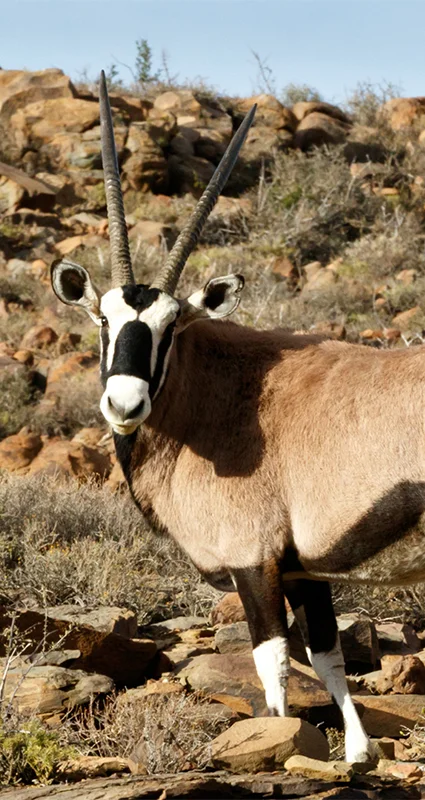
The park spans the Nuweveld Mountains and the plains below, protecting Nama-Karoo shrublands, dwarf succulent vegetation and riparian thickets. Thirty percent of the endemic plant species of the Nama-Karoo Biome are conserved within the park. Springbok, gemsbok, eland, kudu, red hartebeest and Cape mountain zebra move across the terrain, while black rhinoceros and lion - reintroduced in 2010 to restore the predator/prey balance - add unexpected drama to game drives.
Karoo National Park is entirely malaria-free, removing a practical barrier for families and first-time safari travellers. The climate is extreme - winters are cold, with snow sometimes on the Nuweveld peaks; summers are hot and dry - but this harshness gives the park its particular character.
5 Reasons We Love Karoo National Park
Malaria-free destination: accessible year-round, ideal for families and travellers who prefer to explore without prophylaxis.
Black rhinoceros and lion: share open plains with gemsbok, Cape mountain zebra, and springbok for a compelling wildlife experience.
South Africa's richest fossil deposits: genuine specimens and petrified wood along the self-guided Fossil Trail within the rest camp.
Four 4×4 trails: including the 90km Nuweveld route, take adventurous drivers through remote mountain terrain with sweeping Karoo views.
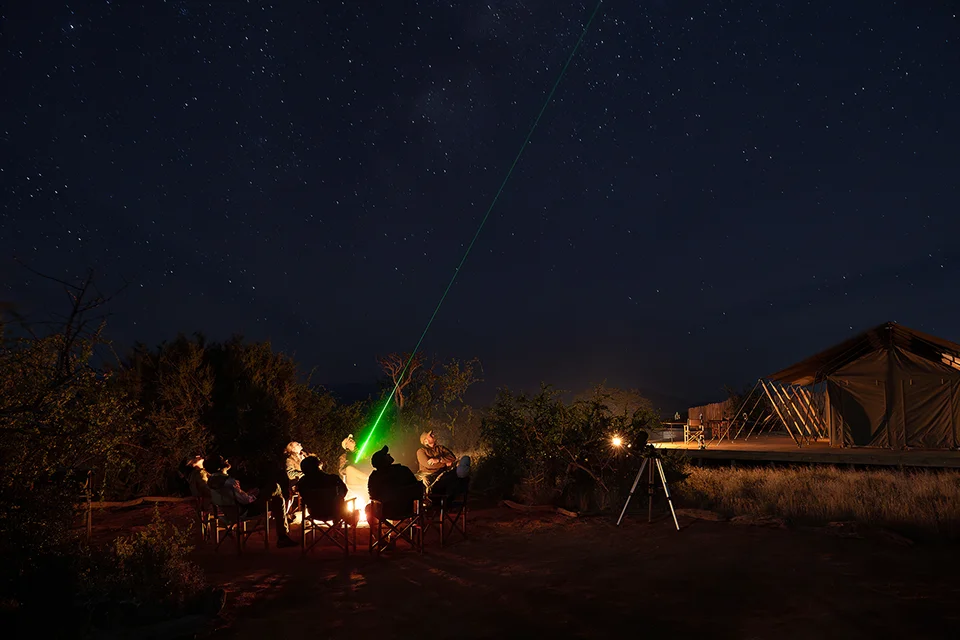
Vast clear night skies: The Great Karoo skies are amongst the darkest, driest inland night-sky belts in South Africa.
All you need to know about Karoo National Park
About Karoo National Park
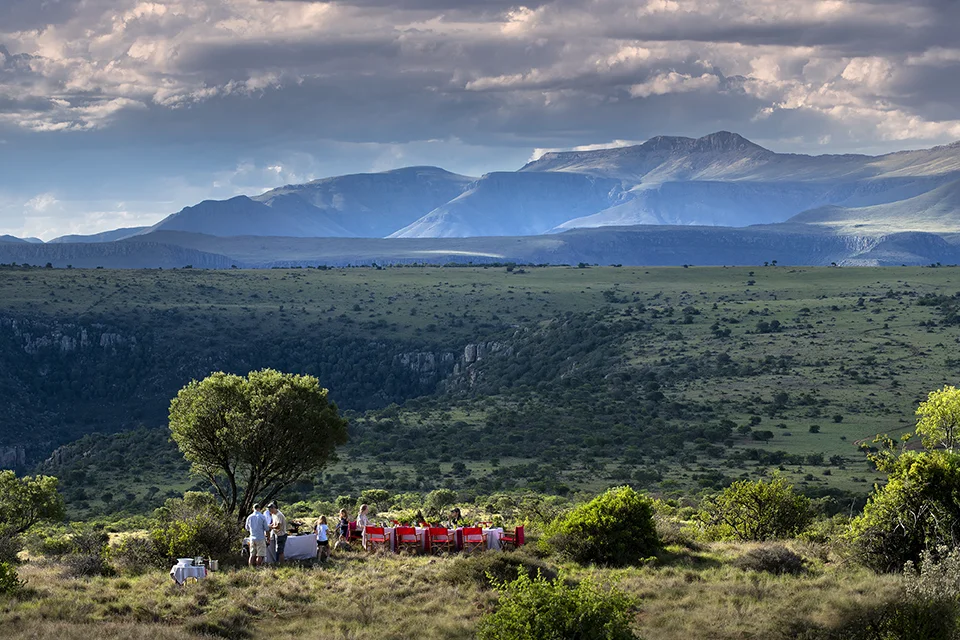
Karoo National Park lies 12km from Beaufort West, off the N1 highway in the Western Cape, approximately 500km from Cape Town and 1,000km from Johannesburg. The park covers 768 km² and rises from rocky plains to the peaks of the Nuweveld Mountains, with altitudes ranging from 783m to 1,821m above sea level.
The Great Karoo was once a vast inland sea - a geological history that makes the landscape a remarkable record of ancient life. Vegetation spans two biomes: the Nama-Karoo, which makes up the largest portion of the park, and a section of Karoo Escarpment Grassland. The landscape is characterised by montane Karoo shrublands, succulent dwarf shrublands and riparian thickets. Annual rainfall averages around 200mm, arriving mostly as summer thunderstorms or cold fronts from the Cape. Winter temperatures can drop below freezing, with snow on the higher peaks. Summers reach up to 40°C.
Things to do in Karoo National Park
Guided morning drive: led by knowledgeable park rangers for two to three hours - minimum two guests; children six and older welcome to participate.
Night drive: a two-hour guided drive after dark with park rangers, revealing a different perspective on the Karoo landscape and its nocturnal life, such as aardvarks and aardwolves.
Self-drive: along 60km of tourist roads, including the scenic Klipspringer Pass and lookout point at Rooivalle, accessible to standard vehicles.
4×4 trails: four routes ranging from the 6km Pienaars Pass to the 90km Nuweveld Trail - exploring the park's most dramatic and remote terrain.
Fossil Trail: a 400m paved, wheelchair-accessible self-guided route featuring genuine fossils and petrified wood displayed in situ at the rest camp.
Rest camp activities: mountain biking and jogging on the Sylvester Single Track, free armed-ranger-guided walks, and birding from the dedicated hide overlooking a waterhole.
What wildlife can I see in Karoo National Park?
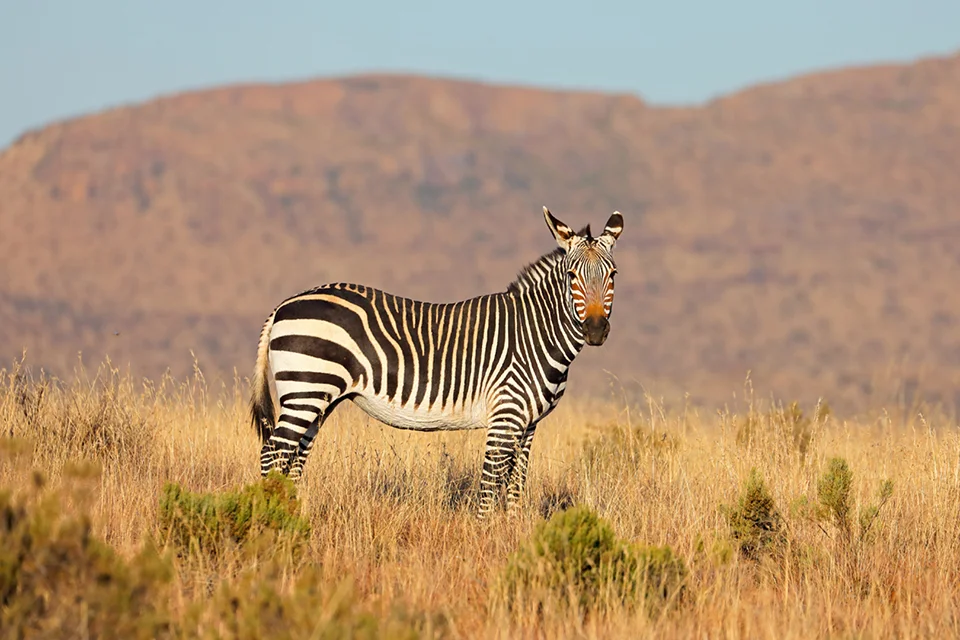
Herbivores: Cape mountain zebra, kudu, klipspringer, grey rhebok, mountain reedbuck, springbok, gemsbok, eland, and red hartebeest are among the most frequently seen on game drives and self-drive routes.
Present but difficult to find: Black rhinoceros and lion, reintroduced in 2010 to restore the predator/prey balance, are present but seldom seen across the park, as are brown hyena
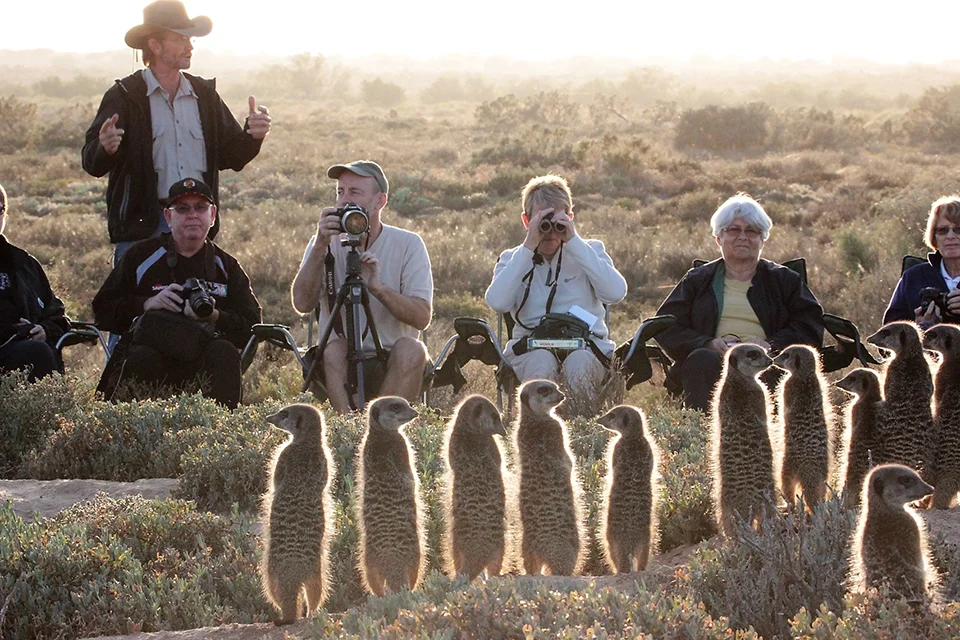
Smaller mammals: meerkat, aardvark, caracal, aardwolf, bat-eared fox, rock hyrax, porcupine, small spotted genet, Cape grey mongoose and Cape fox are among 57 mammal species recorded across the park.
249 bird species: including Karoo korhaan, Ludwig’s bustard, Karoo eremomela, cinnamon-breasted warbler, namaqua warbler, Karoo long-billed lark, short-toed rock-thrush, ground woodpecker and black-eared sparrow-lark
Riverine rabbit: one of Africa's most endangered mammals, this rare species is confirmed on the park's checklist - a significant conservation record.
Heritage in Karoo National Park
Vlieefontein Corbelled House: an intact stone structure demonstrating traditional Karoo vernacular architecture built from local rock.
Rock art complex: four engraving concentrations within the park offer vital insights into 19th-century cultural adaptation and ritual practice.
Old Mill: represents early rural industrialisation in the Karoo, located near water to integrate agricultural production with trade.
Afzaal Cottage: a rustic, stone-built former shepherd's dwelling reflecting historical adaptation to the Karoo using local materials.
Water wells: two deep, hand-excavated wells within the park showcase historical engineering and indigenous knowledge of groundwater management.
Stone-built structure (1908): illustrates vernacular architecture; locally sourced materials provided thermal stability in a harsh climate.
Where to stay in or near Karoo National Park
Karoo National Park lies within easy reach of two distinguished guesthouses in Beaufort West, each offering a different character and a comfortable base for exploring the park.
Cape Karoo Guesthouse occupies a restored Victorian homestead in the heart of Beaufort West. Rooms reflect the scale of the original building, with a sense of heritage that fits this historic landscape. The guesthouse suits those who prefer the comfort of town accommodation combined with easy access to the national park, just 12km away along the N1. It is a natural choice for travellers seeking personalised service and genuine local character, as well as a practical stopover on the Cape Town–Johannesburg route.
Die Herehuis Guesthouse takes a different approach: intimate in scale and atmosphere, it occupies a beautifully maintained Karoo manor house in Beaufort West that speaks to the town's heritage and the enduring aesthetic of Karoo domestic architecture. The name - literally "the manor house" - signals its historic origins. Die Herehuis suits travellers who value quiet surroundings and a more self-contained environment. For those arriving after the long drive from Cape Town or Johannesburg, it offers a restful, characterful night before an early morning in the park.
The park also offers its own SANParks self-catering accommodation - chalets, cottages and campsites - for those who prefer to stay within the reserve itself. Either way, Beaufort West remains the gateway town for this corner of the Great Karoo.
Trusted by thousands of ecstatic travellers
✔️ 5-Star Trustpilot Rating ✔️ Condé Nast Travel Specialist Award Winner
✔️ Accredited by SATSA ✔️ 5,000+ Exceptional Safaris Since 1991
Why choose Africa Geographic to plan your safari?

"Wow, we can’t say enough great things...Every place we stayed struck the perfect balance between sustainability, supporting local communities, and ensuring an amazing experience. It’s clear they’ve put a lot of thought and care into choosing their partners across Africa, and we highly recommend using Africa Geographic if you’re planning to travel across the continent."
"...did an outstanding job organizing an unforgettable trip for my family and me to South Africa...itinerary that far exceeded our expectations. We enjoyed two incredible safaris over the course of eight nights, which struck the perfect balance between family-friendly (ideal for our kids, ages 10 and 11) and fun experiences for adults...we had an extraordinary experience..."
"...Africa Geographic put together a trip for me that gave me the experience I was looking for in a way that I would not have been able to do on my own. I’ve been dreaming about this trip for years, and the reality was even better than I could imagine...Africa Geographic tailored the trip specifically to what I was looking for...work with Africa Geographic to create your perfect trip."
Wish you were here?
Frequently asked questions
Yes. Karoo National Park is entirely malaria-free. No antimalarial medication is required, making it an accessible option for families, travellers with health sensitivities, and those who prefer not to take prophylaxis. No special health precautions beyond standard travel insurance are required for a visit.
The cusp months of April, May, August and September offer the best balance of mild temperatures and comfortable conditions. August and September are ideal for pleasant days without summer heat extremes. Summer (October to April) brings hot daytime temperatures but attractive early mornings and late afternoons. Winter (May to September) can bring bitterly cold nights, though wildlife viewing remains consistent year-round as the park is not seasonal.
Most visitors arrive by car. The rest camp is situated 12km from Beaufort West off the N1 highway, approximately 500km from Cape Town and 1,000km from Johannesburg. The closest commercial airport is in George, approximately 300km away. International airports are in Cape Town and Johannesburg. An airstrip for small aircraft is located 10km north of Beaufort West, though no scheduled flights operate to it.
Yes. The park offers approximately 60km of tourist roads accessible to standard vehicles, including the scenic Klipspringer Pass and lookout at Rooivalle. Four dedicated 4×4 trails, ranging from 6km to 90km, are available for off-road vehicles at no extra cost (the Pienaars Pass Trail requires a fee payable at Reception). Self-drive allows flexibility to explore at your own pace.
The park supports springbok, gemsbok, eland, wildebeest, kudu, red hartebeest, Cape mountain zebra, Burchell's zebra, klipspringer, common duiker and steenbok. Black rhinoceros and lion - reintroduced in 2010 to restore the predator/prey balance - are present but seldom seen. The park records 57 mammal species and 249 bird species. A variety of reptiles also inhabits the park, and wildlife viewing is consistent year-round.
Yes. Guided game drives are offered by the park, led by knowledgeable rangers. Morning drives last two to three hours; night drives last two hours. Drives are available for a minimum of two and a maximum of ten guests, with children under six excluded. Departure times are confirmed at Reception. The park also offers free guided walks led by an armed ranger within the rest camp area, as well as the self-guided Fossil Trail. Overnight guests have access to the Sylvester Single Track for mountain biking and jogging.
The Fossil Trail is a 400m paved walkway that guides visitors through the geology and palaeontology of the Great Karoo using genuine fossils and petrified wood displayed in situ along the route. It is wheelchair accessible and is located within the rest camp. The Karoo landscape underlies one of the world's most significant Permian-era fossil records, and this trail offers an accessible introduction to that history.
There are four 4×4 trails in the park. The Nuweveld Trail (90km) and Afsaal Trail (13km) explore the remote western sections of the park, with the option of an overnight stay at Embizweni Cottage. The Kookfontein Loop (7km) and Sandrivier Loop (7km) provide additional route options, while the Pienaars Pass Trail (6km) - the first of its kind in SANParks - takes visitors to the middle plateau. Day visitors on the longer trails must start by 11:00; overnight visitors by 14:00.
The park records 249 bird species. The best birding is around the rest camp, where species such as Karoo Scrub Robin, Dusky Sunbird, Pale-winged Starling and Layard's Tit-babbler are regularly seen. On the plains, larks and chats are prominent, and Karoo Korhaan, Ludwig's Bustard and Namaqua Sandgrouse should be looked for. A high concentration of Verreaux's (Black) Eagle is one of the park's ornithological highlights. A dedicated bird hide is located at the rest camp entrance.
The park protects several significant heritage sites, including the Vlieefontein Corbelled House, a rock art complex with four engraving concentrations, the Old Mill, Afzaal Cottage, two hand-excavated water wells, a Labourer's Cottage and a stone-built structure dating to 1908. Together these sites document the geology, pastoralism, colonial history and indigenous cultural practices that shaped this part of the Great Karoo.
A minimum of two nights is recommended to experience the guided game drives, Fossil Trail, self-drive scenic routes and birding hide without rushing. Those undertaking the longer 4×4 trails may wish to extend to three or four nights, with an overnight stay at Embizweni Cottage available on the Nuweveld route. The park works well as a multi-night destination or as a more extended stopover on a Cape Town to Johannesburg road journey.
The park spans two biomes: the Nama-Karoo, which covers the largest section of the park and includes Karoo grassy dwarf shrublands and succulent shrublands, and a section of Karoo Escarpment Grassland. Thirty percent of the endemic plant species of the Nama-Karoo Biome are conserved in the park. The Karoo "bossies" — a range of shrub species — characterise the plains, while riparian thickets line seasonal watercourses and the Nuweveld Mountains provide dramatic elevation and contrast.
Yes. The park is malaria-free, making it a practical and safe option for families. The Fossil Trail is paved and wheelchair accessible, suitable for all ages. Guided game drives accept children aged six and over. The Sylvester Single Track within the fenced rest camp provides a safe area for mountain biking and jogging. The rest camp also offers a restaurant and self-catering facilities, and the park's landscape and wildlife offer a genuinely educational experience for younger travellers.
Staying near the Karoon National Park typically costs from R940 per person, per night, depending on the accommodation comfort level and time of year. This price usually includes accommodation but excludes meals and activities.
Click here to schedule a no-obligation call with one of our Safari Experts or fill in our 2-minute form with your questions. Our team of experts are here to help! Whether you’re curious about the best time to travel, want to hear first-hand about an experience or need help planning your safari.
Explore more African destinations
Start planning your dream safari
Our travel experts will craft a no-obligation itinerary just for you. We have crafted over 5,000 safaris since 1991. Your personal details are protected; we only use this information to contact you.
Why book your safari with us?

Deep Experience & Knowledge
Handcrafted experiential safaris since 1991.
Travel in Africa is about knowing when and where to go, and with whom. A few weeks too early/late or a few kilometres off course, and you could miss the greatest show on Earth. And wouldn’t that be a pity?

Trust & Safety

Make A Difference
We donate a portion of the revenue from every safari sold to carefully selected conservation projects that make a significant difference at ground level.
YOUR safari choice does make a difference - thank you!