
Tailor-made safaris. Since 1991

Mountain Zebra National Park: A Karoo Sanctuary
Mountain Zebra National Park at a glance:
Location: Bankberg Mountains, Eastern Cape, near Cradock | Malaria risk: None - malaria-free destination |
Size: Over 28,000 hectares | Nearest city: Cradock, ~12km; Gqeberha, ~3 hours |
Established: 1937, to save the Cape mountain zebra | Altitude: 910m to 2,135m above sea level |
Wildlife: Four of the Big Five (no elephants) | Big cats: Lion, cheetah, leopard, caracal |
Why visit Mountain Zebra National Park?
Mountain Zebra National Park rewards travellers seeking solitude over spectacle. Set among the boulder-strewn ridges of the Bankberg Mountains outside Cradock in the Eastern Cape, this Great Karoo sanctuary was proclaimed in 1937 to save the Cape mountain zebra from extinction. That single conservation act has grown into a 28,000-hectare stronghold where zebra numbers have recovered dramatically, and where cheetahs, lions and black rhinos have since returned to landscapes that had not seen them in generations, healing decades of absence with every passing season.
This is a malaria-free safari destination, making it an easy, low-risk addition to any Cape itinerary, whether travelling with young families or seeking a restorative stop on an extended inland route between Cape Town and the Garden Route. The terrain shifts from open grassland to rugged escarpment, rising from 910 to 2,135 metres above sea level, delivering sweeping views and a genuine sense of space and stillness. Guided game drives, cheetah tracking on foot, 4x4 trails and San rock art walks reveal both the wildlife and the human history layered into this quiet corner of the Great Karoo. Four of the Big Five roam here - only elephants are missing - alongside black wildebeest, buffalo, and 272 bird species.
5 Reasons We Love Mountain Zebra National Park
A conservation triumph: Protection began in 1937 with just 6 Cape mountain zebras; the population has grown to a thriving 300 today.
Cheetah rewilding pioneer: Since 2007, the park has contributed over 35 cheetahs to metapopulation projects across Southern Africa.
Four of the Big Five: Lions, buffalo, leopards and black rhinos share these craggy hills. Only elephants are absent from the full quintet.
High-altitude Karoo drama: Bankberg peaks reach 2,135 metres, framing grasslands, thickets and valleys in dramatic mountain scenery.
Malaria-free family safari: Easily combined with a Cape Town or Garden Route trip, offering wildlife without malaria precautions.
All You Need to Know About Mountain Zebra
About Mountain Zebra National Park
Mountain Zebra National Park lies in the Great Karoo of South Africa's Eastern Cape, just outside Cradock and about a three-hour drive from Gqeberha, formerly Port Elizabeth. Established in 1937 on a modest 1,700-hectare plot to save the last remaining Cape mountain zebras, the park has since grown to more than 28,000 hectares beneath the dramatic Bankberg mountain range. The landscape spans three distinct vegetation types, Karoo Escarpment Grassland, Eastern Upper Karoo shrubland and Eastern Cape Escarpment Thicket, together supporting over 680 recorded plant species. Since 2012, the park has restored degraded farmland, clearing invasive prickly pear and jointed cactus while creating local employment. Cheetahs were reintroduced in 2007 and lions in 2013, making this reserve a quiet conservation success story still unfolding today.
Things to Do in Mountain Zebra National Park
Guided or self-drive game drives: Explore open plains and mountain slopes, spotting zebra, buffalo, antelope and predators at your pace.
Cheetah tracking on foot: Follow guides using telemetry equipment to track collared cheetahs.
San rock art walks: Guided hikes into rocky Great Karoo valleys reveal ancient San rock art depicting animals in red and black pigment on stone.
4x4 trails: Adventurous drivers can tackle dedicated 4x4 routes through the rugged Bankberg escarpment, revealing shifting mountain vistas.
Hiking trails: Two walking trails leave from the rest camp, including the scenic 2.5km Black Eagle Trail with exceptional panoramic views.
Guided night drives: Spot nocturnal species including aardvark, porcupine, black-footed cat, genets and secretive brown hyena after dark.
What Wildlife Can I See in Mountain Zebra NP?
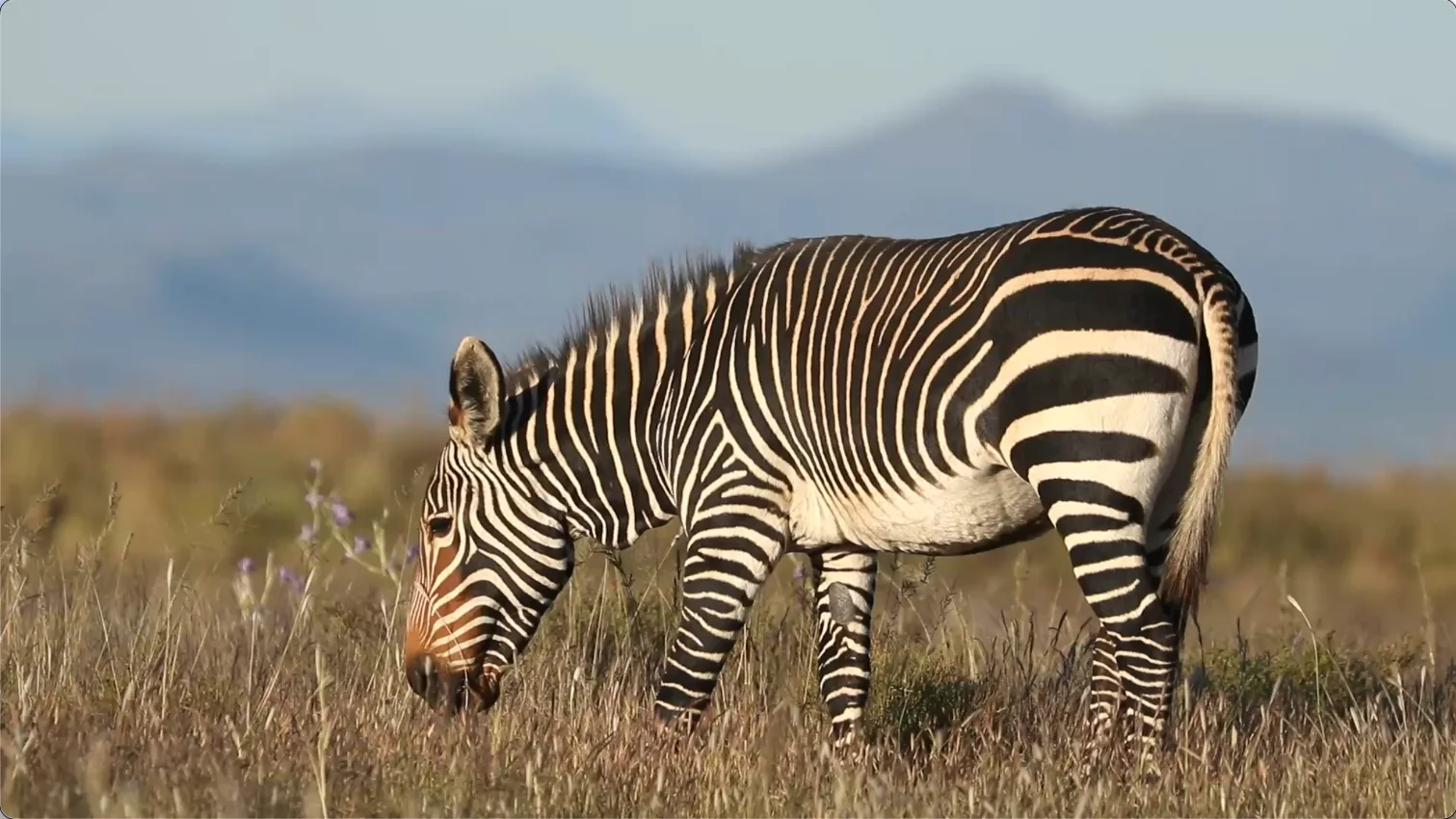
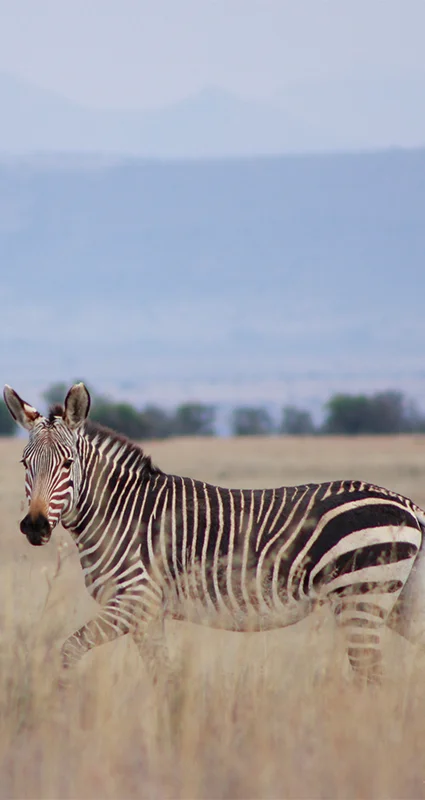
Cape mountain zebra: The park's namesake species now numbers 300, up from just 6 founder animals protected here since 1937 today.
Predators and herbivores: Lions, leopards, buffalo and black rhino share these hills, with only elephants absent from the Big 5.
Cheetah conservation success: Reintroduced in 2007, the park has since sent over 35 cheetahs to rewilding projects across the region.
Plains and mountain antelope: Black wildebeest, red hartebeest, eland, springbok, blesbok, mountain reedbuck and grey rhebok roam here.
Elusive and nocturnal species: Brown hyena, aardwolf, caracal, black-footed cat, aardvark and porcupine appear on guided night drives.
Exceptional birdlife: 272 species include Verreaux's eagle, ground woodpecker, secretarybird, blue crane, Drakensberg rockjumper, blue koorhaan, Ludwig's and kori bustards and pink-billed lark.
Where to stay in or near Mountain Zebra National Park
For those who prefer to stay just outside the park, Die Tuishuise & Victoria Manor in nearby Cradock offers a very different experience: a collection of more than 30 beautifully restored Victorian-era Karoo cottages lining historic Market Street, anchored by Victoria Manor, established in 1848. Each Tuishuis is individually furnished with period antiques and comes with its own private lounge, kitchen and bathroom, while the Manor itself serves hearty, traditional Karoo fare by candlelight. It is an atmospheric, heritage-rich alternative for travellers who want proximity to the park's wildlife alongside the comforts of a historic Karoo town steeped in literary and colonial history.
Self-catering SANParks accommodation inside Mountain Zebra National Park includes the Rock Chalets, the Umthombo and Bakana mountain cottages and the historic Doornhoek Guesthouse, a restored 1838 Victorian farmhouse once declared a national monument.
Trusted by thousands of ecstatic travellers
✔️ 5-Star Trustpilot Rating ✔️ Condé Nast Travel Specialist Award Winner
✔️ Accredited by SATSA ✔️ 5,000+ Exceptional Safaris Since 1991
Why choose Africa Geographic to plan your safari?

"The most amazing bucket list vacation ever. Everything was planned, organized and explained so well. I didn’t have one worry or concern while on another continent. I completely trust the folks at Africa Geographic to plan all future trips!"

"...did an amazing job in arranging our once in a lifetime safari...South Africa. Absolutely everything was perfect!...I realized how responsible the transportation guys were and never worried after that that we would miss a connection!"

"My team at Africa Geographic was amazing. They took the time to listen to what I wanted to experience on my trip and designed the perfect itinerary for me...Thank you...for making my dream vacation an amazing and unforgettable experience."
Wish you were here?
Frequently asked questions
Yes. Mountain Zebra National Park lies in the Eastern Cape, a malaria-free region of South Africa, making it a straightforward, low-risk safari destination for travellers of all ages, including young families.
The park was proclaimed in 1937 specifically to save the Cape mountain zebra from extinction. A small founder herd of just 6 zebra has grown into a population of 300 today.
Cape mountain zebras are unmistakably different: they have a dewlap under the neck, solid stripes that do not run under the belly, and a stockier build suited to rocky terrain. Plains zebras do not occur in this park.
The park is home to four of the Big Five: lion, leopard, buffalo and black rhino. Elephants are the only member of the Big Five absent from the park.
Lions were reintroduced in April 2013 after an absence of 130 years from the area. Three lions were introduced initially, and the park welcomed its first litter of cubs in 2019.
Yes. Cheetahs were reintroduced in 2007, becoming the first large predators returned to the park. Since then, more than 35 cheetahs have been relocated from Mountain Zebra to rewilding sites elsewhere in Southern Africa.
The park lies just outside Cradock, roughly 12 kilometres away, and is approximately three hours' drive from Gqeberha, formerly known as Port Elizabeth.
Options range from Rock Chalets and Family Cottages within the main rest camp to rustic 4x4-access mountain cottages, the historic Doornhoek Guesthouse, and a well-equipped campsite for tents and caravans.
Yes, self-drive game drives are a popular way to explore the park, alongside guided game drives, cheetah tracking, 4x4 trails and hiking routes suited to a range of fitness levels.
Yes. Several rocky areas protect ancient San rock art, including sites with rare depictions combining wild animals and domestic cattle, reflecting early cultural exchange in the region.
Over 270 bird species have been recorded, including Verreaux's eagle, ground woodpecker, secretarybird, blue crane, Drakensberg rockjumper, blue koorhaan, Ludwig's and kori bustards and pink-billed lark.
The park ranges from 910 metres at the entrance gate to 2,135 metres at its highest point, with the reception area sitting at 1,215 metres above sea level.
Yes. Its compact size, proximity to Cradock and position between the Karoo and the Garden Route make it a rewarding one- or two-night addition to a broader Great Karoo or Cape safari itinerary.
SANParks accommodation inside the park typically costs from R700 per person, per night, excluding activities and guiding, while Die Tuishuise & Victoria Manor outside but near the park starts at R1,300 on a bed-and-breakfast basis.
Click here to schedule a no-obligation call with one of our Safari Experts or fill in our 2-minute form with your questions. Our team of experts are here to help! Whether you’re curious about the best time to travel, want to hear first-hand about an experience or need help planning your safari.
Explore more African destinations
Start planning your dream safari
Our travel experts will craft a no-obligation itinerary just for you. We have crafted over 5,000 safaris since 1991. Your personal details are protected; we only use this information to contact you.
Why book your safari with us?

Deep Experience & Knowledge
Handcrafted experiential safaris since 1991.
Travel in Africa is about knowing when and where to go, and with whom. A few weeks too early/late or a few kilometres off course, and you could miss the greatest show on Earth. And wouldn’t that be a pity?

Trust & Safety

Make A Difference
We donate a portion of the revenue from every safari sold to carefully selected conservation projects that make a significant difference at ground level.
YOUR safari choice does make a difference - thank you!