

Tailor-made safaris. Since 1991



Great Karoo: Where Ancient Landscapes Meet the Sky
The Great Karoo at a glance:
Location: South Africa's vast interior plateau, spanning parts of the Eastern Cape, Western Cape and Northern Cape | Best time to visit: May to September; warm, sunny days of 20–25°C and cool, clear nights |
Size: In excess of 400,000 km² | Nearest airports: George (GRJ), Port Elizabeth/Gqeberha (PLZ), Cape Town (CPT) |
Currency: South African Rand (ZAR) | Malaria risk: None; the Great Karoo is malaria-free |
Minimum recommended stay: 3–4 nights | Access from Cape Town: Approximately 4 hours by road to Beaufort West or Prince Albert |
Why Visit the Great Karoo?
The Great Karoo is not a landscape that announces itself. It arrives slowly - through the windscreen of a long road north from Cape Town: flat-topped koppies emerging from pale scrub, a windmill spinning against an enormous sky, heat haze where mountains dissolve into the horizon. It is, to many eyes, the true heart of South Africa.
Covering more than 400,000 square kilometres, the Great Karoo is a vast semi-arid plateau ringed by mountain escarpments that intercept rain-bearing sea winds, leaving the interior famously dry. Rainfall across most of the region is less than 400 mm annually, but less than 200 mm in the more arid north-west, and falls mainly in summer. The best time to visit is between May and September, when days are warm and sunny with temperatures of 20–25°C and nights are cool enough for deep sleep beneath a cathedral of stars. The Great Karoo is not to be confused with the Little Karoo to its south, which is smaller, lower-lying and not as arid.
What the Great Karoo conceals behind its apparent emptiness is extraordinary. These ancient sediments record some 270 million years of geological time. Reptile-like mammals stalked one another across Permian marshlands long before the first dinosaur appeared. The San and Khoi peoples who shared this "Place of Great Dryness" left painted records on rock faces. The Great Karoo rewards those who look closely and travel slowly.
5 Reasons We Love the Great Karoo
Rewilded Big 5 bushveld: Samara Karoo Reserve has restored the Big Five species to 27,000 hectares of semi-arid bushveld, along with cheetahs, giraffes, zebras and various antelope species.
Dark sky country: the SKA/MeerKAT telescope region signals just how pristine the Karoo's night skies remain; among the clearest in the hemisphere.
Ancient fossils: the Karoo's rock strata preserve creatures from 270 million years ago; one of the world's great palaeontological landscapes.
Living history: San rock art, Boer War blockhouses, and Victorian Karoo towns layer a rich human story over the geological record beneath your feet.
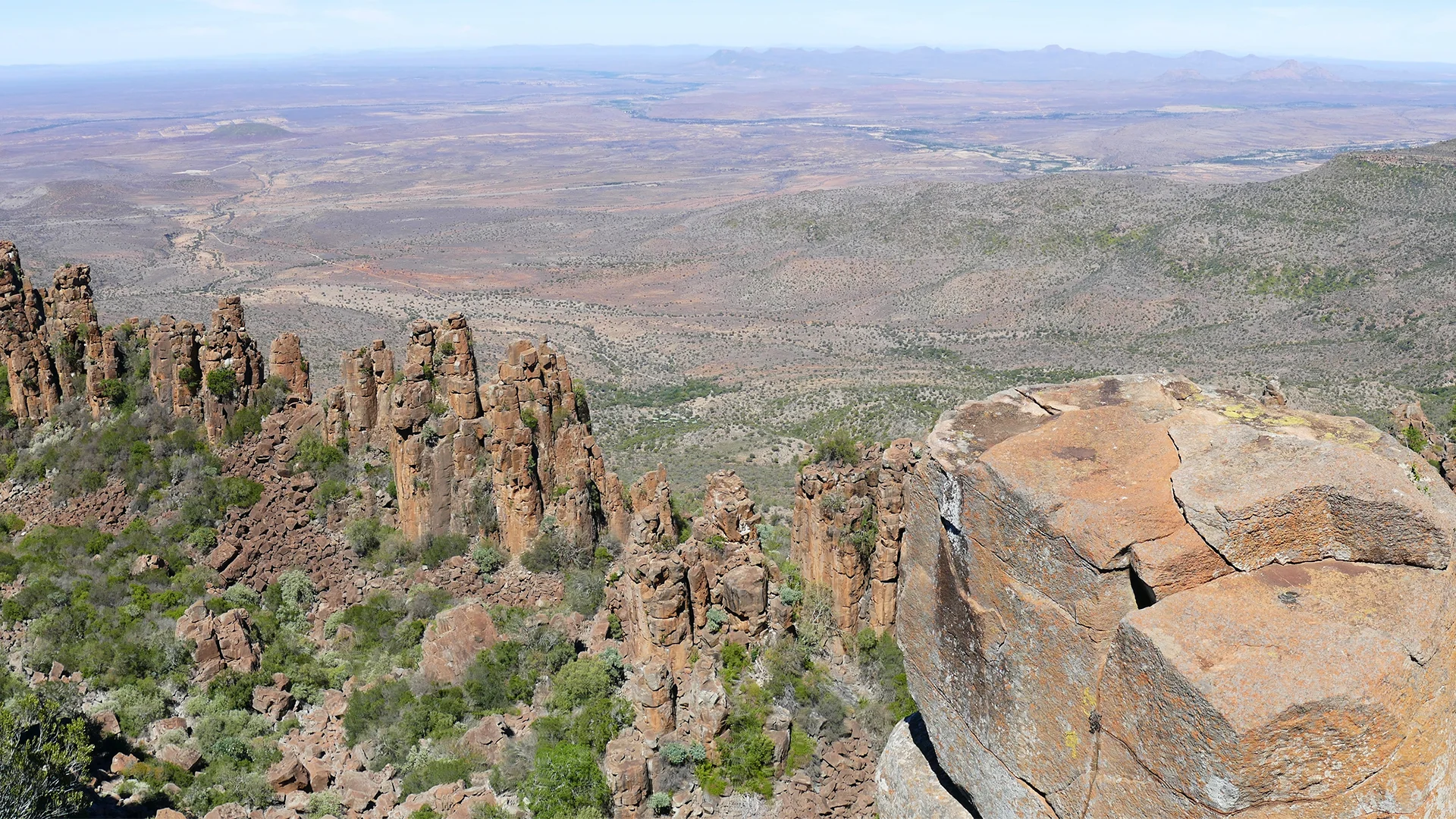
Dramatic geological landscapes: The region features striking topography, from the sheer, towering cliffs of the Valley of Desolation outside Graaff-Reinet to the winding, historic Swartberg Mountain Pass. Its wide-open plains and isolated flat-topped hills (koppies) offer unforgettable road trips and panoramic photo opportunities.
Our favourite Great Karoo safari ideas
All you need to know about the Great Karoo
About the Great Karoo
The Great Karoo is South Africa's vast interior plateau: a semi-arid expanse ringed by mountain escarpments that block sea winds and keep the interior dry. Rain falls mainly in summer, less than 400 mm a year. May to September is the best time to travel, with warm days of 20–25°C and cool, clear nights.
Its story begins 270 million years ago, when ice sheets covered the region. As the climate warmed, reptiles and early mammals thrived in its marshes, and their remains are preserved in rock strata geologists call the Karoo Supergroup: one of the world's great fossil records.
The San and Khoi peoples shared this land for centuries, painting their lives onto rock faces. European explorers such as Karl Thunberg and Cape Governor van der Stel arrived in the 1700s. Today the Karoo is sheep country, fossil country, and increasingly a destination for those who seek wide space, dark skies, and wild animals.
Things to Do in the Great Karoo
Take guided game drives and bush walks at Samara Karoo Reserve, where Big Five and arid-adapted wildlife roam rewilded bushveld.
Explore rock art sites and trace the cultural legacy of the San people who sheltered in the Great Karoo's koppies and dry riverbeds for millennia.
Visit Camdeboo National Park for dramatic views of the Valley of Desolation, a landscape of vertical dolerite columns above Graaff-Reinet.
Stargazing and astro-tourism in the SKA/MeerKAT telescope region, where the absence of light pollution makes the Milky Way vivid.
Go fossil hunting with specialist guides across the ancient sedimentary outcrops that litter the Great Karoo's rocky slopes and lonely hillsides.
What Wildlife Can I See in the Great Karoo?
Samara Karoo Reserve hosts the Big 5 (lions, leopards, elephants, buffalo and black rhinos), cheetahs, giraffes, zebras and various plains wildlife and rock-habitat species such as mountain zebra and klipspringer
Arid-adapted species such as springbok, gemsbok and ostriches roam the open plains of the Great Karoo, including within Karoo National Park.
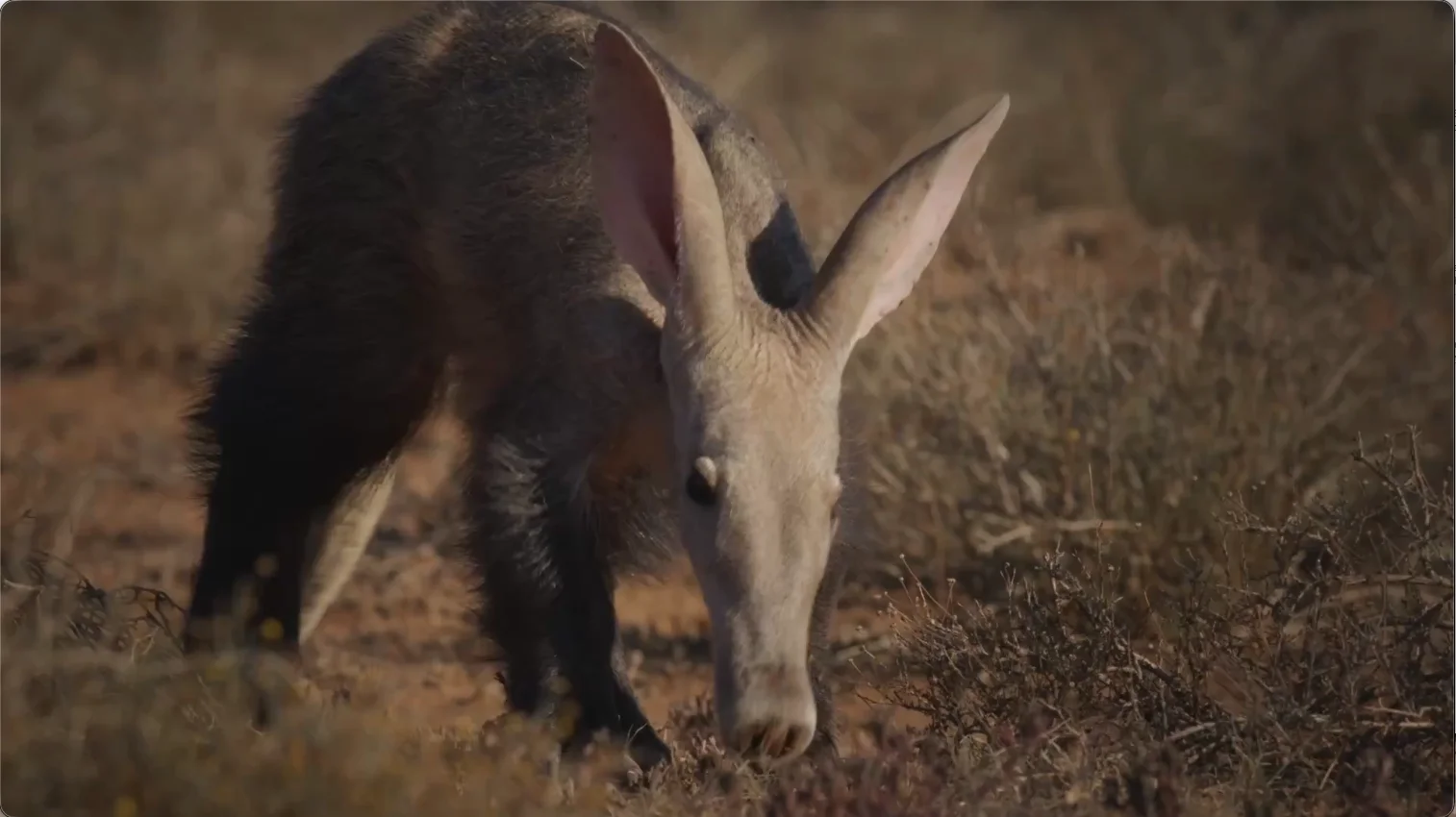
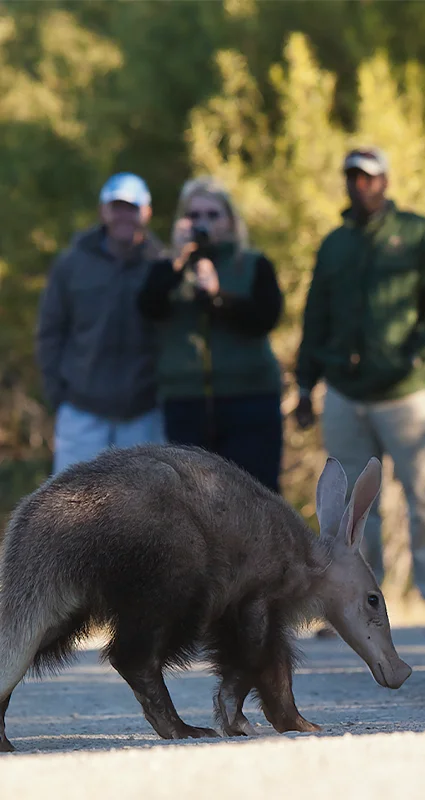
Secretive species such as aardvark, aarfwolf, porcupine, African wild cat and caracal are rarely seen but present across the Great Karoo.
Great Karoo bird species include blue crane, Cape vulture, Ludwig's bustard, Cape longclaw, olive bushshrike, black-headed canary, Karoo korhaan, and Karoo long-billed lark.
Where to Stay in the Great Karoo
The Great Karoo hosts a plethora of hotels, guest houses, and B&Bs, including the following three options in Samara Karoo Reserve:
Karoo Lodge is a lovingly restored historical farmstead embellished with Karoo antiques and contemporary South African craftsmanship. The home includes a wraparound verandah, farm-style kitchen, wine cellar, atmospheric library and a Story Room that documents the reserve's rewilding journey from inception to the present day. A swimming pool, gift shop and indigenous garden complete the picture.
The Manor is best-suited for groups of up to eight guests, offering four spacious en-suite suites, each opening onto a private patio with views of the surrounding mountain landscape. Glass doors frame the 21-metre infinity pool at the heart of the villa; inside, Karoo antiques and beaded African artwork create an atmosphere of understated contemporary elegance. Two living areas and two breakaway lounge alcoves give guests space to gather or retreat as the mood dictates.
Plains Camp sits in a remote corner of the reserve, with spellbinding views across open plains to dolerite-capped mountains. Designed to touch the landscape lightly, this off-grid tented camp runs entirely without electricity - candlelight, oil lanterns and open-air bucket showers define its character.
Geology and Fossils of the Great Karoo
The Great Karoo is an outdoor classroom of geological time on a scale that humbles the imagination. One hundred million years of Earth history are recorded in a succession of ancient sediments some ten kilometres thick, laid down in a sequence geologists call the Karoo Supergroup. Its divisions - the Dwyka, Ecca, Beaufort and Stormberg series - read, from oldest to youngest, like chapters in the biography of the planet.
The story begins around 280 million years ago, as South Africa emerged from the grip of a great Permian ice age. As the ice sheets retreated, the climate shifted through alternating periods of high and low rainfall. Lush plant life developed, and then a rich and strange fauna: reptile-like mammals and their predators. Painstaking detective work by palaeontologists has brought some of these creatures back into focus. Among them are the Pareiasaurus, described as a fearsome cross between a hippopotamus and a crocodile; the sabre-toothed gorgonopsians; and the titanic herbivores upon which they preyed. A Diictodon fossil found in Karoo National Park - a reptile-like mammal approximately 240 million years old - is one of many specimens that illustrate how exceptional this fossil record is.
The geological drama ended with cataclysmic volcanic eruptions that poured molten lava across the Karoo, destroying all life. The long erosion that followed gradually exposed the entire Karoo succession - a petrified showcase of plants and animals that geologists and palaeontologists continue to study.
Samara Karoo Reserve
Samara Karoo Reserve is one of South Africa's most compelling rewilding stories. Covering 27,000 hectares near Graaff-Reinet, it has been systematically restored from overgrazed farmland to a functioning wildlife ecosystem carrying the Big Five alongside cheetah, aardvark, giraffe, and herds of desert-adapted antelope including springbok and oryx.
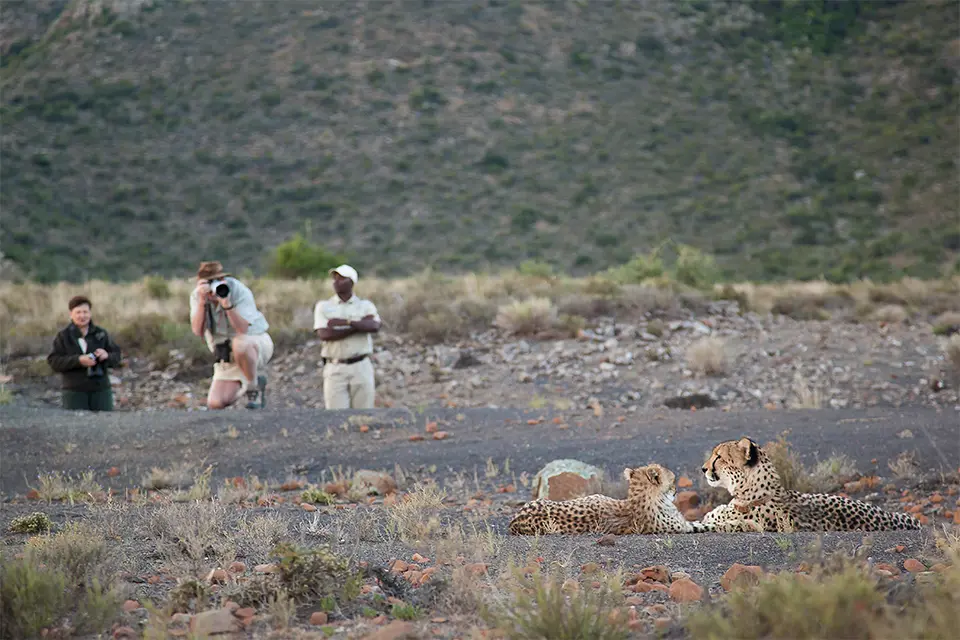
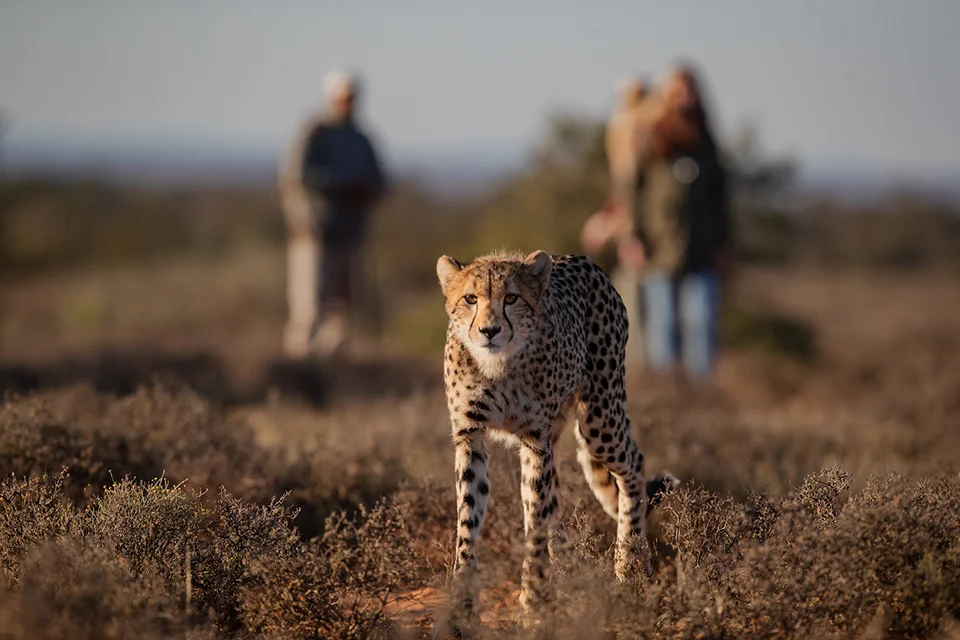
The reserve spans five of South Africa's nine major vegetation types: savanna, Nama Karoo, Albany thicket, forest and grassland. This ecological variety, within a single semi-arid reserve, creates diverse wildlife habitats and a correspondingly wide range of sightings. Cheetahs are a signature Samara experience: reintroduced after a lengthy absence from the Karoo, they can be tracked on foot or by vehicle. Over 225 bird species have been recorded, including blue crane, Ludwig's bustard, Cape vulture and a range of Karoo endemics.
At a broader scale, Samara is the nucleus of an ambitious landscape vision: linking Camdeboo National Park to the west with Mountain Zebra National Park to the east — creating an ecological corridor that could restore the kind of large-scale wildlife movement across the Karoo interior that last defined this landscape in the nineteenth century.
Rhino conservation is a defining commitment of the reserve. White rhinos were introduced in 2006, followed in 2013 by the south-western black rhino - a critically endangered, desert-adapted subspecies.
Great Karoo Towns Worth Knowing
Graaff-Reinet is considered the Karoo's capital, and with good reason. Founded in 1786, it is one of South Africa's oldest European settlements and features a remarkable concentration of Cape Dutch and Victorian architecture. It sits within Camdeboo National Park and is the gateway to the Valley of Desolation: a formation of vertical dolerite columns rising above the surrounding plains, producing one of the most arresting views in South Africa. The town's historic streets, whitewashed facades and Dutch Reformed church make it a destination in its own right.
Nieu-Bethesda is a small, remote village in the Sneeuberg Mountains north of Graaff-Reinet, known primarily for the Owl House, the life's work of South African artist Helen Martins, whose elaborately decorated home and garden of ground glass and cement sculptures became one of the country's most unusual cultural landmarks. The village has an otherworldly quietness that draws artists and travellers seeking a genuine break from the ordinary.
Beaufort West is the largest town in the Great Karoo and the administrative hub of the Central Karoo district. It is the gateway to Karoo National Park, a protected area where visitors can access the geology and arid-adapted wildlife of the interior. The park is home to species including black rhino and mountain zebra, and its character gives a clear sense of what the original Karoo landscape looked like.
Prince Albert is a handsome, well-preserved Karoo town reached via Swartberg Pass. Known for its arts community, olive and fruit produce, and the exceptionally dark skies that have drawn international attention for astro-tourism, it provides an excellent base for exploring the western reaches of the Great Karoo and the wider stargazing region that includes the MeerKAT telescope area.
Trusted by thousands of ecstatic travellers
✔️ 5-Star Trustpilot Rating ✔️ Condé Nast Travel Specialist Award Winner
✔️ Accredited by SATSA ✔️ 5,000+ Exceptional Safaris Since 1991
Why choose Africa Geographic to plan your safari?

"My family and I just returned from a "trip of a lifetime"...we wanted to take a memorable trip with our two children and their spouses.... my whole family kept commenting on what a great job Africa Geographic did...will definitely use Africa Geographic again when I book another trip to Africa! I highly recommend..."
"A top company to help organise and arrange your perfect safari trip...extremely helpful in tailoring our experience exactly how we wanted it from the initial conversations, to suggested changes, to the organisation whilst on the trip...Will definitely be recommending them and using them again ..."
"Amazing Adventure made possible by Africa Geographic...helped us realize our dream of an African Safari. Our guides...shared their vast knowledge of the wildlife and habitats. Such beautiful things we saw, memories to be shared and cherished. We can't recommend Africa Geographic highly enough."
Wish you were here?
Frequently asked questions
The Great Karoo is a vast semi-arid plateau in South Africa's interior, covering in excess of 400,000 square kilometres across the Eastern Cape, Western Cape and Northern Cape. Ringed by mountain escarpments and shaped by 270 million years of geological history, it is a landscape of flat-topped koppies, dry riverbeds, ancient fossil fields and enormous skies.
Yes. The Great Karoo is entirely malaria-free, making it suitable for families with children, travellers who prefer not to take antimalarial medication, and anyone combining a Karoo visit with other malaria-free destinations such as the Cape Winelands or Garden Route.
The best time to visit is between May and September — the cooler, drier months when daytime temperatures sit between 20–25°C and nights are clear and cool. Summer (December–February) brings the majority of rainfall, higher temperatures, and - particularly towards the north-west - extreme heat. Winter nights can be cold, with the village of Sutherland, at nearly 1,500 metres above sea level, among the coldest inhabited places in South Africa.
Samara Karoo Reserve is home to the Big Five - black and white rhino, elephant, lion, leopard and buffalo - alongside cheetah, aardvark, giraffe, springbok, gemsbok and over 225 bird species, including blue crane, Ludwig's bustard, Cape vulture and Karoo endemics. The wider Karoo landscape supports arid-adapted antelope, a wealth of desert birds, and prolific reptile and insect life.
The Great Karoo's low rainfall, high-altitude plateau and near-absence of light pollution produce some of the clearest night skies in the Southern Hemisphere. The region is home to major astronomical infrastructure, including the MeerKAT telescope array, selected precisely for its exceptional atmospheric clarity. The town of Sutherland hosts a major astronomical observatory, and the broader region is increasingly recognised internationally as a premier astro-tourism destination.
Samara Karoo Reserve is a 27,000-hectare rewilded private reserve near Graaff-Reinet in the Eastern Cape. Originally farmland, it has been systematically restored to a functioning wildlife ecosystem carrying the Big Five, cheetah and over 60 mammal species. It is also the nucleus of a larger conservation vision to create an ecological corridor linking Camdeboo National Park and Mountain Zebra National Park.
Yes. Cheetah tracking on foot is one of Samara Karoo Reserve's defining experiences. Rangers with detailed knowledge of individual animals guide guests through the semi-arid terrain for close encounters with these wide-ranging predators. Vehicle-based cheetah drives are also available.
The Karoo's rock strata contain one of the world's most important and best-preserved fossil records. Among the creatures documented are the Pareiasaurus, the sabre-toothed gorgonopsians, and the Diictodon - a reptile-like mammal estimated at 240 million years old, with a specimen found in Karoo National Park. Specialist fossil tours are available in the region, and guided walks introduce visitors to the fossil-bearing outcrops across the landscape.
San rock art can be experienced at Samara Karoo Reserve, where guided hikes lead to ancient painted rock faces. Rock art sites across the broader Karoo record the cultural and spiritual life of the San people - the last Stone Age inhabitants of southern Africa - who shared this landscape for centuries before European arrival.
The Valley of Desolation is a geological formation of dramatic vertical dolerite columns rising from the plains above Graaff-Reinet, within Camdeboo National Park. The view from the top, across the open Karoo, is one of the most striking in South Africa and is accessible via a short drive and walk from Graaff-Reinet.
The Great Karoo is accessible by road from Cape Town (approximately four hours to Prince Albert or Beaufort West), from Port Elizabeth/Gqeberha (approximately three hours to Graaff-Reinet), and from Johannesburg via a long road journey or domestic flight to the nearest regional airport. Self-drive travel along well-maintained national highways is the most common approach, and the Karoo is genuine road-trip country.
A minimum of three to four nights is recommended to begin appreciating the landscape and its experiences. Five to seven nights, split between a Karoo town such as Graaff-Reinet and a reserve such as Samara, allows time for game drives, fossil trails, rock art, stargazing and the slower, more attentive travel the Karoo rewards. It combines naturally with a Cape Town extension.
Yes. The Great Karoo is malaria-free, road-accessible, and offers a range of experiences suited to families - from fossil hunting to guided game drives and open landscape exploration. Samara Karoo Reserve's lodges accommodate children, and the Karoo's towns and national parks provide additional family-friendly options. Always check specific age requirements with individual lodges when booking.
Samara safaris typically cost from R16,000 per person, per night, depending on the accommodation comfort level, time of year and activities. This price includes accommodation, all meals, game drives, experienced guides, and 24/7 support from our team.
Click here to schedule a no-obligation call with one of our Safari Experts or fill in our 2-minute form with your questions. Our team of experts are here to help! Whether you’re curious about the best time to travel, want to hear first-hand about an experience or need help planning your safari.
Explore more African destinations
Start planning your dream safari
Our travel experts will craft a no-obligation itinerary just for you. We have crafted over 5,000 safaris since 1991. Your personal details are protected; we only use this information to contact you.
Why book your safari with us?

Deep Experience & Knowledge
Handcrafted experiential safaris since 1991.
Travel in Africa is about knowing when and where to go, and with whom. A few weeks too early/late or a few kilometres off course, and you could miss the greatest show on Earth. And wouldn’t that be a pity?

Trust & Safety

Make A Difference
We donate a portion of the revenue from every safari sold to carefully selected conservation projects that make a significant difference at ground level.
YOUR safari choice does make a difference - thank you!