

Tailor-made safaris. Since 1991



Sanbona Wildlife Reserve: Little Karoo's Big Five
Sanbona Wildlife Reserve at a glance:
Location: Little Karoo, Western Cape - near the town of Barrydale, along Route 62 | Drive from Cape Town: Approximately 3 hours (270 km) via N1 and Route 62 |
Size: 62,000 hectares across two biodiversity hotspots | Best time to visit: Year-round; May–September for cooler temperatures and clear skies |
Nearest airports: Cape Town International Airport (CPT) | Minimum recommended stay: 2–3 nights |
Currency: South African Rand (ZAR) | Malaria risk: None, Sanbona is entirely malaria-free |
Why visit Sanbona Wildlife Reserve?
Sanbona is the only large Big Five game reserve near Cape Town with free-roaming wildlife not confined to small fenced areas.
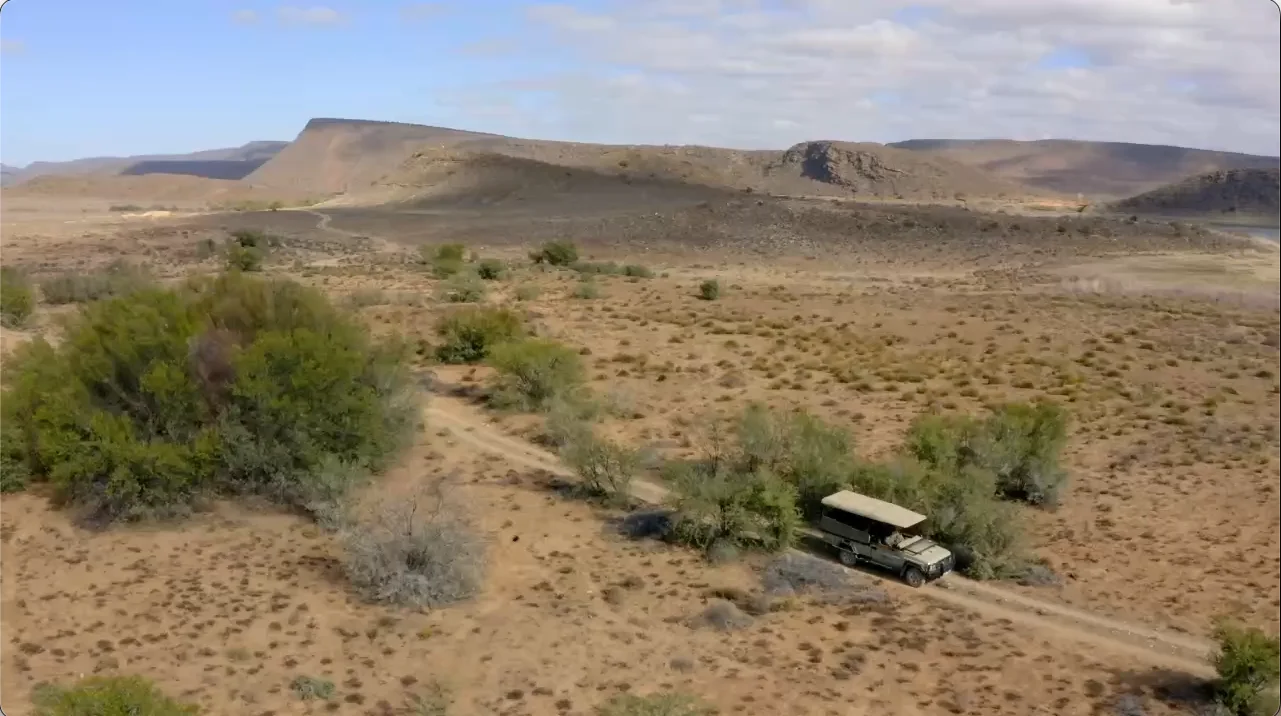
Sanbona Wildlife Reserve stretches across 62,000 hectares of the Little Karoo, between the Warmwaterberg and Anysberg ranges; sculpted plains, quartz fields and Cape fold ridges that feel ancient and unhurried.
What makes Sanbona singular is what happened here. Two and a half centuries of farming steadily reduced the Little Karoo's native biodiversity. In 2002, Sanbona began a deliberate reversal: a rewilding project, the first in an arid Little Karoo environment, converting former farmland toward the ecosystem the San people, whose rock art marks seven sites across the reserve, would once have recognised. Lion, cheetah, elephant and black rhino have been returned. The Cape mountain zebra population here is now the most genetically diverse in South Africa.
In 2020, Sanbona rezoned to conservation use and registered as a non-profit. Every rand spent flows back into ecological and community work. For travellers wanting a Big Five safari without a flight or malaria risk, Sanbona - three hours from Cape Town along Route 62 - offers a working conservation project guests can witness first-hand.
5 Reasons We Love Sanbona Wildlife Reserve
Cape Town to Big Five in 3 hours: The closest malaria-free Big Five reserve to Cape Town, easily reached along the scenic Route 62.
Rewilding in action: A non-profit converting farmland to wilderness since 2002, the first rewilding attempt in the arid Little Karoo.
White lions: A free-roaming white lion pride lives at Sanbona, one of the very few unfenced populations of this rare variant in Africa.
San rock art: Seven on-reserve sites hold paintings over 3,500 years old, connecting guests to the San heritage woven into this ancient landscape.
Three distinct lodges: A romantic ravine camp, a family homestead and a stately manor, each serving different traveller tastes.
All you need to know about Sanbona
About Sanbona Wildlife Reserve
Sanbona Wildlife Reserve occupies 62,000 hectares of the Little Karoo, Western Cape, between the Warmwaterberg and Anysberg mountain ranges along Route 62, near the town of Barrydale and roughly 270 km from Cape Town. The reserve spans two internationally recognised biodiversity hotspots and three biomes: Fynbos, Succulent Karoo and Thicket. The Warmwaterberg forms part of the Table Mountain Group, producing acidic soils in which Fynbos thrives, while nutrient-rich clay soils to the south support critically endangered Renosterveld. Named in tribute to the San people, Sanbona has been under active conservation management since 2002, when a rewilding programme began returning the land to its pre-agricultural state, the first such attempt in the arid Little Karoo. In 2020, the property was rezoned from agricultural to conservation use and is being proclaimed a nature reserve in formal partnership with CapeNature.
The reserve has its own gravel airstrip and is accessible by self-drive via the N1 and Route 62. Complimentary transfers from the Welcome Lounge run at set times; the drive from the main gate to each lodge takes 70–90 minutes.
Things to do in Sanbona Wildlife Reserve
Game drives: twice-daily guided drives across 62,000 hectares and multiple biomes, from open plains to the quartz fields of the Succulent Karoo.
Nature walks: Expert-led exploration on foot reveals endemic plants adapted to this arid environment, Karoo landscapes and the smaller species central to the reserve's ecosystem.
San rock art: Seven on-reserve sites feature paintings dated to over 3,500 years ago, guided by experts with deep knowledge of San cultural heritage.
Stargazing: Minimal light pollution across vast open plains delivers exceptional night skies - among the clearest stargazing in the Western Cape.
Birdwatching: Over 200 bird species across three biomes reward birdwatchers with endemic and rare Western Cape sightings year-round.
Eco-Explorers: Gondwana Family Lodge's children's programme takes young guests into the field through guided nature discovery activities.
What wildlife can I see in Sanbona Wildlife Reserve?
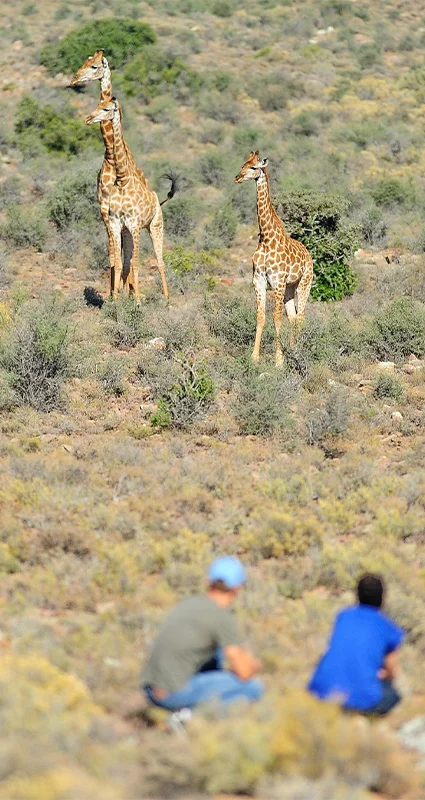
Big Five: Lion, leopard, elephant, buffalo and black rhino (desert and southwestern subspecies) roam freely across Sanbona's 62,000 hectares.
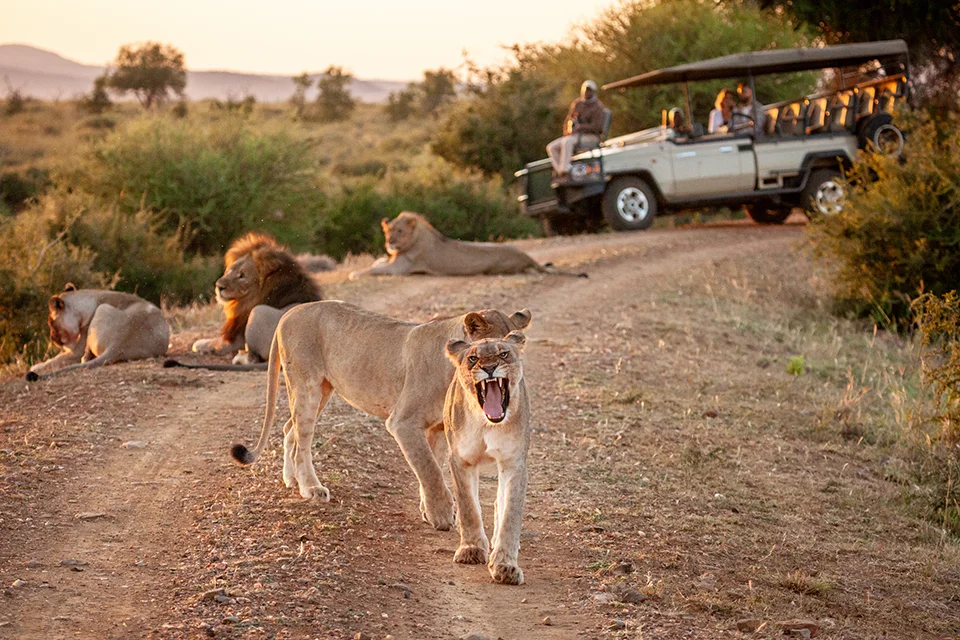
White lions: A free-roaming pride lives within the reserve, one of the very few unfenced white lion populations remaining anywhere in Africa.
Cheetah: The first protected area in the Western Cape to reintroduce cheetah in 2003, with an active tracking research programme still running.
Cape mountain zebra: The most genetically diverse Cape mountain zebra population in South Africa, built through CapeNature translocations.
Riverine rabbit: The 13th most endangered mammal globally, present on the reserve and monitored by the Wildlife Department and CapeNature.
Birds: Three biomes support over 200 species, including cinnamon-breasted warbler, Verreaux’s and booted eagles, black harrier, southern grey tit, Namaqua sandgrouse, Ludwig’s bustard, chestnut-vented tit-babbler and chat flycatcher.
Where to stay in Sanbona Wildlife Reserve
Sanbona's three lodges sit at different corners of the reserve, each designed around a different kind of guest.
Dwyka Tented Lodge is for couples who want privacy above all else. Set in a horseshoe bend of a dry Karoo ravine and concealed by sandstone formations, its nine tented suites feel genuinely remote. Eco-friendly and intimate, the lodge includes a pool, outdoor shower and hot tub. The ravine walls close the camp in; the silence is almost physical. Dwyka is the most secluded, romantic option on the reserve.
Gondwana Family Lodge operates on a different register. A thatched homestead overlooking the Bellair Dam, it has 12 suites and was built with families at its core. Children of all ages are welcome. A dedicated Eco-Explorers programme takes younger guests into the field - guided drives, nature discovery and hands-on engagement with the conservation work happening around them. For families pairing Cape Town with a wildlife stay, Gondwana is the natural fit.
Tilney Manor brings a different historical character. A Cape Georgian-style homestead with six suites, it gazes across the renosterveld to the Kleinberg range through indigenous gardens. Intimate and quiet, it suits couples and small groups seeking a more stately setting. Its heritage character sets it clearly apart from Dwyka's seclusion and Gondwana's family energy.
Trusted by thousands of ecstatic travellers
✔️ 5-Star Trustpilot Rating ✔️ Condé Nast Travel Specialist Award Winner
✔️ Accredited by SATSA ✔️ 5,000+ Exceptional Safaris Since 1991
Why choose Africa Geographic to plan your safari?

"The most amazing bucket list vacation ever. Everything was planned, organized and explained so well. I didn’t have one worry or concern while on another continent. I completely trust the folks at Africa Geographic to plan all future trips!"

"A top company to help organise and arrange your perfect safari trip...extremely helpful in tailoring our experience exactly how we wanted it...Will definitely be recommending them and using them again if and when we visit Africa!"

"...Africa Geographic was amazing. They took the time to listen to what I wanted to experience on my trip and designed the perfect itinerary for me...Thank you...for making my dream vacation an amazing and unforgettable experience."
Wish you were here?
Frequently asked questions
Yes. Sanbona is entirely malaria-free, which makes it suitable for families with young children and travellers who prefer not to take antimalarial medication. This is one of its key practical advantages over Big Five reserves in the Kruger region and KwaZulu-Natal.
Sanbona is approximately 270 km from Cape Town - around three hours by self-drive along the N1 highway and then Route 62. The drive passes through some of the Western Cape's most scenic landscapes, including the Huguenot Tunnel and the Little Karoo valley.
Yes. Lion, leopard, elephant, buffalo and black rhino are all present. Sanbona has successfully reintroduced both the desert and southwestern subspecies of black rhino - species absent from the region for nearly 200 years before their return.
Yes. Sanbona is home to a free-roaming white lion pride - one of only a handful of such populations in Africa living without internal fences. Sightings are not guaranteed on every drive, but guests staying two or more nights have a strong chance of an encounter.
Beginning in 2002, Sanbona began converting former agricultural land back to a natural state resembling the Little Karoo ecosystem as it existed some 300 years ago. This involved removing fences, rehabilitating degraded habitats, combating alien vegetation and reintroducing wildlife species that had become locally extinct - including lion, cheetah, elephant, black rhino and Cape mountain zebra. It was the first rewilding project ever attempted in an arid Karoo environment.
The reserve spans three distinct biomes: Fynbos, Succulent Karoo and Thicket. The Warmwaterberg Mountain Range produces the acidic, nutrient-poor soils in which Fynbos thrives. To the south, nutrient-rich clay soils support critically endangered Renosterveld vegetation. North of the Warmwaterberg, where rainfall drops sharply, the Succulent Karoo biome takes over, while Thicket covers the greatest area of the reserve.
Gondwana Family Lodge is built for families. It has 12 suites, welcomes children of all ages, and runs a dedicated Eco-Explorers programme that takes younger guests into the field through guided nature drives and hands-on discovery activities. The lodge overlooks the Bellair Dam and has a contemporary, energetic feel.
Dwyka Tented Lodge is designed for couples seeking seclusion. Its nine suites are set in a horseshoe bend of a dry Karoo ravine, concealed by sandstone formations. It includes a pool, outdoor shower and hot tub. Tilney Manor - a six-suite Cape Georgian homestead in indigenous gardens — is an alternative for couples who prefer a more stately, heritage-character setting.
All three lodges are fully inclusive. The rate covers accommodation, all meals, house beverages and two guided drives per day. Nature walks, San rock art tours, stargazing and birdwatching are among the additional experiences available on the reserve.
Self-drive from Cape Town takes around three hours via the N1 and Route 62. From the main gate, complimentary reserve transfers to the lodges depart at set times (12h30 and 16h00). Guests with suitable vehicles may self-drive directly to the lodges. Sanbona also has its own gravel airstrip (1,100 m, coordinates -33.7247, 20.6163) capable of accommodating a range of aircraft including PC12, King Air B200 and Cessna 182.
We recommend a minimum of two nights to cover the core experience: Big Five drives, a nature walk, and a rock art visit. Three nights allow for a more relaxed pace and improve the chances of seeing wildlife such as cheetahs and white lions. Families may wish to extend to four nights to make the most of the Eco-Explorers programme at Gondwana.
Yes. There are seven recorded rock art sites across the reserve, with paintings estimated to be more than 3,500 years old. These sites are visited on guided tours led by rangers with knowledge of San heritage and the cultural significance of the imagery.
Sanbona is owned by a non-profit company, and proceeds from each stay are directed back into the reserve's ecological, commercial and social integrity. Conservation work includes habitat rehabilitation, alien vegetation management, wildlife monitoring, anti-poaching operations and community employment programmes. The reserve collaborates with CapeNature, the Endangered Wildlife Trust and academic institutions, and is in the process of formal proclamation as a nature reserve.
Sanbona safaris typically cost from R9,500 per person, per night, depending on the accommodation comfort level, time of year and activities. This price includes accommodation, all meals, game drives, experienced guides, and 24/7 support from our team.
Click here to schedule a no-obligation call with one of our Safari Experts or fill in our 2-minute form with your questions. Our team of experts are here to help! Whether you’re curious about the best time to travel, want to hear first-hand about an experience or need help planning your safari.
Start planning your dream safari
Our travel experts will craft a no-obligation itinerary just for you. We have crafted over 5,000 safaris since 1991. Your personal details are protected; we only use this information to contact you.
Why book your safari with us?

Deep Experience & Knowledge
Handcrafted experiential safaris since 1991.
Travel in Africa is about knowing when and where to go, and with whom. A few weeks too early/late or a few kilometres off course, and you could miss the greatest show on Earth. And wouldn’t that be a pity?

Trust & Safety

Make A Difference
We donate a portion of the revenue from every safari sold to carefully selected conservation projects that make a significant difference at ground level.
YOUR safari choice does make a difference - thank you!