
Tailor-made safaris. Since 1991



Samburu: Where the Special Five roam northern Kenya
Samburu at a glance:
Location: North-central Kenya; Samburu and Isiolo counties | Access: Light aircraft from Wilson Airport, Nairobi; approximately one hour to Samburu National Reserve and Sera Conservancy; 45–60 minutes to the Mathews Range |
Ecosystem: Combined protected area approaching 1,200,000 hectares across national reserves and community conservancies | Best time to visit: June–October and January–February (dry seasons); Mathews Range also excellent January–March |
Wildlife highlights: Samburu Special Five, black and white rhino, leopard, elephant, 450+ bird species | Activities: Game drives, rhino tracking on foot, walking safari, Singing Wells, Reteti Elephant Sanctuary, cultural visits |
Conservation: Three community conservancies managed by the Samburu people, supported by the Northern Rangelands Trust | Recommended stay: 7–14 nights for a meaningful three-area circuit |
Why visit Samburu?
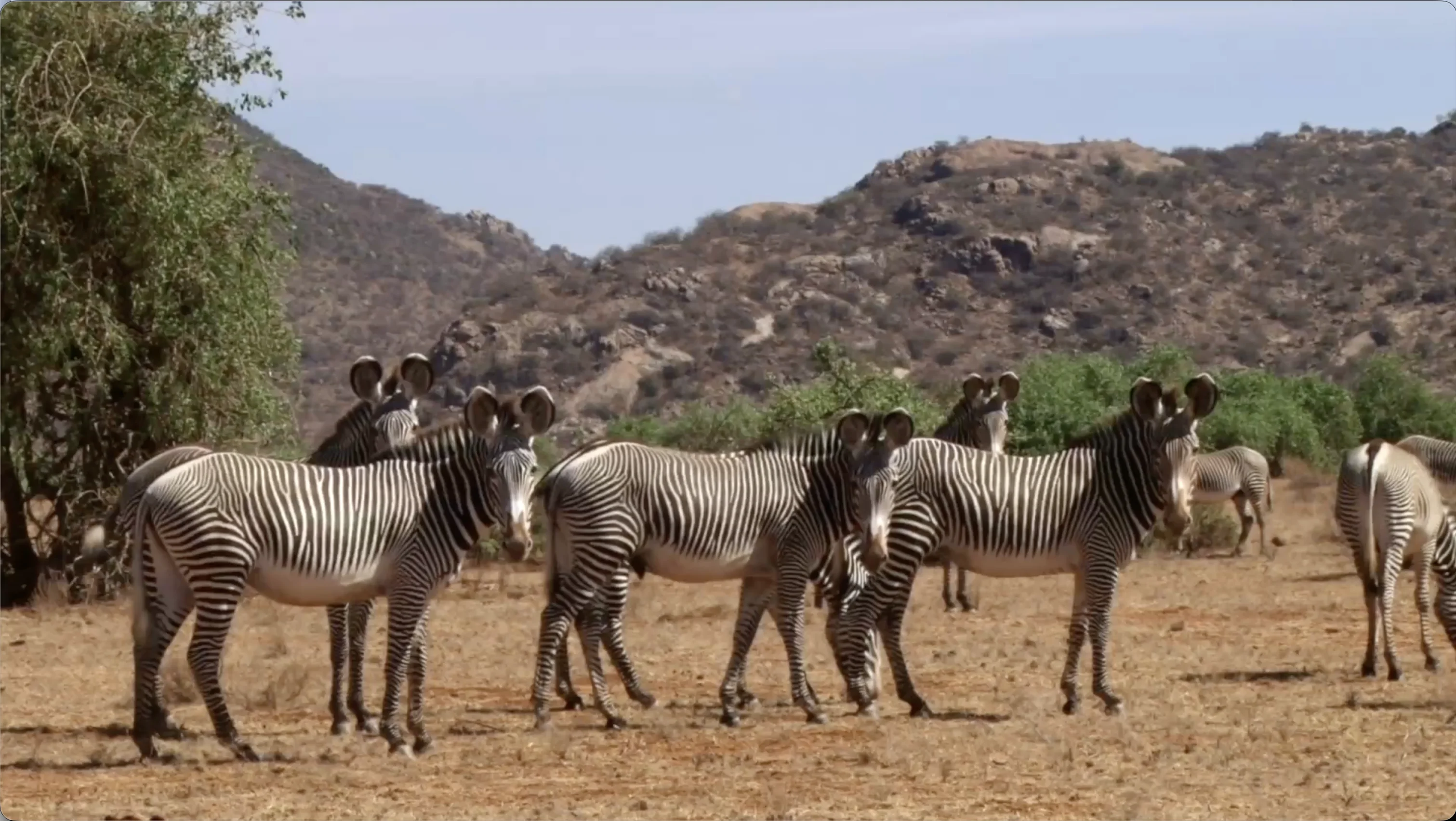
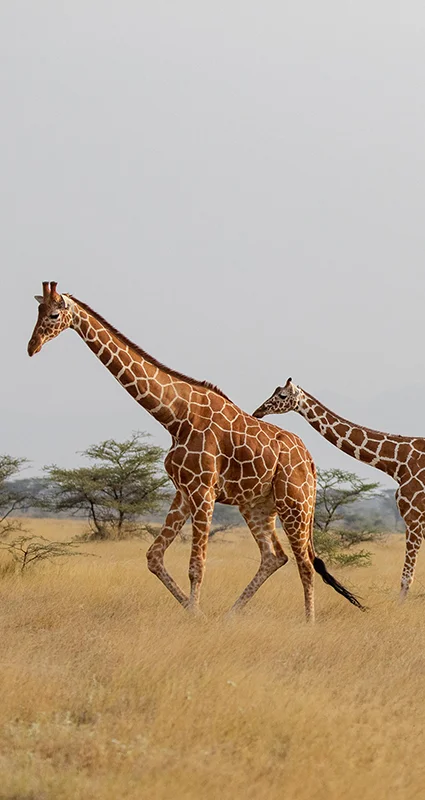
North of the equator, where Kenya's southern savannahs dissolve into the semi-arid plains extending toward the Horn of Africa, the landscape changes character entirely. The air is hotter, the terrain more austere, and the wildlife belongs to a different world from the one found on Kenya's established safari circuit. This is Samburu, and the Samburu Special Five (gerenuk, Grévy's zebra, reticulated giraffe, Beisa oryx and Somali ostrich) are found here and almost nowhere else in Kenya.
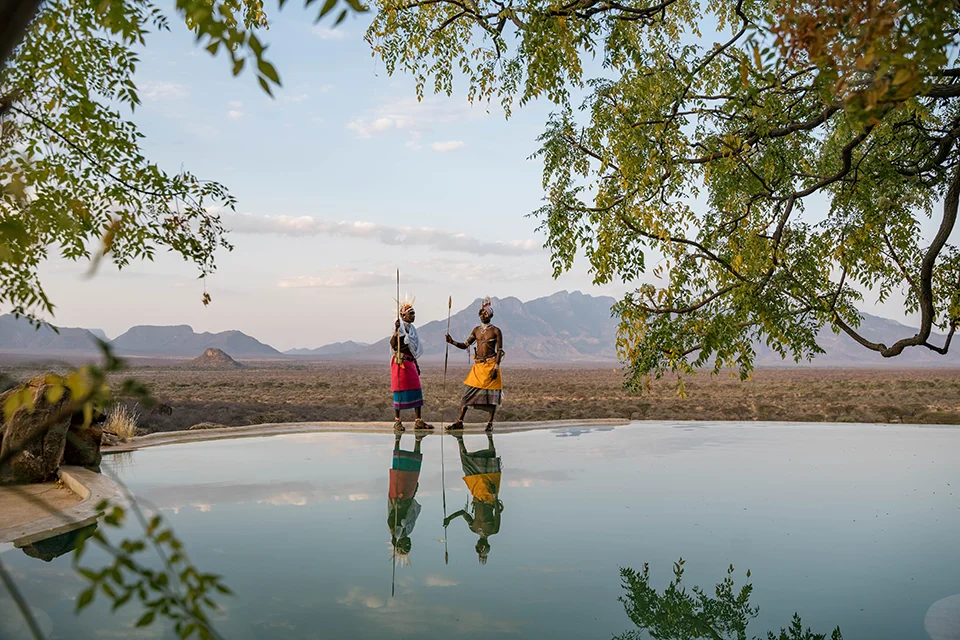
What makes Samburu exceptional is its breadth. This is not a single reserve but an interconnected system of distinct areas, each shaped by the same Samburu people and the same community conservation philosophy, yet each offering a fundamentally different experience. Samburu National Reserve draws travellers for its wildlife-rich riverine corridor and some of the continent's most consistent leopard sightings. At Sera Conservancy, critically endangered black rhinos are tracked on foot within a community-owned sanctuary that has recorded zero poaching since it opened in 2015. In the Mathews Range, ancient granite mountains rise above the northern plains and the wilderness is experienced primarily on foot, guided by trackers whose knowledge of this landscape spans generations.
Running through all three areas is the Samburu people's profound relationship with their land, cattle, and wildlife, and a safari model in which conservation and community prosperity are, by design, inseparable.
5 Reasons We Love Samburu
The Samburu Special Five: Gerenuk, Grévy's zebra, reticulated giraffe, Beisa oryx and Somali ostrich are northern Kenya endemics, five arid-specialist species found here and absent from Kenya's entire southern safari circuit.
Rhino tracking on foot at Sera: The only place in East Africa where guests can follow critically endangered black rhinos on foot alongside Samburu rangers, an encounter earned through silence and deep knowledge of the bush.
The Singing Wells: Across the Samburu ecosystem, herdsmen call their cattle to water through traditional song while elephants stand quietly at the margins, one of Kenya's most affecting and unrepeatable cultural encounters.
Walking safari in the Mathews Range: Moving on foot through Namunyak's ancient cedar and olive forests with Samburu trackers whose knowledge of this landscape runs generations deep is among the most immersive safari experiences available anywhere in Kenya.
The Reteti Elephant Sanctuary: Africa's first elephant orphanage owned and run entirely by a local community, the Samburu, where rescued calves are raised with patience and care before returning to the wild.
All you need to know about Samburu
About Samburu
Samburu is a regional destination in north-central Kenya encompassing various protected areas, of which we focus on three: Samburu National Reserve, Sera Community Conservancy and the Mathews Range within the Namunyak Wildlife Conservancy. Together, they form part of a combined ecosystem of nearly 1,200,000 hectares, spanning national reserves, forest reserves, and community conservancies.
Governance falls under the Northern Rangelands Trust (NRT), an umbrella body supporting community-managed conservancies including Sera, Namunyak, Kalama and Westgate. The model matters: 65% of Kenya's wildlife exists outside formal national parks, and the conservancy system is central, not supplementary, to conservation across this landscape.
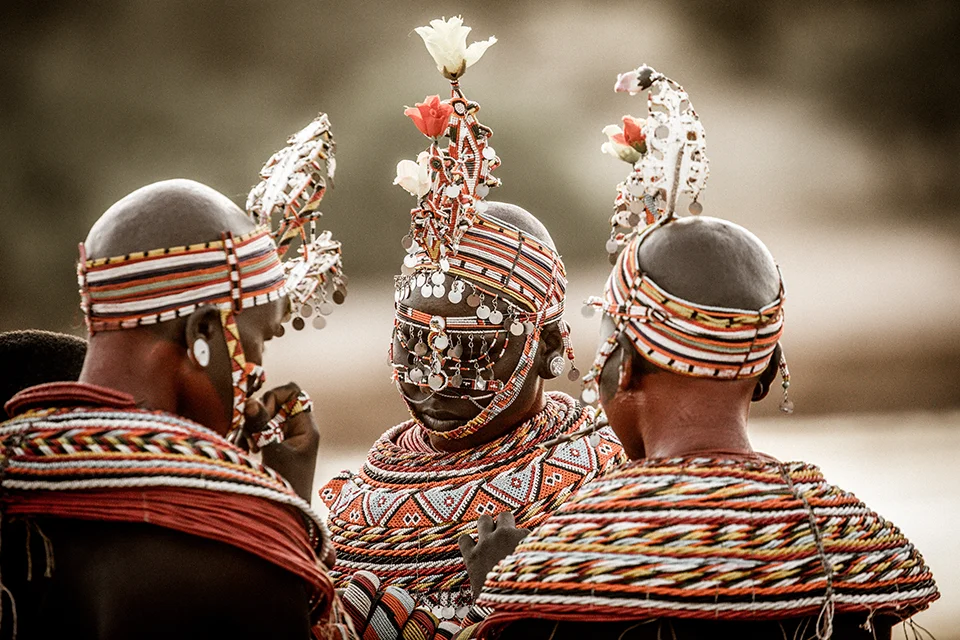
The common thread through every part of Samburu is the people, semi-nomadic pastoralists with a profound relationship with this land and its wildlife. The Samburu community owns and manages both Sera and the Namunyak Conservancy, and their traditions, cattle culture and spiritual connection to elephants give this destination a deep human depth. An elephant corridor connecting the Namunyak Wildlife Conservancy with Samburu National Reserve and the Laikipia Plateau to the south reflects both the scale of this landscape and the ambition of the people protecting it.
Things to do in Samburu
Drive the Ewaso Ng'iro corridor: Game drives through Samburu National Reserve's riverine forest and open plains bring encounters with the Samburu Special Five, leopard along the river and habituated elephant herds.
Track rhinos on foot at Sera: Samburu rangers locate the rhinos before guests leave camp. Tracking moves in silence and downwind, bringing visitors into remarkable proximity to some of the rarest large mammals on Earth.
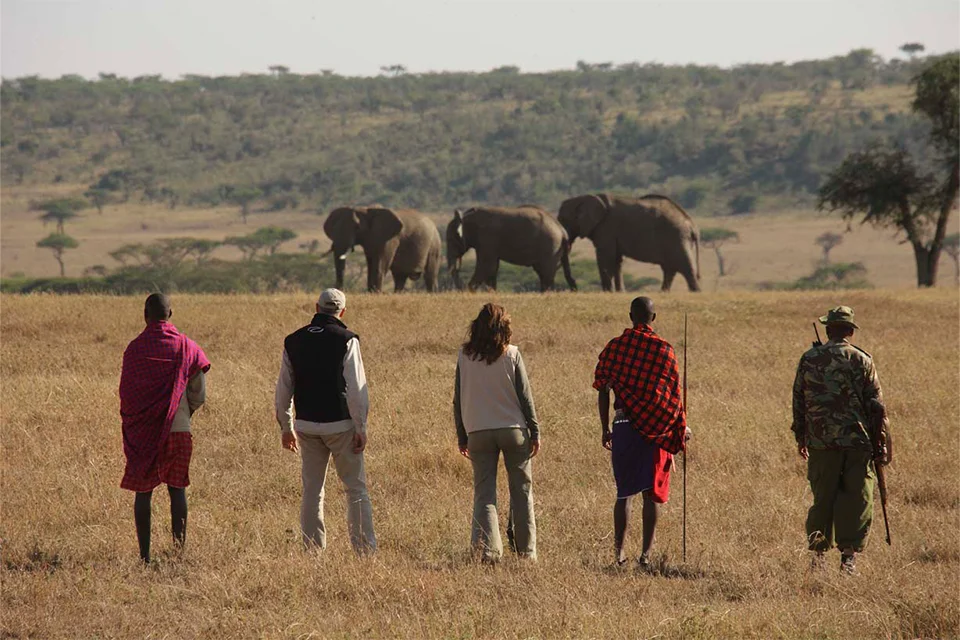
Walk with Samburu trackers in the Mathews Range: Moving through forested gullies and open plains on foot, guides read tracks, identify birdsong and name plants by use, knowledge that only comes from a lifetime in one landscape.
Witness the Singing Wells: At Kisima Hamsini and other sacred water sources across the ecosystem, Samburu herdsmen draw water through traditional song while elephants drink quietly at the margins.
Spend time at the Reteti Elephant Sanctuary: Watch Samburu carers raise rescued elephant calves, observe the bonds that form among orphans of different ages, and understand the patient community-led work of returning wild animals to the wild.
Engage with Samburu culture: From manyatta visits and the BeadWorks programme at Sera to traditional beading with Samburu women in the Mathews Range, the cultural life of this destination runs as deep as the wilderness itself.
What wildlife can I see in Samburu?
The Samburu Special Five: Gerenuk, Grévy's zebra, reticulated giraffe, Beisa oryx and Somali ostrich are five arid-specialist species uniquely adapted to this northern ecosystem and absent from Kenya's entire southern safari circuit.
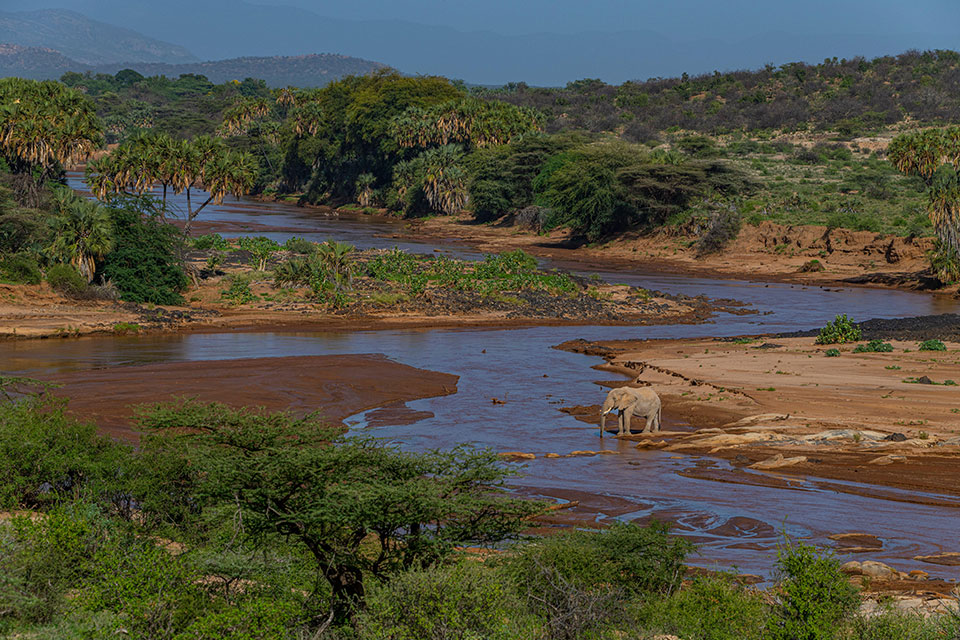
Elephant: One of Kenya's largest and most studied populations inhabits Samburu National Reserve, where individual animals are known across generations. Large herds also migrate seasonally into the Mathews Range montane forests during the dry season, moving along the corridor that connects the entire ecosystem.
Black and white rhino: More than 20 critically endangered black rhinos live within the Sera Rhino Sanctuary, joined by southern white rhinos since 2024. Both species are absent from Samburu National Reserve; Sera is the only place in East Africa to track them on foot.
Leopard and predators: Samburu National Reserve offers some of Kenya's most reliable leopard sightings, particularly along the Ewaso Ng'iro's riverine forest. Lion prides, spotted hyena and occasional cheetah range across Sera; African wild dog move through the Namunyak landscape.
Lesser kudu and De Brazza's monkey: Lesser kudu are reliably seen in Samburu National Reserve, one of very few Kenyan destinations where this shy antelope is consistently found. De Brazza's monkey inhabits the Mathews Range upper forests.
Birds: Over 450 species are recorded across the Samburu ecosystem, including vulturine guineafowl, golden-breasted starling and Somali bee-eater. The Mathews Range holds 200-plus species of its own, with Hartlaub's turaco and the African crowned eagle among the most sought-after.
Where to stay in Samburu
Accommodation across the Samburu ecosystem covers a wide range of lodge types. These include a larger, affordable riverside lodge, specialist tented camps built around photographic hides, and plunge-pool tents in unfenced settings. There is also a small, solar-powered stone lodge for just eight guests, canopy treehouses, an exclusive-use house for private groups, and a deliberately simple forest camp. Together they span mid-range value to exclusive high-end, suiting photographers, families, walkers and those seeking complete privacy.
We showcase many of them on each regional page linked below.
Explore the Samburu areas
Samburu National Reserve
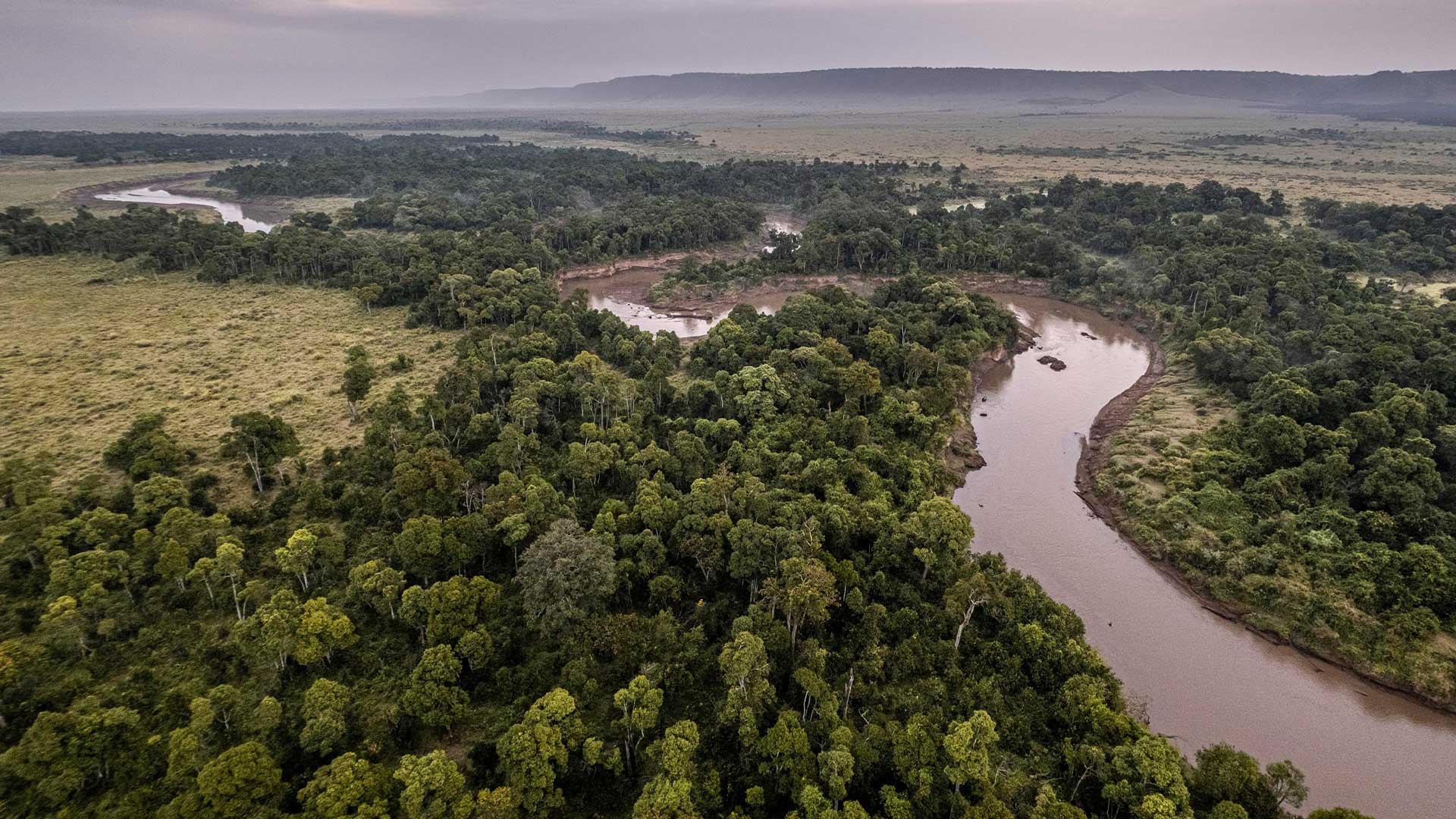
Samburu National Reserve covers 165 km² (16,500 hectares), a compact reserve that anchors one of northern Kenya's most biodiverse ecosystems. Its defining feature is the Ewaso Ng'iro River, rising from the slopes of Mount Kenya and fed year-round by glacial meltwater, sustaining riverine forest and doum palm groves even through the driest months. Where the river runs, wildlife gathers.
This is the home of the Samburu Special Five: gerenuk, Grévy's zebra, reticulated giraffe, Beisa oryx and Somali ostrich. Leopard sightings along the Ewaso Ng'iro are among Kenya's most consistent, the riverine forest and rocky outcrops providing reliable habitat. The reserve's elephant herds rank among the most intensively studied in the country, with individual animals known across generations, enabling a quality of close observation rarely available elsewhere.
Three national reserves (Samburu, Buffalo Springs and Shaba) are covered by a single entry permit, forming the core of an ecosystem that expands into the surrounding NRT conservancies. Rhinos are absent from this area; for rhino experiences, Sera Conservancy is where to go.
Sera Conservancy
Sera Community Conservancy covers approximately 340,000 hectares of semi-arid northern Kenya and holds a conservation record unlike anywhere else in East Africa. Founded in 2001 by the Samburu community, partly as a wildlife initiative and partly as a peace-building effort between historically rival groups, it is a member of the Northern Rangelands Trust and has become one of Africa's most compelling examples of community-led conservation.
At its heart is the Sera Rhino Sanctuary: a 10,700-hectare fenced zone established in 2015 as Africa's first community-owned black rhino sanctuary. From an initial population of ten individuals, the sanctuary now holds more than 20 critically endangered black rhinos and has recorded zero poaching since opening. Southern white rhinos were introduced in 2024, with a calf born shortly after. This is the only place in East Africa where guests can track both species on foot, guided by Samburu rangers.
Beyond the rhinos, Sera's vast plains hold the Samburu Special Five and a growing elephant population, some of which were once calves at the Reteti Elephant Sanctuary and have been released here as part of their return to the wild. At Kisima Hamsini, the ancient pastoral site known as the Fifty Wells, the Singing Wells tradition offers one of Kenya's most unrepeatable cultural encounters.
Mathews Range
The Mathews Range rises from the semi-arid plains north of Samburu as a chain of ancient granite mountains running approximately 150 kilometres north to south through northern Kenya. Its highest peak, Warges, reaches 2,688 metres. At these elevations, dense montane forests of cedar, olive, cycad and juniper thrive on rainfall that never reaches the surrounding savannah, sheltering wildlife and birds found nowhere else in this ecosystem.
The range falls within the Namunyak Wildlife Conservancy, approximately 344,000 hectares managed directly by the Samburu community with support from the Lewa Conservancy and Tusk Trust, and a member of the Northern Rangelands Trust. This is not a national park. It is a living landscape where Samburu communities, their cattle and the region's wildlife share the same terrain under a model that makes community prosperity and conservation the same objective.
Here, safari means moving on foot. Walking with Samburu trackers through forested gullies and open plains is the defining Mathews experience, one that rewards those who prefer depth over density. The conservancy is also home to the Reteti Elephant Sanctuary, Africa's first elephant orphanage owned and run entirely by a local community, and to the Singing Wells, where herdsmen call their cattle to water while elephants wait at the margins.
Trusted by thousands of ecstatic travellers
✔️ 5-Star Trustpilot Rating ✔️ Condé Nast Travel Specialist Award Winner
✔️ Accredited by SATSA ✔️ 5,000+ Exceptional Safaris Since 1991
Why choose Africa Geographic to plan your safari?

“…We were met at the airstrip and our Samburu tribesman driver was our guide on all trips from the camp, he was outstanding, incredibly knowledgeable on all the animals and especially the birds of which there are so many stunning varieties….We had many wonderful experiences…Thank you…AG for arranging...”
“Our second trip with Africa Geographic to Samburu…in Kenya was well organised…Our Safari-link flights all went smoothly and our accommodation excellent…Staff very friendly, food great and our guide…excellent - especially his knowledge with the unfamiliar wild life at Samburu….We would certainly use Africa Geographic again.”
“We had an absolutely incredible trip to Kenya…thanks to Africa Geographic…They made the process so easy from initial planning, to booking and making payments toward out trip to the actual trip itself and throughout our stay in Kenya. Incredible communication, incredible wildlife…We will definitely be using AG again when we return to Africa!”
Wish you were here?
Frequently asked questions
Samburu is a multi-area safari destination in northern Kenya including Samburu National Reserve, Sera Community Conservancy and the Mathews Range within the Namunyak Wildlife Conservancy. Together, these three areas form a combined ecosystem of nearly 1,200,000 hectares, managed largely by the Samburu people under the Northern Rangelands Trust.
The Samburu Special Five are five wildlife species adapted to Kenya's arid northern ecosystem and absent from the country's southern safari circuit: the gerenuk, Grévy's zebra, reticulated giraffe, Beisa oryx and Somali ostrich. All five are regularly encountered across the Samburu ecosystem.
Where the Maasai Mara is defined by open grassland and the Great Migration, Samburu is arid, remote and crowd-free, with an entirely different wildlife profile. The Samburu Special Five are not found in the Mara, and experiences such as foot-based rhino tracking and walking safari in montane forest exist only in the north.
June to October and January to February are the main dry seasons for Samburu National Reserve and Sera, when wildlife concentrates around water and tracking conditions are most reliable. The Mathews Range is excellent June to February, with January to March often outstanding. All three areas can be visited year-round.
Rhinos are present in Sera Community Conservancy only, not in Samburu National Reserve. The Sera Rhino Sanctuary is Africa's first and only community-owned rhino sanctuary, established in 2015. It holds more than 20 critically endangered black rhinos alongside southern white rhinos, introduced in 2024.
Yes. Sera Conservancy is the only place in East Africa where guests can track both black and white rhinos on foot alongside Samburu rangers. The minimum age for rhino tracking is 16. Tracking is included in the Saruni Rhino daily rate and takes place inside the 10,700-hectare fenced sanctuary.
The Singing Wells are sacred Samburu water sources where herdsmen draw water for their cattle by singing traditional family songs, calling their herds to drink while elephants share the same source. The tradition is found across the ecosystem; the named site within Sera Conservancy is Kisima Hamsini, the Fifty Wells.
Reteti is Africa's first elephant orphanage owned and operated entirely by a local community, the Samburu. Located within the Namunyak Conservancy, it cares for rescued calves and works toward their return to the wild. Visits can be arranged from properties in both the Mathews Range and Sera Conservancy.
The Mathews Range is an ancient granite mountain chain in northern Kenya, rising above the semi-arid plains north of Samburu National Reserve. It falls within the Namunyak Wildlife Conservancy, approximately 344,000 hectares managed by the Samburu community, and is known for montane forests, walking-led safaris and cultural immersion.
All three areas are reached by light aircraft from Wilson Airport in Nairobi. Flight time to Samburu National Reserve and Sera Conservancy is approximately one hour; to the Mathews Range, approximately 45 to 60 minutes by charter. Flying is strongly recommended over road travel given the distances involved.
Yes. The three areas form a natural circuit, linked efficiently by charter flight. A stay of seven to fourteen nights allows a meaningful visit to all three. Soft-sided luggage is essential on charter aircraft, which carry strict weight limits. Africa Geographic regularly designs itineraries that include all three areas.
Samburu National Reserve is an excellent choice for first-time visitors, with reliable wildlife and comfortable camps. Sera and the Mathews Range are better suited to experienced travellers: activities are walking-led and physically engaging, and both destinations reward those who are comfortable with remoteness and naturally lower wildlife densities.
Most international visitors require a visa to enter Kenya. Requirements and processes vary by nationality and are subject to change, so checking current Kenyan entry requirements well in advance of travel is strongly advised. Your Africa Geographic safari specialist will be able to advise further.
Outside peak season, prices start at about US$390 per person per night at Soroi Samburu Lodge in Samburu National Reserve and reach around US$1,300 at exclusive-use Reteti House in the Mathews Range. Mid-range options include Saruni Rhino in Sera Conservancy at about US$500–600 and Kitich Forest Camp at around US$600. In peak season, rates rise to about US$750–860 at Soroi Larsens Camp and US$1,500 or more at Sarara Camp and Sarara Treehouses. Rates are mostly full board with activities, but park or conservancy fees of roughly US$160–185 per adult per night are usually extra.
Click here to schedule a no-obligation call with one of our Safari Experts or fill in our 2-minute form with your questions. Our team of experts are here to help! Whether you’re curious about the best time to travel, want to hear first-hand about an experience or need help planning your safari.
Start planning your dream safari
Our travel experts will craft a no-obligation itinerary just for you. We have crafted over 5,000 safaris since 1991. Your personal details are protected; we only use this information to contact you.
Why book your safari with us?

Deep Experience & Knowledge
Handcrafted experiential safaris since 1991.
Travel in Africa is about knowing when and where to go, and with whom. A few weeks too early/late or a few kilometres off course, and you could miss the greatest show on Earth. And wouldn’t that be a pity?

Trust & Safety

Make A Difference
We donate a portion of the revenue from every safari sold to carefully selected conservation projects that make a significant difference at ground level.
YOUR safari choice does make a difference - thank you!