
Tailor-made safaris. Since 1991



Sera Conservancy: East Africa's first community-owned rhino sanctuary
Sera Conservancy at a glance:
Location: Samburu County, northern Kenya; member of the Northern Rangelands Trust (NRT); approximately 340,000 hectares of community-managed wilderness | Main access: Wilson Airport (Nairobi) to Kalama Airstrip by scheduled flight (approximately 1 hour) plus a 90-minute game-drive transfer to Saruni Rhino. Charter flights land directly at Kauro Airstrip, approximately 5 minutes from the lodge |
Sera Rhino Sanctuary: A 10,700-hectare fenced zone within the wider conservancy, established in 2015; the first community-owned black rhino sanctuary in East Africa | Best time to visit: June–October and December–March (dry seasons); heavy rains in April–May and November can limit access to remote tracks |
Currency: Kenyan Shilling (KES); US dollars widely accepted at the lodge | Malaria risk: Low risk; antimalarial precautions still recommended; consult your doctor before travel |
Recommended minimum stay: 2 nights at Saruni Rhino | Visa: Required for most nationalities entering Kenya |
Why visit Sera Conservancy?
Sera Conservancy exists because of an idea that proved harder to dismiss than it might have seemed: that the people who live alongside wildlife are its most capable guardians. Founded in 2001 by the Samburu community as both a conservation initiative and a peace-building exercise between historically rival groups, it has since become a compelling example of community-led conservation in Africa.
What sets Sera apart from Kenya's established safari circuit is not simply what you can see here, but what you can do, and why it matters. This is the only place in East Africa where you can track critically endangered black rhinos on foot, guided by Samburu rangers using traditional tracking methods passed down through generations. The conservancy's Rhino Sanctuary, once a landscape emptied by decades of poaching, now records a 16% annual growth rate and zero poaching since the rhinos were reintroduced in 2015.
Beyond the rhinos, Sera's semi-arid northern frontier holds the Samburu Special Five, five species adapted to this arid landscape and found nowhere on Kenya's southern circuit, alongside growing populations of elephants, lions and leopards. The ancient Singing Wells tradition at Kisima Hamsini offers a cultural encounter with no equivalent elsewhere on the Kenyan safari map. A Sera Conservancy safari rewards travellers who want to leave a destination genuinely better than they found it.
5 reasons we love Sera Conservancy
Track critically endangered rhinos on foot: Sera is the only place in East Africa where you can follow black rhinos on foot alongside expert Samburu trackers, an intimate, once-in-a-lifetime conservation encounter.
The Samburu Special Five: Gerenuk, reticulated giraffe, Beisa oryx, Somali ostrich and Grevy's zebra are all regularly encountered here, five arid-adapted species found nowhere on Kenya's southern safari circuit.
The Singing Wells at Kisima Hamsini: Samburu pastoralists still sing distinctive family songs to call their cattle to drink from hand-dug wells in the dry riverbed, an ancient tradition rarely witnessed by outsiders.
A conservation record worth celebrating: Sera's rhino sanctuary began with 10 black rhinos in 2015 and now records a 16% annual population growth rate and zero poaching, a record that every visiting guest helps sustain.
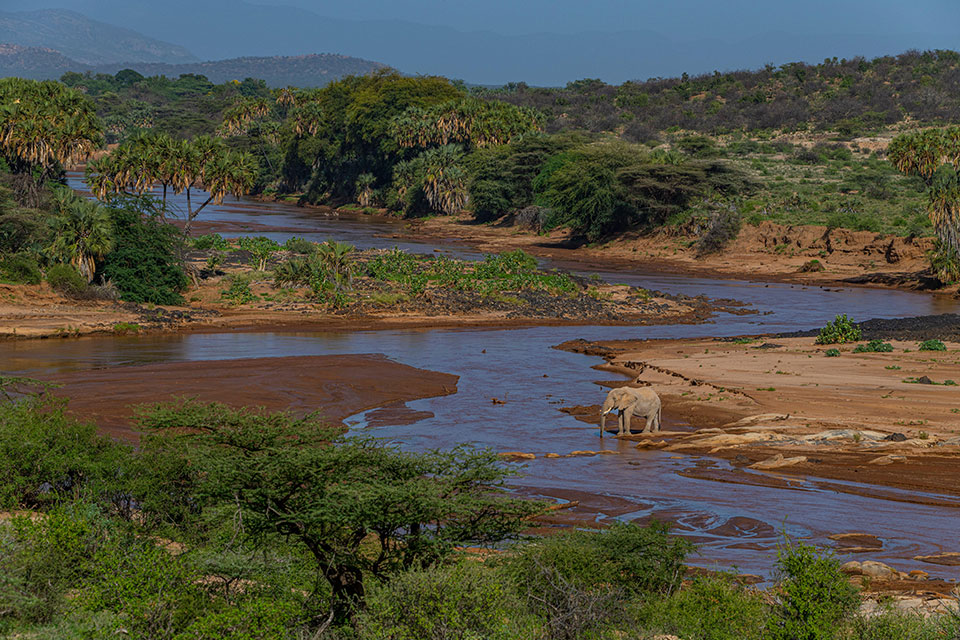
The remote northern frontier: Vast semi-arid plains, doum palm-fringed luggas (dry riverbeds) and a permanent waterhole in front of camp offer the kind of solitude and wilderness immersion that more-visited Kenyan destinations cannot replicate.
All you need to know about Sera Conservancy
About Sera Conservancy
Sera Community Conservancy lies in Samburu County in Kenya's northern frontier, covering approximately 340,000 hectares within the Sere-Olipi and Losesia community lands. When it was established in 2001, its founders, the Samburu, Rendile and Turkana communities, were historically rivals, competing over water and grazing land in this arid, drought-prone landscape. The conservancy gave them a shared framework for managing wildlife, natural resources and community development, and in doing so transformed a former poaching hotspot into a conservation model that has drawn attention from organisations across the continent.
Sera is a member of the Northern Rangelands Trust, one of Kenya's leading community conservation networks, and is managed entirely by the Samburu community, with over 100 permanent staff and 50 community scouts trained to Kenya Wildlife Service standards. Tourism revenue is channelled directly into education bursaries, healthcare and water security, while a community carbon credit initiative funds ongoing rangeland restoration. In 2015, a fenced 10,700-hectare sanctuary was established within the conservancy and 10 critically endangered black rhinos were reintroduced to their ancestral range in northern Kenya, the first time in more than three decades that rhinos had returned to this landscape. Southern white rhinos were introduced in 2024.
Things to do in Sera Conservancy
Track rhinos on foot in the sanctuary: Before guests leave camp, Samburu rangers are already out in the large sanctuary, following spoor and signs to locate the rhinos. Tracking is done in silence and downwind, using termite mounds and fallen trees as cover, bringing you into extraordinary proximity to these animals.
Game drives across the conservancy: Morning, afternoon, and night drives cover the conservancy's vast semi-arid plains, dense acacia bushland, and sandy luggas, bringing encounters with the Samburu Special Five alongside elephants, lions, hyenas and leopards.
Walking safaris along the luggas: Guided bush walks with Samburu rangers move through doum palm-lined dry riverbeds, reading animal tracks, identifying medicinal plants, and experiencing the landscape at a pace that reveals details no vehicle can reach.
Visit the Singing Wells at Kisima Hamsini: At Kisima Hamsini, the ancient pastoral site known as the Fifty Wells, Samburu pastoralists dig into dry riverbeds to reach water and sing family songs known only to their own cattle. It is one of the most genuinely unscripted cultural encounters in northern Kenya.
Watch the waterhole from camp: The permanent waterhole in front of Saruni Rhino draws elephants, Grevy's zebras, oryx and giraffes year-round. In the dry season, thousands of sandgrouse gather at dawn, a spectacle you can watch from your veranda without leaving camp.
Engage with the community and conservation story: Samburu village visits, the community BeadWorks programme, the anti-poaching unit's work and the conservancy's carbon credit initiative reveal a conservation model built as much around people as around wildlife.
What wildlife can I see in Sera Conservancy?
Black and white rhinos: More than 20 critically endangered black rhinos now roam the Sera Rhino Sanctuary after their 2015 reintroduction. Southern white rhinos joined them in 2024, with a calf born shortly after, making Sera one of the few places in Africa where you can encounter both species on foot.
The Samburu Special Five: Gerenuk, reticulated giraffe, Beisa oryx, Somali ostrich and Grevy's zebra are all regularly seen across the conservancy, five arid-specialist species found nowhere on Kenya's southern safari circuit and each distinctly shaped by this dry northern landscape.
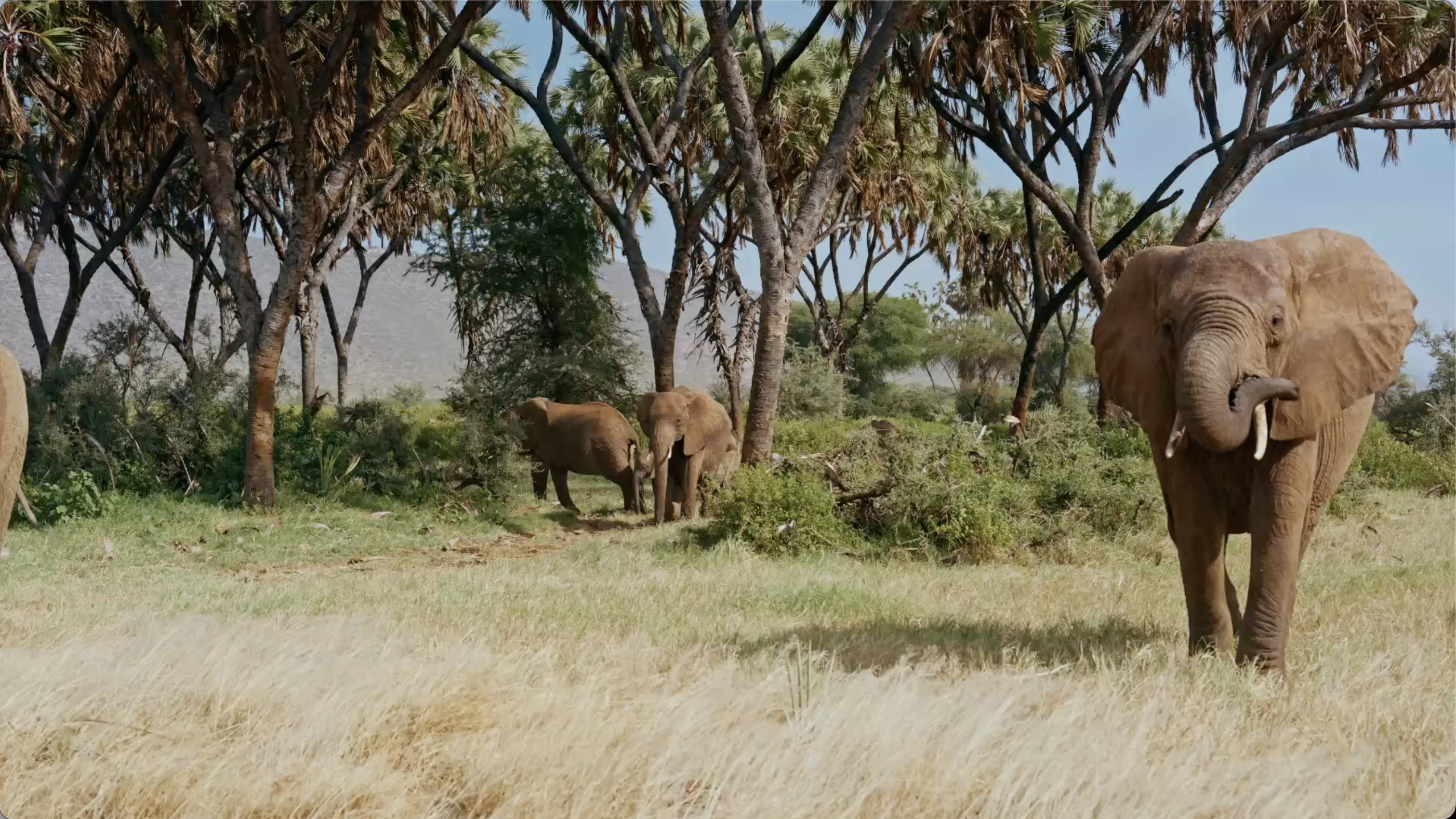
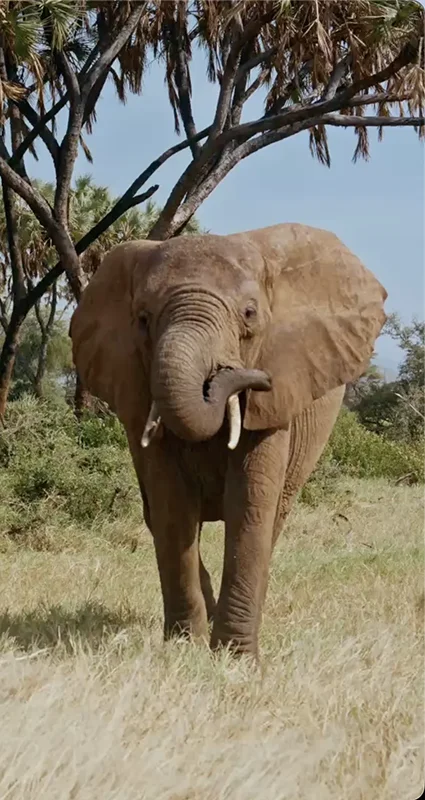
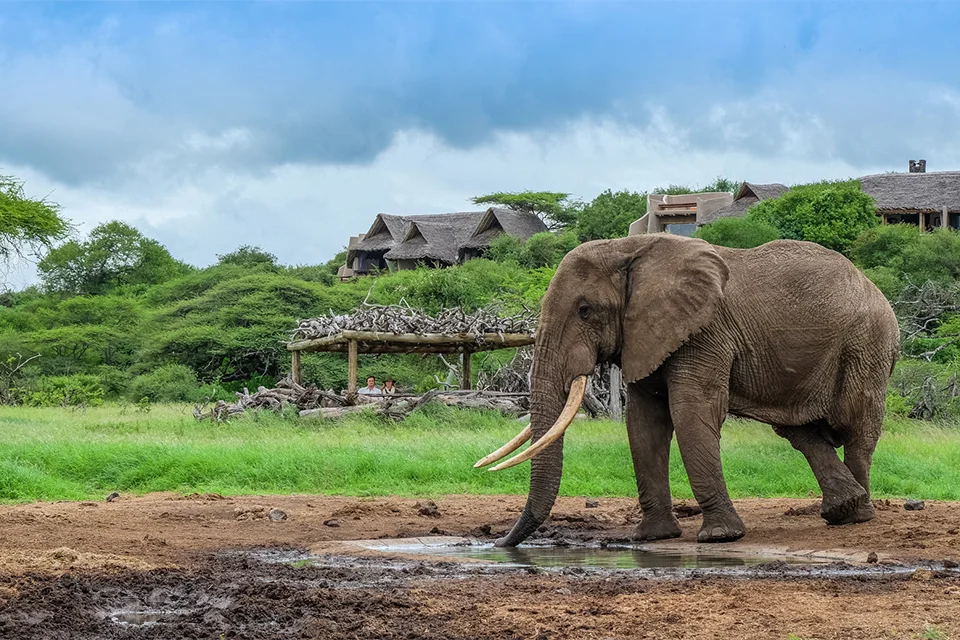
African elephants: Sera supports a growing elephant population, and the conservancy serves as the first point of release for orphaned elephants rescued by the nearby Reteti Elephant Sanctuary, some of which carry satellite collars for ongoing monitoring.
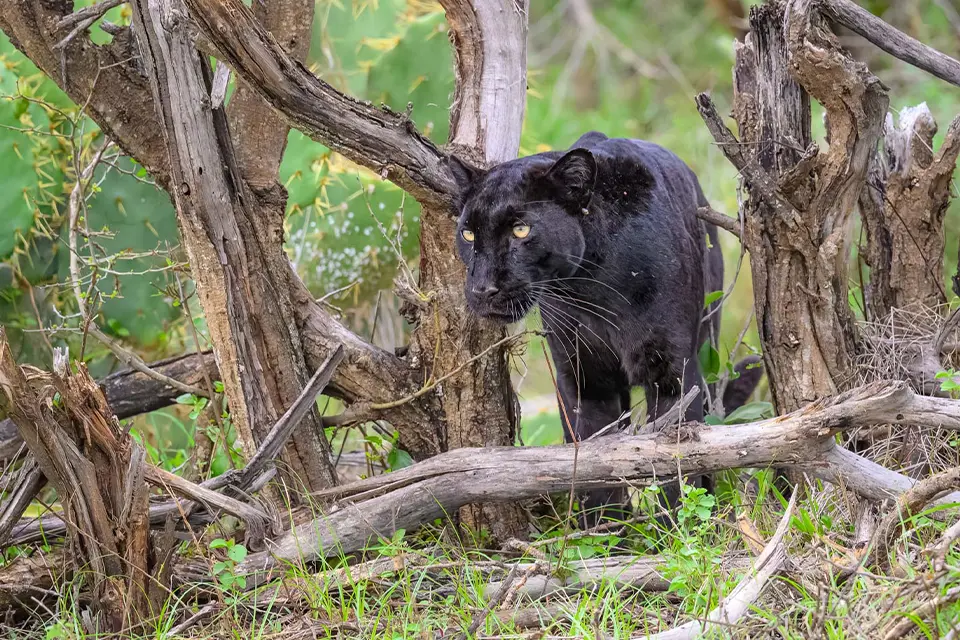
Predators: Resident lion prides, hyenas, and elusive leopards patrol the conservancy's plains and rocky outcrops; cheetahs are occasionally sighted on open ground, and African wild dogs have been recorded moving through the wider landscape.
Grevy's zebra: The world's largest and most endangered equine, Grevy's zebra populations at Sera were restored through translocations from Lewa Wildlife Conservancy, making every sighting here part of a continuing recovery story.
Birds: Sambura hosts over 450 species, including golden Pipit, orange-bellied parrot, vulturine guineafowl, Somali ostrich, golden-breasted starling, rosy-patched bush-shrike, fan-tailed raven, Abyssinian scimitarbill, Somali bee-eater, and Donaldson-Smith's sparrow-weaver.
Where to stay in Sera Conservancy
Saruni Rhino is the only lodge inside Sera Community Conservancy, and that singularity shapes everything about a stay here. With a maximum of eight guests at any one time, the camp sits on the banks of the seasonal Kauro River among doum palms, facing a permanent waterhole that draws wildlife year-round. It is built from local stone with makuti thatched roofs and canvas zip-down windows, open-fronted to catch the breeze and solar-powered throughout. Keeping it simple was a deliberate choice: at Saruni Rhino, what happens outside the camp matters far more than what happens within it.
The lodge offers a small number of stone bandas: a family banda with two bedrooms, two bathrooms and a shared sitting room provides the best waterhole vantage in the camp and suits families or small groups travelling together. Standard bandas accommodate two guests, with private verandas overlooking the Kauro lugga; one has a hammock strung between palms for afternoon reading with the dry riverbed spread out below. All bandas are en-suite with hot and cold running water and are supplied with bottled drinking water.
The communal heart of the lodge is Swara House, an open-fronted thatched space where managers and guides host communal meals. Dining carries a distinct Italian influence: multi-course dinners served in the dry riverbed under a sky full of stars, and bush breakfasts that materialise after morning walks in the sanctuary. An infinity pool offers relief from the heat. The daily rate includes one rhino tracking session, day and night game drives, guided bush walks, and all bush meals and sundowners. A visit to the nearby Reteti Elephant Sanctuary can be arranged separately and requires advance booking.
Trusted by thousands of ecstatic travellers
✔️ 5-Star Trustpilot Rating ✔️ Condé Nast Travel Specialist Award Winner
✔️ Accredited by SATSA ✔️ 5,000+ Exceptional Safaris Since 1991
Why choose Africa Geographic to plan your safari?

"...absolutely excellent, asked all of the right questions, kept in touch with us through the planning process and made us feel entirely comfortable. We were so grateful to have Africa Geographic on our side. The safari was more than we expected. I would recommend Africa Geographic to everyone."

"We had an absolutely incredible trip to Kenya...They made the process so easy from initial planning, to booking and making payments toward out trip to the actual trip itself and throughout our stay in Kenya. Incredible communication, incredible wildlife...We will definitely be using AG again when we return to Africa!"

"My trip to...Kenya was one of my best experiences so far...everything was arranged exactly as I had imagined. The accommodations were excellent...The diversity of landscapes and wildlife was impressive, with new highlights every day. Overall, this was my best trip yet – perfectly organized and unforgettable."
Wish you were here?
Frequently asked questions
Sera Community Conservancy is an approximately 340,000-hectare community-managed wildlife area in Samburu County, northern Kenya. Founded in 2001 and a member of the Northern Rangelands Trust, it is managed entirely by the Samburu community and is best known as home to Africa's first community-owned black rhino sanctuary.
The Sera Rhino Sanctuary is a 10,700-hectare fenced zone within Sera Community Conservancy, established in 2015. It is the first and only community-owned black rhino sanctuary in Africa, and the only place in East Africa where guests can track rhinos on foot guided by trained Samburu rangers.
More than 20 critically endangered black rhinos now live in the sanctuary following their reintroduction in 2015. Southern white rhinos were introduced in 2024, and a calf was born shortly after. The sanctuary records a 16% annual population growth rate and zero poaching since it was established.
The minimum age for rhino tracking on foot is 16 years. Children are welcome at Saruni Rhino for general activities such as game drives and guided walks. The camp is unfenced, with big wildlife moving through freely, so children require constant adult supervision at all times.
The Samburu Special Five are five wildlife species adapted to Kenya's arid northern frontier: the gerenuk, reticulated giraffe, Beisa oryx, Somali ostrich and Grevy's zebra. All five are regularly encountered at Sera and are not found on Kenya's southern safari circuit.
The dry seasons, June to October and December to March, offer the most rewarding conditions for wildlife viewing and rhino tracking, when dry ground makes tracking on foot easier and wildlife concentrates around water sources. Heavy rains in April–May and November can make access to remote tracks difficult.
The easiest route is a scheduled flight from Wilson Airport in Nairobi to Kalama Airstrip (approximately one hour), followed by a 90-minute game drive transfer to the lodge. Charter flights land directly at Kauro Airstrip, approximately five minutes from Saruni Rhino. By road, the drive from Nairobi takes seven to nine hours via Nanyuki, Isiolo and Archer's Post.
Kisima Hamsini is an ancient pastoral site where Samburu warriors dig into dry riverbeds to reach water and sing distinctive family songs to call their specific cattle to drink. It is one of the few genuinely unscripted cultural encounters available to safari travellers anywhere in Kenya.
Saruni Rhino is an intimate stone lodge on the banks of the Kauro River, accommodating a maximum of eight guests. It is deliberately simple and remote, with the focus firmly on the rhino tracking and conservancy experiences, complemented by a permanent waterhole in front of camp, an infinity pool and Italian-influenced communal dining.
Yes. The Reteti Elephant Sanctuary, where orphaned elephant calves are hand-reared before being released back into the wild, is located approximately two hours from Saruni Rhino. Sera Conservancy is the first point of release for elephants from Reteti, so some of the animals encountered on drives may once have been in the sanctuary's care. The excursion must be booked and paid for in advance.
Yes. Sera is managed entirely by the Samburu community and was founded in 2001 partly to resolve resource conflicts between historically rival groups. Tourism revenue, alongside a community carbon credit initiative, funds education bursaries, healthcare, water security and rangeland restoration directly within the conservancy.
Sera combines naturally with Samburu National Reserve; Saruni Rhino's sister property Saruni Samburu is approximately two hours away by road. From there, the circuit can continue south to the Maasai Mara via Saruni Mara. Light aircraft connections link these destinations efficiently, though bush planes have strict luggage limits and soft-sided bags are strongly recommended.
Sera is considered a low-risk malarial area, though antimalarial precautions are still recommended; consult your doctor before travel. A yellow fever vaccination may also be required, so check the current requirements with your doctor ahead of departure. Comprehensive travel and medical evacuation insurance is essential for any stay in this remote destination.
Adult sharing rates at Saruni Rhino are USD 700 per person per night in high season (July–September and 20 December–2 January), USD 600 in mid-season (January–February, June, October and 1–19 December), and USD 500 in low season (March–May and November), plus a conservation fee of USD 175 per adult per night.
Click here to schedule a no-obligation call with one of our Safari Experts or fill in our 2-minute form with your questions. Our team of experts are here to help! Whether you’re curious about the best time to travel, want to hear first-hand about an experience or need help planning your safari.
Explore more African destinations
Start planning your dream safari
Our travel experts will craft a no-obligation itinerary just for you. We have crafted over 5,000 safaris since 1991. Your personal details are protected; we only use this information to contact you.
Why book your safari with us?

Deep Experience & Knowledge
Handcrafted experiential safaris since 1991.
Travel in Africa is about knowing when and where to go, and with whom. A few weeks too early/late or a few kilometres off course, and you could miss the greatest show on Earth. And wouldn’t that be a pity?

Trust & Safety

Make A Difference
We donate a portion of the revenue from every safari sold to carefully selected conservation projects that make a significant difference at ground level.
YOUR safari choice does make a difference - thank you!