

Tailor-made safaris. Since 1991



Mount Kilimanjaro: Africa's highest summit
Mount Kilimanjaro at a glance:
Location: Northern Tanzania, near the Kenyan border | Access: Kilimanjaro International Airport (JRO), ~1 hour from Moshi |
Summit: Uhuru Peak, 5,895 m (19,341 ft), the highest point in Africa | Best time to climb: January–March and July–October |
Protected status: Kilimanjaro National Park, UNESCO World Heritage Site (1987) | Minimum recommended stay: 7–8 days for a summit attempt |
Currency: Tanzanian Shilling (TZS) | Minimum age to climb: 10 years |
Why visit Mount Kilimanjaro?
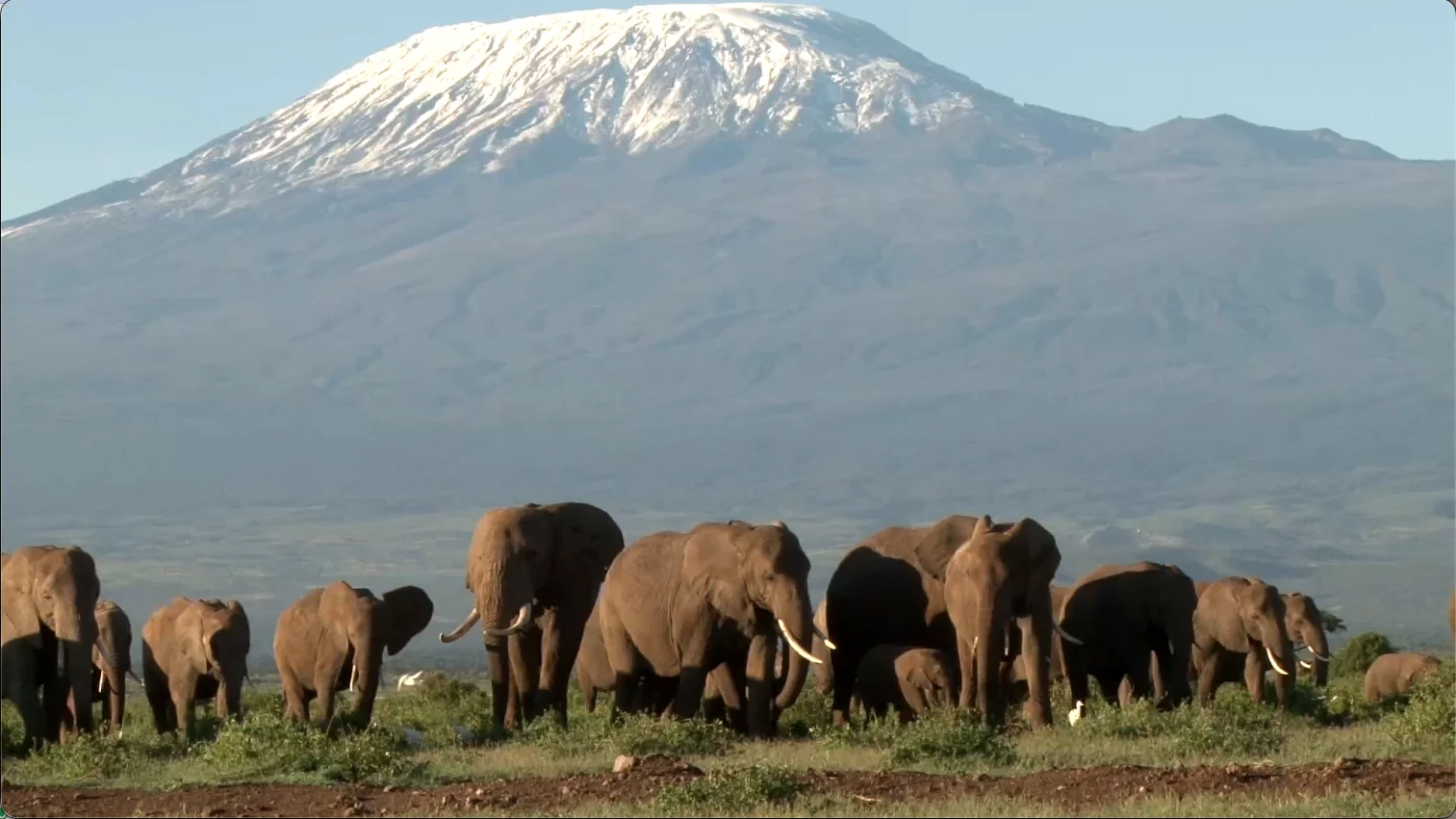
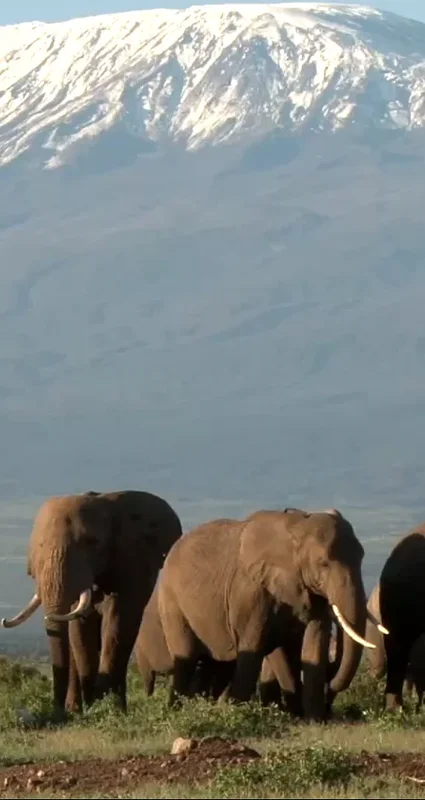
From the surrounding savannah, Kilimanjaro announces itself long before you reach its base - a vast, snow-capped form floating above the plains of northern Tanzania, seemingly detached from the earth below. It is not only the highest peak on the African continent, but the highest free-standing mountain on earth, and something about its isolated scale makes it feel unlike any other summit on the continent.
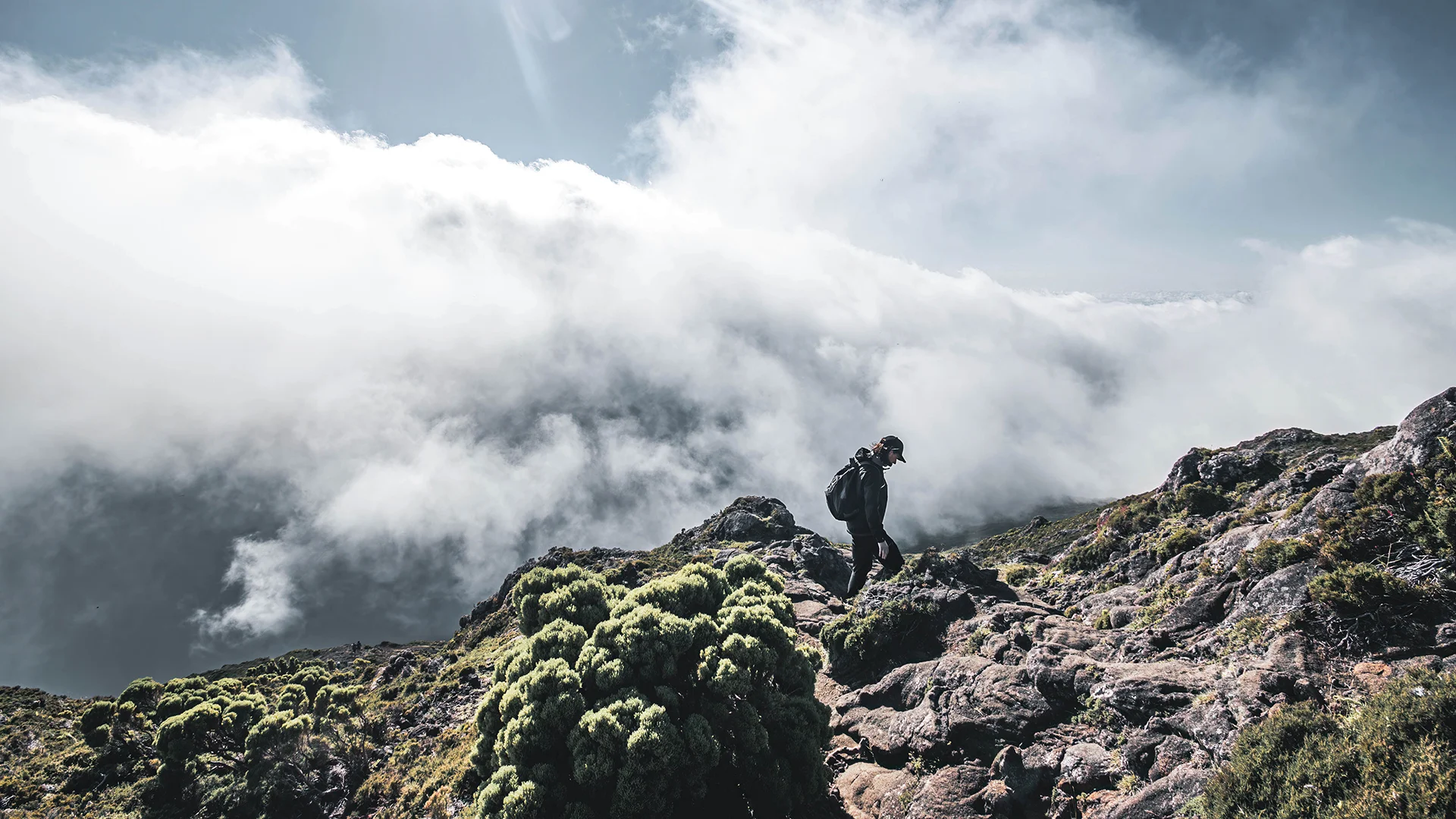
What sets Kilimanjaro apart is the combination of that scale with genuine accessibility. The mountain requires no technical climbing equipment, no ropes, no specialist mountaineering background. Instead, it demands patience, physical commitment, and respect for altitude. The reward is a journey through five distinct ecological zones in a single week, from equatorial rainforest through heather moorland to a high-altitude zone of giant groundsels and lobelias, alpine desert and a glaciated summit above the clouds - a span of environments that exists nowhere else in quite this form.
Kilimanjaro's pull, however, does not begin and end at Uhuru Peak. The mountain sits at the centre of a broader landscape shaped by the Chagga and Maasai peoples, elephants moving through savannah, colobus monkeys in the forest canopy, and private wilderness concessions to the west that offer some of the most atmospheric, crowd-free wildlife experiences in East Africa. For travellers who want physical challenge, extraordinary landscape and genuine cultural depth within a single destination, few places on the continent answer the brief as completely as this one.
5 Reasons We Love Mount Kilimanjaro
Five worlds in a single climb: The ascent moves through cultivated farmland, equatorial rainforest, heather moorland, alpine desert and a glaciated Arctic summit - a complete span of ecosystems, on foot, without technical equipment, in a single week.
The most accessible great summit on earth: No ropes, no crampons, no specialist skills. Kilimanjaro is the least technical of the Seven Summits, yet reaching Uhuru Peak at 5,895 m reshapes how every climber who gets there thinks about what they are capable of.
Wildlife and culture at the mountain's feet: The private concessions of West Kilimanjaro and Sinya hold large-tusked elephant bulls, lesser kudu, gerenuk and Maasai communities whose pastoral life has shaped this landscape for generations.
Seven routes, seven distinct encounters: From the rainforest-rich Lemosho to the remote nine-day Northern Circuit, each trail offers a genuinely different experience of the mountain for different experience levels, timelines and ambitions.
A summit with genuine history: From Yohani Kinyala Lauwo's disputed first ascent in 1889 to the Uhuru Torch carried to the top at Tanzanian independence in 1961, Kilimanjaro carries a remarkable human story alongside its natural one.
All you need to know about Kilimanjaro
About Mount Kilimanjaro
Kilimanjaro is a dormant stratovolcano comprising three distinct cones - Shira, Mawenzi and Kibo - shaped by volcanic activity approximately one million years ago. Kibo is the highest of the three and the only cone that retains permanent glaciers. Uhuru Peak, on the rim of Kibo's crater, stands at 5,895 m (19,341 ft) - the highest point on the African continent.
Everything above 2,700 m falls within Kilimanjaro National Park, gazetted in 1973 and opened to the public in 1977. It protects five distinct ecological zones, leading UNESCO to inscribe the park as a World Heritage Site in 1987.
The mountain sits in Tanzania's Kilimanjaro Region, near the Kenyan border, with the town of Moshi at its southern base and Arusha about two hours to the west. Kilimanjaro International Airport (JRO) is the main international gateway.
Things to do at Mount Kilimanjaro
Summit Uhuru Peak: Trek through five ecological zones over 7–8 days, guided throughout, to stand at 5,895 m, the highest point in Africa. Seven official routes make the experience differently accessible to different travellers.
Walk the Shira Plateau: The broad, open remnant of Kilimanjaro's oldest volcanic cone - Afro-alpine moorland studded with volcanic rock formations, with eland and buffalo moving through the highland grasslands on the wider plain.
Explore the Afromontane rainforest: The lower slopes of the Machame and Lemosho routes pass through dense, mist-threaded forest where colobus monkeys and birds move through the canopy.
Wildlife drives and walks in the concession areas: The private wilderness west of the national park boundary offers game drives and Maasai-led walks across open savannah, with Kilimanjaro rising dramatically on the eastern horizon.
Engage with Maasai communities: Stays in the West Kilimanjaro and Sinya concessions connect travellers with Maasai communities. Enjoy boma visits, walks alongside Maasai guides and occasional ceremony attendance in one of northern Tanzania's most culturally distinctive settings.
Build a broader northern Tanzania itinerary: The Serengeti, Ngorongoro Crater and Tarangire are all within a few hours of Kilimanjaro's base, making the mountain a natural anchor for a wider East Africa journey.
What wildlife can I see near Mount Kilimanjaro?
Black-and-white colobus monkeys inhabit the Afromontane rainforest on the lower slopes, and you'll most reliably see them near the Machame and Marangu gates in the early morning.
Elephants roam the periphery of the national park and the private concessions to the west, and the Sinya and Enduimet areas are home to some of the most impressively tusked bull elephants remaining in East Africa.
Buffalo and eland are present in the moorland zone and on the Shira Plateau, where large mammals move between the national park boundary and the surrounding highland habitat.
Lesser kudu, gerenuk and bat-eared fox inhabit the dry savannah of the West Kilimanjaro and Sinya concessions. These species are rare on the standard northern Tanzania circuit, characteristic of the Somali-Maasai biome here.
Striped hyena moves through the West Kilimanjaro concessions after dark. They are elusive, rarely seen on the wider safari circuit, and a memorable encounter for those staying in the area on night drives.
Over bird 180 species, including Kilimanjaro white-eye, Hartlaub’s turaco, Abbott’s and Kenrick’s starlings, red-tufted sunbird, moorland chat, bearded vulture, cinnamon-chested bee-eater and silvery-cheeked hornbill.
Where to stay near Mount Kilimanjaro?
Kaliwa Lodge is set in the rainforest above Machame village at around 1,300 m, with Machame Gate ten minutes away. Its ten individually furnished rooms and bungalows make it the natural base for climbers preparing to leave for or recovering from the mountain. A wooden deck overlooks the Weru Weru river valley and the summit above; colobus monkeys and bushbabies inhabit the surrounding trees. It is a comfortable, well-positioned lodge rather than a wilderness experience, and all the better for knowing exactly what it is.
Shu'mata Camp, in the Enduimet Wildlife Management Area on leased Maasai land west of the national park, offers a small number of canvas suites in classic Hemingway style on a craggy hilltop, each veranda facing Kilimanjaro across open bush savannah. On clear nights the summit glaciers are visible from the tent. Elegant interiors, locally made furniture, Maasai art in en-suite bathrooms, open-air showers, sit alongside solar power and a kitchen drawing on locally grown produce. Game drives, Maasai-led walks and community visits form the activity programme, with hilltop sundowners as Kilimanjaro turns amber in the evening light.
Kambi ya Tembo - Swahili for "camp of elephants" - occupies the Sinya concession near the Kenyan border, and the wildlife earns the name. Fourteen tents, each facing either Kilimanjaro or the Amboseli plains, feature private verandas and en-suite facilities. Night drives and Maasai-led walking safaris extend the programme, and guests may occasionally witness traditional ceremonies in nearby Maasai settlements.
5 things I wish I knew before climbing Mount Kilimanjaro
Your porters are the climb: They leave camp after you and arrive before you, carrying your equipment and keeping pace on the hardest days. Their contribution is central to the whole enterprise - acknowledge it from the first morning.
Fitness matters less than you expect: Many physically strong trekkers suffer badly from altitude sickness; some less-fit climbers summit without difficulty. Acclimatisation time, not cardiovascular conditioning, matters most.
Pack water-neutralising tablets: Chlorine-treated water tastes like swimming pools at altitude, making adequate hydration harder precisely when it counts most. Neutralising tablets solve this entirely and are one of the most overlooked items on any packing list.
Learn a few words of Swahili: Many guides and porters are most comfortable in Swahili. Even a greeting unlocks a warmth in the mountain crew that makes the whole climb feel different.
Summit night is genuinely hard: Leaving at midnight after three hours of sleep, walking for six to eight hours in freezing temperatures, water bottles icing over - nothing fully prepares you. Stella Point at sunrise makes every step worth it. Read more.
The West Kilimanjaro concession
West Kilimanjaro is a remote wilderness area of about 250 square kilometres, leased from the local Maasai community north of Mount Meru and extending toward the Kenyan border. Contiguous with Amboseli National Park across the frontier, it shares that ecosystem's wildlife while seeing a fraction of its visitor numbers.
The landscape is open plains and acacia woodland, with Kilimanjaro's western face rising above the savannah to the east. Large elephant bulls, including some of the most heavily tusked individuals in East Africa, move through the area alongside lesser kudu, gerenuk, bat-eared fox and, after dark, striped hyena. Night drives, not permitted inside the national park, are available in the concession.
The Maasai communities from whom the land is leased benefit directly from tourism: bed-night fees, annual lease payments and practical support have funded school classrooms and teachers' housing in the area. The adjacent Sinya concession extends the same model across a further 600 square kilometres, with its own Maasai settlements and sightlines to Kilimanjaro, Mount Meru and the peaks of Ol Doinyo Longido and Ol Doinyo Orok.
Kilimanjaro's main climbing routes
Seven official routes lead to Kilimanjaro's summit, each distinct in scenery, duration, crowd level, acclimatisation profile, and cost. Choosing a route is one of the most consequential decisions when planning a climb.
Marangu is the only route where trekkers sleep in permanent huts rather than tents; the most affordable option, and also the busiest. The standard itinerary runs five or six days; five provides inadequate acclimatisation and is not recommended by experienced operators. Unlike every other route, ascent and descent follow the same path.
Machame - the Whiskey route - is the most popular tented trail and is known for its varied scenery, including the steep traverse of the Barranco Wall. Six days is the minimum; seven is advisable. Its varied ascent profile provides better acclimatisation than Marangu's direct line. Descent is via the Mweka route.
Lemosho begins on the mountain's western flank in old-growth Afromontane forest and crosses the open Shira Plateau before converging with the Machame route at higher altitude. Best covered over seven to eight days, its gradual altitude gain consistently produces high summit success rates. The opening forest section - colobus monkeys, turacos, dense canopy - is among the most beautiful on the mountain.
Shira follows a similar westerly approach but starts above the forest zone at a much higher altitude, reducing the acclimatisation benefit of the opening days. It suits trekkers who have already spent time at altitude - on Mount Meru, for instance - rather than those arriving at high elevation for the first time.
Rongai is the only route approaching from the north, sheltered from the rain-bearing south-easterly winds that drench the southern slopes. It is the preferred choice during the two wet seasons (late March to early June, and November to December) and offers views into Kenya and better wildlife-encounter potential than most southern approaches. Generally uncrowded, it runs over five, six or seven days.
Umbwe is the steepest and most direct official ascent. This route is short, dramatically scenic and carryies a higher altitude-sickness risk because the compressed profile leaves limited time to acclimatise. Best suited to those who have already spent time at altitude elsewhere before arriving on Kilimanjaro.
Northern Circuit is the longest, most remote and most expensive route. It is a near-complete circumnavigation of the northern slopes of Kibo requiring a minimum of nine days, with some itineraries running to ten or eleven. Because the ascent is so gradual, it offers the best acclimatisation profile of any route and consistently produces the highest summit success rates. It covers terrain seen on no other trail.
Mweka is a descent-only route, used by climbers coming down from the Machame, Lemosho, Shira, Umbwe and Northern Circuit routes. It is not used for ascent.
The principle behind it is straightforward: longer is better. More days means more acclimatisation, a higher chance of reaching the summit and a fuller encounter with the extraordinary range of landscapes the mountain contains.
The history of climbing Kilimanjaro
Kilimanjaro was not always a destination. The Chagga people, who farmed the mountain's fertile lower slopes in communities sustained by coffee and bananas, and the Maasai people, whose pastoral and trading routes ran across the surrounding plains, both knew the mountain intimately, and both left its upper reaches alone. The cold, barren world above the treeline offered nothing of agricultural or pastoral value, and by some accounts was regarded as a place inhabited by spirits. Routes ran around the mountain, not up it.
In 1848, the German missionary Johannes Rebmann reported snow on a mountain near the equator. The Royal Geographical Society's response, led by the armchair geographer William Desborough Cooley, was dismissal. Snow at the equator was considered implausible by men who had not seen it, and Rebmann's account was treated with scepticism for years.
The first serious attempt on Kibo came in 1887 from Hans Meyer, a geographer from Leipzig, who was stopped by the ice cap. He returned in 1888, only to be captured during the Abushiri revolt against German colonial rule and subsequently ransomed. He returned a third time in 1889, this time accompanied by the Austrian alpinist Ludwig Purtscheller. On 6 October 1889, the two men reached the summit, which Meyer named Kaiser-Wilhelm-Spitze.
Meyer's published account does not clearly explain the role of their young Chagga guide, Yohani Kinyala Lauwo. Tanzanian tradition holds that Lauwo stood on the summit alongside Meyer and Purtscheller, whereas Meyer's account does not clearly credit him, and historians have continued to disagree. What is not in dispute is that Lauwo went on to guide the mountain for decades, became a celebrated figure in the region, and died in 1996, reportedly well over a hundred years old.
Mawenzi - Kilimanjaro's jagged second cone, visibly distinct from the rounded dome of Kibo - held out until 1912, when Fritz Klute and Eduard Oehler completed its first ascent. In 1927, Sheila MacDonald became the first recorded woman to reach Kibo's summit.
The summit's name changed at a specific moment in Tanzania's history. In December 1961, as the country reached independence, Lieutenant Alexander Nyirenda carried the Uhuru Torch to the top. Kaiser-Wilhelm-Spitze became Uhuru Peak - freedom - and the summit sign has carried that name ever since.
Kilimanjaro National Park was gazetted in 1973 and opened to the public in 1977; UNESCO added the mountain to the World Heritage List in 1987. What had begun as an expedition had become an industry. Tens of thousands of climbers now attempt the summit each year, supported by a workforce of guides, cooks and porters. Their welfare - wages, load limits, equipment - went largely unregulated for many years. The Kilimanjaro Porters Assistance Project began pressing for enforceable standards in 2003, with meaningful but continuing work still ahead. And the glaciers that Hans Meyer crossed in 1889, the ice that gave the mountain its apparition-like quality above the equatorial plains, have since lost the vast majority of their coverage, a consequence of climate change that the mountain now carries visibly in its diminishing white crown.
Trusted by thousands of ecstatic travellers
✔️ 5-Star Trustpilot Rating ✔️ Condé Nast Travel Specialist Award Winner
✔️ Accredited by SATSA ✔️ 5,000+ Exceptional Safaris Since 1991
Why choose Africa Geographic to plan your safari?

"We booked our honeymoon safari with Africa Geographic, and it turned out to be one of the most memorable trips of our lives....The safari itself was extraordinary. Each place we stayed had its own atmosphere and purpose, and the flow of the trip was perfect: Kilimanjaro, Tarangire, Lake Manyara, Ngorongoro, Olduvai, Ndutu, and the Serengeti..."
"Africa Geographic planned our safari to Tanzania. His on the ground knowledge of Tanzania, professionalism, and responsiveness throughout the process was top notch. The trip went seamlessly. Our guide’s knowledge was excellent. We saw so much wildlife. The accommodations were beautiful...I wouldn’t hesitate to refer...Africa Geographics to others!"
"The 2 drivers were with us every day and were knowledgeable and good communicators. Their many years of experience and also skill in driving thru challenging rough terrain allowed us to get to great viewing spots at the right times...Overnight facilities were very good and usually had great views from the front door. The hospitality was excellent everywhere we went."
Wish you were here?
Frequently asked questions
No. Kilimanjaro is a non-technical trek requiring no ropes or crampons. What matters is physical fitness, a good layering system and enough days on the mountain to acclimatise safely before the final push to Uhuru Peak.
Acute Mountain Sickness (AMS) is the leading cause of summit failure on Kilimanjaro, causing headaches, nausea and fatigue. It strikes regardless of fitness level. Acclimatisation time, not cardiovascular conditioning, is the decisive factor, which is why longer routes consistently produce better summit outcomes.
The two main seasons are January to mid-March and July to October. July to October is the busiest; January to March is quieter and often snowier, and coincides with the wildebeest calving season in the eastern Serengeti - useful for those combining the climb with a safari.
Seven to eight days is the recommended range; five is too few to acclimatise safely and significantly reduces summit success rates. The Northern Circuit requires a minimum of nine days. Arriving in Moshi or Arusha at least a day before the climb also helps.
It is the hardest part of any climb - six to eight hours of walking in sub-zero temperatures, beginning around midnight after limited sleep. Guides monitor conditions throughout and will turn someone back if serious altitude sickness develops. Sunrise from Stella Point, 45 minutes below Uhuru Peak, makes it worth it.
Layering is essential: light clothes for the rainforest zone, mid-weight fleeces for the moorland, and a heavy insulated jacket for the summit push. Add a sub-zero sleeping bag, well broken-in waterproof boots, headlamp, trekking poles, balaclava and two pairs of gloves.
Kilimanjaro International Airport (JRO) is the gateway, roughly one hour from Moshi and two from Arusha, served by KLM, Ethiopian Airlines, Kenya Airways, Qatar Airways and Turkish Airlines. Most trekkers spend at least one night at low altitude before the climb begins.
Yes, solo trekking is not permitted in Kilimanjaro National Park. A licensed guide monitors altitude sickness, manages pace and carries emergency equipment, including a hyperbaric pressure bag and supplemental oxygen. Operators accredited by the Kilimanjaro Porters Assistance Project (KPAP) uphold fair wages and conditions for the full crew.
Costs vary considerably with route length, group size and operator. National park fees alone are substantial and add up quickly on the mountain. Our team can provide tailored pricing for specific routes and itineraries. Contact us for a current quote.
Two challenges stand out: glacier retreat, with Kilimanjaro's ice fields shrinking steadily due to climate change, and porter welfare. The Kilimanjaro Porters Assistance Project (KPAP), founded in 2003, has pushed for enforceable standards on wages, load limits and working conditions, though compliance still varies between operators.
Easily. The Serengeti, Ngorongoro Crater and Tarangire are all within a few hours of Kilimanjaro's base. Many travellers climb first, then safari west before finishing on Zanzibar - a deeply satisfying arc from summit to savannah to sea.
Children aged ten and above may climb; younger family members are well served by the West Kilimanjaro and Sinya concessions, which welcome all ages. Game drives, Maasai-led walks and cultural encounters are all available within sight of the summit and can bookend a climbing itinerary.
The Chagga have farmed Kilimanjaro's lower slopes for centuries and remain central to its tourism economy as guides, porters and operators. It was a young Chagga guide, Yohani Kinyala Lauwo, who accompanied Hans Meyer and Ludwig Purtscheller on the first recorded summit ascent in 1889 a role Tanzanian tradition holds as indispensable.
Click here to schedule a no-obligation call with one of our Safari Experts or fill in our 2-minute form with your questions. Our team of experts are here to help! Whether you’re curious about the best time to travel, want to hear first-hand about an experience or need help planning your safari.
Explore more African destinations
Start planning your dream safari
Our travel experts will craft a no-obligation itinerary just for you. We have crafted over 5,000 safaris since 1991. Your personal details are protected; we only use this information to contact you.
Why book your safari with us?

Deep Experience & Knowledge
Handcrafted experiential safaris since 1991.
Travel in Africa is about knowing when and where to go, and with whom. A few weeks too early/late or a few kilometres off course, and you could miss the greatest show on Earth. And wouldn’t that be a pity?

Trust & Safety

Make A Difference
We donate a portion of the revenue from every safari sold to carefully selected conservation projects that make a significant difference at ground level.
YOUR safari choice does make a difference - thank you!