

Tailor-made safaris. Since 1991



Gombe Stream: birthplace of chimpanzee research
Gombe Stream National Park at a glance:
Location: Eastern shore of Lake Tanganyika, 16km north of Kigoma, western Tanzania | Access: Flight to Kigoma, then boat transfer along Lake Tanganyika (no roads into the park) |
Size: 56 km² (5,600 hectares) - Tanzania's smallest national park | Best time to visit: May/June to September/October (dry season) |
Nearest airport: Kigoma Airport (via Dar es Salaam or Arusha) | Minimum recommended stay: 2–3 nights |
Minimum age for chimpanzee trekking: 15 years | Malaria risk: Yes – prophylaxis recommended |
Why visit Gombe Stream National Park?
Gombe Stream National Park is where the study of wild chimpanzees began. On the forested slopes above Lake Tanganyika, a young Jane Goodall arrived in July 1960 with no formal scientific training, only patience and curiosity, and within months had overturned long-held assumptions about the boundary separating humans from other animals. Today, the Kasakela chimpanzee community she first observed and named remains at the heart of the longest-running study of a wild animal species in its natural surroundings, still yielding new science decades on.
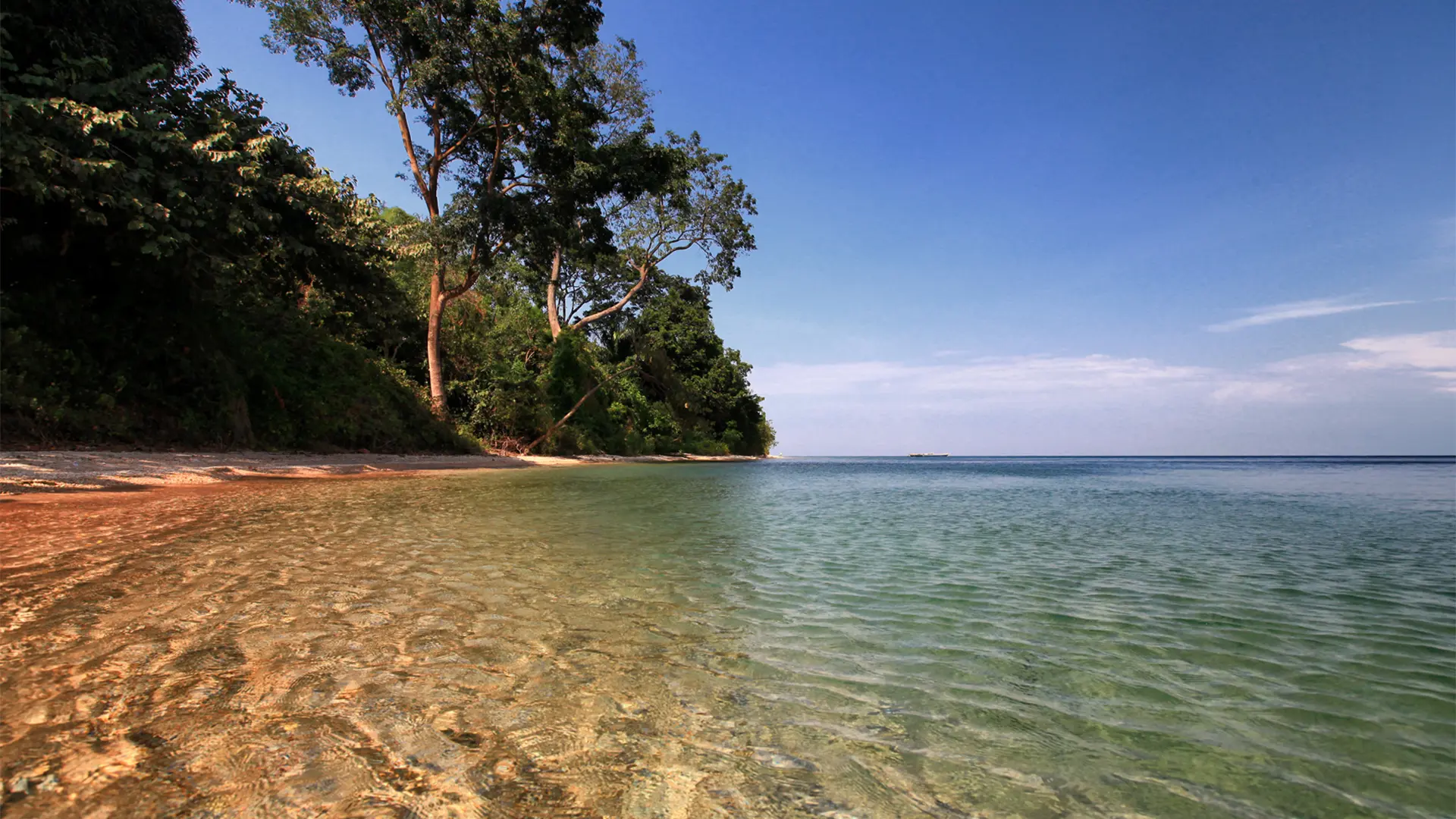
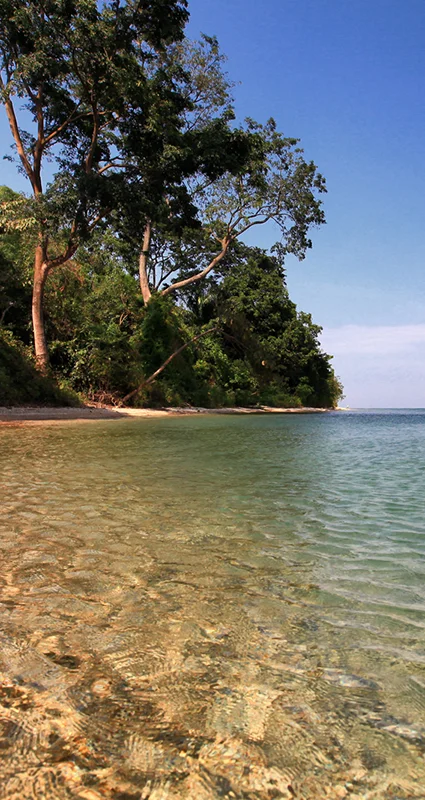
Gombe is Tanzania's smallest national park, a narrow strip of steep, stream-cut valleys and forest squeezed between rift-valley hills and the sandy shores of one of Africa's great lakes. Reaching it demands a boat journey across Lake Tanganyika's clear waters, and the effort sets the tone for what follows: forest treks in search of habituated chimpanzee communities, quiet mornings watching a resident troop of olive baboons on the beach, and unhurried evenings looking out over water that stretches to a distant, hazy horizon. Few destinations anywhere in Africa combine primate science, dense forest wilderness and lakeside stillness so completely, and fewer still carry Gombe's particular weight of scientific history and enduring conservation relevance today.
5 reasons we love Gombe Stream
Chimpanzee trekking with the originals: Track the Kasakela community, the very chimpanzees Jane Goodall first observed and named over 60 years ago.
The birthplace of primatology: Walk the same forest paths where David Greybeard was first seen fishing for termites with a modified twig.
A lakeside forest wilderness: Steep, stream-cut hills tumble into Lake Tanganyika, giving Gombe a rare mix of forest hiking and lakeside stillness.
Remarkably rich for its size: Just 56 km² yet home to almost 300 bird species, 8 primate species and forest butterflies in striking numbers.
Untouched by crowds: Reachable only by boat, with no roads and few visitors, Gombe rewards travellers seeking an intimate, unhurried encounter.
All you need to know about Gombe Stream
About Gombe Stream National Park
Gombe Stream National Park sits on the eastern shore of Lake Tanganyika, 16km north of Kigoma in western Tanzania, and about 150 km north of Mahale Mountains National Park. At just 56 km² (5,600 hectares), it is Tanzania's smallest national park, a narrow band of steeply rising forested hills cut by fast-flowing streams that tumble down to sandy beaches. The park lies at a natural crossroads of ecosystems, where the forests of Central Africa meet the savannas of eastern Africa, producing a compact but remarkably diverse habitat for its modest size.
There are no roads within Gombe; all exploration is done entirely on foot, guided by experienced rangers who know the forest and its resident chimpanzee communities intimately. Gazetted in 1968, the park owes its existence to the pioneering research by Jane Goodall that began here in 1960, and it remains inseparable from that legacy, drawing travellers who want to see wild chimpanzees where the science of studying them was first born.
Things to do in Gombe Stream National Park
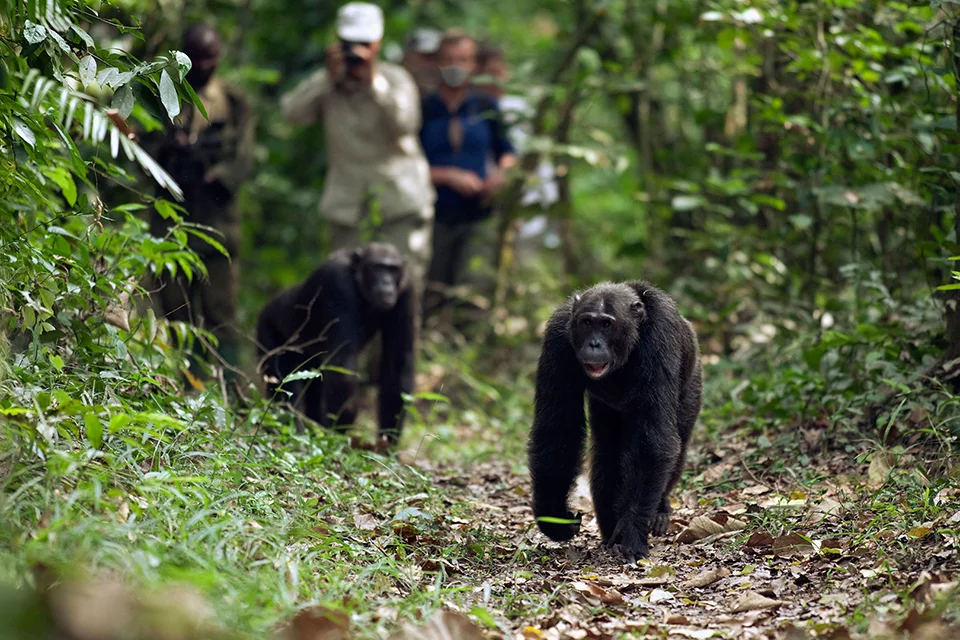
Chimpanzee trekking: Follow experienced guides into the forest to find the habituated Kasakela community and spend up to an hour with them.
Forest hiking: Climb steep trails through mosaic forest and grassland, rewarded by sweeping views over Lake Tanganyika from the hills above.
Waterfall walks: Seek out the forest's Kakombe and Mkenke waterfalls, tumbling down the escarpment through dense, layered vegetation.
Lake Tanganyika boating: Explore the lake by kayak or boat, taking in forested hills rising from the shoreline and calm morning waters.
Snorkelling and diving: Slip into Lake Tanganyika's warm, clear water to see colourful cichlid fish found nowhere else on Earth.
Birds, primates and butterfly watching: Look for nearly 300 bird and 8 primate species and myriad butterflies.
What wildlife can I see in Gombe Stream National Park?
Eastern chimpanzees: Gombe's habituated Kasakela community is the world's most closely studied group of wild chimpanzees.
Other primates: A well-habituated troop of olive baboons spends its time along the shoreline, offering constant, entertaining sightings for guests while Red-tailed and blue monkeys move through Gombe's canopy alongside red colobus and vervet monkey troops.
Leopards: The only large predator present in Gombe, leopards are rarely seen but occasionally recorded in the forest interior.
Bushpigs are common but only occasionally seen near the forest edge
Birds: Almost 300 species are recorded, including crowned and fish eagles, palmnut vulture, Peter's twinspot, Schalow's turaco, blue-breasted kingfisher and double-toothed barbet.
Lake Tanganyika's cichlids: The lake's clear waters hold hundreds of endemic cichlid species, best seen while snorkelling near shore.
Gombe vs Mahale for the chimp experience
Gombe and Mahale Mountains National Park are Tanzania's only two chimpanzee trekking destinations, both reached exclusively by boat across Lake Tanganyika. They are about 150 km apart, as the crow flies.
Gombe: By far the smaller and more accessible of the two, a tightly packed 56 km² of forest where sightings tend to come more easily, and treks are generally shorter, thanks to decades of continuous habituation of its resident chimpanzee communities. Its chimpanzees, watched almost daily since the 1960s, are considered among the most reliably observed anywhere on the continent. Gombe offers intimacy, deep scientific history and the particular resonance of walking the same forest paths where modern primatology first began.
Mahale Mountains National Park: Vastly larger, wilder and considerably more remote, its mountains rising over 2,400 metres above a longer stretch of lakeshore. Tracking here often demands greater fitness, more time pushing through dense vegetation, and considerable patience along the way. Mahale offers scale, drama and true wilderness immersion for travellers seeking a deeper sense of remoteness.
Many travellers combine the two parks, often alongside Katavi National Park, into a complete western Tanzania circuit.
Where to stay in Gombe Stream National Park
Gombe's accommodation is deliberately limited, a reflection of the park's protected status and its long-standing focus on chimpanzee research rather than large-scale tourism. The principal lodge is Mbali Mbali Gombe Lodge, set beneath ancient mango trees on the sandy shore of Lake Tanganyika. It is an intimate camp with seven ensuite tented rooms sheltered under thatched roofs, each positioned with a strip of forest between neighbouring tents to ensure privacy and quiet. Four-poster beds draped with mosquito nets, flush toilets and hot showers bring genuine comfort to a wild and remote setting, while a communal lounge with a library, bar, dining room and lakeside jetty forms the social heart of the camp, a gathering point for guests after a day spent trekking through the forest.
Nights in Gombe are shaped by the sound of the forest pressing close against the shoreline, the proximity of well-worn chimpanzee trails, and direct, unhindered access to the beaches and clear waters of Lake Tanganyika. Because there is only one dedicated tourist lodge inside the park, and because Gombe draws steady interest from travellers following in Jane Goodall's footsteps, booking well ahead of a visit, particularly during the June to September dry season, is strongly advisable for those hoping to secure a room.
The chimp research project at Gombe
No visit to Gombe is complete without understanding the research legacy that shaped the park and continues inside it today, run under the banner of the Gombe Stream Research Center (GSRC), a programme of the Jane Goodall Institute.
It began on 14 July 1960, when a 26-year-old Jane Goodall arrived on the shore of Lake Tanganyika at what is now Gombe, sent by palaeoanthropologist Louis Leakey to study the area's chimpanzees despite having no university training. That date is now marked annually as World Chimpanzee Day. The Gombe Stream Research Center was formally founded in 1965, and the work begun in those early months has never stopped. In 2018, Guinness World Records confirmed it as the longest-running wild chimpanzee study on record; the Jane Goodall Institute describes it as the world's longest-running study of wild chimpanzees, with Mahale's own long-term research, begun in 1965, ranking second.
The scale of the archive is extraordinary. More than 165,000 hours of behavioural data have been collected through observations of over 320 individual chimpanzees, gathered by more than 200 researchers and field assistants across six and a half decades. Complete lifespans have been recorded for many of these individuals, and the longitudinal record now spans four generations of chimpanzee families. Less widely known is that Gombe also hosts one of the longest-running baboon studies anywhere, a parallel project that has quietly run for more than 50 years alongside the chimpanzee research.
Some of the research findings reshaped entire fields of science. In 1960, Goodall observed a chimpanzee she had named David Greybeard stripping leaves from a twig and using it to fish termites from their mound, the first recorded instance of tool use by a wild animal. The discovery forced a fundamental rethink of what, if anything, separates humans from other species. Equally significant, though less celebrated, was the Gombe Chimpanzee War of 1974 to 1978, when the Kasakela community split and its former members in the breakaway Kahama group were systematically killed over four years by their one-time group-mates. It was the first documented case of sustained lethal conflict between groups of a single non-human species, a finding that unsettled the prevailing view of chimpanzees as inherently peaceable and remains central to scientific debate on the evolutionary roots of human violence.
Alongside the behavioural research, the Jane Goodall Institute has run TACARE (the Lake Tanganyika Catchment Reforestation and Education programme) since 1994, working with communities around Gombe on land-use planning, reforestation and the restoration of forest corridors linking the park to the wider landscape. Decades of deforestation on Gombe's boundaries had left the park isolated within cleared farmland, and TACARE's community-led model, built on local land-use planning and forest corridor restoration, is now regarded as one of the most widely cited templates for conservation practice grounded in community partnership rather than enforcement alone.
Trusted by thousands of ecstatic travellers
✔️ 5-Star Trustpilot Rating ✔️ Condé Nast Travel Specialist Award Winner
✔️ Accredited by SATSA ✔️ 5,000+ Exceptional Safaris Since 1991
Why choose Africa Geographic to plan your safari?

"I cannot imagine a better way to customize a trip to Africa than with Africa Geographic...listened to what we hoped to accomplish and patiently went back and forth with suggestions and itineraries until it was perfect. Our trip to Tanzania...exceeded all of our expectations. The transfers all went smoothly and our guides were exceptional. I wish I could give 10 stars."
"The 2 drivers were with us every day and were knowledgeable and good communicators. Their many years of experience and also skill in driving thru challenging rough terrain allowed us to get to great viewing spots at the right times. The food was abundant and very good quality...The hospitality was excellent everywhere we went."
"Beautifully organized tanzania trip! Hats of to...for seamless integration of the tour while taking care of the minutest of the details. Our guide selected deserves special mention here!...was well experienced in his line of work, knowledgable and thoroughly ethical...I would not hesitate to recomment Africa Geographic to any one!..."
Wish you were here?
Frequently asked questions
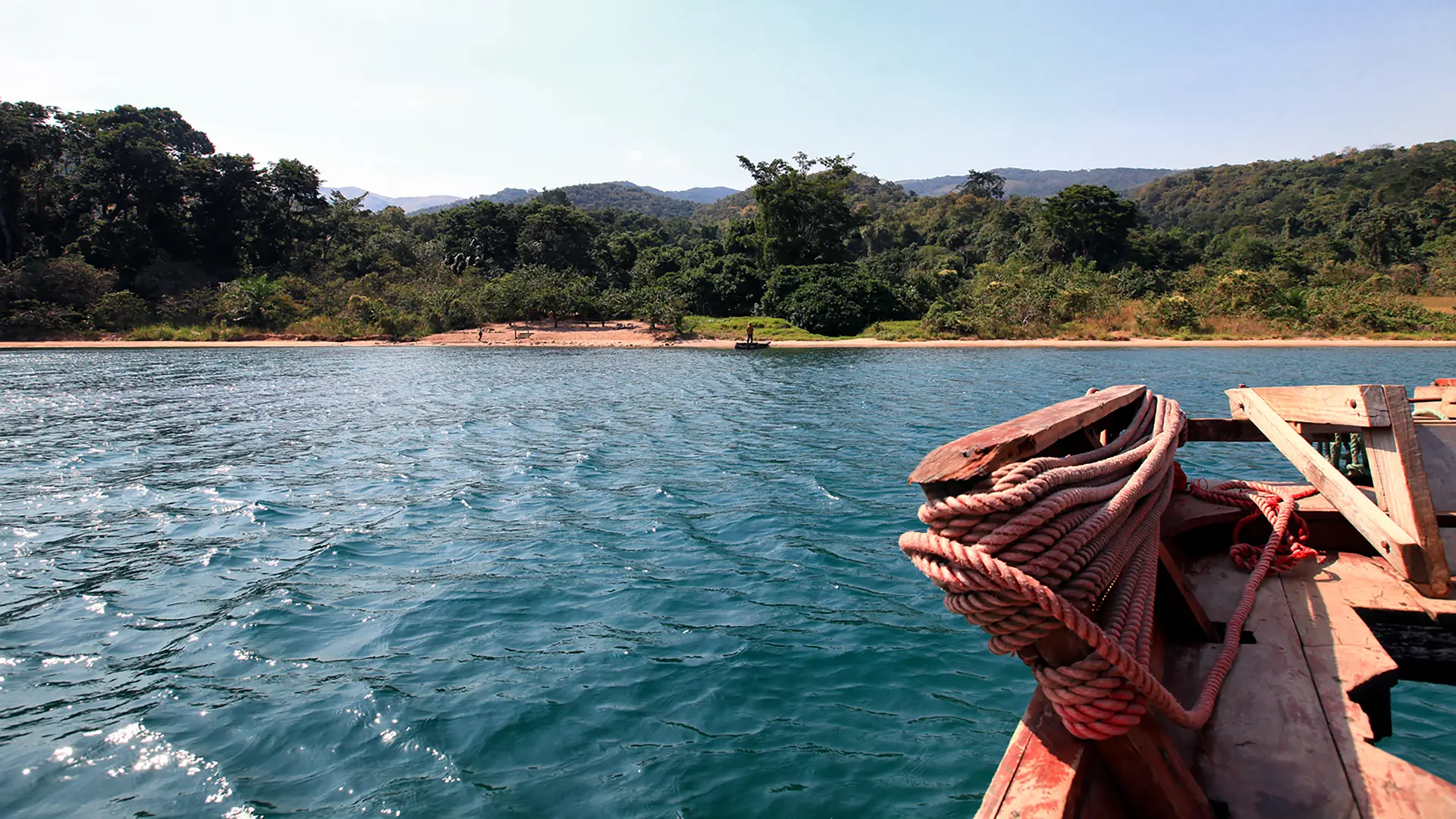
Access begins with a flight to Kigoma, reachable from Dar es Salaam or Arusha by scheduled or charter flight. From Kigoma, Gombe can only be reached by boat along Lake Tanganyika; there are no roads into the park. Lake taxis take around four hours from beaches just north of Kigoma, while private speedboat charters cover the same distance in one to two hours. Some travellers also reach Gombe aboard the MV Liemba, a century-old passenger ferry that calls at the park on its route between Tanzania and Zambia.
The minimum age for chimpanzee trekking is 15 years old. This restriction exists because of the physical demands of forest hiking, the remote location, and the importance of limiting disease transmission risk between visitors and chimpanzee communities, which share close genetic similarity with humans.
A chimpanzee-tracking permit for Gombe, costing US$100, is required in addition to general park and safari costs. Compared with permit prices at other East African chimpanzee destinations, Gombe's permit is on the more affordable end of the scale, reflecting the park's smaller size and shorter average trekking distances.
The dry season, running from roughly May or June through September or October, is the best time to visit. Trails are easier to walk, chimpanzees tend to spend more time near the shore, and sightings are generally more reliable. The wet season runs from November to April; rain makes trails slippery and chimpanzees spend more time in the forest canopy, though the landscape is at its lushest and waterfalls run full.
Once a guide locates a chimpanzee community, visitors typically spend up to one hour observing them at close quarters. Sightings are never guaranteed, since chimpanzees move freely through the forest, but experienced guides give visitors a good chance of a rewarding encounter.
Yes. Thanks to more than six decades of continuous research beginning with Jane Goodall's arrival in 1960, many of Gombe's chimpanzee troops are well habituated to human presence, allowing visitors to observe them at relatively close range without causing distress to the animals.
Beyond chimpanzees, Gombe is home to olive baboons, red-tailed monkeys, blue monkeys, red colobus monkeys and vervet monkeys, along with almost 300 recorded bird species. Leopards are present but rarely seen, and there are no large predators beyond occasional leopard sightings.
Yes. Gombe sits on Tanzania's remote western safari circuit alongside Mahale Mountains National Park and Katavi National Park, both accessible by additional flights or boat transfers. Many travellers combine chimpanzee trekking in Gombe with a more traditional safari elsewhere in Tanzania.
Gombe is smaller, more accessible and offers shorter, generally easier chimpanzee treks thanks to its long habituation history. Mahale is considerably larger, wilder and more remote, offering a more physically demanding trekking experience within a bigger and more dramatic mountain landscape.
Yes. Chimpanzee trekking in Gombe is permitted only with a licensed park guide and a valid trekking permit, which costs US$100. Guides lead all forest walks, since there are no roads within the park and safe, respectful chimpanzee viewing depends on experienced local knowledge of the terrain and the animals.
Gombe can be visited on a 24-hour day pass with a guide, but the park rewards a longer stay of at least 2-3 days, allowing time for repeated chimpanzee trekking attempts, forest walks and time on Lake Tanganyika's shore.
A good pair of sturdy walking shoes, preferably two pairs, is essential, along with waterproofing for cameras and belongings, since rain and wet forest conditions are possible even outside the main wet season. Long sleeves and trousers are recommended for forest walking.
Yes. Visitors can see the site associated with Jane Goodall's early research years within the park, including the area where her research base once stood, giving a tangible connection to the origins of modern primatology and the Gombe Stream Research Center's ongoing work.
Our safaris typically cost from US$700 per person, per night, depending on the accommodation comfort level, time of year and activities. This price usually includes accommodation, all meals, game drives, experienced guides, airport transfers, and 24/7 support from our team.
Click here to schedule a no-obligation call with one of our Safari Experts or fill in our 2-minute form with your questions. Our team of experts are here to help! Whether you’re curious about the best time to travel, want to hear first-hand about an experience or need help planning your safari.
Explore more African destinations
Start planning your dream safari
Our travel experts will craft a no-obligation itinerary just for you. We have crafted over 5,000 safaris since 1991. Your personal details are protected; we only use this information to contact you.
Why book your safari with us?

Deep Experience & Knowledge
Handcrafted experiential safaris since 1991.
Travel in Africa is about knowing when and where to go, and with whom. A few weeks too early/late or a few kilometres off course, and you could miss the greatest show on Earth. And wouldn’t that be a pity?

Trust & Safety

Make A Difference
We donate a portion of the revenue from every safari sold to carefully selected conservation projects that make a significant difference at ground level.
YOUR safari choice does make a difference - thank you!