

Tailor-made safaris. Since 1991



Katavi National Park: remote and untamed
Katavi National Park at a glance:
Location: The far west of Tanzania, east of Lake Tanganyika, in the Great Rift Valley | Access: Fly-in only, from Dar es Salaam or Arusha (4–6 hours, 2–3 flights weekly) |
Size: 4,500 km² (450,000 hectares), one of Tanzania's largest national parks | Best time to visit: June–October (dry season); August–October is peak |
Nearest access towns: Dar es Salaam or Arusha (departure points for flights) | Minimum recommended stay: 3 nights |
Malaria risk: Yes – prophylaxis advised; consult a doctor before travel | Lodges: Chada Katavi, Katavi Wildlife Camp, Mbali Mbali Katavi |
Why visit Katavi National Park?
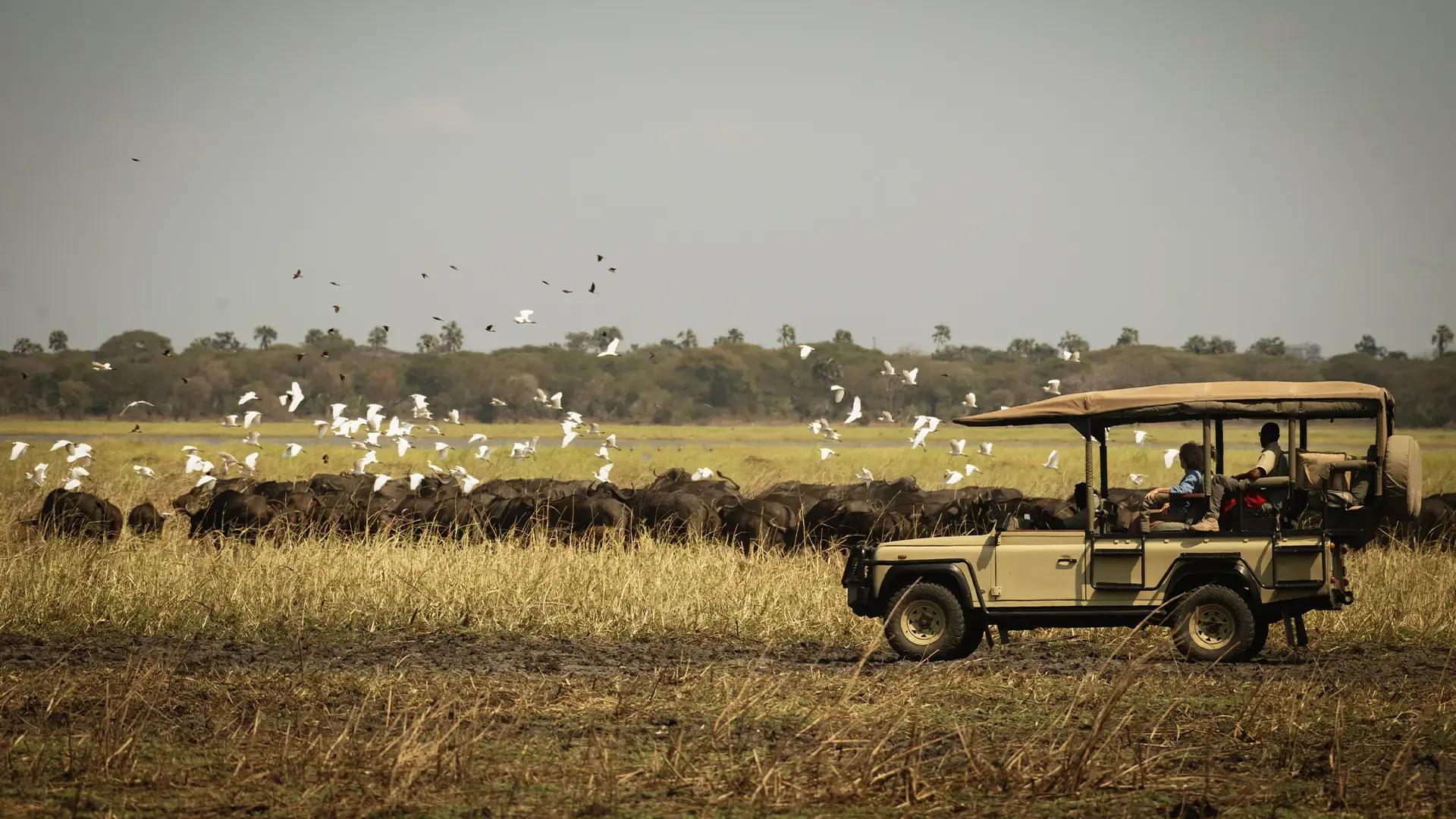
Katavi is one of Africa's wildest and most remote parks, hosting some of the largest hippo pods, buffalo herds and elephant congregations found anywhere on the continent today. Robust populations of lions, painted wolves (African wild dogs), cheetahs, leopards and spotted hyenas roam its floodplains, while river sandbank caves shelter crowds of dormant crocodiles waiting out the driest months in cool, damp darkness. Few travellers make the long journey west to reach Katavi, and that scarcity is central to its enduring appeal: vast golden floodplains and ancient riverine woodlands often belong to you alone, with wildlife largely unaccustomed to people's presence. As the dry season tightens its grip, the Katuma River becomes the last reliable water source for miles around, transforming the park into a raw predator-prey theatre where lion prides confront buffalo herds thousands strong. This is untamed Africa in its most visceral, authentic form, far removed from the crowded circuits further north and east. Katavi rewards travellers willing to fly deep into western Tanzania with landscapes and wildlife encounters that feel genuinely wild, unhurried by tourism, offering the kind of safari authenticity that has become increasingly rare across the continent, prized by those who find their way here.
5 Reasons We Love Katavi
Untamed and remote: Far off Tanzania's traditional circuits, Katavi rewards connoisseurs with empty landscapes and wildlife unused to people.
Legendary dry-season drama: Watch lion prides confront colossal buffalo herds as the Katuma River becomes the last water for miles.
Extraordinary hippo and crocodile congregations: Hundreds of hippos pack into shrinking pools, crocodiles crowd riverbank caves.
A stronghold for predators: Painted wolves (wild dogs), cheetahs, leopards and hyenas thrive here, alongside some of Tanzania's largest elephant herds.
Authentic, classic safari camps: A handful of intimate camps preserve an old-Africa feel, granting access to near-untouched wilderness.
All you need to know about Katavi National Park
About Katavi National Park
Katavi National Park covers 4,500 km² in the far west of Tanzania, close to the Congolese border and just east of Lake Tanganyika, in a truncated arm of the Great Rift Valley that trails off around Lake Rukwa. As one of Tanzania's largest national parks, its protected area is significantly extended by the surrounding Rukwa, Lukwati and Luafi Game Reserves, which together protect roughly 12,000 km² of prime wilderness stretching towards the Ruaha ecosystem and the chimpanzee forests of Mahale Mountains National Park to the north. Life here revolves entirely around water: the Katuma River feeds the seasonal Katavi and Chada Lakes, its network supplemented by the Kavu and Kapapa Rivers, all lined by ancient tamarind forests that provide welcome shade for elephants, buffalo and travellers alike through the fiercest afternoon heat.
Things to do in Katavi National Park
Dry-season game drives: Track lion prides confronting buffalo herds thousands-strong across the golden Chada and Katasunga Plains.
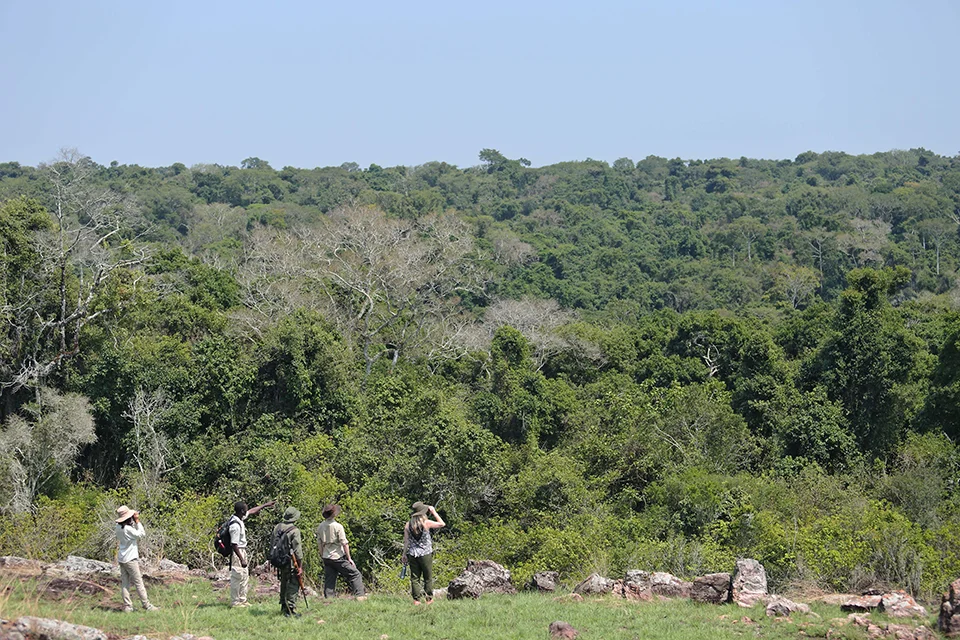
Walking safaris: Explore Katavi's wilderness on foot with an experienced guide, discovering tracks and birdlife up close.
Fly-camping: Spend a night away from camp in a lightweight mesh tent for one of the wildest, most immersive experiences on offer.
Hippo pool sundowners: Watch hundreds of hippos pack into shrinking dry-season pools, engaging in fierce territorial battles at dusk.
Riverside wildlife watching: Observe crocodiles crowding into sandbank caves and marabou storks picking over carcasses along the Katuma River.
Birdwatching: Habitats range from open savannah to miombo woodland, riverine forest, and papyrus wetlands, supporting a wide range of species.
What wildlife can I see in Katavi National Park?
Elephants and buffalo: Katavi holds some of Tanzania's largest elephant herds and buffalo congregations, numbering in the thousands.
Lions and other predators: Sizeable lion prides prey on buffalo herds, while leopards, cheetahs, wild dogs and hyenas patrol the plains.
Hippos and crocodiles: Dry-season pools hold hundreds of hippos packed together, while crocodiles shelter in riverbank mud caves.
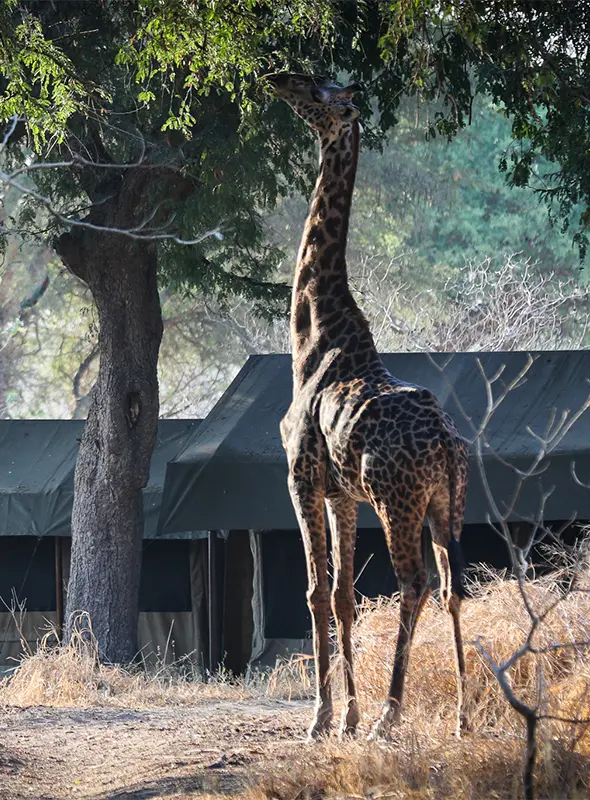
Plains wildlife: Zebra, topi, impala, hartebeest, giraffe and Defassa waterbuck gather in numbers across Katavi's open floodplains. Eland gather in sizeable herds in parts of the park, while roan and sable antelope are regularly seen near water.
Prolific birdlife: about 400 species can be found, including the rarely seen shoebill in the park's deep, remote papyrus marshes, racquet-tailed roller, Stierling's woodpecker, African skimmer, broad-tailed paradise whydah and rufous-bellied heron.
Where to stay in Katavi
Katavi has one of Africa's lowest lodge densities among major safari destinations, and that scarcity is central to its appeal. Most camps close during parts of the rainy season, particularly January to March, when roads become impassable, and wildlife disperses widely. Flights operate only a few days each week, even at peak season, making Katavi logistically complex to plan without expert help.
Chada Katavi sits deep within the Chada Plain, renowned for exceptional wildlife density near the Katuma River. Its six en-suite tents rest on elevated wooden platforms beneath acacia and tamarind trees, overlooking the open plain. Hot bucket showers give it an authentic explorer character rather than polished luxury. Fly-camping trips push the immersion further, placing guests overnight in mesh tents under open skies, well away from camp.
Katavi Wildlife Camp offers a simpler, understated tented experience. It is one of only a handful of permanent camps here, with consistently good sightings year-round. Its intimate scale suits travellers who prize time in the wilderness over elaborate infrastructure.
Mbali Mbali Katavi, formerly Katuma Bush Lodge, sits centrally within the park. It is the only camp in Katavi with a swimming pool, a welcome refuge after hot game drives. Its tented rooms offer greater comfort while staying true to the destination's unpolished character.
Trusted by thousands of ecstatic travellers
✔️ 5-Star Trustpilot Rating ✔️ Condé Nast Travel Specialist Award Winner
✔️ Accredited by SATSA ✔️ 5,000+ Exceptional Safaris Since 1991
Why choose Africa Geographic to plan your safari?

We booked our honeymoon safari with Africa Geographic, and it turned out to be one of the most memorable trips of our lives ... the experience felt personal and thoughtfully designed ... he recommended Tanzania, and the itinerary was beautifully balanced and perfectly aligned with what we wanted ...
I cannot imagine a better way to customize a trip to Africa than with Africa Geographic ... Our trip to Tanzania and Kenya exceeded all of our expectations. The transfers all went smoothly, and our guides were exceptional. I wish I could give 10 stars.
Been traveling with Africa Geographic for some time now, and it has always been a fantastic experience. T
This time was ... Tanzania. The camps were beautifully positioned, the management impeccable, and the food delicious! Africa Geographic suggested the destination and planned it extremely well.
Wish you were here?
Frequently asked questions
Katavi has distinct seasons, which determine the quality of wildlife sightings. June to October, the dry season, offers excellent wildlife sightings in a parched landscape, while November to May, the rainy season, offers green landscapes and baby animals.
Dry season - best wildlife viewing: June to October, when the bushveld thins out, and water is scarce, leading to excellent wildlife encounters near water sources. August to October is the absolute peak season for wildlife sightings, although September and October can be very hot.
Rainy/green season: November to May, when rains bring green landscapes, migrating birds and baby animals. This is a time of plenty, with rivers flooding over their banks and floodplains filling up. Expect hot weather and high humidity, especially during the peak rainfall months of January to March. Many parts of the park become inaccessible during this time, and camps often close until the landscape dries out.
Getting to Katavi is part of what keeps it so wild. It’s remote, logistically demanding, and almost always fly-in. We do not advise attempting to drive to Katavi. There are flights in small planes (Cessna/Caravan type) 2-3 times per week from Dar es Salaam and Arusha, which is why the length of your stay in Katavi has to be managed around available flights. The flights last 4-6 hours and include several stops en route. It is important to use our safari experts to manage your Katavi safari logistics to prevent costly mistakes.
Please get in touch with your local GP or travel clinic well before your trip to obtain professional medical advice and discuss up-to-date vaccination requirements for the areas you will visit.
Yellow fever
Tanzania is not a yellow fever country, so a yellow fever vaccine is not mandatory. However, if you are entering Tanzania from a yellow fever country (such as Rwanda), you will need to present your vaccination certificate upon entry.
Malaria
Malaria is prevalent in many parts of Tanzania, and we advise you to consult your GP before you depart about taking prophylaxis. It’s also essential to cover up in the evenings when the malaria-carrying Anopheles mosquito usually feeds. The malaria incubation period is 1-3 weeks, so if you experience any flu-like symptoms, headaches, aching joints and back or nausea and diarrhoea, it is recommended that you get tested at the earliest opportunity and let the medical people know you’ve recently travelled to Africa.
A minimum of three nights is generally recommended to make the most of Katavi's remote setting and limited flight schedules, though longer stays allow more time for the unpredictability of dry-season wildlife sightings. Given the cost and effort of reaching Katavi, many travellers combine it with a visit to nearby Mahale Mountains National Park.
Katavi's defining feature is its extreme remoteness and correspondingly low visitor numbers. Where parks such as the Serengeti receive well over 100,000 visitors annually, Katavi sees only a few hundred, and its camps operate on a genuinely intimate scale. This scarcity of visitors, combined with dry-season wildlife concentrations around its rivers, creates encounters with an unusually wild and untamed character.
Katavi is renowned for exceptionally large hippo pods and buffalo herds, alongside strong populations of elephant, lion, painted wolves, cheetah, leopard and spotted hyena. During the dry season, hundreds of hippos crowd into shrinking waterholes while crocodiles retreat into riverbank caves, creating some of the most dramatic dry-season wildlife concentrations found anywhere in Africa.
Yes. Katavi is particularly known for dramatic lion-buffalo interactions during the dry season, when enormous buffalo herds gather at dwindling water sources and are targeted by resident lion prides. Cheetah, leopard and spotted hyena are also present, focusing on smaller prey across the park's plains and woodland fringes.
Yes. Guided walking safaris are offered at several camps, allowing close engagement with tracks, birdlife and Katavi's wider ecosystem alongside experienced guides. Fly-camping, where guests spend a night away from the main camp in lightweight mesh tents, is also available for those seeking an even more immersive wilderness experience.
Chada Katavi is set within the wildlife-rich Chada Plain and offers a rustic, bush-deluxe experience with fly-camping options. Katavi Wildlife Camp provides a simpler, understated tented stay with consistent year-round sightings. Mbali Mbali Katavi, centrally located, is the only camp in the park with a swimming pool, offering slightly more comfort without losing Katavi's unpolished character.
Yes. Most camps close during parts of the rainy season, particularly the peak rains between January and March, when roads become unusable and wildlife disperses away from the rivers. The exact closure period varies by camp and by rainfall each year.
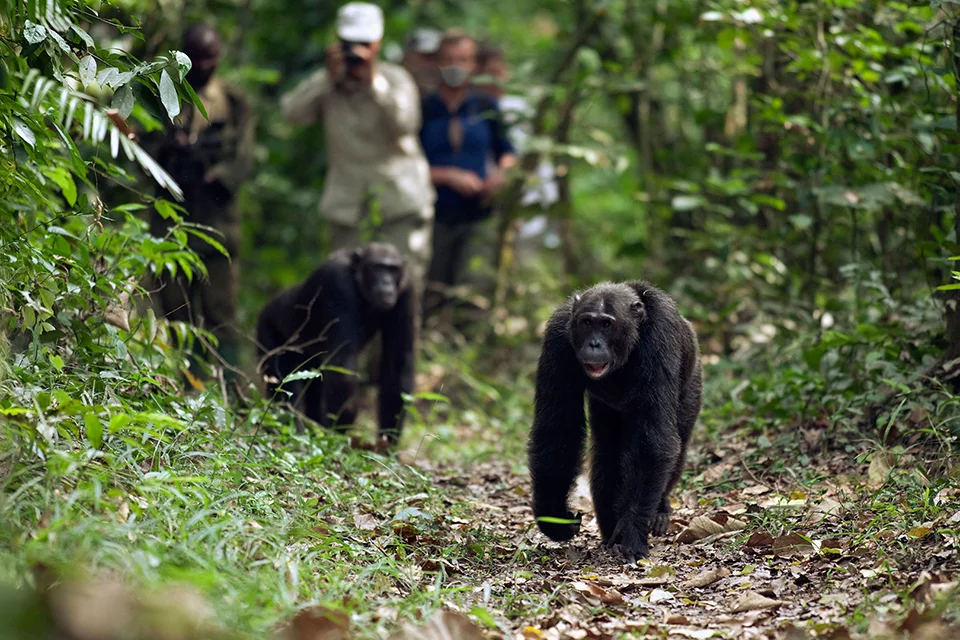
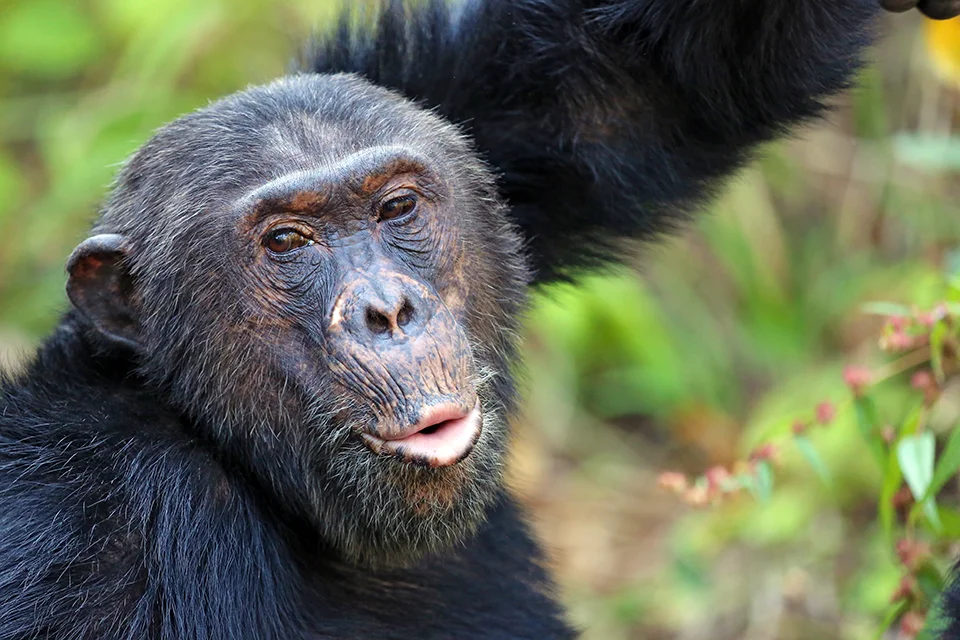
Yes. Katavi's location in western Tanzania makes it a natural pairing with Mahale Mountains National Park, known for chimpanzee trekking on the shores of Lake Tanganyika. Combining the two makes the most of the logistical effort required to reach this remote part of the country.
Katavi's remoteness, limited flight schedules and higher relative cost keep visitor numbers low compared with Tanzania's northern parks. This scarcity is precisely what many experienced safari travellers seek out, offering wilderness and wildlife encounters largely undisturbed by tourism.
Katavi safaris typically cost from US$700 per person, per night, depending on the accommodation comfort level, time of year and activities. This price usually includes accommodation, all meals, game drives, experienced guides, airport transfers, and 24/7 support from our team.
Click here to schedule a no-obligation call with one of our Safari Experts or fill in our 2-minute form with your questions. Our team of experts are here to help! Whether you’re curious about the best time to travel, want to hear first-hand about an experience or need help planning your safari.
Explore more African destinations
Start planning your dream safari
Our travel experts will craft a no-obligation itinerary just for you. We have crafted over 5,000 safaris since 1991. Your personal details are protected; we only use this information to contact you.
Why book your safari with us?

Deep Experience & Knowledge
Handcrafted experiential safaris since 1991.
Travel in Africa is about knowing when and where to go, and with whom. A few weeks too early/late or a few kilometres off course, and you could miss the greatest show on Earth. And wouldn’t that be a pity?

Trust & Safety

Make A Difference
We donate a portion of the revenue from every safari sold to carefully selected conservation projects that make a significant difference at ground level.
YOUR safari choice does make a difference - thank you!