

Tailor-made safaris. Since 1991



Rubondo Island: Lake Victoria's Wild Rainforest Isle
Rubondo Island National Park at a glance:
Location: Southwestern Lake Victoria, ~150km west of Mwanza, Tanzania | Access: Scheduled flight from Serengeti airstrips (~75 minutes) to Rubondo's grass airstrip |
Size: 456.8 km² across 10 islands (main island 28km long, 3–10km wide) | Best time to visit: June–September (dry season, chimpanzee tracking); Jan–Feb (birdwatching) |
Habitat: ~80% equatorial rainforest, with grassland, acacia woodland and papyrus swamp | Camp closure: Rubondo Island Camp closes annually in April and May (long rains) |
Accommodation: Rubondo Island Camp - the only camp within the national park | Circuit: Part of Tanzania's Western Circuit |
Why visit Rubondo Island National Park?
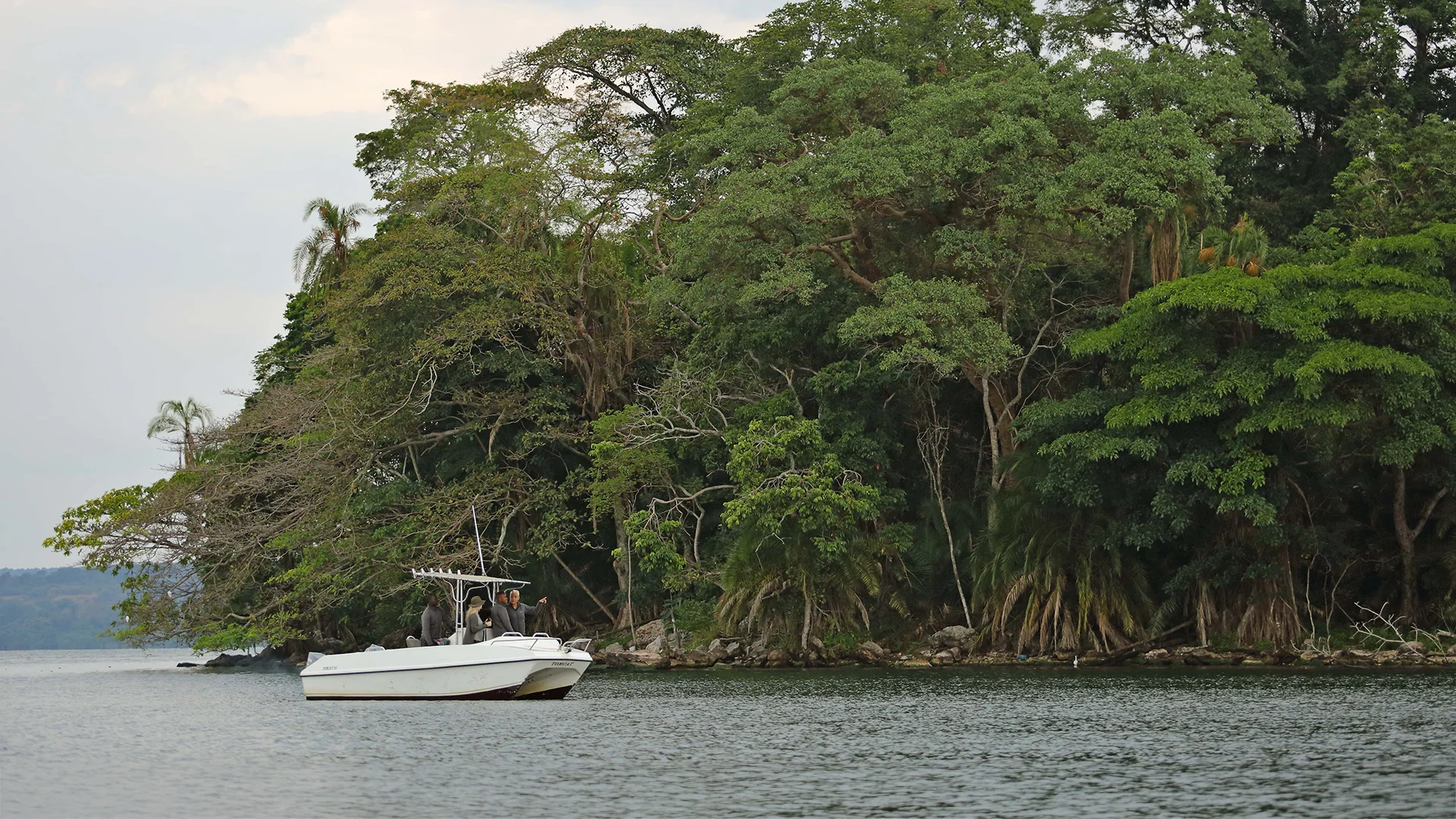
Rubondo Island rises from the southwestern waters of Lake Victoria as one of Africa's most unexpected wildlife destinations. Cloaked in equatorial rainforest across roughly 80% of its surface, this remote island national park feels closer to Central Africa than to the open plains most travellers associate with Tanzania. Chimpanzees move through the high canopy, forest elephants leave tracks along shaded forest paths, and giraffe step into sunlit clearings in the island's south, a striking mix owing as much to deliberate conservation decisions made decades ago as to nature itself.
What makes Rubondo genuinely rare is its exclusivity: a single camp operates within the park, and beyond a handful of rangers and researchers, visitors effectively have the entire island to themselves. Days unfold between quiet forest walks beneath towering canopy, boat cruises along undisturbed shoreline, and the chance to track chimpanzees on foot through dense undergrowth. Evenings often bring hippos grazing on camp lawns and fish eagles calling out across calm water.
Africa's largest island national park rewards travellers seeking something beyond the conventional safari circuit: an intimate, atmospheric wilderness where forest and freshwater lake meet in a setting found nowhere else on the continent.
5 Reasons We Love Rubondo Island
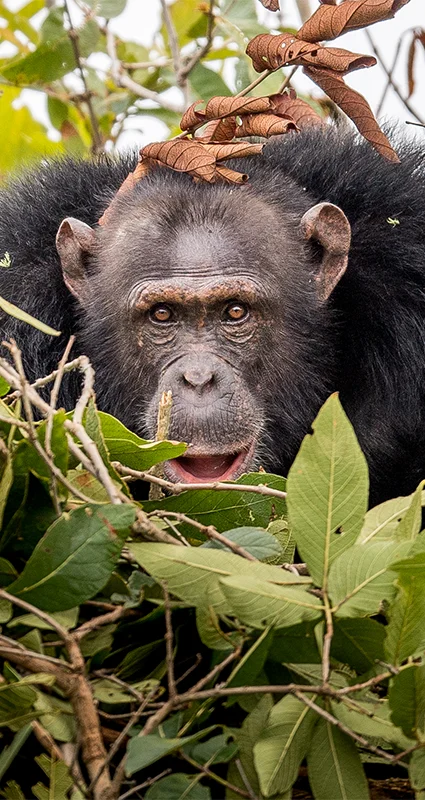
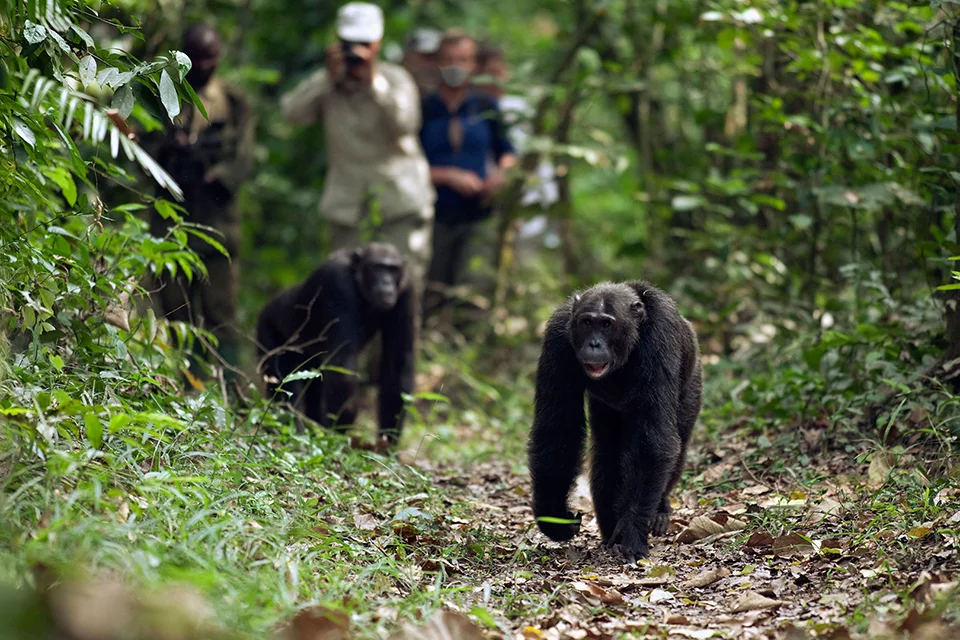
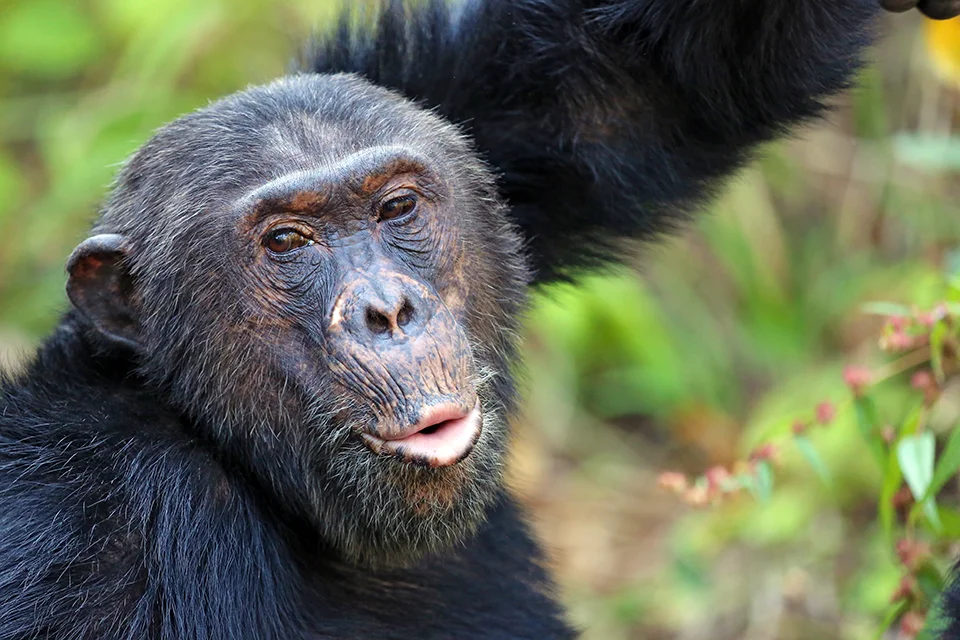
Chimpanzee tracking: Follow expert guides through dense rainforest for an intimate encounter with chimpanzees found nowhere else on Lake Victoria.
Total exclusivity: Explore Africa's largest island national park almost alone, sharing this wilderness with only a few rangers and researchers.
Lake cruises: Glide along undisturbed shoreline spotting hippo, elephant, crocodile, otter and vivid kingfishers from the calm water's edge.
Untouched rainforest: Walk beneath dense canopy covering 80% of the island, where chimpanzee, elephant and giraffe share one compact wilderness.
Bush & Beach combo because of convenient logistics for getting to and from your Serengeti safari via direct flights between the respective airstrips.
All You Need to Know About Rubondo Island
About Rubondo Island National Park
Rubondo Island lies in the southwestern corner of Lake Victoria, roughly 150 kilometres west of the city of Mwanza, and forms Africa's largest island national park. The main island stretches 28 kilometres north to south and spans 3 to 10 kilometres wide, with ten smaller islets protected alongside it. Equatorial rainforest covers around 80% of the terrain, interspersed with open grassland and, in the south, patches of acacia woodland. Rocky shores and sandy beaches line the eastern side of the island, while dense papyrus swamp and date palms edge the western shoreline. Gazetted as a game reserve in 1965 and elevated to national park status in 1977, Rubondo has remained uninhabited by people ever since, allowing its forest, wildlife and shoreline to flourish largely undisturbed by human presence over the decades.
Things to Do on Rubondo Island
Chimpanzee tracking: Follow guides through dense undergrowth to encounter Rubondo's habituated chimpanzee troops in their forest home.
Chimpanzee habituation experience: Join researchers tracking and habituating chimpanzees, learning first-hand how the process unfolds.
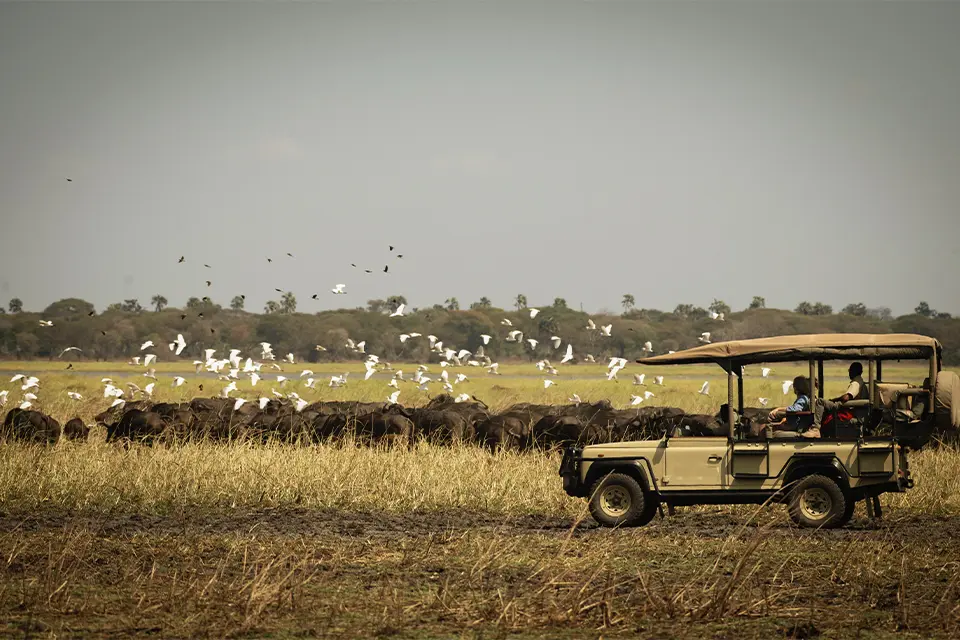
Game drives: Explore hilltops and open southern plains by open vehicle, surrounded by the forest's calls and rustling undergrowth.
Forest walks: Discover mini ecosystems on foot with a knowledgeable guide, uncovering details easily missed from a vehicle.
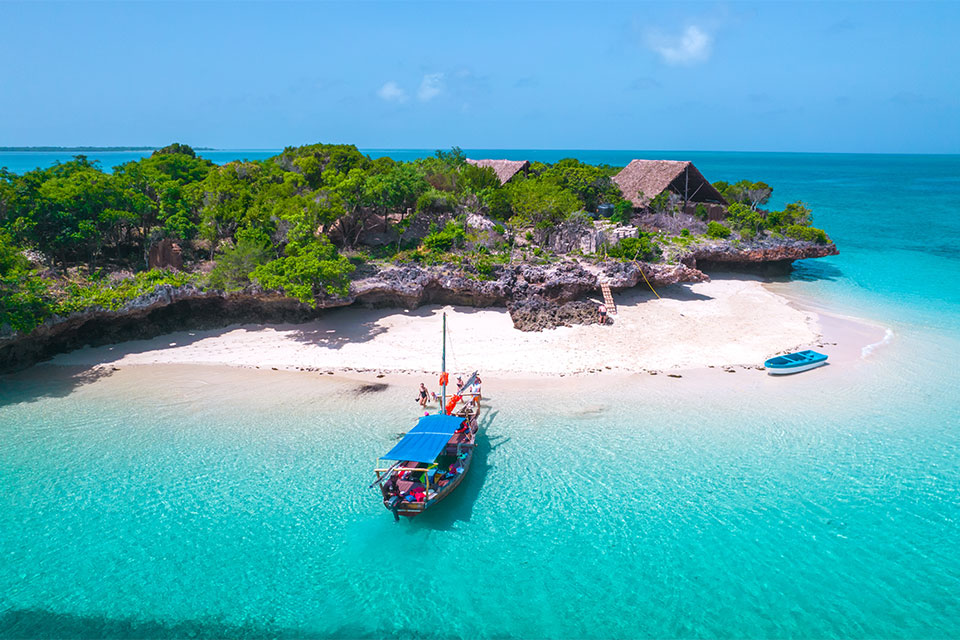
Boating safaris: Cruise Lake Victoria's shoreline spotting hippo, elephant, crocodile, otter and monitor lizard from the water.
What Wildlife Can I See on Rubondo Island?
Chimpanzees: Two troops totalling more than 60 individuals live within the forest, the descendants of animals released onto the island decades ago.
Forest elephants: Push through dense undergrowth on tusks evolved smaller than mainland relatives, less likely to snag on vegetation.
Giraffe: Herds graze the open plains in the island's south, stepping from savannah habitat into sunlight beyond the tree line.
Sitatunga: This shy, swamp-dwelling antelope favours the water's edge and shallows, distinct from the more familiar bushbuck.
Hippos and crocodiles: Hippos graze camp lawns after dark, while neighbouring islets host resting crocodile populations sunning on rocks.
Vervet and colobus monkeys: Vervet monkeys and black-and-white colobus chatter and chase through the upper canopy throughout the day.
Where to Stay on Rubondo Island
Rubondo Island Camp is the only accommodation within the national park, making it one of Tanzania's most exclusive safari settings. Besides a handful of park wardens and researchers, guests staying here effectively have the entire island to themselves, a rare privilege by any East African safari standard.
The camp sits in a sheltered cove on the island's eastern shore, where a sandy beach opens onto a grass lawn before giving way to towering equatorial rainforest. Eight thatch-roofed cottages line the treeline, each with a sheltered private veranda facing out across the water. Hippos are known to graze the lawns outside cottages after dark, and nights at camp combine the gentle lapping of Lake Victoria against the shore with the settling sounds of the forest closing in behind.
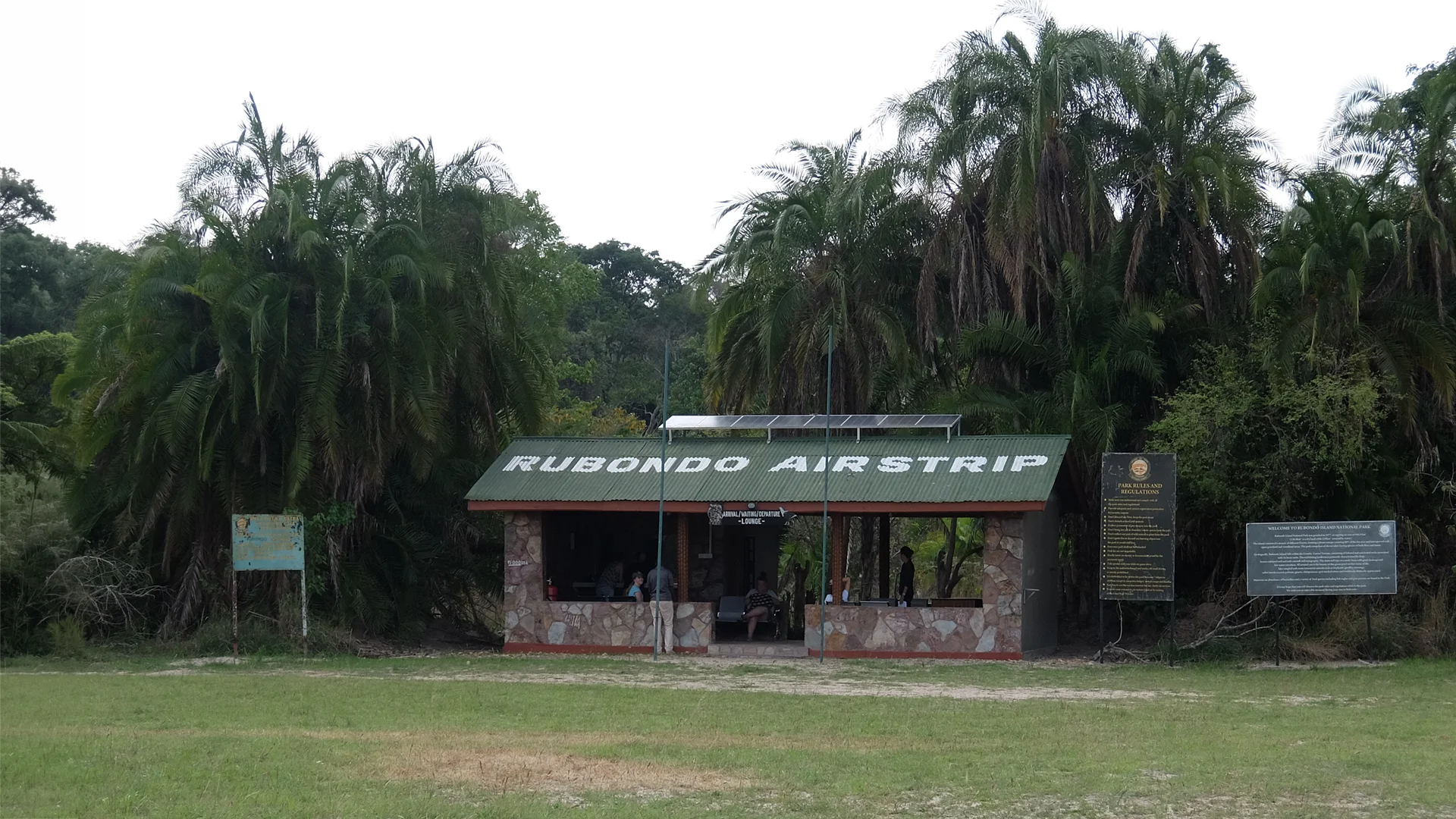
From Rubondo Island Camp, guests can join guided chimpanzee tracking through dense forest undergrowth, take open-vehicle game drives across hilltops and open southern plains, walk forested trails with an expert guide, or head onto Lake Victoria for boating excursions. The island's grass airstrip receives scheduled flights connecting to Serengeti airstrips, a journey of around 75 minutes delivering guests from dry, dusty savannah into lush rainforest within a single flight, a contrast so complete it can be difficult to believe you remain in the same country.
Rubondo Island Camp closes each year during April and May, when the long rains make conditions across the island impassable.
Wildlife Reintroduction: An Island Rebuilt
Rubondo's forests and plains today are not entirely the product of nature alone. Gazetted first as a game reserve in 1965, the island was established as a sanctuary for wildlife at a time when several species across the region faced mounting pressure from habitat loss. Between 1966 and 1969, conservationist Bernhard Grzimek and the Frankfurt Zoological Society oversaw the release of animals onto the then-uninhabited island, transforming it into a refuge unlike anywhere else in Tanzania.
Seven species were introduced during this period: African bush elephant, giraffe, suni, mantled guereza colobus, and grey parrots confiscated from illegal trade, alongside roan antelope and black rhinoceros, both of which have since become extinct on the island. Elephants, giraffe and colobus monkeys have thrived, becoming defining sights of a Rubondo safari today.
The most remarkable introduction, however, involved chimpanzees, a species with no natural history on the island. Over four cohorts between 1966 and 1969, 17 wild-born chimpanzees arrived from European zoos and circuses, having spent anywhere from three-and-a-half months to nine years in captivity before their release, with no rehabilitation or pre-release training. Genetic research into their descendants has since revealed a striking detail: their ancestry traces to both the West African chimpanzee subspecies (Pan troglodytes verus) and the Central African subspecies (Pan troglodytes troglodytes), with hybrids between the two also present among them. This matters because Tanzania's only native chimpanzees in Gombe Stream and Mahale Mountains National Parks belong to the eastern subspecies, Pan troglodytes schweinfurthii. The Rubondo population is therefore not simply non-native to the island; it belongs to subspecies that have never naturally occurred anywhere in Tanzania, and includes animals of mixed subspecific ancestry.
Remarkably, within a year of release the chimpanzees had learned to forage for wild food and build nests, reverting to fully wild behaviour. From an original 16 founders, the population has grown to roughly 40 individuals according to nest-count estimates, with more recent troop counts describing two groups totalling over 60 chimpanzees tracked through the forest by guides and researchers. It stands as one of the more unusual chapters in African conservation history: a population thriving in an environment their ancestors never inhabited, now central to Rubondo's identity as a safari destination.
Trusted by thousands of ecstatic travellers
✔️ 5-Star Trustpilot Rating ✔️ Condé Nast Travel Specialist Award Winner
✔️ Accredited by SATSA ✔️ 5,000+ Exceptional Safaris Since 1991
Why choose Africa Geographic to plan your safari?

"I recently returned from a safari in Tanzania ,I am an 65 year female traveling solo and it was an unforgettable experience....who took the time to understand my needs and expectations, then tailor-made the entire trip accordingly. Everything ran seamlessly...The people I met were wonderful, the landscapes absolutely exquisite, and...I’ve already booked another trip..."
"Beautifully organized tanzania trip! Hats of to...for seamless integration of the tour while taking care of the minutest of the details. Our guide selected deserves special mention here!...was well experienced in his line of work, knowledgable and thoroughly ethical...I would not hesitate to recomment Africa Geographic to any one!..."
"...Africa Geographic planned our safari to Tanzania. His on the ground knowledge of Tanzania, professionalism, and responsiveness throughout the process was top notch. The trip went seamlessly. Our guide’s knowledge was excellent. We saw so much wildlife...We also appreciate Africa Geographics involvement in conservation efforts..."
Wish you were here?
Frequently asked questions
Rubondo Island has its own grass airstrip, reached by scheduled flights connecting from Serengeti airstrips. The flight takes around 75 minutes, offering a striking transition from open savannah to dense equatorial rainforest within a single journey.
The dry season from June to September offers the best wildlife viewing and chimpanzee tracking conditions, with dry trails and fruiting trees that keep chimpanzees feeding in single locations for longer. January and February suit birdwatching, with clear mornings ideal for time on the water.
No. Rubondo Island Camp closes annually during April and May, when long rains make conditions across the island impassable. It reopens once the rains subside, heading into the dry season.
Rubondo is home to chimpanzees, elephants, giraffe, sitatunga, hippo, vervet and colobus monkeys, spotted-necked otters, crocodiles and over 400 recorded bird species, alongside prolific Nile perch and tilapia in the surrounding lake.
No. Chimpanzees were introduced to Rubondo between 1966 and 1969, arriving from European zoos and circuses. Genetic research shows their ancestry traces to West and Central African subspecies, distinct from Tanzania's native eastern chimpanzee subspecies.
The population has grown from an original 16 founder individuals to roughly 40 chimpanzees by nest-count estimates, with more recent observations describing two troops totalling over 60 individuals tracked through the forest by expert guides.
Yes. Guided chimpanzee tracking through dense forest undergrowth is one of Rubondo's signature activities, along with a chimpanzee habituation experience that lets guests join researchers observing and habituating the island's troops.
The national park covers 456.8 square kilometres across ten islands. The main island measures 28 kilometres from north to south and between 3 and 10 kilometres wide, making it Africa's largest island national park.
No. The island has been uninhabited since the late 1960s, when around 400 fisherfolk of the Zinza tribe were resettled onto neighbouring islands and the mainland, allowing the forest and wildlife to flourish undisturbed.
Guests can join chimpanzee tracking, open-vehicle game drives, guided forest walks, boating safaris on Lake Victoria and catch-and-release fishing for tilapia and Nile perch, all accessed exclusively through Rubondo Island Camp.
Lake Victoria's waters around Rubondo hold healthy populations of tilapia and Nile perch, some weighing well over 100 kilograms. Fishing is conducted on a catch-and-release basis from boats or the shoreline, suited to all experience levels.
Approximately 80% of Rubondo Island is covered in equatorial rainforest, with the remainder made up of open grassland, patches of acacia woodland in the south, and papyrus swamp lining the western shoreline.
Rubondo Island sits in the southwestern corner of Lake Victoria in Tanzania, roughly 150 kilometres west of the city of Mwanza, forming part of the country's Western Circuit.
Our safaris typically cost from US$700 per person, per night, depending on the accommodation comfort level, time of year and activities. This price usually includes accommodation, all meals, game drives, experienced guides, airport transfers, and 24/7 support from our team.
Click here to schedule a no-obligation call with one of our Safari Experts or fill in our 2-minute form with your questions. Our team of experts are here to help! Whether you’re curious about the best time to travel, want to hear first-hand about an experience or need help planning your safari.
Explore more African destinations
Start planning your dream safari
Our travel experts will craft a no-obligation itinerary just for you. We have crafted over 5,000 safaris since 1991. Your personal details are protected; we only use this information to contact you.
Why book your safari with us?

Deep Experience & Knowledge
Handcrafted experiential safaris since 1991.
Travel in Africa is about knowing when and where to go, and with whom. A few weeks too early/late or a few kilometres off course, and you could miss the greatest show on Earth. And wouldn’t that be a pity?

Trust & Safety

Make A Difference
We donate a portion of the revenue from every safari sold to carefully selected conservation projects that make a significant difference at ground level.
YOUR safari choice does make a difference - thank you!