

Tailor-made safaris. Since 1991



Lake Eyasi: A Rift Valley Cultural Frontier
Lake Eyasi at a glance:
Location: Karatu District, Arusha Region, northern Tanzania | Access: ~75 km from Ngorongoro; ~100 km from Serengeti, via dirt road |
Known for: Hadza hunter-gatherers and Datoga silversmiths | Best time to visit: June–October (dry season) |
Lake type: Seasonal, shallow endorheic salt lake | Minimum recommended stay: 2 nights |
Nearby reserves: Ngorongoro, Serengeti, Lake Manyara | Main activities: Hadza hunts, Datoga visits, birding, hiking |
Why Visit Lake Eyasi?
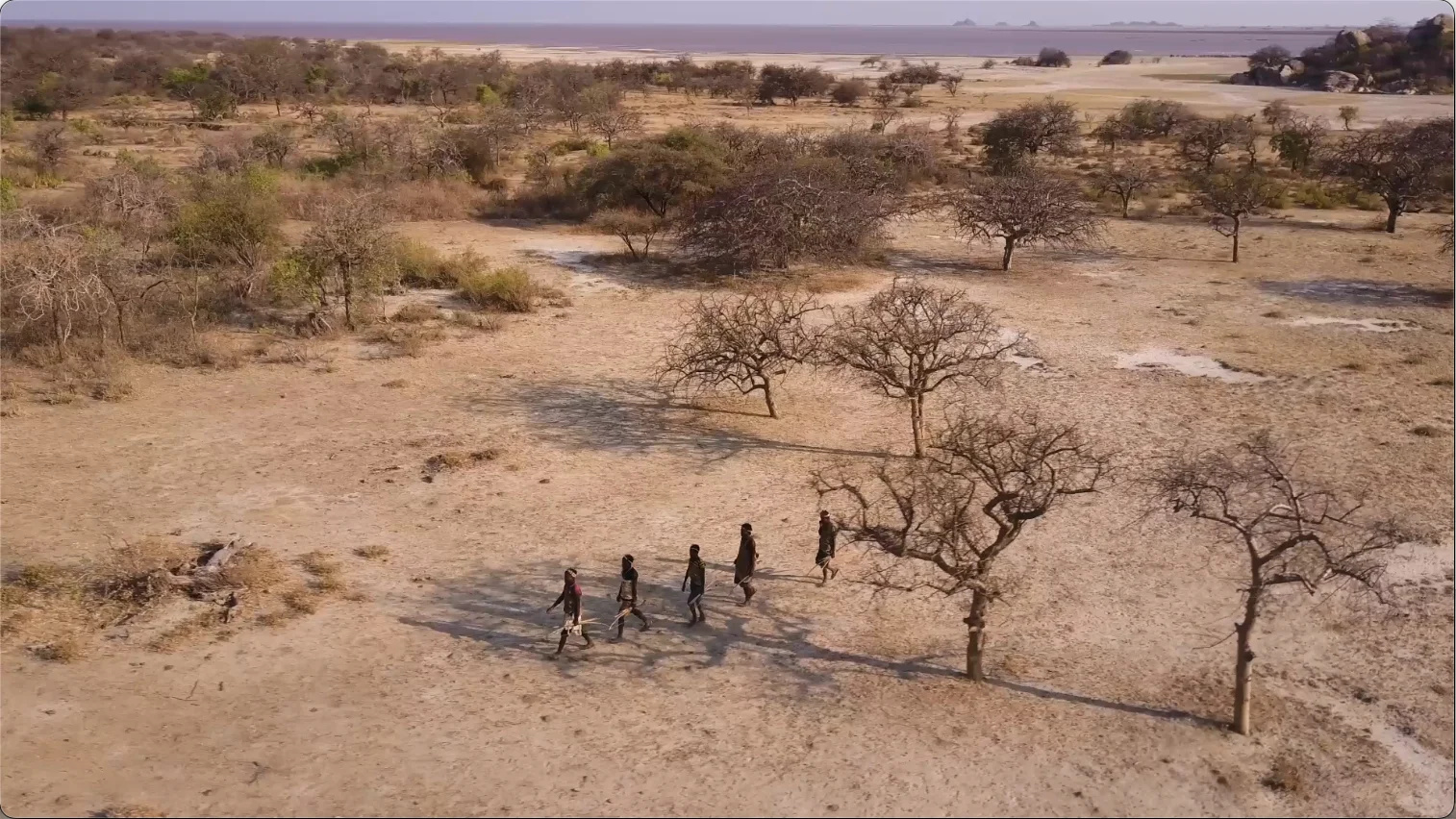
Lake Eyasi offers something few Tanzanian destinations can: genuine remoteness paired with deep cultural richness. Set at the base of a dramatic Rift Valley wall, this shimmering salt lake sees far fewer visitors than nearby Ngorongoro or the Serengeti, keeping an unhurried, authentic feel. The area is best known as home to the Hadza people, one of the last true hunter-gatherer peoples in Africa, who have lived on these shores for tens of thousands of years, adapting to their world rather than reshaping it. Visitors can walk quietly with Hadza men on an early morning hunt, learn how a bow of giraffe tendon and desert rose poison is made, or simply listen to Hadzane, their rare click language, once linked to Khoisan tongues but now seen as a true isolate, unlike any other tongue spoken on Earth today. Nearby, the Datoga people carry on age-old silversmithing skills, forging tools and rings by hand. Baobab trees, rock kopjes, and old rock art add further texture, while the flooded lake draws flamingos and pelicans to its shallow waters. This is not a typical wildlife safari stop, but a place for travellers seeking rare, deep cultural time, best paired with days in the Serengeti or Ngorongoro area.
5 Reasons We Love Lake Eyasi
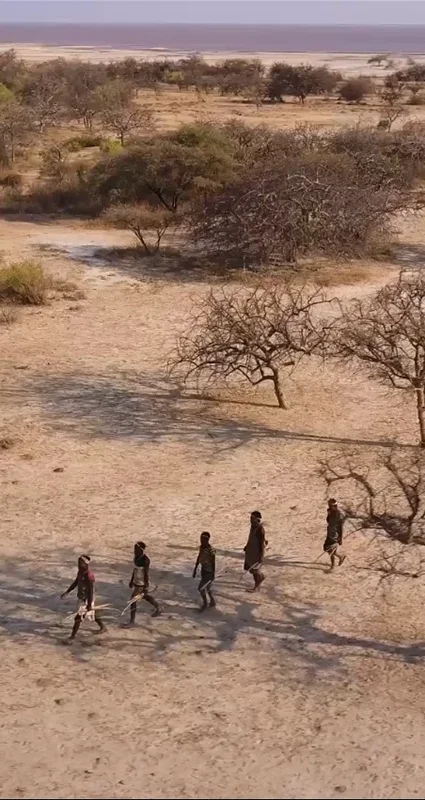
Hadza hunts: walk alongside Hadza hunters at dawn, witnessing bow-and-arrow hunting techniques unchanged for tens of thousands of years.
Datoga silversmiths: meet renowned Datoga silversmiths who forge tools and jewellery using traditional hand-metalworking methods.
Rift Valley scenery: ancient baobab trees, weathered rock kopjes, and preserved rock art punctuate this dramatic wild landscape.
Genuine remoteness: one of Africa's least-visited cultural destinations, remarkably quiet compared to nearby Ngorongoro and the Serengeti.
Birdlife on the shallows: spot flamingos, pelicans, and other waterbirds gathering on the lake during the wetter months from December to June.
All You Need to Know About Lake Eyasi
About Lake Eyasi
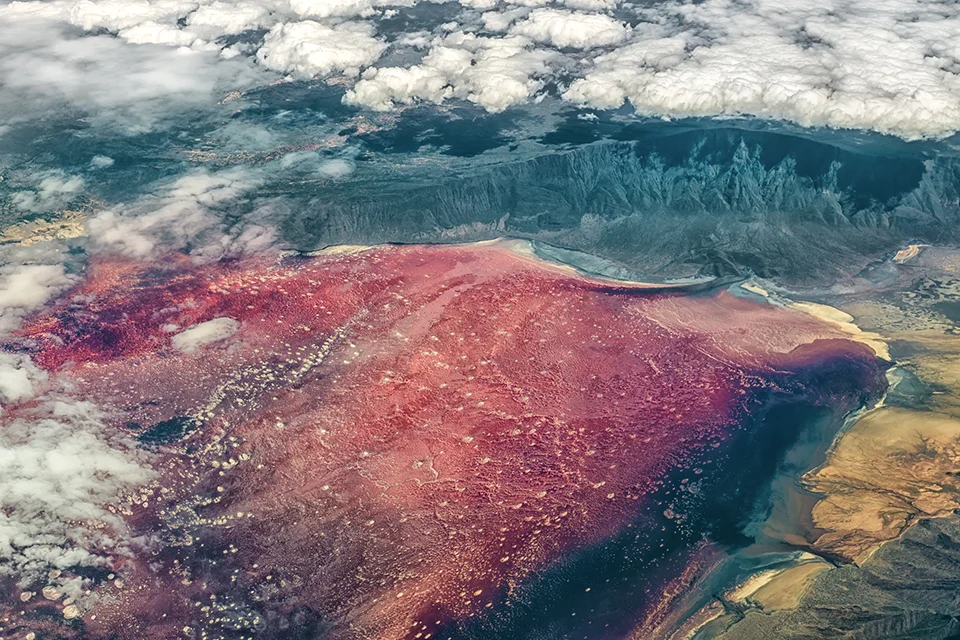
Lake Eyasi is a seasonal, shallow salt lake on the floor of the Great Rift Valley in Tanzania's Arusha Region, about 75 km southwest of Ngorongoro and 100 km south of the Serengeti. This lake has no outflow, losing water only through evaporation, and its size shifts greatly between seasons, sometimes drying up almost completely and at other times flooding its banks. Its main inflow, the Sibiti River, often runs year-round, while other feeder streams are only seasonal. The name is thought to stem from Njarasee, a blend of Swahili and German words meaning 'shimmering sea'. Along its shores live the Hadza people, among the last true hunter-gatherers on Earth, and the Datoga people, in the Yaeda Valley to the southeast, together offering a window into a way of life that predates agriculture itself. The nearby Mumba Cave has yielded Middle and Late Stone Age tools, a sign of the deep human past found here.
Things to Do at Lake Eyasi
Walk with Hadza hunters: join an early morning outing on foot, observing traditional bow-and-arrow techniques passed down for generations. The Hadza hunt is Lake Eyasi's signature experience, but also its most debated one. See "The Hadza People of Lake Eyasi" below for a candid look at how tourism affects this tradition.
Gather with Hadza women: walk alongside women as they forage for berries, tubers, and wild fruit, learning traditional bushcraft skills.
Visit a Datoga settlement: watch renowned silversmiths forge tools and ornamental jewellery using age-old hand-metalworking techniques.
Hike the lake's shoreline: trek past ancient baobab trees and weathered rock kopjes, often passing sites of preserved rock art.
Go birding on the shallows: scan for flamingos, great white pelicans, grey-headed gulls, yellow-billed storks, and pied avocets.
Explore Rift Valley scenery: take in dramatic escarpment views over a lake whose size shifts dramatically with the seasons.
Birdlife and Aquatic Life at Lake Eyasi
Flamingos and pelicans: large, unpredictable flocks of great white pelicans and lesser and great flamingoes gather on the lake's shallow waters, most reliably during the wetter months from December to June.
Sought-after bird species such as Fischer's lovebird, ashy starling, Karamoja apalis, chestnut-banded plover, Abdim's stork, D’Arnaud’s barbet and black-cheeked waxbill lurk in the surrounding hills and acacia woodlands.
Catfish and lungfish: the lake's two main fish species, caught by local fishermen mainly during wetter periods.
Occasional hippopotamus: during exceptionally wet El Niño years, floodwaters can attract hippos from the nearby Serengeti.
Where to Stay at Lake Eyasi
Accommodation at Lake Eyasi is limited, in keeping with the area's off-the-beaten-track appeal, but a small handful of properties stand out for travellers seeking to stay overnight by the lake itself.
Kisima Ngeda Camp is the area's simple, authentic option, favoured by those who want an unpretentious base close to Hadza and Datoga communities. It suits travellers who prioritise genuine cultural immersion over polish, offering a grounded, low-key camp experience within easy reach of both morning hunts and Datoga silversmithing visits.
Ziwani Lodge offers a more substantial and conventionally comfortable stay, with guests able to arrange birding excursions, shoreline hikes past baobab trees and rock kopjes, and cultural visits directly through the lodge. Its guest areas and terrace make it a good fit for travellers who want Lake Eyasi's cultural depth without sacrificing everyday comforts.
Tindiga Tented Camp offers another tented option in the area, suited to travellers who want to base themselves directly on the lakeshore for a night or two while exploring the region's cultural and birding highlights.
Many visitors instead treat Lake Eyasi as a long day trip from the Ngorongoro Karatu area, before returning in the evening. Given the distance and rough roads involved, however, an overnight stay at the lake itself allows for a more relaxed pace, an early start on the Hadza hunt, and a genuine sense of arrival in one of northern Tanzania's most remote corners.
The Hadza People of Lake Eyasi
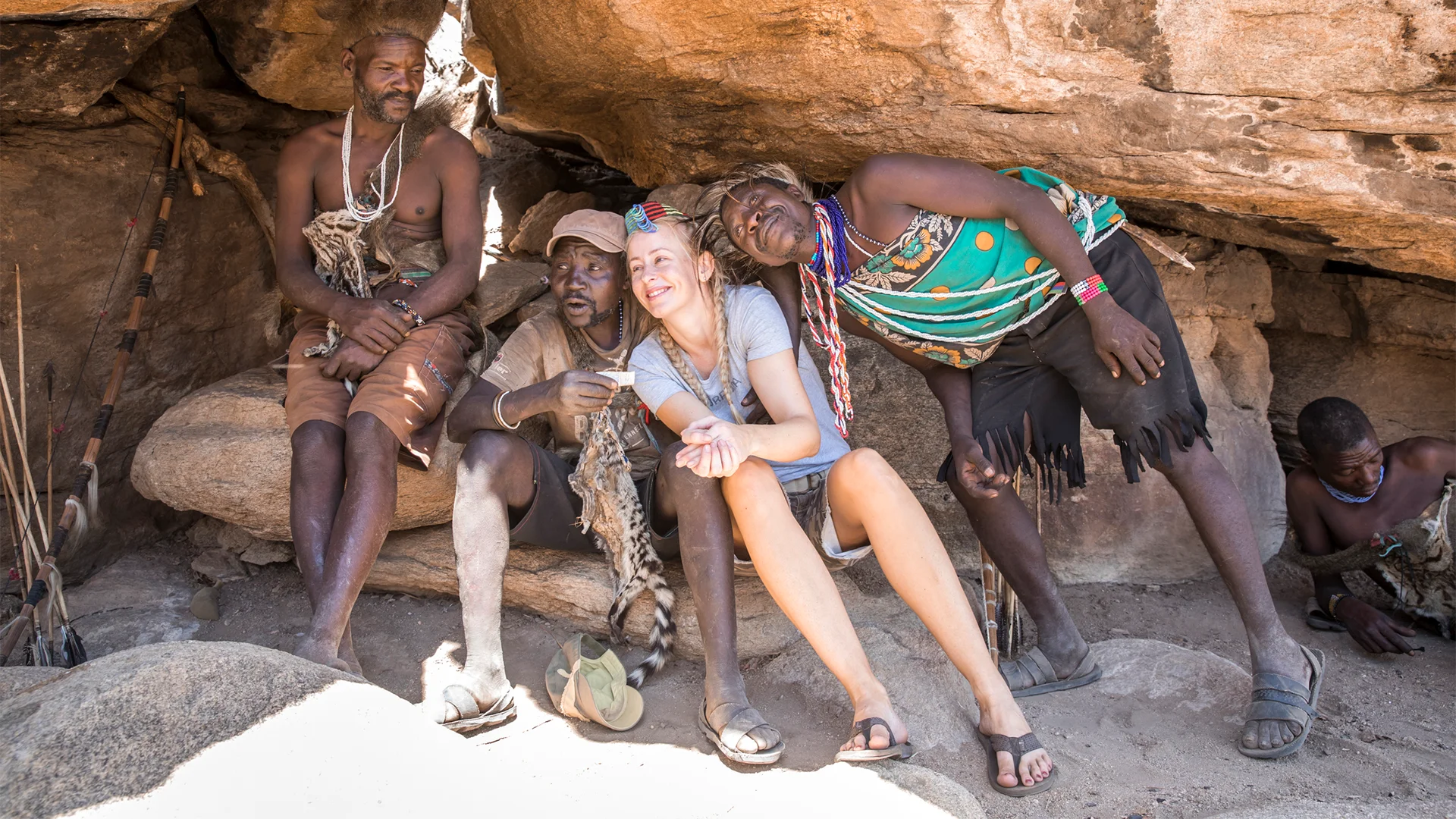
The Hadza people of Lake Eyasi are among the last true hunter-gatherers on Earth, numbering an estimated 1,300 to 1,500 individuals living in the rocky hills and arid valleys around the lake's eastern and southwestern shores. Archaeological evidence suggests hunter-gatherer communities have occupied this part of northern Tanzania for at least 50,000 years, and the Hadza are recognised by neighbouring communities as the region's original inhabitants. Genetic and linguistic studies suggest they are not closely related to any other people; their language, Hadzane, was once classified alongside Khoisan languages for its distinctive click sounds but is now considered a true isolate, unrelated to any other tongue spoken today.
Hadza society is egalitarian and communal, with no system of chiefs and strong customary obligations to share food and resources. Men hunt using bows made from giraffe tendon, with arrows tipped in poison drawn from the desert rose plant, while women forage for berries, tubers, and fruit, including baobab fruit, which forms a meaningful part of the traditional diet. Their oral history contains no record of famine, and their sense of place is undiminished by contact with the modern world.
That world has, however, closed in considerably. The Hadza's traditional range has been reduced by roughly three-quarters through encroachment by farming and pastoralist communities, and in 2011 the Tanzanian government issued the first communal land titles recognising Hadza rights to part of their territory. A proposed lease of Hadza land to a foreign safari company was withdrawn in 2007 following a campaign by indigenous rights activists, a rare and significant victory. More recently, the Hadza have partnered with conservation organisations on landscape protection projects covering tens of thousands of hectares of dryland forest shared with neighbouring Datoga communities, generating income through carbon offset markets, though these projects have also drawn criticism over limited Hadza participation in decision-making.
On the ethics of visiting
Tourism plays an ambivalent role in Hadza life. Visitor income has, in places, helped fund the conservation of surrounding landscapes, including areas bordering Ngorongoro, Serengeti, and Lake Manyara, which in turn sustain the wildlife populations the Hadza depend on. At the same time, unregulated tourism has, in the words of one operator, turned some Hadza camps into what amounts to human zoos, where visitors pay to watch staged hunts or photograph people without meaningful consent.
The dawn hunt is the single most-sold activity at Lake Eyasi, and it is also the most contested. There is a genuine, unresolved tension here worth stating plainly: paying guests can alter the very hunting behaviour they come to witness, changing how, when, and why a hunt takes place. Equally, the income such visits generate can help secure the land and surrounding conservation areas on which hunting still depends. Both arguments carry real weight, and neither fully resolves the other.
Because of this, how a Hadza visit is arranged matters as much as whether it happens at all. Africa Geographic recommends travelling with guides who prioritise consent, keep group sizes small, and treat any hunt or interaction as something the Hadza choose to share rather than perform on demand. Tourism, approached with genuine care, can support the Hadza's continued way of life; approached carelessly, it risks becoming one more pressure on a culture that has already withstood displacement, disease, and the slow erosion of its ancestral land.
Trusted by thousands of ecstatic travellers
✔️ 5-Star Trustpilot Rating ✔️ Condé Nast Travel Specialist Award Winner
✔️ Accredited by SATSA ✔️ 5,000+ Exceptional Safaris Since 1991
Why choose Africa Geographic to plan your safari?

"...was excellent at planning and keeping me informed. Our guide, tracker, camp manager, and chef were all extremely kind, generous, and knowledgeable. We saw incredible wildlife, ate delicious food, and met other friendly travelers. I highly recommend Africa Geographic for any African travel destination you would like to embark on."
"AG organized an outstanding East African experience for me, my wife, and two friends. They set us up with great guides, lovely accommodations, and most importantly, incredible natural history experiences. Seamless travel. And when we wanted to make a last minute change, they were right there to timely accommodate us. 6/5 rating!"
"...Africa Geographic planned our safari to Tanzania....The trip went seamlessly. Our guide’s knowledge was excellent. We saw so much wildlife. The accommodations were beautiful...The food was delicious. We also appreciate Africa Geographics involvement in conservation efforts. I wouldn’t hesitate to refer...Africa Geographics to others!"
Wish you were here?
Frequently asked questions
Lake Eyasi lies in the Karatu District of Tanzania's Arusha Region, on the floor of the Great Rift Valley, about 75 km southwest of the Ngorongoro Conservation Area and 100 km south of the Serengeti National Park.
No. Lake Eyasi is not a major wildlife area. Its main appeal lies in cultural encounters with the Hadza and Datoga peoples, alongside birding and Rift Valley scenery.
June to October, Tanzania's dry season, is generally recommended, offering easier road access and more predictable conditions for cultural visits.
A stay of at least two nights allows time to properly experience Hadza and Datoga interactions, and combines well with a wider Serengeti or Ngorongoro itinerary.
The Hadza are an indigenous hunter-gatherer people numbering an estimated 1,300 to 1,500, who have lived around Lake Eyasi for tens of thousands of years and are considered among the last true hunter-gatherers in Africa.
Visitors can accompany Hadza men on an early morning hunting outing on foot. Sightings and outcomes cannot be guaranteed, as the Hadza remain genuinely nomadic and self-directed.
It depends heavily on how a visit is arranged. The dawn hunt, the most-sold activity here, is also the most contested: it can be reduced to staged spectacle, or it can be a genuine, consent-based exchange that helps fund the conservation areas the Hadza rely on.
Hadzane, a click language once linked to Khoisan tongues but now classified as a linguistic isolate, unrelated to any other language spoken today.
The Datoga are pastoralists who live near Lake Eyasi's Yaeda Valley and are renowned as skilled silversmiths, producing tools and jewellery using traditional metalworking techniques.
Wildlife is sparse overall, though the lake attracts flamingos, pelicans, and other waterbirds, particularly during wetter months, along with catfish and lungfish in its waters.
Options include Kisima Ngeda Camp, Ziwani Lodge, and Tindiga Tented Camp near the lakeshore, or lodges in the Ngorongoro Karatu area for a day-trip approach.
Most visitors arrive via a dirt road branching from the main Ngorongoro Karatu route, descending roughly 40 km to the lakeshore, usually as part of a wider guided safari.
For travellers seeking authentic cultural immersion away from crowded safari routes, Lake Eyasi offers a rare and thought-provoking encounter with two of Tanzania's most distinctive indigenous communities.
Our Lake Eyasi safaris typically cost from US$600 per person, per night, depending on the accommodation comfort level, time of year and activities. This price usually includes accommodation, meals, and 24/7 support from our team, but excludes activities and transfers.
Click here to schedule a no-obligation call with one of our Safari Experts or fill in our 2-minute form with your questions. Our team of experts are here to help! Whether you’re curious about the best time to travel, want to hear first-hand about an experience or need help planning your safari.
Explore more African destinations
Start planning your dream safari
Our travel experts will craft a no-obligation itinerary just for you. We have crafted over 5,000 safaris since 1991. Your personal details are protected; we only use this information to contact you.
Why book your safari with us?

Deep Experience & Knowledge
Handcrafted experiential safaris since 1991.
Travel in Africa is about knowing when and where to go, and with whom. A few weeks too early/late or a few kilometres off course, and you could miss the greatest show on Earth. And wouldn’t that be a pity?

Trust & Safety

Make A Difference
We donate a portion of the revenue from every safari sold to carefully selected conservation projects that make a significant difference at ground level.
YOUR safari choice does make a difference - thank you!