

Tailor-made safaris. Since 1991



Tarangire National Park: Land of giants, baobabs, elephants & lions
Tarangire National Park at a glance:
Location: Manyara Region, northern Tanzania, ~100 km south of Arusha | Best time to visit: June–October (dry season) |
Size: 2,850km² (280,500 hectares), plus surrounding conservancies | Getting there: ~2 hours by road from Arusha, or 20-30 minutes by scheduled flight |
Landscape: Riverine forest, acacia woodland, seasonal swamps, baobab-studded savannah | Signature wildlife: Elephant herds up to 300 strong, tree-climbing lions, over 500 bird species |
Malaria risk: Yes – prophylaxis recommended | Ideal stay: 2–3 nights, as part of a wider northern circuit safari |
Why visit Tarangire National Park?
Tarangire National Park is where northern Tanzania's safari story turns earthier and quieter. Roughly 100km south of Arusha, this 2,850 km² park is anchored by the perennial Tarangire River, the lifeline that draws wildlife inward as the dry season tightens its grip elsewhere. Ancient baobabs punctuate rolling, golden-grassed hills, dwarfing even the elephant herds that shelter beneath them.
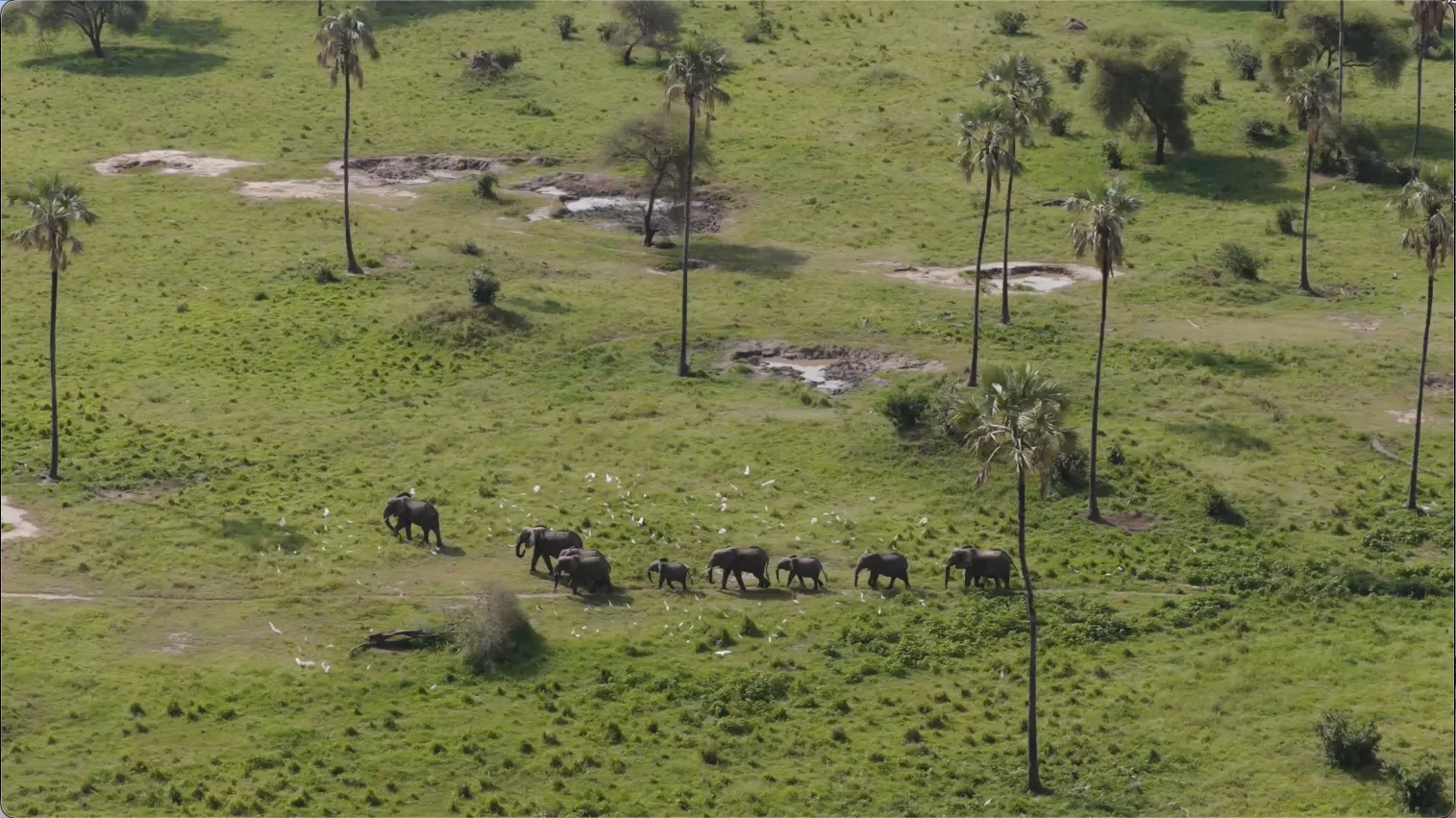
Tarangire holds some of Tanzania's largest elephant concentrations, with herds sometimes numbering 300 or more moving together toward the riverbed. Wildebeest, zebra, buffalo, giraffe and eland gather along the water in their thousands, drawing lions, leopards and hyenas into the drama. The Silale Swamp lions are famed for hunting the marshes and lounging in trees, escaping the tsetse flies below.
Beyond the crowds of the northern circuit, Tarangire remains one of Tanzania's best-kept secrets, even in peak season. Arid specialists such as gerenuk and fringe-eared oryx appear away from the wetter ground, while more than 500 recorded bird species make this one of the country's premier birding destinations. For travellers seeking authentic wilderness alongside the Serengeti and Ngorongoro, Tarangire offers something rarer: space, silence and time to watch a landscape reveal itself slowly.
5 Reasons We Love Tarangire National Park
Colossal elephant herds: Tarangire hosts some of Tanzania's densest elephant populations, congregating 300-strong along the river in dry season.
Ancient baobab landscapes: Giant baobabs dominate the horizon, storing water and sheltering wildlife across striking savannah scenery.
Tree-climbing lions: The Silale Swamp lions hunt the marshes and rest in tree boughs, likely escaping resident tsetse flies below.
Arid specialist wildlife: Gerenuk and fringe-eared oryx roam Tarangire's drier reaches, rarely seen elsewhere in Tanzania.
Uncrowded exploration: Even in peak season, Tarangire remains one of Tanzania's best-kept secrets, offering space other parks cannot match.
Our favourite Tarangire National Park safari ideas
All you need to know about Tarangire
About Tarangire National Park
Tarangire National Park lies in Tanzania's Manyara Region, roughly 100km south of Arusha, on the northern safari circuit near Lake Manyara, Ngorongoro and the Serengeti. Covering 2,850 km², it is bordered by surrounding Wildlife Management Areas and conservancies, where people and wildlife coexist.
The perennial Tarangire River runs through incised ravines in the north before feeding Lake Burungi, while the south holds vast seasonal swamps that stay green even in the dry months. Rolling hills, granitic ridges, red termite mounds and whistling-thorn woodlands surround dense stands of ancient baobabs. Vegetation here is denser than the Serengeti's, mixing acacia woodland with ribbons of riverine forest.
Tarangire forms part of a wider ecosystem stretching from Lake Manyara to the Maasai Steppe and Lake Natron.
Things to do in Tarangire National Park
Game drives along the Tarangire River: Watch elephants dig for groundwater, crocodiles lie low in pools, and lions hang out in trees.
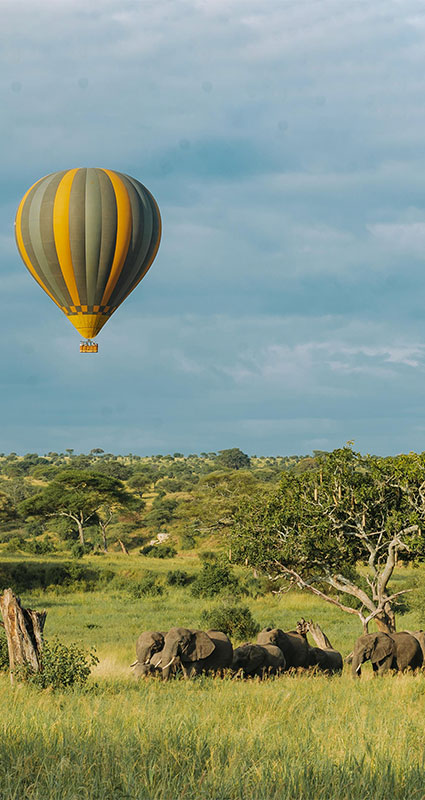
Elephant and baobab viewing: Follow herds of up to 300 as they move through baobab country, especially rewarding from June to October.
Birdwatching across varied habitats: Track yellow-collared lovebirds, kori bustards and Von der Decken's hornbills among 500-plus species.
Spotting arid specialists: Look for gerenuk browsing on hind legs and fringe-eared oryx in Tarangire's drier woodland margins.
Walking safaris: Walking in the bushveld with an experienced guide is a great way to learn about the details of nature - the tell-tale signs that animals leave when they pass by, and evidence of violent encounters between predators and prey. Be alert to the sounds and smells we miss on game drive - a thrilling experience.
Night drives in select concessions: Search the dark for serval, genet, African wild cat, and leopard, which are active once the sun goes down. Again, not available in the national park.
What wildlife can I see in Tarangire National Park?
Elephants: Tarangire holds some of Tanzania's largest herds, with congregations of up to 300 gathering near the river.
Big cats: Lions are common throughout, including the tree-climbing Silale Swamp pride; leopards, cheetahs and hyenas also occur.
Plains wildlife: Wildebeest, zebra, giraffe, buffalo, impala and eland assemble near water in large numbers during the dry season.
Arid specialists: Gerenuk and fringe-eared oryx, rarely seen elsewhere in Tanzania, favour the park's drier woodland margins.
Nocturnal species: Serval, genet and African wild cat appear on night drives available in concessions bordering the park.
Birdlife: Over 500 species recorded, including endemic ashy starlings, rufous-tailed weavers and yellow-collared lovebirds.
Where to stay in Tarangire
OUTSIDE Tarangire National Park
In the Randilen Wildlife Management Area. Permitted activities: game drives, night drives, off-road driving, bush walking, bush dinners and fly camping. Most productive game drives are inside the national park, so expect a lengthy drive each way.
Tarangire Treetops: On elevated platforms built around a huge baobab tree just north-east of the park boundary, about 45 minutes from the main gate. The lodge is on an annual elephant migration route amongst baobab-studded hills.
Olkeri Camp: An intimate tented camp on wooden platforms amongst baobab trees and overlooking two waterholes and a seasonal riverbed.
INSIDE Tarangire National Park
Permitted activities: bush walking in certain areas and game drives
Swala Camp: A tented camp overlooking a waterhole in the south-western sector, remote and well away from the busier north.
Kuro Tarangire: An intimate tented camp in the centre of the park, near the Tarangire River.
Ndovu Tented Lodge: A tented camp in the remote western part of the park, about an hour from the main game drive areas near the river.
Trusted by thousands of ecstatic travellers
✔️ 5-Star Trustpilot Rating ✔️ Condé Nast Travel Specialist Award Winner
✔️ Accredited by SATSA ✔️ 5,000+ Exceptional Safaris Since 1991
Why choose Africa Geographic to plan your safari?

"We booked our honeymoon safari with Africa Geographic, and it turned out to be one of the most memorable trips of our lives. From the very first call, the experience felt personal and thoughtfully designed...he recommended Tanzania, and the itinerary he built for us was beautifully balanced and perfectly aligned with what we wanted."
"In May this year I visited Tanzania with a very focused and targeted itinerary in mind...There were so many highlights - but the most memorable were great images of Blue-capped Cordon Blues...topped off with nesting Yellow-collared Lovebirds in Tarangire Nat Park. I am very happy with how the trip turned out and look forward to planning my next birding expedition."
"...Africa Geographic planned our safari to Tanzania. His on the ground knowledge of Tanzania, professionalism, and responsiveness throughout the process was top notch. The trip went seamlessly. Our guide’s knowledge was excellent. We saw so much wildlife. The accommodations were beautiful. The staff everywhere we stayed were professional..."
Wish you were here?
Frequently asked questions
The dry season, June to October, is best for wildlife viewing, when animals concentrate around the Tarangire River and swamps as other water sources dry up. Short rains fall in November and December, and long rains arrive in March and April, greening the landscape but dispersing wildlife more widely across the ecosystem.
Two nights is a reasonable minimum, particularly as part of a wider northern circuit itinerary. Three nights allows time for private concession activities such as walking safaris and night drives, or a stronger focus on elephants and birding.
Most visitors fly into Kilimanjaro International Airport near Arusha, then transfer by road to Tarangire in around two hours. Light aircraft charters to nearby private airstrips are also possible depending on route and camp choice.
The Serengeti delivers scale and the Great Migration; Ngorongoro Crater delivers density within a volcanic bowl. Tarangire is more spatial and elemental, defined by its elephant herds, ancient baobabs, excellent birding and a more intimate, uncrowded feel.
Walking safaris are permitted inside the national park - official guided walking safaris in designated zones. The private concessions bordering the park offer more freedom for walking safaris.
The Tarangire River is the park's principal water source and its defining geographical feature. During the dry season it becomes one of the only reliable water sources in the wider ecosystem, drawing tens of thousands of animals from miles around.
Yes. The lions of the Silale Swamps are known for both their marshy hunting techniques and their habit of resting in tree boughs, a behaviour thought to help them escape tsetse flies.
Tarangire has recorded more than 500 bird species, making it one of Tanzania's premier birding destinations. Highlights include yellow-collared lovebirds, kori bustards, Von der Decken's hornbills, and the Tanzania-endemic rufous-tailed weaver and ashy starling.
Yes. Tarangire is considered one of Tanzania's best destinations for elephants, with herds sometimes gathering 300 or more strong along the riverbed, particularly during the dry season from June to October.
Rhinos do not occur in Tarangire. Visitors prioritising black rhino sightings are better served by pairing a Tarangire safari with the Ngorongoro Crater.
Yes, Tarangire lies within a malaria-risk zone. Antimalarial medication is recommended ahead of travel, along with insect repellent and long sleeves and trousers at dawn and dusk.
Yes. Tarangire pairs naturally with Ngorongoro Crater, Serengeti National Park and Lake Manyara as part of Tanzania's northern circuit, and many travellers extend their trip with a stay on Zanzibar.
Tarangire's landscape combines riverine forest, dense acacia woodland, seasonal swamps and rolling, granitic-ridged hills, all dominated by ancient baobab trees. Its vegetation is notably denser than the Serengeti's, giving it a distinctive character on the northern circuit.
Our safaris typically cost from US$700 per person, per night, depending on the accommodation comfort level, time of year and activities. This price usually includes accommodation, all meals, game drives, experienced guides, airport transfers, and 24/7 support from our team.
Click here to schedule a no-obligation call with one of our Safari Experts or fill in our 2-minute form with your questions. Our team of experts are here to help! Whether you’re curious about the best time to travel, want to hear first-hand about an experience or need help planning your safari.
Explore more African destinations
Start planning your dream safari
Our travel experts will craft a no-obligation itinerary just for you. We have crafted over 5,000 safaris since 1991. Your personal details are protected; we only use this information to contact you.
Why book your safari with us?

Deep Experience & Knowledge
Handcrafted experiential safaris since 1991.
Travel in Africa is about knowing when and where to go, and with whom. A few weeks too early/late or a few kilometres off course, and you could miss the greatest show on Earth. And wouldn’t that be a pity?

Trust & Safety

Make A Difference
We donate a portion of the revenue from every safari sold to carefully selected conservation projects that make a significant difference at ground level.
YOUR safari choice does make a difference - thank you!