

Tailor-made safaris. Since 1991



Mahale: meet chimps on a lake shore
Mahale Mountains National Park at a glance:
Location: Eastern shore of Lake Tanganyika, western Tanzania | Access: Light aircraft to park airstrip, then boat transfer on Lake Tanganyika |
Size: 1,650 km² (165,000 hectares) | Best time to visit: June to October (dry season) |
Highest point: Mount Nkungwe, over 2,400m | Minimum recommended stay: 4 nights, given remote access |
Key wildlife: Approx. 1,000 wild chimpanzees | Access note: No roads within the park; all exploration is on foot |
Why visit Mahale Mountains National Park?
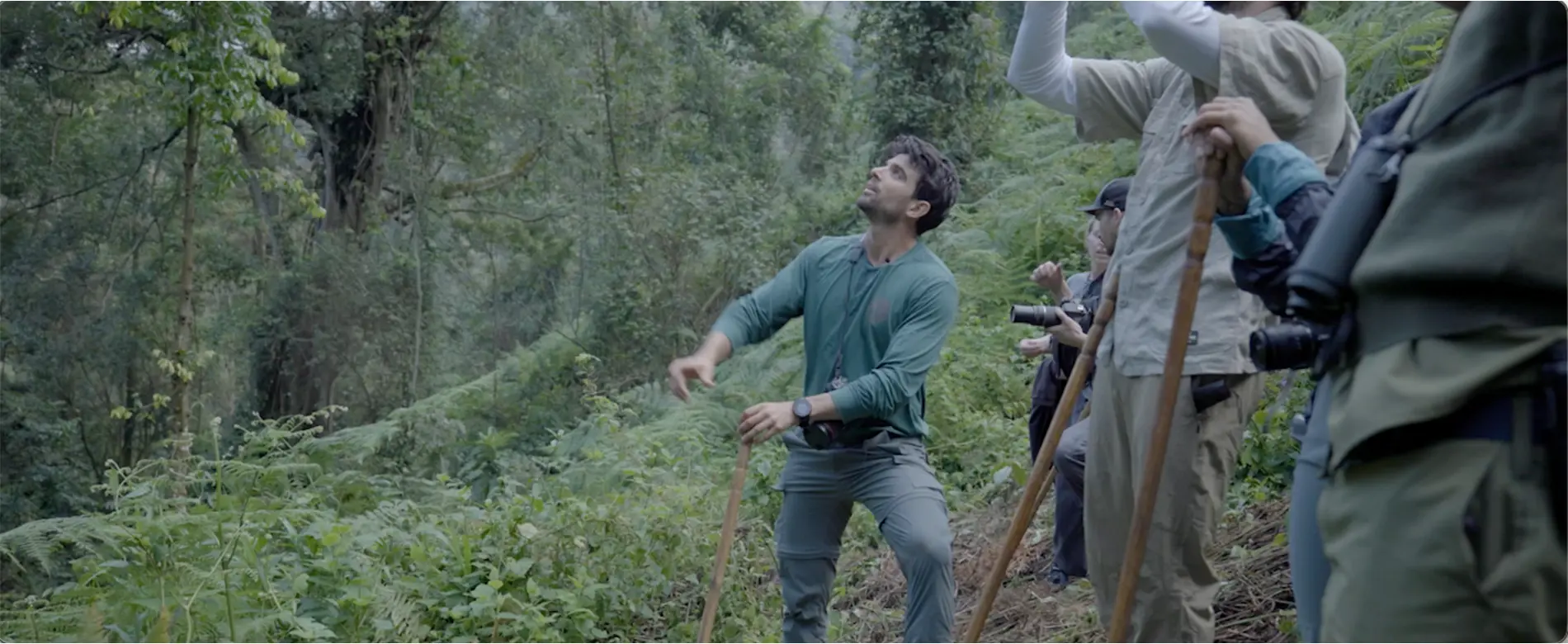
Mahale Mountains National Park occupies one of the remotest corners of Tanzania, reached only by air and by a boat trip along the shores of Lake Tanganyika, the world's second-deepest lake. Here, on forested slopes rising from white-sand beaches, lives one of the largest protected populations of wild chimpanzees left on the continent. Trekking for them means climbing through miombo woodland and rainforest alive with electric-blue butterflies and chattering colobus monkeys, guided by trackers who know individual chimpanzees by name and history. The reward is often an hour spent within metres of a wild chimpanzee family: grooming, playing, occasionally charging past in a blur of noise and energy. Few wildlife encounters anywhere in Africa feel as raw or intimate as this one. Away from the forest, Lake Tanganyika offers an entirely different rhythm. Its clear, warm waters and pale beaches invite swimming, snorkelling and kayaking among hundreds of endemic cichlid fish, while hippos and the occasional leopard patrol its edges. With no roads inside the park, and access only by boat and light aircraft, Mahale rewards travellers seeking genuine remoteness over convenience. It is a place best measured in unhurried immersion, where chimpanzee trekking and lakeside recovery form two halves of one unforgettable rhythm.
5 Reasons We Love Mahale Mountains
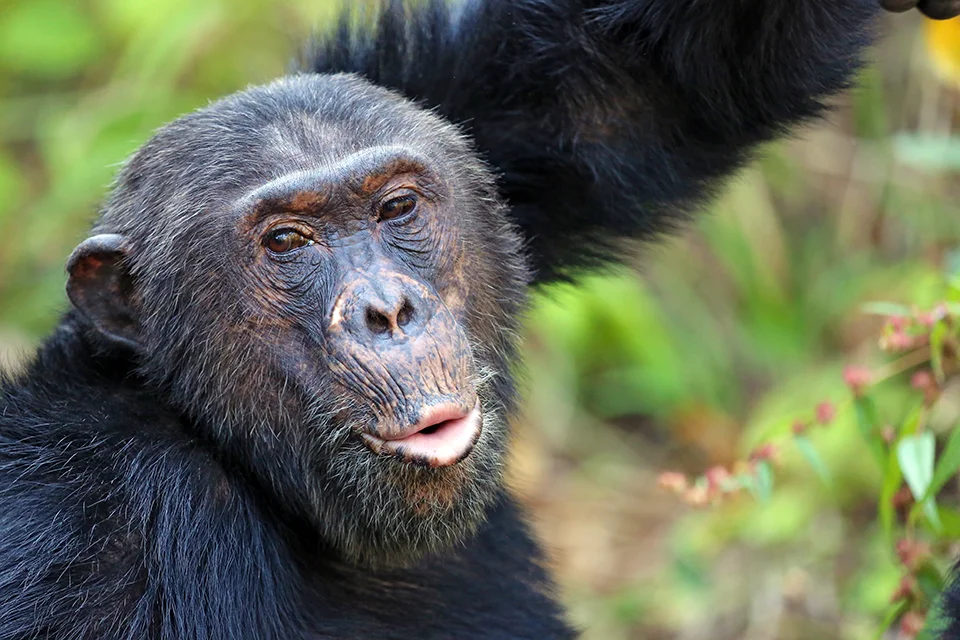
World-class chimp trekking: Mahale is widely regarded as Africa's top destination for tracking wild chimpanzees on foot, deep in ancient forest.
Decades of habituation: The M-group chimps have been studied via the Nishida Kyoto University chimp research programme since 1965, making sightings remarkably close and relaxed for a wild population.
A dramatic double landscape: Craggy 2,400-metre peaks meet white sand beaches, offering forest treks and lake relaxation in one destination.
Lake Tanganyika's beauty: Snorkel, swim or kayak in crystal-clear water home to hundreds of colourful, endemic cichlid fish species.
True wilderness access: With no roads and no other way in but boat and light aircraft, Mahale offers rare, unspoiled remoteness in Africa.
All you need to know about Mahale Mountains
About Mahale Mountains National Park
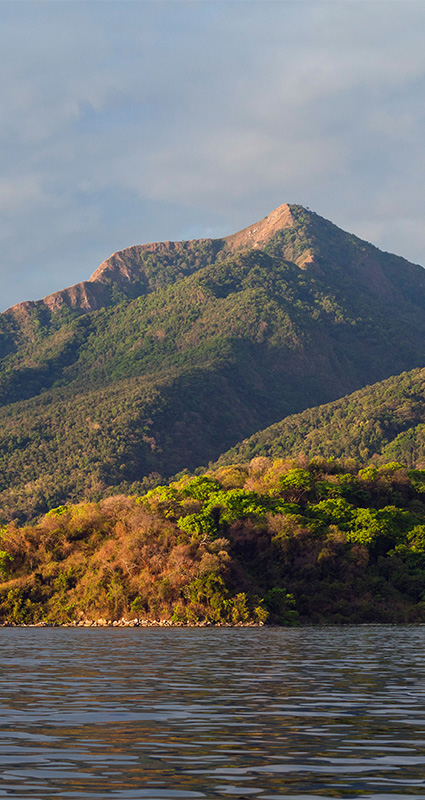
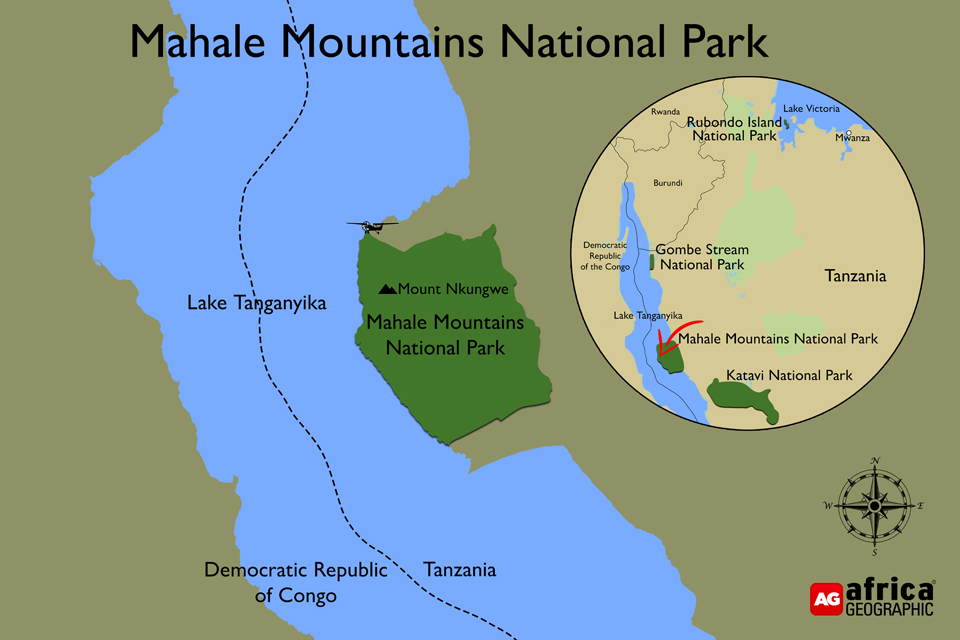
Mahale Mountains National Park covers roughly 1,650 km² on the eastern shore of Lake Tanganyika, deep in Tanzania's remote far west. It forms part of Tanzania’s western safari circuit, a sparsely visited region that offers a very different safari experience from the better-known parks of northern Tanzania. Mahale is about 150 km south of Gombe Stream National Park. Gazetted in 1985, the park is named for the forested Mahale range, whose highest peak, Mount Nkungwe, rises above 2,400 metres. Thick rainforest and miombo woodland cloak the slopes, giving way beyond the mountains to open savanna. There are no roads within the park; access is only by light aircraft and a boat trip along the Lake Tanganyika shoreline.
Around 1,000 wild chimpanzees live here and have been studied by Kyoto University researchers since 1965, a programme that has habituated them to close observation. Yellow baboons, vervet, red-tailed and colobus monkeys share the forest, and over 230 bird species have been recorded. This remoteness keeps Mahale one of Africa's least-visited yet most rewarding destinations.
Things to do in Mahale Mountains National Park
Track wild chimpanzees: Trek through montane forest with expert guides to spend up to an hour observing the habituated M-group at close range.
Swim and snorkel Lake Tanganyika: Float in crystal-clear water right off the beach to admire hundreds of colourful, endemic cichlid fish species.
Kayak the lakeshore: Paddle calm mornings along the beach beneath the mountains, an easy complement to more strenuous forest treks.
Take a dhow cruise: Cross or explore the lake by traditional wooden dhow, watching for hippos, otters and abundant birdlife along the way.
Relax on a private beach: Unwind on Mahale's unspoiled sandy shoreline between treks, with mountains rising directly behind the lodges.
What wildlife can I see in Mahale Mountains National Park?
Eastern chimpanzees: Around 1,000 individuals live in Mahale, including the habituated M-group, studied continuously by researchers since 1965.
Colobus monkeys: Both red and Angolan black-and-white colobus move through the canopy, occasionally hunted by chimpanzees in dramatic displays.
Other primates: Yellow baboons, vervet and red-tailed monkeys are frequently encountered along forest trails and near the lakeshore camps.
Savanna wildlife: Beyond the mountains, rarely visited by tourists, lions, elephants, zebras, giraffes, roan and sable antelope roam open plains.
Prolific birdlife: Almost 400 recorded species include Kungwe apalis, Stuhlmann's starling, yellow-bellied wattle-eye, Bocage's akalat, African broadbill, palm-nut vulture and Ross' turaco.
Lake Tanganyika's fish: Hundreds of cichlid species, many endemic to the lake, create a vivid underwater world visible while snorkelling.
Africa Geographic guest reviews of Mahale Mountains
Travellers who have tracked chimpanzees in Mahale often describe it as one of the most intense wildlife experiences of their lives.
Anna fulfilled a wish to feel "like Jane Goodall". She flew for hours and crossed Lake Tanganyika by dhow before reaching Greystoke Mahale, where warm hospitality and knowledgeable trackers turned the trip into a personal pilgrimage. She found chimp trekking a world apart from the gorilla trekking she had done previously in Uganda: the constant movement, the noise, the sudden charges of young males through the group.
Sarah recalled days of steep, humid trekking rewarded by close encounters with the habituated M-group, including a chimpanzee sitting calmly on a guest's foot and another delivering a firm thump while asserting rank. Evenings were spent snorkelling among Lake Tanganyika's cichlids, kayaking the shore, and watching sundowners fall behind the mountains, capped by an unexpected leopard sighting on the beach.
Where to stay in Mahale Mountains National Park
Mahale offers only two camps, both reached only by light aircraft and a boat ride on Lake Tanganyika.
Greystoke Mahale is the more original and immersive of the two, one of Africa's most remote and characterful upmarket camps. It sits on a pristine white beach, with the forested Mahale Mountains rising directly behind it. Just six en-suite wood and thatch bandas, built almost entirely from materials found around the lake, sit tucked along the forest edge, so each one opens only onto beach and lake. The central mess is the only structure right on the sand, where mornings begin with breakfast while awaiting news from the chimp trackers, and evenings close with sundowners on the beach or at the nearby rocky point above the water. Greystoke's guides and trackers, some of whom have spent decades in this forest, know individual chimps by name and history, lending every trek a warm, personal quality rare on safari.
Mbali Mbali Mahale offers a smarter, more polished stay on the very same shoreline and tends to suit travellers whose main aim is simply to meet the park's habituated chimps in comfortable surroundings. Like its neighbour, it acts as a base for daily forest treks, with the lake itself offering swimming, snorkelling and kayaking between outings into the hills.
Trusted by thousands of ecstatic travellers
✔️ 5-Star Trustpilot Rating ✔️ Condé Nast Travel Specialist Award Winner
✔️ Accredited by SATSA ✔️ 5,000+ Exceptional Safaris Since 1991
Why choose Africa Geographic to plan your safari?

"...he recommended Tanzania, and the itinerary he built for us was beautifully balanced and perfectly aligned with what we wanted...everything worked smoothly, and we always felt supported. The safari itself was extraordinary...We would recommend Africa Geographic without hesitation to anyone looking for a safari that is personal, well-designed, and truly special."
"I recently returned from a safari in Tanzania, l am a 65 year female traveling solo and it was an unforgettable experience. I booked through...Africa Geographic, who took the time to understand my needs and expectations, then tailor-made the entire trip accordingly. Everything ran seamlessly...l've already booked another trip..."
"...Africa Geographic planned our safari to Tanzania... The trip went seamlessly. Our guide's knowledge was excellent. We saw so much wildlife. The accommodations were beautiful. The staff everywhere we stayed were professional, welcoming and attentive. The food was delicious. We also appreciate Africa Geographic's involvement in conservation efforts..."
Wish you were here?
Frequently asked questions
Mahale combines two rare experiences: trekking wild chimpanzees in forested mountains and unwinding on a remote, white-sand beach beside Lake Tanganyika. With no roads inside the park and access only by air and boat, it is one of the most genuinely remote wildlife destinations in Africa.
Around 1,000 wild chimpanzees inhabit Mahale's forests. One community, known as the M-group or Mimikire clan, has been habituated to human presence through a research programme run continuously since 1965, making close, relaxed observation possible.
Researchers from Kyoto University began studying Mahale's chimpanzees in 1965, gradually habituating the M-group first through controlled feeding and later through sustained, respectful daily contact. This unbroken decades-long presence is why the group remains so relaxed around visitors today.
Habituated M-group chimpanzees show little concern for human observers and often pass or sit close by, sometimes within a few metres. Visitors are asked to keep roughly ten metres' distance, though the chimpanzees themselves do not always observe this rule.
Yes. Because chimpanzees are vulnerable to human respiratory illnesses, all visitors must wear a surgical mask during treks, avoid eating or drinking near the group, and stay away entirely if unwell.
Treks can involve several hours of steep, humid hiking through dense forest, sometimes off-trail and on hands and knees through vegetation. A reasonable level of fitness is essential, and the experience is best suited to travellers who enjoy an active, adventurous safari.
Mahale has no roads and cannot be reached overland. Access to the park's airstrip is by light aircraft, followed by a boat transfer along the Lake Tanganyika shoreline to the lakeside lodges.
The dry season from roughly June to October offers the most reliable chimpanzee trekking, with chimpanzees ranging closer to the lakeshore and clearer, more accessible forest trails. The wet season, from November to May, brings lush scenery but a much harder trek.
Yellow baboons, vervet, red-tailed and colobus monkeys share the forest with the chimpanzees. Beyond the mountains, a rarely visited savanna area supports lions, elephants, zebras, giraffes, and roan and sable antelope. There are almost 400 bird species.
Yes. Mahale's savanna hinterland stretches toward Katavi National Park, and chimpanzee treks here are commonly combined with a more traditional safari there or in Ruaha National Park.
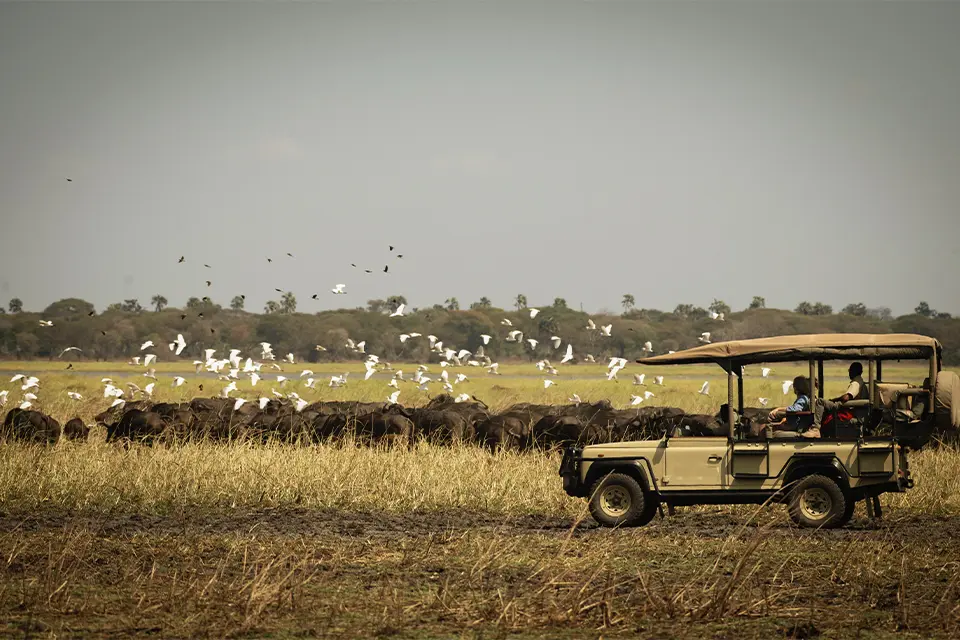
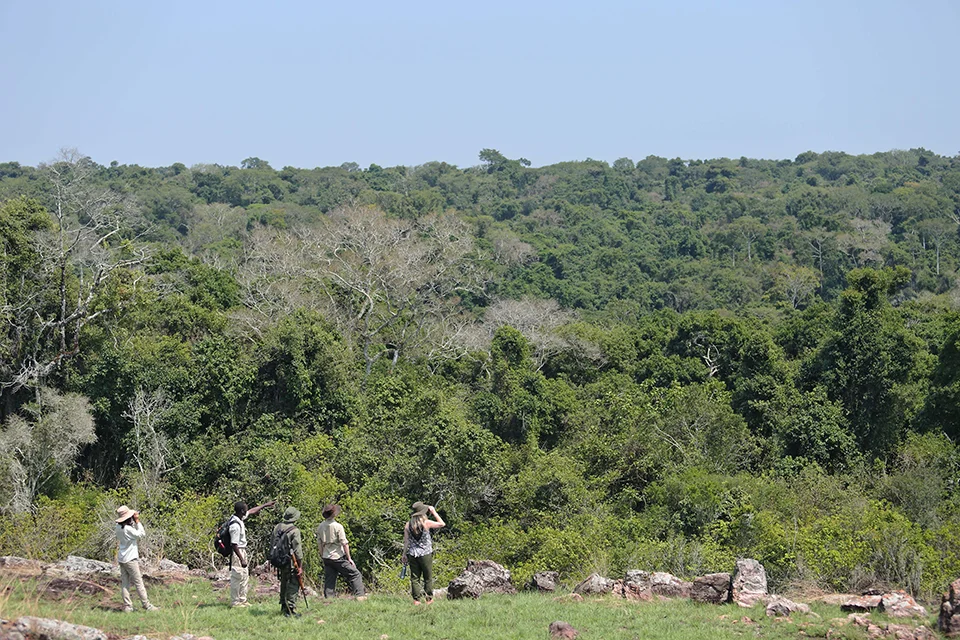
Mahale and Katavi make particularly good safari partners because they offer two completely different experiences within Tanzania’s remote west. Katavi is about classic big-game safari: open floodplains, large concentrations of wildlife and game drives through an expansive wilderness. Mahale replaces the vehicle with walking boots and a boat, combining chimpanzee trekking in forested mountains with time beside Lake Tanganyika. Together, they offer a rare bush-and-lake itinerary with both traditional safari and one of Africa’s most intimate primate encounters.
Lake Tanganyika is the world's second-deepest and second-oldest freshwater lake, with warm, exceptionally clear water and hundreds of endemic cichlid fish species. Swimming and snorkelling directly off the beach at the lodges is a highlight of any stay, with crocodiles rarely seen near camp.
Two established lodges serve the park: Greystoke Mahale, an immersive, characterful beach lodge, and Mbali Mbali Mahale, a smarter lakeside lodge suited to travellers focused on comfortable access to the chimpanzees.
Given the remote access and the unpredictable nature of chimpanzee movements, four days allow for repeat trekking attempts and time to enjoy Lake Tanganyika. Mondays and Thursdays are typically rest days for the chimpanzees, coinciding with twice-weekly flights.
Our safaris typically cost from US$700 per person, per night, depending on the accommodation comfort level, time of year and activities. This price usually includes accommodation, all meals, game drives, experienced guides, airport transfers, and 24/7 support from our team.
Mahale particularly suits active travellers and primate enthusiasts, as chimpanzee tracking can involve steep, humid forest walks lasting several hours. It is also an excellent choice for repeat safari-goers looking for something markedly different from a conventional game-drive itinerary. The combination of wild forest, white-sand beaches and Lake Tanganyika works especially well for honeymooners and travellers who value privacy, remoteness and time to slow down between activities. Above all, Mahale is for those drawn to a safari that combines adventure in the bush with an unusually peaceful lakeside setting.
Click here to schedule a no-obligation call with one of our Safari Experts or fill in our 2-minute form with your questions. Our team of experts are here to help! Whether you’re curious about the best time to travel, want to hear first-hand about an experience or need help planning your safari.
Explore more African destinations
Start planning your dream safari
Our travel experts will craft a no-obligation itinerary just for you. We have crafted over 5,000 safaris since 1991. Your personal details are protected; we only use this information to contact you.
Why book your safari with us?

Deep Experience & Knowledge
Handcrafted experiential safaris since 1991.
Travel in Africa is about knowing when and where to go, and with whom. A few weeks too early/late or a few kilometres off course, and you could miss the greatest show on Earth. And wouldn’t that be a pity?

Trust & Safety

Make A Difference
We donate a portion of the revenue from every safari sold to carefully selected conservation projects that make a significant difference at ground level.
YOUR safari choice does make a difference - thank you!