

Tailor-made safaris. Since 1991



De Hoop: where fynbos meets the whale coast
De Hoop Nature Reserve at a glance:
Location: Western Cape, South Africa - Overberg region, ~3 hours by road from Cape Town | Access from Cape Town: ~3 hours by self-drive (via Bredasdorp or Swellendam); ~1 hour by light aircraft |
Size: 340 km² (34,000 hectares) | Best time to visit: October–April (summer wildlife & walks); June–November (whale season) |
Nearest airport: Cape Town International Airport (CPT) | Minimum recommended stay: 3 nights |
Currency: South African Rand (ZAR) | Malaria risk: None — no prophylaxis required |
Why visit De Hoop Nature Reserve?
Few reserves in southern Africa pack as much ecological richness into such a modest area as De Hoop. Covering 340 km² of the Western Cape, this UNESCO World Heritage Site sits where ancient fynbos meets a rugged coastline, a 16-kilometre vlei, towering calcified dunes and one of Africa's largest marine protected areas. Proclaimed in 1953, De Hoop harbours around 1,500 plant species, over 86 mammal species and more than 260 bird species, including the Western Cape's only remaining Cape vulture breeding colony in the Potberg Mountains.
What sets De Hoop apart is the breadth of experiences available on foot, in complete safety. Because the reserve harbours few dangerous animals, walking is actively encouraged. Self-guided trails wind through lowland fynbos alive with birdcalls, open plains grazed by bontebok, Cape mountain zebra and eland, and a spectacular coastline of sea caves and rock pools. Guided marine walks, birding excursions and boat trips on the vlei are all available for those who prefer company.
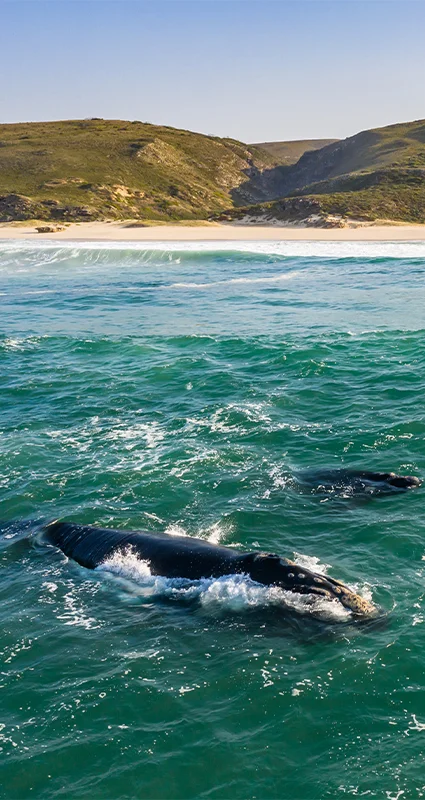
From June to November, southern right whales appear so close to shore that visitors can watch them calve and breach from the dunes. De Hoop lies roughly three hours from Cape Town, and sits conveniently near the Garden Route, making it an accessible yet rewarding wilderness escape.
5 Reasons We Love De Hoop Nature Reserve
Whale watching from the dunes: Southern right whales calve and breach close inshore from June to November, making De Hoop one of the world's best land-based whale-watching sites.
A birding stronghold: The Potberg Mountains hold the Western Cape's last Cape vulture breeding colony, among more than 260 bird species recorded across the reserve.
Rare animals on foot: Endangered bontebok and Cape mountain zebra roam fynbos plains freely, and can be seen on self-guided and guided walks through the reserve.
The De Hoop Vlei: A 16-kilometre vlei draws flamingos, pelicans and spoonbills, all explorable via a superb walking trail skirting the full length of the lake.
Wild and untouched coastline: More than 70 kilometres of coastline offer pristine beaches, calcified dune cliffs, sea caves and intertidal rock pools rich with marine life.
All you need to know about De Hoop Nature Reserve
About De Hoop Nature Reserve
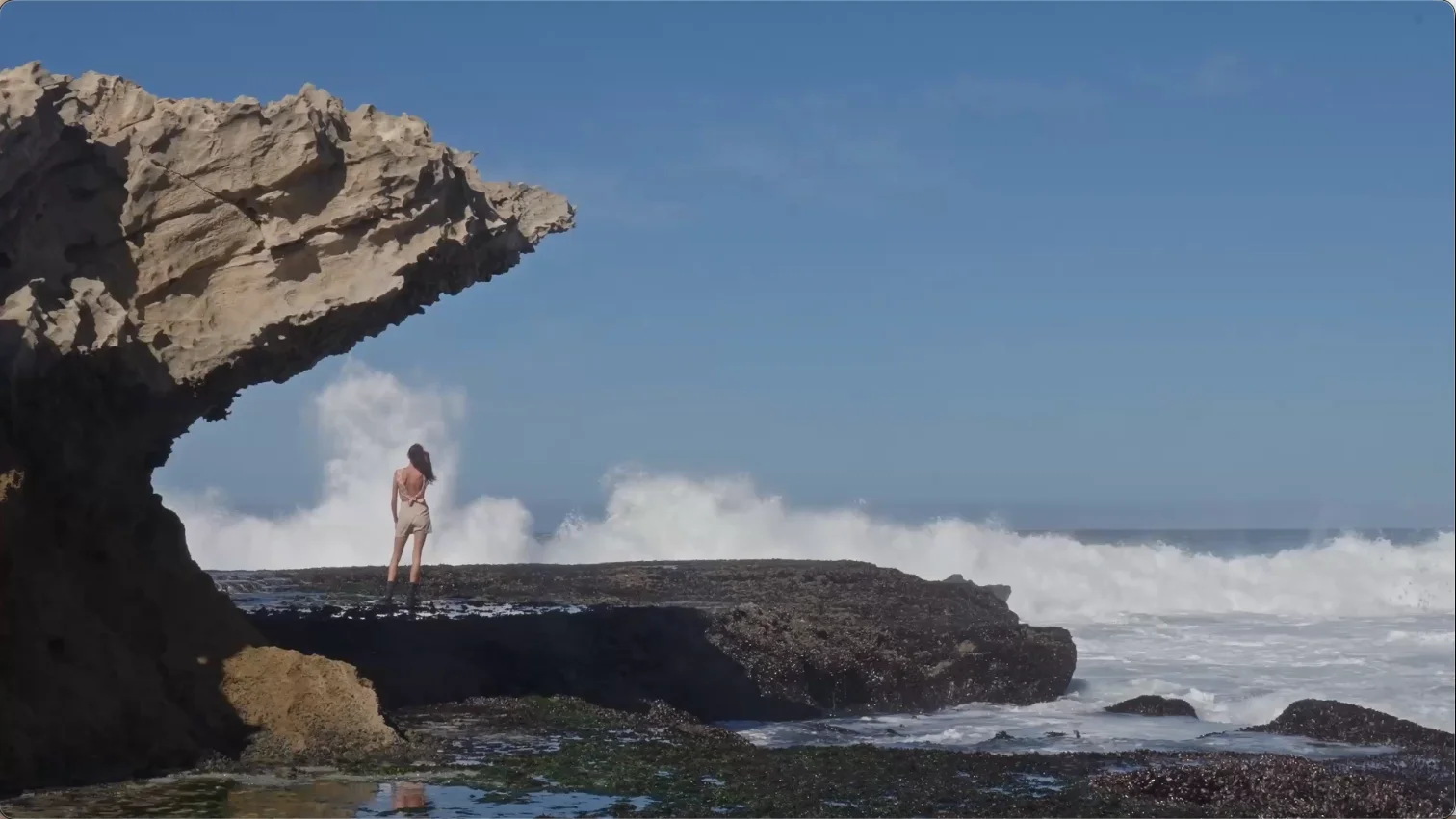
De Hoop Nature Reserve covers 340 km² of the Western Cape Overberg, 60 km south of Swellendam, on South Africa's Whale Coast. Its terrain is strikingly varied: lowland fynbos, part of the Cape Floral Kingdom, rolls across the interior, giving way to grassy plains, a 16-kilometre vlei and a 70-kilometre coastline of calcified dunes, sea caves and rock pools. Strandveld pockets support the reserve's large herbivore communities.
The marine component extends 5 km offshore, making it one of Africa's largest marine protected areas, sitting at the confluence of the warm Agulhas and cold Benguela currents. UNESCO declared De Hoop a World Heritage Site in 2004. It is also South Africa's first RAMSAR birding site and holds some of the Western Cape's best-preserved coastal Stone Age archaeological sites, spanning Early to Later Stone Age occupation. These layers of natural and cultural value make De Hoop one of South Africa's most significant protected areas.
Things to do in De Hoop Nature Reserve
Guided marine walks: Walk guided marine trails across the dunes and intertidal rock pools, exploring the coastline's sea caves, fossils and rich intertidal life.
Land-based whale watching: Watch southern right whales breach and calve from the clifftops and dunes - the best land-based viewing runs from June through November.
Vlei exploration: Explore the De Hoop Vlei by foot or eco boat trip, scanning for flamingos, pelicans, spoonbills, African fish eagles and rare waterbirds.
Fynbos walking and cycling: Hike or cycle through lowland fynbos on self-guided trails, passing bontebok, eland and Cape mountain zebra grazing and perhaps even seeing a glimpse of caracal or Cape clawless otter.
Guided birding: Join guided birding walks in the Potberg Mountains, home to the Western Cape's only remaining breeding colony of the endangered Cape vulture.
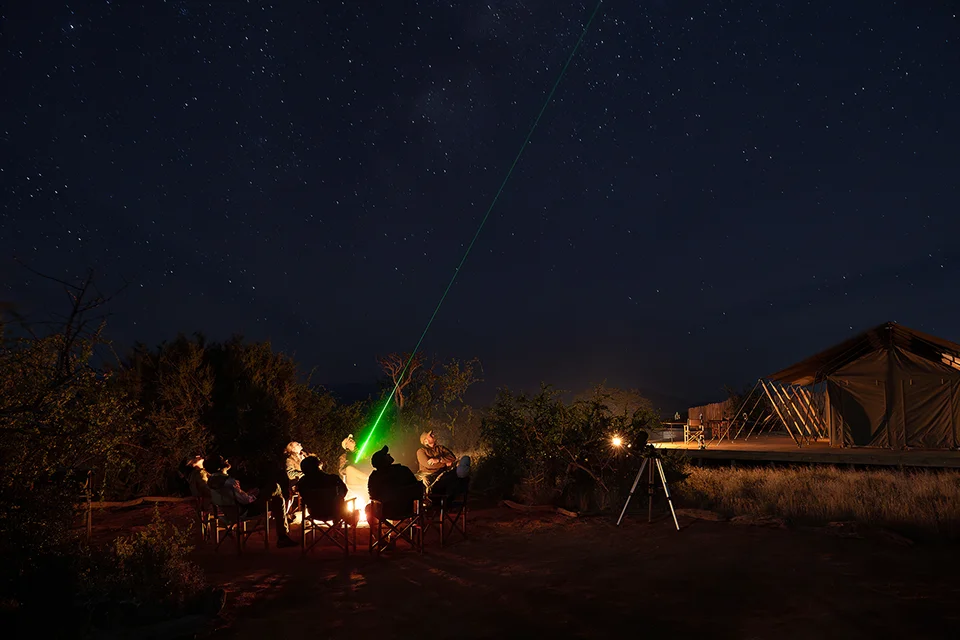
Stargazing: Take a guided stargazing session in the reserve - De Hoop's remote Overberg location offers exceptional dark skies far from city light pollution.
What wildlife can I see in De Hoop Nature Reserve?
Endangered bontebok and Cape mountain zebra roam the open plains alongside eland, grey rhebok, ostrich, baboon and yellow mongoose.
Southern right whales are regular winter visitors between June and November, often accompanied by dolphins and seals along the protected coastline.
The Cape vulture, a critically important species, breeds in the Potberg Mountains, the Western Cape's last remaining stronghold for this bird.
Birds: The reserve hosts over 260 bird species, including African penguin, African fish eagle, Caspian tern, African black oystercatcher, Agulhas long-billed and Cape clapper larks and great crested grebe.
Caracal and leopard are both present in the reserve, though rarely seen. De Hoop's low-danger profile makes most trails safe to walk without a guide.
Marine and intertidal life: Rock pools and the protected marine area hold diverse intertidal species such as Cape clawless otter and chacma baboons that hunt for shellfish.
Where to stay in De Hoop Nature Reserve
De Hoop's accommodation spans four distinct properties, from a multi-generational beach house to an intimate eco-lodge, each shaped by the surrounding landscape.
Lekkerwater Beach Lodge is an off-grid coastal hideaway with only seven units in a private concession in the eastern reaches of De Hoop, overlooking a pristine stretch of Indian Ocean coastline and backed by dense coastal fynbos.
The Opstal is a spacious restored 1800s Cape Dutch farmhouse with yellowwood floors and antique furniture, offering a range of self-catering and fully catered private free-standing suites, cottages and villas. The Fig Tree Restaurant serves meals throughout the day, and children of all ages are welcome.
Morukuru Beach Lodge is a five-bedroom, Relais & Châteaux-affiliated oceanfront lodge set directly above the Indian Ocean, bookable per suite or on a fully exclusive-use basis, making it well suited to couples, honeymooners and small families alike. Each suite offers panoramic ocean and fynbos views from a private balcony, while shared amenities include a swimming pool, hot tub and rooftop terrace.
Morukuru Ocean House is an off-the-grid exclusive-use property designed for multi-generational groups and families seeking complete privacy. Amenities include a dedicated hospitality team, private swimming pool, wine cellar, rooftop terrace, and private safari vehicle.
Trusted by thousands of ecstatic travellers
✔️ 5-Star Trustpilot Rating ✔️ Condé Nast Travel Specialist Award Winner
✔️ Accredited by SATSA ✔️ 5,000+ Exceptional Safaris Since 1991
Why choose Africa Geographic to plan your safari?

"My family and I just returned from a "trip of a lifetime"...we wanted to take a memorable trip with our two children and their spouses...found Africa Geographic...Everything went so smoothly and my whole family kept commenting on what a great job Africa Geographic did"

"Africa Geographic helped craft the perfect 60th Birthday trip for my husband. All the arrangements were made exactly as we asked and when we had a query during the trip they were immediately available with an answer. We'll definitely be using them again for future safaris!"

"...I’ve been dreaming about this trip for years, and the reality was even better than I could imagine...Africa Geographic tailored the trip specifically to what I was looking for...They were very helpful in arranging all the details...work with Africa Geographic to create your perfect trip."
Wish you were here?
Frequently asked questions
De Hoop is one of South Africa's most ecologically diverse protected areas. Covering 340 km², it combines ancient lowland fynbos, a 16-kilometre freshwater vlei, a rugged 70-kilometre coastline and one of Africa's largest marine protected areas - all within three hours of Cape Town. Walking is safe and encouraged throughout, and southern right whale watching from the dunes is considered one of the finest land-based wildlife experiences in the world.
De Hoop is open year-round and rewarding in all seasons. The whale season runs from June to November, when southern right whales calve close inshore and viewing from the dunes is exceptional. October to April brings warmer, drier weather and is ideal for walking, birding and coastal exploration. The reserve receives most of its rainfall between June and August.
Yes. De Hoop is in a malaria-free zone. No anti-malarial prophylaxis is required. The Western Cape climate is Mediterranean rather than tropical, and there are no malarial mosquitoes in this region. This makes De Hoop particularly suitable for families, older travellers and those who cannot take anti-malarial medication.
Yes. The reserve contains few dangerous animals, which makes walking safe and actively encouraged throughout. Leopard and caracal are present but very rarely seen, and the reserve's open fynbos landscape makes self-guided exploration both practical and rewarding. Clearly marked trails allow visitors to navigate the reserve independently, and guided walks are available for those who prefer company.
By self-drive, De Hoop is approximately three hours from Cape Town via either Bredasdorp or Swellendam. The last 60 km is on a gravel road. Alternatively, the reserve is accessible by light aircraft in about one hour from Cape Town; Lekkerwater Beach Lodge also offers a scenic 90-minute helicopter transfer. The Opstal has an airstrip on-site for guests arriving by chartered plane.
The De Hoop Vlei is a 16-kilometre-long freshwater lake at the heart of the reserve. It is fringed by a superb walking trail and is a productive birdwatching destination, attracting flamingos, pelicans, spoonbills, white-fronted cormorants, black-necked grebes and a range of other water and wetland birds. Eco boat trips on the vlei are also available from The Opstal.
De Hoop is one of South Africa's most important birding areas and holds its first RAMSAR birding site designation. Over 260 species have been recorded, including African fish eagle, African black oystercatcher, Caspian tern, lesser and greater flamingo, pelican, African penguin, cardinal woodpecker and the Cape vulture. The Potberg Mountain area hosts the Western Cape's only remaining Cape vulture breeding colony.
The simplest and most rewarding method is land-based watching from the dunes above the beach. Whales frequent the coastline between June and November, calving in the warm shallows and often breaching and blowing extremely close to shore. No boat trip is required — the spectacle can be observed with the naked eye from the clifftops and dune ridges that line the coast.
Four properties serve De Hoop. Lekkerwater Beach Lodge is a fully catered seven-room eco-lodge on the reserve's eastern coast, ideal for an immersive, remote experience. The Opstal is the reserve's central hub, offering rooms, suites, self-catering cottages and sole-use villas alongside a restaurant and a broad activities programme. Morukuru Beach Lodge is a Relais & Châteaux five-bedroom oceanfront lodge bookable per suite or exclusively, suited to couples and small families. Morukuru Ocean House is an exclusive-use five-bedroom property accommodating up to ten adults and two children, designed for multi-generational groups seeking total privacy with five-star service.
Yes. De Hoop is a family-friendly destination. The Opstal welcomes children of all ages and runs a dedicated children's programme during school holidays. Lekkerwater Beach Lodge accepts children aged six and older. Morukuru Beach Lodge's Ocean View Family Suites each accommodate two adults and up to two children under sixteen. Morukuru Ocean House accommodates up to ten adults and two children and is particularly well suited to multi-generational family groups.
A minimum of three nights is recommended to experience the reserve's full variety — the vlei, the fynbos, the coastline and whale watching in season. Combining a stay at one of the coastal properties (Lekkerwater Beach Lodge, Morukuru Beach Lodge or Morukuru Ocean House) with two to three nights at The Opstal gives a rounded picture of both the remote eastern reaches and the wider reserve.
Activities include self-guided and guided walking trails, guided marine walks, eco boat trips on the vlei, guided birding, mountain biking, stargazing sessions and land-based whale watching in season. The Opstal also offers spa treatments. Most activities are centred on exploring the reserve's varied landscapes on foot or by cycle, and the low-risk wildlife profile means much of the reserve can be explored independently.
Yes. De Hoop Nature Reserve was declared a UNESCO World Heritage Site in 2004, recognised for the exceptional biodiversity of the Cape Floral Kingdom and its significant marine environment. The marine component extends 5 km offshore and sits at the confluence of the warm Agulhas and cold Benguela currents — one of the richest marine ecosystems along the southern African coast. The reserve also contains some of the best-preserved coastal Stone Age archaeological sites in the Western Cape.
De Hoop safaris typically cost from R2,950 per person, per night, depending on the accommodation comfort level, time of year and activities. This price usually includes accommodation, all meals, game drives, experienced guides, airport transfers, and 24/7 support from our team.
Click here to schedule a no-obligation call with one of our Safari Experts or fill in our 2-minute form with your questions. Our team of experts are here to help! Whether you’re curious about the best time to travel, want to hear first-hand about an experience or need help planning your safari.
Explore more African destinations
Start planning your dream safari
Our travel experts will craft a no-obligation itinerary just for you. We have crafted over 5,000 safaris since 1991. Your personal details are protected; we only use this information to contact you.
Why book your safari with us?

Deep Experience & Knowledge
Handcrafted experiential safaris since 1991.
Travel in Africa is about knowing when and where to go, and with whom. A few weeks too early/late or a few kilometres off course, and you could miss the greatest show on Earth. And wouldn’t that be a pity?

Trust & Safety

Make A Difference
We donate a portion of the revenue from every safari sold to carefully selected conservation projects that make a significant difference at ground level.
YOUR safari choice does make a difference - thank you!