

Tailor-made safaris. Since 1991

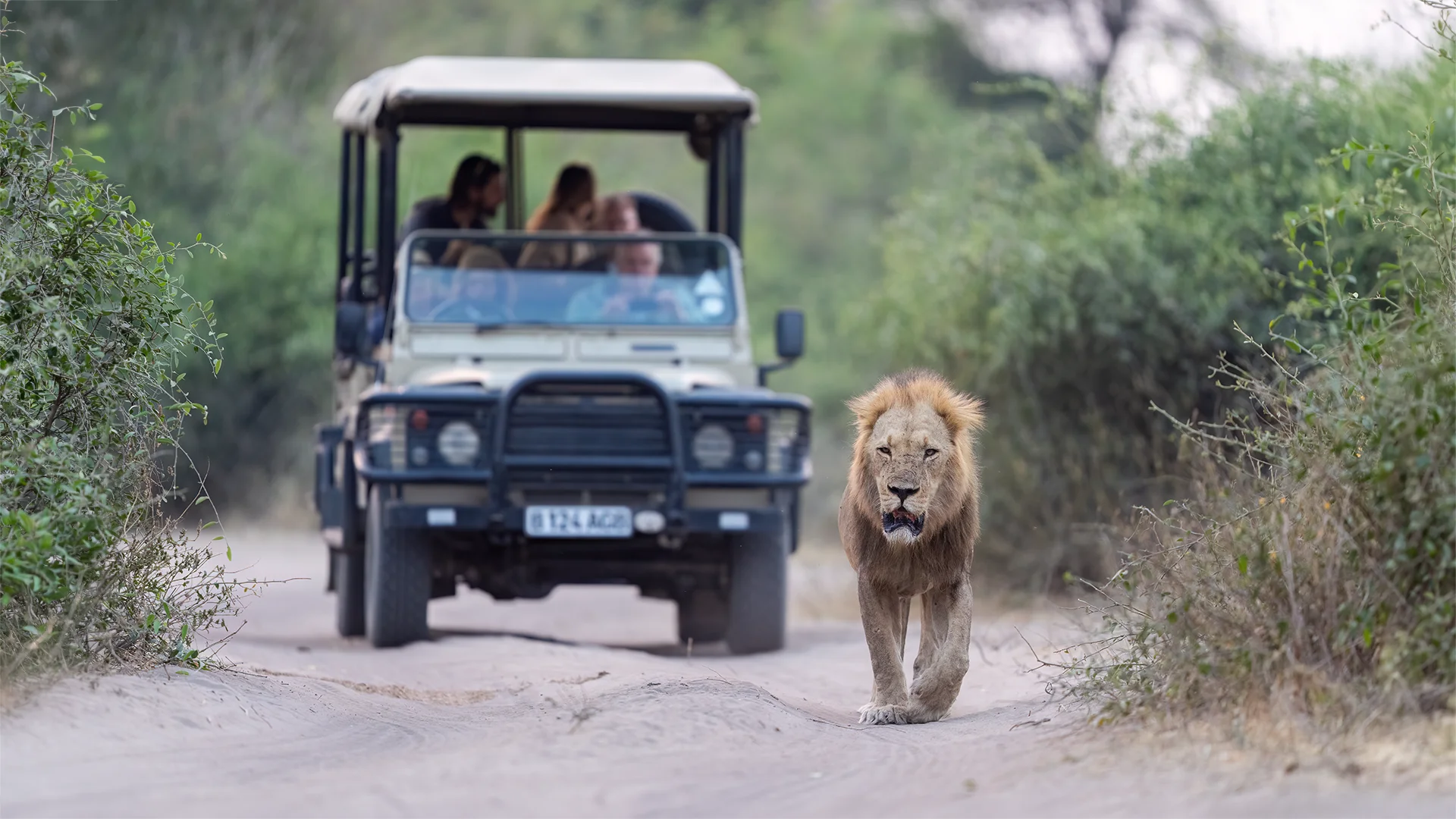


Trust us to find you the rarest animals, the most spectacular wildlife events, the remotest landscapes and deeply meaningful cultural encounters!
Choose Botswana for an ethical safari
“A safari in Botswana is the pursuit of wildlife in its purest form,” says Ross Exler, Africa Geographic safari expert and Botswana specialist. “Each day, you head out into arguably the world's greatest wildlife venue and anything is possible. You're truly immersed in the wilderness, and it results in sightings that are memories that you'll carry with you for the rest of your life.”
Botswana's conservation model is widely regarded as one of the most successful in Africa. Built on a high-value, low-volume tourism strategy and supported by both private concessions and community-led initiatives, it offers a blueprint for sustainable safari travel.
From the riverine mystery of the Okavango Delta to the incredible wildlife viewing in Chobe and the dry magic of the Salt Pans, Botswana promises many unique safari experiences, and as Ross says, is a memorable destination. Part of what makes it exceptional is its unique conservation model, which leads to richer, more exclusive safari experiences across the country.
Botswana's ethical safari model at a glance
Attribute | Detail |
Core model | High-value, low-volume tourism |
Land under conservation | ~29-45% (approximately 39% commonly cited) |
Community mechanism | CBNRM (Community-Based Natural Resource Management) |
Key community example | Khwai Community Concession, Okavango Delta |
Revenue sharing | Concession fees paid directly to community trusts where relevant |
Trade-off | Among Africa's most expensive safari experiences |
Best suited to | Travellers prioritising conservation impact over cost |
3 things we love about ethical safaris
Beyond the wildlife itself, here’s what makes Botswana's approach to conservation travel genuinely worth supporting on your next safari.
Concessions that pay for themselves: community trusts earn direct revenue from every guest who visits, not just from wildlife photographs.
Community participation beyond employment: through Botswana's CBNRM system, some community trusts hold formal rights and earn tourism revenue from wildlife areas they manage.
Honesty about complexity: travelling ethically here means engaging with the Kalahari's difficult history, not only its conservation success.
Botswana's high-value, low-volume tourism model
A simple founding principle
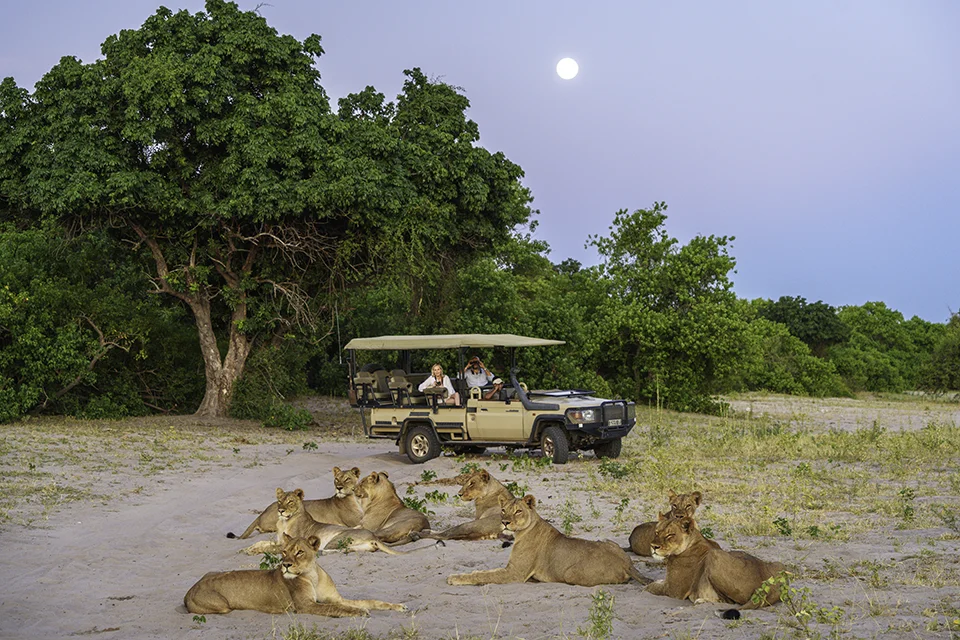
At the heart of Botswana's approach is a principle that's as simple as it is effective: fewer tourists, paying more, causing less damage.
The country has allocated a significant percentage of its land to conservation: between 29%–45% depending on how you define ‘conservation’, with around 39% commonly cited for national parks, game reserves and wildlife management areas. These concessions are leased to private safari operators or community trusts and operate as exclusive-use wildlife areas within state-managed conservation land.
The cost of exclusivity
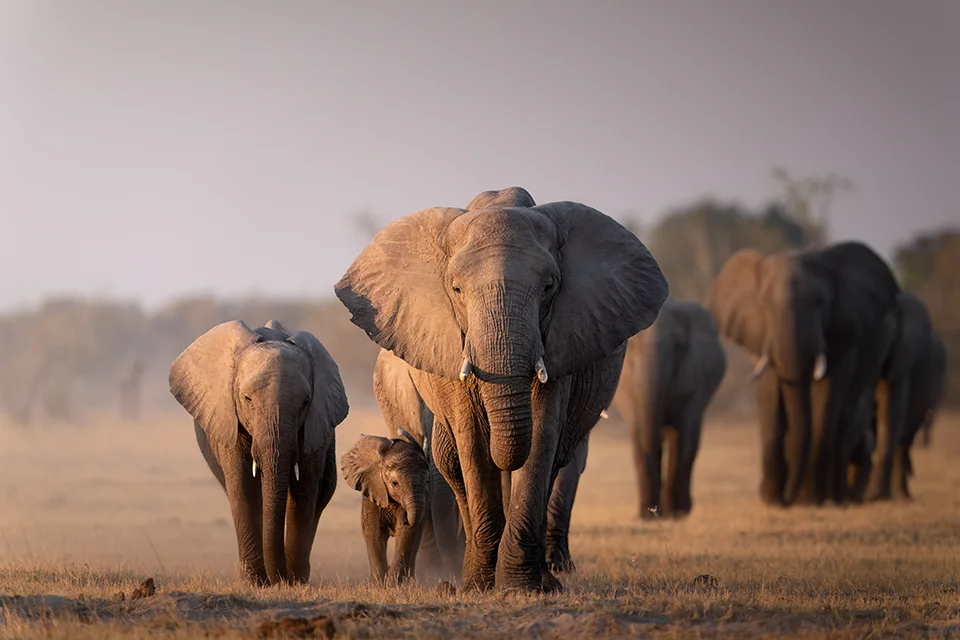
They can cover hundreds of thousands of hectares while hosting only a few dozen guests at a time, creating an experience rare in the safari world. In some of Botswana's most productive wildlife areas, it's not uncommon to spend an entire day in the field without encountering another vehicle. However, this exclusivity does come at a price, and this makes Botswana's private concessions among the most expensive and luxurious safari experiences in Africa.
Some of our favourite Botswana safaris
Community-based natural resource management
What CBNRM means for local communities
Botswana's conservation story isn't only written by private operators. Across the country, local communities play a central role through a model known as Community-Based Natural Resource Management (CBNRM).
At its core, CBNRM gives communities the right to manage the wildlife and wild spaces on their land – and to benefit directly from them. Much like private concessions, these areas are often leased to safari operators, but the difference lies in ownership of the opportunity: revenue flows back to the people who live alongside the wildlife.
The Khwai Community Concession
On the fringes of the Okavango Delta, the Khwai Community Concession stands as one of the most compelling examples. Managed by the Khwai Development Trust, the area hosts safari lodges, with income from guest stays feeding into community projects, employment, and local infrastructure.
For those who know Botswana well, this model is more than policy – it's fundamental to the country's conservation success. “I'm a firm believer that CBNRM's ability to make local communities stakeholders in conservation land management – through sharing of tourism revenue – is a very effective tool for creating community buy-in,” says Ross.
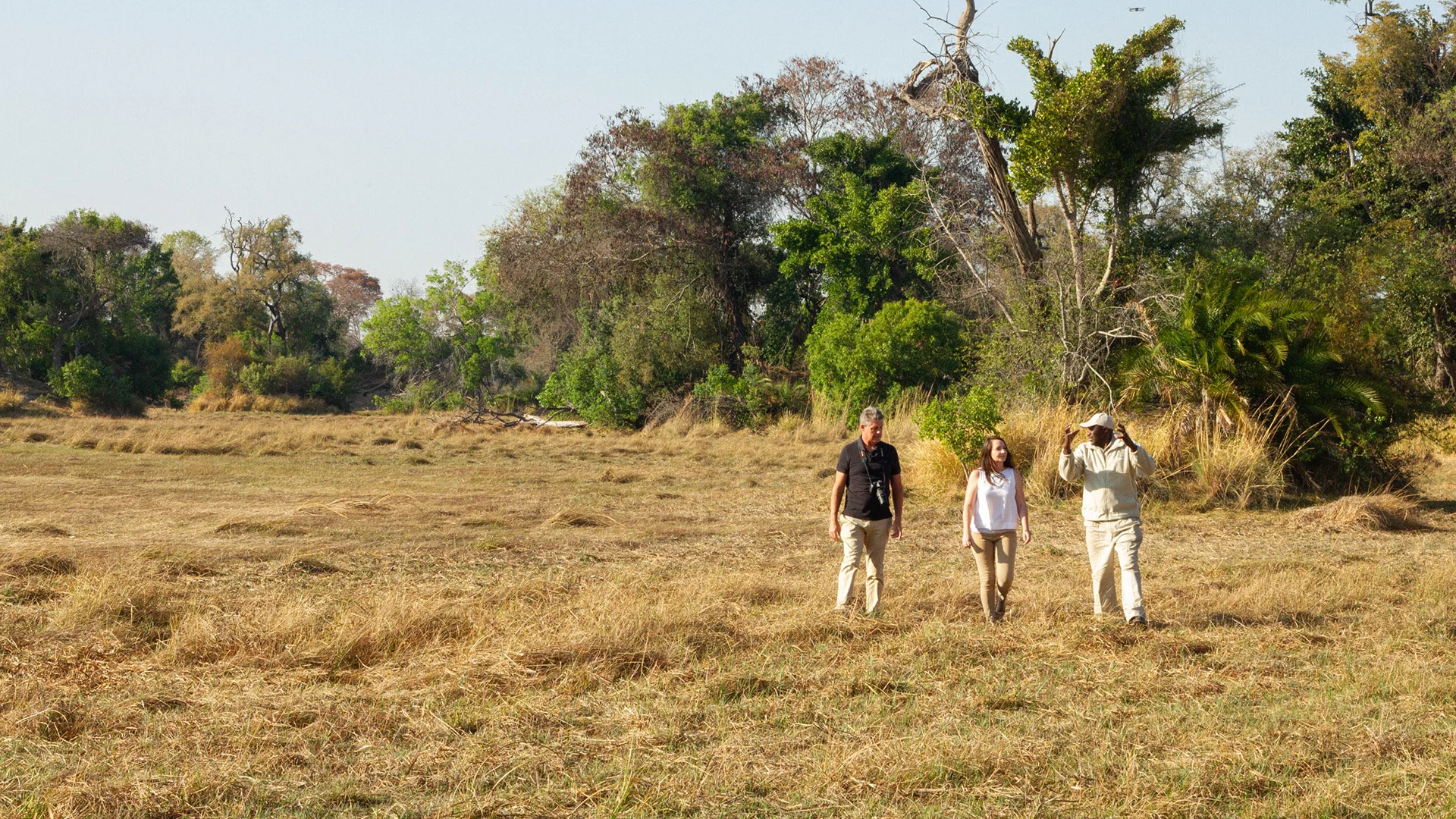
How safari tourism benefits local communities
Operators, trusts and shared revenue
The relationship between safari operators and communities is both structured and practical. Operators pay concession fees to community trusts, prioritise local employment, and support initiatives such as infrastructure, education, and healthcare.
In the Okavango Delta, for example, Duba Plains operates within a concession linked to the Okavango Community Trust, which represents five villages – Seronga, Gunotsoga, Eretsha, Beetsha, and Gudigwa. Through this model, communities gain both income and a formal role in managing some of Africa's most wildlife-rich land.
A complicated history worth understanding
Botswana's conservation model is widely admired, but it is not without complexity. For travellers, this means going a step further. Choose cultural experiences carefully, with an understanding of who benefits.
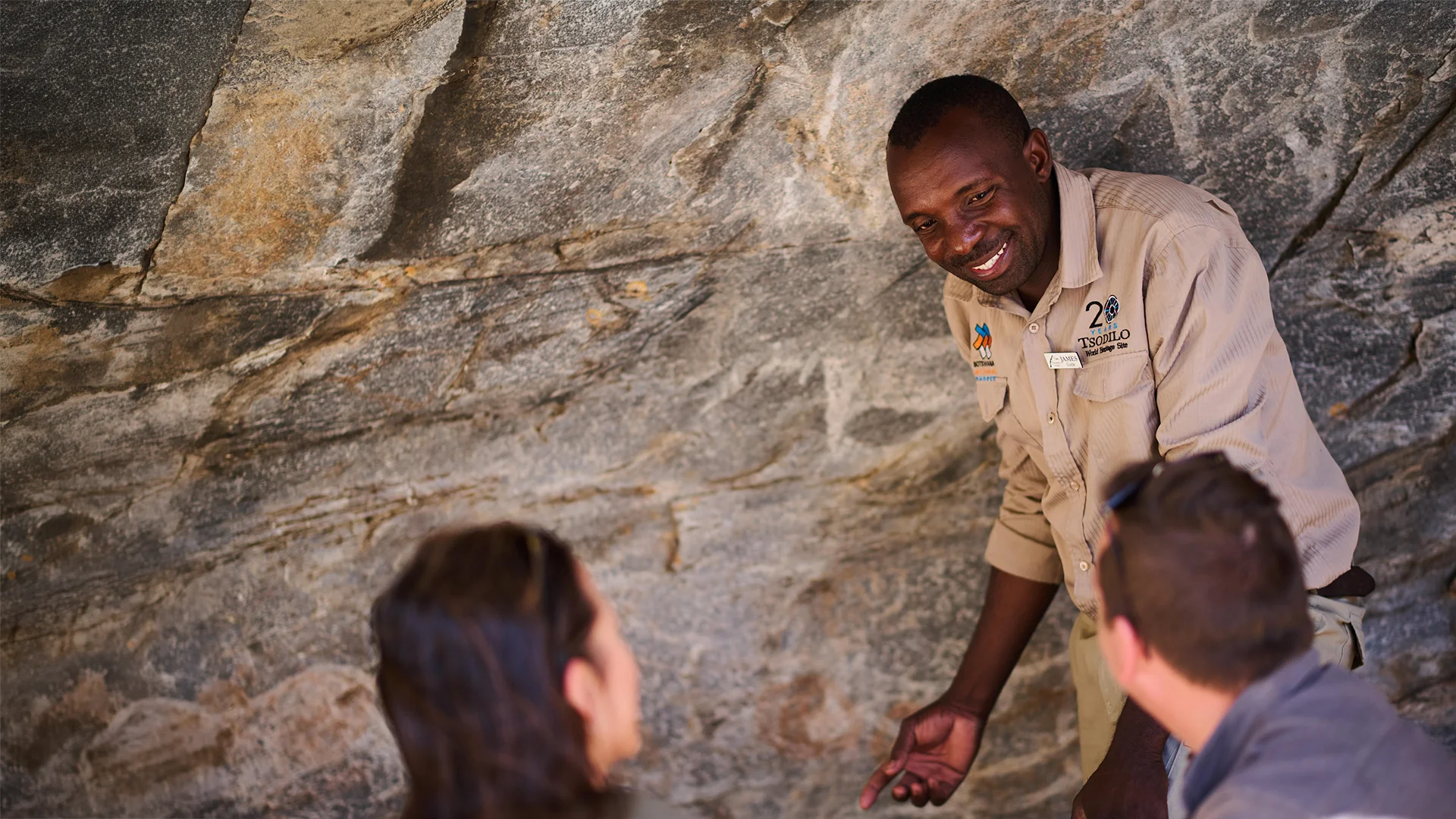
Travelling ethically in Botswana also means engaging honestly with the country's history. The Central Kalahari Game Reserve is the ancestral homeland of the San peoples, including the Gana, Gwi, and Tsila. In the 1990s and early 2000s, many of these communities faced forced removals to resettlement camps outside the reserve – removals that were justified on conservation and development grounds but that coincided with diamond discoveries, and that have since become the subject of legal and human rights disputes.
Visiting the Kalahari and participating in cultural tourism programmes means doing the groundwork. The most meaningful journeys are those where local communities are not just participants, but partners. No destination is without its contradictions, and a thoughtful traveller is better served by understanding them than by ignoring them.
Wish you were here?
How to book an ethical safari in Botswana
Practical steps for booking ethically
As safari experts since 1991, and dedicated conservationists, we have some suggestions on how to book your safari ethically:
Book early – the low-volume tourism model means space is genuinely limited.
Work with us on the finer details; we will match your itinerary to the season and identify lodges with verifiable community partnerships.
Don't automatically default to high season. Wildlife viewing in the Okavango remains strong year-round, though different seasons favour different species and landscapes.
Where ethics and experience align
For travellers who want their spend to do more than fund a holiday, Botswana offers something increasingly rare: a tourism model where the ethical case and the experiential case point in exactly the same direction. The fewer the tourists, the better the wildlife experience – and the more sustainable the whole system becomes.
Frequently asked questions
Botswana is widely regarded as having one of Africa's most successful conservation models, built on a high-value, low-volume tourism strategy. Between roughly 29% and 45% of the country's land is allocated to conservation, depending on definition, with around 39% commonly cited for national parks, game reserves and wildlife management areas, supported by both private concessions and community-led initiatives.
Low-volume, high-value tourism is Botswana's core conservation principle: fewer tourists, paying more, causing less impact on the land. Private concessions can cover hundreds of thousands of acres while hosting only a few dozen guests at any time, meaning it is not uncommon to spend a full day in the field without encountering another vehicle.
CBNRM stands for Community-Based Natural Resource Management, a model that gives local communities the right to manage the wildlife and wild spaces on their own land and to benefit directly from them. These community-managed areas are often leased to safari operators, but the revenue and decision-making stay with the people who live alongside the wildlife.
Safari operators pay concession fees directly to community trusts, prioritise local employment, and support infrastructure, education and healthcare initiatives. In the Okavango, the Duba Plains concession is linked to the Okavango Community Trust, which represents five villages and gains both income and a formal role in managing wildlife-rich land.
The Khwai Community Concession sits on the fringes of the Okavango Delta and is managed by the Khwai Development Trust. It hosts a small number of safari lodges, with income from every guest stay feeding directly into community projects, local employment and infrastructure, making it one of Botswana's most compelling examples of CBNRM in practice.
Yes, tourism revenue in Botswana funds both private concession management and community trusts under the CBNRM model, giving local communities a direct financial stake in protecting wildlife on their own land. This revenue-sharing approach is widely credited by conservationists as a key reason the country's model has succeeded where others have struggled.
Book early, since Botswana's low-volume model means space is genuinely limited, and work with a Botswana specialist who can match your itinerary to the season and identify lodges with verifiable community partnerships. It also helps not to default automatically to high season, since wildlife viewing in the Okavango remains strong throughout the year.
The Central Kalahari Game Reserve is the ancestral homeland of the San peoples, including the Gana, Gwi and Tsila. In the 1990s and early 2000s, many faced forced removals to resettlement camps outside the reserve, justified on conservation and development grounds but coinciding with diamond discoveries, a history that remains the subject of legal and human rights disputes.
Yes, the exclusivity created by Botswana's low-volume approach comes at a price, and its private concessions rank among the most expensive and luxurious safari experiences in Africa. For many travellers, the trade-off is worthwhile: a near guarantee of uncrowded wildlife encounters and a tourism model that directly funds conservation and communities.
Start planning your dream safari
Our travel experts will craft a no-obligation itinerary just for you. We have crafted over 5,000 safaris since 1991. Your personal details are protected; we only use this information to contact you.
Why book your safari with us?

Deep Experience & Knowledge
Handcrafted experiential safaris since 1991.
Travel in Africa is about knowing when and where to go, and with whom. A few weeks too early/late or a few kilometres off course, and you could miss the greatest show on Earth. And wouldn’t that be a pity?

Trust & Safety

Make A Difference
We donate a portion of the revenue from every safari sold to carefully selected conservation projects that make a significant difference at ground level.
YOUR safari choice does make a difference - thank you!